
Stefan Zweig
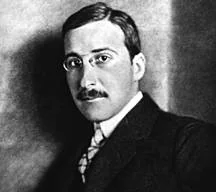
Image from Wikipedia
Image from Wikipedia
Stefan Zweig: The Master of Psychological Novellas and European Melancholy
A Literary Life Between Vienna, Exile, and Global Impact
Stefan Zweig was born on November 28, 1881, in Vienna and was among the most read German-speaking authors of the 20th century during his lifetime. As a writer, translator, and pacifist, he combined stylistic elegance with psychological precision, creating a body of work that continues to exert an extraordinary influence between realism, humanism, and European diagnosis of the times. ([britannica.com](https://www.britannica.com/biography/Stefan-Zweig?utm_source=openai))
Early Years: Vienna as a Spiritual Resonance Space
Zweig grew up in a wealthy Jewish family in Vienna, a city that was considered a vibrant cultural center of Europe around 1900. His early engagement with literature, study of philosophy and literary history, and his completed doctoral degree in 1904 laid the groundwork for a career focused from the outset on international understanding and intellectual agility. ([stefanzweig.de](https://www.stefanzweig.de/de/leben.php?utm_source=openai))
His initial literary steps, which began with poetry and early prose works, led him into the circles of Viennese modernism. With his first book publication Silberne Saiten in 1901 and the early novellas, he demonstrated a blend of linguistic beauty, observational talent, and psychological depth that became his hallmark. ([stefanzweig.de](https://www.stefanzweig.de/en/zeittafel.php?utm_source=openai))
The Breakthrough: Novella Art with Emotional Depth
Zweig's literary breakthrough can be attributed primarily to his psychological novellas. Works such as Brennendes Geheimnis, Angst, Brief einer Unbekannten, and Der Amokläufer combined dramatic intensity with finely balanced internal perspectives, making him a narrator who did not just depict conflicts but made them emotionally palpable. ([britannica.com](https://www.britannica.com/biography/Stefan-Zweig?utm_source=openai))
His prose remained committed to realism, but it drew its tension from the psychological construction of the characters. Typical of Zweig are shifting perspectives, clear narrative arcs, and a style that aims for vividness and pleasing sound without resorting to modernism or formal experimentation. This was precisely where his success with a broad readership lay: Zweig reflected the present without rendering it inaccessible. ([britannica.com](https://www.britannica.com/biography/Stefan-Zweig?utm_source=openai))
Linguistic Signature: Psychology, Rhythm, and Humanistic Perspective
Zweig's language possesses a distinctive rhythm that makes his texts almost musical: sentence structure, tension build-up, and imagery appear carefully composed. His characters are often marked by inner turmoil, guilt, desire, or idealistic despair, resulting in novellas that evoke an emotional immediacy binding readers across generations. ([britannica.com](https://www.britannica.com/biography/Stefan-Zweig?utm_source=openai))
Zweig's intense engagement with psychoanalysis and Sigmund Freud also shaped his literary development. The focus on states of mind, unconscious motives, and the fragile web of human decisions made him an author more interested in the inner life of his characters than in external action in the classical sense. ([britannica.com](https://www.britannica.com/biography/Stefan-Zweig?utm_source=openai))
Biographies and Historical Miniatures as Narrative Art Form
In addition to his novellas, Zweig's literary biographies are among his most significant achievements. In books about Marie Antoinette, Mary Stuart, Erasmus of Rotterdam, or Joseph Fouché, he combined historical research with narrative accessibility, making history an experience of human decisions. His famous collected works like Triumph und Tragik des Erasmus von Rotterdam and Sternstunden der Menschheit reveal how captivated he was by historical extremes, turning points, and moments of fate. ([britannica.com](https://www.britannica.com/biography/Stefan-Zweig?utm_source=openai))
These texts are not dry life sketches but rather sharply focused literary interpretations. It is precisely in them that Zweig's authority as a storyteller is demonstrated: he condenses biographical material into psychological portraits that make the individual visible in history while simultaneously placing the fragility of European culture at the center. ([britannica.com](https://www.britannica.com/biography/Stefan-Zweig?utm_source=openai))
Exile, Loss of the World, and Late Mastery
In 1934, Zweig went into exile, first to England, and later through New York to Brazil. The Nazi persecution, the book burnings, and the loss of his cultural environment marked a profound rupture in his biography and intensified the melancholic undertone of his later works. ([britannica.com](https://www.britannica.com/biography/Stefan-Zweig?utm_source=openai))
During this period, his most famous late work Die Schachnovelle was written in 1941 while in exile, which is now considered a masterpiece of German-language literature. At the same time, he wrote Die Welt von Gestern, a poignant memory of the declining Europe of the imperial era, and one of the most quoted literary testimonies about the loss of an entire epoch. ([stefanzweig.de](https://www.stefanzweig.de/en/?utm_source=openai))
Impact, Reception, and Cultural Influence
During the 1920s and 1930s, Zweig was one of the most internationally renowned authors and was translated into many languages. His popularity was based on a rare combination of literary elegance, emotional accessibility, and intellectual breadth that made him readable for a global audience. ([britannica.com](https://www.britannica.com/biography/Stefan-Zweig?utm_source=openai))
Even today, Zweig's work resonates in literature, theater, film, and essays. His themes—exile, Europe, fear, identity, historical upheavals, and the struggle for humanity—remain relevant as they are not tied to a single era but make the vulnerability of modern humans visible. ([stefanzweig.de](https://www.stefanzweig.de/en/?utm_source=openai))
Important Works and Literary Highlights
Some of his most notable texts include the novellas Brennendes Geheimnis, Angst, Der Amokläufer, and Brief einer Unbekannten, the historical miniature collection Sternstunden der Menschheit, the biographies Marie Antoinette, Maria Stuart, and Triumph und Tragik des Erasmus von Rotterdam, as well as the memoirs Die Welt von Gestern. These works mark the central milestones of his artistic development. ([britannica.com](https://www.britannica.com/biography/Stefan-Zweig?utm_source=openai))
Zweig was also significant as a translator: he conveyed literature across language and national boundaries and helped to make European voices visible in the German-speaking world. His entire oeuvre thus resembles a cultural network that understands literature as a dialogue between times, nations, and mentalities. ([britannica.com](https://www.britannica.com/biography/Stefan-Zweig?utm_source=openai))
Current Projects and Publications
Since Stefan Zweig died in 1942, there are no current publications, albums, or tours of his own. However, the ongoing presence of his work is evident in digital archives, scholarly editions, and new publications that make his texts accessible to today’s readers. ([britannica.com](https://www.britannica.com/biography/Stefan-Zweig?utm_source=openai))
Fans' Voices
No official social media channels for Stefan Zweig could be verified. Therefore, this section is omitted entirely. ([britannica.com](https://www.britannica.com/biography/Stefan-Zweig?utm_source=openai))
Conclusion: Why Stefan Zweig Fascinates to This Day
Stefan Zweig remains compelling because he understood literature as a precise instrument for exploring the human soul. His novellas are dense, his biographies vibrant, and his memories impactful. Those who read Zweig encounter an author who extraordinary links the private, the political, and the European with exceptional clarity. ([britannica.com](https://www.britannica.com/biography/Stefan-Zweig?utm_source=openai))
It is precisely the combination of psychological depth, linguistic elegance, and humanistic seriousness that makes his work permanently relevant. Visiting his texts is always a new experience because Zweig not only describes an era but also encapsulates the feelings of loss, hope, and intellectual self-assertion in literary form. ([stefanzweig.de](https://www.stefanzweig.de/en/?utm_source=openai))
To understand European literature of the 20th century, one should not only read but also richly experience Stefan Zweig. His works are among the most impressive testimonies of a destroyed yet glorious culture—and they continue to speak with unbroken power to this day. ([britannica.com](https://www.britannica.com/biography/Stefan-Zweig?utm_source=openai))
Official Channels of Stefan Zweig:
- Instagram: No official profile found
- Facebook: No official profile found
- YouTube: No official profile found
- Spotify: No official profile found
- TikTok: No official profile found
Sources:
Upcoming Events
Literary Lecture with Simon Hausstetter: Stefan Zweig - A Overview of Life and Work
A literary evening for all who want to rediscover Stefan Zweig: Lecture, overview of works, and cultural depth at the Kolbermoor Town Hall. 11.05.2026, 19:30. #Literature
Star Moments of Humanity
Experience the impressive Star Moments of Humanity at the Memmingen City Museum, a captivating play about significant moments in history.
Letter from an Unknown Woman at the AnStattTheater
Enjoy Zweig's emotional chamber play 'Letter from an Unknown Woman' on October 9, 2026, at the AnStattTheater Straubing.