
Karl Schmidt-Rottluff
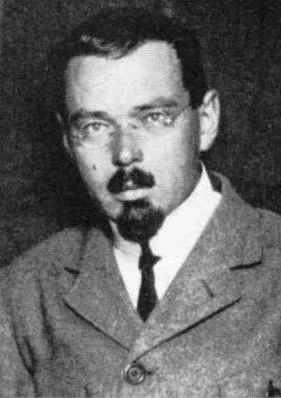
Image from Wikipedia
Image from Wikipedia
Karl Schmidt-Rottluff – Expressionist Pioneer between Awakening, Color, and Form
An Artist Who Helped Found Modernism
Karl Schmidt-Rottluff is one of the defining names of German Expressionism. As a co-founder of the artist group "Brücke," he participated in one of the pivotal awakenings of 20th-century art and developed a visual language that to this day represents radical colorfulness, formal condensation, and emotional immediacy. Born in 1884 in Rottluff near Chemnitz, he shaped a distinctive position within classical modernism through the connection of his origins, artistic restlessness, and intellectual experimentation. ([dhm.de](https://www.dhm.de/lemo/biografie/karl-schmidt-rottluff?utm_source=openai))
His biography tells not only of a painter, graphic artist, and sculptor, but of an artist who sharpened the perception of his time and aimed to expand the possibilities of expression. His journey took him from Dresden to Berlin and into the post-war period, characterized by avant-garde, state persecution, losses, and later recognition. It is precisely this range that makes Karl Schmidt-Rottluff so fascinating today: his work stands for intensity, resilience, and stylistic consistency. ([dhm.de](https://www.dhm.de/lemo/biografie/karl-schmidt-rottluff?utm_source=openai))
Biographical Roots in Chemnitz-Rottluff
Karl Schmidt was born in 1884 in Rottluff, which is now part of Chemnitz. After the fire of the birthplace, his father had a residential mill built, which influenced the artist during his childhood and youth. This early connection to the Saxony region remained significant for his later self-understanding, as he supplemented his name with the place of origin, making it an artistic statement. ([de.wikipedia.org](https://de.wikipedia.org/wiki/Karl_Schmidt-Rottluff?utm_source=openai))
The connection to the city of Chemnitz remained not only biographical but also musically and culturally vibrant. Since 2025, the Karl Schmidt-Rottluff House has opened as a museum of the Chemnitz art collections in the neighboring manor. The house sees itself as a "place of awakening" and places the artist's history in a contemporary cultural context that brings together origin, work, and memory. ([kunstsammlungen-chemnitz.de](https://www.kunstsammlungen-chemnitz.de/en/haeuser/karl-schmidt-rottluff-museum/?utm_source=openai))
The Breakthrough with "Brücke"
In 1905, Schmidt-Rottluff moved to Dresden and co-founded the artist group "Brücke" along with Ernst Ludwig Kirchner, Erich Heckel, and Fritz Bleyl. This union became a driving force of Expressionism as it intentionally left academic rules behind and focused on direct, spontaneous, and subjective image creation. The early phase marks the actual breakthrough of his artistic profile. ([dhm.de](https://www.dhm.de/lemo/biographie/karl-schmidt-rottluff?utm_source=openai))
His involvement with "Brücke" was not only about a collective program but also the quest for a new way of seeing. Later, the group moved to Berlin, where Schmidt-Rottluff engaged more strongly with Cubism and further condensed his formal language. The dialogue with European modernity, particularly with Picasso, left clear traces in his work. ([dhm.de](https://www.dhm.de/lemo/biografie/karl-schmidt-rottluff?utm_source=openai))
Style: Color, Plane, and Expressive Condensation
Schmidt-Rottluff developed a style of great independence: strong, often luminous colors, angular forms, and a reduced, monumental composition. His works show a particular tension between natural observation and formal simplification. Especially in landscapes, portraits, and woodcuts, it becomes evident how strongly he was guided by the principle of elemental expression. ([wissen.de](https://www.wissen.de/lexikon/schmidt-rottluff-karl?utm_source=openai))
His work in different media is also remarkable. In addition to paintings, he created watercolors, drawings, woodcuts, etchings, lithographs, graphic designs, and sculptures. This versatility makes him one of the most productive minds in the history of Expressionism, whose work cannot be reduced to a single format. ([de.wikipedia.org](https://de.wikipedia.org/wiki/Karl_Schmidt-Rottluff?utm_source=openai))
Between Recognition and Persecution
In the 1930s, his work came under increasing pressure. In 1937, the Nazis defamed his art as "degenerate," and in 1941 a painting ban followed. Like many modern artists, this phase meant not only political repression but also a deep intrusion into his creative process and public visibility. ([geschichte.sachsen.de](https://www.geschichte.sachsen.de/karl-schmidt-rottluff-6076.html?utm_source=openai))
The war also destroyed parts of his Berlin studio and working environment. After the bombing in 1943, he lived with his wife Emy in the country house in Chemnitz before returning to Berlin at the end of 1946. The post-war period gradually brought rehabilitation, new honors, and growing institutional recognition of his work. ([de.wikipedia.org](https://de.wikipedia.org/wiki/Karl_Schmidt-Rottluff?utm_source=openai))
Work, Collection, and Art Historical Reception
Today, Schmidt-Rottluff is firmly established in the major collections of modernism. The Brücke-Museum houses over 300 works by him, including paintings, watercolors, drawings, woodcuts, etchings, lithographs, graphic designs, and sculptures. The Chemnitz art collections also own a significant collection and are among the most important places for his reception. ([de.wikipedia.org](https://de.wikipedia.org/wiki/Karl_Schmidt-Rottluff?utm_source=openai))
Art historical evaluations particularly highlight his consistency and formal radicality. Treccani, Deutsche Biographie, and LeMO emphasize his role as a co-founder of "Brücke," his further development towards Cubism, and the special quality of his color and surface art. He does not stand on the sidelines but at the center of the European avant-garde. ([treccani.it](https://www.treccani.it/enciclopedia/karl-schmidt-rottluff/?utm_source=openai))
Cultural Influence and Lasting Significance
Schmidt-Rottluff's influence extends far beyond the individual work. He shaped the image of Expressionism as an art of intense experience, independent form, and uncompromising subjectivity. His motifs, print graphics, and landscape paintings still serve as reference points for exhibitions, research, and museum mediation. ([universalis.fr](https://www.universalis.fr/encyclopedie/karl-schmidt-rottluff/?utm_source=openai))
His legacy is also evident in foundations, museums, and awards. By donating large groups of works to Berlin, he contributed to the establishment of the Brücke Museum; additionally, his estate was incorporated into a foundation. Such institutional traces not only secure the work but also show how much Schmidt-Rottluff himself was interested in the future of artistic memory. ([deutsche-biographie.de](https://www.deutsche-biographie.de/sfz114014.html?utm_source=openai))
Current Projects and Presentations
Even in 2025, Karl Schmidt-Rottluff remains present, primarily through the new Karl Schmidt-Rottluff House in Chemnitz. The museum was opened in April 2025 by the Chemnitz art collections and is part of the European Capital of Culture Chemnitz 2025. The initial presentation focuses on original artworks, craftsmanship, documents, and biographical highlights with connections to Chemnitz. ([kunstsammlungen-chemnitz.de](https://www.kunstsammlungen-chemnitz.de/en/haeuser/karl-schmidt-rottluff-museum/?utm_source=openai))
The new institution roots his legacy in the present and makes his life accessible both spatially and contextually. Guided tours, exhibitions, and the museum's exploration of his childhood home open a new approach to his work and biography. This creates a vibrant place for visitors where art history becomes immediate. ([kunstsammlungen-chemnitz.de](https://www.kunstsammlungen-chemnitz.de/en/news/herzlich-willkommen-im-karl-schmidt-rottluff-haus-12571/?utm_source=openai))
Conclusion: An Artist of Radical Renewal
Karl Schmidt-Rottluff remains fascinating because his work embodies the awakening of modernity with a rare consistency. He combined origin and avant-garde, expressiveness and formal rigor, personal experience, and art historical insight. Anyone dealing with Expressionism, "Brücke," and German modernism cannot overlook him. ([dhm.de](https://www.dhm.de/lemo/biografie/karl-schmidt-rottluff?utm_source=openai))
A visit to his works in a museum or exhibition is always worthwhile because his images want not only to be seen but experienced. It is in the tension of color, form, and life history that his special effect unfolds to this day. Karl Schmidt-Rottluff is one of those artists whose presence has not only supplemented art history but has decisively shaped it. ([kunstsammlungen-chemnitz.de](https://www.kunstsammlungen-chemnitz.de/en/haeuser/karl-schmidt-rottluff-museum/?utm_source=openai))
Official Channels of Karl Schmidt-Rottluff:
- Instagram: No official profile found
- Facebook: No official profile found
- YouTube: No official profile found
- Spotify: No official profile found
- TikTok: No official profile found
Sources:
- LeMO – Karl Schmidt-Rottluff
- Deutsche Biographie – Schmidt-Rottluff, Karl
- Sächsische Staatskanzlei – Karl Schmidt-Rottluff
- Kunstsammlungen Chemnitz – Karl Schmidt-Rottluff Haus
- Kunstsammlungen Chemnitz – Karl Schmidt-Rottluff Museum
- Kunstsammlungen Chemnitz – Digital Collection
- MoMA – Karl Schmidt-Rottluff
- Wikipedia: Image and Text Source