
Hanna-Elisabeth Müller
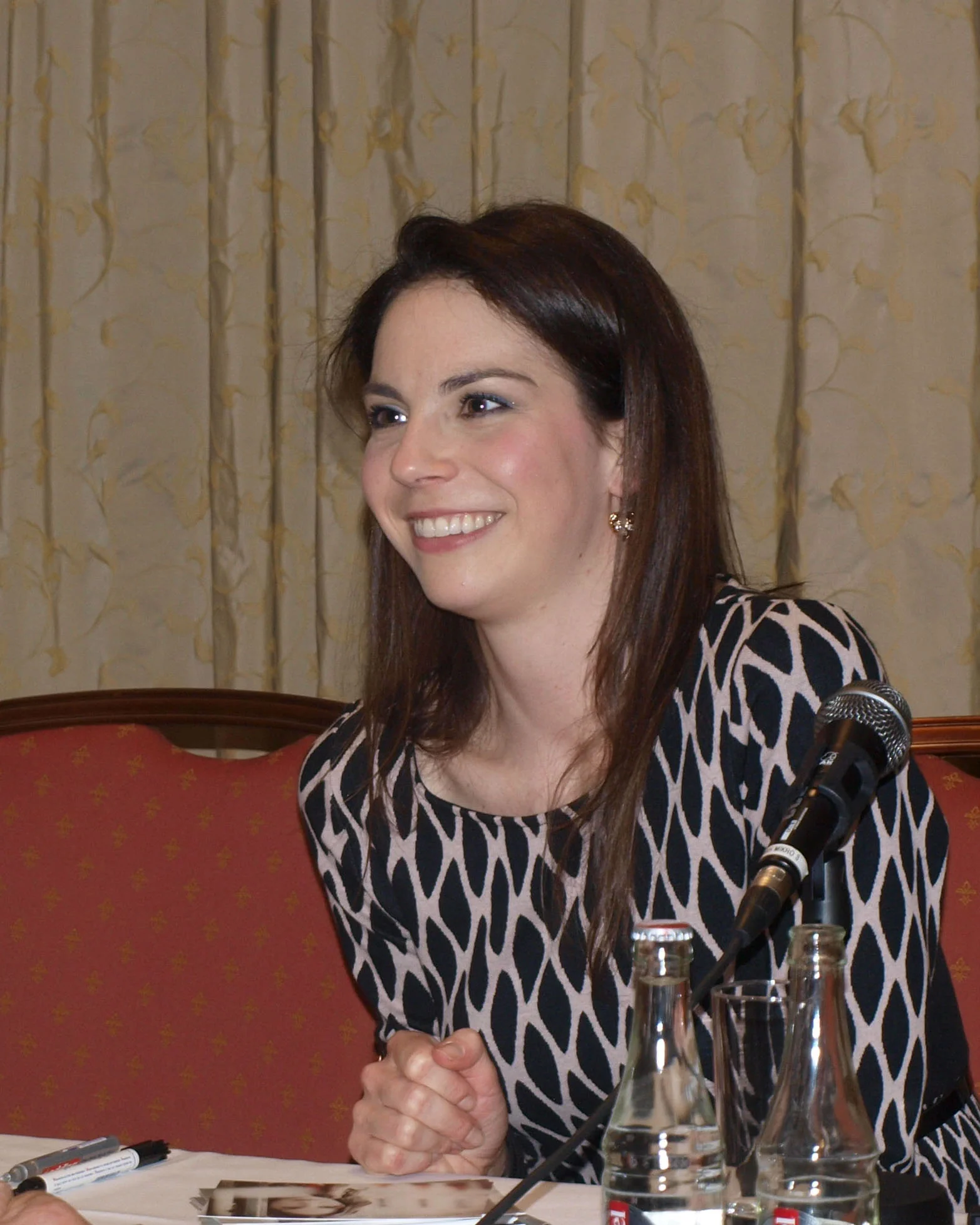
Image from Wikipedia
Image from Wikipedia
Hanna-Elisabeth Müller: The German Soprano Between Opera Passion, Song Art, and International Stage
A soprano with a crystal-clear signature and great dramatic tension
Hanna-Elisabeth Müller, born on May 3, 1985, in Mannheim, is one of the most distinctive German soprano voices of her generation. As an opera, concert, and lied singer, she navigates confidently between grand stages, finely crafted song art, and the concentrated expression of oratorio. Her artistic profile combines technical precision with emotional immediacy and stylistic confidence that spans a wide range of repertoires. ([hannaelisabethmueller.de](https://www.hannaelisabethmueller.de/wp-content/uploads/Biography-2024-25-Hanna-Elisabeth-Muller.pdf))
Particularly significant is her dual role as both an opera and lied interpreter: On one hand, she masters the grand dramatic repertoire with Strauss, Mozart, Wagner, and Reimann; on the other hand, she is a highly sought-after artist of Schubert, Wolf, Mahler, Poulenc, Zemlinsky, and Strauss songs. It is this very range that makes her musical career exciting for opera enthusiasts, concert audiences, and song lovers alike. Critics describe her voice as particularly clear and radiant, yet also flexible and rich in color. ([hannaelisabethmueller.de](https://www.hannaelisabethmueller.de/wp-content/uploads/Biography-2024-25-Hanna-Elisabeth-Muller.pdf))
Biographical Roots and Education
Hanna-Elisabeth Müller studied with Rudolf Piernay, with whom she continues to work closely, and refined her technique in masterclasses with Dietrich Fischer-Dieskau, Julia Varady, Elly Ameling, and Thomas Hampson. This education deeply anchored her in the German singing and song tradition and sharpened her early focus on text interpretation, phrasing, and stylistic fidelity. This thorough training is particularly evident in her repertoire that bridges the Romantic era and 20th-century music. ([hannaelisabethmueller.de](https://www.hannaelisabethmueller.de/wp-content/uploads/Biografie.pdf))
Even her early career years suggested an extraordinary path. From 2012 to 2016, she was a member of the ensemble at the Bavarian State Opera, where she gained significant stage experience in roles of the lyrical soprano fach. During this period, the foundation was laid for an artistic development that would soon extend to the major opera houses in Europe and the USA. ([hannaelisabethmueller.de](https://www.hannaelisabethmueller.de/wp-content/uploads/Biografie.pdf))
The International Breakthrough: Arabella and the Following World Career
The actual international breakthrough came in 2014 at the Salzburg Easter Festival as Zdenka in Richard Strauss’ Arabella under Christian Thielemann, alongside Renée Fleming and Thomas Hampson. For this performance, she was awarded by Opernwelt as "Young Artist of the Year." This accolade marked not only a career boost but also sent a message: Here was a singer who combines lyrical elegance with strong stage presence. ([hannaelisabethmueller.de](https://www.hannaelisabethmueller.de/wp-content/uploads/Biography-2024-25-Hanna-Elisabeth-Muller.pdf))
From that moment on, the major houses followed almost naturally. Key stations in her career include the Bavarian State Opera, the Vienna State Opera, the Metropolitan Opera, the Semperoper Dresden, La Scala Milan, the Royal Opera House Covent Garden, the Zurich Opera, and the Salzburg Festival. Such engagements indicate not only international demand but also a repertoire profile based on musical maturity and reliability. ([hannaelisabethmueller.de](https://www.hannaelisabethmueller.de/wp-content/uploads/Biography-2024-25-Hanna-Elisabeth-Muller.pdf))
Opera, Role Debuts, and a Substantive Repertoire
In the opera field, Müller made early impressions with roles such as Sophie in Der Rosenkavalier, Marzelline in Fidelio, Donna Anna in Don Giovanni, Ilia in Idomeneo, Susanna in Le nozze di Figaro, Rosalinde in Die Fledermaus, Eva in Die Meistersinger von Nürnberg, and Elettra in Idomeneo. These roles showcase an extraordinarily wide spectrum from the Mozart repertoire to Strauss and 20th-century musical theater. Her ability to connect lyrical lines with dramatic tension particularly distinguishes her in this role landscape. ([hannaelisabethmueller.de](https://www.hannaelisabethmueller.de/wp-content/uploads/Biografie.pdf))
She also left a significant mark at the Metropolitan Opera. In 2017, she debuted there as Marzelline in Jürgen Flimm's Fidelio, and in 2020, she returned as Susanna in Mozart's Le nozze di Figaro. Additional performances at La Scala and the Vienna State Opera as Donna Anna further solidified her international authority in the Mozart and Strauss repertoire. ([hannaelisabethmueller.de](https://www.hannaelisabethmueller.de/wp-content/uploads/Biografie.pdf))
Concert, Oratorio, and the Art of Fine Form
Outside the opera house, Hanna-Elisabeth Müller unfolds a second artistic identity as a concert and oratorio singer. Her repertoire ranges from Haydn's Die Schöpfung and Beethoven's Missa solemnis to Brahms’ Ein deutsches Requiem and Mahler’s Fourth Symphony, as well as songs by Schubert, Berg, and Strauss in orchestrated versions. It is here that her talent for sound balance, text clarity, and a cultivated dynamic between intimacy and expressiveness shines through. ([en.wikipedia.org](https://en.wikipedia.org/wiki/Hanna-Elisabeth_M%C3%BCller?utm_source=openai))
The 2024/25 season particularly impressively underscores this versatility. She returned to the Vienna State Opera, made her debut as Rosalinde in Strauss’ Die Fledermaus, sang again as the Countess Almaviva in Le nozze di Figaro, and performed at the Berlin State Opera as Eva and Elettra. On the concert stage, her program included Richard Strauss’ Vier letzte Lieder, Hugo Wolf’s Italienisches Liederbuch, and Mahler’s Second Symphony. ([hannaelisabethmueller.de](https://www.hannaelisabethmueller.de/wp-content/uploads/Biography-2024-25-Hanna-Elisabeth-Muller.pdf))
Discography: Song Art with Profile and Orchestral Depth
Her discography shows a clear focus on art song and orchestral wide-ranging song projects. Released albums include Traumgekrönt, Reine de Coeur, Sinnbild – Strauss Songs, and Dvořák: Stabat Mater. These releases portray a singer who not only interprets repertoire but also thinks dramaturgically and models sound. ([hannaelisabethmueller.de](https://www.hannaelisabethmueller.de/))
Particularly Sinnbild – Strauss Songs showcases her affinity for the late romantic world of expression: The collaboration with Christoph Eschenbach and the WDR Symphony Orchestra combines vocal line, orchestral transparency, and a sensitive approach to Strauss' song aesthetics. Additionally, Reine de Coeur emphasizes her closeness to the French and German song tradition and the artful transition between intimacy and colorful orchestration. ([theclassicreview.com](https://theclassicreview.com/album-reviews/review-strauss-orchestral-songs-hanna-elisabeth-muller-soprano/))
Current Projects, Performances, and Artistic Presence 2024 to 2026
Her official website lists performances in 2026 in Vienna, Florence, and at the Salzburg Easter Festival. She is also announcing concerts with the Deutsches Symphonie-Orchester Berlin in summer 2025, where she will sing Unsuk Chin's Puzzles and Games from the opera Alice in Wonderland for the first time. Such projects reveal a singer who does not linger in safe core repertoire but consciously explores new musical spaces. ([hannaelisabethmueller.de](https://www.hannaelisabethmueller.de/))
Collaboration with renowned conductors and orchestras remains a defining part of her career. Recent materials mention Christian Thielemann, Bertrand de Billy, Gianandrea Noseda, Cornelius Meister, Petr Popelka, and Christoph Eschenbach, which underscores the highest standards in production, interpretation, and stylistic control. ([hannaelisabethmueller.de](https://www.hannaelisabethmueller.de/wp-content/uploads/Biography-2024-25-Hanna-Elisabeth-Muller.pdf))
Style, Voice, and Critical Reception
Critics and official artist texts describe her voice as clear, radiant, and yet richly colored. A phrase like "a voice as if cut from crystal" fits her artistry: The tone remains lean, precisely focused, and yet emotionally charged. Especially in Strauss, Mahler, and German song, she achieves a balance of technical control, legato culture, and psychological accuracy. ([hannaelisabethmueller.de](https://www.hannaelisabethmueller.de/wp-content/uploads/Biography-2024-25-Hanna-Elisabeth-Muller.pdf))
The press repeatedly highlights her interpretative seriousness. The New York Times praised her soprano in a concert context, while Die Zeit emphasized that she is making a career in opera but remains at heart a devoted lied singer. Such voices affirm her reputation as an artist who not only convinces vocally but also shapes musical statements with substance and character. ([hannaelisabethmueller.de](https://www.hannaelisabethmueller.de/))
Cultural Influence and Artistic Significance
Hanna-Elisabeth Müller represents a generation of sopranos who consciously blur the lines between opera, concert, and song. Her journey from Mannheim through Munich and Salzburg to the major opera houses of the world tells of a musical career based on skill, discipline, and stylistic curiosity. While doing so, she maintains a strong connection to the German music tradition without confining herself to a single genre. ([hannaelisabethmueller.de](https://www.hannaelisabethmueller.de/wp-content/uploads/Biografie.pdf))
Her repertoire creates cultural continuity: Mozart and Strauss meet Berg, Poulenc, Wolf, and Mahler, along with modern accents such as Unsuk Chin. This is precisely where her artistic allure lies. She embodies not mere virtuosity but a reflective, vibrant, and highly contemporary form of soprano on international stages. ([hannaelisabethmueller.de](https://www.hannaelisabethmueller.de/wp-content/uploads/Biography-2024-25-Hanna-Elisabeth-Muller.pdf))
Conclusion: Why Hanna-Elisabeth Müller Remains So Exciting
Hanna-Elisabeth Müller is exciting because she unites vocal elegance, dramatic presence, and intellectual song art in a rare way. Her career shows continuous development rather than mere snapshots, her discography demonstrates maturity and stylistic awareness, and her performances at the world’s major houses confirm her standing in the international opera and concert scene. Anyone wishing to experience a singer who harmonizes musicality, expression, and precision should hear Hanna-Elisabeth Müller live. ([hannaelisabethmueller.de](https://www.hannaelisabethmueller.de/wp-content/uploads/Biography-2024-25-Hanna-Elisabeth-Muller.pdf))
Official Channels of Hanna-Elisabeth Müller:
- Instagram: No official profile found
- Facebook: No official profile found
- YouTube: No official profile found
- Spotify: No official profile found
- TikTok: No official profile found
Sources:
- Hanna-Elisabeth Müller - Official Website
- Hanna-Elisabeth Müller - Biography Season 2024/25
- Hanna-Elisabeth Müller - Biography PDF
- Wikipedia - Hanna-Elisabeth Müller
- Hanna-Elisabeth Müller - New release: Dvořák’s Stabat Mater
- Hanna-Elisabeth Müller - A milestone celebration with the Vienna Symphony
- Hanna-Elisabeth Müller - Deutsches Symphonie-Orchester Berlin and Hanna-Elisabeth Müller
- The Classic Review - Review: Strauss – Orchestral Songs – Hanna-Elisabeth Müller, Soprano
- DIE ZEIT - Hanna-Elisabeth Müller: Wildes Blut