
Friedrich Hollaender
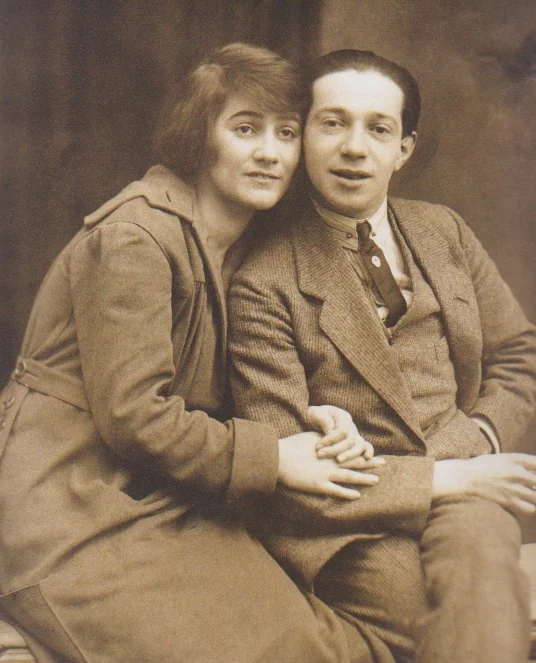
Image from Wikipedia
Image from Wikipedia
Friedrich Hollaender – The Elegant Cynic of the Weimar Stage and a Master of Cabaret Tone
An Artist Between Review, Film, and Exile
Friedrich Hollaender is one of the most influential voices in German-speaking entertainment culture of the 20th century. Born in London in 1896, the composer, cabaret artist, and lyricist grew up in a musical family, learned the piano at an early age, and developed a special confidence in improvisation as a child. His career took him from Berlin cabarets through the sound film of the Weimar Republic to Hollywood, and later back to Munich. ([de.wikipedia.org](https://de.wikipedia.org/wiki/Friedrich_Hollaender))
Early Influences: Music as Language, Stage as Home
Hollaender's artistic influence began in his parental home. His father, Victor Hollaender, was a composer and conductor, and the family moved to Berlin around the turn of the century, where Friedrich grew up in a vibrant city of theater and music. At the Stern Conservatory, he studied under Engelbert Humperdinck; in addition, he played the piano in cinemas at a young age, accompanying silent films with spontaneous musical creativity. This blend of classical training, theatrical practice, and urban sensibility later became the core of his distinctive style. ([deutsche-biographie.de](https://www.deutsche-biographie.de/dbo070055.html?language=en))
During World War I, Hollaender was in New York and Prague, and he spent the rest of the war directing a front theater on the Western Front. After 1918, he encountered authors and satirists in Berlin like Kurt Tucholsky, Klabund, Walter Mehring, and Joachim Ringelnatz, with whom he further refined cabaret as a literary-musical art form. In the cellar of Max Reinhardt's Großes Schauspielhaus, "Schall und Rauch" was created, an environment in which Hollaender could showcase his talent for punchlines, rhythm, and theatrical tension. ([de.wikipedia.org](https://de.wikipedia.org/wiki/Friedrich_Hollaender))
The Breakthrough in Berlin: Chanson, Revue, and Musical Irony
In the 1920s, Hollaender established himself as a composer and piano accompanist at Berlin cabaret theaters, including Trude Hesterberg's Wilder Bühne. He shaped the hybrid of cabaret and revue into a subtle form that later became known as "Revuette." Works like "Laterna Magica," "Hetärengespräche," or "Bei uns um die Gedächtniskirche rum" demonstrate how precisely he intertwined zeitgeist, humor, and urban observation. ([deutsche-biographie.de](https://www.deutsche-biographie.de/dbo070055.html?language=en))
Hollaender's ability to translate social tension into musical elegance was particularly important. For Claire Waldoff, he wrote the politically sharp couplet "Raus mit den Männern aus dem Reichstag" in 1926, and many of his chansons navigate a spectrum between satire, melancholy, and frivolous lightness. This balance made him one of the most intelligent songwriters of the Republic: never just funny, never just elegant, always with a quiet jab at current events. ([deutsche-biographie.de](https://www.deutsche-biographie.de/dbo070055.html?language=en))
The Blue Angel: The Moment a Cabaret Artist Became a Legend
The significant boost in popularity came in 1930 with the music for the Ufa film "Der blaue Engel." The song "Ich bin von Kopf bis Fuß auf Liebe eingestellt," sung by Marlene Dietrich, suddenly made Hollaender famous and became a cornerstone of German entertainment history. Titles like "Ich bin die fesche Lola," "Nimm dich in acht vor blonden Frau’n," and "Kinder, heut abend, da such ich mir was aus" permanently anchored his name in the cultural memory. ([de.wikipedia.org](https://de.wikipedia.org/wiki/Friedrich_Hollaender))
The success of the film opened further doors for him: in 1931, he founded his own stage, the Tingel-Tangel Theater, in the basement of the Theater des Westens in Berlin. There, he combined musical revue, pointed topicality, and confident stage presence into a style that fluctuated between entertainment and social observation. Hollaender was not only a composer but also the director of his own sound, an artist who intellectually charged the format of the variety revue. ([deutsche-biographie.de](https://www.deutsche-biographie.de/dbo070055.html?language=en))
Exile in Hollywood: Adaptation, Break, and New Film Career
In 1933, Hollaender was forced to leave Germany due to his Jewish heritage. After a stop in Paris, he moved to Hollywood in 1934, where he was to work for 20th Century Fox through the mediation of Erich Pommer. The American phase remained artistically ambivalent: Hollaender attempted to transfer his Tingel-Tangel principle to Los Angeles but faced language barriers and cultural differences. Nevertheless, he developed an extensive film portfolio in exile, composing music for dozens of films over the decades. ([deutsche-biographie.de](https://www.deutsche-biographie.de/dbo070055.html?language=en))
Some of his most notable works during this period include "Desire" by Frank Borzage, "Angel" by Ernst Lubitsch, as well as "A Foreign Affair" and "Sabrina" by Billy Wilder. These milestones show that Hollaender was not only a Berlin cabaret artist but also an internationally applicable film composer with a keen sense of atmosphere, milieu, and melodic clarity. His work in exile expands his profile from chansonnier to transatlantic film author. ([deutsche-biographie.de](https://www.deutsche-biographie.de/dbo070055.html?language=en))
Return to Germany and Later Years in Munich
After his return, Hollaender settled in Munich in 1955 and again worked for stage and film. His later works include the film music for "Das Spukschloss im Spessart" as well as revues for the cabaret "Kleine Freiheit" and the musical "Majestät macht Revolution." With this, he returned to a German post-war culture that reinterpreted his Weimar elegance and slowly rediscovered his work. ([klassika.info](https://www.klassika.info/Komponisten/Hollaender/lebenslauf_1.html))
In 1965, he published his autobiography "Von Kopf bis Fuß. Mein Leben mit Text und Musik," in which life and work read as closely intertwined artistic documents. In this late phase, Hollaender remains the chronicler of a vanished stage world, while also being a living witness to how cabaret, film, and chanson can create cultural continuity despite political fractures. His last years in Munich mark not an elegy, but the culmination of an extraordinary musician’s biography. ([klassika.info](https://www.klassika.info/Komponisten/Hollaender/lebenslauf_1.html))
Discography, Record Releases, and Literary Legacy
Hollaender's work is primarily passed down as stage, chanson, and film music, but the documented landscape of records and books is remarkable. The Wikipedia and Deutsche Biographie entries mention among others CD collections like "Bei uns um die Gedächtniskirche ’rum," "Vaführ mir liebers nicht," "Wenn ich mir was wünschen dürfte," and "… Ich bin von Kopf bis Fuss auf Musik eingestellt." These editions show how alive his material remains in the repertoire of singers and cabaret artists. ([de.wikipedia.org](https://de.wikipedia.org/wiki/Friedrich_Hollaender))
Some of his most significant written works include "Those Torn from Earth" from 1941, the autobiography "Von Kopf bis Fuß. Mein Leben mit Text und Musik," the chanson collections, and later books like "Ich starb an einem Dienstag." Thus, Hollaender was not only a composer but also an author, chronicler, and cultural observer. His work can be read as an intersection of literature, music, and temporal diagnosis. ([de.wikipedia.org](https://de.wikipedia.org/wiki/Friedrich_Hollaender))
Style and Musical Signature: Between Mockery, Elegance, and Melancholy
Friedrich Hollaender's style thrives on the pointed interplay between text and melody. His compositions combine cabaret sharpness with theatrical finesse, often propelled by danceable rhythms, ironic twists, and a melody that lingers immediately in the ear. In Hollaender's Berlin chansons from the 1920s and early 1930s, a sound language emerges that encapsulates urban modernity, sexual self-representation, and social observation in just a few bars. ([deutsche-biographie.de](https://www.deutsche-biographie.de/dbo070055.html?language=en))
Hollaender worked with a fine sense for arrangement and stage effect. He used the piano not only as an accompanying instrument but also as a commenting entity that responded to tone of voice, posture, and punchline. This resulted in a form of musical irony that elevated cabaret singing far beyond mere entertainment and remains a reference for sophisticated chanson writing to this day. ([klassika.info](https://www.klassika.info/Komponisten/Hollaender/lebenslauf_1.html))
Cultural Influence: Berlin, Hollywood, and the Aftermath of a European Original
Hollaender's cultural influence extends far beyond individual hits. He shaped the sound aesthetics of the Weimar revue, helped develop a literarily sophisticated form of cabaret, and left behind "Der blaue Engel," a song that became an international icon. At the same time, his Hollywood career shows how German exile culture influenced American film and left its marks there. ([deutsche-biographie.de](https://www.deutsche-biographie.de/dbo070055.html?language=en))
Later reception oscillates between forgetfulness and rediscovery. The Tagesspiegel describes his legacy as a work full of couplets, romances, and "Revuette," which was strong in its time and today appears primarily as an irretrievable blossoming of light muse. This is precisely where his fascination lies: Hollaender stands for a highly cultivated entertainment that brings wit, music, and contemporary history into a stylistically distinctive form. ([tagesspiegel.de](https://www.tagesspiegel.de/kultur/ein-leben-auf-der-achterbahn-4278037.html))
Conclusion: Why Friedrich Hollaender Remains Intriguing Today
Friedrich Hollaender is intriguing because he never viewed entertainment as mere distraction. His musical career speaks of an artist who connected cabaret, film, revue, and chanson with literary sharpness and musical elegance. Hearing his songs introduces one not only to a piece of music history but to an entire era with all its beauty, irony, and vulnerability. ([deutsche-biographie.de](https://www.deutsche-biographie.de/dbo070055.html?language=en))
Even decades after his death, Hollaender remains a benchmark for intelligent stage art. His songs are defined by attitude, precision, and charm; his film compositions still carry the aura of a composer who understood modernity early on. Those who cannot experience him live should consider his chansons, film hits, and recordings as an immediate invitation to rediscover the world of Berlin cabaret and European music theater. ([de.wikipedia.org](https://de.wikipedia.org/wiki/Friedrich_Hollaender))
Official Channels of Friedrich Hollaender:
- Instagram: No official profile found
- Facebook: No official profile found
- YouTube: No official profile found
- Spotify: No official profile found
- TikTok: No official profile found
Sources:
Upcoming Events
Jazz touché Friedrich Hollaender