
Franz von Lenbach
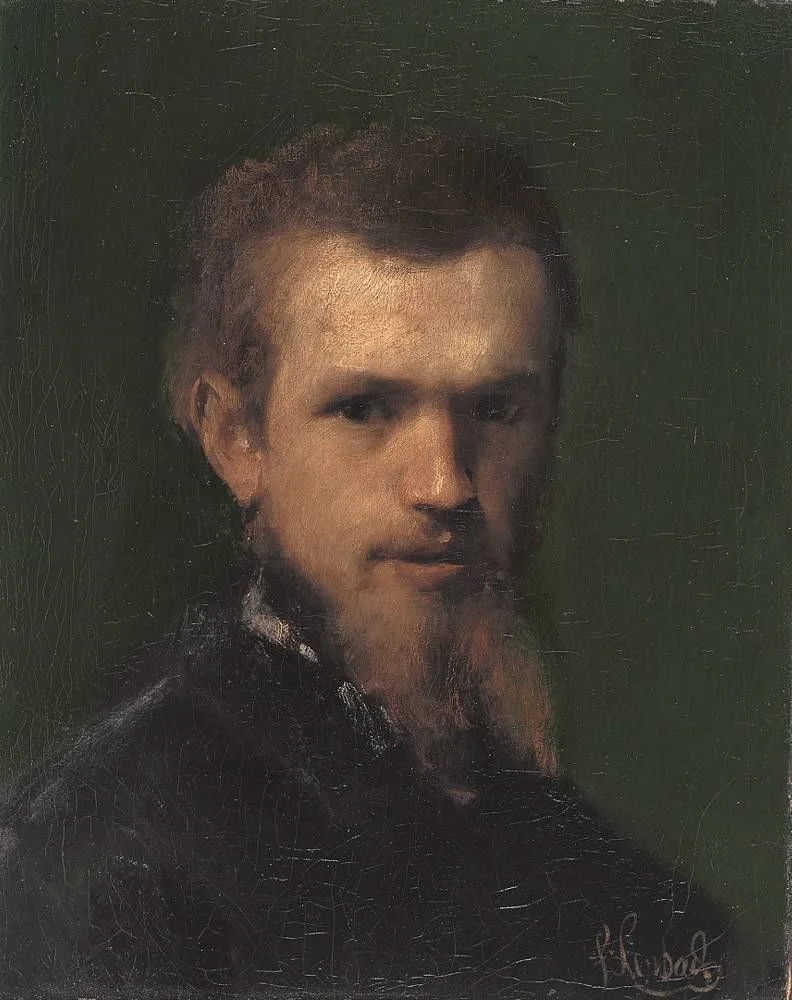
Image from Wikipedia
Image from Wikipedia
Franz von Lenbach – The Great Portrait Painter of 19th Century Germany
An Artist Between Society, Power, and Portrait
Franz Seraph Lenbach, knighted von Lenbach in 1882, shaped German art in the 19th century as one of the most famous portrait painters of his time. Born on December 13, 1836, in Schrobenhausen and died on May 6, 1904, in Munich, he rose from humble beginnings to become one of the most influential portrait artists in the German-speaking world. His name is synonymous with representative portrait art, societal self-confidence, and a visual language that staged power, rank, and personality with great assurance. ([deutsche-biographie.de](https://www.deutsche-biographie.de/sfz70494.html?utm_source=openai))
From Academic Foundation to Early Artistic Profile
Lenbach received his training in Munich and developed an artistic self-understanding at a young age that closely connected observation, technique, and stylistic precision. His apprenticeship under Carl Theodor von Piloty was particularly important, providing him not only with a solid academic foundation but also a sense of impact, lighting, and pictorial staging. Early in his work, he demonstrated a keen eye for character and the ability to make a person visible not just as a likeness but as a societal phenomenon. ([lenbachhaus.de](https://www.lenbachhaus.de/digital/sammlung-online/person/lenbach-franzvon-8413?utm_source=openai))
A trip to Italy in 1858 and later stays in Rome broadened his horizons and strengthened his affinity for plein air painting and Italian models. At the same time, Lenbach quickly evolved from a experimenting young painter to an artist with a clear specialization. This early connection of academic discipline and southern coloration is one of the foundations of his later successes. ([neumeister.com](https://www.neumeister.com/en/artwork-search/artist/6206/0/?utm_source=openai))
The Breakthrough as a Portrait Painter
The actual breakthrough came with the international art exhibition of 1869 at the Munich Glass Palace. From then on, Lenbach increasingly focused on portraiture, a genre in which he could fully develop his talent for psychological depth and representative effect. This decision provided a remarkable clarity to his career: Lenbach became a sought-after painter for the political, cultural, and social elite of his time. ([de.wikipedia.org](https://de.wikipedia.org/wiki/Franz_von_Lenbach?utm_source=openai))
Some of his most notable subjects include Otto von Bismarck, the German Emperors Wilhelm I and Wilhelm II, Emperor Franz Joseph of Austria, and Pope Leo XIII. Additionally, he portrayed numerous prominent figures from business, art, and society of the late 19th century. Lenbach's portraits thus became a visual archive of power that continues to influence how we conceive of the representation culture of the Empire today. ([de.wikipedia.org](https://de.wikipedia.org/wiki/Franz_von_Lenbach?utm_source=openai))
Social Ascent and the Myth of the "Painter Prince"
Lenbach's artistic success was accompanied by a remarkable social ascent. The Lenbachhaus biography describes how he appeared as a celebrated portrait painter from at least 1870, portraying himself as a cosmopolitan, virtuoso artist. This rise was also reflected in his lifestyle: he moved in the highest circles, maintained a dense network, and became a public figure himself. ([lenbachhaus.de](https://www.lenbachhaus.de/digital/sammlung-online/person/lenbach-franzvon-8413?utm_source=openai))
The public and art history referred to him as the "Munich Painter Prince." This term not only indicates wealth and prestige but also points to an almost aristocratic position of the artist in society. Lenbach thus embodied that rare combination of artistic authority, social visibility, and economic success that few painters of his era achieved. ([de.wikipedia.org](https://de.wikipedia.org/wiki/Franz_von_Lenbach?utm_source=openai))
Working Methods, Techniques, and Artistic Signature
Lenbach's style was based on a high level of characterization and a profound mastery of portrait techniques. Particularly in his pastels, his ability to capture an initial impression quickly and accurately can be seen; he often worked on cardboard known as "Lenbach paper" and also used photography as a tool. This approach reveals an artist who did not play tradition and modernity off against each other but combined them productively. ([deutsche-biographie.de](https://www.deutsche-biographie.de/sfz70494.html?utm_source=openai))
The connection of studio practice and staged visual effect also belongs to his signature style. Lenbach employed a visual language that conveys dignity, concentration, and rank without slipping into mere smoothness. Especially in the monumental portraits of his political and cultural patrons, his ability to formulate the individual as a historical phenomenon is evident. ([deutsche-biographie.de](https://www.deutsche-biographie.de/sfz70494.html?utm_source=openai))
Style, Influences, and Artistic Network
Lenbach was closely connected to important figures in the Munich and international art world. His friends included Hans Makart, Friedrich August von Kaulbach, the couple Cosima and Richard Wagner, Paul Heyse, as well as sculptors Lorenz Gedon and Reinhold Begas. This network illustrates how deeply Lenbach was embedded in the cultural center of his time and how his art emerged from a milieu of music, literature, architecture, and representation. ([lenbachhaus.de](https://www.lenbachhaus.de/digital/sammlung-online/person/lenbach-franzvon-8413?utm_source=openai))
His career in Vienna and Rome, stays in Spain, Egypt, and Greece, as well as his proximity to Arnold Böcklin and Hans Makart sharpened his perception of European artistic currents. Nevertheless, Lenbach remained strongest in portraiture and developed that old masterly attitude for which he became famous. His work stands at the intersection of academic tradition, international experience, and the stylistic ambitions of the Gründerzeit. ([deutsche-biographie.de](https://www.deutsche-biographie.de/sfz70494.html?utm_source=openai))
Lenbach's Cultural Influence Until Today
Lenbach's significance extends far beyond individual paintings. With his villa and studio in Munich, he left behind not only an artistic but also a city historical legacy; his former residence later became the Lenbachhaus, one of Munich's most renowned art museums. The fact that his name is still associated with a museum demonstrates the lasting impact of his personality on the German art landscape. ([lenbachhaus.de](https://www.lenbachhaus.de/en/museum/collection/franz-von-lenbach?utm_source=openai))
His portraits continue to shape the image of the late 19th century and are regarded as visual documents of an era when art, politics, and society were closely intertwined. Lenbach remains compelling because he did not merely portray but actively shaped representation itself. Anyone who views his works experiences not just painting but a staging of an entire era. ([de.wikipedia.org](https://de.wikipedia.org/wiki/Franz_von_Lenbach?utm_source=openai))
Conclusion: Why Franz von Lenbach Continues to Fascinate Today
Franz von Lenbach is among the most seminal German artists of the 19th century because he united virtuosity, social presence, and psychological portrait art in a rare balance. His images narrate power, taste, and cultural self-presentation, while also depicting an artist who understood his role early on and consistently developed it. Anyone who wishes to understand the art of the Empire cannot overlook Lenbach. ([deutsche-biographie.de](https://www.deutsche-biographie.de/sfz70494.html?utm_source=openai))
His work remains alive because it shows not only historical personalities but also the entire spectrum of fame, style, and identity. A visit to his works is worthwhile for anyone who wants to experience portrait painting as an art of presence. Lenbach's images belong on the list of those works that one not only looks at but seeks out with respect and curiosity. ([lenbachhaus.de](https://www.lenbachhaus.de/en/museum/collection/franz-von-lenbach?utm_source=openai))
Official Channels of Franz von Lenbach:
- Instagram: No official profile found
- Facebook: No official profile found
- YouTube: No official profile found
- Spotify: No official profile found
- TikTok: No official profile found
Sources:
- Wikipedia – Franz von Lenbach
- German Biography – Lenbach, Franz Ritter von
- Lenbachhaus – Franz von Lenbach (1836–1904)
- Lenbachhaus – Collection: Franz von Lenbach
- BR Culture – Franz von Lenbach: From Sun Fanatic to Painter Star
- NEUMEISTER – Artist Biography: Franz von Lenbach
- Wikipedia: Image and text source