
Erich Erler
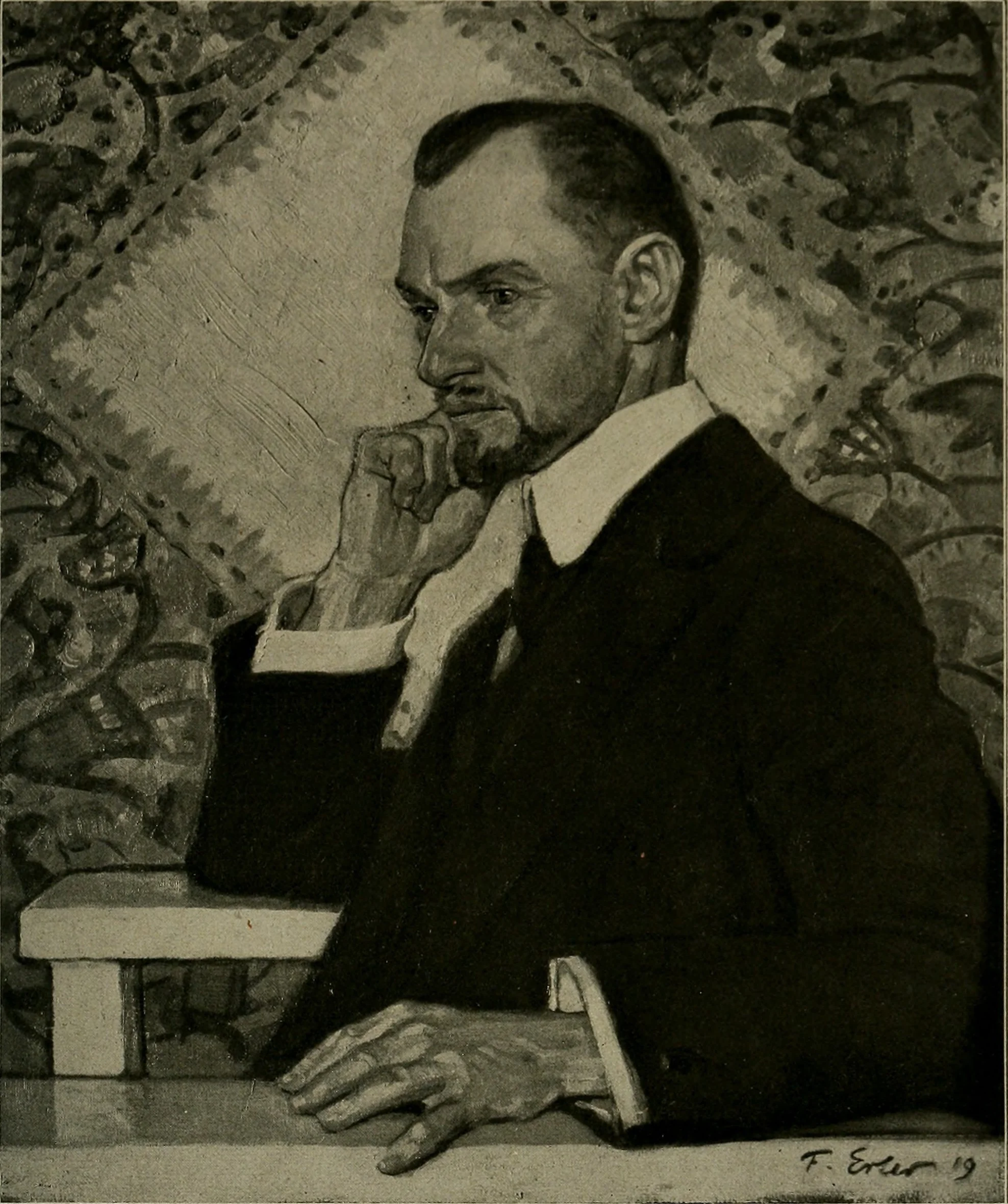
Image from Wikipedia
Image from Wikipedia
Erich Erler: The Quiet Master of the Munich School Between Mountains, Light, and Melancholy
An Artist's Life Between Soil, Longing, and Winter Vastness
Erich Erler, also known as Erich Erler-Samaden, belongs to that generation of German painters who around 1900 developed a distinctive visual language between tradition and innovation. Born on December 16, 1870, in Frankenstein in Silesia and died on June 19, 1946, in Icking in the Isar Valley, he was a representative of the Munich School and simultaneously a prominent contributor to the weekly magazine Die Jugend. His career combines a craftsman background, artistic self-assertion, and a visual world especially shaped by landscapes, mountains, and snow.
Erler does not stand in the glaring spotlight of art history, but rather in its subtle, atmospheric zone. This is precisely where his fascination lies: He worked in the spirit of a time when painting was not only representation but also mood, observation, and cultural attitude. His work shows how an artist, with belated recognition yet great consistency, develops a unique signature.
Background and Early Influences
Erich Erler was born as the younger brother of the painter Fritz Erler, who had early access to art school. In contrast, Erich initially learned the profession of a printer before embarking on the path of art. This craft background shaped his sensitivity to material, form, and precision, which remains evident in his later paintings.
Around 1896, he spent time in Paris, where he continued to develop artistically. The move to the French art metropolis marked an important turning point: he distanced himself from purely craft-based training and approached a freer, more modern conception of image and composition. This phase began to outline his later style, which relied on nature observation and atmospheric condensation.
The Turning Point in Samaden: Illness, Withdrawal, and New Visual Language
A tuberculosis illness forced Erler to take a cure in the Engadine, in Samedan. This stay was crucial for his artistic development. He derived the name addition Samaden from this place, and here he began to work with tempera paints. The health crisis thus became an aesthetic reorientation, from which an independent, calm, and simultaneously intense painting style emerged.
With his images of mountains and snowy landscapes, Erler-Samaden quickly gained recognition. The Munich Pinakothek purchased a painting from him in 1902, and he received a gold medal for one of his works. Such successes demonstrate that his painting not only convinced personally but also held weight in the art criticism environment of the time. The combination of natural experience, fine tonality, and formal clarity made his works attractive to collectors and museums.
Munich, Die Scholle, and the Art Scene at the Turn of the Century
Around 1900, Erler lived in Munich, established a studio on Türkenstraße, and became a member of the artist group Die Scholle. As early as 1901, he exhibited with this association in the Glass Palace. Die Scholle was not a loud programmatic school but a loose community of painters dedicated to modern landscape and figure painting, giving the Munich art scene a distinct, cultivated signature.
Erler was thus part of a network of significant artists who worked in Munich between Art Nouveau, Impressionism, and Symbolist nature experience. His work fits into that Munich modernity that did not rely on radical breaks but on refined nuances. That is exactly where the strength of his painting lies: it is observational, poetic, and technically controlled, without ever appearing academically rigid.
Die Jugend, Graphics, and Proximity to Applied Arts
In addition to painting, Erich Erler collaborated with the weekly magazine Die Jugend, a central organ of the cultural awakening around the turn of the century. This involvement points to his proximity to graphics and to an understanding of art that did not limit visual culture to the canvas. The connection of painting, printmaking, and magazine aesthetics aligns with an era in which visual modernity emerged simultaneously in many media.
His background as a printer gained additional significance here. Erler maneuvered not only in fine arts but also in the field of applied design, where clear lines, image rhythm, and reproducible formats were important. This dual anchoring made him an artist who was present both in the studio and in the public domain.
War Painter, Honorary Professor, and Later Years
In 1914, despite his tuberculosis illness, Erler volunteered as a war painter for military service. The experience of war profoundly shook him and flowed into graphic cycles such as Krieg from 1915 to 1916. This section of his biography reveals a darker, more serious phase of work in which historical experience and artistic processing are inextricably linked.
In 1916, the Bavarian King appointed him as an honorary professor. After the war, he retreated to Icking in the Isar Valley and worked as a farmer for a time. From 1921, he resumed his role as a professor in Munich. In the 1920s, he was a board member of the artist association Die Türmer and a member of the German Artists' Association Weimar. These positions document his ongoing presence in the art scene despite personal and historical upheavals.
Exhibitions, Recognition, and Art Historical Classification
Erich Erler participated in numerous exhibitions, including the Berlin Secession as well as art shows in Dresden and Düsseldorf. Between 1938 and 1944, he was also represented in the Great German Art Exhibition at the House of German Art in Munich. In August 1944, he was included in the so-called Gottbegnadeten list. These biographical markers document his integration into various institutional contexts of German art history.
Art historically, Erler is counted among those painters whose work is characterized by a peculiar blend of tradition and modernity. The proximity to the Munich School, the connection to Die Scholle, and the focus on landscape, snow, and mountain motifs indicate an artist who convinces not through spectacular stylistic breaks but through formal refinement. His images speak the language of stillness, atmosphere, and precise observation.
Discography of the Canvas: Motifs, Themes, and Artistic Signature
Erich Erler does not have a musical discography in the narrow sense. His “body of work” consists of motifs, series, and thematic focuses that can be read like a visual biography. Particularly striking are his depictions of mountains, snowy landscapes, and natural moods, in which he arranges light, surface, and atmosphere with great sensitivity.
The early influences of Giovanni Segantini, initially evident in his style, dissolved over the course of his development in favor of a freer painting technique. Tempera became an essential medium for him to capture the cool brightness of alpine landscapes and the concentration of winter spaces. It is precisely here that his artistic maturity manifests: not the motif alone, but the condensation of mood and structure makes his pictures unmistakable.
Cultural Influence and Legacy
Erich Erler is among those artists who helped shape the visual memory of Munich Modernity, even though they are less frequently in the center of public attention today. His work connects the spirit of Die Scholle with the sensitive nature perception of the time around 1900 and with a personal signature that emerged from illness, withdrawal, and observation. It is precisely in this blend of biography and visual language that his cultural significance lies.
For collectors, museums, and art historians, Erler remains intriguing because he embodies the subtle tones of German painting from the late 19th and early 20th centuries. His career tells of recognition without loudness, of professionalism without pretense, and of landscape painting that is much more than mere natural depiction. Those who view his works encounter an art that simultaneously evokes distance and closeness.
Conclusion: Why Erich Erler Remains Fascinating Today
Erich Erler is an artist for those who seek not only spectacle in art but also condensed mood. His life spans from Silesia to Paris and Munich to the Isar Valley; his work transitions from printmaking to tempera painting, from the magazine Die Jugend to the quiet authority of alpine landscapes. Those who look at his pictures see a painter who has created a distinct form of beauty from illness, change, and observation.
That is why engaging with Erich Erler is worthwhile: he demonstrates how strongly an artistic signature emerges from attitude, patience, and precision. His pictures invite not for a quick glance but for lingering. Those who wish to experience his art should study it carefully and encounter it in the original wherever possible.
Official Channels of Erich Erler:
- Instagram: No official profile found
- Facebook: No official profile found
- YouTube: No official profile found
- Spotify: No official profile found
- TikTok: No official profile found