The History of Lake Ammersee in 10 Stations
Discover Ammersee in the Future: 10 Stations Where You Can Experience the Region's History On Site
This route is intended as a preview for your next visits to Lake Ammersee: ten stations where you can vividly discover natural and cultural history through viewpoints, themed trails, museums, church spaces, promenades, events, and shipping.
How These "10 Stations" Work
Instead of a retrospective, this article is intended as a plan for your upcoming excursions. Each station describes what you can do on site in the future and where you can get reliable information about the history of the Ammersee region—via information boards, guided tours, museums, church spaces, local archives, protected area notices, and official websites.
- Time Horizon: Everything is formulated as a future activity (your next walk, your next guided tour, your next visit).
- Reliability: Where historical or natural classification is important, official or expert sources are referenced (see Sources).
- Nature Compatibility: Especially in shore and wetland areas, it is worthwhile in the future to pay attention to path rules and protected area signs.
1) Start at the South Shore: Learning to "Read" the Landscape
If you start at the south shore in the future, you can deliberately focus your gaze on shapes in the landscape: slope edges, shallow depressions, shoreline lines, and the transitions between forest, meadow, and water. Especially on quiet days, you will more easily notice differences in soil moisture, vegetation, and sightlines.
For a sound classification, it is worthwhile to use maps and information material in advance in the future (e.g., official environmental and geodata services). This turns a walk into a small "landscape reading" without having to guess on site.
2) Ammer Inflow: Consciously Perceiving Waterways
On your next visit to the Ammer inflow, you can observe how a river shapes the lake: current, turbidity, reed belts, and the alternation between quiet bays and open water. In the future, take time for a short break at a well-accessible viewpoint—not in the middle of the shore vegetation, but from paths or platforms.
If you want to know more, you can consult official water and protected area information in the future. This helps you to better classify observations (e.g., water level, vegetation zones)—without speculative explanations.
3) Shore and Wetlands: Nature Tours Instead of Shortcuts
In shore and wetland zones, you will be able to learn a lot about natural history in the future—and at the same time, consideration is most important there. Plan your next tour so that you stay on marked paths and do not enter sensitive areas.
If guided tours are offered on site (e.g., by nature conservation associations, municipalities, or nature parks), they are ideal for your upcoming visits: You get reliable knowledge about habitats, seasonal rules, and observation opportunities without affecting animal or plant areas.
- For your next tour: Bring binoculars, stay quiet, keep your distance from breeding and reed zones.
- If in doubt, follow the protected area signs in the future and respect barriers.
4) High Trail on the East Shore: Sightlines to the Lake
If you choose a high trail on the east shore in the future, you will get the best overview: shorelines, villages, forest-field mosaic, and the "big shape" of the lake area. Such perspectives help you to understand the region as a coherent cultural landscape.
For your next hike, it is worthwhile to consciously head for viewpoints and pause there briefly. This way, the view over the lake becomes an orientation aid: Where are settlement bands? Where does the open shore begin? Where do natural shore sections dominate?
5) Themed Trail on Early Settlement: Finding Traces Without Disturbing
If you use a themed trail on early settlement in the future (e.g., with information boards, local circular route, or archaeologically oriented stations), you can absorb history where it is conveyed: at official notices, museum offers, or guided tours.
For your next steps: Make sure not to look for "traces" yourself (e.g., digging in embankments or moving stones). Archaeology works best in the region through documentation, mediation, and protection—and that's exactly what you can actively support as a visitor.
6) Pilgrimage Routes & Andechs: Change of Perspective Between Lake and Hill
On your next excursion to a hill and a spiritual place (e.g., monastery or chapel rooms, wayside crosses, quiet forest sections), you can experience the region at a different pace: less "route," more "way." In the future, plan enough time not only to arrive, but also to consciously walk the in-between space.
For reliable classification, you can use official information from the respective institutions in the future (opening hours, notes on services, rules of conduct). This way, you respect the character of the place and avoid misconceptions.
7) Promenades (Schondorf/Herrsching/Utting): History in Everyday Life
If you walk along promenades and lakeside paths in the future, you will notice: Here, history is not only told but lived—as a mix of recreation, mobility, encounters, and local traditions. Take time on your next visit to read the details: boards, monuments, references to previous uses, names of jetties or squares.
For an informed view, you can also consult the websites of the municipalities or local museum and archive offers in the future. This way, observations (building forms, shore design, usage priorities) can be better classified without relying on hearsay.
8) Shipping: Connecting Places, Understanding the Region
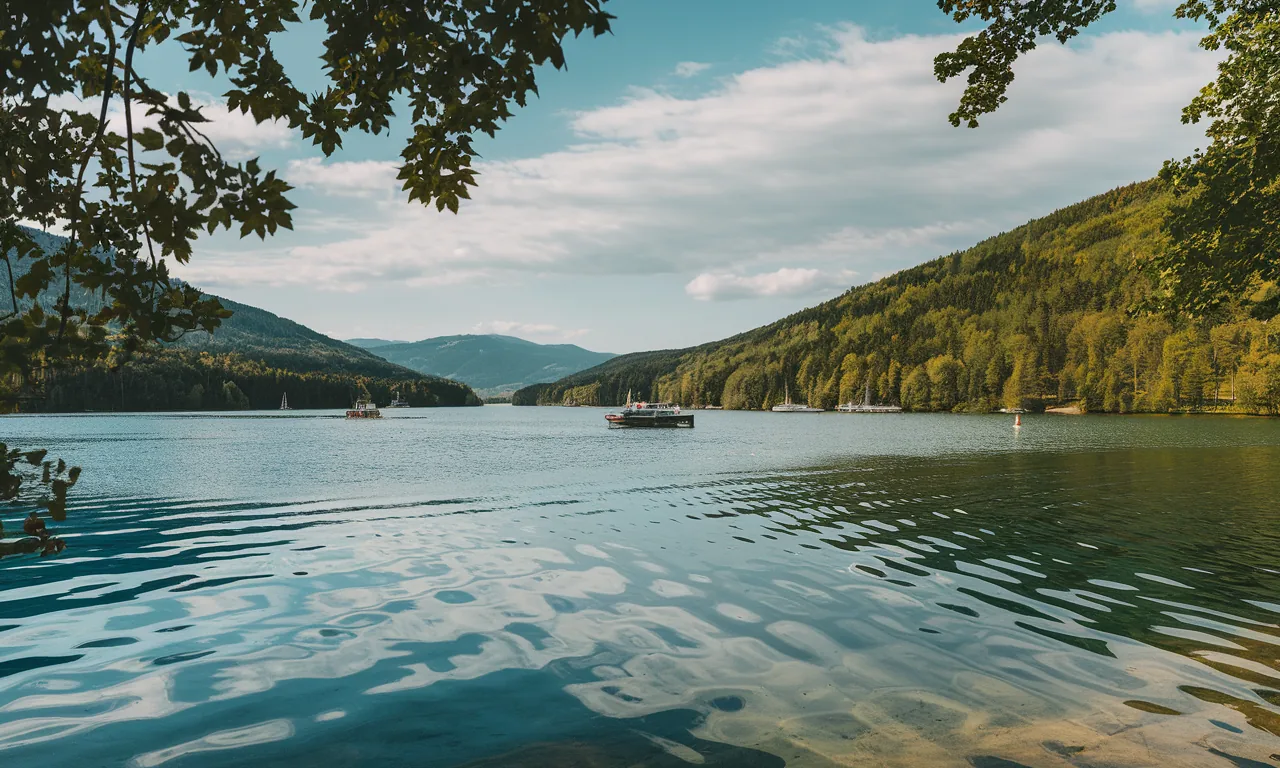
On your next trip with a scheduled ship, you can experience Lake Ammersee as a "connecting space": From the water, distances, shore shapes, and village locations appear differently than on foot. This makes shipping a very vivid way to understand the region in the future.
For your planning, it is advisable to check the official timetable and notes on seasonal operating times in the future. This way, you can realistically and stress-free plan your day (e.g., hiking stage + return trip).
9) Readings & Culture by the Water: Words for the Lake
If you attend cultural events at or near the lake in the future—readings, small stage formats, concerts, or exhibitions—you can perceive the region anew through stories, memories, and current topics. Such events often give you access that pure facts cannot provide: atmosphere, imagery, local perspectives.
For your next dates, it is worthwhile to keep an eye on program pages of cultural initiatives, libraries, adult education centers, or event venues in the lake communities. This way, you will find formats that fit your travel time.
10) Town Tours & Anniversary Formats: Local Knowledge Firsthand
If you book a town tour or attend a locally curated anniversary or themed format in the future, you will get history firsthand: from people who manage, collect, research, and convey places. This is especially helpful if you not only want to "see" but also "understand."
For your next visits: Look out for offers from municipalities, local heritage associations, museums, and tourist information offices. Such formats are often well suited to ask questions and get reliable references to further sources.
Conclusion: Your Next Steps at Lake Ammersee
If you consciously explore Lake Ammersee in the future, you can experience history and the present together—without having to rely on assumptions. The key is the combination of on-site observation (paths, views, shore zones, town spaces) and reliable classification (guided tours, museums, official information, official programs).
This way, every next tour becomes a journey of discovery: calm, respectful towards nature and places—and at the same time rich in context.
Sources (Selection)
- Bavarian State Office for the Environment (LfU) — Environmental, water, and nature conservation information (accessed 2026-04-22)
- Bavarian State Office for Monument Preservation (BLfD) — Information on monuments and archaeological topics in Bavaria (accessed 2026-04-22)
- Bavarian Lake Shipping — Timetables and information on shipping on Bavarian lakes (accessed 2026-04-22)
- Andechs Monastery (official website) — Information on visits, services, and events (accessed 2026-04-22)
- Federal Agency for Nature Conservation (BfN) — Background knowledge on nature conservation and protected areas in Germany (accessed 2026-04-22)