
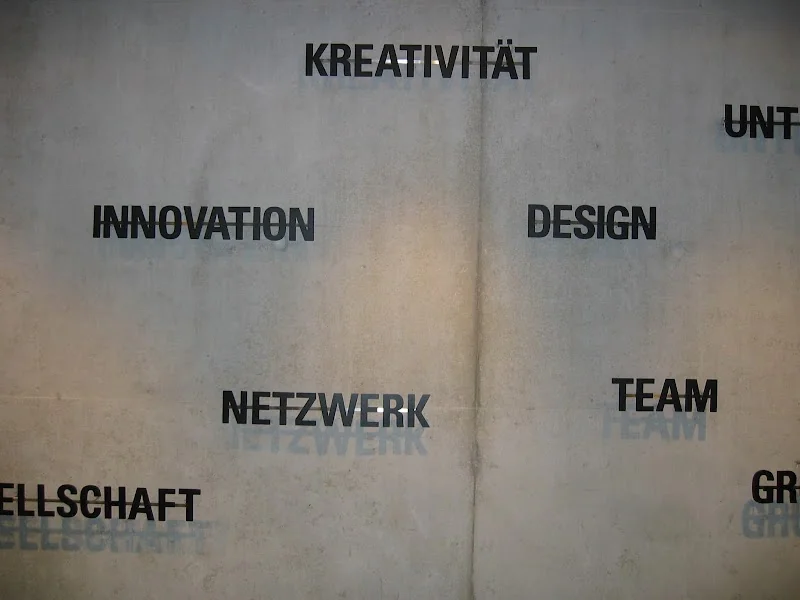
Entrepreneurship-Center der Hochschule München, Heßstraße 89, München
Entrepreneurship-Center der Hochschule München, Heßstraße 89, 80797 München, Germany
Strascheg Center for Entrepreneurship | Reviews & Events
The Strascheg Center for Entrepreneurship, or SCE, is much more than just an address in Munich. As the entrepreneurship center of Munich University of Applied Sciences, it combines education, research, startup support, and community work in a place focused on entrepreneurial thinking and practical implementation. On the official website, the SCE describes itself as a center that supports startups, promotes innovation processes, and accompanies young companies from idea development to marketable innovation. At the same time, it sees itself as an open place for students, founders, companies, and anyone who wants to work with new ideas. This mix of proximity to academia, networking power, and concrete startup support is a central reason why the SCE is so frequently sought after in Munich. It is not just a space for events, but a place where formats, programs, workspaces, and contacts converge. Additionally, its location at Heßstraße 89, in close proximity to Munich University, makes the SCE easily accessible for both campus audiences and external guests. The combination of entrepreneurship, events, incubator, creative hall, and international network makes the location particularly relevant for searches related to reviews, events, startup support, and directions. ([sce.de](https://www.sce.de/en/inside-sce.html))
Reviews for the Strascheg Center for Entrepreneurship SCE
Those looking for reviews of the Strascheg Center for Entrepreneurship often expect a classic event location with ratings on service, accessibility, or atmosphere. The picture at the SCE is somewhat different, as it is not a pure event venue but rather a university-affiliated entrepreneurship center with many functions at once. The existing feedback from users is quite clear: international boot camps, exciting insights into entrepreneurship and design thinking, as well as a friendly, competent team and a diverse range of offerings are praised. At the same time, there are occasional critical notes that the telephone accessibility is not always optimal. This mix is typical for an institution that bundles many consulting, teaching, and networking tasks. For interested parties, it is important to understand that the SCE is evaluated more on content quality, community benefit, and startup relevance than on classic event comfort. Therefore, those reading reviews should look less for concert hall logic and more for reports on boot camps, workshops, mentoring, startup support, and personal exchange. The SCE itself describes its mission as responsibility-oriented and co-creative: it aims to promote an innovation culture, develop entrepreneurial thinking individuals, and support startups. Thus, the positive feedback from the reviews aligns very well with the institution's self-understanding. For the search intent around reviews, the SCE is particularly interesting because here not only a place is evaluated, but a whole ecosystem of learning, founding, and networking. ([sce.de](https://www.sce.de/en/inside-sce.html))
The structure of the website also shows why the SCE is often perceived in reviews and search results more as a workspace and innovation hub. Among the offerings, education, startup programs, research, partner offerings, and international programs stand equally side by side. This means that those visiting the SCE do not experience an isolated individual event, but usually a component in a longer founding or learning journey. This is where many users find added value. A boot camp, an innovation café, a pitch format, or a co-founder matching is not just an event, but an entry into further discussions, funding opportunities, and networks. For reviews, this results in a nuanced picture: strengths lie in professional depth, international exchange, and support for young ideas; weaknesses appear where such an organizational framework naturally functions less like a classic ticket operation and more like a vibrant work environment. Those who understand this interpret the existing reviews more realistically. The SCE is not a sterile conference center, but a place where knowledge, projects, and startup mentality meet. This role also explains why individual visitors tend to emphasize the content quality of the programs rather than the external infrastructure. ([sce.de](https://www.sce.de/inside-sce/sce-vision-mission.html))
AI+MUNICH Demo Night and Events with Startup Focus
A particularly strong keyword around the SCE is the AI Munich Demo Night, as it directly connects the event page of the house with a current field of innovation. On the official SCE page, the AI+MUNICH Demo Night is presented as an evening where early AI startup teams showcase their prototypes and product demos, network with other founders, and meet potential co-founders. The event is thus aimed not only at spectators but especially at people who are actively involved in the AI startup ecosystem or want to get involved. It is highlighted that the teams come from a funded batch and that it concerns early stages of founding where feedback, contacts, and visibility are crucial. This is exactly where the SCE fits very well: as an entrepreneurship center focused on innovation and co-creation, it provides the space where such events make substantive sense. The Demo Night is therefore not an isolated marketing format but an example of the type of community event that the SCE represents. Those searching for the keyword usually want to know if it is worth attending and whether real startup development takes place there. The answer is clearly yes: the format is geared towards real products, teams, and networking and reflects the role of the SCE as a bridge between academia, founding, and the regional AI ecosystem. ([sce.de](https://www.sce.de/news-details/ai-munich-demo-night-on-september-25th.html))
Furthermore, the website shows that events at the SCE do not just take place sporadically but are a fixed part of the offerings. The homepage states that the current dates are mostly free and that one can find workshops, events, and deadlines for the pre-accelerator environment there. This is an important note for visitors who are not just looking for a single evening event but a place with ongoing programming. The SCE does not think of events merely as renting out spaces but as part of a learning and support process. Therefore, topics like Toastmasters, AI webinars, co-founder matching, or boot camps appear regularly. For the location, this means that the event culture is strongly oriented towards practice, exchange, and development. This is also why search queries with terms like program, event, demo night, or workshop fit so well with the SCE. Those interested in innovations with impact will not find a mass event here but an environment that gives early ideas space and brings people into conversation. Particularly valuable is the close integration with Munich University, partners in the Munich ecosystem, and international networks. Thus, a single event becomes a building block in a significantly larger founding architecture. ([sce.de](https://www.sce.de/))
Startup Support, Incubator, and Startup Guidance
When seekers look for startup support in Munich or an incubator, the SCE is one of the most important addresses in the academic environment. On the official infrastructure page, the incubator is described as a workspace of over 700 m², of which around 200 m² is used as a co-working area. This is complemented by individual team rooms, a free-to-use meeting room, projectors, presentation screens, mobile whiteboards, flip charts, pinboards, and a kitchen. This equipment is not only practical but also clearly shows how the SCE organizes work: it is about collaborative development, visible ideas, and an environment where teams can inspire each other. The incubator is a central workplace for supported startups, meaning teams that are already a step further than just the initial idea sketch. At the same time, usage is tied to coordination with the startup support, which shows that structured and targeted work is being done here. For founders, this is particularly attractive because it is not just about space but about support, connection to funding logics, and access to a real network. ([sce.de](https://www.sce.de/inside-sce/infrastruktur/inkubator.html))
The SCE describes its mission as offering educational and research programs in the field of entrepreneurship, promoting innovation processes, and supporting the development of entrepreneurial personalities. It also accompanies startups from academia and young companies from idea to marketable innovation. This path is reflected in the structure of offerings, events, and infrastructure. Those working at the SCE should not only receive a desk but also access to mentoring, peer learning, exchange with experts, and an environment where co-creation is explicitly encouraged. For the keyword-relevant topics of startup support, incubator, and startup promotion, this is a strong signal. The center is explicitly aimed at students, founders, and companies. These target groups are not mentioned by chance but shape the entire structure: students learn entrepreneurial thinking, founders receive support for market entry, and companies find points of connection for innovation projects or collaborations. The SCE thus positions itself as a hinge between theory and practice, between academia and business, and between initial ideas and scalable solutions. Therefore, anyone looking for a place for sustainable startup support in Munich will find a clearly structured ecosystem here. ([sce.de](https://www.sce.de/en/inside-sce.html))
Steelcase Creative Hall and Workspaces at Heßstraße 89
A central feature of the location is the Steelcase Creative Hall. According to the SCE, it is an open space for anyone who wants to work, study, or be creative. It was set up by Steelcase and offers modern, flexibly adjustable workspaces. It is also stated that most SCE events take place there. Thus, the Creative Hall becomes much more than a lounge: it is a stage, workspace, meeting point, and informal encounter space in one. For visitors, this is an important practical note because many events and exchange formats take place precisely where creative work and community building intersect. The hall is open to access, aims to enable focused work, and simultaneously promotes spontaneous encounters. Such spaces are particularly valuable for an entrepreneurship center because startup ideas often emerge where one can easily engage in conversation and quickly receive feedback. The SCE makes this approach very visible by communicating the space not as a closed hall but as open infrastructure. Thus, the Creative Hall corresponds exactly to the image that many have of the SCE: a place where not only content is conveyed but where collaboration is actively made possible. ([sce.de](https://www.sce.de/inside-sce/infrastruktur/steelcase-creative-hall.html))
The usage times also show that the Creative Hall is intentionally designed as a flexible and vibrant space. It is open Monday to Friday from 09:00 to 21:30, and during semester breaks from 09:00 to 17:00. Additionally, the SCE points out that a booking plan is important because the hall is heavily used. For event enthusiasts, founders, and students, this is relevant because one can plan in advance whether to choose a quieter working time or an evening with an event. The Creative Hall is located in the SCE building at Heßstraße 89 and is thus directly connected to the university campus. Especially in combination with the incubator, this creates a spatial continuum: open encounters in the Creative Hall, focused project work in the incubator, along with lectures, workshops, and events as connecting elements. This structure is a good example of how the SCE thinks about its spaces functionally. It is not about representative architecture for its own sake but about a workspace that concretely supports innovation. Therefore, anyone searching for seating plans, rooms, meeting spaces, or event locations will find a clear, practical infrastructure here. ([sce.de](https://www.sce.de/inside-sce/infrastruktur/steelcase-creative-hall.html))
Directions, Location, and Practical Orientation in Munich
For the search intent around directions and parking, the precise location of the SCE is particularly important. The address is Heßstraße 89, 80797 Munich, and the center is closely connected to Munich University of Applied Sciences. On the contact and directions page, the SCE describes several ways to arrive by public transport. From the main train station, one can take tram lines 20, 21, or 22 to the Hochschule München (Lothstraße) stop. From there, it is just a few minutes on foot via Lothstraße and Heßstraße. Those coming by subway can use the U2 to Theresienstraße or the U1 to Stiglmaierplatz and then walk to house number 89. Additionally, the arrival from the airport is also described: from there, one takes the S-Bahn S1 or S8 to the main train station and then follows the described tram route. For visitors, this is a strong plus because the location is well accessible by public transport in Munich. The website thus provides clear orientation even before the first visit, making planning easier. ([sce.de](https://www.sce.de/en/inside-sce/contact-directions.html))
It is also practical that the SCE makes its availability and contact methods transparent. The page displays opening hours from 08:00 to 20:00, and it is also noted that the Creative Hall is heavily used and a booking plan should be observed. Therefore, anyone wanting to attend an event, keep an appointment, or simply get to know the infrastructure should check in advance how the rooms are booked. The location at the university campus also facilitates orientation for guests arriving from the Munich metropolitan area or the airport. Even though the SCE is not a classic event house with a large parking logic, access can be very well organized through public transport. This is particularly important for many users today, more so than a large parking lot right outside the door. The central location combined with good tram and subway connections fits well with the profile of the house: urban, campus-close, networked, and designed for exchange. Therefore, anyone searching for directions, address, or practical directions will find a clear and well-documented guide at the SCE. ([sce.de](https://www.sce.de/en/inside-sce/contact-directions.html))
History, Mission, and Self-Understanding of the SCE
The Strascheg Center for Entrepreneurship was founded in 2002 by Prof. Dr. h. c. Falk F. Strascheg at Munich University of Applied Sciences. This historical context is important because it explains why the SCE is so strongly anchored in the academic landscape today. The name of the center goes directly back to the founder, who has supported the center since its inception. In content, the SCE describes itself as a thought leader, enabler, and pathfinder for an entrepreneurial-oriented and livable society. Its vision is Responsible Entrepreneurship. This entails the claim to understand entrepreneurship not only as an economic activity but as responsible shaping of the future. The guiding principles of the center emphasize, among other things, a university-wide and cross-university innovation culture, entrepreneurial-minded individuals, founding as a desirable and feasible future option, and impulses through research. This is not just an image formula but shapes the structure of the entire offering. Therefore, those entering the SCE encounter a self-understanding that integrates education, research, practice, and social responsibility. This mix makes the location particularly interesting for search queries related to innovation, entrepreneurship, and impact. ([sce.de](https://www.sce.de/inside-sce/sce-vision-mission.html))
The SCE also emphasizes that it promotes entrepreneurial activities in close collaboration with Munich University of Applied Sciences and supports students, professors, and alumni in realizing their own ideas. At the same time, it sees itself as an internationally networked center with partners from science, business, and other ecosystems. The website clearly shows that the SCE does not only operate locally but is integrated into regional and international networks, such as through the Munich Innovation Ecosystem, AI+Munich, and Start for Future. This networking is an important part of the brand and also a reason why search terms like impact, innovation, and entrepreneurship fit so well. The SCE does not simply want to promote individual startups but create an environment where ideas become sustainable projects and projects become viable companies. In this sense, the center is not just a location but an infrastructure for shaping the future. The combination of research, community, startup support, and social responsibility sets it apart from many other places. Therefore, the SCE is also exciting for users who are not just looking for an address but a credible ecosystem with real substance. ([sce.de](https://www.sce.de/inside-sce/sce-vision-mission.html))
APE, Internationalization, and the Network Behind It
Another important search term is the Academic Program for Entrepreneurship, or APE. This program was launched by the SCE in 2008 and offers an entrepreneurship certificate program at Munich University of Applied Sciences and the SCE as additional qualification in entrepreneurship and innovation. According to the official description, it is aimed at professionals and students from all universities. This is noteworthy because it shows that the SCE is not exclusively limited to HM-internal target groups. It consciously opens itself up to a broader audience that wants to engage with founding, innovation, and entrepreneurial thinking. For SEO research, this is an important point because search queries related to further education, certificates, and entrepreneurship programs can lead directly to the SCE. The APE stands for the educational core of the house: not just startup support in the narrow sense but competence building, methodological learning, and practical qualification. In the combination of certificate program, boot camps, workshops, and startup programs, it becomes clear that the SCE offers a complete learning chain that ranges from inspiration to implementation. ([sce.de](https://www.sce.de/en/non-curricular-programs/academic-program-for-entrepreneurship.html))
The international orientation is also a central feature. The SCE describes itself as well-networked internationally and supports startups from academia as well as young companies on their way to marketable innovation. In the APE International Bootcamp, students from various universities and countries come together to work in interdisciplinary teams on real challenges. Methods such as design thinking and lean startup are used, complemented by pitch training, feedback from experienced entrepreneurs, and extensive networking opportunities. Such formats explain why the SCE is often mentioned in topics like impact in innovation & entrepreneurship. It is a place where innovation is not only discussed but made tangible through concrete formats. The combination of academic ambition, international exchange, startup practice, and social responsibility makes the SCE a particularly strong location in Munich. Therefore, anyone looking for an entrepreneurship center with a real network, international perspective, and tangible programs will find a very clear answer here. The SCE is in this sense not just an institution but an active hub for ideas, talents, and entrepreneurial impact. ([sce.de](https://www.sce.de/en/academic-program-for-entrepreneurship/ape-international-bootcamp.html?utm_source=openai))
Sources:
Show moreShow less
Strascheg Center for Entrepreneurship | Reviews & Events
The Strascheg Center for Entrepreneurship, or SCE, is much more than just an address in Munich. As the entrepreneurship center of Munich University of Applied Sciences, it combines education, research, startup support, and community work in a place focused on entrepreneurial thinking and practical implementation. On the official website, the SCE describes itself as a center that supports startups, promotes innovation processes, and accompanies young companies from idea development to marketable innovation. At the same time, it sees itself as an open place for students, founders, companies, and anyone who wants to work with new ideas. This mix of proximity to academia, networking power, and concrete startup support is a central reason why the SCE is so frequently sought after in Munich. It is not just a space for events, but a place where formats, programs, workspaces, and contacts converge. Additionally, its location at Heßstraße 89, in close proximity to Munich University, makes the SCE easily accessible for both campus audiences and external guests. The combination of entrepreneurship, events, incubator, creative hall, and international network makes the location particularly relevant for searches related to reviews, events, startup support, and directions. ([sce.de](https://www.sce.de/en/inside-sce.html))
Reviews for the Strascheg Center for Entrepreneurship SCE
Those looking for reviews of the Strascheg Center for Entrepreneurship often expect a classic event location with ratings on service, accessibility, or atmosphere. The picture at the SCE is somewhat different, as it is not a pure event venue but rather a university-affiliated entrepreneurship center with many functions at once. The existing feedback from users is quite clear: international boot camps, exciting insights into entrepreneurship and design thinking, as well as a friendly, competent team and a diverse range of offerings are praised. At the same time, there are occasional critical notes that the telephone accessibility is not always optimal. This mix is typical for an institution that bundles many consulting, teaching, and networking tasks. For interested parties, it is important to understand that the SCE is evaluated more on content quality, community benefit, and startup relevance than on classic event comfort. Therefore, those reading reviews should look less for concert hall logic and more for reports on boot camps, workshops, mentoring, startup support, and personal exchange. The SCE itself describes its mission as responsibility-oriented and co-creative: it aims to promote an innovation culture, develop entrepreneurial thinking individuals, and support startups. Thus, the positive feedback from the reviews aligns very well with the institution's self-understanding. For the search intent around reviews, the SCE is particularly interesting because here not only a place is evaluated, but a whole ecosystem of learning, founding, and networking. ([sce.de](https://www.sce.de/en/inside-sce.html))
The structure of the website also shows why the SCE is often perceived in reviews and search results more as a workspace and innovation hub. Among the offerings, education, startup programs, research, partner offerings, and international programs stand equally side by side. This means that those visiting the SCE do not experience an isolated individual event, but usually a component in a longer founding or learning journey. This is where many users find added value. A boot camp, an innovation café, a pitch format, or a co-founder matching is not just an event, but an entry into further discussions, funding opportunities, and networks. For reviews, this results in a nuanced picture: strengths lie in professional depth, international exchange, and support for young ideas; weaknesses appear where such an organizational framework naturally functions less like a classic ticket operation and more like a vibrant work environment. Those who understand this interpret the existing reviews more realistically. The SCE is not a sterile conference center, but a place where knowledge, projects, and startup mentality meet. This role also explains why individual visitors tend to emphasize the content quality of the programs rather than the external infrastructure. ([sce.de](https://www.sce.de/inside-sce/sce-vision-mission.html))
AI+MUNICH Demo Night and Events with Startup Focus
A particularly strong keyword around the SCE is the AI Munich Demo Night, as it directly connects the event page of the house with a current field of innovation. On the official SCE page, the AI+MUNICH Demo Night is presented as an evening where early AI startup teams showcase their prototypes and product demos, network with other founders, and meet potential co-founders. The event is thus aimed not only at spectators but especially at people who are actively involved in the AI startup ecosystem or want to get involved. It is highlighted that the teams come from a funded batch and that it concerns early stages of founding where feedback, contacts, and visibility are crucial. This is exactly where the SCE fits very well: as an entrepreneurship center focused on innovation and co-creation, it provides the space where such events make substantive sense. The Demo Night is therefore not an isolated marketing format but an example of the type of community event that the SCE represents. Those searching for the keyword usually want to know if it is worth attending and whether real startup development takes place there. The answer is clearly yes: the format is geared towards real products, teams, and networking and reflects the role of the SCE as a bridge between academia, founding, and the regional AI ecosystem. ([sce.de](https://www.sce.de/news-details/ai-munich-demo-night-on-september-25th.html))
Furthermore, the website shows that events at the SCE do not just take place sporadically but are a fixed part of the offerings. The homepage states that the current dates are mostly free and that one can find workshops, events, and deadlines for the pre-accelerator environment there. This is an important note for visitors who are not just looking for a single evening event but a place with ongoing programming. The SCE does not think of events merely as renting out spaces but as part of a learning and support process. Therefore, topics like Toastmasters, AI webinars, co-founder matching, or boot camps appear regularly. For the location, this means that the event culture is strongly oriented towards practice, exchange, and development. This is also why search queries with terms like program, event, demo night, or workshop fit so well with the SCE. Those interested in innovations with impact will not find a mass event here but an environment that gives early ideas space and brings people into conversation. Particularly valuable is the close integration with Munich University, partners in the Munich ecosystem, and international networks. Thus, a single event becomes a building block in a significantly larger founding architecture. ([sce.de](https://www.sce.de/))
Startup Support, Incubator, and Startup Guidance
When seekers look for startup support in Munich or an incubator, the SCE is one of the most important addresses in the academic environment. On the official infrastructure page, the incubator is described as a workspace of over 700 m², of which around 200 m² is used as a co-working area. This is complemented by individual team rooms, a free-to-use meeting room, projectors, presentation screens, mobile whiteboards, flip charts, pinboards, and a kitchen. This equipment is not only practical but also clearly shows how the SCE organizes work: it is about collaborative development, visible ideas, and an environment where teams can inspire each other. The incubator is a central workplace for supported startups, meaning teams that are already a step further than just the initial idea sketch. At the same time, usage is tied to coordination with the startup support, which shows that structured and targeted work is being done here. For founders, this is particularly attractive because it is not just about space but about support, connection to funding logics, and access to a real network. ([sce.de](https://www.sce.de/inside-sce/infrastruktur/inkubator.html))
The SCE describes its mission as offering educational and research programs in the field of entrepreneurship, promoting innovation processes, and supporting the development of entrepreneurial personalities. It also accompanies startups from academia and young companies from idea to marketable innovation. This path is reflected in the structure of offerings, events, and infrastructure. Those working at the SCE should not only receive a desk but also access to mentoring, peer learning, exchange with experts, and an environment where co-creation is explicitly encouraged. For the keyword-relevant topics of startup support, incubator, and startup promotion, this is a strong signal. The center is explicitly aimed at students, founders, and companies. These target groups are not mentioned by chance but shape the entire structure: students learn entrepreneurial thinking, founders receive support for market entry, and companies find points of connection for innovation projects or collaborations. The SCE thus positions itself as a hinge between theory and practice, between academia and business, and between initial ideas and scalable solutions. Therefore, anyone looking for a place for sustainable startup support in Munich will find a clearly structured ecosystem here. ([sce.de](https://www.sce.de/en/inside-sce.html))
Steelcase Creative Hall and Workspaces at Heßstraße 89
A central feature of the location is the Steelcase Creative Hall. According to the SCE, it is an open space for anyone who wants to work, study, or be creative. It was set up by Steelcase and offers modern, flexibly adjustable workspaces. It is also stated that most SCE events take place there. Thus, the Creative Hall becomes much more than a lounge: it is a stage, workspace, meeting point, and informal encounter space in one. For visitors, this is an important practical note because many events and exchange formats take place precisely where creative work and community building intersect. The hall is open to access, aims to enable focused work, and simultaneously promotes spontaneous encounters. Such spaces are particularly valuable for an entrepreneurship center because startup ideas often emerge where one can easily engage in conversation and quickly receive feedback. The SCE makes this approach very visible by communicating the space not as a closed hall but as open infrastructure. Thus, the Creative Hall corresponds exactly to the image that many have of the SCE: a place where not only content is conveyed but where collaboration is actively made possible. ([sce.de](https://www.sce.de/inside-sce/infrastruktur/steelcase-creative-hall.html))
The usage times also show that the Creative Hall is intentionally designed as a flexible and vibrant space. It is open Monday to Friday from 09:00 to 21:30, and during semester breaks from 09:00 to 17:00. Additionally, the SCE points out that a booking plan is important because the hall is heavily used. For event enthusiasts, founders, and students, this is relevant because one can plan in advance whether to choose a quieter working time or an evening with an event. The Creative Hall is located in the SCE building at Heßstraße 89 and is thus directly connected to the university campus. Especially in combination with the incubator, this creates a spatial continuum: open encounters in the Creative Hall, focused project work in the incubator, along with lectures, workshops, and events as connecting elements. This structure is a good example of how the SCE thinks about its spaces functionally. It is not about representative architecture for its own sake but about a workspace that concretely supports innovation. Therefore, anyone searching for seating plans, rooms, meeting spaces, or event locations will find a clear, practical infrastructure here. ([sce.de](https://www.sce.de/inside-sce/infrastruktur/steelcase-creative-hall.html))
Directions, Location, and Practical Orientation in Munich
For the search intent around directions and parking, the precise location of the SCE is particularly important. The address is Heßstraße 89, 80797 Munich, and the center is closely connected to Munich University of Applied Sciences. On the contact and directions page, the SCE describes several ways to arrive by public transport. From the main train station, one can take tram lines 20, 21, or 22 to the Hochschule München (Lothstraße) stop. From there, it is just a few minutes on foot via Lothstraße and Heßstraße. Those coming by subway can use the U2 to Theresienstraße or the U1 to Stiglmaierplatz and then walk to house number 89. Additionally, the arrival from the airport is also described: from there, one takes the S-Bahn S1 or S8 to the main train station and then follows the described tram route. For visitors, this is a strong plus because the location is well accessible by public transport in Munich. The website thus provides clear orientation even before the first visit, making planning easier. ([sce.de](https://www.sce.de/en/inside-sce/contact-directions.html))
It is also practical that the SCE makes its availability and contact methods transparent. The page displays opening hours from 08:00 to 20:00, and it is also noted that the Creative Hall is heavily used and a booking plan should be observed. Therefore, anyone wanting to attend an event, keep an appointment, or simply get to know the infrastructure should check in advance how the rooms are booked. The location at the university campus also facilitates orientation for guests arriving from the Munich metropolitan area or the airport. Even though the SCE is not a classic event house with a large parking logic, access can be very well organized through public transport. This is particularly important for many users today, more so than a large parking lot right outside the door. The central location combined with good tram and subway connections fits well with the profile of the house: urban, campus-close, networked, and designed for exchange. Therefore, anyone searching for directions, address, or practical directions will find a clear and well-documented guide at the SCE. ([sce.de](https://www.sce.de/en/inside-sce/contact-directions.html))
History, Mission, and Self-Understanding of the SCE
The Strascheg Center for Entrepreneurship was founded in 2002 by Prof. Dr. h. c. Falk F. Strascheg at Munich University of Applied Sciences. This historical context is important because it explains why the SCE is so strongly anchored in the academic landscape today. The name of the center goes directly back to the founder, who has supported the center since its inception. In content, the SCE describes itself as a thought leader, enabler, and pathfinder for an entrepreneurial-oriented and livable society. Its vision is Responsible Entrepreneurship. This entails the claim to understand entrepreneurship not only as an economic activity but as responsible shaping of the future. The guiding principles of the center emphasize, among other things, a university-wide and cross-university innovation culture, entrepreneurial-minded individuals, founding as a desirable and feasible future option, and impulses through research. This is not just an image formula but shapes the structure of the entire offering. Therefore, those entering the SCE encounter a self-understanding that integrates education, research, practice, and social responsibility. This mix makes the location particularly interesting for search queries related to innovation, entrepreneurship, and impact. ([sce.de](https://www.sce.de/inside-sce/sce-vision-mission.html))
The SCE also emphasizes that it promotes entrepreneurial activities in close collaboration with Munich University of Applied Sciences and supports students, professors, and alumni in realizing their own ideas. At the same time, it sees itself as an internationally networked center with partners from science, business, and other ecosystems. The website clearly shows that the SCE does not only operate locally but is integrated into regional and international networks, such as through the Munich Innovation Ecosystem, AI+Munich, and Start for Future. This networking is an important part of the brand and also a reason why search terms like impact, innovation, and entrepreneurship fit so well. The SCE does not simply want to promote individual startups but create an environment where ideas become sustainable projects and projects become viable companies. In this sense, the center is not just a location but an infrastructure for shaping the future. The combination of research, community, startup support, and social responsibility sets it apart from many other places. Therefore, the SCE is also exciting for users who are not just looking for an address but a credible ecosystem with real substance. ([sce.de](https://www.sce.de/inside-sce/sce-vision-mission.html))
APE, Internationalization, and the Network Behind It
Another important search term is the Academic Program for Entrepreneurship, or APE. This program was launched by the SCE in 2008 and offers an entrepreneurship certificate program at Munich University of Applied Sciences and the SCE as additional qualification in entrepreneurship and innovation. According to the official description, it is aimed at professionals and students from all universities. This is noteworthy because it shows that the SCE is not exclusively limited to HM-internal target groups. It consciously opens itself up to a broader audience that wants to engage with founding, innovation, and entrepreneurial thinking. For SEO research, this is an important point because search queries related to further education, certificates, and entrepreneurship programs can lead directly to the SCE. The APE stands for the educational core of the house: not just startup support in the narrow sense but competence building, methodological learning, and practical qualification. In the combination of certificate program, boot camps, workshops, and startup programs, it becomes clear that the SCE offers a complete learning chain that ranges from inspiration to implementation. ([sce.de](https://www.sce.de/en/non-curricular-programs/academic-program-for-entrepreneurship.html))
The international orientation is also a central feature. The SCE describes itself as well-networked internationally and supports startups from academia as well as young companies on their way to marketable innovation. In the APE International Bootcamp, students from various universities and countries come together to work in interdisciplinary teams on real challenges. Methods such as design thinking and lean startup are used, complemented by pitch training, feedback from experienced entrepreneurs, and extensive networking opportunities. Such formats explain why the SCE is often mentioned in topics like impact in innovation & entrepreneurship. It is a place where innovation is not only discussed but made tangible through concrete formats. The combination of academic ambition, international exchange, startup practice, and social responsibility makes the SCE a particularly strong location in Munich. Therefore, anyone looking for an entrepreneurship center with a real network, international perspective, and tangible programs will find a very clear answer here. The SCE is in this sense not just an institution but an active hub for ideas, talents, and entrepreneurial impact. ([sce.de](https://www.sce.de/en/academic-program-for-entrepreneurship/ape-international-bootcamp.html?utm_source=openai))
Sources:
Strascheg Center for Entrepreneurship | Reviews & Events
The Strascheg Center for Entrepreneurship, or SCE, is much more than just an address in Munich. As the entrepreneurship center of Munich University of Applied Sciences, it combines education, research, startup support, and community work in a place focused on entrepreneurial thinking and practical implementation. On the official website, the SCE describes itself as a center that supports startups, promotes innovation processes, and accompanies young companies from idea development to marketable innovation. At the same time, it sees itself as an open place for students, founders, companies, and anyone who wants to work with new ideas. This mix of proximity to academia, networking power, and concrete startup support is a central reason why the SCE is so frequently sought after in Munich. It is not just a space for events, but a place where formats, programs, workspaces, and contacts converge. Additionally, its location at Heßstraße 89, in close proximity to Munich University, makes the SCE easily accessible for both campus audiences and external guests. The combination of entrepreneurship, events, incubator, creative hall, and international network makes the location particularly relevant for searches related to reviews, events, startup support, and directions. ([sce.de](https://www.sce.de/en/inside-sce.html))
Reviews for the Strascheg Center for Entrepreneurship SCE
Those looking for reviews of the Strascheg Center for Entrepreneurship often expect a classic event location with ratings on service, accessibility, or atmosphere. The picture at the SCE is somewhat different, as it is not a pure event venue but rather a university-affiliated entrepreneurship center with many functions at once. The existing feedback from users is quite clear: international boot camps, exciting insights into entrepreneurship and design thinking, as well as a friendly, competent team and a diverse range of offerings are praised. At the same time, there are occasional critical notes that the telephone accessibility is not always optimal. This mix is typical for an institution that bundles many consulting, teaching, and networking tasks. For interested parties, it is important to understand that the SCE is evaluated more on content quality, community benefit, and startup relevance than on classic event comfort. Therefore, those reading reviews should look less for concert hall logic and more for reports on boot camps, workshops, mentoring, startup support, and personal exchange. The SCE itself describes its mission as responsibility-oriented and co-creative: it aims to promote an innovation culture, develop entrepreneurial thinking individuals, and support startups. Thus, the positive feedback from the reviews aligns very well with the institution's self-understanding. For the search intent around reviews, the SCE is particularly interesting because here not only a place is evaluated, but a whole ecosystem of learning, founding, and networking. ([sce.de](https://www.sce.de/en/inside-sce.html))
The structure of the website also shows why the SCE is often perceived in reviews and search results more as a workspace and innovation hub. Among the offerings, education, startup programs, research, partner offerings, and international programs stand equally side by side. This means that those visiting the SCE do not experience an isolated individual event, but usually a component in a longer founding or learning journey. This is where many users find added value. A boot camp, an innovation café, a pitch format, or a co-founder matching is not just an event, but an entry into further discussions, funding opportunities, and networks. For reviews, this results in a nuanced picture: strengths lie in professional depth, international exchange, and support for young ideas; weaknesses appear where such an organizational framework naturally functions less like a classic ticket operation and more like a vibrant work environment. Those who understand this interpret the existing reviews more realistically. The SCE is not a sterile conference center, but a place where knowledge, projects, and startup mentality meet. This role also explains why individual visitors tend to emphasize the content quality of the programs rather than the external infrastructure. ([sce.de](https://www.sce.de/inside-sce/sce-vision-mission.html))
AI+MUNICH Demo Night and Events with Startup Focus
A particularly strong keyword around the SCE is the AI Munich Demo Night, as it directly connects the event page of the house with a current field of innovation. On the official SCE page, the AI+MUNICH Demo Night is presented as an evening where early AI startup teams showcase their prototypes and product demos, network with other founders, and meet potential co-founders. The event is thus aimed not only at spectators but especially at people who are actively involved in the AI startup ecosystem or want to get involved. It is highlighted that the teams come from a funded batch and that it concerns early stages of founding where feedback, contacts, and visibility are crucial. This is exactly where the SCE fits very well: as an entrepreneurship center focused on innovation and co-creation, it provides the space where such events make substantive sense. The Demo Night is therefore not an isolated marketing format but an example of the type of community event that the SCE represents. Those searching for the keyword usually want to know if it is worth attending and whether real startup development takes place there. The answer is clearly yes: the format is geared towards real products, teams, and networking and reflects the role of the SCE as a bridge between academia, founding, and the regional AI ecosystem. ([sce.de](https://www.sce.de/news-details/ai-munich-demo-night-on-september-25th.html))
Furthermore, the website shows that events at the SCE do not just take place sporadically but are a fixed part of the offerings. The homepage states that the current dates are mostly free and that one can find workshops, events, and deadlines for the pre-accelerator environment there. This is an important note for visitors who are not just looking for a single evening event but a place with ongoing programming. The SCE does not think of events merely as renting out spaces but as part of a learning and support process. Therefore, topics like Toastmasters, AI webinars, co-founder matching, or boot camps appear regularly. For the location, this means that the event culture is strongly oriented towards practice, exchange, and development. This is also why search queries with terms like program, event, demo night, or workshop fit so well with the SCE. Those interested in innovations with impact will not find a mass event here but an environment that gives early ideas space and brings people into conversation. Particularly valuable is the close integration with Munich University, partners in the Munich ecosystem, and international networks. Thus, a single event becomes a building block in a significantly larger founding architecture. ([sce.de](https://www.sce.de/))
Startup Support, Incubator, and Startup Guidance
When seekers look for startup support in Munich or an incubator, the SCE is one of the most important addresses in the academic environment. On the official infrastructure page, the incubator is described as a workspace of over 700 m², of which around 200 m² is used as a co-working area. This is complemented by individual team rooms, a free-to-use meeting room, projectors, presentation screens, mobile whiteboards, flip charts, pinboards, and a kitchen. This equipment is not only practical but also clearly shows how the SCE organizes work: it is about collaborative development, visible ideas, and an environment where teams can inspire each other. The incubator is a central workplace for supported startups, meaning teams that are already a step further than just the initial idea sketch. At the same time, usage is tied to coordination with the startup support, which shows that structured and targeted work is being done here. For founders, this is particularly attractive because it is not just about space but about support, connection to funding logics, and access to a real network. ([sce.de](https://www.sce.de/inside-sce/infrastruktur/inkubator.html))
The SCE describes its mission as offering educational and research programs in the field of entrepreneurship, promoting innovation processes, and supporting the development of entrepreneurial personalities. It also accompanies startups from academia and young companies from idea to marketable innovation. This path is reflected in the structure of offerings, events, and infrastructure. Those working at the SCE should not only receive a desk but also access to mentoring, peer learning, exchange with experts, and an environment where co-creation is explicitly encouraged. For the keyword-relevant topics of startup support, incubator, and startup promotion, this is a strong signal. The center is explicitly aimed at students, founders, and companies. These target groups are not mentioned by chance but shape the entire structure: students learn entrepreneurial thinking, founders receive support for market entry, and companies find points of connection for innovation projects or collaborations. The SCE thus positions itself as a hinge between theory and practice, between academia and business, and between initial ideas and scalable solutions. Therefore, anyone looking for a place for sustainable startup support in Munich will find a clearly structured ecosystem here. ([sce.de](https://www.sce.de/en/inside-sce.html))
Steelcase Creative Hall and Workspaces at Heßstraße 89
A central feature of the location is the Steelcase Creative Hall. According to the SCE, it is an open space for anyone who wants to work, study, or be creative. It was set up by Steelcase and offers modern, flexibly adjustable workspaces. It is also stated that most SCE events take place there. Thus, the Creative Hall becomes much more than a lounge: it is a stage, workspace, meeting point, and informal encounter space in one. For visitors, this is an important practical note because many events and exchange formats take place precisely where creative work and community building intersect. The hall is open to access, aims to enable focused work, and simultaneously promotes spontaneous encounters. Such spaces are particularly valuable for an entrepreneurship center because startup ideas often emerge where one can easily engage in conversation and quickly receive feedback. The SCE makes this approach very visible by communicating the space not as a closed hall but as open infrastructure. Thus, the Creative Hall corresponds exactly to the image that many have of the SCE: a place where not only content is conveyed but where collaboration is actively made possible. ([sce.de](https://www.sce.de/inside-sce/infrastruktur/steelcase-creative-hall.html))
The usage times also show that the Creative Hall is intentionally designed as a flexible and vibrant space. It is open Monday to Friday from 09:00 to 21:30, and during semester breaks from 09:00 to 17:00. Additionally, the SCE points out that a booking plan is important because the hall is heavily used. For event enthusiasts, founders, and students, this is relevant because one can plan in advance whether to choose a quieter working time or an evening with an event. The Creative Hall is located in the SCE building at Heßstraße 89 and is thus directly connected to the university campus. Especially in combination with the incubator, this creates a spatial continuum: open encounters in the Creative Hall, focused project work in the incubator, along with lectures, workshops, and events as connecting elements. This structure is a good example of how the SCE thinks about its spaces functionally. It is not about representative architecture for its own sake but about a workspace that concretely supports innovation. Therefore, anyone searching for seating plans, rooms, meeting spaces, or event locations will find a clear, practical infrastructure here. ([sce.de](https://www.sce.de/inside-sce/infrastruktur/steelcase-creative-hall.html))
Directions, Location, and Practical Orientation in Munich
For the search intent around directions and parking, the precise location of the SCE is particularly important. The address is Heßstraße 89, 80797 Munich, and the center is closely connected to Munich University of Applied Sciences. On the contact and directions page, the SCE describes several ways to arrive by public transport. From the main train station, one can take tram lines 20, 21, or 22 to the Hochschule München (Lothstraße) stop. From there, it is just a few minutes on foot via Lothstraße and Heßstraße. Those coming by subway can use the U2 to Theresienstraße or the U1 to Stiglmaierplatz and then walk to house number 89. Additionally, the arrival from the airport is also described: from there, one takes the S-Bahn S1 or S8 to the main train station and then follows the described tram route. For visitors, this is a strong plus because the location is well accessible by public transport in Munich. The website thus provides clear orientation even before the first visit, making planning easier. ([sce.de](https://www.sce.de/en/inside-sce/contact-directions.html))
It is also practical that the SCE makes its availability and contact methods transparent. The page displays opening hours from 08:00 to 20:00, and it is also noted that the Creative Hall is heavily used and a booking plan should be observed. Therefore, anyone wanting to attend an event, keep an appointment, or simply get to know the infrastructure should check in advance how the rooms are booked. The location at the university campus also facilitates orientation for guests arriving from the Munich metropolitan area or the airport. Even though the SCE is not a classic event house with a large parking logic, access can be very well organized through public transport. This is particularly important for many users today, more so than a large parking lot right outside the door. The central location combined with good tram and subway connections fits well with the profile of the house: urban, campus-close, networked, and designed for exchange. Therefore, anyone searching for directions, address, or practical directions will find a clear and well-documented guide at the SCE. ([sce.de](https://www.sce.de/en/inside-sce/contact-directions.html))
History, Mission, and Self-Understanding of the SCE
The Strascheg Center for Entrepreneurship was founded in 2002 by Prof. Dr. h. c. Falk F. Strascheg at Munich University of Applied Sciences. This historical context is important because it explains why the SCE is so strongly anchored in the academic landscape today. The name of the center goes directly back to the founder, who has supported the center since its inception. In content, the SCE describes itself as a thought leader, enabler, and pathfinder for an entrepreneurial-oriented and livable society. Its vision is Responsible Entrepreneurship. This entails the claim to understand entrepreneurship not only as an economic activity but as responsible shaping of the future. The guiding principles of the center emphasize, among other things, a university-wide and cross-university innovation culture, entrepreneurial-minded individuals, founding as a desirable and feasible future option, and impulses through research. This is not just an image formula but shapes the structure of the entire offering. Therefore, those entering the SCE encounter a self-understanding that integrates education, research, practice, and social responsibility. This mix makes the location particularly interesting for search queries related to innovation, entrepreneurship, and impact. ([sce.de](https://www.sce.de/inside-sce/sce-vision-mission.html))
The SCE also emphasizes that it promotes entrepreneurial activities in close collaboration with Munich University of Applied Sciences and supports students, professors, and alumni in realizing their own ideas. At the same time, it sees itself as an internationally networked center with partners from science, business, and other ecosystems. The website clearly shows that the SCE does not only operate locally but is integrated into regional and international networks, such as through the Munich Innovation Ecosystem, AI+Munich, and Start for Future. This networking is an important part of the brand and also a reason why search terms like impact, innovation, and entrepreneurship fit so well. The SCE does not simply want to promote individual startups but create an environment where ideas become sustainable projects and projects become viable companies. In this sense, the center is not just a location but an infrastructure for shaping the future. The combination of research, community, startup support, and social responsibility sets it apart from many other places. Therefore, the SCE is also exciting for users who are not just looking for an address but a credible ecosystem with real substance. ([sce.de](https://www.sce.de/inside-sce/sce-vision-mission.html))
APE, Internationalization, and the Network Behind It
Another important search term is the Academic Program for Entrepreneurship, or APE. This program was launched by the SCE in 2008 and offers an entrepreneurship certificate program at Munich University of Applied Sciences and the SCE as additional qualification in entrepreneurship and innovation. According to the official description, it is aimed at professionals and students from all universities. This is noteworthy because it shows that the SCE is not exclusively limited to HM-internal target groups. It consciously opens itself up to a broader audience that wants to engage with founding, innovation, and entrepreneurial thinking. For SEO research, this is an important point because search queries related to further education, certificates, and entrepreneurship programs can lead directly to the SCE. The APE stands for the educational core of the house: not just startup support in the narrow sense but competence building, methodological learning, and practical qualification. In the combination of certificate program, boot camps, workshops, and startup programs, it becomes clear that the SCE offers a complete learning chain that ranges from inspiration to implementation. ([sce.de](https://www.sce.de/en/non-curricular-programs/academic-program-for-entrepreneurship.html))
The international orientation is also a central feature. The SCE describes itself as well-networked internationally and supports startups from academia as well as young companies on their way to marketable innovation. In the APE International Bootcamp, students from various universities and countries come together to work in interdisciplinary teams on real challenges. Methods such as design thinking and lean startup are used, complemented by pitch training, feedback from experienced entrepreneurs, and extensive networking opportunities. Such formats explain why the SCE is often mentioned in topics like impact in innovation & entrepreneurship. It is a place where innovation is not only discussed but made tangible through concrete formats. The combination of academic ambition, international exchange, startup practice, and social responsibility makes the SCE a particularly strong location in Munich. Therefore, anyone looking for an entrepreneurship center with a real network, international perspective, and tangible programs will find a very clear answer here. The SCE is in this sense not just an institution but an active hub for ideas, talents, and entrepreneurial impact. ([sce.de](https://www.sce.de/en/academic-program-for-entrepreneurship/ape-international-bootcamp.html?utm_source=openai))
Sources:
Upcoming Events
No events found
Frequently Asked Questions
Reviews
Katerina Binder
4. June 2018
I had a chance to participate in the Academic Program for Entrepreneurship’s international Bootcamp. It was a great experience, filled with interesting insights into entrepreneurship and design thinking, as well as a chance to meet inspiring people from around the world. Keep up the good work SCE!
Andi Gandi
7. March 2023
I can highly recommend the Entrepreneurship Center to everyone. They offer a very diverse range of services, both regional and international. The team is incredibly friendly and competent!
Theo Krull
23. October 2024
You can't reach anyone here by phone.
Yến Nhi Trần
27. October 2022
Martin Wolf
6. July 2021