
Utting am Ammersee
Schmiedberg 12, 86919 Utting am Ammersee, Deutschland
St. Ulrich | History & Access
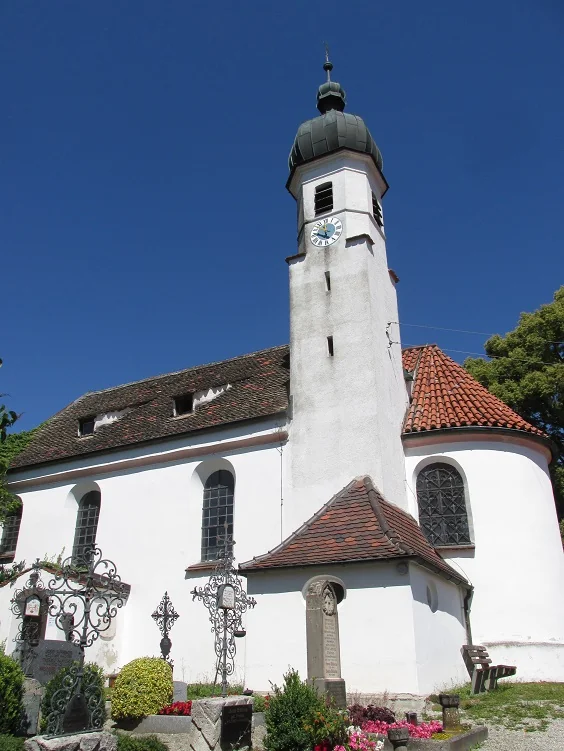
St. Ulrich in Utting am Ammersee is the branch church of Holzhausen and a place that appears small and quiet at first glance, but upon closer inspection bundles an astonishing amount of history, art, and local identity. The church stands elevated on a narrow terrace that slopes north towards the Kittenbach and was likely artificially raised in the Middle Ages. This creates a clear presence in the village landscape, immediately showing why St. Ulrich is more than just a religious building for many visitors. Here, you will not find a large event arena, but a lively village church with deep historical roots, regular services, and furnishings that visibly trace the long journey from Romanesque through Baroque transformations to more recent renovations. St. Ulrich belongs to the parish community of Utting-Schondorf and is closely connected with Utting, Holzhausen, and the Ammersee. It is precisely this mix of landscape, religiosity, and architectural history that makes the church an exciting destination for visitors interested in photographic motifs, quiet places, and authentic local history. ([pg-utting.de](https://pg-utting.de/wir-ueber-uns/st-ulrich-holzhausen/))
History and Architecture of the Branch Church St. Ulrich
The historical depth of St. Ulrich begins very early. The church and parish of Holzhausen were first mentioned in 1226 when Otto Fuez transferred his patronage rights to the monastery of Bernried. Thus, the church stands in a long tradition of ecclesiastical and regional ownership and supply structures typical for many places around the western Ammersee. In the 17th century, Holzhausen was then served as a branch by the priests of Utting, as the distant parish had become too unprofitable for the monastery. This development already shows that St. Ulrich is not an isolated building, but has always remained embedded in a network of village, parish, and regional organization. The nave originates from the Romanesque period, presumably from the 12th century, and is built of tuff blocks. This early construction phase explains why the church has retained a solid, ancient character despite later changes. The semi-circular choir, the sacristy, and the upper part of the tower were built between 1725 and 1730. A multi-year restoration began in 1673, which still gives the church its appearance today, and in 1833/34 a new west gable was created, while the western part of the southern nave walls was rebuilt. The last renovation was completed in 1974. Those who understand the building history see St. Ulrich with different eyes: not as a homogeneous style building, but as a layering of different epochs, in which each century has contributed its own part to the current appearance. ([pg-utting.de](https://pg-utting.de/wir-ueber-uns/st-ulrich-holzhausen/))
Particularly impressive is how the interior design makes these layers visible. The Baroque high altar was created in 1676 by the Weilheim sculptor Ambrosius Degler and the Dießen carpenter Michael Tablander, although not in its current form. The high altar was later made wider and taller to better fill the altar space newly built between 1725 and 1730. Thus, St. Ulrich is a beautiful example of how liturgical spaces adapt over time to changed proportions and aesthetic ideas. The putti were created by the Landsberg sculptor Johann Luidl. The three main figures of the high altar depict Saint Ulrich, with Saint Afra on the left and Saint Barbara on the right; the tabernacle structure dates from around 1800. The ceiling fresco by the Oberfinning painter Caspar Schäffler shows Saint Ulrich surrounded by angels, while the figure of Saint Joseph in the choir area is a work by Lorenz Luidl from the 18th century. The two side altars also stylistically date from around 1675. The left altar depicts Christ with Mary and Saint Michael, while the right altar shows Saint Mechthildis and Saint Agatha. Additionally, there are figures of Saint Anna with Jesus and Mary, as well as a Pietà created in the first third of the 18th century. Even the old plank door from the mid-17th century tells a story, as its very rare wooden latch basket requires a huge key to open and close. The Stations of the Cross created in 1977 are reverse glass paintings by a Gilchinger artist and complement the historical ensemble with a younger, regional touch. ([pg-utting.de](https://pg-utting.de/wir-ueber-uns/st-ulrich-holzhausen/))
Directions to Holzhausen, Bus Line 14, and Parking
For planning a visit, the location of St. Ulrich is just as important as its history. According to the parish community, Utting am Ammersee is located about 45 kilometers west of Munich on the A96 motorway at the Greifenberg exit. The municipality also describes Utting as a place with good transport connections, and public schedules refer to train, S-Bahn information, and regional bus lines. For St. Ulrich, this means: The journey is generally uncomplicated, but one should consciously plan the last meters to Holzhausen. Particularly helpful is the Schneiderwirt stop on Schondorfer Straße, from which there are bus connections towards Holzhausen. Additionally, Utting train station is about one kilometer away and offers train connections to Peißenberg, Geltendorf, Schongau, and Augsburg. Therefore, those arriving by public transport can easily combine their church visit with a walk through the village. For drivers, it is important that the municipality of Utting explicitly mentions the parking situation on St. Ulrich Street as a topic in its local development plan. This is not a dramatic warning, but a clear indication that one should not expect a large, comfortable visitor facility during services, holidays, or special occasions. Those who want to arrive relaxed should therefore plan a little more time, park proactively, and possibly combine the visit with a short walk through Holzhausen. These tips are particularly useful for anyone searching for reliable orientation under the keywords access, parking, or bus line 14. ([pg-utting.de](https://pg-utting.de/wir-ueber-uns/?utm_source=openai))
The surroundings of the church also help with orientation. The branch church stands in Holzhausen on a narrow terrace and not on a broadly developed main traffic axis. This explains why the access feels more village-like and quiet. Holzhausen itself, as a district of Utting, is closely connected to the lakeshore, the paths leading to the Ammersee, and the residential streets of the village. For pedestrians and cyclists, this is often an advantage, as St. Ulrich can be well integrated into a small village walk. Those arriving by car should not only focus on the church but also pay attention to the local road structure. In Utting, the municipality has repeatedly discussed traffic, tourist parking, and accessibility of local areas as part of the local development plan; this shows that the management of parking space at the Ammersee is generally an important topic. Especially on days with high traffic at the lake or during church festivals, this can also be noticeable around St. Ulrich. Practically, this means: Arriving early is worthwhile. This is especially true for visitors who want to take photos or combine their church visit with a walk through Holzhausen. From an SEO perspective, this covers exactly the search intentions that often lie behind terms like access, parking, bus, train station, or location. St. Ulrich is easily accessible but not designed as a large-scale event venue. Its strength lies precisely in the quiet, developed accessibility within a real village and not in an anonymous event infrastructure. ([pg-utting.de](https://pg-utting.de/wir-ueber-uns/st-ulrich-holzhausen/))
Services, Dates, and Church Use
St. Ulrich is not only perceived as a historical building but primarily as a vibrant part of the parish community Utting-Schondorf. The current website of the parish community continuously publishes service dates, events, and regularly lists St. Ulrich in Holzhausen in the liturgical calendar. This is an important note for anyone looking for programs, masses, dates, or services: You will not find a rigid, once-published annual plan here, but a continuously updated calendar. For visitors, this means that the church is indeed used and does not merely exist as a monument on paper. Particularly noteworthy is that the parish community also lists special forms such as May devotions, memorial services, family services, and other church dates in its offerings. The church is also relevant in connection with sacraments and weddings in the parish community; the corresponding page on marriage explicitly mentions St. Ulrich in a church context and refers to usage regulations and fees for weddings. This shows: St. Ulrich is a place for liturgy, celebration, and pastoral care, not just a place for quiet visits. Therefore, anyone searching for programs, services, or church dates should check the current entries of the parish community before visiting. This is particularly sensible as dates may change depending on the church year, holiday periods, or special events. For SEO planning, this is a central topic, as search queries like St. Ulrich services, St. Ulrich program, or St. Ulrich date generally expect current and reliable information. ([pg-utting.de](https://pg-utting.de/?utm_source=openai))
At the same time, the use by the parish community makes it clear what kind of atmosphere visitors can expect in St. Ulrich. The church is part of a network of places where music, devotion, confession, marriage, baptism, and other pastoral forms come together. The PG website even has dedicated sections for church music, liturgical services, and spiritual offerings. This can be inferred that St. Ulrich is perceived in everyday life more as a quiet, grounded church space with local and sacred functions, not as a place for loud events. This is not a disadvantage but a clear location advantage for all who appreciate authentic village churches, quiet interiors, and well-maintained church traditions. When special events take place, they appear in the official calendar or in the information sheets of the parish community. Therefore, if you want to connect your visit with a specific occasion, you can orient yourself there and receive reliable, current information. From a user perspective, this is also helpful, as it allows one to distinguish between a normal visit and a liturgical appointment. For content logic, this is important: The frequently searched term program does not fit here with a cultural house with tickets but with a church calendar with services, devotions, and special dates. This clear classification avoids misunderstandings and ensures that visitors come to Holzhausen with the right expectations. ([pg-utting.de](https://pg-utting.de/?utm_source=openai))
High Altar, Fresco, and the Special Atmosphere in the Interior
Those searching for St. Ulrich photos, interior, or highlights will find in this church primarily strong details instead of great monumentality. The parish community itself emphasizes that the Holzhausen branch church stands out less for remarkable architecture than for its attractive elevated location. This is precisely where its charm lies: The building appears modest from the outside but gains enormous radiance through its position and historical layers. For photos, this is particularly interesting because the church can be staged not only frontally but also in its embedding in the terrace and the village structure. Inside, it is worth looking at the Baroque high altar, the figure cycle with Saint Ulrich, Saint Afra, and Saint Barbara, the ceiling fresco by Caspar Schäffler, and the side altars. The unusually old plank door with its rare wooden latch basket is also a detail that often surprises visitors. Additionally, the Stations of the Cross created in 1977, which are reverse glass paintings, set a unique regional accent. All these elements make St. Ulrich a place where one not only reads history but sees it immediately. Even though the church is not staged as a large museum, it is a very dense ensemble of art and space. For this reason, a slow visit is worthwhile. Those who enter with open eyes perceive the different epochs, materials, and image programs much more clearly. For many visitors, these quiet, authentic impressions are more valuable than spectacular effects. ([pg-utting.de](https://pg-utting.de/wir-ueber-uns/st-ulrich-holzhausen/))
Additionally, there is a practical advantage that is important for the visit itself: Admission is free. This makes St. Ulrich a low-threshold destination for anyone looking for a quiet stop on a walk or a small round around the Ammersee. Without ticket pressure, without queues, and without commercial barriers, the place can be experienced spontaneously. From a visitor's perspective, a two-part strategy is therefore advisable. Outside, one should observe the elevated location, the integration into Holzhausen, and the effect of the building on the surroundings. Inside, one should take time for the high altar, the fresco, the side altars, and the older wooden details. Those photographing should not only look for classic postcard motifs but also capture details: the light on the altar table, the structure of the tuff, the faces of the figures, or the effect of the old door. Especially in historical village churches, the combination of light, silence, and closeness often decides. St. Ulrich fulfills exactly that. Furthermore, the parish community provides a gallery of images on the website, allowing one to get a picture of interior and exterior views in advance. For users searching for photos, this is an additional plus. The church thus appears not only in reality but also digitally present and well documented. ([module.tourinfra.com](https://module.tourinfra.com/landsberg/details-content.php?guid=p_100009133&utm_source=openai))
Utting, Holzhausen, and the Ammersee as Surroundings for Your Visit
St. Ulrich should not be viewed in isolation but embedded in a place that has much to offer. Utting am Ammersee is described by the Ammersee region as a modern spa town with very good transport connections; it is also stated that Utting and Holzhausen were popular artists' places even before 1900. This historical and scenic backdrop explains why a church visit in Holzhausen can be easily combined with a small excursion. The Ammersee, the paths along the shore, the village structure, and the developed mix of living, art, and leisure make the region attractive for all those looking for not just a single sight but a coherent overall picture. For St. Ulrich, this means: The church stands in the tension between a quiet district and a lively Ammersee region. Those coming here can easily combine the visit with a walk through Holzhausen, a detour to the lakeshore, or another stop in the town center of Utting. This is ideal for families, walkers, cyclists, and culture-interested day visitors, as the visit can be flexibly extended. The municipality of Utting also points to schedules, public transport, and local maps, which facilitates the combination of arrival and local discovery. Thus, a single church becomes a small but very coherent building block of an entire excursion. This is also relevant for search engines, as many users search for a church while simultaneously asking about surroundings, location, photo, and access. St. Ulrich meets exactly this need: a real place with history, embedded in a real district and a real lake area. ([ammersee-region.de](https://www.ammersee-region.de/utting?utm_source=openai))
Especially from a tourist perspective, it makes sense to keep the visit to St. Ulrich uncomplicated and consciously small. The strength of the place lies in its tranquility, not in the number of program points. Those planning half a day at the Ammersee can incorporate the branch church as a cultural oasis and then explore the scenic or local historical aspects of Utting. This is especially true for visitors searching for st. ulrich photos, st. ulrich history, st. ulrich access, or st. ulrich parking and expecting a clear, practical page. The location on a terrace, the historical depth, the Baroque high altar, and the lively integration into the parish community make the place both photogenic and credible. For the SEO focus, this is important because such pages should not only provide information but also facilitate a real visitor decision. St. Ulrich is a good example of this: small enough for a quick detour, rich enough for a content-strong page, and quiet enough to remain in memory as an authentic place. Therefore, anyone visiting the region around Utting am Ammersee will find in St. Ulrich a quiet, historically rich, and well-placed focal point. This is exactly the kind of place that stays in memory and is evaluated not by a large spectacle but by atmosphere, history, and location. ([pg-utting.de](https://pg-utting.de/wir-ueber-uns/st-ulrich-holzhausen/))
Sources:
- PG Utting-Schondorf – Branch Church St. Ulrich, Holzhausen. ([pg-utting.de](https://pg-utting.de/wir-ueber-uns/st-ulrich-holzhausen/))
- PG Utting-Schondorf – About Us. ([pg-utting.de](https://pg-utting.de/wir-ueber-uns/?utm_source=openai))
- Municipality of Utting am Ammersee – Schedules / Public Transport. ([utting.de](https://www.utting.de/rathaus-gemeinde/buergerservice/fahrplaene/?utm_source=openai))
- Municipality of Utting am Ammersee – Local Development Plan. ([utting.de](https://www.utting.de/wp-content/uploads/2021/11/OEK_Endfassung_26_Juli_2013.pdf))
- Ammersee Region – Utting am Ammersee. ([ammersee-region.de](https://www.ammersee-region.de/detail/id%3D672a64df7c479551d5ac7a98?utm_source=openai))
Mehr anzeigenWeniger anzeigen
St. Ulrich | History & Access
St. Ulrich in Utting am Ammersee is the branch church of Holzhausen and a place that appears small and quiet at first glance, but upon closer inspection bundles an astonishing amount of history, art, and local identity. The church stands elevated on a narrow terrace that slopes north towards the Kittenbach and was likely artificially raised in the Middle Ages. This creates a clear presence in the village landscape, immediately showing why St. Ulrich is more than just a religious building for many visitors. Here, you will not find a large event arena, but a lively village church with deep historical roots, regular services, and furnishings that visibly trace the long journey from Romanesque through Baroque transformations to more recent renovations. St. Ulrich belongs to the parish community of Utting-Schondorf and is closely connected with Utting, Holzhausen, and the Ammersee. It is precisely this mix of landscape, religiosity, and architectural history that makes the church an exciting destination for visitors interested in photographic motifs, quiet places, and authentic local history. ([pg-utting.de](https://pg-utting.de/wir-ueber-uns/st-ulrich-holzhausen/))
History and Architecture of the Branch Church St. Ulrich
The historical depth of St. Ulrich begins very early. The church and parish of Holzhausen were first mentioned in 1226 when Otto Fuez transferred his patronage rights to the monastery of Bernried. Thus, the church stands in a long tradition of ecclesiastical and regional ownership and supply structures typical for many places around the western Ammersee. In the 17th century, Holzhausen was then served as a branch by the priests of Utting, as the distant parish had become too unprofitable for the monastery. This development already shows that St. Ulrich is not an isolated building, but has always remained embedded in a network of village, parish, and regional organization. The nave originates from the Romanesque period, presumably from the 12th century, and is built of tuff blocks. This early construction phase explains why the church has retained a solid, ancient character despite later changes. The semi-circular choir, the sacristy, and the upper part of the tower were built between 1725 and 1730. A multi-year restoration began in 1673, which still gives the church its appearance today, and in 1833/34 a new west gable was created, while the western part of the southern nave walls was rebuilt. The last renovation was completed in 1974. Those who understand the building history see St. Ulrich with different eyes: not as a homogeneous style building, but as a layering of different epochs, in which each century has contributed its own part to the current appearance. ([pg-utting.de](https://pg-utting.de/wir-ueber-uns/st-ulrich-holzhausen/))
Particularly impressive is how the interior design makes these layers visible. The Baroque high altar was created in 1676 by the Weilheim sculptor Ambrosius Degler and the Dießen carpenter Michael Tablander, although not in its current form. The high altar was later made wider and taller to better fill the altar space newly built between 1725 and 1730. Thus, St. Ulrich is a beautiful example of how liturgical spaces adapt over time to changed proportions and aesthetic ideas. The putti were created by the Landsberg sculptor Johann Luidl. The three main figures of the high altar depict Saint Ulrich, with Saint Afra on the left and Saint Barbara on the right; the tabernacle structure dates from around 1800. The ceiling fresco by the Oberfinning painter Caspar Schäffler shows Saint Ulrich surrounded by angels, while the figure of Saint Joseph in the choir area is a work by Lorenz Luidl from the 18th century. The two side altars also stylistically date from around 1675. The left altar depicts Christ with Mary and Saint Michael, while the right altar shows Saint Mechthildis and Saint Agatha. Additionally, there are figures of Saint Anna with Jesus and Mary, as well as a Pietà created in the first third of the 18th century. Even the old plank door from the mid-17th century tells a story, as its very rare wooden latch basket requires a huge key to open and close. The Stations of the Cross created in 1977 are reverse glass paintings by a Gilchinger artist and complement the historical ensemble with a younger, regional touch. ([pg-utting.de](https://pg-utting.de/wir-ueber-uns/st-ulrich-holzhausen/))
Directions to Holzhausen, Bus Line 14, and Parking
For planning a visit, the location of St. Ulrich is just as important as its history. According to the parish community, Utting am Ammersee is located about 45 kilometers west of Munich on the A96 motorway at the Greifenberg exit. The municipality also describes Utting as a place with good transport connections, and public schedules refer to train, S-Bahn information, and regional bus lines. For St. Ulrich, this means: The journey is generally uncomplicated, but one should consciously plan the last meters to Holzhausen. Particularly helpful is the Schneiderwirt stop on Schondorfer Straße, from which there are bus connections towards Holzhausen. Additionally, Utting train station is about one kilometer away and offers train connections to Peißenberg, Geltendorf, Schongau, and Augsburg. Therefore, those arriving by public transport can easily combine their church visit with a walk through the village. For drivers, it is important that the municipality of Utting explicitly mentions the parking situation on St. Ulrich Street as a topic in its local development plan. This is not a dramatic warning, but a clear indication that one should not expect a large, comfortable visitor facility during services, holidays, or special occasions. Those who want to arrive relaxed should therefore plan a little more time, park proactively, and possibly combine the visit with a short walk through Holzhausen. These tips are particularly useful for anyone searching for reliable orientation under the keywords access, parking, or bus line 14. ([pg-utting.de](https://pg-utting.de/wir-ueber-uns/?utm_source=openai))
The surroundings of the church also help with orientation. The branch church stands in Holzhausen on a narrow terrace and not on a broadly developed main traffic axis. This explains why the access feels more village-like and quiet. Holzhausen itself, as a district of Utting, is closely connected to the lakeshore, the paths leading to the Ammersee, and the residential streets of the village. For pedestrians and cyclists, this is often an advantage, as St. Ulrich can be well integrated into a small village walk. Those arriving by car should not only focus on the church but also pay attention to the local road structure. In Utting, the municipality has repeatedly discussed traffic, tourist parking, and accessibility of local areas as part of the local development plan; this shows that the management of parking space at the Ammersee is generally an important topic. Especially on days with high traffic at the lake or during church festivals, this can also be noticeable around St. Ulrich. Practically, this means: Arriving early is worthwhile. This is especially true for visitors who want to take photos or combine their church visit with a walk through Holzhausen. From an SEO perspective, this covers exactly the search intentions that often lie behind terms like access, parking, bus, train station, or location. St. Ulrich is easily accessible but not designed as a large-scale event venue. Its strength lies precisely in the quiet, developed accessibility within a real village and not in an anonymous event infrastructure. ([pg-utting.de](https://pg-utting.de/wir-ueber-uns/st-ulrich-holzhausen/))
Services, Dates, and Church Use
St. Ulrich is not only perceived as a historical building but primarily as a vibrant part of the parish community Utting-Schondorf. The current website of the parish community continuously publishes service dates, events, and regularly lists St. Ulrich in Holzhausen in the liturgical calendar. This is an important note for anyone looking for programs, masses, dates, or services: You will not find a rigid, once-published annual plan here, but a continuously updated calendar. For visitors, this means that the church is indeed used and does not merely exist as a monument on paper. Particularly noteworthy is that the parish community also lists special forms such as May devotions, memorial services, family services, and other church dates in its offerings. The church is also relevant in connection with sacraments and weddings in the parish community; the corresponding page on marriage explicitly mentions St. Ulrich in a church context and refers to usage regulations and fees for weddings. This shows: St. Ulrich is a place for liturgy, celebration, and pastoral care, not just a place for quiet visits. Therefore, anyone searching for programs, services, or church dates should check the current entries of the parish community before visiting. This is particularly sensible as dates may change depending on the church year, holiday periods, or special events. For SEO planning, this is a central topic, as search queries like St. Ulrich services, St. Ulrich program, or St. Ulrich date generally expect current and reliable information. ([pg-utting.de](https://pg-utting.de/?utm_source=openai))
At the same time, the use by the parish community makes it clear what kind of atmosphere visitors can expect in St. Ulrich. The church is part of a network of places where music, devotion, confession, marriage, baptism, and other pastoral forms come together. The PG website even has dedicated sections for church music, liturgical services, and spiritual offerings. This can be inferred that St. Ulrich is perceived in everyday life more as a quiet, grounded church space with local and sacred functions, not as a place for loud events. This is not a disadvantage but a clear location advantage for all who appreciate authentic village churches, quiet interiors, and well-maintained church traditions. When special events take place, they appear in the official calendar or in the information sheets of the parish community. Therefore, if you want to connect your visit with a specific occasion, you can orient yourself there and receive reliable, current information. From a user perspective, this is also helpful, as it allows one to distinguish between a normal visit and a liturgical appointment. For content logic, this is important: The frequently searched term program does not fit here with a cultural house with tickets but with a church calendar with services, devotions, and special dates. This clear classification avoids misunderstandings and ensures that visitors come to Holzhausen with the right expectations. ([pg-utting.de](https://pg-utting.de/?utm_source=openai))
High Altar, Fresco, and the Special Atmosphere in the Interior
Those searching for St. Ulrich photos, interior, or highlights will find in this church primarily strong details instead of great monumentality. The parish community itself emphasizes that the Holzhausen branch church stands out less for remarkable architecture than for its attractive elevated location. This is precisely where its charm lies: The building appears modest from the outside but gains enormous radiance through its position and historical layers. For photos, this is particularly interesting because the church can be staged not only frontally but also in its embedding in the terrace and the village structure. Inside, it is worth looking at the Baroque high altar, the figure cycle with Saint Ulrich, Saint Afra, and Saint Barbara, the ceiling fresco by Caspar Schäffler, and the side altars. The unusually old plank door with its rare wooden latch basket is also a detail that often surprises visitors. Additionally, the Stations of the Cross created in 1977, which are reverse glass paintings, set a unique regional accent. All these elements make St. Ulrich a place where one not only reads history but sees it immediately. Even though the church is not staged as a large museum, it is a very dense ensemble of art and space. For this reason, a slow visit is worthwhile. Those who enter with open eyes perceive the different epochs, materials, and image programs much more clearly. For many visitors, these quiet, authentic impressions are more valuable than spectacular effects. ([pg-utting.de](https://pg-utting.de/wir-ueber-uns/st-ulrich-holzhausen/))
Additionally, there is a practical advantage that is important for the visit itself: Admission is free. This makes St. Ulrich a low-threshold destination for anyone looking for a quiet stop on a walk or a small round around the Ammersee. Without ticket pressure, without queues, and without commercial barriers, the place can be experienced spontaneously. From a visitor's perspective, a two-part strategy is therefore advisable. Outside, one should observe the elevated location, the integration into Holzhausen, and the effect of the building on the surroundings. Inside, one should take time for the high altar, the fresco, the side altars, and the older wooden details. Those photographing should not only look for classic postcard motifs but also capture details: the light on the altar table, the structure of the tuff, the faces of the figures, or the effect of the old door. Especially in historical village churches, the combination of light, silence, and closeness often decides. St. Ulrich fulfills exactly that. Furthermore, the parish community provides a gallery of images on the website, allowing one to get a picture of interior and exterior views in advance. For users searching for photos, this is an additional plus. The church thus appears not only in reality but also digitally present and well documented. ([module.tourinfra.com](https://module.tourinfra.com/landsberg/details-content.php?guid=p_100009133&utm_source=openai))
Utting, Holzhausen, and the Ammersee as Surroundings for Your Visit
St. Ulrich should not be viewed in isolation but embedded in a place that has much to offer. Utting am Ammersee is described by the Ammersee region as a modern spa town with very good transport connections; it is also stated that Utting and Holzhausen were popular artists' places even before 1900. This historical and scenic backdrop explains why a church visit in Holzhausen can be easily combined with a small excursion. The Ammersee, the paths along the shore, the village structure, and the developed mix of living, art, and leisure make the region attractive for all those looking for not just a single sight but a coherent overall picture. For St. Ulrich, this means: The church stands in the tension between a quiet district and a lively Ammersee region. Those coming here can easily combine the visit with a walk through Holzhausen, a detour to the lakeshore, or another stop in the town center of Utting. This is ideal for families, walkers, cyclists, and culture-interested day visitors, as the visit can be flexibly extended. The municipality of Utting also points to schedules, public transport, and local maps, which facilitates the combination of arrival and local discovery. Thus, a single church becomes a small but very coherent building block of an entire excursion. This is also relevant for search engines, as many users search for a church while simultaneously asking about surroundings, location, photo, and access. St. Ulrich meets exactly this need: a real place with history, embedded in a real district and a real lake area. ([ammersee-region.de](https://www.ammersee-region.de/utting?utm_source=openai))
Especially from a tourist perspective, it makes sense to keep the visit to St. Ulrich uncomplicated and consciously small. The strength of the place lies in its tranquility, not in the number of program points. Those planning half a day at the Ammersee can incorporate the branch church as a cultural oasis and then explore the scenic or local historical aspects of Utting. This is especially true for visitors searching for st. ulrich photos, st. ulrich history, st. ulrich access, or st. ulrich parking and expecting a clear, practical page. The location on a terrace, the historical depth, the Baroque high altar, and the lively integration into the parish community make the place both photogenic and credible. For the SEO focus, this is important because such pages should not only provide information but also facilitate a real visitor decision. St. Ulrich is a good example of this: small enough for a quick detour, rich enough for a content-strong page, and quiet enough to remain in memory as an authentic place. Therefore, anyone visiting the region around Utting am Ammersee will find in St. Ulrich a quiet, historically rich, and well-placed focal point. This is exactly the kind of place that stays in memory and is evaluated not by a large spectacle but by atmosphere, history, and location. ([pg-utting.de](https://pg-utting.de/wir-ueber-uns/st-ulrich-holzhausen/))
Sources:
- PG Utting-Schondorf – Branch Church St. Ulrich, Holzhausen. ([pg-utting.de](https://pg-utting.de/wir-ueber-uns/st-ulrich-holzhausen/))
- PG Utting-Schondorf – About Us. ([pg-utting.de](https://pg-utting.de/wir-ueber-uns/?utm_source=openai))
- Municipality of Utting am Ammersee – Schedules / Public Transport. ([utting.de](https://www.utting.de/rathaus-gemeinde/buergerservice/fahrplaene/?utm_source=openai))
- Municipality of Utting am Ammersee – Local Development Plan. ([utting.de](https://www.utting.de/wp-content/uploads/2021/11/OEK_Endfassung_26_Juli_2013.pdf))
- Ammersee Region – Utting am Ammersee. ([ammersee-region.de](https://www.ammersee-region.de/detail/id%3D672a64df7c479551d5ac7a98?utm_source=openai))
St. Ulrich | History & Access
St. Ulrich in Utting am Ammersee is the branch church of Holzhausen and a place that appears small and quiet at first glance, but upon closer inspection bundles an astonishing amount of history, art, and local identity. The church stands elevated on a narrow terrace that slopes north towards the Kittenbach and was likely artificially raised in the Middle Ages. This creates a clear presence in the village landscape, immediately showing why St. Ulrich is more than just a religious building for many visitors. Here, you will not find a large event arena, but a lively village church with deep historical roots, regular services, and furnishings that visibly trace the long journey from Romanesque through Baroque transformations to more recent renovations. St. Ulrich belongs to the parish community of Utting-Schondorf and is closely connected with Utting, Holzhausen, and the Ammersee. It is precisely this mix of landscape, religiosity, and architectural history that makes the church an exciting destination for visitors interested in photographic motifs, quiet places, and authentic local history. ([pg-utting.de](https://pg-utting.de/wir-ueber-uns/st-ulrich-holzhausen/))
History and Architecture of the Branch Church St. Ulrich
The historical depth of St. Ulrich begins very early. The church and parish of Holzhausen were first mentioned in 1226 when Otto Fuez transferred his patronage rights to the monastery of Bernried. Thus, the church stands in a long tradition of ecclesiastical and regional ownership and supply structures typical for many places around the western Ammersee. In the 17th century, Holzhausen was then served as a branch by the priests of Utting, as the distant parish had become too unprofitable for the monastery. This development already shows that St. Ulrich is not an isolated building, but has always remained embedded in a network of village, parish, and regional organization. The nave originates from the Romanesque period, presumably from the 12th century, and is built of tuff blocks. This early construction phase explains why the church has retained a solid, ancient character despite later changes. The semi-circular choir, the sacristy, and the upper part of the tower were built between 1725 and 1730. A multi-year restoration began in 1673, which still gives the church its appearance today, and in 1833/34 a new west gable was created, while the western part of the southern nave walls was rebuilt. The last renovation was completed in 1974. Those who understand the building history see St. Ulrich with different eyes: not as a homogeneous style building, but as a layering of different epochs, in which each century has contributed its own part to the current appearance. ([pg-utting.de](https://pg-utting.de/wir-ueber-uns/st-ulrich-holzhausen/))
Particularly impressive is how the interior design makes these layers visible. The Baroque high altar was created in 1676 by the Weilheim sculptor Ambrosius Degler and the Dießen carpenter Michael Tablander, although not in its current form. The high altar was later made wider and taller to better fill the altar space newly built between 1725 and 1730. Thus, St. Ulrich is a beautiful example of how liturgical spaces adapt over time to changed proportions and aesthetic ideas. The putti were created by the Landsberg sculptor Johann Luidl. The three main figures of the high altar depict Saint Ulrich, with Saint Afra on the left and Saint Barbara on the right; the tabernacle structure dates from around 1800. The ceiling fresco by the Oberfinning painter Caspar Schäffler shows Saint Ulrich surrounded by angels, while the figure of Saint Joseph in the choir area is a work by Lorenz Luidl from the 18th century. The two side altars also stylistically date from around 1675. The left altar depicts Christ with Mary and Saint Michael, while the right altar shows Saint Mechthildis and Saint Agatha. Additionally, there are figures of Saint Anna with Jesus and Mary, as well as a Pietà created in the first third of the 18th century. Even the old plank door from the mid-17th century tells a story, as its very rare wooden latch basket requires a huge key to open and close. The Stations of the Cross created in 1977 are reverse glass paintings by a Gilchinger artist and complement the historical ensemble with a younger, regional touch. ([pg-utting.de](https://pg-utting.de/wir-ueber-uns/st-ulrich-holzhausen/))
Directions to Holzhausen, Bus Line 14, and Parking
For planning a visit, the location of St. Ulrich is just as important as its history. According to the parish community, Utting am Ammersee is located about 45 kilometers west of Munich on the A96 motorway at the Greifenberg exit. The municipality also describes Utting as a place with good transport connections, and public schedules refer to train, S-Bahn information, and regional bus lines. For St. Ulrich, this means: The journey is generally uncomplicated, but one should consciously plan the last meters to Holzhausen. Particularly helpful is the Schneiderwirt stop on Schondorfer Straße, from which there are bus connections towards Holzhausen. Additionally, Utting train station is about one kilometer away and offers train connections to Peißenberg, Geltendorf, Schongau, and Augsburg. Therefore, those arriving by public transport can easily combine their church visit with a walk through the village. For drivers, it is important that the municipality of Utting explicitly mentions the parking situation on St. Ulrich Street as a topic in its local development plan. This is not a dramatic warning, but a clear indication that one should not expect a large, comfortable visitor facility during services, holidays, or special occasions. Those who want to arrive relaxed should therefore plan a little more time, park proactively, and possibly combine the visit with a short walk through Holzhausen. These tips are particularly useful for anyone searching for reliable orientation under the keywords access, parking, or bus line 14. ([pg-utting.de](https://pg-utting.de/wir-ueber-uns/?utm_source=openai))
The surroundings of the church also help with orientation. The branch church stands in Holzhausen on a narrow terrace and not on a broadly developed main traffic axis. This explains why the access feels more village-like and quiet. Holzhausen itself, as a district of Utting, is closely connected to the lakeshore, the paths leading to the Ammersee, and the residential streets of the village. For pedestrians and cyclists, this is often an advantage, as St. Ulrich can be well integrated into a small village walk. Those arriving by car should not only focus on the church but also pay attention to the local road structure. In Utting, the municipality has repeatedly discussed traffic, tourist parking, and accessibility of local areas as part of the local development plan; this shows that the management of parking space at the Ammersee is generally an important topic. Especially on days with high traffic at the lake or during church festivals, this can also be noticeable around St. Ulrich. Practically, this means: Arriving early is worthwhile. This is especially true for visitors who want to take photos or combine their church visit with a walk through Holzhausen. From an SEO perspective, this covers exactly the search intentions that often lie behind terms like access, parking, bus, train station, or location. St. Ulrich is easily accessible but not designed as a large-scale event venue. Its strength lies precisely in the quiet, developed accessibility within a real village and not in an anonymous event infrastructure. ([pg-utting.de](https://pg-utting.de/wir-ueber-uns/st-ulrich-holzhausen/))
Services, Dates, and Church Use
St. Ulrich is not only perceived as a historical building but primarily as a vibrant part of the parish community Utting-Schondorf. The current website of the parish community continuously publishes service dates, events, and regularly lists St. Ulrich in Holzhausen in the liturgical calendar. This is an important note for anyone looking for programs, masses, dates, or services: You will not find a rigid, once-published annual plan here, but a continuously updated calendar. For visitors, this means that the church is indeed used and does not merely exist as a monument on paper. Particularly noteworthy is that the parish community also lists special forms such as May devotions, memorial services, family services, and other church dates in its offerings. The church is also relevant in connection with sacraments and weddings in the parish community; the corresponding page on marriage explicitly mentions St. Ulrich in a church context and refers to usage regulations and fees for weddings. This shows: St. Ulrich is a place for liturgy, celebration, and pastoral care, not just a place for quiet visits. Therefore, anyone searching for programs, services, or church dates should check the current entries of the parish community before visiting. This is particularly sensible as dates may change depending on the church year, holiday periods, or special events. For SEO planning, this is a central topic, as search queries like St. Ulrich services, St. Ulrich program, or St. Ulrich date generally expect current and reliable information. ([pg-utting.de](https://pg-utting.de/?utm_source=openai))
At the same time, the use by the parish community makes it clear what kind of atmosphere visitors can expect in St. Ulrich. The church is part of a network of places where music, devotion, confession, marriage, baptism, and other pastoral forms come together. The PG website even has dedicated sections for church music, liturgical services, and spiritual offerings. This can be inferred that St. Ulrich is perceived in everyday life more as a quiet, grounded church space with local and sacred functions, not as a place for loud events. This is not a disadvantage but a clear location advantage for all who appreciate authentic village churches, quiet interiors, and well-maintained church traditions. When special events take place, they appear in the official calendar or in the information sheets of the parish community. Therefore, if you want to connect your visit with a specific occasion, you can orient yourself there and receive reliable, current information. From a user perspective, this is also helpful, as it allows one to distinguish between a normal visit and a liturgical appointment. For content logic, this is important: The frequently searched term program does not fit here with a cultural house with tickets but with a church calendar with services, devotions, and special dates. This clear classification avoids misunderstandings and ensures that visitors come to Holzhausen with the right expectations. ([pg-utting.de](https://pg-utting.de/?utm_source=openai))
High Altar, Fresco, and the Special Atmosphere in the Interior
Those searching for St. Ulrich photos, interior, or highlights will find in this church primarily strong details instead of great monumentality. The parish community itself emphasizes that the Holzhausen branch church stands out less for remarkable architecture than for its attractive elevated location. This is precisely where its charm lies: The building appears modest from the outside but gains enormous radiance through its position and historical layers. For photos, this is particularly interesting because the church can be staged not only frontally but also in its embedding in the terrace and the village structure. Inside, it is worth looking at the Baroque high altar, the figure cycle with Saint Ulrich, Saint Afra, and Saint Barbara, the ceiling fresco by Caspar Schäffler, and the side altars. The unusually old plank door with its rare wooden latch basket is also a detail that often surprises visitors. Additionally, the Stations of the Cross created in 1977, which are reverse glass paintings, set a unique regional accent. All these elements make St. Ulrich a place where one not only reads history but sees it immediately. Even though the church is not staged as a large museum, it is a very dense ensemble of art and space. For this reason, a slow visit is worthwhile. Those who enter with open eyes perceive the different epochs, materials, and image programs much more clearly. For many visitors, these quiet, authentic impressions are more valuable than spectacular effects. ([pg-utting.de](https://pg-utting.de/wir-ueber-uns/st-ulrich-holzhausen/))
Additionally, there is a practical advantage that is important for the visit itself: Admission is free. This makes St. Ulrich a low-threshold destination for anyone looking for a quiet stop on a walk or a small round around the Ammersee. Without ticket pressure, without queues, and without commercial barriers, the place can be experienced spontaneously. From a visitor's perspective, a two-part strategy is therefore advisable. Outside, one should observe the elevated location, the integration into Holzhausen, and the effect of the building on the surroundings. Inside, one should take time for the high altar, the fresco, the side altars, and the older wooden details. Those photographing should not only look for classic postcard motifs but also capture details: the light on the altar table, the structure of the tuff, the faces of the figures, or the effect of the old door. Especially in historical village churches, the combination of light, silence, and closeness often decides. St. Ulrich fulfills exactly that. Furthermore, the parish community provides a gallery of images on the website, allowing one to get a picture of interior and exterior views in advance. For users searching for photos, this is an additional plus. The church thus appears not only in reality but also digitally present and well documented. ([module.tourinfra.com](https://module.tourinfra.com/landsberg/details-content.php?guid=p_100009133&utm_source=openai))
Utting, Holzhausen, and the Ammersee as Surroundings for Your Visit
St. Ulrich should not be viewed in isolation but embedded in a place that has much to offer. Utting am Ammersee is described by the Ammersee region as a modern spa town with very good transport connections; it is also stated that Utting and Holzhausen were popular artists' places even before 1900. This historical and scenic backdrop explains why a church visit in Holzhausen can be easily combined with a small excursion. The Ammersee, the paths along the shore, the village structure, and the developed mix of living, art, and leisure make the region attractive for all those looking for not just a single sight but a coherent overall picture. For St. Ulrich, this means: The church stands in the tension between a quiet district and a lively Ammersee region. Those coming here can easily combine the visit with a walk through Holzhausen, a detour to the lakeshore, or another stop in the town center of Utting. This is ideal for families, walkers, cyclists, and culture-interested day visitors, as the visit can be flexibly extended. The municipality of Utting also points to schedules, public transport, and local maps, which facilitates the combination of arrival and local discovery. Thus, a single church becomes a small but very coherent building block of an entire excursion. This is also relevant for search engines, as many users search for a church while simultaneously asking about surroundings, location, photo, and access. St. Ulrich meets exactly this need: a real place with history, embedded in a real district and a real lake area. ([ammersee-region.de](https://www.ammersee-region.de/utting?utm_source=openai))
Especially from a tourist perspective, it makes sense to keep the visit to St. Ulrich uncomplicated and consciously small. The strength of the place lies in its tranquility, not in the number of program points. Those planning half a day at the Ammersee can incorporate the branch church as a cultural oasis and then explore the scenic or local historical aspects of Utting. This is especially true for visitors searching for st. ulrich photos, st. ulrich history, st. ulrich access, or st. ulrich parking and expecting a clear, practical page. The location on a terrace, the historical depth, the Baroque high altar, and the lively integration into the parish community make the place both photogenic and credible. For the SEO focus, this is important because such pages should not only provide information but also facilitate a real visitor decision. St. Ulrich is a good example of this: small enough for a quick detour, rich enough for a content-strong page, and quiet enough to remain in memory as an authentic place. Therefore, anyone visiting the region around Utting am Ammersee will find in St. Ulrich a quiet, historically rich, and well-placed focal point. This is exactly the kind of place that stays in memory and is evaluated not by a large spectacle but by atmosphere, history, and location. ([pg-utting.de](https://pg-utting.de/wir-ueber-uns/st-ulrich-holzhausen/))
Sources:
- PG Utting-Schondorf – Branch Church St. Ulrich, Holzhausen. ([pg-utting.de](https://pg-utting.de/wir-ueber-uns/st-ulrich-holzhausen/))
- PG Utting-Schondorf – About Us. ([pg-utting.de](https://pg-utting.de/wir-ueber-uns/?utm_source=openai))
- Municipality of Utting am Ammersee – Schedules / Public Transport. ([utting.de](https://www.utting.de/rathaus-gemeinde/buergerservice/fahrplaene/?utm_source=openai))
- Municipality of Utting am Ammersee – Local Development Plan. ([utting.de](https://www.utting.de/wp-content/uploads/2021/11/OEK_Endfassung_26_Juli_2013.pdf))
- Ammersee Region – Utting am Ammersee. ([ammersee-region.de](https://www.ammersee-region.de/detail/id%3D672a64df7c479551d5ac7a98?utm_source=openai))
Upcoming Events
No events found
Frequently Asked Questions
Reviews
No reviews found