
Dießen am Ammersee
St.-Georg-Straße 12, 86911 Dießen am Ammersee, Deutschland
St. George | Church & History
St. George in Dießen am Ammersee is much more than a name on the map. The church stands as a Catholic branch church in a place where religious history, local identity, and impressive architecture have overlapped for centuries. The official parish website describes St. George as a church where church life began in 815 with the founding of a monastery, and as a building that served as the parish church of Dießen until 1803. Today, it belongs to the parish of Mariä Himmelfahrt and the parish community of Dießen in the Landsberg deanery of the Diocese of Augsburg. Those searching for St. George will find not only a sacred building but a historical focal point of the town, which continues to make visible how deeply rooted church, architectural, and social traditions are in Dießen. The location on a tuff cone, the setting in the cemetery area, and its significance as the largest and most important church next to the Marienmünster give St. George a special presence that visitors feel at first glance. ([katholisch-diessen.de](https://katholisch-diessen.de/unsere-kirchen/st-georg/))
History of St. George in Dießen am Ammersee
The history of St. George is closely connected with the early history of the town. According to the official representation of the parish community, St. George was already the place where church life in Dießen began with the founding of a monastery in 815. The church was the parish church of the town until 1803, thus serving as the most important church space of the community for many centuries. This long function as a parish church explains why St. George still has such a strong symbolic impact today. It is not just any secondary church, but a historical anchor that makes visible the transition from monastic influence to the present parish community. For visitors, this is particularly exciting because here, not only is a building preserved, but a whole development of local memory that can be read in stone, space, and landscape. This makes St. George a place where history is not abstract but stands immediately before our eyes. ([katholisch-diessen.de](https://katholisch-diessen.de/unsere-kirchen/st-georg/))
Additionally, the local sights page describes a legendary prehistory: It is said that in 815 Count Rathard founded a monastery in St. George, which was destroyed by the Hungarians in 955 and rebuilt in the 11th century. The present church essentially dates back to around 1500. Around 1750, an extension and baroque furnishings, attributed to Johann Michael Fischer, were added. This sequence is typical for many significant churches in southern Germany: a medieval core is preserved while the later baroque redesign brings the space into a new aesthetic order. The renovations are also documented: exterior in 1980, interior from 1999 to 2001. This resulted in a building that combines historical depth with contemporary preservation quality. It is precisely this mixture of medieval substance, baroque formation, and modern restoration that makes St. George so worthwhile for culture-interested visitors. ([trailessayer.de](https://www.trailessayer.de/sehenswertes/region/landsberg-lech/st-georg-diessen))
Therefore, when one looks at St. George today, one sees not only a beautiful village church but a growing testament to local continuity. The church is a place of remembrance in Dießen, a spiritual space, and at the same time a building that embodies the different epochs of local history. The fact that the parish highlights it as the largest and most significant church of the parish community alongside the Marienmünster further underscores its importance. Thus, St. George is relevant not only for believers but also for all those who wish to understand the development of Dießen am Ammersee. ([katholisch-diessen.de](https://katholisch-diessen.de/unsere-kirchen/st-georg/))
Architecture, Tuff Cone, and External Impact
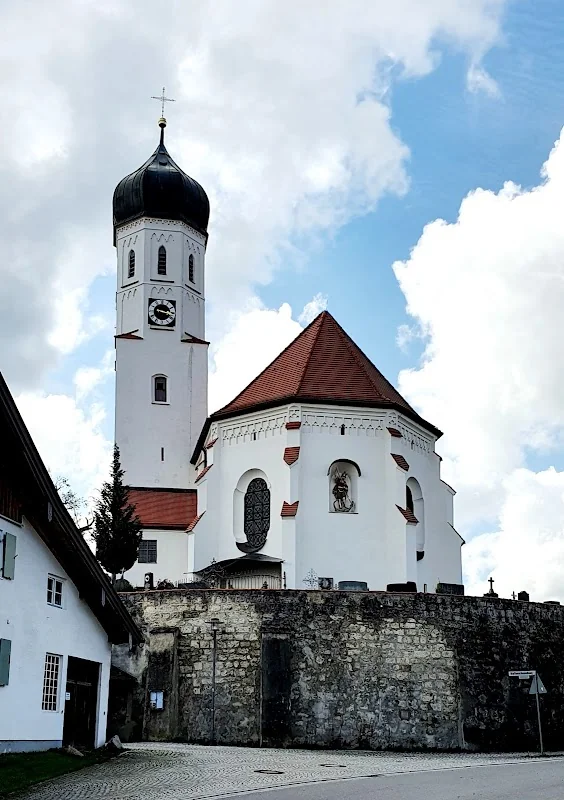
The architecture of St. George thrives on its location. The church stands on a tuff cone and thus appears striking and slightly elevated from a distance. According to the local description, it is situated in the midst of a walled cemetery, which gives the building a special tranquility and completeness. The structure is described as a unified hall building, meaning it convinces not through a multitude of separate naves but through a clear, concentrated form. The large, noticeably recessed round-arched windows with chamfered reveals give the exterior lightness without losing the massive overall impression. Triple-stepped buttresses support the building and emphasize the verticality, while a surrounding frieze of stilted cloverleaf arches rhythmically divides the masonry. This mixture of massiveness and ornamentation is crucial to the church's appeal: St. George appears powerful but not cumbersome, rather as a building that combines stability, dignity, and ornamental finesse. ([trailessayer.de](https://www.trailessayer.de/sehenswertes/region/landsberg-lech/st-georg-diessen))
Particularly characteristic is the choir flank tower on the south side. It has a square base, above which is a late Gothic octagon with an onion dome. This composition gives the building its unmistakable silhouette and combines Gothic origins with a baroque roof form. At the southwest corner, there is an ossuary, and east of the choir, an Empire burial site of the Dießen merchant families of Baan and Schorn around 1805. Such extensions and memorials make it clear that St. George should not be viewed in isolation but as part of a larger sacred and social space. The cemetery wall, the tower, the ossuary, and the graves together create a strong ensemble that immediately draws visitors into the history of the place. This external impact is also appealing for photographers, as the building appears not only from the front but from several angles and is very present due to its elevated position and clear design language. ([trailessayer.de](https://www.trailessayer.de/sehenswertes/region/landsberg-lech/st-georg-diessen))
From an SEO perspective, this clear architectural readability is particularly important: Those searching for St. George often want not only to confirm the name but to understand why this building is considered a sight. The answer lies in the connection of place, material, and form. The tuff cone gives the building a natural stage, the walled cemetery creates distance and gathering, and the tower with the onion dome provides the visual conclusion. Thus, an ensemble is created that leaves an impression even without a large area. St. George is therefore a good example of how a religious building can simultaneously be a landmark of landscape orientation and cultural history. ([trailessayer.de](https://www.trailessayer.de/sehenswertes/region/landsberg-lech/st-georg-diessen))
Interior, Artworks, and Baroque Furnishings
The interior of St. George is one of the reasons why the church is described as significant. The local description highlights three elegant stucco marble altars that were created around 1765. The high altar and its figures come from Thomas Schaidhauf, and the high altar painting with St. George as dragon slayer is by Matthäus Günther. On the sides stand the figures of Saints Sebastian and Florian, and in the upper section appear the Holy Trinity and the double coat of arms of the founder Provost Berchtold II. Wolf. Even this furnishing shows how strongly the space relies on a theologically and artistically thought-out imagery. George as the dragon slayer is not only a patron motif but also a pictorial condensation of protection, courage, and faithfulness. For visitors, this creates an interior that is not merely decorative but possesses a narrative dramaturgy. ([trailessayer.de](https://www.trailessayer.de/sehenswertes/region/landsberg-lech/st-georg-diessen))
The side altars and the pulpit also deserve attention. They were made in 1767 by Tassilo Zöpf from stucco marble. The left altar painting with St. Sebastian is by Joseph Mages from Augsburg, the right one depicting the adoration of the shepherds is by Johann Baptist Baader. In the choir, there is also a figure of St. Mechtildis from around 1500, and in the nave, there are representations of St. George, a crucifix, and the sorrowful Mother of God. The stucco from around 1750, executed in powerful rocaille forms by Franz Xaver Feichtmayr the Elder, and the ceiling frescoes by Franz Joseph Zitter give the space additional depth. In the choir, the fresco shows St. George and the founding of the monastery, above it Christ as the good shepherd; in the nave, the main image appears with St. George as the defender of the church and helper of the oppressed. Thus, the entire interior furnishing becomes a narrative space that connects biblical, hagiographic, and local motifs. ([trailessayer.de](https://www.trailessayer.de/sehenswertes/region/landsberg-lech/st-georg-diessen))
It is precisely in this connection that the special quality of St. George lies. The space does not appear overloaded but balanced. The artworks do not stand alone but form a coherent whole that strengthens the church's function. For SEO and content, this means: Those searching for furnishings, special features, or church art in Dießen will find here a place with comprehensible historical depth and high craftsmanship quality. The baroque furnishings tell of endowments, local artists, and the appreciation for sacred art that remains evident in this church to this day. St. George is therefore not only a historical monument but also a vivid example of the religious image culture of the 18th century in Upper Bavaria. ([trailessayer.de](https://www.trailessayer.de/sehenswertes/region/landsberg-lech/st-georg-diessen))
Parking, Access, and Location in Dießen am Ammersee
For visitors, the approach to St. George is pleasantly uncomplicated because the church is well anchored in the townscape. The local signage names St.-Georg-Straße as the address, and a sights page explicitly points out a parking lot across from the church. In the municipal parking fee regulation of the market Dießen, the gravel parking lot St.-Georg-Straße is listed for this purpose. This is practical because one does not have to search long for parking spaces for a visit but can park close to the church. Especially for a church located on an elevated, landscape-marked point, this proximity is important as it keeps the walking distance short and makes the place easily accessible. For a spontaneous visit, a short tour, or a quiet moment on site, this is a clear advantage. ([trailessayer.de](https://www.trailessayer.de/sehenswertes/region/landsberg-lech/st-georg-diessen))
The parking regulations in the town are clearly described: In many areas, the paid parking applies daily from 09:00 to 17:00, the first 30 minutes are free, up to 60 minutes costs 0.50 euros, and each additional hour costs 1.00 euro. For some areas, day, month, and annual tickets are available. Therefore, those arriving at St. George should pay attention to the local signage and plan the parking duration accordingly. This is especially true if the visit is combined with further walks through Dießen. The community publishes the details in its parking fee regulation, allowing visitors to orient themselves in advance. In practical terms, this means: The location is good, parking is regulated, and the visit can be planned with minimal organizational effort. This makes St. George particularly attractive for day visitors, excursionists, and culture enthusiasts seeking uncomplicated access to a historical site. ([diessen.de](https://www.diessen.de/fileadmin/Gemeinde/Dateien/Ortsrecht/Ordnungsamt/Durchgeschrieben_Fassung_Parkgebuehrenverordnung_mit_Anlagen.pdf))
From the perspective of the local structure, the location is advantageous. St. George is not isolated but situated in an area where Dießen visibly consolidates its religious and historical identity. This allows the visit to be easily combined with a walk through the town or a church tour. The elevated position on the tuff cone also aids orientation: One quickly recognizes the building, and the path to it becomes part of the experience. Therefore, those searching for parking, access, or location information will find at St. George a combination of good accessibility, clear orientation, and historical atmosphere. ([trailessayer.de](https://www.trailessayer.de/sehenswertes/region/landsberg-lech/st-georg-diessen))
Parish Community, Services, and Importance for the Town
St. George is not just a monument but a living part of the parish community of Dießen. The official page assigns the church to the parish of Mariä Himmelfahrt and simultaneously refers to its role as a former center of church life. The menu structure of the page also shows that current content such as services, church tours, and other offerings are maintained there. This is important because it does not reduce St. George to the past but shows it as a currently used church space. For visitors, this means: One does not encounter a museum-like still life here, but a place that continues to be integrated into the church life of the market. This liveliness enhances the impression of the building because architecture, liturgy, and community life are thought together. St. George remains a place where history is not only told but continued. ([katholisch-diessen.de](https://katholisch-diessen.de/unsere-kirchen/st-georg/))
The parish community also emphasizes that St. George is the largest and most significant church in the community alongside the Marienmünster. This classification is central to the perception of the church because it clearly defines its position within the local structure. Therefore, those visiting Dießen should not understand St. George as a side note but as one of the most important church sites of the market. This is a strong argument, especially for people interested in sacred spaces, regional identity, or church building history. The church combines historical depth, artistic quality, and a still recognizable pastoral function. Thus, it is a relevant point of contact for both believers and culturally historically interested guests. ([katholisch-diessen.de](https://katholisch-diessen.de/unsere-kirchen/st-georg/))
From an editorial perspective, this is also important for search queries revolving around terms like services, parish, church, or history. St. George meets these expectations on multiple levels. The church stands for religious continuity, for local memory, and for a high-quality furnishing that can be experienced directly in the space. Those wishing to get to know the parish community will find here one of the most striking points of contact. This makes St. George a fitting destination for visitors seeking a church with genuine historical substance and not just a quick sight to check off. ([katholisch-diessen.de](https://katholisch-diessen.de/unsere-kirchen/st-georg/))
Visiting Tips, Photo Motifs, and Surroundings
A visit to St. George is particularly worthwhile when one brings time for details. The location on the tuff cone and the walled cemetery give the church a quiet, almost protected atmosphere. This combination makes the place very photogenic. From the outside, the tower, gable, buttresses, and the elevated position of the building appear particularly clear, while inside the altars, frescoes, and stucco forms create a strong visual impact. Those photographing architecture will find here a church that impresses with its silhouette and materiality. Those seeking mood will experience a space that conveys dignity and silence. Both together make St. George a typical destination for cultural walks by the Ammersee: manageable, impressive, and historically rich. ([trailessayer.de](https://www.trailessayer.de/sehenswertes/region/landsberg-lech/st-georg-diessen))
For planning, a visit during daylight is recommended so that the plastic elements of the facade and the baroque interior can be well appreciated. At the same time, one should respect the character of the place, as St. George is not only a sight but also an active church space amidst a cemetery. Therefore, calm and attentive behavior is appropriate. Those wishing to explore Dießen more intensively can see St. George as part of a larger church route, as the parish community includes several churches and church sites. This is where the added value lies: A visit does not become an isolated photo stop but a building block of a larger historical context. Thus, St. George unfolds its value not only through individual artworks but through the interplay of place, faith, and landscape. ([katholisch-diessen.de](https://katholisch-diessen.de/unsere-kirchen/st-georg/))
Therefore, those searching for St. George in Dießen am Ammersee are ultimately looking for a place with a clear identity. The church connects early local history, medieval roots, baroque furnishings, and a still visible presence in the townscape. It is precisely this mixture that makes it so interesting for visitors: One can stop by briefly, but often stays longer because new details can always be discovered. For an SEO-oriented location text, this is the best starting point, as St. George offers both emotional appeal and solid facts. The place is quiet, steeped in history, and easily accessible, and that makes it a compelling destination for guests who consciously visit Dießen with an interest in genuine substance. ([katholisch-diessen.de](https://katholisch-diessen.de/unsere-kirchen/st-georg/))
Sources:
- Parish Community Dießen - St. George ([katholisch-diessen.de](https://katholisch-diessen.de/unsere-kirchen/st-georg/))
- Trailessayer - St. George Dießen ([trailessayer.de](https://www.trailessayer.de/sehenswertes/region/landsberg-lech/st-georg-diessen))
- Market Dießen am Ammersee - Parking Fee Regulation ([diessen.de](https://www.diessen.de/fileadmin/Gemeinde/Dateien/Ortsrecht/Ordnungsamt/Durchgeschriebene_Fassung_Parkgebuehrenverordnung_mit_Anlagen.pdf))
- Diocese of Augsburg - Dießen ([www2.bistum-augsburg.de](https://www2.bistum-augsburg.de/pfarreien/pfarreiengemeinschaften/diessen_id386063))
Mehr anzeigenWeniger anzeigen
St. George | Church & History
St. George in Dießen am Ammersee is much more than a name on the map. The church stands as a Catholic branch church in a place where religious history, local identity, and impressive architecture have overlapped for centuries. The official parish website describes St. George as a church where church life began in 815 with the founding of a monastery, and as a building that served as the parish church of Dießen until 1803. Today, it belongs to the parish of Mariä Himmelfahrt and the parish community of Dießen in the Landsberg deanery of the Diocese of Augsburg. Those searching for St. George will find not only a sacred building but a historical focal point of the town, which continues to make visible how deeply rooted church, architectural, and social traditions are in Dießen. The location on a tuff cone, the setting in the cemetery area, and its significance as the largest and most important church next to the Marienmünster give St. George a special presence that visitors feel at first glance. ([katholisch-diessen.de](https://katholisch-diessen.de/unsere-kirchen/st-georg/))
History of St. George in Dießen am Ammersee
The history of St. George is closely connected with the early history of the town. According to the official representation of the parish community, St. George was already the place where church life in Dießen began with the founding of a monastery in 815. The church was the parish church of the town until 1803, thus serving as the most important church space of the community for many centuries. This long function as a parish church explains why St. George still has such a strong symbolic impact today. It is not just any secondary church, but a historical anchor that makes visible the transition from monastic influence to the present parish community. For visitors, this is particularly exciting because here, not only is a building preserved, but a whole development of local memory that can be read in stone, space, and landscape. This makes St. George a place where history is not abstract but stands immediately before our eyes. ([katholisch-diessen.de](https://katholisch-diessen.de/unsere-kirchen/st-georg/))
Additionally, the local sights page describes a legendary prehistory: It is said that in 815 Count Rathard founded a monastery in St. George, which was destroyed by the Hungarians in 955 and rebuilt in the 11th century. The present church essentially dates back to around 1500. Around 1750, an extension and baroque furnishings, attributed to Johann Michael Fischer, were added. This sequence is typical for many significant churches in southern Germany: a medieval core is preserved while the later baroque redesign brings the space into a new aesthetic order. The renovations are also documented: exterior in 1980, interior from 1999 to 2001. This resulted in a building that combines historical depth with contemporary preservation quality. It is precisely this mixture of medieval substance, baroque formation, and modern restoration that makes St. George so worthwhile for culture-interested visitors. ([trailessayer.de](https://www.trailessayer.de/sehenswertes/region/landsberg-lech/st-georg-diessen))
Therefore, when one looks at St. George today, one sees not only a beautiful village church but a growing testament to local continuity. The church is a place of remembrance in Dießen, a spiritual space, and at the same time a building that embodies the different epochs of local history. The fact that the parish highlights it as the largest and most significant church of the parish community alongside the Marienmünster further underscores its importance. Thus, St. George is relevant not only for believers but also for all those who wish to understand the development of Dießen am Ammersee. ([katholisch-diessen.de](https://katholisch-diessen.de/unsere-kirchen/st-georg/))
Architecture, Tuff Cone, and External Impact
The architecture of St. George thrives on its location. The church stands on a tuff cone and thus appears striking and slightly elevated from a distance. According to the local description, it is situated in the midst of a walled cemetery, which gives the building a special tranquility and completeness. The structure is described as a unified hall building, meaning it convinces not through a multitude of separate naves but through a clear, concentrated form. The large, noticeably recessed round-arched windows with chamfered reveals give the exterior lightness without losing the massive overall impression. Triple-stepped buttresses support the building and emphasize the verticality, while a surrounding frieze of stilted cloverleaf arches rhythmically divides the masonry. This mixture of massiveness and ornamentation is crucial to the church's appeal: St. George appears powerful but not cumbersome, rather as a building that combines stability, dignity, and ornamental finesse. ([trailessayer.de](https://www.trailessayer.de/sehenswertes/region/landsberg-lech/st-georg-diessen))
Particularly characteristic is the choir flank tower on the south side. It has a square base, above which is a late Gothic octagon with an onion dome. This composition gives the building its unmistakable silhouette and combines Gothic origins with a baroque roof form. At the southwest corner, there is an ossuary, and east of the choir, an Empire burial site of the Dießen merchant families of Baan and Schorn around 1805. Such extensions and memorials make it clear that St. George should not be viewed in isolation but as part of a larger sacred and social space. The cemetery wall, the tower, the ossuary, and the graves together create a strong ensemble that immediately draws visitors into the history of the place. This external impact is also appealing for photographers, as the building appears not only from the front but from several angles and is very present due to its elevated position and clear design language. ([trailessayer.de](https://www.trailessayer.de/sehenswertes/region/landsberg-lech/st-georg-diessen))
From an SEO perspective, this clear architectural readability is particularly important: Those searching for St. George often want not only to confirm the name but to understand why this building is considered a sight. The answer lies in the connection of place, material, and form. The tuff cone gives the building a natural stage, the walled cemetery creates distance and gathering, and the tower with the onion dome provides the visual conclusion. Thus, an ensemble is created that leaves an impression even without a large area. St. George is therefore a good example of how a religious building can simultaneously be a landmark of landscape orientation and cultural history. ([trailessayer.de](https://www.trailessayer.de/sehenswertes/region/landsberg-lech/st-georg-diessen))
Interior, Artworks, and Baroque Furnishings
The interior of St. George is one of the reasons why the church is described as significant. The local description highlights three elegant stucco marble altars that were created around 1765. The high altar and its figures come from Thomas Schaidhauf, and the high altar painting with St. George as dragon slayer is by Matthäus Günther. On the sides stand the figures of Saints Sebastian and Florian, and in the upper section appear the Holy Trinity and the double coat of arms of the founder Provost Berchtold II. Wolf. Even this furnishing shows how strongly the space relies on a theologically and artistically thought-out imagery. George as the dragon slayer is not only a patron motif but also a pictorial condensation of protection, courage, and faithfulness. For visitors, this creates an interior that is not merely decorative but possesses a narrative dramaturgy. ([trailessayer.de](https://www.trailessayer.de/sehenswertes/region/landsberg-lech/st-georg-diessen))
The side altars and the pulpit also deserve attention. They were made in 1767 by Tassilo Zöpf from stucco marble. The left altar painting with St. Sebastian is by Joseph Mages from Augsburg, the right one depicting the adoration of the shepherds is by Johann Baptist Baader. In the choir, there is also a figure of St. Mechtildis from around 1500, and in the nave, there are representations of St. George, a crucifix, and the sorrowful Mother of God. The stucco from around 1750, executed in powerful rocaille forms by Franz Xaver Feichtmayr the Elder, and the ceiling frescoes by Franz Joseph Zitter give the space additional depth. In the choir, the fresco shows St. George and the founding of the monastery, above it Christ as the good shepherd; in the nave, the main image appears with St. George as the defender of the church and helper of the oppressed. Thus, the entire interior furnishing becomes a narrative space that connects biblical, hagiographic, and local motifs. ([trailessayer.de](https://www.trailessayer.de/sehenswertes/region/landsberg-lech/st-georg-diessen))
It is precisely in this connection that the special quality of St. George lies. The space does not appear overloaded but balanced. The artworks do not stand alone but form a coherent whole that strengthens the church's function. For SEO and content, this means: Those searching for furnishings, special features, or church art in Dießen will find here a place with comprehensible historical depth and high craftsmanship quality. The baroque furnishings tell of endowments, local artists, and the appreciation for sacred art that remains evident in this church to this day. St. George is therefore not only a historical monument but also a vivid example of the religious image culture of the 18th century in Upper Bavaria. ([trailessayer.de](https://www.trailessayer.de/sehenswertes/region/landsberg-lech/st-georg-diessen))
Parking, Access, and Location in Dießen am Ammersee
For visitors, the approach to St. George is pleasantly uncomplicated because the church is well anchored in the townscape. The local signage names St.-Georg-Straße as the address, and a sights page explicitly points out a parking lot across from the church. In the municipal parking fee regulation of the market Dießen, the gravel parking lot St.-Georg-Straße is listed for this purpose. This is practical because one does not have to search long for parking spaces for a visit but can park close to the church. Especially for a church located on an elevated, landscape-marked point, this proximity is important as it keeps the walking distance short and makes the place easily accessible. For a spontaneous visit, a short tour, or a quiet moment on site, this is a clear advantage. ([trailessayer.de](https://www.trailessayer.de/sehenswertes/region/landsberg-lech/st-georg-diessen))
The parking regulations in the town are clearly described: In many areas, the paid parking applies daily from 09:00 to 17:00, the first 30 minutes are free, up to 60 minutes costs 0.50 euros, and each additional hour costs 1.00 euro. For some areas, day, month, and annual tickets are available. Therefore, those arriving at St. George should pay attention to the local signage and plan the parking duration accordingly. This is especially true if the visit is combined with further walks through Dießen. The community publishes the details in its parking fee regulation, allowing visitors to orient themselves in advance. In practical terms, this means: The location is good, parking is regulated, and the visit can be planned with minimal organizational effort. This makes St. George particularly attractive for day visitors, excursionists, and culture enthusiasts seeking uncomplicated access to a historical site. ([diessen.de](https://www.diessen.de/fileadmin/Gemeinde/Dateien/Ortsrecht/Ordnungsamt/Durchgeschrieben_Fassung_Parkgebuehrenverordnung_mit_Anlagen.pdf))
From the perspective of the local structure, the location is advantageous. St. George is not isolated but situated in an area where Dießen visibly consolidates its religious and historical identity. This allows the visit to be easily combined with a walk through the town or a church tour. The elevated position on the tuff cone also aids orientation: One quickly recognizes the building, and the path to it becomes part of the experience. Therefore, those searching for parking, access, or location information will find at St. George a combination of good accessibility, clear orientation, and historical atmosphere. ([trailessayer.de](https://www.trailessayer.de/sehenswertes/region/landsberg-lech/st-georg-diessen))
Parish Community, Services, and Importance for the Town
St. George is not just a monument but a living part of the parish community of Dießen. The official page assigns the church to the parish of Mariä Himmelfahrt and simultaneously refers to its role as a former center of church life. The menu structure of the page also shows that current content such as services, church tours, and other offerings are maintained there. This is important because it does not reduce St. George to the past but shows it as a currently used church space. For visitors, this means: One does not encounter a museum-like still life here, but a place that continues to be integrated into the church life of the market. This liveliness enhances the impression of the building because architecture, liturgy, and community life are thought together. St. George remains a place where history is not only told but continued. ([katholisch-diessen.de](https://katholisch-diessen.de/unsere-kirchen/st-georg/))
The parish community also emphasizes that St. George is the largest and most significant church in the community alongside the Marienmünster. This classification is central to the perception of the church because it clearly defines its position within the local structure. Therefore, those visiting Dießen should not understand St. George as a side note but as one of the most important church sites of the market. This is a strong argument, especially for people interested in sacred spaces, regional identity, or church building history. The church combines historical depth, artistic quality, and a still recognizable pastoral function. Thus, it is a relevant point of contact for both believers and culturally historically interested guests. ([katholisch-diessen.de](https://katholisch-diessen.de/unsere-kirchen/st-georg/))
From an editorial perspective, this is also important for search queries revolving around terms like services, parish, church, or history. St. George meets these expectations on multiple levels. The church stands for religious continuity, for local memory, and for a high-quality furnishing that can be experienced directly in the space. Those wishing to get to know the parish community will find here one of the most striking points of contact. This makes St. George a fitting destination for visitors seeking a church with genuine historical substance and not just a quick sight to check off. ([katholisch-diessen.de](https://katholisch-diessen.de/unsere-kirchen/st-georg/))
Visiting Tips, Photo Motifs, and Surroundings
A visit to St. George is particularly worthwhile when one brings time for details. The location on the tuff cone and the walled cemetery give the church a quiet, almost protected atmosphere. This combination makes the place very photogenic. From the outside, the tower, gable, buttresses, and the elevated position of the building appear particularly clear, while inside the altars, frescoes, and stucco forms create a strong visual impact. Those photographing architecture will find here a church that impresses with its silhouette and materiality. Those seeking mood will experience a space that conveys dignity and silence. Both together make St. George a typical destination for cultural walks by the Ammersee: manageable, impressive, and historically rich. ([trailessayer.de](https://www.trailessayer.de/sehenswertes/region/landsberg-lech/st-georg-diessen))
For planning, a visit during daylight is recommended so that the plastic elements of the facade and the baroque interior can be well appreciated. At the same time, one should respect the character of the place, as St. George is not only a sight but also an active church space amidst a cemetery. Therefore, calm and attentive behavior is appropriate. Those wishing to explore Dießen more intensively can see St. George as part of a larger church route, as the parish community includes several churches and church sites. This is where the added value lies: A visit does not become an isolated photo stop but a building block of a larger historical context. Thus, St. George unfolds its value not only through individual artworks but through the interplay of place, faith, and landscape. ([katholisch-diessen.de](https://katholisch-diessen.de/unsere-kirchen/st-georg/))
Therefore, those searching for St. George in Dießen am Ammersee are ultimately looking for a place with a clear identity. The church connects early local history, medieval roots, baroque furnishings, and a still visible presence in the townscape. It is precisely this mixture that makes it so interesting for visitors: One can stop by briefly, but often stays longer because new details can always be discovered. For an SEO-oriented location text, this is the best starting point, as St. George offers both emotional appeal and solid facts. The place is quiet, steeped in history, and easily accessible, and that makes it a compelling destination for guests who consciously visit Dießen with an interest in genuine substance. ([katholisch-diessen.de](https://katholisch-diessen.de/unsere-kirchen/st-georg/))
Sources:
- Parish Community Dießen - St. George ([katholisch-diessen.de](https://katholisch-diessen.de/unsere-kirchen/st-georg/))
- Trailessayer - St. George Dießen ([trailessayer.de](https://www.trailessayer.de/sehenswertes/region/landsberg-lech/st-georg-diessen))
- Market Dießen am Ammersee - Parking Fee Regulation ([diessen.de](https://www.diessen.de/fileadmin/Gemeinde/Dateien/Ortsrecht/Ordnungsamt/Durchgeschriebene_Fassung_Parkgebuehrenverordnung_mit_Anlagen.pdf))
- Diocese of Augsburg - Dießen ([www2.bistum-augsburg.de](https://www2.bistum-augsburg.de/pfarreien/pfarreiengemeinschaften/diessen_id386063))
St. George | Church & History
St. George in Dießen am Ammersee is much more than a name on the map. The church stands as a Catholic branch church in a place where religious history, local identity, and impressive architecture have overlapped for centuries. The official parish website describes St. George as a church where church life began in 815 with the founding of a monastery, and as a building that served as the parish church of Dießen until 1803. Today, it belongs to the parish of Mariä Himmelfahrt and the parish community of Dießen in the Landsberg deanery of the Diocese of Augsburg. Those searching for St. George will find not only a sacred building but a historical focal point of the town, which continues to make visible how deeply rooted church, architectural, and social traditions are in Dießen. The location on a tuff cone, the setting in the cemetery area, and its significance as the largest and most important church next to the Marienmünster give St. George a special presence that visitors feel at first glance. ([katholisch-diessen.de](https://katholisch-diessen.de/unsere-kirchen/st-georg/))
History of St. George in Dießen am Ammersee
The history of St. George is closely connected with the early history of the town. According to the official representation of the parish community, St. George was already the place where church life in Dießen began with the founding of a monastery in 815. The church was the parish church of the town until 1803, thus serving as the most important church space of the community for many centuries. This long function as a parish church explains why St. George still has such a strong symbolic impact today. It is not just any secondary church, but a historical anchor that makes visible the transition from monastic influence to the present parish community. For visitors, this is particularly exciting because here, not only is a building preserved, but a whole development of local memory that can be read in stone, space, and landscape. This makes St. George a place where history is not abstract but stands immediately before our eyes. ([katholisch-diessen.de](https://katholisch-diessen.de/unsere-kirchen/st-georg/))
Additionally, the local sights page describes a legendary prehistory: It is said that in 815 Count Rathard founded a monastery in St. George, which was destroyed by the Hungarians in 955 and rebuilt in the 11th century. The present church essentially dates back to around 1500. Around 1750, an extension and baroque furnishings, attributed to Johann Michael Fischer, were added. This sequence is typical for many significant churches in southern Germany: a medieval core is preserved while the later baroque redesign brings the space into a new aesthetic order. The renovations are also documented: exterior in 1980, interior from 1999 to 2001. This resulted in a building that combines historical depth with contemporary preservation quality. It is precisely this mixture of medieval substance, baroque formation, and modern restoration that makes St. George so worthwhile for culture-interested visitors. ([trailessayer.de](https://www.trailessayer.de/sehenswertes/region/landsberg-lech/st-georg-diessen))
Therefore, when one looks at St. George today, one sees not only a beautiful village church but a growing testament to local continuity. The church is a place of remembrance in Dießen, a spiritual space, and at the same time a building that embodies the different epochs of local history. The fact that the parish highlights it as the largest and most significant church of the parish community alongside the Marienmünster further underscores its importance. Thus, St. George is relevant not only for believers but also for all those who wish to understand the development of Dießen am Ammersee. ([katholisch-diessen.de](https://katholisch-diessen.de/unsere-kirchen/st-georg/))
Architecture, Tuff Cone, and External Impact
The architecture of St. George thrives on its location. The church stands on a tuff cone and thus appears striking and slightly elevated from a distance. According to the local description, it is situated in the midst of a walled cemetery, which gives the building a special tranquility and completeness. The structure is described as a unified hall building, meaning it convinces not through a multitude of separate naves but through a clear, concentrated form. The large, noticeably recessed round-arched windows with chamfered reveals give the exterior lightness without losing the massive overall impression. Triple-stepped buttresses support the building and emphasize the verticality, while a surrounding frieze of stilted cloverleaf arches rhythmically divides the masonry. This mixture of massiveness and ornamentation is crucial to the church's appeal: St. George appears powerful but not cumbersome, rather as a building that combines stability, dignity, and ornamental finesse. ([trailessayer.de](https://www.trailessayer.de/sehenswertes/region/landsberg-lech/st-georg-diessen))
Particularly characteristic is the choir flank tower on the south side. It has a square base, above which is a late Gothic octagon with an onion dome. This composition gives the building its unmistakable silhouette and combines Gothic origins with a baroque roof form. At the southwest corner, there is an ossuary, and east of the choir, an Empire burial site of the Dießen merchant families of Baan and Schorn around 1805. Such extensions and memorials make it clear that St. George should not be viewed in isolation but as part of a larger sacred and social space. The cemetery wall, the tower, the ossuary, and the graves together create a strong ensemble that immediately draws visitors into the history of the place. This external impact is also appealing for photographers, as the building appears not only from the front but from several angles and is very present due to its elevated position and clear design language. ([trailessayer.de](https://www.trailessayer.de/sehenswertes/region/landsberg-lech/st-georg-diessen))
From an SEO perspective, this clear architectural readability is particularly important: Those searching for St. George often want not only to confirm the name but to understand why this building is considered a sight. The answer lies in the connection of place, material, and form. The tuff cone gives the building a natural stage, the walled cemetery creates distance and gathering, and the tower with the onion dome provides the visual conclusion. Thus, an ensemble is created that leaves an impression even without a large area. St. George is therefore a good example of how a religious building can simultaneously be a landmark of landscape orientation and cultural history. ([trailessayer.de](https://www.trailessayer.de/sehenswertes/region/landsberg-lech/st-georg-diessen))
Interior, Artworks, and Baroque Furnishings
The interior of St. George is one of the reasons why the church is described as significant. The local description highlights three elegant stucco marble altars that were created around 1765. The high altar and its figures come from Thomas Schaidhauf, and the high altar painting with St. George as dragon slayer is by Matthäus Günther. On the sides stand the figures of Saints Sebastian and Florian, and in the upper section appear the Holy Trinity and the double coat of arms of the founder Provost Berchtold II. Wolf. Even this furnishing shows how strongly the space relies on a theologically and artistically thought-out imagery. George as the dragon slayer is not only a patron motif but also a pictorial condensation of protection, courage, and faithfulness. For visitors, this creates an interior that is not merely decorative but possesses a narrative dramaturgy. ([trailessayer.de](https://www.trailessayer.de/sehenswertes/region/landsberg-lech/st-georg-diessen))
The side altars and the pulpit also deserve attention. They were made in 1767 by Tassilo Zöpf from stucco marble. The left altar painting with St. Sebastian is by Joseph Mages from Augsburg, the right one depicting the adoration of the shepherds is by Johann Baptist Baader. In the choir, there is also a figure of St. Mechtildis from around 1500, and in the nave, there are representations of St. George, a crucifix, and the sorrowful Mother of God. The stucco from around 1750, executed in powerful rocaille forms by Franz Xaver Feichtmayr the Elder, and the ceiling frescoes by Franz Joseph Zitter give the space additional depth. In the choir, the fresco shows St. George and the founding of the monastery, above it Christ as the good shepherd; in the nave, the main image appears with St. George as the defender of the church and helper of the oppressed. Thus, the entire interior furnishing becomes a narrative space that connects biblical, hagiographic, and local motifs. ([trailessayer.de](https://www.trailessayer.de/sehenswertes/region/landsberg-lech/st-georg-diessen))
It is precisely in this connection that the special quality of St. George lies. The space does not appear overloaded but balanced. The artworks do not stand alone but form a coherent whole that strengthens the church's function. For SEO and content, this means: Those searching for furnishings, special features, or church art in Dießen will find here a place with comprehensible historical depth and high craftsmanship quality. The baroque furnishings tell of endowments, local artists, and the appreciation for sacred art that remains evident in this church to this day. St. George is therefore not only a historical monument but also a vivid example of the religious image culture of the 18th century in Upper Bavaria. ([trailessayer.de](https://www.trailessayer.de/sehenswertes/region/landsberg-lech/st-georg-diessen))
Parking, Access, and Location in Dießen am Ammersee
For visitors, the approach to St. George is pleasantly uncomplicated because the church is well anchored in the townscape. The local signage names St.-Georg-Straße as the address, and a sights page explicitly points out a parking lot across from the church. In the municipal parking fee regulation of the market Dießen, the gravel parking lot St.-Georg-Straße is listed for this purpose. This is practical because one does not have to search long for parking spaces for a visit but can park close to the church. Especially for a church located on an elevated, landscape-marked point, this proximity is important as it keeps the walking distance short and makes the place easily accessible. For a spontaneous visit, a short tour, or a quiet moment on site, this is a clear advantage. ([trailessayer.de](https://www.trailessayer.de/sehenswertes/region/landsberg-lech/st-georg-diessen))
The parking regulations in the town are clearly described: In many areas, the paid parking applies daily from 09:00 to 17:00, the first 30 minutes are free, up to 60 minutes costs 0.50 euros, and each additional hour costs 1.00 euro. For some areas, day, month, and annual tickets are available. Therefore, those arriving at St. George should pay attention to the local signage and plan the parking duration accordingly. This is especially true if the visit is combined with further walks through Dießen. The community publishes the details in its parking fee regulation, allowing visitors to orient themselves in advance. In practical terms, this means: The location is good, parking is regulated, and the visit can be planned with minimal organizational effort. This makes St. George particularly attractive for day visitors, excursionists, and culture enthusiasts seeking uncomplicated access to a historical site. ([diessen.de](https://www.diessen.de/fileadmin/Gemeinde/Dateien/Ortsrecht/Ordnungsamt/Durchgeschrieben_Fassung_Parkgebuehrenverordnung_mit_Anlagen.pdf))
From the perspective of the local structure, the location is advantageous. St. George is not isolated but situated in an area where Dießen visibly consolidates its religious and historical identity. This allows the visit to be easily combined with a walk through the town or a church tour. The elevated position on the tuff cone also aids orientation: One quickly recognizes the building, and the path to it becomes part of the experience. Therefore, those searching for parking, access, or location information will find at St. George a combination of good accessibility, clear orientation, and historical atmosphere. ([trailessayer.de](https://www.trailessayer.de/sehenswertes/region/landsberg-lech/st-georg-diessen))
Parish Community, Services, and Importance for the Town
St. George is not just a monument but a living part of the parish community of Dießen. The official page assigns the church to the parish of Mariä Himmelfahrt and simultaneously refers to its role as a former center of church life. The menu structure of the page also shows that current content such as services, church tours, and other offerings are maintained there. This is important because it does not reduce St. George to the past but shows it as a currently used church space. For visitors, this means: One does not encounter a museum-like still life here, but a place that continues to be integrated into the church life of the market. This liveliness enhances the impression of the building because architecture, liturgy, and community life are thought together. St. George remains a place where history is not only told but continued. ([katholisch-diessen.de](https://katholisch-diessen.de/unsere-kirchen/st-georg/))
The parish community also emphasizes that St. George is the largest and most significant church in the community alongside the Marienmünster. This classification is central to the perception of the church because it clearly defines its position within the local structure. Therefore, those visiting Dießen should not understand St. George as a side note but as one of the most important church sites of the market. This is a strong argument, especially for people interested in sacred spaces, regional identity, or church building history. The church combines historical depth, artistic quality, and a still recognizable pastoral function. Thus, it is a relevant point of contact for both believers and culturally historically interested guests. ([katholisch-diessen.de](https://katholisch-diessen.de/unsere-kirchen/st-georg/))
From an editorial perspective, this is also important for search queries revolving around terms like services, parish, church, or history. St. George meets these expectations on multiple levels. The church stands for religious continuity, for local memory, and for a high-quality furnishing that can be experienced directly in the space. Those wishing to get to know the parish community will find here one of the most striking points of contact. This makes St. George a fitting destination for visitors seeking a church with genuine historical substance and not just a quick sight to check off. ([katholisch-diessen.de](https://katholisch-diessen.de/unsere-kirchen/st-georg/))
Visiting Tips, Photo Motifs, and Surroundings
A visit to St. George is particularly worthwhile when one brings time for details. The location on the tuff cone and the walled cemetery give the church a quiet, almost protected atmosphere. This combination makes the place very photogenic. From the outside, the tower, gable, buttresses, and the elevated position of the building appear particularly clear, while inside the altars, frescoes, and stucco forms create a strong visual impact. Those photographing architecture will find here a church that impresses with its silhouette and materiality. Those seeking mood will experience a space that conveys dignity and silence. Both together make St. George a typical destination for cultural walks by the Ammersee: manageable, impressive, and historically rich. ([trailessayer.de](https://www.trailessayer.de/sehenswertes/region/landsberg-lech/st-georg-diessen))
For planning, a visit during daylight is recommended so that the plastic elements of the facade and the baroque interior can be well appreciated. At the same time, one should respect the character of the place, as St. George is not only a sight but also an active church space amidst a cemetery. Therefore, calm and attentive behavior is appropriate. Those wishing to explore Dießen more intensively can see St. George as part of a larger church route, as the parish community includes several churches and church sites. This is where the added value lies: A visit does not become an isolated photo stop but a building block of a larger historical context. Thus, St. George unfolds its value not only through individual artworks but through the interplay of place, faith, and landscape. ([katholisch-diessen.de](https://katholisch-diessen.de/unsere-kirchen/st-georg/))
Therefore, those searching for St. George in Dießen am Ammersee are ultimately looking for a place with a clear identity. The church connects early local history, medieval roots, baroque furnishings, and a still visible presence in the townscape. It is precisely this mixture that makes it so interesting for visitors: One can stop by briefly, but often stays longer because new details can always be discovered. For an SEO-oriented location text, this is the best starting point, as St. George offers both emotional appeal and solid facts. The place is quiet, steeped in history, and easily accessible, and that makes it a compelling destination for guests who consciously visit Dießen with an interest in genuine substance. ([katholisch-diessen.de](https://katholisch-diessen.de/unsere-kirchen/st-georg/))
Sources:
- Parish Community Dießen - St. George ([katholisch-diessen.de](https://katholisch-diessen.de/unsere-kirchen/st-georg/))
- Trailessayer - St. George Dießen ([trailessayer.de](https://www.trailessayer.de/sehenswertes/region/landsberg-lech/st-georg-diessen))
- Market Dießen am Ammersee - Parking Fee Regulation ([diessen.de](https://www.diessen.de/fileadmin/Gemeinde/Dateien/Ortsrecht/Ordnungsamt/Durchgeschriebene_Fassung_Parkgebuehrenverordnung_mit_Anlagen.pdf))
- Diocese of Augsburg - Dießen ([www2.bistum-augsburg.de](https://www2.bistum-augsburg.de/pfarreien/pfarreiengemeinschaften/diessen_id386063))
Upcoming Events
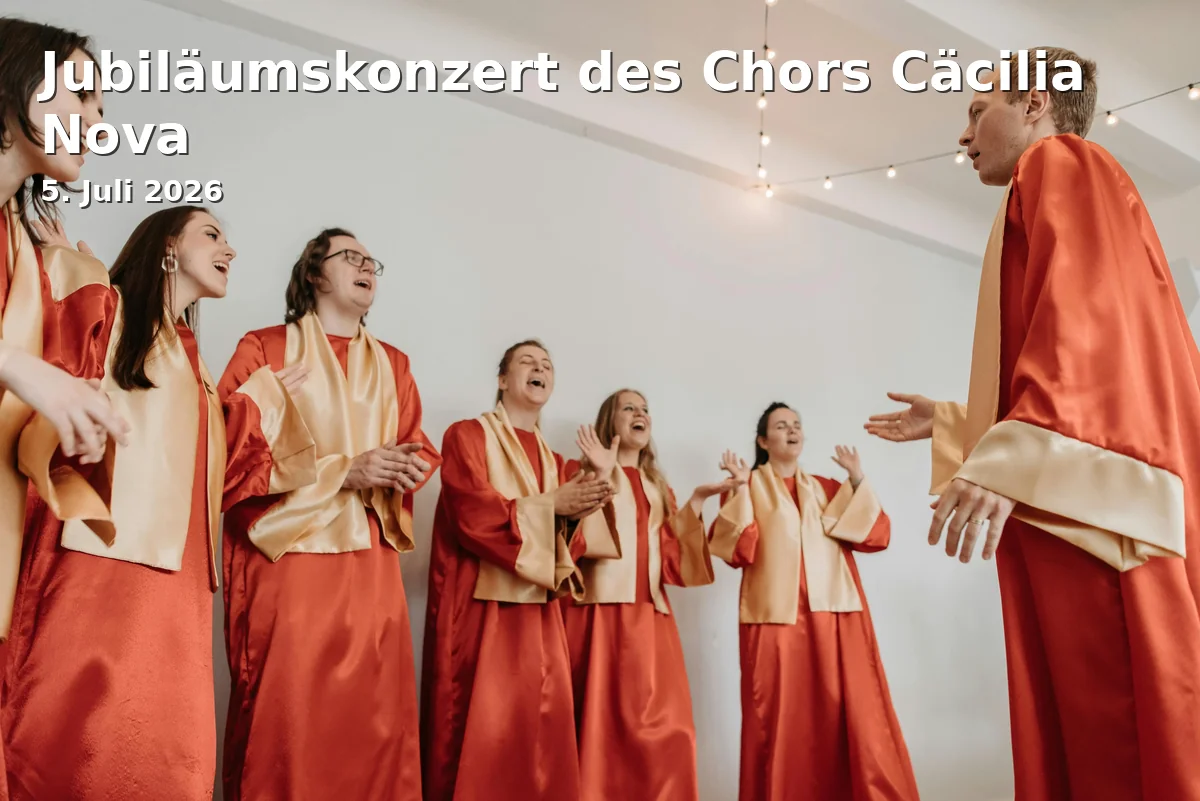
Anniversary Concert of the Choir Cäcilia Nova
Experience the Choir Cäcilia Nova at the anniversary concert on July 5, 2026, in Dießen am Ammersee. Admission free!
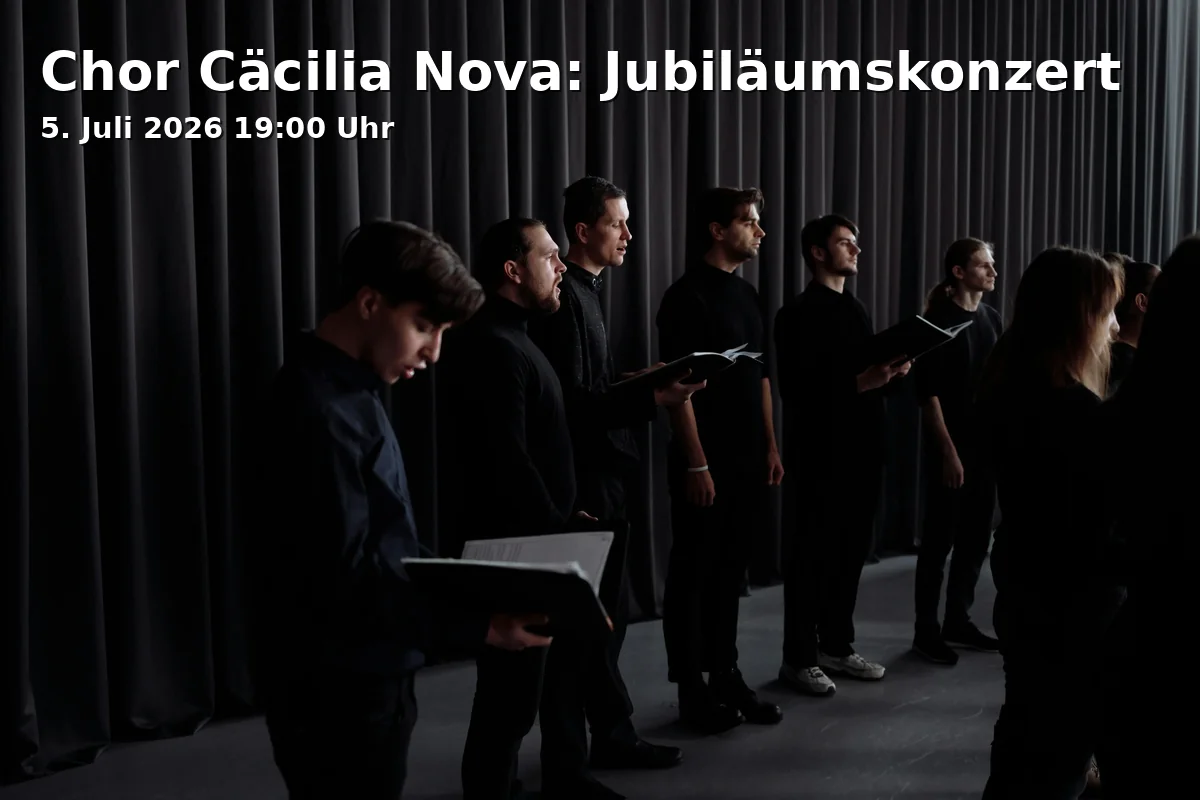
Chor Cäcilia Nova: Anniversary Concert
A festive choral evening at Ammersee: Cäcilia Nova sings at the St. Georg Church with great emotional power. 05.07.2026, 7:00 PM, free admission. #Ammersee

Cäcilia Nova
Cäcilia Nova brings choral sound, strings, and festive ambiance together in St. Georg. On July 5, 2026, Dießen awaits a special summer evening. #ChoralConcert
Frequently Asked Questions
Reviews
Wulf-Ingo Gilbert
5. March 2023
We didn't visit the church, but we did check out the accompanying cemetery with its partly very old graves and the small ossuary in front of the church entrance with its few skulls and thigh bones. It feels like a reminder to churchgoers about the transience of life.
Robin Marti KirchenGlocken
5. September 2022
Beautiful and inviting church with excellent facilities. It served as the parish church of Dießen until the secularization of the Augustinian Canons.
G. G.
20. June 2019
Definitely worth a visit if you're nearby.
Benjamin kobes
28. May 2019
Fits.
Ss Sybille und Jürgen Sonnenberg
25. July 2024
No comment