
Bernried am Starnberger See
Dorfstraße 26, 82347 Bernried am Starnberger See, Deutschland
Sommerkeller at the Town Hall Bernried | Events & Directions
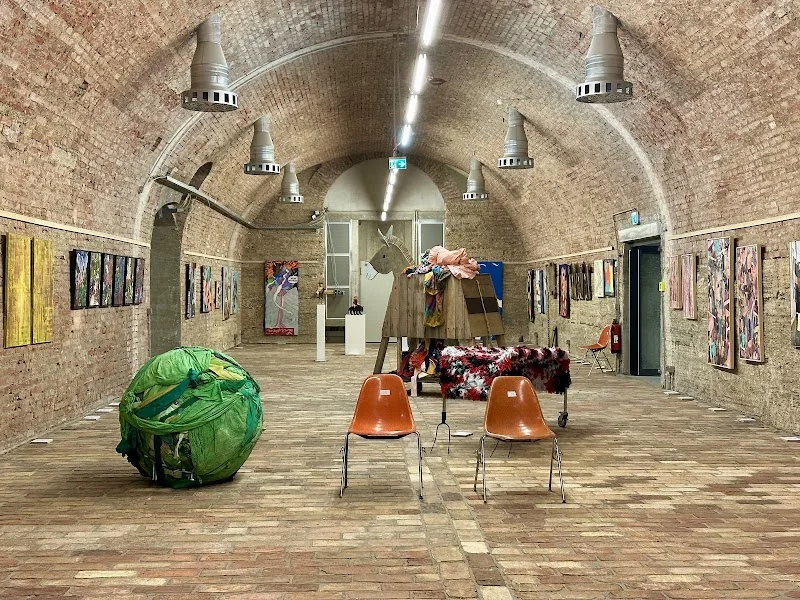
The Sommerkeller at the Town Hall Bernried is a unique cultural and event gem located in the village of Bernried on Lake Starnberg. The official website describes the venue as a former beer cellar from 1860, which today features three differently sized barrel vaults. Depending on the needs, these rooms can be used individually or together. This combination of historical substance, authentic architecture, and modern event usage makes the Sommerkeller a place that stands out in searches for photos, address, events, parking, and program. ([sommerkeller-bernried.de](https://sommerkeller-bernried.de/))
For visitors, the Sommerkeller is therefore much more than just an event location. It connects the history of the former beer cellar with its current role as a stage for culture, celebrations, and encounters. At the same time, it is located in close proximity to the town center, the monastery, the town hall plateau, and Lake Starnberg. The glass JUCHÄ complements the historical core with a modern viewpoint overlooking the lake, making the place visually particularly appealing. Those looking for a location with character will find one of the most exciting event venues in Bernried here. ([sommerkeller-bernried.de](https://sommerkeller-bernried.de/))
Current Program and Events at the Sommerkeller Bernried
The current program clearly shows what the Sommerkeller stands for: The place is not only intended for private celebrations or corporate events but is also consciously established as a public cultural address. The official program page announces concerts, theater, exhibitions, and readings throughout the year. The current selection includes D'BavaResi, the Bernried art exhibition for the 50th anniversary, Art as the Voice of Europe, and Jürgen Udo Fischer painting. This covers exactly the topics that users expect when searching for events and programs. ([sommerkeller-bernried.de](https://sommerkeller-bernried.de/aktuelles-programm/))
Particularly helpful for planning is that the Sommerkeller is closely linked to local cultural life. The municipality of Bernried also lists the Sommerkeller in its event calendar, which shows that the location is firmly anchored in the public cultural scene. The website also points out that ticket pre-sales are sometimes possible through the Bernried tourist information next to the Sommerkeller. For visitors, this means: The program is not only diverse but also practically accessible. Those interested in an event should regularly check the official website, as dates, formats, and exhibitions are continuously updated. ([sommerkeller-bernried.de](https://sommerkeller-bernried.de/aktuelles-programm/))
Address, Directions, and Parking at the Sommerkeller Bernried
The address is clear and easy to find: Sommerkeller, Dorfstraße 26, 82347 Bernried am Starnberger See, with the entrance at the village square. Those arriving by car should follow the official directions via the A95 towards Garmisch, take exit 7 Seeshaupt, drive on the state road 2064 towards Seeshaupt, and continue to the turnoff for Bernried. From there, it leads to the town center. This route is particularly relevant for guests from Munich, the greater Upper Bavaria area, and the western shore of Lake Starnberg, as it makes the Sommerkeller easily accessible. ([sommerkeller-bernried.de](https://sommerkeller-bernried.de/kontakt-anfahrt/))
When it comes to parking, Bernried offers several options. Directly at the Town Hall / Sommerkeller parking garage, there are 30 spaces available. Additionally, the official site mentions further parking spaces at the Buchheim Museum with 300 spaces, on Dorfstraße with 10 spaces, at the farm shop with 20 spaces, at the shipyard with 15 spaces, and at the marina with 50 paid spaces. For cultural events, the municipality explicitly recommends the large parking lot of the Buchheim Museum at the town entrance; from there, it is only about a 10-minute walk. Those relying on public transport benefit from the train connection and can avoid the parking situation on the day of the event. ([sommerkeller-bernried.de](https://sommerkeller-bernried.de/kontakt-anfahrt/))
The arrival by train is also well described. Bernried has its own train station, which is regularly served by a regional train on the Munich-Penzberg route; a MVV day ticket is usable according to the website. From the station, it takes about 10 to 15 minutes on foot, depending on the chosen route. The official directions lead downhill towards the lake, across the pedestrian traffic light, and along the village street to the village square, from where the main entrance of the Sommerkeller is already visible. Additionally, the website refers to taxis at the station and the possibility of arriving by boat during the summer months. Thus, the Sommerkeller is not only accessible by car but also conveniently by train and boat. ([sommerkeller-bernried.de](https://sommerkeller-bernried.de/kontakt-anfahrt/))
Barrel Vaults, Capacity, and Equipment of the Event Location
Architecturally, the Sommerkeller thrives on its historical barrel vaults. The official homepage mentions three differently sized, adjacent barrel vaults that can be used individually or together as needed. In the historical description, the place is additionally referred to as a four-aisled cellar with massive barrel vaults. This structure gives the rooms their unique character and explains why the location is suitable for very different formats. For celebrations, the website states a capacity of up to 200 people, for congresses and concerts even up to 600 people. This makes the Sommerkeller attractive for both private parties and larger cultural events. ([sommerkeller-bernried.de](https://sommerkeller-bernried.de/))
The equipment also shows that the use as an event location has been carefully developed. According to the event organizer's page, the historical vaults provide ideal acoustics for concerts, readings, cabaret, and other musical performances due to their brick construction. At the same time, professional stage technology and an atmospheric audience area can be utilized. Listed are, among other things, a screen measuring 4 by 3 meters, projector, flip chart, podium, stage, microphone-speaker system, and Wi-Fi. For catering, there is a rear vaulted barrel with direct access, restrooms, and a shower for staff; the kitchen and catering inventory can be rented from an external caterer. This shows how flexibly the Sommerkeller can adapt to events, seminars, and cultural formats. ([sommerkeller-bernried.de](https://sommerkeller-bernried.de/fuer-veranstalter/))
Those planning their own events at the Sommerkeller also benefit from the combination of historical rooms and modern organization. The website explicitly emphasizes that celebrations and seminars are planned together with clients, and individual wishes are taken into account. The architectural structure creates different spatial effects, from an intimate atmosphere to a spacious setting for audience and stage. This mix of tradition and functionality is a strong argument for inquiries about capacity, seating options, floor plans, and equipment. The Sommerkeller thus offers not only beautiful photos but also practical conditions for high-quality events. ([sommerkeller-bernried.de](https://sommerkeller-bernried.de/))
The Glass JUCHÄ with Lake View and Open-Air Area
A special highlight is the glass JUCHÄ, which sits atop the Sommerkeller and offers a view of the historic town center and Lake Starnberg. According to the official description, this area is directly connected to the Sommerkeller via an elevator or outdoor stairs. The JUCHÄ serves as a modern counterpoint to the historical vaults and is particularly suitable for champagne receptions, small exhibitions, and events where a high-quality first impression counts. The large glass fronts ensure that part of the area is also visible from the outside, generating attention even outside of opening hours. ([sommerkeller-bernried.de](https://sommerkeller-bernried.de/der-sommerkeller/das-glaeserne-juchae/))
For event organizers, the glass JUCHÄ is also attractive because it provides a weather-friendly addition to the historical cellar. The website describes it as a place where events can shine even in bad weather. At the same time, the town hall plateau borders it directly and offers space for open-air events. The page for the glass JUCHÄ even points out that the cultural summer Bernried has been enhanced with classical open-air concerts and comedy events there. Thus, the JUCHÄ expands the use of the Sommerkeller by another dimension: It is not only a viewing platform but also a functional event component with a lake view, audience impact, and architectural independence. ([sommerkeller-bernried.de](https://sommerkeller-bernried.de/der-sommerkeller/das-glaeserne-juchae/))
Organizationally, this fits well into the overall picture. The municipal enterprise Bernried, short KUB, was founded after the municipality took over the monastery of the Missionary Benedictines on January 1, 2022, and has since operated, among other things, the St. Martin education house and catering at the Sommerkeller. The website emphasizes regional sourcing, seasonal dishes, and individual planning. Thus, the glass JUCHÄ becomes not only a beautiful viewpoint but also a high-quality place for receptions, culture, and representative moments. Those looking for photos of Bernried will find one of the strongest image locations between the lake, historic town center, and modern architecture. ([sommerkeller-bernried.de](https://sommerkeller-bernried.de/der-sommerkeller/das-glaeserne-juchae/))
History of the Sommerkeller from Beer Cellar to Cultural Venue
The history of the Sommerkeller begins long before its current use as an event location. The official history page states that August von Wendland bought the monastery with all its facilities in 1852 and converted it into a castle. The economy with brewery developed into a flourishing business, and in 1858/59 the cellar was expanded. It served as a summer cellar for storing and cooling beer. Brewed in winter, cooled with natural ice blocks, and stored in four large barrel vaults, the place was a technical and economic structure of its time. Above the earth coverage stood a barn-like building that served as shading. ([sommerkeller-bernried.de](https://sommerkeller-bernried.de/der-sommerkeller/))
Between about 1870 and 1910, the Sommerkeller was a lively beer garden operation. According to the website, it attracted many Munich residents on weekends by train and boat to Bernried; also, raucous parties and large cultural events with up to a thousand visitors took place here. With the sale of the Bernried castle brewery to the Tutzingers in 1909, this joyful life came to an end. Today, the Sommerkeller stands as a four-aisled cellar with massive barrel vaults under monument protection. In the course of the construction of the town hall and the planning of the community center, the vaults were worked on, the load-bearing walls were stabilized with 256 bored piles, and further measures for use for events were implemented. Thus, a former brewing cellar gradually became a culturally usable place with an identity-forming history. ([sommerkeller-bernried.de](https://sommerkeller-bernried.de/der-sommerkeller/))
This historical depth is an essential part of today's impact. When entering the Sommerkeller, one does not experience an arbitrary event space but a place with a visible past. The masonry, the vaults, and the underground structure tell of storage, brewing art, and social life of the 19th century. At the same time, the renovation shows that monument protection and contemporary use do not have to be contradictory. This connection of historical authenticity and technical enhancement makes the Sommerkeller interesting for weddings, cultural evenings, seminars, and receptions. The history here is not a mere accessory but the core of the experience. ([sommerkeller-bernried.de](https://sommerkeller-bernried.de/der-sommerkeller/))
Bernried on Lake Starnberg around Monastery, Park, and Lake Shore
The Sommerkeller greatly benefits from its surroundings. The official website points out that it is just a few steps from the Sommerkeller through the historic town center, past the monastery, directly to Lake Starnberg. The subsequent Bernried Park invites for walks along the lake shore. Thus, the location is not only interesting for the evening of an event but also for the entire stay before or after. Those wanting to take photos will find several levels here: the place with its vaults, the glass JUCHÄ, the historic town center, the monastery, and the water of the lake. For visitors, this creates a particularly dense, picturesque overall picture. ([sommerkeller-bernried.de](https://sommerkeller-bernried.de/der-sommerkeller/das-glaeserne-juchae/))
The connection to local cultural life is also strong. The municipality of Bernried centrally lists its event dates, and the Sommerkeller regularly appears there as an event location. This fits with a place that does not stand isolated in Bernried but is part of a whole cultural ecosystem. This includes the monastery, the municipality, cultural associations, the cultural summer, and other institutions around the place. This is particularly important for inquiries such as pictures of Sommerkeller at the Town Hall Bernried or Sommerkeller Bernried events because the location is not just a building but a cultural anchor point of the community. ([bernried.de](https://www.bernried.de/de/aktuelles/veranstaltungstermine))
Particularly helpful for travelers is also the location in a place with good connections and clear orientation. The train station, the boat connection in the summer months, and the easily accessible destinations make Bernried manageable and relaxed. The combination of lakeside location, historic village center, and modern event usage is rarely bundled in this form in the Starnberg area. That is why the Sommerkeller is suitable for both local visitors and guests from outside looking for a special location with character. Whether culture, private celebration, or representative event: The Sommerkeller at the Town Hall Bernried stands for atmosphere, history, and good accessibility all in one. ([sommerkeller-bernried.de](https://sommerkeller-bernried.de/kontakt-anfahrt/))
Sources:
- Sommerkeller Bernried - Official Website
- Sommerkeller Bernried - The Sommerkeller
- Sommerkeller Bernried - Contact & Directions
- Sommerkeller Bernried - Current Program
- Sommerkeller Bernried - Cultural Events
- Sommerkeller Bernried - The Glass JUCHÄ
- Municipality of Bernried on Lake Starnberg - Event Dates
- Hey Stage - Udo Wachtveitl & Amici-Ensemble: Casanova's Return
Show moreShow less
Sommerkeller at the Town Hall Bernried | Events & Directions
The Sommerkeller at the Town Hall Bernried is a unique cultural and event gem located in the village of Bernried on Lake Starnberg. The official website describes the venue as a former beer cellar from 1860, which today features three differently sized barrel vaults. Depending on the needs, these rooms can be used individually or together. This combination of historical substance, authentic architecture, and modern event usage makes the Sommerkeller a place that stands out in searches for photos, address, events, parking, and program. ([sommerkeller-bernried.de](https://sommerkeller-bernried.de/))
For visitors, the Sommerkeller is therefore much more than just an event location. It connects the history of the former beer cellar with its current role as a stage for culture, celebrations, and encounters. At the same time, it is located in close proximity to the town center, the monastery, the town hall plateau, and Lake Starnberg. The glass JUCHÄ complements the historical core with a modern viewpoint overlooking the lake, making the place visually particularly appealing. Those looking for a location with character will find one of the most exciting event venues in Bernried here. ([sommerkeller-bernried.de](https://sommerkeller-bernried.de/))
Current Program and Events at the Sommerkeller Bernried
The current program clearly shows what the Sommerkeller stands for: The place is not only intended for private celebrations or corporate events but is also consciously established as a public cultural address. The official program page announces concerts, theater, exhibitions, and readings throughout the year. The current selection includes D'BavaResi, the Bernried art exhibition for the 50th anniversary, Art as the Voice of Europe, and Jürgen Udo Fischer painting. This covers exactly the topics that users expect when searching for events and programs. ([sommerkeller-bernried.de](https://sommerkeller-bernried.de/aktuelles-programm/))
Particularly helpful for planning is that the Sommerkeller is closely linked to local cultural life. The municipality of Bernried also lists the Sommerkeller in its event calendar, which shows that the location is firmly anchored in the public cultural scene. The website also points out that ticket pre-sales are sometimes possible through the Bernried tourist information next to the Sommerkeller. For visitors, this means: The program is not only diverse but also practically accessible. Those interested in an event should regularly check the official website, as dates, formats, and exhibitions are continuously updated. ([sommerkeller-bernried.de](https://sommerkeller-bernried.de/aktuelles-programm/))
Address, Directions, and Parking at the Sommerkeller Bernried
The address is clear and easy to find: Sommerkeller, Dorfstraße 26, 82347 Bernried am Starnberger See, with the entrance at the village square. Those arriving by car should follow the official directions via the A95 towards Garmisch, take exit 7 Seeshaupt, drive on the state road 2064 towards Seeshaupt, and continue to the turnoff for Bernried. From there, it leads to the town center. This route is particularly relevant for guests from Munich, the greater Upper Bavaria area, and the western shore of Lake Starnberg, as it makes the Sommerkeller easily accessible. ([sommerkeller-bernried.de](https://sommerkeller-bernried.de/kontakt-anfahrt/))
When it comes to parking, Bernried offers several options. Directly at the Town Hall / Sommerkeller parking garage, there are 30 spaces available. Additionally, the official site mentions further parking spaces at the Buchheim Museum with 300 spaces, on Dorfstraße with 10 spaces, at the farm shop with 20 spaces, at the shipyard with 15 spaces, and at the marina with 50 paid spaces. For cultural events, the municipality explicitly recommends the large parking lot of the Buchheim Museum at the town entrance; from there, it is only about a 10-minute walk. Those relying on public transport benefit from the train connection and can avoid the parking situation on the day of the event. ([sommerkeller-bernried.de](https://sommerkeller-bernried.de/kontakt-anfahrt/))
The arrival by train is also well described. Bernried has its own train station, which is regularly served by a regional train on the Munich-Penzberg route; a MVV day ticket is usable according to the website. From the station, it takes about 10 to 15 minutes on foot, depending on the chosen route. The official directions lead downhill towards the lake, across the pedestrian traffic light, and along the village street to the village square, from where the main entrance of the Sommerkeller is already visible. Additionally, the website refers to taxis at the station and the possibility of arriving by boat during the summer months. Thus, the Sommerkeller is not only accessible by car but also conveniently by train and boat. ([sommerkeller-bernried.de](https://sommerkeller-bernried.de/kontakt-anfahrt/))
Barrel Vaults, Capacity, and Equipment of the Event Location
Architecturally, the Sommerkeller thrives on its historical barrel vaults. The official homepage mentions three differently sized, adjacent barrel vaults that can be used individually or together as needed. In the historical description, the place is additionally referred to as a four-aisled cellar with massive barrel vaults. This structure gives the rooms their unique character and explains why the location is suitable for very different formats. For celebrations, the website states a capacity of up to 200 people, for congresses and concerts even up to 600 people. This makes the Sommerkeller attractive for both private parties and larger cultural events. ([sommerkeller-bernried.de](https://sommerkeller-bernried.de/))
The equipment also shows that the use as an event location has been carefully developed. According to the event organizer's page, the historical vaults provide ideal acoustics for concerts, readings, cabaret, and other musical performances due to their brick construction. At the same time, professional stage technology and an atmospheric audience area can be utilized. Listed are, among other things, a screen measuring 4 by 3 meters, projector, flip chart, podium, stage, microphone-speaker system, and Wi-Fi. For catering, there is a rear vaulted barrel with direct access, restrooms, and a shower for staff; the kitchen and catering inventory can be rented from an external caterer. This shows how flexibly the Sommerkeller can adapt to events, seminars, and cultural formats. ([sommerkeller-bernried.de](https://sommerkeller-bernried.de/fuer-veranstalter/))
Those planning their own events at the Sommerkeller also benefit from the combination of historical rooms and modern organization. The website explicitly emphasizes that celebrations and seminars are planned together with clients, and individual wishes are taken into account. The architectural structure creates different spatial effects, from an intimate atmosphere to a spacious setting for audience and stage. This mix of tradition and functionality is a strong argument for inquiries about capacity, seating options, floor plans, and equipment. The Sommerkeller thus offers not only beautiful photos but also practical conditions for high-quality events. ([sommerkeller-bernried.de](https://sommerkeller-bernried.de/))
The Glass JUCHÄ with Lake View and Open-Air Area
A special highlight is the glass JUCHÄ, which sits atop the Sommerkeller and offers a view of the historic town center and Lake Starnberg. According to the official description, this area is directly connected to the Sommerkeller via an elevator or outdoor stairs. The JUCHÄ serves as a modern counterpoint to the historical vaults and is particularly suitable for champagne receptions, small exhibitions, and events where a high-quality first impression counts. The large glass fronts ensure that part of the area is also visible from the outside, generating attention even outside of opening hours. ([sommerkeller-bernried.de](https://sommerkeller-bernried.de/der-sommerkeller/das-glaeserne-juchae/))
For event organizers, the glass JUCHÄ is also attractive because it provides a weather-friendly addition to the historical cellar. The website describes it as a place where events can shine even in bad weather. At the same time, the town hall plateau borders it directly and offers space for open-air events. The page for the glass JUCHÄ even points out that the cultural summer Bernried has been enhanced with classical open-air concerts and comedy events there. Thus, the JUCHÄ expands the use of the Sommerkeller by another dimension: It is not only a viewing platform but also a functional event component with a lake view, audience impact, and architectural independence. ([sommerkeller-bernried.de](https://sommerkeller-bernried.de/der-sommerkeller/das-glaeserne-juchae/))
Organizationally, this fits well into the overall picture. The municipal enterprise Bernried, short KUB, was founded after the municipality took over the monastery of the Missionary Benedictines on January 1, 2022, and has since operated, among other things, the St. Martin education house and catering at the Sommerkeller. The website emphasizes regional sourcing, seasonal dishes, and individual planning. Thus, the glass JUCHÄ becomes not only a beautiful viewpoint but also a high-quality place for receptions, culture, and representative moments. Those looking for photos of Bernried will find one of the strongest image locations between the lake, historic town center, and modern architecture. ([sommerkeller-bernried.de](https://sommerkeller-bernried.de/der-sommerkeller/das-glaeserne-juchae/))
History of the Sommerkeller from Beer Cellar to Cultural Venue
The history of the Sommerkeller begins long before its current use as an event location. The official history page states that August von Wendland bought the monastery with all its facilities in 1852 and converted it into a castle. The economy with brewery developed into a flourishing business, and in 1858/59 the cellar was expanded. It served as a summer cellar for storing and cooling beer. Brewed in winter, cooled with natural ice blocks, and stored in four large barrel vaults, the place was a technical and economic structure of its time. Above the earth coverage stood a barn-like building that served as shading. ([sommerkeller-bernried.de](https://sommerkeller-bernried.de/der-sommerkeller/))
Between about 1870 and 1910, the Sommerkeller was a lively beer garden operation. According to the website, it attracted many Munich residents on weekends by train and boat to Bernried; also, raucous parties and large cultural events with up to a thousand visitors took place here. With the sale of the Bernried castle brewery to the Tutzingers in 1909, this joyful life came to an end. Today, the Sommerkeller stands as a four-aisled cellar with massive barrel vaults under monument protection. In the course of the construction of the town hall and the planning of the community center, the vaults were worked on, the load-bearing walls were stabilized with 256 bored piles, and further measures for use for events were implemented. Thus, a former brewing cellar gradually became a culturally usable place with an identity-forming history. ([sommerkeller-bernried.de](https://sommerkeller-bernried.de/der-sommerkeller/))
This historical depth is an essential part of today's impact. When entering the Sommerkeller, one does not experience an arbitrary event space but a place with a visible past. The masonry, the vaults, and the underground structure tell of storage, brewing art, and social life of the 19th century. At the same time, the renovation shows that monument protection and contemporary use do not have to be contradictory. This connection of historical authenticity and technical enhancement makes the Sommerkeller interesting for weddings, cultural evenings, seminars, and receptions. The history here is not a mere accessory but the core of the experience. ([sommerkeller-bernried.de](https://sommerkeller-bernried.de/der-sommerkeller/))
Bernried on Lake Starnberg around Monastery, Park, and Lake Shore
The Sommerkeller greatly benefits from its surroundings. The official website points out that it is just a few steps from the Sommerkeller through the historic town center, past the monastery, directly to Lake Starnberg. The subsequent Bernried Park invites for walks along the lake shore. Thus, the location is not only interesting for the evening of an event but also for the entire stay before or after. Those wanting to take photos will find several levels here: the place with its vaults, the glass JUCHÄ, the historic town center, the monastery, and the water of the lake. For visitors, this creates a particularly dense, picturesque overall picture. ([sommerkeller-bernried.de](https://sommerkeller-bernried.de/der-sommerkeller/das-glaeserne-juchae/))
The connection to local cultural life is also strong. The municipality of Bernried centrally lists its event dates, and the Sommerkeller regularly appears there as an event location. This fits with a place that does not stand isolated in Bernried but is part of a whole cultural ecosystem. This includes the monastery, the municipality, cultural associations, the cultural summer, and other institutions around the place. This is particularly important for inquiries such as pictures of Sommerkeller at the Town Hall Bernried or Sommerkeller Bernried events because the location is not just a building but a cultural anchor point of the community. ([bernried.de](https://www.bernried.de/de/aktuelles/veranstaltungstermine))
Particularly helpful for travelers is also the location in a place with good connections and clear orientation. The train station, the boat connection in the summer months, and the easily accessible destinations make Bernried manageable and relaxed. The combination of lakeside location, historic village center, and modern event usage is rarely bundled in this form in the Starnberg area. That is why the Sommerkeller is suitable for both local visitors and guests from outside looking for a special location with character. Whether culture, private celebration, or representative event: The Sommerkeller at the Town Hall Bernried stands for atmosphere, history, and good accessibility all in one. ([sommerkeller-bernried.de](https://sommerkeller-bernried.de/kontakt-anfahrt/))
Sources:
- Sommerkeller Bernried - Official Website
- Sommerkeller Bernried - The Sommerkeller
- Sommerkeller Bernried - Contact & Directions
- Sommerkeller Bernried - Current Program
- Sommerkeller Bernried - Cultural Events
- Sommerkeller Bernried - The Glass JUCHÄ
- Municipality of Bernried on Lake Starnberg - Event Dates
- Hey Stage - Udo Wachtveitl & Amici-Ensemble: Casanova's Return
Sommerkeller at the Town Hall Bernried | Events & Directions
The Sommerkeller at the Town Hall Bernried is a unique cultural and event gem located in the village of Bernried on Lake Starnberg. The official website describes the venue as a former beer cellar from 1860, which today features three differently sized barrel vaults. Depending on the needs, these rooms can be used individually or together. This combination of historical substance, authentic architecture, and modern event usage makes the Sommerkeller a place that stands out in searches for photos, address, events, parking, and program. ([sommerkeller-bernried.de](https://sommerkeller-bernried.de/))
For visitors, the Sommerkeller is therefore much more than just an event location. It connects the history of the former beer cellar with its current role as a stage for culture, celebrations, and encounters. At the same time, it is located in close proximity to the town center, the monastery, the town hall plateau, and Lake Starnberg. The glass JUCHÄ complements the historical core with a modern viewpoint overlooking the lake, making the place visually particularly appealing. Those looking for a location with character will find one of the most exciting event venues in Bernried here. ([sommerkeller-bernried.de](https://sommerkeller-bernried.de/))
Current Program and Events at the Sommerkeller Bernried
The current program clearly shows what the Sommerkeller stands for: The place is not only intended for private celebrations or corporate events but is also consciously established as a public cultural address. The official program page announces concerts, theater, exhibitions, and readings throughout the year. The current selection includes D'BavaResi, the Bernried art exhibition for the 50th anniversary, Art as the Voice of Europe, and Jürgen Udo Fischer painting. This covers exactly the topics that users expect when searching for events and programs. ([sommerkeller-bernried.de](https://sommerkeller-bernried.de/aktuelles-programm/))
Particularly helpful for planning is that the Sommerkeller is closely linked to local cultural life. The municipality of Bernried also lists the Sommerkeller in its event calendar, which shows that the location is firmly anchored in the public cultural scene. The website also points out that ticket pre-sales are sometimes possible through the Bernried tourist information next to the Sommerkeller. For visitors, this means: The program is not only diverse but also practically accessible. Those interested in an event should regularly check the official website, as dates, formats, and exhibitions are continuously updated. ([sommerkeller-bernried.de](https://sommerkeller-bernried.de/aktuelles-programm/))
Address, Directions, and Parking at the Sommerkeller Bernried
The address is clear and easy to find: Sommerkeller, Dorfstraße 26, 82347 Bernried am Starnberger See, with the entrance at the village square. Those arriving by car should follow the official directions via the A95 towards Garmisch, take exit 7 Seeshaupt, drive on the state road 2064 towards Seeshaupt, and continue to the turnoff for Bernried. From there, it leads to the town center. This route is particularly relevant for guests from Munich, the greater Upper Bavaria area, and the western shore of Lake Starnberg, as it makes the Sommerkeller easily accessible. ([sommerkeller-bernried.de](https://sommerkeller-bernried.de/kontakt-anfahrt/))
When it comes to parking, Bernried offers several options. Directly at the Town Hall / Sommerkeller parking garage, there are 30 spaces available. Additionally, the official site mentions further parking spaces at the Buchheim Museum with 300 spaces, on Dorfstraße with 10 spaces, at the farm shop with 20 spaces, at the shipyard with 15 spaces, and at the marina with 50 paid spaces. For cultural events, the municipality explicitly recommends the large parking lot of the Buchheim Museum at the town entrance; from there, it is only about a 10-minute walk. Those relying on public transport benefit from the train connection and can avoid the parking situation on the day of the event. ([sommerkeller-bernried.de](https://sommerkeller-bernried.de/kontakt-anfahrt/))
The arrival by train is also well described. Bernried has its own train station, which is regularly served by a regional train on the Munich-Penzberg route; a MVV day ticket is usable according to the website. From the station, it takes about 10 to 15 minutes on foot, depending on the chosen route. The official directions lead downhill towards the lake, across the pedestrian traffic light, and along the village street to the village square, from where the main entrance of the Sommerkeller is already visible. Additionally, the website refers to taxis at the station and the possibility of arriving by boat during the summer months. Thus, the Sommerkeller is not only accessible by car but also conveniently by train and boat. ([sommerkeller-bernried.de](https://sommerkeller-bernried.de/kontakt-anfahrt/))
Barrel Vaults, Capacity, and Equipment of the Event Location
Architecturally, the Sommerkeller thrives on its historical barrel vaults. The official homepage mentions three differently sized, adjacent barrel vaults that can be used individually or together as needed. In the historical description, the place is additionally referred to as a four-aisled cellar with massive barrel vaults. This structure gives the rooms their unique character and explains why the location is suitable for very different formats. For celebrations, the website states a capacity of up to 200 people, for congresses and concerts even up to 600 people. This makes the Sommerkeller attractive for both private parties and larger cultural events. ([sommerkeller-bernried.de](https://sommerkeller-bernried.de/))
The equipment also shows that the use as an event location has been carefully developed. According to the event organizer's page, the historical vaults provide ideal acoustics for concerts, readings, cabaret, and other musical performances due to their brick construction. At the same time, professional stage technology and an atmospheric audience area can be utilized. Listed are, among other things, a screen measuring 4 by 3 meters, projector, flip chart, podium, stage, microphone-speaker system, and Wi-Fi. For catering, there is a rear vaulted barrel with direct access, restrooms, and a shower for staff; the kitchen and catering inventory can be rented from an external caterer. This shows how flexibly the Sommerkeller can adapt to events, seminars, and cultural formats. ([sommerkeller-bernried.de](https://sommerkeller-bernried.de/fuer-veranstalter/))
Those planning their own events at the Sommerkeller also benefit from the combination of historical rooms and modern organization. The website explicitly emphasizes that celebrations and seminars are planned together with clients, and individual wishes are taken into account. The architectural structure creates different spatial effects, from an intimate atmosphere to a spacious setting for audience and stage. This mix of tradition and functionality is a strong argument for inquiries about capacity, seating options, floor plans, and equipment. The Sommerkeller thus offers not only beautiful photos but also practical conditions for high-quality events. ([sommerkeller-bernried.de](https://sommerkeller-bernried.de/))
The Glass JUCHÄ with Lake View and Open-Air Area
A special highlight is the glass JUCHÄ, which sits atop the Sommerkeller and offers a view of the historic town center and Lake Starnberg. According to the official description, this area is directly connected to the Sommerkeller via an elevator or outdoor stairs. The JUCHÄ serves as a modern counterpoint to the historical vaults and is particularly suitable for champagne receptions, small exhibitions, and events where a high-quality first impression counts. The large glass fronts ensure that part of the area is also visible from the outside, generating attention even outside of opening hours. ([sommerkeller-bernried.de](https://sommerkeller-bernried.de/der-sommerkeller/das-glaeserne-juchae/))
For event organizers, the glass JUCHÄ is also attractive because it provides a weather-friendly addition to the historical cellar. The website describes it as a place where events can shine even in bad weather. At the same time, the town hall plateau borders it directly and offers space for open-air events. The page for the glass JUCHÄ even points out that the cultural summer Bernried has been enhanced with classical open-air concerts and comedy events there. Thus, the JUCHÄ expands the use of the Sommerkeller by another dimension: It is not only a viewing platform but also a functional event component with a lake view, audience impact, and architectural independence. ([sommerkeller-bernried.de](https://sommerkeller-bernried.de/der-sommerkeller/das-glaeserne-juchae/))
Organizationally, this fits well into the overall picture. The municipal enterprise Bernried, short KUB, was founded after the municipality took over the monastery of the Missionary Benedictines on January 1, 2022, and has since operated, among other things, the St. Martin education house and catering at the Sommerkeller. The website emphasizes regional sourcing, seasonal dishes, and individual planning. Thus, the glass JUCHÄ becomes not only a beautiful viewpoint but also a high-quality place for receptions, culture, and representative moments. Those looking for photos of Bernried will find one of the strongest image locations between the lake, historic town center, and modern architecture. ([sommerkeller-bernried.de](https://sommerkeller-bernried.de/der-sommerkeller/das-glaeserne-juchae/))
History of the Sommerkeller from Beer Cellar to Cultural Venue
The history of the Sommerkeller begins long before its current use as an event location. The official history page states that August von Wendland bought the monastery with all its facilities in 1852 and converted it into a castle. The economy with brewery developed into a flourishing business, and in 1858/59 the cellar was expanded. It served as a summer cellar for storing and cooling beer. Brewed in winter, cooled with natural ice blocks, and stored in four large barrel vaults, the place was a technical and economic structure of its time. Above the earth coverage stood a barn-like building that served as shading. ([sommerkeller-bernried.de](https://sommerkeller-bernried.de/der-sommerkeller/))
Between about 1870 and 1910, the Sommerkeller was a lively beer garden operation. According to the website, it attracted many Munich residents on weekends by train and boat to Bernried; also, raucous parties and large cultural events with up to a thousand visitors took place here. With the sale of the Bernried castle brewery to the Tutzingers in 1909, this joyful life came to an end. Today, the Sommerkeller stands as a four-aisled cellar with massive barrel vaults under monument protection. In the course of the construction of the town hall and the planning of the community center, the vaults were worked on, the load-bearing walls were stabilized with 256 bored piles, and further measures for use for events were implemented. Thus, a former brewing cellar gradually became a culturally usable place with an identity-forming history. ([sommerkeller-bernried.de](https://sommerkeller-bernried.de/der-sommerkeller/))
This historical depth is an essential part of today's impact. When entering the Sommerkeller, one does not experience an arbitrary event space but a place with a visible past. The masonry, the vaults, and the underground structure tell of storage, brewing art, and social life of the 19th century. At the same time, the renovation shows that monument protection and contemporary use do not have to be contradictory. This connection of historical authenticity and technical enhancement makes the Sommerkeller interesting for weddings, cultural evenings, seminars, and receptions. The history here is not a mere accessory but the core of the experience. ([sommerkeller-bernried.de](https://sommerkeller-bernried.de/der-sommerkeller/))
Bernried on Lake Starnberg around Monastery, Park, and Lake Shore
The Sommerkeller greatly benefits from its surroundings. The official website points out that it is just a few steps from the Sommerkeller through the historic town center, past the monastery, directly to Lake Starnberg. The subsequent Bernried Park invites for walks along the lake shore. Thus, the location is not only interesting for the evening of an event but also for the entire stay before or after. Those wanting to take photos will find several levels here: the place with its vaults, the glass JUCHÄ, the historic town center, the monastery, and the water of the lake. For visitors, this creates a particularly dense, picturesque overall picture. ([sommerkeller-bernried.de](https://sommerkeller-bernried.de/der-sommerkeller/das-glaeserne-juchae/))
The connection to local cultural life is also strong. The municipality of Bernried centrally lists its event dates, and the Sommerkeller regularly appears there as an event location. This fits with a place that does not stand isolated in Bernried but is part of a whole cultural ecosystem. This includes the monastery, the municipality, cultural associations, the cultural summer, and other institutions around the place. This is particularly important for inquiries such as pictures of Sommerkeller at the Town Hall Bernried or Sommerkeller Bernried events because the location is not just a building but a cultural anchor point of the community. ([bernried.de](https://www.bernried.de/de/aktuelles/veranstaltungstermine))
Particularly helpful for travelers is also the location in a place with good connections and clear orientation. The train station, the boat connection in the summer months, and the easily accessible destinations make Bernried manageable and relaxed. The combination of lakeside location, historic village center, and modern event usage is rarely bundled in this form in the Starnberg area. That is why the Sommerkeller is suitable for both local visitors and guests from outside looking for a special location with character. Whether culture, private celebration, or representative event: The Sommerkeller at the Town Hall Bernried stands for atmosphere, history, and good accessibility all in one. ([sommerkeller-bernried.de](https://sommerkeller-bernried.de/kontakt-anfahrt/))
Sources:
- Sommerkeller Bernried - Official Website
- Sommerkeller Bernried - The Sommerkeller
- Sommerkeller Bernried - Contact & Directions
- Sommerkeller Bernried - Current Program
- Sommerkeller Bernried - Cultural Events
- Sommerkeller Bernried - The Glass JUCHÄ
- Municipality of Bernried on Lake Starnberg - Event Dates
- Hey Stage - Udo Wachtveitl & Amici-Ensemble: Casanova's Return

Frequently Asked Questions
Reviews
No reviews found