

Schwifting
Kirchberg 9, 86940 Schwifting, Deutschland
Schwiftinger Gallery and Project Integ Eric Gand | Art & Space
The Schwiftinger Gallery and Project Integ Eric Gand, now closely associated with the Schwifting Art Space, is an unusual cultural venue in Schwifting near Landsberg am Lech. The place combines publishing history, gallery work, and changing exhibitions with the signature of Eric Gand and the memory of Ingeborg Weigand. Instead of a neutral white cube, visitors experience nested spaces, a personal atmosphere, and a program that conceptualizes art, literature, and spatial impact together. For inquiries about the gallery, art space, opening hours, directions, art history, and Eric Gand, this location is particularly relevant. ([augsburger-allgemeine.de](https://www.augsburger-allgemeine.de/landsberg/Eine-verschachtelte-Geschichte-id8080746.html?utm_source=openai))
How the Schwiftinger Gallery Publishing House Became the Schwifting Art Space
The history of this place does not begin with a modern exhibition operation, but with a publishing house and a very specific cultural idea. The Schwiftinger Gallery Publishing House is documented as an organization in the German National Library; an alternative name is also the form Schwiftinger Gallery Publishing House for Visual Arts and Literature. This aligns with what the place has embodied for decades: a link between literature, visual arts, and craft-oriented publishing work. This is remarkable for regional cultural history because art is not simply shown here; rather, a whole production context has been established. Books, catalogs, and exhibitions have been closely linked from the beginning, giving the place a character that still distinguishes it from classical galleries today. Researching the Schwiftinger Gallery Publishing House therefore leads not only to a name but to a long tradition of cultural independence. ([portal.dnb.de](https://portal.dnb.de/opac/showPreviousRecord?currentPosition=0¤tResultId=nid%3D1044058145%26any&utm_source=openai))
An Augsburg article describes the emergence of the art space as a nested story that began with the Schwiftinger Gallery Publishing House and from which the first gallery emerged. For many years, it was managed by Eric Gand and his wife Ingeborg Weigand. After her death in 1995, Gand initially opened the gallery only sporadically for special occasions, while art and literature remained closely intertwined. Later, this developed into the current art space, which Eric Gand runs together with Kurt Tykwer. This transformation is SEO-relevant because users often search for the origin, the publishing name, and the current form of the location. The place is therefore not just a gallery but a historically grown cultural space where a private initiative has transformed into a local institution over decades. ([augsburger-allgemeine.de](https://www.augsburger-allgemeine.de/landsberg/Eine-verschachtelte-Geschichte-id8080746.html?utm_source=openai))
Opening Hours, Address, and Directions to Kirchberg 9
Those wishing to visit the place can find clear practical information on the official contact page. The address is Kirchberg 9, 86940 Schwifting. The website also provides a phone number and the email address info@kunstraum-schwifting.de. Particularly important for visitors are the opening hours: Sundays from 2 PM to 5 PM and by appointment. For inquiries about opening hours, contact, address, or directions, this information is central because the place is not a classical large operation with daily standard hours but rather a more personal, flexibly scheduled cultural address. This makes planning particularly easy when one knows that a Sunday visit or an individual appointment is possible. Those who want to consciously experience an exhibition should check the opening hours in advance and contact if necessary. ([kunstraum-schwifting.de](https://www.kunstraum-schwifting.de/kontakt.html?utm_source=openai))
The directions are also described very concretely on the contact page. The A96 Munich–Lindau highway is mentioned with the Schöffelding exit. From there, turn left over the highway, then right towards Landsberg, and then parallel to the highway until the turnoff to Schwifting. After that, follow the local signs. For visitors searching for parking, directions, or route descriptions, this clear driving route is particularly helpful because it makes the final stretch very comprehensible. The location is intentionally not on a major urban axis but in a rural environment that one approaches purposefully. This is not a disadvantage but shapes the character of the visit: one leaves the usual city rhythm and reaches an art place that already conveys a sense of deceleration in its location and accessibility. Those coming from Landsberg am Lech or from the A96 can easily combine the visit with a regional excursion. ([kunstraum-schwifting.de](https://www.kunstraum-schwifting.de/kontakt.html?utm_source=openai))
Exhibitions and Program Between Photography, Installation, and Nature
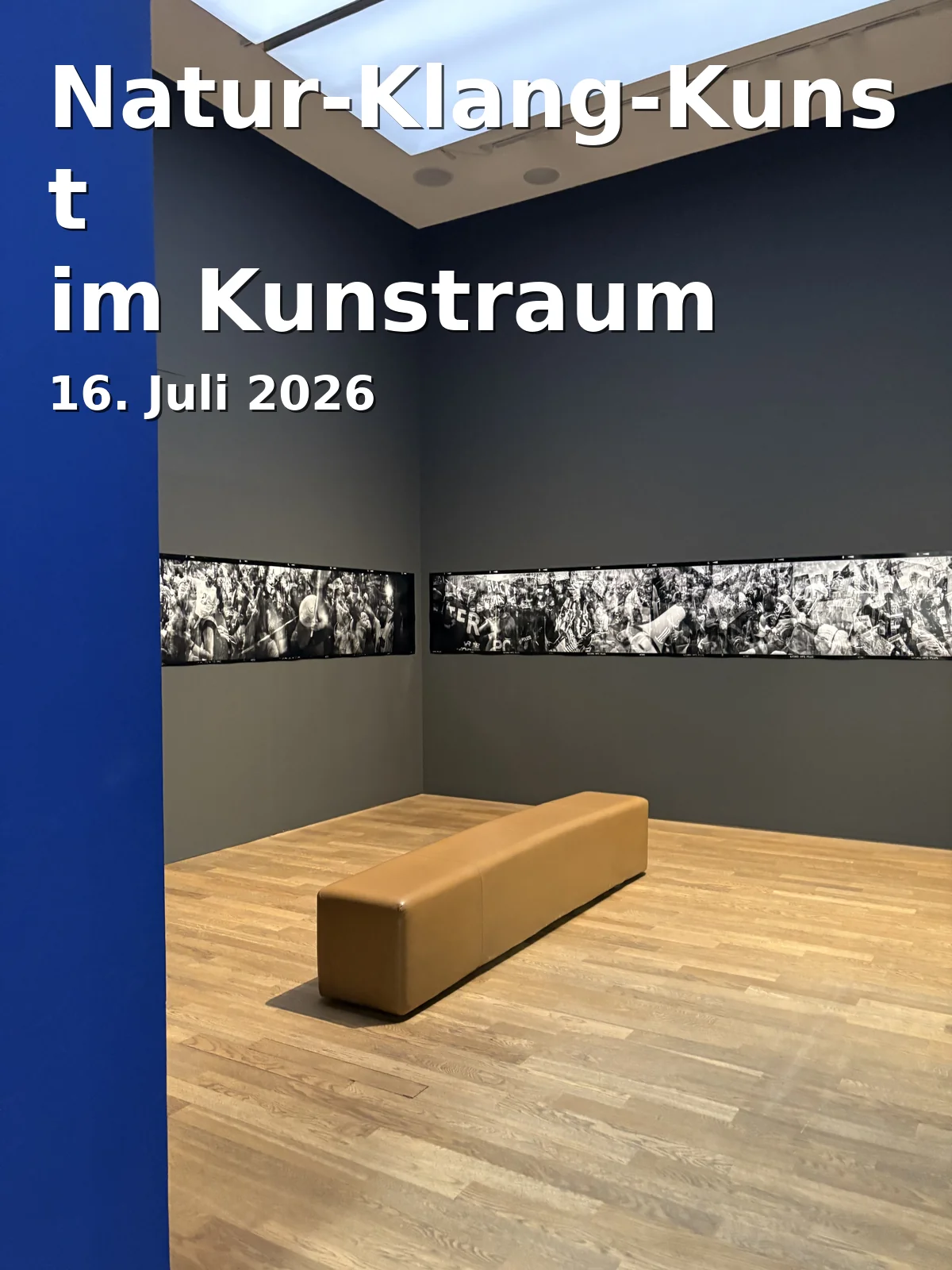
The profile of the Schwifting Art Space is particularly evident in the exhibition program. A report from 2025 about the exhibition Into the Three-Dimensional describes photographic works by Christiane Fleissner and Peter Wilson that do not simply depict spatial perception but expand and irritate it. A later report from 2026 about Nature-Sound-Art mentions the artists Christiane Fleissner, Verena Friedrich, and Sabine Köhl and emphasizes the connection of natural materials, collage, object art, and exhibition experience. For inquiries about the program, exhibitions, or art, this is important because the place does not pursue a rigid program but presents changing artistic positions in an open framework. Visitors can therefore expect not only one genre but dialogues between photography, material art, spatial installation, and thematic group exhibitions. The art space is thus not just a place for images on the wall but a space where different forms of perception meet. ([augsburger-allgemeine.de](https://www.augsburger-allgemeine.de/landsberg/foto-ausstellung-in-schwifting-beschaeftigt-sich-mit-der-dreidimensionalitaet-109024135?utm_source=openai))
Another example is the exhibition Karl Witti – Images and Texts from 2023. According to the event entry, it included more than 30 exhibits and showcased the 12-part work cycle Riders on the Storm for the first time. The theme of image and text played a central role, which fits the tradition of the house where literature and art have belonged together since the publishing years. Therefore, those searching for event programs, typical events, or special features of the location will find a clear answer here: The Schwifting Art Space enjoys working with artistic combinations, work cycles, text-image references, and exhibitions that understand themselves as spaces for thought beyond mere presentation. This programmatic openness is a significant SEO and user value factor because it distinguishes the place from many other regional exhibition spaces. Especially in smaller cultural venues, the mix of personal support, thematic selection, and intellectual ambition is often the strongest attraction. ([augsburger-allgemeine.de](https://www.augsburger-allgemeine.de/landsberg/schwifting-werkzyklus-von-karl-witti-wird-erstmals-in-schwifting-praesentiert-id67236006.html?utm_source=openai))
Eric Gand and Ingeborg Weigand as Artistic Influences
Those searching for Eric Gand are usually looking not only for a name but for the artistic biography of a place. The Schwifting Art Space is closely linked to his work, and regional reporting shows that Gand is a formative figure as an artist and gallery owner. In older articles, he is described as a co-designer of the gallery, together with Ingeborg Weigand, whose work has been repeatedly shown at the location. A later report emphasizes that Gand kept his wife's life work alive through exhibitions after her death in 1995. This gives the place a very personal depth: it is not curated anonymously but shaped by artistic biographies, family history, and journalistic work. This connection explains why user terms like Eric Gand, Ingeborg Weigand, or Schwiftinger Gallery Publishing House are closely related in search behavior. ([augsburger-allgemeine.de](https://www.augsburger-allgemeine.de/landsberg/Eine-verschachtelte-Geschichte-id8080746.html?utm_source=openai))
Content-wise, this background is essential because it explains the tone of the house. Ingeborg Weigand was not only a painter but also a writer; in the environment of the Schwiftinger Gallery Publishing House, a cultural world emerged that systematically brought together image and word. This is also reflected in the perception of the place: a report describes the exhibition of her works as particularly impressive, with a space that feels inviting and whose winding exhibition rooms invite exploration. For visitors, this means that they do not just consume an exhibition here but enter a personal, historically grown narrative. Those interested in art places with character will appreciate this mix of artistic biography, familial commitment, and journalistic continuity. Thus, the name Schwiftinger Gallery and Project Integ Eric Gand becomes a place where not only artworks but also life paths and attitudes meet. ([augsburger-allgemeine.de](https://www.augsburger-allgemeine.de/landsberg/von-schwarzen-sonnen-und-einer-frau-im-roten-mantel-eine-ausstellung-von-einem-kuenstlerehepaar-112573413?utm_source=openai))
Spaces, Atmosphere, and the Special Tour Through the Gallery
The spatial impression is another reason why this cultural venue remains memorable. An older article describes the emergence of the art space as being as nested as the spaces themselves, which are distributed across different levels and open up new perspectives as one walks through the gallery. A later review speaks of a small old converted house, around which wild vines and ivy grow, and highlights the inviting effect of the winding rooms. Another report mentions the rustic charm as a fitting frame for artistic works. These descriptions are interesting for inquiries about seating plans, spatial feeling, or atmosphere because they show: this is not about a large event hall with standard logic, but about a very specific tour through a place that itself becomes part of the exhibition experience. Those who engage in the visit experience art not only visually but spatially. ([augsburger-allgemeine.de](https://www.augsburger-allgemeine.de/landsberg/Eine-verschachtelte-Geschichte-id8080746.html?utm_source=openai))
Especially for visitors with practical interests, this information is valuable. The official contact page does mention the address and opening hours, but the actual experience only unfolds on-site when one perceives the sequence of spaces, experiences the transitions between narrow and open areas, and embraces the heterogeneity of the house. Therefore, it is advisable to plan a visit more as a cultural appointment than as a quick stop. The location in Schwifting, the regional access via the A96, and the opening hours on Sundays or by appointment make the place an address for conscious discovery. Those searching for a special exhibition venue in the Landsberg area will find a combination of personal support, historical depth, and atmospheric density here. This is precisely where the strength of the place lies in local SEO: the location stands not only for events but for an unmistakable visitor experience that is rarely found in this form. ([kunstraum-schwifting.de](https://www.kunstraum-schwifting.de/kontakt.html?utm_source=openai))
Sources:
- Kunstraum Schwifting - Contact ([kunstraum-schwifting.de](https://www.kunstraum-schwifting.de/kontakt.html?utm_source=openai))
- A Nested Story - Augsburger Allgemeine ([augsburger-allgemeine.de](https://www.augsburger-allgemeine.de/landsberg/Eine-verschachtelte-Geschichte-id8080746.html?utm_source=openai))
- Photo Exhibition in Schwifting Deals with Three-Dimensionality - Augsburger Allgemeine ([augsburger-allgemeine.de](https://www.augsburger-allgemeine.de/landsberg/foto-ausstellung-in-schwifting-beschaeftigt-sich-mit-der-dreidimensionalitaet-109024135?utm_source=openai))
- Honeycombs, Scallops, Chicken Bones: Exhibition at the Schwifting Art Space - Kreisbote ([kreisbote.de](https://www.kreisbote.de/lokales/landsberg/waben-napfmuscheln-huehnerknochen-ausstellung-im-kunstraum-schwifting-94375134.html?utm_source=openai))
- Schwiftinger Gallery Publishing House - German National Library ([portal.dnb.de](https://portal.dnb.de/opac/showPreviousRecord?currentPosition=0¤tResultId=nid%3D1044058145%26any&utm_source=openai))
Mehr anzeigenWeniger anzeigen
Schwiftinger Gallery and Project Integ Eric Gand | Art & Space
The Schwiftinger Gallery and Project Integ Eric Gand, now closely associated with the Schwifting Art Space, is an unusual cultural venue in Schwifting near Landsberg am Lech. The place combines publishing history, gallery work, and changing exhibitions with the signature of Eric Gand and the memory of Ingeborg Weigand. Instead of a neutral white cube, visitors experience nested spaces, a personal atmosphere, and a program that conceptualizes art, literature, and spatial impact together. For inquiries about the gallery, art space, opening hours, directions, art history, and Eric Gand, this location is particularly relevant. ([augsburger-allgemeine.de](https://www.augsburger-allgemeine.de/landsberg/Eine-verschachtelte-Geschichte-id8080746.html?utm_source=openai))
How the Schwiftinger Gallery Publishing House Became the Schwifting Art Space
The history of this place does not begin with a modern exhibition operation, but with a publishing house and a very specific cultural idea. The Schwiftinger Gallery Publishing House is documented as an organization in the German National Library; an alternative name is also the form Schwiftinger Gallery Publishing House for Visual Arts and Literature. This aligns with what the place has embodied for decades: a link between literature, visual arts, and craft-oriented publishing work. This is remarkable for regional cultural history because art is not simply shown here; rather, a whole production context has been established. Books, catalogs, and exhibitions have been closely linked from the beginning, giving the place a character that still distinguishes it from classical galleries today. Researching the Schwiftinger Gallery Publishing House therefore leads not only to a name but to a long tradition of cultural independence. ([portal.dnb.de](https://portal.dnb.de/opac/showPreviousRecord?currentPosition=0¤tResultId=nid%3D1044058145%26any&utm_source=openai))
An Augsburg article describes the emergence of the art space as a nested story that began with the Schwiftinger Gallery Publishing House and from which the first gallery emerged. For many years, it was managed by Eric Gand and his wife Ingeborg Weigand. After her death in 1995, Gand initially opened the gallery only sporadically for special occasions, while art and literature remained closely intertwined. Later, this developed into the current art space, which Eric Gand runs together with Kurt Tykwer. This transformation is SEO-relevant because users often search for the origin, the publishing name, and the current form of the location. The place is therefore not just a gallery but a historically grown cultural space where a private initiative has transformed into a local institution over decades. ([augsburger-allgemeine.de](https://www.augsburger-allgemeine.de/landsberg/Eine-verschachtelte-Geschichte-id8080746.html?utm_source=openai))
Opening Hours, Address, and Directions to Kirchberg 9
Those wishing to visit the place can find clear practical information on the official contact page. The address is Kirchberg 9, 86940 Schwifting. The website also provides a phone number and the email address info@kunstraum-schwifting.de. Particularly important for visitors are the opening hours: Sundays from 2 PM to 5 PM and by appointment. For inquiries about opening hours, contact, address, or directions, this information is central because the place is not a classical large operation with daily standard hours but rather a more personal, flexibly scheduled cultural address. This makes planning particularly easy when one knows that a Sunday visit or an individual appointment is possible. Those who want to consciously experience an exhibition should check the opening hours in advance and contact if necessary. ([kunstraum-schwifting.de](https://www.kunstraum-schwifting.de/kontakt.html?utm_source=openai))
The directions are also described very concretely on the contact page. The A96 Munich–Lindau highway is mentioned with the Schöffelding exit. From there, turn left over the highway, then right towards Landsberg, and then parallel to the highway until the turnoff to Schwifting. After that, follow the local signs. For visitors searching for parking, directions, or route descriptions, this clear driving route is particularly helpful because it makes the final stretch very comprehensible. The location is intentionally not on a major urban axis but in a rural environment that one approaches purposefully. This is not a disadvantage but shapes the character of the visit: one leaves the usual city rhythm and reaches an art place that already conveys a sense of deceleration in its location and accessibility. Those coming from Landsberg am Lech or from the A96 can easily combine the visit with a regional excursion. ([kunstraum-schwifting.de](https://www.kunstraum-schwifting.de/kontakt.html?utm_source=openai))
Exhibitions and Program Between Photography, Installation, and Nature
The profile of the Schwifting Art Space is particularly evident in the exhibition program. A report from 2025 about the exhibition Into the Three-Dimensional describes photographic works by Christiane Fleissner and Peter Wilson that do not simply depict spatial perception but expand and irritate it. A later report from 2026 about Nature-Sound-Art mentions the artists Christiane Fleissner, Verena Friedrich, and Sabine Köhl and emphasizes the connection of natural materials, collage, object art, and exhibition experience. For inquiries about the program, exhibitions, or art, this is important because the place does not pursue a rigid program but presents changing artistic positions in an open framework. Visitors can therefore expect not only one genre but dialogues between photography, material art, spatial installation, and thematic group exhibitions. The art space is thus not just a place for images on the wall but a space where different forms of perception meet. ([augsburger-allgemeine.de](https://www.augsburger-allgemeine.de/landsberg/foto-ausstellung-in-schwifting-beschaeftigt-sich-mit-der-dreidimensionalitaet-109024135?utm_source=openai))
Another example is the exhibition Karl Witti – Images and Texts from 2023. According to the event entry, it included more than 30 exhibits and showcased the 12-part work cycle Riders on the Storm for the first time. The theme of image and text played a central role, which fits the tradition of the house where literature and art have belonged together since the publishing years. Therefore, those searching for event programs, typical events, or special features of the location will find a clear answer here: The Schwifting Art Space enjoys working with artistic combinations, work cycles, text-image references, and exhibitions that understand themselves as spaces for thought beyond mere presentation. This programmatic openness is a significant SEO and user value factor because it distinguishes the place from many other regional exhibition spaces. Especially in smaller cultural venues, the mix of personal support, thematic selection, and intellectual ambition is often the strongest attraction. ([augsburger-allgemeine.de](https://www.augsburger-allgemeine.de/landsberg/schwifting-werkzyklus-von-karl-witti-wird-erstmals-in-schwifting-praesentiert-id67236006.html?utm_source=openai))
Eric Gand and Ingeborg Weigand as Artistic Influences
Those searching for Eric Gand are usually looking not only for a name but for the artistic biography of a place. The Schwifting Art Space is closely linked to his work, and regional reporting shows that Gand is a formative figure as an artist and gallery owner. In older articles, he is described as a co-designer of the gallery, together with Ingeborg Weigand, whose work has been repeatedly shown at the location. A later report emphasizes that Gand kept his wife's life work alive through exhibitions after her death in 1995. This gives the place a very personal depth: it is not curated anonymously but shaped by artistic biographies, family history, and journalistic work. This connection explains why user terms like Eric Gand, Ingeborg Weigand, or Schwiftinger Gallery Publishing House are closely related in search behavior. ([augsburger-allgemeine.de](https://www.augsburger-allgemeine.de/landsberg/Eine-verschachtelte-Geschichte-id8080746.html?utm_source=openai))
Content-wise, this background is essential because it explains the tone of the house. Ingeborg Weigand was not only a painter but also a writer; in the environment of the Schwiftinger Gallery Publishing House, a cultural world emerged that systematically brought together image and word. This is also reflected in the perception of the place: a report describes the exhibition of her works as particularly impressive, with a space that feels inviting and whose winding exhibition rooms invite exploration. For visitors, this means that they do not just consume an exhibition here but enter a personal, historically grown narrative. Those interested in art places with character will appreciate this mix of artistic biography, familial commitment, and journalistic continuity. Thus, the name Schwiftinger Gallery and Project Integ Eric Gand becomes a place where not only artworks but also life paths and attitudes meet. ([augsburger-allgemeine.de](https://www.augsburger-allgemeine.de/landsberg/von-schwarzen-sonnen-und-einer-frau-im-roten-mantel-eine-ausstellung-von-einem-kuenstlerehepaar-112573413?utm_source=openai))
Spaces, Atmosphere, and the Special Tour Through the Gallery
The spatial impression is another reason why this cultural venue remains memorable. An older article describes the emergence of the art space as being as nested as the spaces themselves, which are distributed across different levels and open up new perspectives as one walks through the gallery. A later review speaks of a small old converted house, around which wild vines and ivy grow, and highlights the inviting effect of the winding rooms. Another report mentions the rustic charm as a fitting frame for artistic works. These descriptions are interesting for inquiries about seating plans, spatial feeling, or atmosphere because they show: this is not about a large event hall with standard logic, but about a very specific tour through a place that itself becomes part of the exhibition experience. Those who engage in the visit experience art not only visually but spatially. ([augsburger-allgemeine.de](https://www.augsburger-allgemeine.de/landsberg/Eine-verschachtelte-Geschichte-id8080746.html?utm_source=openai))
Especially for visitors with practical interests, this information is valuable. The official contact page does mention the address and opening hours, but the actual experience only unfolds on-site when one perceives the sequence of spaces, experiences the transitions between narrow and open areas, and embraces the heterogeneity of the house. Therefore, it is advisable to plan a visit more as a cultural appointment than as a quick stop. The location in Schwifting, the regional access via the A96, and the opening hours on Sundays or by appointment make the place an address for conscious discovery. Those searching for a special exhibition venue in the Landsberg area will find a combination of personal support, historical depth, and atmospheric density here. This is precisely where the strength of the place lies in local SEO: the location stands not only for events but for an unmistakable visitor experience that is rarely found in this form. ([kunstraum-schwifting.de](https://www.kunstraum-schwifting.de/kontakt.html?utm_source=openai))
Sources:
- Kunstraum Schwifting - Contact ([kunstraum-schwifting.de](https://www.kunstraum-schwifting.de/kontakt.html?utm_source=openai))
- A Nested Story - Augsburger Allgemeine ([augsburger-allgemeine.de](https://www.augsburger-allgemeine.de/landsberg/Eine-verschachtelte-Geschichte-id8080746.html?utm_source=openai))
- Photo Exhibition in Schwifting Deals with Three-Dimensionality - Augsburger Allgemeine ([augsburger-allgemeine.de](https://www.augsburger-allgemeine.de/landsberg/foto-ausstellung-in-schwifting-beschaeftigt-sich-mit-der-dreidimensionalitaet-109024135?utm_source=openai))
- Honeycombs, Scallops, Chicken Bones: Exhibition at the Schwifting Art Space - Kreisbote ([kreisbote.de](https://www.kreisbote.de/lokales/landsberg/waben-napfmuscheln-huehnerknochen-ausstellung-im-kunstraum-schwifting-94375134.html?utm_source=openai))
- Schwiftinger Gallery Publishing House - German National Library ([portal.dnb.de](https://portal.dnb.de/opac/showPreviousRecord?currentPosition=0¤tResultId=nid%3D1044058145%26any&utm_source=openai))
Schwiftinger Gallery and Project Integ Eric Gand | Art & Space
The Schwiftinger Gallery and Project Integ Eric Gand, now closely associated with the Schwifting Art Space, is an unusual cultural venue in Schwifting near Landsberg am Lech. The place combines publishing history, gallery work, and changing exhibitions with the signature of Eric Gand and the memory of Ingeborg Weigand. Instead of a neutral white cube, visitors experience nested spaces, a personal atmosphere, and a program that conceptualizes art, literature, and spatial impact together. For inquiries about the gallery, art space, opening hours, directions, art history, and Eric Gand, this location is particularly relevant. ([augsburger-allgemeine.de](https://www.augsburger-allgemeine.de/landsberg/Eine-verschachtelte-Geschichte-id8080746.html?utm_source=openai))
How the Schwiftinger Gallery Publishing House Became the Schwifting Art Space
The history of this place does not begin with a modern exhibition operation, but with a publishing house and a very specific cultural idea. The Schwiftinger Gallery Publishing House is documented as an organization in the German National Library; an alternative name is also the form Schwiftinger Gallery Publishing House for Visual Arts and Literature. This aligns with what the place has embodied for decades: a link between literature, visual arts, and craft-oriented publishing work. This is remarkable for regional cultural history because art is not simply shown here; rather, a whole production context has been established. Books, catalogs, and exhibitions have been closely linked from the beginning, giving the place a character that still distinguishes it from classical galleries today. Researching the Schwiftinger Gallery Publishing House therefore leads not only to a name but to a long tradition of cultural independence. ([portal.dnb.de](https://portal.dnb.de/opac/showPreviousRecord?currentPosition=0¤tResultId=nid%3D1044058145%26any&utm_source=openai))
An Augsburg article describes the emergence of the art space as a nested story that began with the Schwiftinger Gallery Publishing House and from which the first gallery emerged. For many years, it was managed by Eric Gand and his wife Ingeborg Weigand. After her death in 1995, Gand initially opened the gallery only sporadically for special occasions, while art and literature remained closely intertwined. Later, this developed into the current art space, which Eric Gand runs together with Kurt Tykwer. This transformation is SEO-relevant because users often search for the origin, the publishing name, and the current form of the location. The place is therefore not just a gallery but a historically grown cultural space where a private initiative has transformed into a local institution over decades. ([augsburger-allgemeine.de](https://www.augsburger-allgemeine.de/landsberg/Eine-verschachtelte-Geschichte-id8080746.html?utm_source=openai))
Opening Hours, Address, and Directions to Kirchberg 9
Those wishing to visit the place can find clear practical information on the official contact page. The address is Kirchberg 9, 86940 Schwifting. The website also provides a phone number and the email address info@kunstraum-schwifting.de. Particularly important for visitors are the opening hours: Sundays from 2 PM to 5 PM and by appointment. For inquiries about opening hours, contact, address, or directions, this information is central because the place is not a classical large operation with daily standard hours but rather a more personal, flexibly scheduled cultural address. This makes planning particularly easy when one knows that a Sunday visit or an individual appointment is possible. Those who want to consciously experience an exhibition should check the opening hours in advance and contact if necessary. ([kunstraum-schwifting.de](https://www.kunstraum-schwifting.de/kontakt.html?utm_source=openai))
The directions are also described very concretely on the contact page. The A96 Munich–Lindau highway is mentioned with the Schöffelding exit. From there, turn left over the highway, then right towards Landsberg, and then parallel to the highway until the turnoff to Schwifting. After that, follow the local signs. For visitors searching for parking, directions, or route descriptions, this clear driving route is particularly helpful because it makes the final stretch very comprehensible. The location is intentionally not on a major urban axis but in a rural environment that one approaches purposefully. This is not a disadvantage but shapes the character of the visit: one leaves the usual city rhythm and reaches an art place that already conveys a sense of deceleration in its location and accessibility. Those coming from Landsberg am Lech or from the A96 can easily combine the visit with a regional excursion. ([kunstraum-schwifting.de](https://www.kunstraum-schwifting.de/kontakt.html?utm_source=openai))
Exhibitions and Program Between Photography, Installation, and Nature
The profile of the Schwifting Art Space is particularly evident in the exhibition program. A report from 2025 about the exhibition Into the Three-Dimensional describes photographic works by Christiane Fleissner and Peter Wilson that do not simply depict spatial perception but expand and irritate it. A later report from 2026 about Nature-Sound-Art mentions the artists Christiane Fleissner, Verena Friedrich, and Sabine Köhl and emphasizes the connection of natural materials, collage, object art, and exhibition experience. For inquiries about the program, exhibitions, or art, this is important because the place does not pursue a rigid program but presents changing artistic positions in an open framework. Visitors can therefore expect not only one genre but dialogues between photography, material art, spatial installation, and thematic group exhibitions. The art space is thus not just a place for images on the wall but a space where different forms of perception meet. ([augsburger-allgemeine.de](https://www.augsburger-allgemeine.de/landsberg/foto-ausstellung-in-schwifting-beschaeftigt-sich-mit-der-dreidimensionalitaet-109024135?utm_source=openai))
Another example is the exhibition Karl Witti – Images and Texts from 2023. According to the event entry, it included more than 30 exhibits and showcased the 12-part work cycle Riders on the Storm for the first time. The theme of image and text played a central role, which fits the tradition of the house where literature and art have belonged together since the publishing years. Therefore, those searching for event programs, typical events, or special features of the location will find a clear answer here: The Schwifting Art Space enjoys working with artistic combinations, work cycles, text-image references, and exhibitions that understand themselves as spaces for thought beyond mere presentation. This programmatic openness is a significant SEO and user value factor because it distinguishes the place from many other regional exhibition spaces. Especially in smaller cultural venues, the mix of personal support, thematic selection, and intellectual ambition is often the strongest attraction. ([augsburger-allgemeine.de](https://www.augsburger-allgemeine.de/landsberg/schwifting-werkzyklus-von-karl-witti-wird-erstmals-in-schwifting-praesentiert-id67236006.html?utm_source=openai))
Eric Gand and Ingeborg Weigand as Artistic Influences
Those searching for Eric Gand are usually looking not only for a name but for the artistic biography of a place. The Schwifting Art Space is closely linked to his work, and regional reporting shows that Gand is a formative figure as an artist and gallery owner. In older articles, he is described as a co-designer of the gallery, together with Ingeborg Weigand, whose work has been repeatedly shown at the location. A later report emphasizes that Gand kept his wife's life work alive through exhibitions after her death in 1995. This gives the place a very personal depth: it is not curated anonymously but shaped by artistic biographies, family history, and journalistic work. This connection explains why user terms like Eric Gand, Ingeborg Weigand, or Schwiftinger Gallery Publishing House are closely related in search behavior. ([augsburger-allgemeine.de](https://www.augsburger-allgemeine.de/landsberg/Eine-verschachtelte-Geschichte-id8080746.html?utm_source=openai))
Content-wise, this background is essential because it explains the tone of the house. Ingeborg Weigand was not only a painter but also a writer; in the environment of the Schwiftinger Gallery Publishing House, a cultural world emerged that systematically brought together image and word. This is also reflected in the perception of the place: a report describes the exhibition of her works as particularly impressive, with a space that feels inviting and whose winding exhibition rooms invite exploration. For visitors, this means that they do not just consume an exhibition here but enter a personal, historically grown narrative. Those interested in art places with character will appreciate this mix of artistic biography, familial commitment, and journalistic continuity. Thus, the name Schwiftinger Gallery and Project Integ Eric Gand becomes a place where not only artworks but also life paths and attitudes meet. ([augsburger-allgemeine.de](https://www.augsburger-allgemeine.de/landsberg/von-schwarzen-sonnen-und-einer-frau-im-roten-mantel-eine-ausstellung-von-einem-kuenstlerehepaar-112573413?utm_source=openai))
Spaces, Atmosphere, and the Special Tour Through the Gallery
The spatial impression is another reason why this cultural venue remains memorable. An older article describes the emergence of the art space as being as nested as the spaces themselves, which are distributed across different levels and open up new perspectives as one walks through the gallery. A later review speaks of a small old converted house, around which wild vines and ivy grow, and highlights the inviting effect of the winding rooms. Another report mentions the rustic charm as a fitting frame for artistic works. These descriptions are interesting for inquiries about seating plans, spatial feeling, or atmosphere because they show: this is not about a large event hall with standard logic, but about a very specific tour through a place that itself becomes part of the exhibition experience. Those who engage in the visit experience art not only visually but spatially. ([augsburger-allgemeine.de](https://www.augsburger-allgemeine.de/landsberg/Eine-verschachtelte-Geschichte-id8080746.html?utm_source=openai))
Especially for visitors with practical interests, this information is valuable. The official contact page does mention the address and opening hours, but the actual experience only unfolds on-site when one perceives the sequence of spaces, experiences the transitions between narrow and open areas, and embraces the heterogeneity of the house. Therefore, it is advisable to plan a visit more as a cultural appointment than as a quick stop. The location in Schwifting, the regional access via the A96, and the opening hours on Sundays or by appointment make the place an address for conscious discovery. Those searching for a special exhibition venue in the Landsberg area will find a combination of personal support, historical depth, and atmospheric density here. This is precisely where the strength of the place lies in local SEO: the location stands not only for events but for an unmistakable visitor experience that is rarely found in this form. ([kunstraum-schwifting.de](https://www.kunstraum-schwifting.de/kontakt.html?utm_source=openai))
Sources:
- Kunstraum Schwifting - Contact ([kunstraum-schwifting.de](https://www.kunstraum-schwifting.de/kontakt.html?utm_source=openai))
- A Nested Story - Augsburger Allgemeine ([augsburger-allgemeine.de](https://www.augsburger-allgemeine.de/landsberg/Eine-verschachtelte-Geschichte-id8080746.html?utm_source=openai))
- Photo Exhibition in Schwifting Deals with Three-Dimensionality - Augsburger Allgemeine ([augsburger-allgemeine.de](https://www.augsburger-allgemeine.de/landsberg/foto-ausstellung-in-schwifting-beschaeftigt-sich-mit-der-dreidimensionalitaet-109024135?utm_source=openai))
- Honeycombs, Scallops, Chicken Bones: Exhibition at the Schwifting Art Space - Kreisbote ([kreisbote.de](https://www.kreisbote.de/lokales/landsberg/waben-napfmuscheln-huehnerknochen-ausstellung-im-kunstraum-schwifting-94375134.html?utm_source=openai))
- Schwiftinger Gallery Publishing House - German National Library ([portal.dnb.de](https://portal.dnb.de/opac/showPreviousRecord?currentPosition=0¤tResultId=nid%3D1044058145%26any&utm_source=openai))
Frequently Asked Questions
Reviews
No reviews found