
Tutzing
Schloßstraße 2+4, 82327 Tutzing, Deutschland
Schloss Tutzing | History & Accommodation
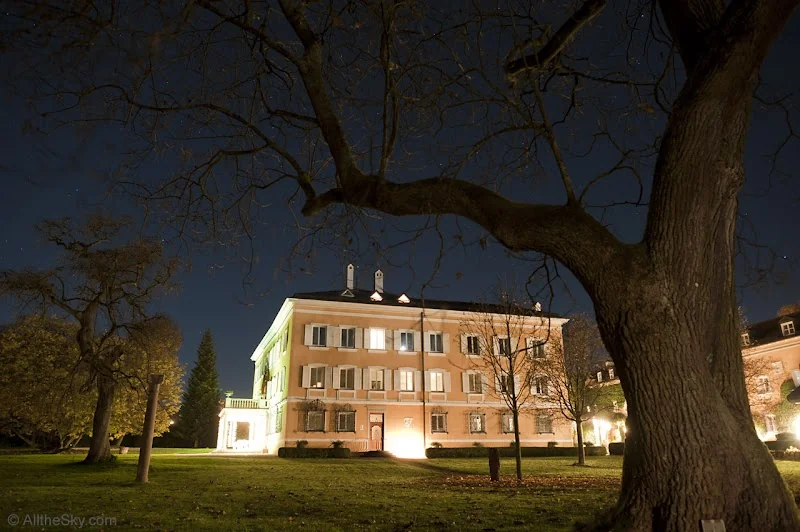
Schloss Tutzing is both a historic castle, a conference hotel, and a cultural meeting point on the western shore of Lake Starnberg. Since 1947, the ensemble has housed the Protestant Academy Tutzing; today, guests can expect a listed park with lake access, modern guest rooms, and a restaurant. Its location south of Munich makes the place equally attractive for conferences, overnight stays, summer retreats, and events. Those looking for a place where history, tranquility, and professional infrastructure come together will find a remarkable combination here. ([schloss-tutzing.de](https://www.schloss-tutzing.de/schloss-tutzing/?utm_source=openai))
Castle History and Protestant Academy Tutzing
The current form of Schloss Tutzing essentially goes back to Friedrich Graf von Vieregg, who initiated the reconstruction of the facility between 1802 and 1816. Even this early renovation shows that this is not just any building, but an ensemble whose architecture and park development have been shaped over generations. Later, between 1869 and 1880, the castle belonged to the founder of the German Publishing House, Eduard von Hallberger. From 1921 to 1930, Marczell von Nemes resided in the castle; he left traces in the house's furnishings, among other things. The changing owners reflect the cultural significance of the place as well as its role as a representative country estate with views of the lake and the mountains. ([schloss-tutzing.de](https://www.schloss-tutzing.de/schloss-tutzing/der-historische-ort/?utm_source=openai))
After World War II, the estate was sold to the Inner Mission; already in 1947, conferences began in the house, marking the start of the history of the Protestant Academy Tutzing. In 1956, the castle chapel was redesigned, in 1958/59 the auditorium and foyer were created, in 1980 the restaurant was added, and in 1992 the guesthouse was inaugurated. In 2007, the Schloss Tutzing Foundation was also established to secure the castle and park as an artistically, monumentally, and culturally outstanding ensemble. Today, the Protestant Academy Tutzing is one of the significant think tanks in Germany, bringing together people from politics, business, culture, media, and the church. ([ev-akademie-tutzing.de](https://www.ev-akademie-tutzing.de/akademie/schloss-tutzing/schlossgeschichte/?utm_source=openai))
Conference Rooms, Concerts, and Events at the Castle
Schloss Tutzing is much more than a beautiful backdrop. The house is clearly structured as a conference venue and designed for professional events. Eight conference rooms are available, all equipped with modern technology and free Wi-Fi. The representative music hall accommodates up to 220 people and is thus the most important large room in the house. The auditorium holds a maximum of 120 people and, with its fixed round seating, is ideal for conferences, discussions, and programs requiring close eye contact. The offer is complemented by a foyer, conference room, media room, as well as various salons and the chapel, allowing for formats ranging from small group work to receptions, discussions, and quiet reflection. ([schloss-tutzing.de](https://www.schloss-tutzing.de/tagen-im-schloss/?utm_source=openai))
Particularly impressive is the music hall, the centerpiece of Schloss Tutzing. It serves for concerts, conferences, and receptions and was historically even once a garden menagerie and palm garden. Today, it features a historic ceiling, a Renaissance fireplace, and a stage where not only the academy's annual reception takes place but also high-ranking conferences and award ceremonies. The foyer connects the auditorium and music hall, is suitable for coffee breaks and smaller receptions, and is occasionally used for exhibitions. This blend of historic atmosphere and functional equipment is what makes the house appealing: here, focused work meets inspiring architecture, and even large events maintain a personal, almost intimate character. ([schloss-tutzing.de](https://www.schloss-tutzing.de/tagen-im-schloss/veranstaltungsraume/festsaal/?utm_source=openai))
Rooms, Accommodation, and Holidays at the Castle
Those looking for rooms or accommodation at Schloss Tutzing will find a clearly structured offer. The guest rooms are located in the old castle, in the guesthouse, and in the cavalier's building. All 64 rooms are equipped with shower and toilet; some are designed to be accessible for people with disabilities, and several rooms offer views over Lake Starnberg and the expansive castle park. The combination of the historic castle building and contemporary accommodation options is intentional: stucco ceilings and antique furnishings meet modern installations and amenities suitable for people with mobility impairments. This makes the house suitable for both conference guests and those seeking tranquility, nature, and atmosphere. ([schloss-tutzing.de](https://www.schloss-tutzing.de/tagen-im-schloss/gastezimmer/?utm_source=openai))
During the conference-free summer period, Schloss Tutzing operates as a hotel garni, usually from mid-July to early September. Holiday guests are explicitly welcome, even if they do not participate in a conference. The minimum stay is three days, and in summer, morning devotions and cultural events are offered. For 2026, the house indicates a period from July 16 to September 3; arrival and departure days are Monday and Thursday, and rooms start at 74 euros per person per night, including castle tax. Those seeking a quiet retreat will also find plenty of space here: the house sees itself during this time as a refuge, source of strength, and starting point for excursions to Munich, the mountains, or the surrounding lakes. ([schloss-tutzing.de](https://www.schloss-tutzing.de/ferien-im-schloss/?utm_source=openai))
Access, Parking, and the Practical Location in Tutzing
The access to Schloss Tutzing is straightforward, whether you come by car or by train. The town of Tutzing is located about 40 kilometers south of Munich on the western shore of Lake Starnberg. By car, you drive from Munich on the highway towards Garmisch until the Starnberg exit, then on the B2 to Traubing and from there left to Tutzing. In Tutzing, the way to the academy is signposted. Those arriving by train can reach the town via the Munich–Garmisch or Munich–Kochel lines or with the S6, whose southern terminus is Tutzing. It takes about 10 minutes to walk from the station to the academy. This good accessibility is a practical advantage for conference guests and holidaymakers, as the scenic location can be combined with a convenient journey. ([schloss-tutzing.de](https://www.schloss-tutzing.de/lage-umgebung/anreise/?utm_source=openai))
Parking is also clearly regulated: According to the official arrival page, there are sufficient free parking spaces available for drivers. This is not a given for a historic estate with a park and lakeside location and significantly increases the practicality of the house. Those arriving by public transport can use the short walk from the station and arrive without additional logistics. At the same time, the place remains deliberately quiet and unobtrusive, as not every area is subordinated to traffic. This balance of good accessibility and protected location fits excellently with the house's self-understanding as a think tank, conference venue, and retreat space. For visitors, this means: arriving is easy, and then the actual experience of the place begins immediately. ([schloss-tutzing.de](https://www.schloss-tutzing.de/lage-umgebung/anreise/?utm_source=openai))
Park, Lake Starnberg, and Special Landscape around Schloss Tutzing
The castle park is one of the major highlights of Schloss Tutzing. The unique location on the shore of Lake Starnberg, the old tree population, and the wide view of Karwendel, Wetterstein, and Zugspitze make the area a remarkable natural and cultural space. The former baroque castle garden was transformed into an English landscape garden in 1802 during the reconstruction under Friedrich Graf von Vieregg. It was not until 1870 that the shoreline was incorporated into the park under Eduard von Hallberger. For the redesign, the Bavarian court garden director Karl von Effner was brought in; he created a landscape that appears large and open in a limited space. This historical change is still visible today and gives the park its special character. ([schloss-tutzing.de](https://www.schloss-tutzing.de/tagen-im-schloss/der-park/?utm_source=openai))
Especially for walks, conversations, and quiet breaks, the park is ideal. In summer, the direct access to Lake Starnberg invites swimming; at the same time, the expansive grounds encourage lingering and breathing deeply. The castle thus sees itself not only as a conference hotel but also as a place where nature and culture are experienced directly. Those wishing to explore the surroundings will find other destinations within a short distance, such as the Andechs Monastery, the Buchheim Museum in Bernried, Lake Ammer, Lake Wörth, the Pfaffenwinkel, the royal castles, or Munich with its theaters and museums. Schloss Tutzing is therefore not an isolated retreat but a very well-embedded starting point in the Five Lakes Region. ([schloss-tutzing.de](https://www.schloss-tutzing.de/tagen-im-schloss/?utm_source=openai))
Photos, Impressions, and Tours around Schloss Tutzing
Those looking for photos or tours of Schloss Tutzing should use the official impressions sections. There, the themes of surroundings & park, culture & events, architecture & monuments, as well as accommodation & restaurant are prepared separately. This structure is helpful because it not only shows beautiful images but also makes the different sides of the house visible: the historic character, the event atmosphere, the park, and the accommodation situation. Additionally, the website refers to the Day of Open Monuments with a castle tour, making the place an exciting point of interest for culture enthusiasts. Thus, a search query for photos quickly turns into a deeper impression of architecture, use, and landscape. ([schloss-tutzing.de](https://www.schloss-tutzing.de/?utm_source=openai))
It is practical that the website not only provides inspiration but also concrete orientation. Those interested in an event can mentally link the conference rooms, music hall, auditorium, and salons directly with the impressions. Those planning an overnight stay can recognize in advance the mix of historic castle, guesthouse, and cavalier's building. And those simply wanting to understand the atmosphere of the place will find in the connection of park, lake, architecture, and cultural use exactly what makes Schloss Tutzing special. The website thus serves as a first step for planning, arrival, booking, and anticipation at the same time. ([schloss-tutzing.de](https://www.schloss-tutzing.de/tagen-im-schloss/?utm_source=openai))
Sources:
Show moreShow less
Schloss Tutzing | History & Accommodation
Schloss Tutzing is both a historic castle, a conference hotel, and a cultural meeting point on the western shore of Lake Starnberg. Since 1947, the ensemble has housed the Protestant Academy Tutzing; today, guests can expect a listed park with lake access, modern guest rooms, and a restaurant. Its location south of Munich makes the place equally attractive for conferences, overnight stays, summer retreats, and events. Those looking for a place where history, tranquility, and professional infrastructure come together will find a remarkable combination here. ([schloss-tutzing.de](https://www.schloss-tutzing.de/schloss-tutzing/?utm_source=openai))
Castle History and Protestant Academy Tutzing
The current form of Schloss Tutzing essentially goes back to Friedrich Graf von Vieregg, who initiated the reconstruction of the facility between 1802 and 1816. Even this early renovation shows that this is not just any building, but an ensemble whose architecture and park development have been shaped over generations. Later, between 1869 and 1880, the castle belonged to the founder of the German Publishing House, Eduard von Hallberger. From 1921 to 1930, Marczell von Nemes resided in the castle; he left traces in the house's furnishings, among other things. The changing owners reflect the cultural significance of the place as well as its role as a representative country estate with views of the lake and the mountains. ([schloss-tutzing.de](https://www.schloss-tutzing.de/schloss-tutzing/der-historische-ort/?utm_source=openai))
After World War II, the estate was sold to the Inner Mission; already in 1947, conferences began in the house, marking the start of the history of the Protestant Academy Tutzing. In 1956, the castle chapel was redesigned, in 1958/59 the auditorium and foyer were created, in 1980 the restaurant was added, and in 1992 the guesthouse was inaugurated. In 2007, the Schloss Tutzing Foundation was also established to secure the castle and park as an artistically, monumentally, and culturally outstanding ensemble. Today, the Protestant Academy Tutzing is one of the significant think tanks in Germany, bringing together people from politics, business, culture, media, and the church. ([ev-akademie-tutzing.de](https://www.ev-akademie-tutzing.de/akademie/schloss-tutzing/schlossgeschichte/?utm_source=openai))
Conference Rooms, Concerts, and Events at the Castle
Schloss Tutzing is much more than a beautiful backdrop. The house is clearly structured as a conference venue and designed for professional events. Eight conference rooms are available, all equipped with modern technology and free Wi-Fi. The representative music hall accommodates up to 220 people and is thus the most important large room in the house. The auditorium holds a maximum of 120 people and, with its fixed round seating, is ideal for conferences, discussions, and programs requiring close eye contact. The offer is complemented by a foyer, conference room, media room, as well as various salons and the chapel, allowing for formats ranging from small group work to receptions, discussions, and quiet reflection. ([schloss-tutzing.de](https://www.schloss-tutzing.de/tagen-im-schloss/?utm_source=openai))
Particularly impressive is the music hall, the centerpiece of Schloss Tutzing. It serves for concerts, conferences, and receptions and was historically even once a garden menagerie and palm garden. Today, it features a historic ceiling, a Renaissance fireplace, and a stage where not only the academy's annual reception takes place but also high-ranking conferences and award ceremonies. The foyer connects the auditorium and music hall, is suitable for coffee breaks and smaller receptions, and is occasionally used for exhibitions. This blend of historic atmosphere and functional equipment is what makes the house appealing: here, focused work meets inspiring architecture, and even large events maintain a personal, almost intimate character. ([schloss-tutzing.de](https://www.schloss-tutzing.de/tagen-im-schloss/veranstaltungsraume/festsaal/?utm_source=openai))
Rooms, Accommodation, and Holidays at the Castle
Those looking for rooms or accommodation at Schloss Tutzing will find a clearly structured offer. The guest rooms are located in the old castle, in the guesthouse, and in the cavalier's building. All 64 rooms are equipped with shower and toilet; some are designed to be accessible for people with disabilities, and several rooms offer views over Lake Starnberg and the expansive castle park. The combination of the historic castle building and contemporary accommodation options is intentional: stucco ceilings and antique furnishings meet modern installations and amenities suitable for people with mobility impairments. This makes the house suitable for both conference guests and those seeking tranquility, nature, and atmosphere. ([schloss-tutzing.de](https://www.schloss-tutzing.de/tagen-im-schloss/gastezimmer/?utm_source=openai))
During the conference-free summer period, Schloss Tutzing operates as a hotel garni, usually from mid-July to early September. Holiday guests are explicitly welcome, even if they do not participate in a conference. The minimum stay is three days, and in summer, morning devotions and cultural events are offered. For 2026, the house indicates a period from July 16 to September 3; arrival and departure days are Monday and Thursday, and rooms start at 74 euros per person per night, including castle tax. Those seeking a quiet retreat will also find plenty of space here: the house sees itself during this time as a refuge, source of strength, and starting point for excursions to Munich, the mountains, or the surrounding lakes. ([schloss-tutzing.de](https://www.schloss-tutzing.de/ferien-im-schloss/?utm_source=openai))
Access, Parking, and the Practical Location in Tutzing
The access to Schloss Tutzing is straightforward, whether you come by car or by train. The town of Tutzing is located about 40 kilometers south of Munich on the western shore of Lake Starnberg. By car, you drive from Munich on the highway towards Garmisch until the Starnberg exit, then on the B2 to Traubing and from there left to Tutzing. In Tutzing, the way to the academy is signposted. Those arriving by train can reach the town via the Munich–Garmisch or Munich–Kochel lines or with the S6, whose southern terminus is Tutzing. It takes about 10 minutes to walk from the station to the academy. This good accessibility is a practical advantage for conference guests and holidaymakers, as the scenic location can be combined with a convenient journey. ([schloss-tutzing.de](https://www.schloss-tutzing.de/lage-umgebung/anreise/?utm_source=openai))
Parking is also clearly regulated: According to the official arrival page, there are sufficient free parking spaces available for drivers. This is not a given for a historic estate with a park and lakeside location and significantly increases the practicality of the house. Those arriving by public transport can use the short walk from the station and arrive without additional logistics. At the same time, the place remains deliberately quiet and unobtrusive, as not every area is subordinated to traffic. This balance of good accessibility and protected location fits excellently with the house's self-understanding as a think tank, conference venue, and retreat space. For visitors, this means: arriving is easy, and then the actual experience of the place begins immediately. ([schloss-tutzing.de](https://www.schloss-tutzing.de/lage-umgebung/anreise/?utm_source=openai))
Park, Lake Starnberg, and Special Landscape around Schloss Tutzing
The castle park is one of the major highlights of Schloss Tutzing. The unique location on the shore of Lake Starnberg, the old tree population, and the wide view of Karwendel, Wetterstein, and Zugspitze make the area a remarkable natural and cultural space. The former baroque castle garden was transformed into an English landscape garden in 1802 during the reconstruction under Friedrich Graf von Vieregg. It was not until 1870 that the shoreline was incorporated into the park under Eduard von Hallberger. For the redesign, the Bavarian court garden director Karl von Effner was brought in; he created a landscape that appears large and open in a limited space. This historical change is still visible today and gives the park its special character. ([schloss-tutzing.de](https://www.schloss-tutzing.de/tagen-im-schloss/der-park/?utm_source=openai))
Especially for walks, conversations, and quiet breaks, the park is ideal. In summer, the direct access to Lake Starnberg invites swimming; at the same time, the expansive grounds encourage lingering and breathing deeply. The castle thus sees itself not only as a conference hotel but also as a place where nature and culture are experienced directly. Those wishing to explore the surroundings will find other destinations within a short distance, such as the Andechs Monastery, the Buchheim Museum in Bernried, Lake Ammer, Lake Wörth, the Pfaffenwinkel, the royal castles, or Munich with its theaters and museums. Schloss Tutzing is therefore not an isolated retreat but a very well-embedded starting point in the Five Lakes Region. ([schloss-tutzing.de](https://www.schloss-tutzing.de/tagen-im-schloss/?utm_source=openai))
Photos, Impressions, and Tours around Schloss Tutzing
Those looking for photos or tours of Schloss Tutzing should use the official impressions sections. There, the themes of surroundings & park, culture & events, architecture & monuments, as well as accommodation & restaurant are prepared separately. This structure is helpful because it not only shows beautiful images but also makes the different sides of the house visible: the historic character, the event atmosphere, the park, and the accommodation situation. Additionally, the website refers to the Day of Open Monuments with a castle tour, making the place an exciting point of interest for culture enthusiasts. Thus, a search query for photos quickly turns into a deeper impression of architecture, use, and landscape. ([schloss-tutzing.de](https://www.schloss-tutzing.de/?utm_source=openai))
It is practical that the website not only provides inspiration but also concrete orientation. Those interested in an event can mentally link the conference rooms, music hall, auditorium, and salons directly with the impressions. Those planning an overnight stay can recognize in advance the mix of historic castle, guesthouse, and cavalier's building. And those simply wanting to understand the atmosphere of the place will find in the connection of park, lake, architecture, and cultural use exactly what makes Schloss Tutzing special. The website thus serves as a first step for planning, arrival, booking, and anticipation at the same time. ([schloss-tutzing.de](https://www.schloss-tutzing.de/tagen-im-schloss/?utm_source=openai))
Sources:
Schloss Tutzing | History & Accommodation
Schloss Tutzing is both a historic castle, a conference hotel, and a cultural meeting point on the western shore of Lake Starnberg. Since 1947, the ensemble has housed the Protestant Academy Tutzing; today, guests can expect a listed park with lake access, modern guest rooms, and a restaurant. Its location south of Munich makes the place equally attractive for conferences, overnight stays, summer retreats, and events. Those looking for a place where history, tranquility, and professional infrastructure come together will find a remarkable combination here. ([schloss-tutzing.de](https://www.schloss-tutzing.de/schloss-tutzing/?utm_source=openai))
Castle History and Protestant Academy Tutzing
The current form of Schloss Tutzing essentially goes back to Friedrich Graf von Vieregg, who initiated the reconstruction of the facility between 1802 and 1816. Even this early renovation shows that this is not just any building, but an ensemble whose architecture and park development have been shaped over generations. Later, between 1869 and 1880, the castle belonged to the founder of the German Publishing House, Eduard von Hallberger. From 1921 to 1930, Marczell von Nemes resided in the castle; he left traces in the house's furnishings, among other things. The changing owners reflect the cultural significance of the place as well as its role as a representative country estate with views of the lake and the mountains. ([schloss-tutzing.de](https://www.schloss-tutzing.de/schloss-tutzing/der-historische-ort/?utm_source=openai))
After World War II, the estate was sold to the Inner Mission; already in 1947, conferences began in the house, marking the start of the history of the Protestant Academy Tutzing. In 1956, the castle chapel was redesigned, in 1958/59 the auditorium and foyer were created, in 1980 the restaurant was added, and in 1992 the guesthouse was inaugurated. In 2007, the Schloss Tutzing Foundation was also established to secure the castle and park as an artistically, monumentally, and culturally outstanding ensemble. Today, the Protestant Academy Tutzing is one of the significant think tanks in Germany, bringing together people from politics, business, culture, media, and the church. ([ev-akademie-tutzing.de](https://www.ev-akademie-tutzing.de/akademie/schloss-tutzing/schlossgeschichte/?utm_source=openai))
Conference Rooms, Concerts, and Events at the Castle
Schloss Tutzing is much more than a beautiful backdrop. The house is clearly structured as a conference venue and designed for professional events. Eight conference rooms are available, all equipped with modern technology and free Wi-Fi. The representative music hall accommodates up to 220 people and is thus the most important large room in the house. The auditorium holds a maximum of 120 people and, with its fixed round seating, is ideal for conferences, discussions, and programs requiring close eye contact. The offer is complemented by a foyer, conference room, media room, as well as various salons and the chapel, allowing for formats ranging from small group work to receptions, discussions, and quiet reflection. ([schloss-tutzing.de](https://www.schloss-tutzing.de/tagen-im-schloss/?utm_source=openai))
Particularly impressive is the music hall, the centerpiece of Schloss Tutzing. It serves for concerts, conferences, and receptions and was historically even once a garden menagerie and palm garden. Today, it features a historic ceiling, a Renaissance fireplace, and a stage where not only the academy's annual reception takes place but also high-ranking conferences and award ceremonies. The foyer connects the auditorium and music hall, is suitable for coffee breaks and smaller receptions, and is occasionally used for exhibitions. This blend of historic atmosphere and functional equipment is what makes the house appealing: here, focused work meets inspiring architecture, and even large events maintain a personal, almost intimate character. ([schloss-tutzing.de](https://www.schloss-tutzing.de/tagen-im-schloss/veranstaltungsraume/festsaal/?utm_source=openai))
Rooms, Accommodation, and Holidays at the Castle
Those looking for rooms or accommodation at Schloss Tutzing will find a clearly structured offer. The guest rooms are located in the old castle, in the guesthouse, and in the cavalier's building. All 64 rooms are equipped with shower and toilet; some are designed to be accessible for people with disabilities, and several rooms offer views over Lake Starnberg and the expansive castle park. The combination of the historic castle building and contemporary accommodation options is intentional: stucco ceilings and antique furnishings meet modern installations and amenities suitable for people with mobility impairments. This makes the house suitable for both conference guests and those seeking tranquility, nature, and atmosphere. ([schloss-tutzing.de](https://www.schloss-tutzing.de/tagen-im-schloss/gastezimmer/?utm_source=openai))
During the conference-free summer period, Schloss Tutzing operates as a hotel garni, usually from mid-July to early September. Holiday guests are explicitly welcome, even if they do not participate in a conference. The minimum stay is three days, and in summer, morning devotions and cultural events are offered. For 2026, the house indicates a period from July 16 to September 3; arrival and departure days are Monday and Thursday, and rooms start at 74 euros per person per night, including castle tax. Those seeking a quiet retreat will also find plenty of space here: the house sees itself during this time as a refuge, source of strength, and starting point for excursions to Munich, the mountains, or the surrounding lakes. ([schloss-tutzing.de](https://www.schloss-tutzing.de/ferien-im-schloss/?utm_source=openai))
Access, Parking, and the Practical Location in Tutzing
The access to Schloss Tutzing is straightforward, whether you come by car or by train. The town of Tutzing is located about 40 kilometers south of Munich on the western shore of Lake Starnberg. By car, you drive from Munich on the highway towards Garmisch until the Starnberg exit, then on the B2 to Traubing and from there left to Tutzing. In Tutzing, the way to the academy is signposted. Those arriving by train can reach the town via the Munich–Garmisch or Munich–Kochel lines or with the S6, whose southern terminus is Tutzing. It takes about 10 minutes to walk from the station to the academy. This good accessibility is a practical advantage for conference guests and holidaymakers, as the scenic location can be combined with a convenient journey. ([schloss-tutzing.de](https://www.schloss-tutzing.de/lage-umgebung/anreise/?utm_source=openai))
Parking is also clearly regulated: According to the official arrival page, there are sufficient free parking spaces available for drivers. This is not a given for a historic estate with a park and lakeside location and significantly increases the practicality of the house. Those arriving by public transport can use the short walk from the station and arrive without additional logistics. At the same time, the place remains deliberately quiet and unobtrusive, as not every area is subordinated to traffic. This balance of good accessibility and protected location fits excellently with the house's self-understanding as a think tank, conference venue, and retreat space. For visitors, this means: arriving is easy, and then the actual experience of the place begins immediately. ([schloss-tutzing.de](https://www.schloss-tutzing.de/lage-umgebung/anreise/?utm_source=openai))
Park, Lake Starnberg, and Special Landscape around Schloss Tutzing
The castle park is one of the major highlights of Schloss Tutzing. The unique location on the shore of Lake Starnberg, the old tree population, and the wide view of Karwendel, Wetterstein, and Zugspitze make the area a remarkable natural and cultural space. The former baroque castle garden was transformed into an English landscape garden in 1802 during the reconstruction under Friedrich Graf von Vieregg. It was not until 1870 that the shoreline was incorporated into the park under Eduard von Hallberger. For the redesign, the Bavarian court garden director Karl von Effner was brought in; he created a landscape that appears large and open in a limited space. This historical change is still visible today and gives the park its special character. ([schloss-tutzing.de](https://www.schloss-tutzing.de/tagen-im-schloss/der-park/?utm_source=openai))
Especially for walks, conversations, and quiet breaks, the park is ideal. In summer, the direct access to Lake Starnberg invites swimming; at the same time, the expansive grounds encourage lingering and breathing deeply. The castle thus sees itself not only as a conference hotel but also as a place where nature and culture are experienced directly. Those wishing to explore the surroundings will find other destinations within a short distance, such as the Andechs Monastery, the Buchheim Museum in Bernried, Lake Ammer, Lake Wörth, the Pfaffenwinkel, the royal castles, or Munich with its theaters and museums. Schloss Tutzing is therefore not an isolated retreat but a very well-embedded starting point in the Five Lakes Region. ([schloss-tutzing.de](https://www.schloss-tutzing.de/tagen-im-schloss/?utm_source=openai))
Photos, Impressions, and Tours around Schloss Tutzing
Those looking for photos or tours of Schloss Tutzing should use the official impressions sections. There, the themes of surroundings & park, culture & events, architecture & monuments, as well as accommodation & restaurant are prepared separately. This structure is helpful because it not only shows beautiful images but also makes the different sides of the house visible: the historic character, the event atmosphere, the park, and the accommodation situation. Additionally, the website refers to the Day of Open Monuments with a castle tour, making the place an exciting point of interest for culture enthusiasts. Thus, a search query for photos quickly turns into a deeper impression of architecture, use, and landscape. ([schloss-tutzing.de](https://www.schloss-tutzing.de/?utm_source=openai))
It is practical that the website not only provides inspiration but also concrete orientation. Those interested in an event can mentally link the conference rooms, music hall, auditorium, and salons directly with the impressions. Those planning an overnight stay can recognize in advance the mix of historic castle, guesthouse, and cavalier's building. And those simply wanting to understand the atmosphere of the place will find in the connection of park, lake, architecture, and cultural use exactly what makes Schloss Tutzing special. The website thus serves as a first step for planning, arrival, booking, and anticipation at the same time. ([schloss-tutzing.de](https://www.schloss-tutzing.de/tagen-im-schloss/?utm_source=openai))
Sources:
Upcoming Events
No events found
Frequently Asked Questions
Reviews
Nuttapol Thanathammarat
24. September 2025
Great place
Thomas E. Killinger
1. November 2025
Super well-kept academy of the Protestant Church, beautiful castle, the 'ground crew' very cultured, helpful, anyone working here is in great hands.
Peter Hanebut
22. July 2024
Great ambiance, dreamy view of Lake Starnberg. Tastefully furnished rooms, delicious food, very friendly and accommodating staff.
Over Nerd
5. September 2023
The castle park should be handed over to the public so that it can always be used all the way to the lake.
T. A. L.
15. December 2025
No comment