
Gilching
Brucker Str. 11, 82205 Gilching, Deutschland
SchichtWerk - Time Travel in the Wersonhaus | Tickets & Program
SchichtWerk – Time Travel in the Wersonhaus is the first museum in Gilching and connects local history, archaeology, and a consciously experiential exhibition in the historic Wersonhaus at Brucker Straße 11. The community describes the house as a time travel through Gilching's history; the association Zeitreise Gilching e.V. has opened the permanent exhibition on the upper floor and works voluntarily on mediation, research, and programming. This mix makes the location interesting for visitors who are not only looking for facts but for a place where history can be experienced spatially and sensually. ([gilching.de](https://www.gilching.de/kultur-freizeit/museum/))
Admission is free, donations are welcome; those who want to delve deeper can book guided tours or explore the exhibition on their own. Currently, the website lists regular openings on Tuesday mornings and on selected Sundays, supplemented by appointments upon request and special openings for occasions such as Museum Day or Open Monument Day. This makes SchichtWerk suitable for a short cultural stop as well as for planned family, group, and school visits. ([schichtwerk-gilching.de](https://schichtwerk-gilching.de/de/ihr-besuch/preise))
Tickets, Admission, and Guided Tours
When people look for tickets for SchichtWerk, they often mean access to the exhibition, and here the good news is particularly clear: Admission to the exhibition is free. The official price overview states free entry and simultaneously asks for a donation to keep special exhibitions, research, and restorations possible. This is remarkable for a local historical institution because it allows for a low-threshold visit while ensuring the quality of mediation. This openness is a great advantage, especially for families, spontaneous visitors, or travelers who have little time in Gilching. ([schichtwerk-gilching.de](https://schichtwerk-gilching.de/de/ihr-besuch/preise))
Guided tours, on the other hand, are chargeable, and the price depends on the scope. Therefore, anyone who wants a deeper explanation of Romans, Bavarians, finds, and historical contexts beyond a simple visit should plan for a guided tour. The team points out on the homepage that one can discover the exhibition alone or be guided through it in an engaging hour. Current dates, special openings, and information can be found on the association's page or in the newsletter. For the search intent “tickets,” it is important to know: The actual admission ticket is waived, but guided tour dates, group offers, and special formats may require reservations or be chargeable. ([schichtwerk-gilching.de](https://schichtwerk-gilching.de/))
Opening Hours, Dates, and Events
The current opening hours are a central theme because SchichtWerk is not open daily but consciously operates in the rhythm of a museum with volunteer operations. The website lists Sunday openings for 2026 from 2 PM to 5 PM on the dates 10.05.2026, 17.05.2026, 14.06.2026, 12.07.2026, 09.08.2026, and 13.09.2026. Additionally, it is open on Tuesdays from 10 AM to 12 PM, but not on public holidays. Furthermore, visits by appointment are possible. Therefore, anyone planning an excursion should check the date in advance and not assume that openings occur spontaneously every weekend. ([schichtwerk-gilching.de](https://schichtwerk-gilching.de/))
For the category of events, SchichtWerk is more than just a fixed permanent exhibition: The homepage lists current special exhibitions and additional dates, and the association's page provides information about lectures, events, and other dates. Currently, the special exhibition “At the Table with the Romans – History to Bite Into” is featured, while previous topics ranged from archaeology to air war history to local stories around the Wersonhaus. This shows that the program changes regularly and continuously opens new perspectives on Gilching's history. Therefore, those searching for “program,” “dates,” or “events” will find here not a rigid calendar but a lively museum with changing focuses. ([schichtwerk-gilching.de](https://schichtwerk-gilching.de/))
Directions and Parking at the Wersonhaus
Directions are a crucial search topic for many visitors, and there are specific routes for SchichtWerk. You can take the S-Bahn to Gilching-Argelsried; from there, it is about 1.5 kilometers on foot to Brucker Straße 11, or you can take the bus X920 towards Fürstenfeldbruck to the Welfenstraße stop. From there, it is about 300 meters on foot to the north. This combination of train and bus makes the museum accessible without a car, which is practical for day visitors from Munich and the western surroundings. The address is clearly located in the town, making the last meters relatively easy to find. ([starnbergammersee.de](https://www.starnbergammersee.de/detail/id%3D6076acb907bca56b2082f5d8))
By car, the house is also easily accessible: From the south, the route leads via the A95, exit Gilching-Argelsried, then towards Gilching or Fürstenfeldbruck on the St 2069. From the north, you can come from the B2 Munich–Fürstenfeldbruck via the St 2069 and turn into Brucker Straße in Gilching. The visitor information explicitly states that parking spaces are available. Therefore, anyone searching for “parking” gets a reliable answer: There are parking options on-site, and the access is suitable for both regional and long-distance arrivals. For a museum visit with a short stay, this is an important comfort factor. ([starnbergammersee.de](https://www.starnbergammersee.de/detail/id%3D6076acb907bca56b2082f5d8))
Exhibition, Romans, and Bavarians
The content core of SchichtWerk is the transition from late Roman to Bavarian settlement in Gilching. The museum tells this development not as a dry collection of numbers but as an experiential story about people, places, and objects. The mediation concept is based on the idea of stratigraphy: layers are not only explained but made visible as a principle of knowledge. Visitors encounter the content through different senses, namely by seeing, hearing, touching, and actively exploring. The regional description explicitly emphasizes that one can go on a discovery journey alone or be guided through the exhibition. ([starnbergammersee.de](https://www.starnbergammersee.de/detail/id%3D6076acb907bca56b2082f5d8))
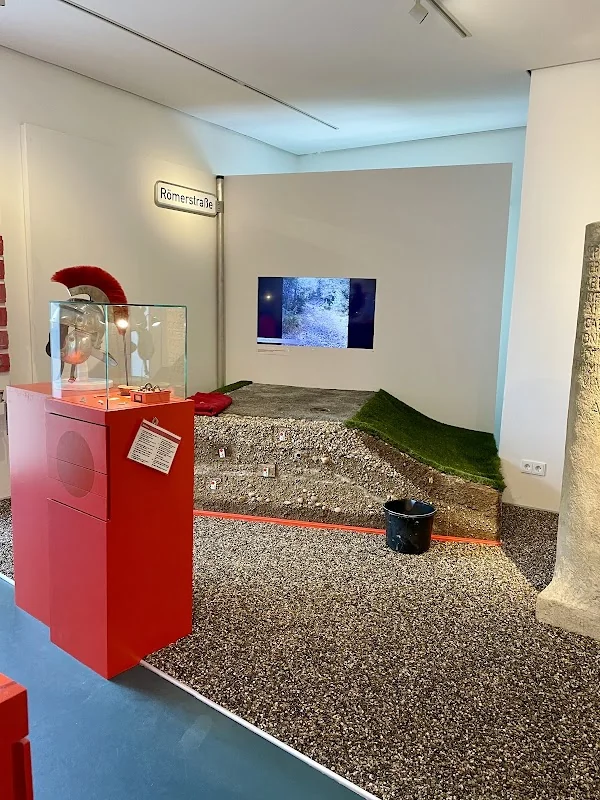
The exhibition is particularly strong where it translates finds and reconstructions into comprehensible stations. Among other things, the restored grave goods of the Kiltis, a Roman milestone with an interior, a touchable oil lamp, a Caligula coin under a magnifying glass, a Groma for self-measuring, a Kiltines pearl necklace for trying on, and the document from 804 for reading are mentioned. Such exhibits make it understandable why the museum is considered interactive: It not only shows what has been found but also how knowledge about life in earlier centuries is created from it. Audio stations and play scenes in video or audio form complement these objects and facilitate access for younger guests as well. ([schichtwerk-gilching.de](https://schichtwerk-gilching.de/de/das-museum/die-ausstellung?utm_source=openai))
The Wersonhaus and Its History
The building itself is part of the history and not just a backdrop. According to the official house history, the builder Melchior Fanger planned the house on the edge of the old village in 1914, the contractor Eduard Forner bought the plan and built the country house as the so-called Villa Forner. Later, among others, doctors lived there before Marie Lindemann acquired the house in 1919 and moved in with the sculptor Jules Werson and a housekeeper. In 1920, the studio extension was added, and in 1923 Werson received the house “Two Birches.” Even this sequence shows how closely the building is intertwined with artistic, social, and local history. ([schichtwerk-gilching.de](https://schichtwerk-gilching.de/de/das-museum/das-ausstellungshaus))
Subsequently, the use changed several times: Werson held VHS courses in his own house starting in 1950, in 1981 the community acquired the country house after the widow's death, and later social services, kindergarten, emergency library, and municipal institutions used the ensemble. In 2010, the renovated Wersonhaus was reopened, and in 2017 the association Zeitreise Gilching opened SchichtWerk on the upper floor. It is also interesting that the wedding hall in the house is still used for marriages. Therefore, visitors to the museum experience not only an exhibition about past times but also a building that itself has a long and eventful history of use. ([schichtwerk-gilching.de](https://schichtwerk-gilching.de/de/das-museum/das-ausstellungshaus))
Accessibility, Groups, and Special Formats
Practical planning also includes looking at accessibility and target groups. The official information lists the museum as not accessible. At the same time, it is described as suitable for individual visitors, groups, and school classes upon request. For visitors, this means: The place is generally open to different formats, but those with special needs should contact in advance. Especially in a historic house with grown building substance, this information is important because it creates realistic expectations and avoids disappointments. It fits that the website lists not only the opening hours but also special openings and additional dates, making group visits well-planned. ([museen-in-bayern.de](https://museen-in-bayern.de/museen/detailseite-museum/schichtwerk-zeitreisen-im-wersonhaus))
Additionally, several awards and notes make SchichtWerk visible as an engaged cultural site. The homepage honors the association Zeitreise Gilching e.V. for the monument protection medal 2023, and SchichtWerk is also mentioned as a prizewinner of the Tassilo Culture Prize 2018. This is not only a nice detail but also an indication of the quality of mediation work and the relevance of the place beyond Gilching. Therefore, anyone planning a visit can not only view the permanent exhibition but also include current special exhibitions, guided tours, and lectures. For the search for “events,” “program,” and “accessibility,” a clear picture emerges: SchichtWerk is a small but very active museum with a strong regional profile and a clearly defined visitor service structure. ([schichtwerk-gilching.de](https://schichtwerk-gilching.de/))
Sources:
- SchichtWerk – Homepage with current exhibitions, opening hours, and awards ([schichtwerk-gilching.de](https://schichtwerk-gilching.de/))
- SchichtWerk – Prices, admission, donations, and guided tours ([schichtwerk-gilching.de](https://schichtwerk-gilching.de/de/ihr-besuch/preise))
- Community Gilching – Museum SchichtWerk and opening hours ([gilching.de](https://www.gilching.de/kultur-freizeit/museum/))
- SchichtWerk – Directions and visitor information ([schichtwerk-gilching.de](https://schichtwerk-gilching.de/de/ihr-besuch/anfahrt))
- SchichtWerk – Concept, exhibition, and house history ([schichtwerk-gilching.de](https://schichtwerk-gilching.de/de/das-museum/das-konzept?utm_source=openai))
- Museums in Bavaria – Visitor info, free admission, accessibility ([museen-in-bayern.de](https://museen-in-bayern.de/museen/detailseite-museum/schichtwerk-zeitreisen-im-wersonhaus))
Show moreShow less
SchichtWerk - Time Travel in the Wersonhaus | Tickets & Program
SchichtWerk – Time Travel in the Wersonhaus is the first museum in Gilching and connects local history, archaeology, and a consciously experiential exhibition in the historic Wersonhaus at Brucker Straße 11. The community describes the house as a time travel through Gilching's history; the association Zeitreise Gilching e.V. has opened the permanent exhibition on the upper floor and works voluntarily on mediation, research, and programming. This mix makes the location interesting for visitors who are not only looking for facts but for a place where history can be experienced spatially and sensually. ([gilching.de](https://www.gilching.de/kultur-freizeit/museum/))
Admission is free, donations are welcome; those who want to delve deeper can book guided tours or explore the exhibition on their own. Currently, the website lists regular openings on Tuesday mornings and on selected Sundays, supplemented by appointments upon request and special openings for occasions such as Museum Day or Open Monument Day. This makes SchichtWerk suitable for a short cultural stop as well as for planned family, group, and school visits. ([schichtwerk-gilching.de](https://schichtwerk-gilching.de/de/ihr-besuch/preise))
Tickets, Admission, and Guided Tours
When people look for tickets for SchichtWerk, they often mean access to the exhibition, and here the good news is particularly clear: Admission to the exhibition is free. The official price overview states free entry and simultaneously asks for a donation to keep special exhibitions, research, and restorations possible. This is remarkable for a local historical institution because it allows for a low-threshold visit while ensuring the quality of mediation. This openness is a great advantage, especially for families, spontaneous visitors, or travelers who have little time in Gilching. ([schichtwerk-gilching.de](https://schichtwerk-gilching.de/de/ihr-besuch/preise))
Guided tours, on the other hand, are chargeable, and the price depends on the scope. Therefore, anyone who wants a deeper explanation of Romans, Bavarians, finds, and historical contexts beyond a simple visit should plan for a guided tour. The team points out on the homepage that one can discover the exhibition alone or be guided through it in an engaging hour. Current dates, special openings, and information can be found on the association's page or in the newsletter. For the search intent “tickets,” it is important to know: The actual admission ticket is waived, but guided tour dates, group offers, and special formats may require reservations or be chargeable. ([schichtwerk-gilching.de](https://schichtwerk-gilching.de/))
Opening Hours, Dates, and Events
The current opening hours are a central theme because SchichtWerk is not open daily but consciously operates in the rhythm of a museum with volunteer operations. The website lists Sunday openings for 2026 from 2 PM to 5 PM on the dates 10.05.2026, 17.05.2026, 14.06.2026, 12.07.2026, 09.08.2026, and 13.09.2026. Additionally, it is open on Tuesdays from 10 AM to 12 PM, but not on public holidays. Furthermore, visits by appointment are possible. Therefore, anyone planning an excursion should check the date in advance and not assume that openings occur spontaneously every weekend. ([schichtwerk-gilching.de](https://schichtwerk-gilching.de/))
For the category of events, SchichtWerk is more than just a fixed permanent exhibition: The homepage lists current special exhibitions and additional dates, and the association's page provides information about lectures, events, and other dates. Currently, the special exhibition “At the Table with the Romans – History to Bite Into” is featured, while previous topics ranged from archaeology to air war history to local stories around the Wersonhaus. This shows that the program changes regularly and continuously opens new perspectives on Gilching's history. Therefore, those searching for “program,” “dates,” or “events” will find here not a rigid calendar but a lively museum with changing focuses. ([schichtwerk-gilching.de](https://schichtwerk-gilching.de/))
Directions and Parking at the Wersonhaus
Directions are a crucial search topic for many visitors, and there are specific routes for SchichtWerk. You can take the S-Bahn to Gilching-Argelsried; from there, it is about 1.5 kilometers on foot to Brucker Straße 11, or you can take the bus X920 towards Fürstenfeldbruck to the Welfenstraße stop. From there, it is about 300 meters on foot to the north. This combination of train and bus makes the museum accessible without a car, which is practical for day visitors from Munich and the western surroundings. The address is clearly located in the town, making the last meters relatively easy to find. ([starnbergammersee.de](https://www.starnbergammersee.de/detail/id%3D6076acb907bca56b2082f5d8))
By car, the house is also easily accessible: From the south, the route leads via the A95, exit Gilching-Argelsried, then towards Gilching or Fürstenfeldbruck on the St 2069. From the north, you can come from the B2 Munich–Fürstenfeldbruck via the St 2069 and turn into Brucker Straße in Gilching. The visitor information explicitly states that parking spaces are available. Therefore, anyone searching for “parking” gets a reliable answer: There are parking options on-site, and the access is suitable for both regional and long-distance arrivals. For a museum visit with a short stay, this is an important comfort factor. ([starnbergammersee.de](https://www.starnbergammersee.de/detail/id%3D6076acb907bca56b2082f5d8))
Exhibition, Romans, and Bavarians
The content core of SchichtWerk is the transition from late Roman to Bavarian settlement in Gilching. The museum tells this development not as a dry collection of numbers but as an experiential story about people, places, and objects. The mediation concept is based on the idea of stratigraphy: layers are not only explained but made visible as a principle of knowledge. Visitors encounter the content through different senses, namely by seeing, hearing, touching, and actively exploring. The regional description explicitly emphasizes that one can go on a discovery journey alone or be guided through the exhibition. ([starnbergammersee.de](https://www.starnbergammersee.de/detail/id%3D6076acb907bca56b2082f5d8))
The exhibition is particularly strong where it translates finds and reconstructions into comprehensible stations. Among other things, the restored grave goods of the Kiltis, a Roman milestone with an interior, a touchable oil lamp, a Caligula coin under a magnifying glass, a Groma for self-measuring, a Kiltines pearl necklace for trying on, and the document from 804 for reading are mentioned. Such exhibits make it understandable why the museum is considered interactive: It not only shows what has been found but also how knowledge about life in earlier centuries is created from it. Audio stations and play scenes in video or audio form complement these objects and facilitate access for younger guests as well. ([schichtwerk-gilching.de](https://schichtwerk-gilching.de/de/das-museum/die-ausstellung?utm_source=openai))
The Wersonhaus and Its History
The building itself is part of the history and not just a backdrop. According to the official house history, the builder Melchior Fanger planned the house on the edge of the old village in 1914, the contractor Eduard Forner bought the plan and built the country house as the so-called Villa Forner. Later, among others, doctors lived there before Marie Lindemann acquired the house in 1919 and moved in with the sculptor Jules Werson and a housekeeper. In 1920, the studio extension was added, and in 1923 Werson received the house “Two Birches.” Even this sequence shows how closely the building is intertwined with artistic, social, and local history. ([schichtwerk-gilching.de](https://schichtwerk-gilching.de/de/das-museum/das-ausstellungshaus))
Subsequently, the use changed several times: Werson held VHS courses in his own house starting in 1950, in 1981 the community acquired the country house after the widow's death, and later social services, kindergarten, emergency library, and municipal institutions used the ensemble. In 2010, the renovated Wersonhaus was reopened, and in 2017 the association Zeitreise Gilching opened SchichtWerk on the upper floor. It is also interesting that the wedding hall in the house is still used for marriages. Therefore, visitors to the museum experience not only an exhibition about past times but also a building that itself has a long and eventful history of use. ([schichtwerk-gilching.de](https://schichtwerk-gilching.de/de/das-museum/das-ausstellungshaus))
Accessibility, Groups, and Special Formats
Practical planning also includes looking at accessibility and target groups. The official information lists the museum as not accessible. At the same time, it is described as suitable for individual visitors, groups, and school classes upon request. For visitors, this means: The place is generally open to different formats, but those with special needs should contact in advance. Especially in a historic house with grown building substance, this information is important because it creates realistic expectations and avoids disappointments. It fits that the website lists not only the opening hours but also special openings and additional dates, making group visits well-planned. ([museen-in-bayern.de](https://museen-in-bayern.de/museen/detailseite-museum/schichtwerk-zeitreisen-im-wersonhaus))
Additionally, several awards and notes make SchichtWerk visible as an engaged cultural site. The homepage honors the association Zeitreise Gilching e.V. for the monument protection medal 2023, and SchichtWerk is also mentioned as a prizewinner of the Tassilo Culture Prize 2018. This is not only a nice detail but also an indication of the quality of mediation work and the relevance of the place beyond Gilching. Therefore, anyone planning a visit can not only view the permanent exhibition but also include current special exhibitions, guided tours, and lectures. For the search for “events,” “program,” and “accessibility,” a clear picture emerges: SchichtWerk is a small but very active museum with a strong regional profile and a clearly defined visitor service structure. ([schichtwerk-gilching.de](https://schichtwerk-gilching.de/))
Sources:
- SchichtWerk – Homepage with current exhibitions, opening hours, and awards ([schichtwerk-gilching.de](https://schichtwerk-gilching.de/))
- SchichtWerk – Prices, admission, donations, and guided tours ([schichtwerk-gilching.de](https://schichtwerk-gilching.de/de/ihr-besuch/preise))
- Community Gilching – Museum SchichtWerk and opening hours ([gilching.de](https://www.gilching.de/kultur-freizeit/museum/))
- SchichtWerk – Directions and visitor information ([schichtwerk-gilching.de](https://schichtwerk-gilching.de/de/ihr-besuch/anfahrt))
- SchichtWerk – Concept, exhibition, and house history ([schichtwerk-gilching.de](https://schichtwerk-gilching.de/de/das-museum/das-konzept?utm_source=openai))
- Museums in Bavaria – Visitor info, free admission, accessibility ([museen-in-bayern.de](https://museen-in-bayern.de/museen/detailseite-museum/schichtwerk-zeitreisen-im-wersonhaus))
SchichtWerk - Time Travel in the Wersonhaus | Tickets & Program
SchichtWerk – Time Travel in the Wersonhaus is the first museum in Gilching and connects local history, archaeology, and a consciously experiential exhibition in the historic Wersonhaus at Brucker Straße 11. The community describes the house as a time travel through Gilching's history; the association Zeitreise Gilching e.V. has opened the permanent exhibition on the upper floor and works voluntarily on mediation, research, and programming. This mix makes the location interesting for visitors who are not only looking for facts but for a place where history can be experienced spatially and sensually. ([gilching.de](https://www.gilching.de/kultur-freizeit/museum/))
Admission is free, donations are welcome; those who want to delve deeper can book guided tours or explore the exhibition on their own. Currently, the website lists regular openings on Tuesday mornings and on selected Sundays, supplemented by appointments upon request and special openings for occasions such as Museum Day or Open Monument Day. This makes SchichtWerk suitable for a short cultural stop as well as for planned family, group, and school visits. ([schichtwerk-gilching.de](https://schichtwerk-gilching.de/de/ihr-besuch/preise))
Tickets, Admission, and Guided Tours
When people look for tickets for SchichtWerk, they often mean access to the exhibition, and here the good news is particularly clear: Admission to the exhibition is free. The official price overview states free entry and simultaneously asks for a donation to keep special exhibitions, research, and restorations possible. This is remarkable for a local historical institution because it allows for a low-threshold visit while ensuring the quality of mediation. This openness is a great advantage, especially for families, spontaneous visitors, or travelers who have little time in Gilching. ([schichtwerk-gilching.de](https://schichtwerk-gilching.de/de/ihr-besuch/preise))
Guided tours, on the other hand, are chargeable, and the price depends on the scope. Therefore, anyone who wants a deeper explanation of Romans, Bavarians, finds, and historical contexts beyond a simple visit should plan for a guided tour. The team points out on the homepage that one can discover the exhibition alone or be guided through it in an engaging hour. Current dates, special openings, and information can be found on the association's page or in the newsletter. For the search intent “tickets,” it is important to know: The actual admission ticket is waived, but guided tour dates, group offers, and special formats may require reservations or be chargeable. ([schichtwerk-gilching.de](https://schichtwerk-gilching.de/))
Opening Hours, Dates, and Events
The current opening hours are a central theme because SchichtWerk is not open daily but consciously operates in the rhythm of a museum with volunteer operations. The website lists Sunday openings for 2026 from 2 PM to 5 PM on the dates 10.05.2026, 17.05.2026, 14.06.2026, 12.07.2026, 09.08.2026, and 13.09.2026. Additionally, it is open on Tuesdays from 10 AM to 12 PM, but not on public holidays. Furthermore, visits by appointment are possible. Therefore, anyone planning an excursion should check the date in advance and not assume that openings occur spontaneously every weekend. ([schichtwerk-gilching.de](https://schichtwerk-gilching.de/))
For the category of events, SchichtWerk is more than just a fixed permanent exhibition: The homepage lists current special exhibitions and additional dates, and the association's page provides information about lectures, events, and other dates. Currently, the special exhibition “At the Table with the Romans – History to Bite Into” is featured, while previous topics ranged from archaeology to air war history to local stories around the Wersonhaus. This shows that the program changes regularly and continuously opens new perspectives on Gilching's history. Therefore, those searching for “program,” “dates,” or “events” will find here not a rigid calendar but a lively museum with changing focuses. ([schichtwerk-gilching.de](https://schichtwerk-gilching.de/))
Directions and Parking at the Wersonhaus
Directions are a crucial search topic for many visitors, and there are specific routes for SchichtWerk. You can take the S-Bahn to Gilching-Argelsried; from there, it is about 1.5 kilometers on foot to Brucker Straße 11, or you can take the bus X920 towards Fürstenfeldbruck to the Welfenstraße stop. From there, it is about 300 meters on foot to the north. This combination of train and bus makes the museum accessible without a car, which is practical for day visitors from Munich and the western surroundings. The address is clearly located in the town, making the last meters relatively easy to find. ([starnbergammersee.de](https://www.starnbergammersee.de/detail/id%3D6076acb907bca56b2082f5d8))
By car, the house is also easily accessible: From the south, the route leads via the A95, exit Gilching-Argelsried, then towards Gilching or Fürstenfeldbruck on the St 2069. From the north, you can come from the B2 Munich–Fürstenfeldbruck via the St 2069 and turn into Brucker Straße in Gilching. The visitor information explicitly states that parking spaces are available. Therefore, anyone searching for “parking” gets a reliable answer: There are parking options on-site, and the access is suitable for both regional and long-distance arrivals. For a museum visit with a short stay, this is an important comfort factor. ([starnbergammersee.de](https://www.starnbergammersee.de/detail/id%3D6076acb907bca56b2082f5d8))
Exhibition, Romans, and Bavarians
The content core of SchichtWerk is the transition from late Roman to Bavarian settlement in Gilching. The museum tells this development not as a dry collection of numbers but as an experiential story about people, places, and objects. The mediation concept is based on the idea of stratigraphy: layers are not only explained but made visible as a principle of knowledge. Visitors encounter the content through different senses, namely by seeing, hearing, touching, and actively exploring. The regional description explicitly emphasizes that one can go on a discovery journey alone or be guided through the exhibition. ([starnbergammersee.de](https://www.starnbergammersee.de/detail/id%3D6076acb907bca56b2082f5d8))
The exhibition is particularly strong where it translates finds and reconstructions into comprehensible stations. Among other things, the restored grave goods of the Kiltis, a Roman milestone with an interior, a touchable oil lamp, a Caligula coin under a magnifying glass, a Groma for self-measuring, a Kiltines pearl necklace for trying on, and the document from 804 for reading are mentioned. Such exhibits make it understandable why the museum is considered interactive: It not only shows what has been found but also how knowledge about life in earlier centuries is created from it. Audio stations and play scenes in video or audio form complement these objects and facilitate access for younger guests as well. ([schichtwerk-gilching.de](https://schichtwerk-gilching.de/de/das-museum/die-ausstellung?utm_source=openai))
The Wersonhaus and Its History
The building itself is part of the history and not just a backdrop. According to the official house history, the builder Melchior Fanger planned the house on the edge of the old village in 1914, the contractor Eduard Forner bought the plan and built the country house as the so-called Villa Forner. Later, among others, doctors lived there before Marie Lindemann acquired the house in 1919 and moved in with the sculptor Jules Werson and a housekeeper. In 1920, the studio extension was added, and in 1923 Werson received the house “Two Birches.” Even this sequence shows how closely the building is intertwined with artistic, social, and local history. ([schichtwerk-gilching.de](https://schichtwerk-gilching.de/de/das-museum/das-ausstellungshaus))
Subsequently, the use changed several times: Werson held VHS courses in his own house starting in 1950, in 1981 the community acquired the country house after the widow's death, and later social services, kindergarten, emergency library, and municipal institutions used the ensemble. In 2010, the renovated Wersonhaus was reopened, and in 2017 the association Zeitreise Gilching opened SchichtWerk on the upper floor. It is also interesting that the wedding hall in the house is still used for marriages. Therefore, visitors to the museum experience not only an exhibition about past times but also a building that itself has a long and eventful history of use. ([schichtwerk-gilching.de](https://schichtwerk-gilching.de/de/das-museum/das-ausstellungshaus))
Accessibility, Groups, and Special Formats
Practical planning also includes looking at accessibility and target groups. The official information lists the museum as not accessible. At the same time, it is described as suitable for individual visitors, groups, and school classes upon request. For visitors, this means: The place is generally open to different formats, but those with special needs should contact in advance. Especially in a historic house with grown building substance, this information is important because it creates realistic expectations and avoids disappointments. It fits that the website lists not only the opening hours but also special openings and additional dates, making group visits well-planned. ([museen-in-bayern.de](https://museen-in-bayern.de/museen/detailseite-museum/schichtwerk-zeitreisen-im-wersonhaus))
Additionally, several awards and notes make SchichtWerk visible as an engaged cultural site. The homepage honors the association Zeitreise Gilching e.V. for the monument protection medal 2023, and SchichtWerk is also mentioned as a prizewinner of the Tassilo Culture Prize 2018. This is not only a nice detail but also an indication of the quality of mediation work and the relevance of the place beyond Gilching. Therefore, anyone planning a visit can not only view the permanent exhibition but also include current special exhibitions, guided tours, and lectures. For the search for “events,” “program,” and “accessibility,” a clear picture emerges: SchichtWerk is a small but very active museum with a strong regional profile and a clearly defined visitor service structure. ([schichtwerk-gilching.de](https://schichtwerk-gilching.de/))
Sources:
- SchichtWerk – Homepage with current exhibitions, opening hours, and awards ([schichtwerk-gilching.de](https://schichtwerk-gilching.de/))
- SchichtWerk – Prices, admission, donations, and guided tours ([schichtwerk-gilching.de](https://schichtwerk-gilching.de/de/ihr-besuch/preise))
- Community Gilching – Museum SchichtWerk and opening hours ([gilching.de](https://www.gilching.de/kultur-freizeit/museum/))
- SchichtWerk – Directions and visitor information ([schichtwerk-gilching.de](https://schichtwerk-gilching.de/de/ihr-besuch/anfahrt))
- SchichtWerk – Concept, exhibition, and house history ([schichtwerk-gilching.de](https://schichtwerk-gilching.de/de/das-museum/das-konzept?utm_source=openai))
- Museums in Bavaria – Visitor info, free admission, accessibility ([museen-in-bayern.de](https://museen-in-bayern.de/museen/detailseite-museum/schichtwerk-zeitreisen-im-wersonhaus))

Frequently Asked Questions
Reviews
Nica Nario
14. May 2023
Today was our first time at SchichtWerk. We were lucky to randomly listen to Ms. Reindl's additions to the exhibits. She runs the museum with passion!❣️ Admission is free. Opening hours: - On the 2nd Sunday of the month from 2-5 PM (not on holidays) - Every Tuesday from 10 AM to 12 PM (not during school holidays and on holidays)
Dieter Hornung ERGO Geschäftsstelle München
11. February 2024
My wife and I visited Schichtwerk today with friends. Ms. Reindl took the time to guide us through the special exhibition "Kilti, who are you?" Super interesting and explained in a very engaging way. Thank you from the Hornung family and friends!
Markus Kirsch
15. August 2017
Very informative and well-made small exhibition about the ancient history of Gilching! A small guided tour by a knowledgeable member of the Schichtwerk association is highly recommended! Otherwise, you can also explore the different layers (drawers) of the exhibition on your own and gather information. Anyone who has worked their way through Schichtwerk will walk a bit more respectfully over the historical ground of Gilching in the future!
Ulrich Bähr
12. November 2018
A professionally made small museum about Romans and Bavarians in Gilching. Absolutely worth seeing. Adults can constantly discover new things, and there are really lovely offerings for kids.
Ralf Domschat
24. September 2022
A small, nice museum, really recommended for both young and old.