
Utting am Ammersee
Bahnhofpl. 1, 86919 Utting am Ammersee, Deutschland
raumB1 | Exhibitions & Events at the Train Station
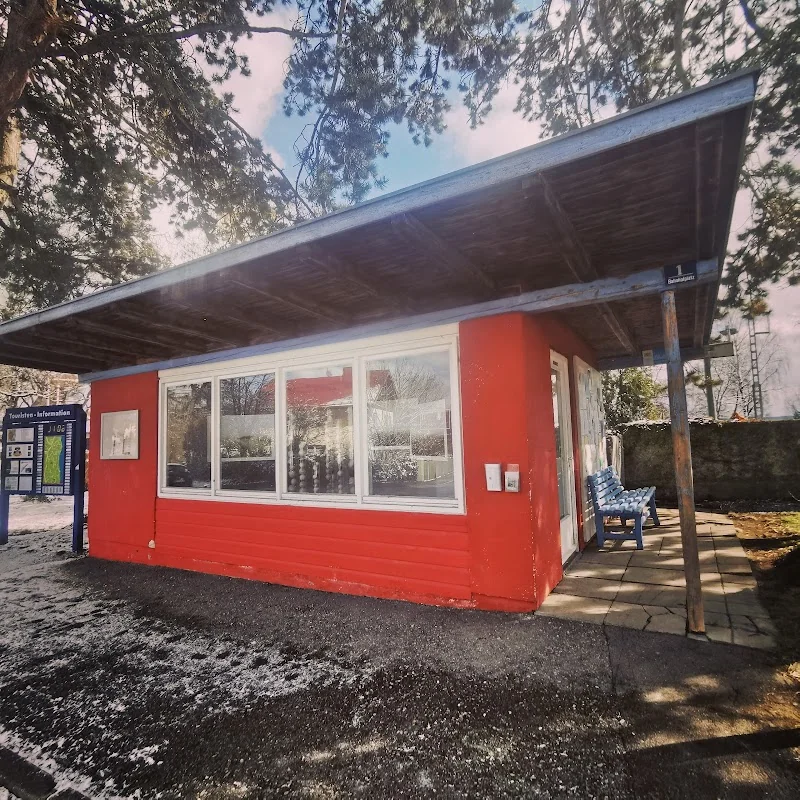
The search intention behind raumB1 Utting revolves almost always around the same core questions: What is the space currently showing, what events are taking place there, how to get there, and where to park. This is precisely why raumB1 is so exciting for visitors. The place connects art, everyday life, and mobility in a small space. Since June 2018, the space has been documented as a venue for art exhibitions, cultural events, and encounters. It is located at Bahnhofplatz 1 in Utting am Ammersee, right next to the train station, and its large display windows shape the local image in such a way that art does not disappear behind a threshold but becomes visible in passing. The former tourist information office has thus transformed from a practical information point into a cultural anchor point. Those looking for raumB1 are therefore not just searching for an address but for a place with a stance: open, accessible, regionally anchored, and at the same time curious about new artistic forms. This mix makes the space one of the most distinctive creative places in the Ammersee region and explains why it is equally interesting for exhibitions, cultural appointments, and spontaneous visits. ([staatspreis-kreativorte.bayern](https://staatspreis-kreativorte.bayern/kreativorte/raum-b1/))
Exhibitions, Concerts, and Readings at raumB1
Those searching for events at raumB1 will not find a classic multipurpose hall with a standardized program, but a cultural space defined by its content. This is one of the reasons why the place works so well. According to the official description and historical contributions on the website, exhibitions, concerts, readings, documentary formats related to local and contemporary history, and repeatedly experimental projects take place at raumB1. The mix is deliberately broad and yet does not seem arbitrary because it arises from a clear stance: Art should not only take place for an initiated professional audience but for people who happen to pass by, are specifically searching, or are looking in for the first time. The space is thus not a closed white cube but a lively, public resonance space. Particularly interesting is the curatorial openness, as it allows room for classical visual arts as well as for video, sound, text, installation, or performative formats. The creative place description states that regional art and cultural events take place here with cultural creators from the Ammersee West region, the surrounding area, and also from cities like Landsberg, Fürstenfeldbruck, Starnberg, and Munich. This regional interconnection makes raumB1 particularly relevant for the search for exhibitions in Utting, concerts in Utting, or readings in Utting. Those who come here do not receive just a mere program space but a place where young talents and established positions can stand side by side. This leads to a special profile: sometimes concentrated and quiet, sometimes documentary, sometimes surprisingly experimental, but always close to immediate perception and the dialogue between art and the public. ([staatspreis-kreativorte.bayern](https://staatspreis-kreativorte.bayern/kreativorte/raum-b1/))
Directions and Parking at raumB1 in Utting
For many users, the journey is the most important practical search term, and with raumB1, this is no coincidence, as the place is located directly at a traffic junction. The municipality of Utting describes the journey by car from various directions, mentions the connection by train via Munich or Augsburg, and also refers to local parking options and the mobile parking solution with easypark. For visitors to raumB1, it is especially important that the cultural space is located right next to the train station. Therefore, those arriving by train have it extremely short: The space is so close to the station that it is quickly noticeable when getting off or crossing the train station area. The train station infrastructure itself includes toilets, bicycle parking spaces, and parking lots. This is particularly helpful for guests who want to combine their visit with a short onward journey, by bike, or with a train stop. The municipality also mentions free parking at the train station and in the town center; in the recreational area, there are paid parking spaces, and for Utting, digital payment with easypark is offered. This means: Those looking to park near raumB1 will not find a complicated parking landscape but a mix of free, paid, and digital options that can be sensibly combined depending on duration and time of day. For the journey by train, the municipality is particularly clear: From Munich, you take the S4 to Geltendorf and then continue with the Bavarian Regiobahn to Utting am Ammersee; from Augsburg, the route is simply Augsburg Central Station – Utting am Ammersee. This keeps raumB1 not only a cultural place but also a very accessible meeting point for visitors from the entire region. ([utting.de](https://www.utting.de/freizeit-tourismus/anreise/))
From the Former Tourist Information Office to a Creative Space
The history of raumB1 is a good example of how a small functional building can become a significant cultural place. On the page for the Bavarian creative space, the house is described as a former tourist information office in Utting, a low building with large display windows in a central location right next to the train station. An older official representation adds that there used to be the municipality's tourist information in a small pavilion from the 1970s at this address. In 2018, Harry Sternberg was able to take over the space and transformed it into a place for art, culture, and encounters. This is where the core of success lies: The location remained the same, but the function was expanded. The tourist information point became a cultural meeting place that is recognized beyond district boundaries. According to the official chronicle, Sternberg pursued the idea of creating a meeting place for art and culture, breaking down barriers, and appealing to as many people as possible. This goal fits perfectly with the location: Those passing by Bahnhofstraße encounter the space not after a long search but in everyday life. The development of the programs also shows how consistently the concept has been built. The first exhibition dealt with a historical theme, and later, according to the website, more than sixty further exhibitions followed, along with documentary formats, concerts, readings, and projects that also deal with Brecht at Ammersee or with the memory of concentration camp subcamps. This makes it clear that raumB1 has never been merely decorative but always seriously content-oriented. In April 2024, the official site also reported on the handover of the space to new curators; thus, the development continued without losing the character of the place. For seekers interested in history, background, and peculiarities, this continuity is essential: raumB1 is small but not a marginal phenomenon. It is a consciously designed creative space whose identity consists of location, program, and stance. ([staatspreis-kreativorte.bayern](https://staatspreis-kreativorte.bayern/kreativorte/raum-b1/))
LIGHT CHAIN, Sound Art, and Changing Projects
A particularly strong unique selling point of raumB1 is the way the place stages current projects. The official website shows that the space has recently been involved with series such as LIGHT CHAIN, sound and light installations, and formats like analog. offline. B1 plays records. This is relevant from an SEO perspective because many search queries not only look for the address but also for the current program or a specific event in 2025 or 2026. LIGHT CHAIN is a good example of how the place works: Changing artists present light, video, and spatial installations that can be experienced from the outside after dark. The official description explicitly emphasizes that these works are accessible without thresholds and without admission fees. This is a special form of cultural mediation because it brings art back into the public space and invites passersby without requiring a formal admission situation. The current program practice also shows openness: The website presents Robin Taylor's “Sound / Light / Text” as an installation between sound art, analog technology, and philosophical reflection. Additionally, with analog. offline. B1 plays records, there is a format that consciously does without playlists and algorithms and places the communal music moment at the center. This way, raumB1 is experienced not only as a gallery but also as a place for listening, seeing, thinking, and social encounters. This is exactly what is interesting for visitors who, when searching for raumB1 program or raumB1 today, do not just want an appointment but an atmosphere. The projects are often concentrated, poetic, and at the same time very accessible. They appeal to people who happen to pass by as well as those who specifically travel for an opening, an installation, or a musical-artistic series. The space thus uses its display window location not as a decorative detail but as a curatorial instrument. ([raumb1.de](https://raumb1.de/))
Display Windows, Public Space, and Regional Networking
The special strength of raumB1 lies not only in the program but also in its visibility. The creative place description and older texts on the website make it clear that the space is located at a point where many people pass by daily: commuters, school children, day-trippers, and all those entering or leaving Utting. This is crucial for a cultural place because it creates a natural contact with the public. Unlike in a hidden side street, raumB1 is directly connected with movement, arrival, and departure. The large display windows amplify this effect because exhibitions or installations not only work inside but also have an impact from the outside. This is precisely the appeal for search terms related to display window exhibitions, projects at the train station, or cultural spaces at the train station. The place is not an isolated building but a kind of interface between the town center, train traffic, and cultural everyday life. In addition, there is regional networking. The creative place page emphasizes that the events do not only come from Utting itself but from the West region of Ammersee and the surrounding area. This makes raumB1 a small but very effective hub for artists and culture enthusiasts from several places. This networking is also important because it integrates the space into a larger cultural landscape and does not reduce it to a single municipality. The website and reports also show that the place repeatedly works with memory culture, for example, in documentary exhibitions or historical projects. This makes it a space where present and past, regional identity and experimental form come together. This is exactly what makes it attractive for visitors who are looking for more than just a calendar appointment. Those interested in a cultural place with transparent, public impact will find in raumB1 a rare combination of proximity, openness, and content depth. This is valuable for the local cultural scene because here not only is shown but also networked, mediated, and further thought. ([staatspreis-kreativorte.bayern](https://staatspreis-kreativorte.bayern/kreativorte/raum-b1/))
Practical Tips for Your Visit to Utting Train Station
For a good visit to raumB1, it is worth considering the practical information, as this often creates the decisive comfort points. The train station page mentions toilets, bicycle parking spaces, and parking lots for Utting; the municipality adds free parking options at the train station and in the town center, as well as paid parking spaces in the recreational area and mobile parking with easypark. Additionally, the train station is not staffed, so it does not offer classic on-site support. Those needing assistance can inquire through the mobility service center of the railway; furthermore, the station refers to the 3-S center Munich Central Station. For visitors, this means primarily: Arrival and orientation are uncomplicated, but one should plan a little in advance depending on needs, especially if traveling with limited mobility, with luggage, or to a specific opening time. The proximity to the train station is a plus because one can easily combine train, walking, and cultural moments. Those arriving by bike benefit from the parking spaces at the train station; those arriving by car have various options between free and paid parking depending on the duration of stay. The official municipality page is therefore a sensible starting point for planning, while the train station page provides immediate service information. For visitors to raumB1, it is also important that many formats are deliberately designed to be experienced from the outside. This means: Even if one just walks by briefly, one can get an impression of the work of the space. Those with more time can combine their visit with a walk through the town, a look at the current exhibitions, or an event. This mix of spontaneous perception and targeted visit makes raumB1 so suitable for modern search queries. It is neither a hard-to-access special place nor an arbitrary event space but a cultural point that is easy to find, easy to reach, and can be experienced in very different intensities. This is the foundation for raumB1 Utting to be perceived in searches not just as an address but as a real experience. ([bahnhof.de](https://www.bahnhof.de/utting/))
Sources:
Show moreShow less
raumB1 | Exhibitions & Events at the Train Station
The search intention behind raumB1 Utting revolves almost always around the same core questions: What is the space currently showing, what events are taking place there, how to get there, and where to park. This is precisely why raumB1 is so exciting for visitors. The place connects art, everyday life, and mobility in a small space. Since June 2018, the space has been documented as a venue for art exhibitions, cultural events, and encounters. It is located at Bahnhofplatz 1 in Utting am Ammersee, right next to the train station, and its large display windows shape the local image in such a way that art does not disappear behind a threshold but becomes visible in passing. The former tourist information office has thus transformed from a practical information point into a cultural anchor point. Those looking for raumB1 are therefore not just searching for an address but for a place with a stance: open, accessible, regionally anchored, and at the same time curious about new artistic forms. This mix makes the space one of the most distinctive creative places in the Ammersee region and explains why it is equally interesting for exhibitions, cultural appointments, and spontaneous visits. ([staatspreis-kreativorte.bayern](https://staatspreis-kreativorte.bayern/kreativorte/raum-b1/))
Exhibitions, Concerts, and Readings at raumB1
Those searching for events at raumB1 will not find a classic multipurpose hall with a standardized program, but a cultural space defined by its content. This is one of the reasons why the place works so well. According to the official description and historical contributions on the website, exhibitions, concerts, readings, documentary formats related to local and contemporary history, and repeatedly experimental projects take place at raumB1. The mix is deliberately broad and yet does not seem arbitrary because it arises from a clear stance: Art should not only take place for an initiated professional audience but for people who happen to pass by, are specifically searching, or are looking in for the first time. The space is thus not a closed white cube but a lively, public resonance space. Particularly interesting is the curatorial openness, as it allows room for classical visual arts as well as for video, sound, text, installation, or performative formats. The creative place description states that regional art and cultural events take place here with cultural creators from the Ammersee West region, the surrounding area, and also from cities like Landsberg, Fürstenfeldbruck, Starnberg, and Munich. This regional interconnection makes raumB1 particularly relevant for the search for exhibitions in Utting, concerts in Utting, or readings in Utting. Those who come here do not receive just a mere program space but a place where young talents and established positions can stand side by side. This leads to a special profile: sometimes concentrated and quiet, sometimes documentary, sometimes surprisingly experimental, but always close to immediate perception and the dialogue between art and the public. ([staatspreis-kreativorte.bayern](https://staatspreis-kreativorte.bayern/kreativorte/raum-b1/))
Directions and Parking at raumB1 in Utting
For many users, the journey is the most important practical search term, and with raumB1, this is no coincidence, as the place is located directly at a traffic junction. The municipality of Utting describes the journey by car from various directions, mentions the connection by train via Munich or Augsburg, and also refers to local parking options and the mobile parking solution with easypark. For visitors to raumB1, it is especially important that the cultural space is located right next to the train station. Therefore, those arriving by train have it extremely short: The space is so close to the station that it is quickly noticeable when getting off or crossing the train station area. The train station infrastructure itself includes toilets, bicycle parking spaces, and parking lots. This is particularly helpful for guests who want to combine their visit with a short onward journey, by bike, or with a train stop. The municipality also mentions free parking at the train station and in the town center; in the recreational area, there are paid parking spaces, and for Utting, digital payment with easypark is offered. This means: Those looking to park near raumB1 will not find a complicated parking landscape but a mix of free, paid, and digital options that can be sensibly combined depending on duration and time of day. For the journey by train, the municipality is particularly clear: From Munich, you take the S4 to Geltendorf and then continue with the Bavarian Regiobahn to Utting am Ammersee; from Augsburg, the route is simply Augsburg Central Station – Utting am Ammersee. This keeps raumB1 not only a cultural place but also a very accessible meeting point for visitors from the entire region. ([utting.de](https://www.utting.de/freizeit-tourismus/anreise/))
From the Former Tourist Information Office to a Creative Space
The history of raumB1 is a good example of how a small functional building can become a significant cultural place. On the page for the Bavarian creative space, the house is described as a former tourist information office in Utting, a low building with large display windows in a central location right next to the train station. An older official representation adds that there used to be the municipality's tourist information in a small pavilion from the 1970s at this address. In 2018, Harry Sternberg was able to take over the space and transformed it into a place for art, culture, and encounters. This is where the core of success lies: The location remained the same, but the function was expanded. The tourist information point became a cultural meeting place that is recognized beyond district boundaries. According to the official chronicle, Sternberg pursued the idea of creating a meeting place for art and culture, breaking down barriers, and appealing to as many people as possible. This goal fits perfectly with the location: Those passing by Bahnhofstraße encounter the space not after a long search but in everyday life. The development of the programs also shows how consistently the concept has been built. The first exhibition dealt with a historical theme, and later, according to the website, more than sixty further exhibitions followed, along with documentary formats, concerts, readings, and projects that also deal with Brecht at Ammersee or with the memory of concentration camp subcamps. This makes it clear that raumB1 has never been merely decorative but always seriously content-oriented. In April 2024, the official site also reported on the handover of the space to new curators; thus, the development continued without losing the character of the place. For seekers interested in history, background, and peculiarities, this continuity is essential: raumB1 is small but not a marginal phenomenon. It is a consciously designed creative space whose identity consists of location, program, and stance. ([staatspreis-kreativorte.bayern](https://staatspreis-kreativorte.bayern/kreativorte/raum-b1/))
LIGHT CHAIN, Sound Art, and Changing Projects
A particularly strong unique selling point of raumB1 is the way the place stages current projects. The official website shows that the space has recently been involved with series such as LIGHT CHAIN, sound and light installations, and formats like analog. offline. B1 plays records. This is relevant from an SEO perspective because many search queries not only look for the address but also for the current program or a specific event in 2025 or 2026. LIGHT CHAIN is a good example of how the place works: Changing artists present light, video, and spatial installations that can be experienced from the outside after dark. The official description explicitly emphasizes that these works are accessible without thresholds and without admission fees. This is a special form of cultural mediation because it brings art back into the public space and invites passersby without requiring a formal admission situation. The current program practice also shows openness: The website presents Robin Taylor's “Sound / Light / Text” as an installation between sound art, analog technology, and philosophical reflection. Additionally, with analog. offline. B1 plays records, there is a format that consciously does without playlists and algorithms and places the communal music moment at the center. This way, raumB1 is experienced not only as a gallery but also as a place for listening, seeing, thinking, and social encounters. This is exactly what is interesting for visitors who, when searching for raumB1 program or raumB1 today, do not just want an appointment but an atmosphere. The projects are often concentrated, poetic, and at the same time very accessible. They appeal to people who happen to pass by as well as those who specifically travel for an opening, an installation, or a musical-artistic series. The space thus uses its display window location not as a decorative detail but as a curatorial instrument. ([raumb1.de](https://raumb1.de/))
Display Windows, Public Space, and Regional Networking
The special strength of raumB1 lies not only in the program but also in its visibility. The creative place description and older texts on the website make it clear that the space is located at a point where many people pass by daily: commuters, school children, day-trippers, and all those entering or leaving Utting. This is crucial for a cultural place because it creates a natural contact with the public. Unlike in a hidden side street, raumB1 is directly connected with movement, arrival, and departure. The large display windows amplify this effect because exhibitions or installations not only work inside but also have an impact from the outside. This is precisely the appeal for search terms related to display window exhibitions, projects at the train station, or cultural spaces at the train station. The place is not an isolated building but a kind of interface between the town center, train traffic, and cultural everyday life. In addition, there is regional networking. The creative place page emphasizes that the events do not only come from Utting itself but from the West region of Ammersee and the surrounding area. This makes raumB1 a small but very effective hub for artists and culture enthusiasts from several places. This networking is also important because it integrates the space into a larger cultural landscape and does not reduce it to a single municipality. The website and reports also show that the place repeatedly works with memory culture, for example, in documentary exhibitions or historical projects. This makes it a space where present and past, regional identity and experimental form come together. This is exactly what makes it attractive for visitors who are looking for more than just a calendar appointment. Those interested in a cultural place with transparent, public impact will find in raumB1 a rare combination of proximity, openness, and content depth. This is valuable for the local cultural scene because here not only is shown but also networked, mediated, and further thought. ([staatspreis-kreativorte.bayern](https://staatspreis-kreativorte.bayern/kreativorte/raum-b1/))
Practical Tips for Your Visit to Utting Train Station
For a good visit to raumB1, it is worth considering the practical information, as this often creates the decisive comfort points. The train station page mentions toilets, bicycle parking spaces, and parking lots for Utting; the municipality adds free parking options at the train station and in the town center, as well as paid parking spaces in the recreational area and mobile parking with easypark. Additionally, the train station is not staffed, so it does not offer classic on-site support. Those needing assistance can inquire through the mobility service center of the railway; furthermore, the station refers to the 3-S center Munich Central Station. For visitors, this means primarily: Arrival and orientation are uncomplicated, but one should plan a little in advance depending on needs, especially if traveling with limited mobility, with luggage, or to a specific opening time. The proximity to the train station is a plus because one can easily combine train, walking, and cultural moments. Those arriving by bike benefit from the parking spaces at the train station; those arriving by car have various options between free and paid parking depending on the duration of stay. The official municipality page is therefore a sensible starting point for planning, while the train station page provides immediate service information. For visitors to raumB1, it is also important that many formats are deliberately designed to be experienced from the outside. This means: Even if one just walks by briefly, one can get an impression of the work of the space. Those with more time can combine their visit with a walk through the town, a look at the current exhibitions, or an event. This mix of spontaneous perception and targeted visit makes raumB1 so suitable for modern search queries. It is neither a hard-to-access special place nor an arbitrary event space but a cultural point that is easy to find, easy to reach, and can be experienced in very different intensities. This is the foundation for raumB1 Utting to be perceived in searches not just as an address but as a real experience. ([bahnhof.de](https://www.bahnhof.de/utting/))
Sources:
raumB1 | Exhibitions & Events at the Train Station
The search intention behind raumB1 Utting revolves almost always around the same core questions: What is the space currently showing, what events are taking place there, how to get there, and where to park. This is precisely why raumB1 is so exciting for visitors. The place connects art, everyday life, and mobility in a small space. Since June 2018, the space has been documented as a venue for art exhibitions, cultural events, and encounters. It is located at Bahnhofplatz 1 in Utting am Ammersee, right next to the train station, and its large display windows shape the local image in such a way that art does not disappear behind a threshold but becomes visible in passing. The former tourist information office has thus transformed from a practical information point into a cultural anchor point. Those looking for raumB1 are therefore not just searching for an address but for a place with a stance: open, accessible, regionally anchored, and at the same time curious about new artistic forms. This mix makes the space one of the most distinctive creative places in the Ammersee region and explains why it is equally interesting for exhibitions, cultural appointments, and spontaneous visits. ([staatspreis-kreativorte.bayern](https://staatspreis-kreativorte.bayern/kreativorte/raum-b1/))
Exhibitions, Concerts, and Readings at raumB1
Those searching for events at raumB1 will not find a classic multipurpose hall with a standardized program, but a cultural space defined by its content. This is one of the reasons why the place works so well. According to the official description and historical contributions on the website, exhibitions, concerts, readings, documentary formats related to local and contemporary history, and repeatedly experimental projects take place at raumB1. The mix is deliberately broad and yet does not seem arbitrary because it arises from a clear stance: Art should not only take place for an initiated professional audience but for people who happen to pass by, are specifically searching, or are looking in for the first time. The space is thus not a closed white cube but a lively, public resonance space. Particularly interesting is the curatorial openness, as it allows room for classical visual arts as well as for video, sound, text, installation, or performative formats. The creative place description states that regional art and cultural events take place here with cultural creators from the Ammersee West region, the surrounding area, and also from cities like Landsberg, Fürstenfeldbruck, Starnberg, and Munich. This regional interconnection makes raumB1 particularly relevant for the search for exhibitions in Utting, concerts in Utting, or readings in Utting. Those who come here do not receive just a mere program space but a place where young talents and established positions can stand side by side. This leads to a special profile: sometimes concentrated and quiet, sometimes documentary, sometimes surprisingly experimental, but always close to immediate perception and the dialogue between art and the public. ([staatspreis-kreativorte.bayern](https://staatspreis-kreativorte.bayern/kreativorte/raum-b1/))
Directions and Parking at raumB1 in Utting
For many users, the journey is the most important practical search term, and with raumB1, this is no coincidence, as the place is located directly at a traffic junction. The municipality of Utting describes the journey by car from various directions, mentions the connection by train via Munich or Augsburg, and also refers to local parking options and the mobile parking solution with easypark. For visitors to raumB1, it is especially important that the cultural space is located right next to the train station. Therefore, those arriving by train have it extremely short: The space is so close to the station that it is quickly noticeable when getting off or crossing the train station area. The train station infrastructure itself includes toilets, bicycle parking spaces, and parking lots. This is particularly helpful for guests who want to combine their visit with a short onward journey, by bike, or with a train stop. The municipality also mentions free parking at the train station and in the town center; in the recreational area, there are paid parking spaces, and for Utting, digital payment with easypark is offered. This means: Those looking to park near raumB1 will not find a complicated parking landscape but a mix of free, paid, and digital options that can be sensibly combined depending on duration and time of day. For the journey by train, the municipality is particularly clear: From Munich, you take the S4 to Geltendorf and then continue with the Bavarian Regiobahn to Utting am Ammersee; from Augsburg, the route is simply Augsburg Central Station – Utting am Ammersee. This keeps raumB1 not only a cultural place but also a very accessible meeting point for visitors from the entire region. ([utting.de](https://www.utting.de/freizeit-tourismus/anreise/))
From the Former Tourist Information Office to a Creative Space
The history of raumB1 is a good example of how a small functional building can become a significant cultural place. On the page for the Bavarian creative space, the house is described as a former tourist information office in Utting, a low building with large display windows in a central location right next to the train station. An older official representation adds that there used to be the municipality's tourist information in a small pavilion from the 1970s at this address. In 2018, Harry Sternberg was able to take over the space and transformed it into a place for art, culture, and encounters. This is where the core of success lies: The location remained the same, but the function was expanded. The tourist information point became a cultural meeting place that is recognized beyond district boundaries. According to the official chronicle, Sternberg pursued the idea of creating a meeting place for art and culture, breaking down barriers, and appealing to as many people as possible. This goal fits perfectly with the location: Those passing by Bahnhofstraße encounter the space not after a long search but in everyday life. The development of the programs also shows how consistently the concept has been built. The first exhibition dealt with a historical theme, and later, according to the website, more than sixty further exhibitions followed, along with documentary formats, concerts, readings, and projects that also deal with Brecht at Ammersee or with the memory of concentration camp subcamps. This makes it clear that raumB1 has never been merely decorative but always seriously content-oriented. In April 2024, the official site also reported on the handover of the space to new curators; thus, the development continued without losing the character of the place. For seekers interested in history, background, and peculiarities, this continuity is essential: raumB1 is small but not a marginal phenomenon. It is a consciously designed creative space whose identity consists of location, program, and stance. ([staatspreis-kreativorte.bayern](https://staatspreis-kreativorte.bayern/kreativorte/raum-b1/))
LIGHT CHAIN, Sound Art, and Changing Projects
A particularly strong unique selling point of raumB1 is the way the place stages current projects. The official website shows that the space has recently been involved with series such as LIGHT CHAIN, sound and light installations, and formats like analog. offline. B1 plays records. This is relevant from an SEO perspective because many search queries not only look for the address but also for the current program or a specific event in 2025 or 2026. LIGHT CHAIN is a good example of how the place works: Changing artists present light, video, and spatial installations that can be experienced from the outside after dark. The official description explicitly emphasizes that these works are accessible without thresholds and without admission fees. This is a special form of cultural mediation because it brings art back into the public space and invites passersby without requiring a formal admission situation. The current program practice also shows openness: The website presents Robin Taylor's “Sound / Light / Text” as an installation between sound art, analog technology, and philosophical reflection. Additionally, with analog. offline. B1 plays records, there is a format that consciously does without playlists and algorithms and places the communal music moment at the center. This way, raumB1 is experienced not only as a gallery but also as a place for listening, seeing, thinking, and social encounters. This is exactly what is interesting for visitors who, when searching for raumB1 program or raumB1 today, do not just want an appointment but an atmosphere. The projects are often concentrated, poetic, and at the same time very accessible. They appeal to people who happen to pass by as well as those who specifically travel for an opening, an installation, or a musical-artistic series. The space thus uses its display window location not as a decorative detail but as a curatorial instrument. ([raumb1.de](https://raumb1.de/))
Display Windows, Public Space, and Regional Networking
The special strength of raumB1 lies not only in the program but also in its visibility. The creative place description and older texts on the website make it clear that the space is located at a point where many people pass by daily: commuters, school children, day-trippers, and all those entering or leaving Utting. This is crucial for a cultural place because it creates a natural contact with the public. Unlike in a hidden side street, raumB1 is directly connected with movement, arrival, and departure. The large display windows amplify this effect because exhibitions or installations not only work inside but also have an impact from the outside. This is precisely the appeal for search terms related to display window exhibitions, projects at the train station, or cultural spaces at the train station. The place is not an isolated building but a kind of interface between the town center, train traffic, and cultural everyday life. In addition, there is regional networking. The creative place page emphasizes that the events do not only come from Utting itself but from the West region of Ammersee and the surrounding area. This makes raumB1 a small but very effective hub for artists and culture enthusiasts from several places. This networking is also important because it integrates the space into a larger cultural landscape and does not reduce it to a single municipality. The website and reports also show that the place repeatedly works with memory culture, for example, in documentary exhibitions or historical projects. This makes it a space where present and past, regional identity and experimental form come together. This is exactly what makes it attractive for visitors who are looking for more than just a calendar appointment. Those interested in a cultural place with transparent, public impact will find in raumB1 a rare combination of proximity, openness, and content depth. This is valuable for the local cultural scene because here not only is shown but also networked, mediated, and further thought. ([staatspreis-kreativorte.bayern](https://staatspreis-kreativorte.bayern/kreativorte/raum-b1/))
Practical Tips for Your Visit to Utting Train Station
For a good visit to raumB1, it is worth considering the practical information, as this often creates the decisive comfort points. The train station page mentions toilets, bicycle parking spaces, and parking lots for Utting; the municipality adds free parking options at the train station and in the town center, as well as paid parking spaces in the recreational area and mobile parking with easypark. Additionally, the train station is not staffed, so it does not offer classic on-site support. Those needing assistance can inquire through the mobility service center of the railway; furthermore, the station refers to the 3-S center Munich Central Station. For visitors, this means primarily: Arrival and orientation are uncomplicated, but one should plan a little in advance depending on needs, especially if traveling with limited mobility, with luggage, or to a specific opening time. The proximity to the train station is a plus because one can easily combine train, walking, and cultural moments. Those arriving by bike benefit from the parking spaces at the train station; those arriving by car have various options between free and paid parking depending on the duration of stay. The official municipality page is therefore a sensible starting point for planning, while the train station page provides immediate service information. For visitors to raumB1, it is also important that many formats are deliberately designed to be experienced from the outside. This means: Even if one just walks by briefly, one can get an impression of the work of the space. Those with more time can combine their visit with a walk through the town, a look at the current exhibitions, or an event. This mix of spontaneous perception and targeted visit makes raumB1 so suitable for modern search queries. It is neither a hard-to-access special place nor an arbitrary event space but a cultural point that is easy to find, easy to reach, and can be experienced in very different intensities. This is the foundation for raumB1 Utting to be perceived in searches not just as an address but as a real experience. ([bahnhof.de](https://www.bahnhof.de/utting/))
Sources:
Frequently Asked Questions
Reviews
No reviews found