
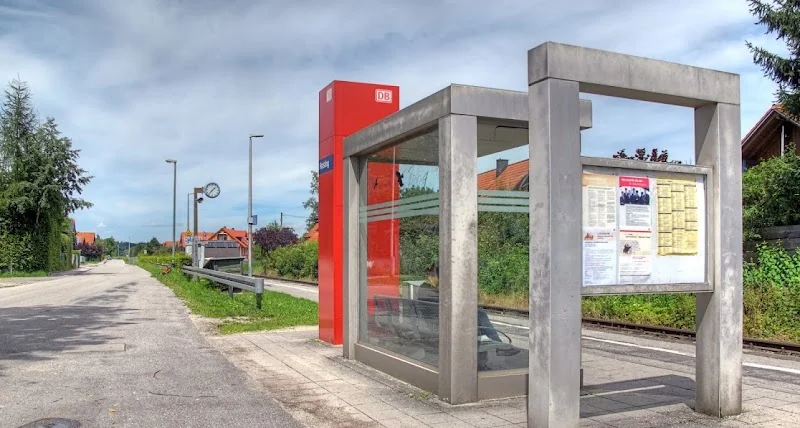
Raisting
82399 Raisting, Deutschland
Raisting | Earth Station & Radome
Raisting connects village history, technology, and excursion feelings in a special way. At the southern end of Lake Ammersee lies the municipality in the Pfaffenwinkel, its history dates back to 776, and with the radome and the earth station, the place has a landmark that is known far beyond the region. At the same time, storks, clubs, events, and digital municipal administration shape everyday life on site. This mixture makes Raisting interesting for visitors, day-trippers, and anyone looking for a real destination at Lake Ammersee and not just a point on the map. ([raisting.de](https://raisting.de/geschichte))
Those who enter Raisting will find not just a Bavarian village, but a place with a clear identity: a community by the lake, a historical settlement area, a site for satellite communication, and a starting point for excursions in the Pfaffenwinkel. The municipal website today offers event calendars, newsletters, citizen services, drinking water information, and practical tips for citizens and guests. Raisting is thus both a hometown and a destination, both an administrative address and a photographic motif. ([raisting.de](https://raisting.de/tourismus))
Earth Station Raisting and Radome: Satellites, History, and Technology
The history of the radome is closely linked to the development of German satellite communication. On March 26, 1963, the building permit for the earth station was granted. In 1963 and 1964, the facility and air-supported structure were built on behalf of the German Federal Post; by December 1964, construction and assembly were largely completed, and initial test transmissions began. In April 1965, regular operations began with Antenna 1 under the radome. Between 1969 and 1981, additional large antennas were added, and in 1985, Antenna 1 was taken out of service due to rapid technological advancements. The fact that Raisting became this turning point early on made the place a symbol for the leap from a local community into a global communication network. ([radomraisting.com](https://radomraisting.com/the-radom/))
The structure itself still appears today as a technical work of art in the landscape. The radome cover measures just under 49 meters in diameter, the parabolic antenna inside is 25 meters; the radome is about 39.5 meters high and is under a pressure of about 400 pascals. The technology was designed for receiving and transmitting telephone and television signals to satellites approximately 40,000 kilometers away. This combination of size, precision, and function explains why the radome is often described as a landmark, industrial monument, and contemporary witness. ([raisting.de](https://raisting.de/index.php/radom-erdfunkstelle))
Today, the radome is no longer just a historical relic but a publicly accessible monument. In 2007, Radom Raisting GmbH took over the industrial site, which now belongs to the district of Weilheim-Schongau; it was added to the monument list in 1999 and later classified as a monument of national significance. After the storm Bianca in February 2020, the air-supported structure was renewed, and since October 2021, the radome has been presented with a new cover. Visitors can experience exhibitions and guided tours, and the operator refers to seasonal opening hours, individual visits, group tours, and a presentation that vividly illustrates the history of technology. ([radomraisting.com](https://radomraisting.com/))
Directions, Route, Maps, and Parking in Raisting
The journey to Raisting is straightforward. By train, you can reach the Raisting stop via the Bavarian Regional Train from Augsburg, Geltendorf, or Weilheim; from the station, it takes only a few minutes to about 15 minutes on foot, depending on the starting point and route. By car, the official route leads via the A96 Munich-Lindau, exit Greifenberg, further towards Dießen, and from there towards Weilheim with a turnoff to Raisting. There are parking spaces for cars and buses directly at the facility. For visitors, this means: The destination is located in a rural area but is very well accessible for both day-trippers and groups. ([starnbergammersee.de](https://www.starnbergammersee.de/detail/id%3D647d9c584143b70bfdc51f2d))
Especially practical is that the operator also consolidates navigation and map instructions as well as visitor information on the official page. Those planning the trip can therefore combine train, car, and later walking paths well. The facility is also predominantly accessible at ground level, which makes the visit significantly easier. For many guests, this is exactly the appeal: The journey does not end at an anonymous parking lot but directly at a place that functions as both a technical and landscape special feature. Those who see Raisting only as a destination on the navigation system will experience on-site that the journey itself becomes part of the story. ([radomraisting.com](https://radomraisting.com/))
Events in Raisting: Calendar, Holiday Program, and Tours
The event calendar also shows that Raisting is much more than a destination for technology fans. The municipal website continuously lists dates from church, cultural, and club life, such as processions, services, May devotions, or joint actions around holidays and local life. The page thus serves as a showcase of local everyday life: Here you can see how strongly Raisting is shaped by commitment, volunteer work, and established rituals. For those looking for Raisting events, this is particularly valuable because you can recognize not only individual events but also the rhythm of a vibrant community. ([raisting.de](https://raisting.de/?utm_source=openai))
The holiday program additionally underscores this picture. In 2025, the offerings ranged from archive and museum formats to fire department, football, and cooking, to playful, sporting, and creative events. The municipality transparently explained the registration, the limited places, and the allocation system, and the events primarily target children and young people from Raisting. Additionally, the radome offers seasonal tours and special exhibitions, so a visit can quickly become a small day trip with cultural, technical, and natural references. ([raisting.de](https://raisting.de/ferienprogramm))
History and Community Raisting: Residents, Town Hall, and Everyday Life
Historically, Raisting is deeply rooted. The municipality sees itself as a successor settlement of the Roman URUSA, and archaeological finds such as burial mounds from the Early Bronze Age attest to even older settlement south of the village. The place has been documented in writing since 776, later Raisting, together with Sölb, became a rural municipality in 1818 and was incorporated into the district office of Weilheim in 1881, which has belonged to the district of Weilheim-Schongau since 1972. Today, the municipality has 2,369 residents as of June 30, 2023. These are not abstract numbers but the expression of a manageable, grown community with a clear local identity. ([raisting.de](https://raisting.de/geschichte))
Everyday life in Raisting is also organized in a modern way. The town hall is located at Kirchenweg 12, the opening hours are clearly communicated, and with the citizen service portal, online town hall, fault report for street lighting, drinking water information, and newsletters, the municipality relies on digital and citizen-friendly communication. For residents and visitors, this is practical: Important topics are quickly findable, appointments are transparently announced, and services for construction, administration, and information are bundled in one place. This creates the impression of a community that can indeed connect tradition and administrative sense. ([raisting.de](https://raisting.de/kontakt))
Storks, Lake Ammersee, and Weather: Why Raisting Excites Outdoors
Another reason why Raisting remains in memory is the storks. The StarnbergAmmersee region refers to the place as the village with the largest stork population in Upper Bavaria. This makes Raisting particularly attractive in spring and summer: Those who stroll through the village experience not only half-timbered houses, churches, and village life but often also the typical clattering of breeding pairs and the lively activity on the roofs. In the region, stork walks are even offered, combining the theme of nature conservation, observation, and family outing. ([starnbergammersee.de](https://www.starnbergammersee.de/detail/id%3D699dbc278b020b01a1d921ac))
For visitors, this also means: Raisting is a place for the outdoors. The region recommends weatherproof clothing, sturdy footwear, and depending on the weather, sun, rain, and mosquito protection for the stork walk; these tips show that the place is best experienced with time and space. This fits the location by Lake Ammersee and in the Pfaffenwinkel with bike paths and pilgrimage routes that make the area interesting for hikers and cyclists. At the same time, the topographical location explains why the earth station works so well here: The Raisting basin with its hill chains and the lake to the north shields against interference signals. Thus, nature experience and high-tech meet directly in Raisting. ([starnbergammersee.de](https://www.starnbergammersee.de/detail/id%3D699dbc278b020b01a1d921ac))
Restaurants, Overnight Stays, and Practical Tips on Site
Raisting is also well-equipped when it comes to food and accommodation. The municipal website lists, among others, the Gasthof zur Post and FeWo Sabrina as local addresses for guests. Those wishing to extend their trip can find additional destinations in the area, such as Kloster Andechs or accommodations in Dießen and Andechs. This allows a visit to the radome to be well combined with a walk, lunch, or an overnight stay. This combination of a technical monument, regional gastronomy, and lakescape is particularly attractive for day-trippers coming from Munich or the surrounding area. ([raisting.de](https://raisting.de/tourismus))
To experience Raisting meaningfully, it is best to plan several components: the earth station with radome, a look at the event calendar, a village walk with storks, and perhaps a detour into the surrounding Ammersee region. The official website and the operator of the facility provide the most important orientation points, from opening hours to directions and from municipal information to guided tours. Thus, the search term Raisting becomes not just a place on the map but a complete excursion and information destination. ([raisting.de](https://raisting.de/?utm_source=openai))
Sources:
- Municipality of Raisting – The History of Raisting ([raisting.de](https://raisting.de/geschichte))
- Municipality of Raisting – The Radome and the Earth Station ([raisting.de](https://raisting.de/index.php/radom-erdfunkstelle))
- Radom Raisting GmbH – Opening Hours, Visitor Information, and Technical Data ([radomraisting.com](https://radomraisting.com/guidedtours_opening_hours/))
- Municipality of Raisting – Tourism and Local Accommodation Options ([raisting.de](https://raisting.de/tourismus))
- Region StarnbergAmmersee – Stork Village Raisting ([starnbergammersee.de](https://www.starnbergammersee.de/detail/id%3D699dbc278b020b01a1d921ac))
Show moreShow less
Raisting | Earth Station & Radome
Raisting connects village history, technology, and excursion feelings in a special way. At the southern end of Lake Ammersee lies the municipality in the Pfaffenwinkel, its history dates back to 776, and with the radome and the earth station, the place has a landmark that is known far beyond the region. At the same time, storks, clubs, events, and digital municipal administration shape everyday life on site. This mixture makes Raisting interesting for visitors, day-trippers, and anyone looking for a real destination at Lake Ammersee and not just a point on the map. ([raisting.de](https://raisting.de/geschichte))
Those who enter Raisting will find not just a Bavarian village, but a place with a clear identity: a community by the lake, a historical settlement area, a site for satellite communication, and a starting point for excursions in the Pfaffenwinkel. The municipal website today offers event calendars, newsletters, citizen services, drinking water information, and practical tips for citizens and guests. Raisting is thus both a hometown and a destination, both an administrative address and a photographic motif. ([raisting.de](https://raisting.de/tourismus))
Earth Station Raisting and Radome: Satellites, History, and Technology
The history of the radome is closely linked to the development of German satellite communication. On March 26, 1963, the building permit for the earth station was granted. In 1963 and 1964, the facility and air-supported structure were built on behalf of the German Federal Post; by December 1964, construction and assembly were largely completed, and initial test transmissions began. In April 1965, regular operations began with Antenna 1 under the radome. Between 1969 and 1981, additional large antennas were added, and in 1985, Antenna 1 was taken out of service due to rapid technological advancements. The fact that Raisting became this turning point early on made the place a symbol for the leap from a local community into a global communication network. ([radomraisting.com](https://radomraisting.com/the-radom/))
The structure itself still appears today as a technical work of art in the landscape. The radome cover measures just under 49 meters in diameter, the parabolic antenna inside is 25 meters; the radome is about 39.5 meters high and is under a pressure of about 400 pascals. The technology was designed for receiving and transmitting telephone and television signals to satellites approximately 40,000 kilometers away. This combination of size, precision, and function explains why the radome is often described as a landmark, industrial monument, and contemporary witness. ([raisting.de](https://raisting.de/index.php/radom-erdfunkstelle))
Today, the radome is no longer just a historical relic but a publicly accessible monument. In 2007, Radom Raisting GmbH took over the industrial site, which now belongs to the district of Weilheim-Schongau; it was added to the monument list in 1999 and later classified as a monument of national significance. After the storm Bianca in February 2020, the air-supported structure was renewed, and since October 2021, the radome has been presented with a new cover. Visitors can experience exhibitions and guided tours, and the operator refers to seasonal opening hours, individual visits, group tours, and a presentation that vividly illustrates the history of technology. ([radomraisting.com](https://radomraisting.com/))
Directions, Route, Maps, and Parking in Raisting
The journey to Raisting is straightforward. By train, you can reach the Raisting stop via the Bavarian Regional Train from Augsburg, Geltendorf, or Weilheim; from the station, it takes only a few minutes to about 15 minutes on foot, depending on the starting point and route. By car, the official route leads via the A96 Munich-Lindau, exit Greifenberg, further towards Dießen, and from there towards Weilheim with a turnoff to Raisting. There are parking spaces for cars and buses directly at the facility. For visitors, this means: The destination is located in a rural area but is very well accessible for both day-trippers and groups. ([starnbergammersee.de](https://www.starnbergammersee.de/detail/id%3D647d9c584143b70bfdc51f2d))
Especially practical is that the operator also consolidates navigation and map instructions as well as visitor information on the official page. Those planning the trip can therefore combine train, car, and later walking paths well. The facility is also predominantly accessible at ground level, which makes the visit significantly easier. For many guests, this is exactly the appeal: The journey does not end at an anonymous parking lot but directly at a place that functions as both a technical and landscape special feature. Those who see Raisting only as a destination on the navigation system will experience on-site that the journey itself becomes part of the story. ([radomraisting.com](https://radomraisting.com/))
Events in Raisting: Calendar, Holiday Program, and Tours
The event calendar also shows that Raisting is much more than a destination for technology fans. The municipal website continuously lists dates from church, cultural, and club life, such as processions, services, May devotions, or joint actions around holidays and local life. The page thus serves as a showcase of local everyday life: Here you can see how strongly Raisting is shaped by commitment, volunteer work, and established rituals. For those looking for Raisting events, this is particularly valuable because you can recognize not only individual events but also the rhythm of a vibrant community. ([raisting.de](https://raisting.de/?utm_source=openai))
The holiday program additionally underscores this picture. In 2025, the offerings ranged from archive and museum formats to fire department, football, and cooking, to playful, sporting, and creative events. The municipality transparently explained the registration, the limited places, and the allocation system, and the events primarily target children and young people from Raisting. Additionally, the radome offers seasonal tours and special exhibitions, so a visit can quickly become a small day trip with cultural, technical, and natural references. ([raisting.de](https://raisting.de/ferienprogramm))
History and Community Raisting: Residents, Town Hall, and Everyday Life
Historically, Raisting is deeply rooted. The municipality sees itself as a successor settlement of the Roman URUSA, and archaeological finds such as burial mounds from the Early Bronze Age attest to even older settlement south of the village. The place has been documented in writing since 776, later Raisting, together with Sölb, became a rural municipality in 1818 and was incorporated into the district office of Weilheim in 1881, which has belonged to the district of Weilheim-Schongau since 1972. Today, the municipality has 2,369 residents as of June 30, 2023. These are not abstract numbers but the expression of a manageable, grown community with a clear local identity. ([raisting.de](https://raisting.de/geschichte))
Everyday life in Raisting is also organized in a modern way. The town hall is located at Kirchenweg 12, the opening hours are clearly communicated, and with the citizen service portal, online town hall, fault report for street lighting, drinking water information, and newsletters, the municipality relies on digital and citizen-friendly communication. For residents and visitors, this is practical: Important topics are quickly findable, appointments are transparently announced, and services for construction, administration, and information are bundled in one place. This creates the impression of a community that can indeed connect tradition and administrative sense. ([raisting.de](https://raisting.de/kontakt))
Storks, Lake Ammersee, and Weather: Why Raisting Excites Outdoors
Another reason why Raisting remains in memory is the storks. The StarnbergAmmersee region refers to the place as the village with the largest stork population in Upper Bavaria. This makes Raisting particularly attractive in spring and summer: Those who stroll through the village experience not only half-timbered houses, churches, and village life but often also the typical clattering of breeding pairs and the lively activity on the roofs. In the region, stork walks are even offered, combining the theme of nature conservation, observation, and family outing. ([starnbergammersee.de](https://www.starnbergammersee.de/detail/id%3D699dbc278b020b01a1d921ac))
For visitors, this also means: Raisting is a place for the outdoors. The region recommends weatherproof clothing, sturdy footwear, and depending on the weather, sun, rain, and mosquito protection for the stork walk; these tips show that the place is best experienced with time and space. This fits the location by Lake Ammersee and in the Pfaffenwinkel with bike paths and pilgrimage routes that make the area interesting for hikers and cyclists. At the same time, the topographical location explains why the earth station works so well here: The Raisting basin with its hill chains and the lake to the north shields against interference signals. Thus, nature experience and high-tech meet directly in Raisting. ([starnbergammersee.de](https://www.starnbergammersee.de/detail/id%3D699dbc278b020b01a1d921ac))
Restaurants, Overnight Stays, and Practical Tips on Site
Raisting is also well-equipped when it comes to food and accommodation. The municipal website lists, among others, the Gasthof zur Post and FeWo Sabrina as local addresses for guests. Those wishing to extend their trip can find additional destinations in the area, such as Kloster Andechs or accommodations in Dießen and Andechs. This allows a visit to the radome to be well combined with a walk, lunch, or an overnight stay. This combination of a technical monument, regional gastronomy, and lakescape is particularly attractive for day-trippers coming from Munich or the surrounding area. ([raisting.de](https://raisting.de/tourismus))
To experience Raisting meaningfully, it is best to plan several components: the earth station with radome, a look at the event calendar, a village walk with storks, and perhaps a detour into the surrounding Ammersee region. The official website and the operator of the facility provide the most important orientation points, from opening hours to directions and from municipal information to guided tours. Thus, the search term Raisting becomes not just a place on the map but a complete excursion and information destination. ([raisting.de](https://raisting.de/?utm_source=openai))
Sources:
- Municipality of Raisting – The History of Raisting ([raisting.de](https://raisting.de/geschichte))
- Municipality of Raisting – The Radome and the Earth Station ([raisting.de](https://raisting.de/index.php/radom-erdfunkstelle))
- Radom Raisting GmbH – Opening Hours, Visitor Information, and Technical Data ([radomraisting.com](https://radomraisting.com/guidedtours_opening_hours/))
- Municipality of Raisting – Tourism and Local Accommodation Options ([raisting.de](https://raisting.de/tourismus))
- Region StarnbergAmmersee – Stork Village Raisting ([starnbergammersee.de](https://www.starnbergammersee.de/detail/id%3D699dbc278b020b01a1d921ac))
Raisting | Earth Station & Radome
Raisting connects village history, technology, and excursion feelings in a special way. At the southern end of Lake Ammersee lies the municipality in the Pfaffenwinkel, its history dates back to 776, and with the radome and the earth station, the place has a landmark that is known far beyond the region. At the same time, storks, clubs, events, and digital municipal administration shape everyday life on site. This mixture makes Raisting interesting for visitors, day-trippers, and anyone looking for a real destination at Lake Ammersee and not just a point on the map. ([raisting.de](https://raisting.de/geschichte))
Those who enter Raisting will find not just a Bavarian village, but a place with a clear identity: a community by the lake, a historical settlement area, a site for satellite communication, and a starting point for excursions in the Pfaffenwinkel. The municipal website today offers event calendars, newsletters, citizen services, drinking water information, and practical tips for citizens and guests. Raisting is thus both a hometown and a destination, both an administrative address and a photographic motif. ([raisting.de](https://raisting.de/tourismus))
Earth Station Raisting and Radome: Satellites, History, and Technology
The history of the radome is closely linked to the development of German satellite communication. On March 26, 1963, the building permit for the earth station was granted. In 1963 and 1964, the facility and air-supported structure were built on behalf of the German Federal Post; by December 1964, construction and assembly were largely completed, and initial test transmissions began. In April 1965, regular operations began with Antenna 1 under the radome. Between 1969 and 1981, additional large antennas were added, and in 1985, Antenna 1 was taken out of service due to rapid technological advancements. The fact that Raisting became this turning point early on made the place a symbol for the leap from a local community into a global communication network. ([radomraisting.com](https://radomraisting.com/the-radom/))
The structure itself still appears today as a technical work of art in the landscape. The radome cover measures just under 49 meters in diameter, the parabolic antenna inside is 25 meters; the radome is about 39.5 meters high and is under a pressure of about 400 pascals. The technology was designed for receiving and transmitting telephone and television signals to satellites approximately 40,000 kilometers away. This combination of size, precision, and function explains why the radome is often described as a landmark, industrial monument, and contemporary witness. ([raisting.de](https://raisting.de/index.php/radom-erdfunkstelle))
Today, the radome is no longer just a historical relic but a publicly accessible monument. In 2007, Radom Raisting GmbH took over the industrial site, which now belongs to the district of Weilheim-Schongau; it was added to the monument list in 1999 and later classified as a monument of national significance. After the storm Bianca in February 2020, the air-supported structure was renewed, and since October 2021, the radome has been presented with a new cover. Visitors can experience exhibitions and guided tours, and the operator refers to seasonal opening hours, individual visits, group tours, and a presentation that vividly illustrates the history of technology. ([radomraisting.com](https://radomraisting.com/))
Directions, Route, Maps, and Parking in Raisting
The journey to Raisting is straightforward. By train, you can reach the Raisting stop via the Bavarian Regional Train from Augsburg, Geltendorf, or Weilheim; from the station, it takes only a few minutes to about 15 minutes on foot, depending on the starting point and route. By car, the official route leads via the A96 Munich-Lindau, exit Greifenberg, further towards Dießen, and from there towards Weilheim with a turnoff to Raisting. There are parking spaces for cars and buses directly at the facility. For visitors, this means: The destination is located in a rural area but is very well accessible for both day-trippers and groups. ([starnbergammersee.de](https://www.starnbergammersee.de/detail/id%3D647d9c584143b70bfdc51f2d))
Especially practical is that the operator also consolidates navigation and map instructions as well as visitor information on the official page. Those planning the trip can therefore combine train, car, and later walking paths well. The facility is also predominantly accessible at ground level, which makes the visit significantly easier. For many guests, this is exactly the appeal: The journey does not end at an anonymous parking lot but directly at a place that functions as both a technical and landscape special feature. Those who see Raisting only as a destination on the navigation system will experience on-site that the journey itself becomes part of the story. ([radomraisting.com](https://radomraisting.com/))
Events in Raisting: Calendar, Holiday Program, and Tours
The event calendar also shows that Raisting is much more than a destination for technology fans. The municipal website continuously lists dates from church, cultural, and club life, such as processions, services, May devotions, or joint actions around holidays and local life. The page thus serves as a showcase of local everyday life: Here you can see how strongly Raisting is shaped by commitment, volunteer work, and established rituals. For those looking for Raisting events, this is particularly valuable because you can recognize not only individual events but also the rhythm of a vibrant community. ([raisting.de](https://raisting.de/?utm_source=openai))
The holiday program additionally underscores this picture. In 2025, the offerings ranged from archive and museum formats to fire department, football, and cooking, to playful, sporting, and creative events. The municipality transparently explained the registration, the limited places, and the allocation system, and the events primarily target children and young people from Raisting. Additionally, the radome offers seasonal tours and special exhibitions, so a visit can quickly become a small day trip with cultural, technical, and natural references. ([raisting.de](https://raisting.de/ferienprogramm))
History and Community Raisting: Residents, Town Hall, and Everyday Life
Historically, Raisting is deeply rooted. The municipality sees itself as a successor settlement of the Roman URUSA, and archaeological finds such as burial mounds from the Early Bronze Age attest to even older settlement south of the village. The place has been documented in writing since 776, later Raisting, together with Sölb, became a rural municipality in 1818 and was incorporated into the district office of Weilheim in 1881, which has belonged to the district of Weilheim-Schongau since 1972. Today, the municipality has 2,369 residents as of June 30, 2023. These are not abstract numbers but the expression of a manageable, grown community with a clear local identity. ([raisting.de](https://raisting.de/geschichte))
Everyday life in Raisting is also organized in a modern way. The town hall is located at Kirchenweg 12, the opening hours are clearly communicated, and with the citizen service portal, online town hall, fault report for street lighting, drinking water information, and newsletters, the municipality relies on digital and citizen-friendly communication. For residents and visitors, this is practical: Important topics are quickly findable, appointments are transparently announced, and services for construction, administration, and information are bundled in one place. This creates the impression of a community that can indeed connect tradition and administrative sense. ([raisting.de](https://raisting.de/kontakt))
Storks, Lake Ammersee, and Weather: Why Raisting Excites Outdoors
Another reason why Raisting remains in memory is the storks. The StarnbergAmmersee region refers to the place as the village with the largest stork population in Upper Bavaria. This makes Raisting particularly attractive in spring and summer: Those who stroll through the village experience not only half-timbered houses, churches, and village life but often also the typical clattering of breeding pairs and the lively activity on the roofs. In the region, stork walks are even offered, combining the theme of nature conservation, observation, and family outing. ([starnbergammersee.de](https://www.starnbergammersee.de/detail/id%3D699dbc278b020b01a1d921ac))
For visitors, this also means: Raisting is a place for the outdoors. The region recommends weatherproof clothing, sturdy footwear, and depending on the weather, sun, rain, and mosquito protection for the stork walk; these tips show that the place is best experienced with time and space. This fits the location by Lake Ammersee and in the Pfaffenwinkel with bike paths and pilgrimage routes that make the area interesting for hikers and cyclists. At the same time, the topographical location explains why the earth station works so well here: The Raisting basin with its hill chains and the lake to the north shields against interference signals. Thus, nature experience and high-tech meet directly in Raisting. ([starnbergammersee.de](https://www.starnbergammersee.de/detail/id%3D699dbc278b020b01a1d921ac))
Restaurants, Overnight Stays, and Practical Tips on Site
Raisting is also well-equipped when it comes to food and accommodation. The municipal website lists, among others, the Gasthof zur Post and FeWo Sabrina as local addresses for guests. Those wishing to extend their trip can find additional destinations in the area, such as Kloster Andechs or accommodations in Dießen and Andechs. This allows a visit to the radome to be well combined with a walk, lunch, or an overnight stay. This combination of a technical monument, regional gastronomy, and lakescape is particularly attractive for day-trippers coming from Munich or the surrounding area. ([raisting.de](https://raisting.de/tourismus))
To experience Raisting meaningfully, it is best to plan several components: the earth station with radome, a look at the event calendar, a village walk with storks, and perhaps a detour into the surrounding Ammersee region. The official website and the operator of the facility provide the most important orientation points, from opening hours to directions and from municipal information to guided tours. Thus, the search term Raisting becomes not just a place on the map but a complete excursion and information destination. ([raisting.de](https://raisting.de/?utm_source=openai))
Sources:
- Municipality of Raisting – The History of Raisting ([raisting.de](https://raisting.de/geschichte))
- Municipality of Raisting – The Radome and the Earth Station ([raisting.de](https://raisting.de/index.php/radom-erdfunkstelle))
- Radom Raisting GmbH – Opening Hours, Visitor Information, and Technical Data ([radomraisting.com](https://radomraisting.com/guidedtours_opening_hours/))
- Municipality of Raisting – Tourism and Local Accommodation Options ([raisting.de](https://raisting.de/tourismus))
- Region StarnbergAmmersee – Stork Village Raisting ([starnbergammersee.de](https://www.starnbergammersee.de/detail/id%3D699dbc278b020b01a1d921ac))
Upcoming Events
No events found
Frequently Asked Questions
Reviews
Mr Alexey
14. July 2022
Small town
Andrzej Polak
4. March 2018
A distinctive place due to the cosmic observatory. The huge antennas and their number are impressive. There's also a museum under a huge dome... I recommend visiting this place. And on a good day, the views of the Alps are stunning...
Minze
2. June 2023
Trains come and trains go. Some trains also stop. Important: there is also a Pokémon Arena here.
Ahmad Jalad
8. March 2022
😊
Magnus 3044
22. October 2023
Great place