
Pöcking
82343 Pöcking, Deutschland
Possenhofen | Sisi & Starnberger See
Possenhofen is a place that many initially know only by name, but on-site it immediately unfolds a clear imagery: lakeside, castle, train station, bathing area, and walking paths are so closely situated that an ordinary excursion quickly becomes a small time travel. The district belongs to the municipality of Pöcking on the western shore of Lake Starnberg and is described by the region as a particularly beautiful spot right by the water. At the same time, Possenhofen is not a museum-like open-air object, but a vibrant place with historical traces, gastronomy, hiking trails, and very concrete everyday functions such as access, parking, and train connections. This mixture is exactly what makes it appealing: Those who come to Possenhofen experience not only the Sisi narrative but also a lakeside location that can be explored with just a few steps. The castle remains private, the museum is located in the train station, the bathing area lies in the former park, and the Elisabethweg connects these points into a manageable but rich circular walk. ([poecking.de](https://www.poecking.de/unsere-gemeinde/lernen-sie-uns-kennen/ortsteile))
The demand for Possenhofen therefore revolves not only around a single building but around an entire thematic field: Sisi, castle, Lake Starnberg, train station, paradise, pier 1, parking, and excursion tips. This is precisely where the strength of this place lies for visitors who want to experience history and nature together. Instead of large urban distances, Possenhofen offers short paths, clear orientation, and a high density of noteworthy stations. This makes the location particularly attractive for day visitors who arrive by train or car and then want to accomplish almost everything on foot. When one opens maps or cards, it quickly becomes clear that there are not many distant goals to be sought, but a compact ensemble of culture, shore, and dining. Thus, Possenhofen is not a place for superficial passing by, but a place for slow viewing, remembering, and enjoying. ([poecking.de](https://www.poecking.de/tourismus-freizeit/ausflugsziele/schloss-possenhofen?utm_source=openai))
Sisi, Castle, and the History of Possenhofen
The history of Possenhofen primarily begins in today's tourist perception with Castle Possenhofen. According to the municipality of Pöcking, a manor house was built in Possenhofen in 1536 on the orders of the Wittelsbach Duke Wilhelm IV, so that travelers could stop there. From this building, the castle developed, which provided work for the then fishing village and permanently shaped the place. Another important turning point marks the year 1834 when Duke Max in Bavaria became the new owner. He lived here with his large family and had the adjacent park redesigned into an English garden. This shifted the function of the place: from a rather practical noble residence to a landscape-shaped place of stay, which was increasingly discovered for summer freshness. The municipality explicitly describes this time as the golden years of emerging tourism when the lake was discovered by city dwellers, and Possenhofen benefited from the reputation of a quiet lakeside place. ([poecking.de](https://www.poecking.de/unsere-gemeinde/lernen-sie-uns-kennen/ortsteile))
Possenhofen is of course particularly closely associated with Empress Elisabeth, who spent her childhood and youth here. The name Sisi is therefore more than a tourist buzzword; it stands in Possenhofen for biography, memory, and landscape at the same time. However, the municipality also points to an important reality: Castle Possenhofen is not publicly accessible today because it is privately owned. However, this does not mean that the place has lost its historical core. On the contrary: it is precisely the external perspective, the view of the castle from the surroundings of the Elisabethweg, that creates the special atmosphere. Visitors experience a place where family history, Bavarian noble history, and the later legend formation around Sisi overlap. The district lives from this tension between private retreat and public memory. Thus, those who walk through Possenhofen today see not only a castle but the transformation of a former noble estate into a cultural symbol by the lake. ([poecking.de](https://www.poecking.de/tourismus-freizeit/ausflugsziele/schloss-possenhofen))
The location by the water also plays a central role in this story. Possenhofen has not become a place of longing by chance at Lake Starnberg, but because the castle, park, and lake together form an unusually strong unit. This is still palpable today when one looks from the district towards the shore zone or traces the historical references of summer freshness. The place is small enough to be quickly understood and significant enough to discover new details repeatedly. This duality makes Possenhofen equally attractive for Sisi enthusiasts, history lovers, and walkers. The historical narrative here is not detached but directly connected with paths, trees, lake views, and the visible private castle. This is precisely where the charm of Possenhofen lies: the past is not far away but part of today's orientation. ([poecking.de](https://www.poecking.de/unsere-gemeinde/lernen-sie-uns-kennen/ortsteile))
Possenhofen Train Station and the Empress Elisabeth Museum
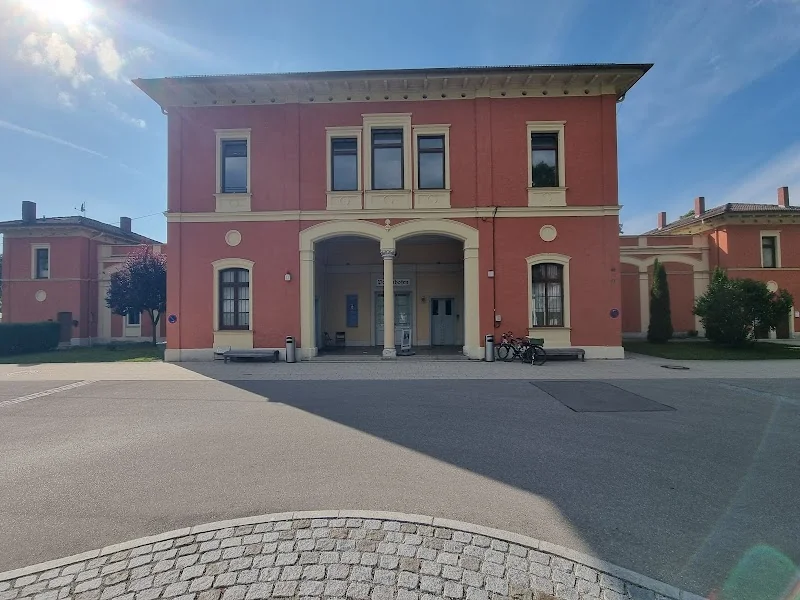
One of the most important stations in Possenhofen is the historic train station, as it is now home to the Empress Elisabeth Museum. The MVV explicitly describes the former grand waiting room of the S-train station as the museum's location, making it clear that arrival and history in Possenhofen are closely intertwined. The museum presents Elisabeth's life from birth to her death in Geneva with authentic exhibits and is, according to the official website, the only museum of its kind in Germany. It comprises four museum rooms and is also a place of remembrance for the summer time of young Elisabeth in Possenhofen. The museum's page also emphasizes that the family, as well as kings, emperors, and nobility, used the grand waiting room for their arrivals and departures. Thus, the train station is not just a transportation point but part of the narrative itself. Historically, the museum brochure refers to the station as a former royal station building; the collection there was founded in 1998 and newly presented after renovation in 2009/2010. ([mvv-muenchen.de](https://www.mvv-muenchen.de/plaene-bahnhoefe/bahnhofsinformation/station/possenhofen/index.html))
The current information for visitors is particularly practical: According to the official website, the general opening hours for 2026 are from May 1 to October 18, 2026, each Friday to Sunday and on public holidays from 12:00 to 18:00; it is closed from Monday to Thursday. Special tours are possible year-round, and outside the season, group appointments can be arranged daily from 9:00 to 16:00. The website also mentions a group size of 1 to a maximum of 25 people, with larger groups accordingly in two tours. The MVV adds that access is step-free, so the train station can be used barrier-free. This is important for guests arriving by S6 and wanting to explore the place without a car. Photography is not allowed in the museum, dogs must stay outside, and the tour lasts just over an hour according to the website. Those who want to experience Possenhofen seriously and relaxed should definitely plan this visit, as biography, original objects, and train station history condense at a single, very compact place. ([kaiserin-elisabeth-museum.de](https://kaiserin-elisabeth-museum.de/?grp=OEFFNUNG&lang=1&utm_source=openai))
Particularly for search queries like possenhofen sissi museum or possenhofen train station, this place is therefore the central answer. The strength of the museum lies less in size than in density and authenticity: one does not enter an anonymous new building but a historic train station room that was itself part of the courtly mobility history. The musealization of the grand waiting room makes the connection between arrival, departure, and memory immediately visible. At the same time, the train station is very practical in terms of transportation: the MVV lists Park & Ride offers with a total of 79 parking spaces, divided between the Schlossberg parking lot with 30 spaces and the Schafflergraben parking lot with 49 spaces. Thus, those visiting the museum can arrive by train or car and experience the place very flexibly. This makes Possenhofen suitable for guests who are looking for not only beautiful scenery but also functioning infrastructure. ([mvv-muenchen.de](https://www.mvv-muenchen.de/plaene-bahnhoefe/bahnhofsinformation/station/possenhofen/index.html))
Bathing Area Paradise, Pier 1, and Parking
A second, highly sought-after part of Possenhofen is the bathing area Paradise. The StarnbergAmmersee region describes it as a huge bathing area in the former park grounds of the Sisi castle, and the name is truly programmatic: everyone can find their paradise here. Around the kiosk at Pier 1, lively activity prevails according to the official description, and 300 sun loungers invite sunbathing. At the same time, there are three more bathing piers and a second kiosk, allowing one to use the place differently depending on preference. Those who prefer a more active experience will find a beach volleyball court, a SUP rental, and a dedicated section for surfers. Families benefit from the children's playground, while the public barbecue area provides an additional excursion argument. For search terms like possenhofen pier 1 or possenhofen paradise parking, this area is the most important anchor point. Particularly pleasant: entry is free, only the parking spaces are subject to a fee. ([starnbergammersee.de](https://www.starnbergammersee.de/detail/id%3D6076ac7c07bca56b2082f42c))
The arrival is also well documented. According to the StarnbergAmmersee region, one can reach Possenhofen by S-Bahn line S6 towards Tutzing every 20 minutes from Munich; from the train station, it is about a 15-minute walk to the bathing area. Those arriving by car or coach drive via the A95 Munich-Garmisch and the A952 at Starnberg further towards Tutzing until Possenhofen and then follow the signposted parking spaces. The MVV complements this with the Park & Ride information for the station: Schlossberg with 30 parking spaces, Schafflergraben with 49 parking spaces, totaling 79 parking spaces. For map and GPS users, this is a significant advantage, as the place unfolds in a compact area and does not need to be searched for extensively. One can connect the museum, bathing area, and gastronomy in a pathway system without long transfers or complicated location changes. Especially on warm days, this spatial proximity adds to the appeal. ([starnbergammersee.de](https://www.starnbergammersee.de/detail/id%3D6076ac7c07bca56b2082f42c))
The Paradise is therefore not just a bathing stop but a real leisure center by the lake. The combination of lake access, lounging areas, sports offerings, and easy access explains why the place is so popular with day visitors. For families, the mix of free entry, playground, and barbecue area is attractive; for young visitors, the Pier 1 area with kiosk and lively shore; for sporty guests, the water and beach offerings. Even those who only want to stay briefly will find a clear, uncomplicated place with classic Starnberger See atmosphere. The fact that the area has directly emerged from the former castle park gives it an additional historical framework without impairing its recreational value. Those who want to understand Possenhofen should definitely consider Paradise and Pier 1, as this is where the modern side of the place shows itself: open, summery, family-friendly, and closely connected to the lake. ([starnbergammersee.de](https://www.starnbergammersee.de/detail/id%3D6076ac7c07bca56b2082f42c))
Restaurant, Fishmaster, and Regional Dining
Those searching for possenhofen restaurant or possenhofen fishmaster quickly encounter the culinary identity of the place, which is strongly influenced by the lake and the historical fishing environment. An important example is the inn Zum Fischmeister Karl Schauer at Karl-Theodor-Straße 6 in Pöcking-Possenhofen. The official website describes the establishment as once again what it used to be: a showcase for Possenhofen, for hospitality, and for enjoyment. The regional environment clearly shows that Possenhofen is not only an excursion destination but also a dining destination. The old name Fishmaster refers to the long connection of the place with fishing, the lake, and shore economy. This is relevant for day visitors because one can dine here directly after a walk or museum visit without having to leave the place. This proximity of history and gastronomy fits particularly well with Possenhofen. ([gasthaus-schauer.com](https://www.gasthaus-schauer.com/?utm_source=openai))
Additionally, the region complements this with the fishery to Fischer-Sepp at Zum Landungssteg 16, another very fitting culinary station by the water. Fresh fish is sold there, and the official regional page lists specific opening hours on several weekdays. This creates a coherent overall picture: Possenhofen is not a place with anonymous standard gastronomy but a place where lakeside location, fish tradition, and excursion cuisine intertwine. Those searching for the topic restaurant in connection with Possenhofen are therefore usually not looking for a large urban restaurant district but a handy selection of places with views of the lake, castle, and pier. The train station also offers a practical stop with Bistro-AL at Schloßberg for a quick stop. This mix of fish restaurant, bistro, and lakeside inn is ideal for visitors who want to spend their day between culture and bathing while enjoying regional cuisine. ([starnbergammersee.de](https://www.starnbergammersee.de/detail/id%3D6076acaf07bca56b2082f58e?utm_source=openai))
Especially in conjunction with the Sisi theme, the gastronomy in Possenhofen gains an additional level. The term Fishmaster sounds not only down-to-earth but is also historically intertwined with the lake and shore culture of the place. For an excursion to Possenhofen, this is an advantage because dining here is not just provision but part of the perception of the place. After a tour through the museum, a view of the castle, and an afternoon in Paradise, a meal at Fischmeister or at the landing stage fits very well into the overall picture. Thus, individual search terms like restaurant, fishmaster, and maps become concrete stations of a route that can be plausibly, briefly, and enjoyably connected. For searchers, this means: Possenhofen is not only beautiful but also practically planable. And that is exactly what makes the place so attractive for many visitors. ([gasthaus-schauer.com](https://www.gasthaus-schauer.com/?utm_source=openai))
Elisabethweg, Rose Island, and Other Attractions
Among the most important attractions around Possenhofen is the Elisabethweg, a cultural-historical circular hiking trail following Sisi's traces. The municipality of Pöcking describes it as a route that leads from the Empress Elisabeth Museum to Castle Possenhofen in about ten minutes on foot and to the crossing to Rose Island in about 30 minutes on foot. From there, it continues over Feldafing, the Wolfsschlucht, and the nature trail back to the S-Bahn station Possenhofen or shortened to the Feldafing station. This is a very strong added value for visitors because the most important Sisi places are not experienced in isolation but as an interconnected system. The path connects the museum in the train station, the private castle from the outside, the lake, and the famous island landscape experience. The official brochure also mentions a free audio walking variant with nine stations in Possenhofen and Feldafing, accessible via QR code, available in German and English and suitable for all ages. Thus, historical knowledge becomes a truly modern visitor form. ([poecking.de](https://www.poecking.de/tourismus-freizeit/freizeit-und-sport/radeln-und-wandern))
The brochure for the Elisabethweg complements this with further concrete places: the historic train station Possenhofen, the fisher chapel from the 17th century, Castle Possenhofen, the park area Paradise, the pier to Rose Island, the Lenné Park, the Golf Hotel Kaiserin Elisabeth, the Church of St. Peter and Paul, and the Wolfsschlucht. This density makes it clear that Possenhofen is much more than just a name on a map. The fisher chapel anchors the place in the older local history, the Lenné Park and Rose Island refer to landscape design and courtly use, and the train station keeps the memory of the mobility of that time alive. Such details are particularly important for searching visitors because they show that Possenhofen does not consist of a single object but of a small network of historical stations. So, those searching for attractions, maps, or GPS need primarily a good circular walk here, not complicated logistics. Everything is surprisingly close together and can be well combined. ([poecking.de](https://www.poecking.de/fileadmin/Gemeinde/Dateien/Weitere/flyer_kaiserin_elisabeth_museum_eng.pdf))
Another attractive component is the proximity to Rose Island, which, according to the official brochure, can be reached from the Elisabethweg in about 30 minutes. The island was a favorite spot of King Ludwig II and Empress Elisabeth, and the connection of Possenhofen to the lake gains an additional romantic and historical depth through this. At the same time, the view of the path helps simplify the search for a practical excursion day: first museum and train station, then castle exterior view, followed by a walk to the shore zone or to Rose Island, and finally a meal. This is how Possenhofen ideally functions. It is a place that is not exhausted by a single view but through movements between stations. This makes the attractions not only more beautiful but also more understandable. ([poecking.de](https://www.poecking.de/tourismus-freizeit/freizeit-und-sport/radeln-und-wandern))
Map, GPS, and the Best Way to Get to Possenhofen
When one opens Possenhofen on the map or in GPS, one quickly recognizes the place's most important strength: the relevant destinations are compactly and logically located together. The district is situated on the western shore of Lake Starnberg in Pöcking, and the public access points are clearly defined. The train station Possenhofen is the central hub, the Empress Elisabeth Museum is located at Schlossberg 2, the bathing area Paradise is on Ferdinand-von-Miller-Straße, and the inn Zum Fischmeister is at Karl-Theodor-Straße 6. For Fischer-Sepp, the landing stage 16 is the appropriate address. Those who know these anchors can plan an entire day very relaxed because the most important stations are connected on foot or with very short paths. The MVV also confirms the barrier-free use of the station and lists a total of 79 parking spaces for Park & Ride. For many visitors, this is the ideal mix of train comfort and local walkability. ([poecking.de](https://www.poecking.de/unsere-gemeinde/lernen-sie-uns-kennen/ortsteile))
The journey itself is also simply described. With the S6 towards Tutzing, one arrives from Munich at the train station Possenhofen in a timely manner; from there, it is about a 15-minute walk to the bathing area according to official information. By car, the route leads via the A95 and the A952 at Starnberg further towards Tutzing until Possenhofen, after which one follows the signposted parking spaces. This is particularly helpful for search queries like possenhofen arrival or possenhofen parking, as the place does not require a complicated traffic structure. Instead, Possenhofen functions like a well-readable day destination: train station, lake, castle, museum, dining. Even if one has little time, one can explore the place understandably. Those who stay longer can connect the route with Elisabethweg, Rose Island, or a bathing break in Paradise. This flexibility makes the place interesting for different target groups: train travelers, families, Sisi fans, walkers, and bathers. For all, the same basic rule applies: first look at the map, then use the compact paths on-site, and then enjoy the lake and the history. ([starnbergammersee.de](https://www.starnbergammersee.de/detail/id%3D6076ac7c07bca56b2082f42c))
Possenhofen is therefore a very grateful place for visitors who appreciate orientation. On GPS, many things initially seem small, but that is precisely the strength: instead of constant location changes, one can thematically structure the day while still keeping short paths. Those who only seek a cultural destination can take the museum. Those who want lake and summer atmosphere stay in Paradise. Those who love the historical perspective follow the Elisabethweg. Those searching for food stay by the shore or at the Fishmaster. And those simply wanting a clear, beautiful place by Lake Starnberg have the full package of history, landscape, and practical accessibility in Possenhofen. The interplay of these factors explains why the name is searched so often: Possenhofen is not just a place on the map but a very concrete, well-functioning excursion point. ([poecking.de](https://www.poecking.de/unsere-gemeinde/lernen-sie-uns-kennen/ortsteile))
Sources:
- Municipality of Pöcking - District Possenhofen
- Municipality of Pöcking - Castle Possenhofen
- Municipality of Pöcking - Cycling and Hiking / Elisabethweg
- Empress Elisabeth Museum Possenhofen - Homepage
- Empress Elisabeth Museum Possenhofen - Opening Hours 2026
- MVV - Train Station Possenhofen
- Region StarnbergAmmersee - Bathing Area Paradise Possenhofen
- Region StarnbergAmmersee - Audio Walks Empress Elisabeth
- Inn Zum Fischmeister Karl Schauer
- Region StarnbergAmmersee - Fishery to Fischer-Sepp
Show moreShow less
Possenhofen | Sisi & Starnberger See
Possenhofen is a place that many initially know only by name, but on-site it immediately unfolds a clear imagery: lakeside, castle, train station, bathing area, and walking paths are so closely situated that an ordinary excursion quickly becomes a small time travel. The district belongs to the municipality of Pöcking on the western shore of Lake Starnberg and is described by the region as a particularly beautiful spot right by the water. At the same time, Possenhofen is not a museum-like open-air object, but a vibrant place with historical traces, gastronomy, hiking trails, and very concrete everyday functions such as access, parking, and train connections. This mixture is exactly what makes it appealing: Those who come to Possenhofen experience not only the Sisi narrative but also a lakeside location that can be explored with just a few steps. The castle remains private, the museum is located in the train station, the bathing area lies in the former park, and the Elisabethweg connects these points into a manageable but rich circular walk. ([poecking.de](https://www.poecking.de/unsere-gemeinde/lernen-sie-uns-kennen/ortsteile))
The demand for Possenhofen therefore revolves not only around a single building but around an entire thematic field: Sisi, castle, Lake Starnberg, train station, paradise, pier 1, parking, and excursion tips. This is precisely where the strength of this place lies for visitors who want to experience history and nature together. Instead of large urban distances, Possenhofen offers short paths, clear orientation, and a high density of noteworthy stations. This makes the location particularly attractive for day visitors who arrive by train or car and then want to accomplish almost everything on foot. When one opens maps or cards, it quickly becomes clear that there are not many distant goals to be sought, but a compact ensemble of culture, shore, and dining. Thus, Possenhofen is not a place for superficial passing by, but a place for slow viewing, remembering, and enjoying. ([poecking.de](https://www.poecking.de/tourismus-freizeit/ausflugsziele/schloss-possenhofen?utm_source=openai))
Sisi, Castle, and the History of Possenhofen
The history of Possenhofen primarily begins in today's tourist perception with Castle Possenhofen. According to the municipality of Pöcking, a manor house was built in Possenhofen in 1536 on the orders of the Wittelsbach Duke Wilhelm IV, so that travelers could stop there. From this building, the castle developed, which provided work for the then fishing village and permanently shaped the place. Another important turning point marks the year 1834 when Duke Max in Bavaria became the new owner. He lived here with his large family and had the adjacent park redesigned into an English garden. This shifted the function of the place: from a rather practical noble residence to a landscape-shaped place of stay, which was increasingly discovered for summer freshness. The municipality explicitly describes this time as the golden years of emerging tourism when the lake was discovered by city dwellers, and Possenhofen benefited from the reputation of a quiet lakeside place. ([poecking.de](https://www.poecking.de/unsere-gemeinde/lernen-sie-uns-kennen/ortsteile))
Possenhofen is of course particularly closely associated with Empress Elisabeth, who spent her childhood and youth here. The name Sisi is therefore more than a tourist buzzword; it stands in Possenhofen for biography, memory, and landscape at the same time. However, the municipality also points to an important reality: Castle Possenhofen is not publicly accessible today because it is privately owned. However, this does not mean that the place has lost its historical core. On the contrary: it is precisely the external perspective, the view of the castle from the surroundings of the Elisabethweg, that creates the special atmosphere. Visitors experience a place where family history, Bavarian noble history, and the later legend formation around Sisi overlap. The district lives from this tension between private retreat and public memory. Thus, those who walk through Possenhofen today see not only a castle but the transformation of a former noble estate into a cultural symbol by the lake. ([poecking.de](https://www.poecking.de/tourismus-freizeit/ausflugsziele/schloss-possenhofen))
The location by the water also plays a central role in this story. Possenhofen has not become a place of longing by chance at Lake Starnberg, but because the castle, park, and lake together form an unusually strong unit. This is still palpable today when one looks from the district towards the shore zone or traces the historical references of summer freshness. The place is small enough to be quickly understood and significant enough to discover new details repeatedly. This duality makes Possenhofen equally attractive for Sisi enthusiasts, history lovers, and walkers. The historical narrative here is not detached but directly connected with paths, trees, lake views, and the visible private castle. This is precisely where the charm of Possenhofen lies: the past is not far away but part of today's orientation. ([poecking.de](https://www.poecking.de/unsere-gemeinde/lernen-sie-uns-kennen/ortsteile))
Possenhofen Train Station and the Empress Elisabeth Museum
One of the most important stations in Possenhofen is the historic train station, as it is now home to the Empress Elisabeth Museum. The MVV explicitly describes the former grand waiting room of the S-train station as the museum's location, making it clear that arrival and history in Possenhofen are closely intertwined. The museum presents Elisabeth's life from birth to her death in Geneva with authentic exhibits and is, according to the official website, the only museum of its kind in Germany. It comprises four museum rooms and is also a place of remembrance for the summer time of young Elisabeth in Possenhofen. The museum's page also emphasizes that the family, as well as kings, emperors, and nobility, used the grand waiting room for their arrivals and departures. Thus, the train station is not just a transportation point but part of the narrative itself. Historically, the museum brochure refers to the station as a former royal station building; the collection there was founded in 1998 and newly presented after renovation in 2009/2010. ([mvv-muenchen.de](https://www.mvv-muenchen.de/plaene-bahnhoefe/bahnhofsinformation/station/possenhofen/index.html))
The current information for visitors is particularly practical: According to the official website, the general opening hours for 2026 are from May 1 to October 18, 2026, each Friday to Sunday and on public holidays from 12:00 to 18:00; it is closed from Monday to Thursday. Special tours are possible year-round, and outside the season, group appointments can be arranged daily from 9:00 to 16:00. The website also mentions a group size of 1 to a maximum of 25 people, with larger groups accordingly in two tours. The MVV adds that access is step-free, so the train station can be used barrier-free. This is important for guests arriving by S6 and wanting to explore the place without a car. Photography is not allowed in the museum, dogs must stay outside, and the tour lasts just over an hour according to the website. Those who want to experience Possenhofen seriously and relaxed should definitely plan this visit, as biography, original objects, and train station history condense at a single, very compact place. ([kaiserin-elisabeth-museum.de](https://kaiserin-elisabeth-museum.de/?grp=OEFFNUNG&lang=1&utm_source=openai))
Particularly for search queries like possenhofen sissi museum or possenhofen train station, this place is therefore the central answer. The strength of the museum lies less in size than in density and authenticity: one does not enter an anonymous new building but a historic train station room that was itself part of the courtly mobility history. The musealization of the grand waiting room makes the connection between arrival, departure, and memory immediately visible. At the same time, the train station is very practical in terms of transportation: the MVV lists Park & Ride offers with a total of 79 parking spaces, divided between the Schlossberg parking lot with 30 spaces and the Schafflergraben parking lot with 49 spaces. Thus, those visiting the museum can arrive by train or car and experience the place very flexibly. This makes Possenhofen suitable for guests who are looking for not only beautiful scenery but also functioning infrastructure. ([mvv-muenchen.de](https://www.mvv-muenchen.de/plaene-bahnhoefe/bahnhofsinformation/station/possenhofen/index.html))
Bathing Area Paradise, Pier 1, and Parking
A second, highly sought-after part of Possenhofen is the bathing area Paradise. The StarnbergAmmersee region describes it as a huge bathing area in the former park grounds of the Sisi castle, and the name is truly programmatic: everyone can find their paradise here. Around the kiosk at Pier 1, lively activity prevails according to the official description, and 300 sun loungers invite sunbathing. At the same time, there are three more bathing piers and a second kiosk, allowing one to use the place differently depending on preference. Those who prefer a more active experience will find a beach volleyball court, a SUP rental, and a dedicated section for surfers. Families benefit from the children's playground, while the public barbecue area provides an additional excursion argument. For search terms like possenhofen pier 1 or possenhofen paradise parking, this area is the most important anchor point. Particularly pleasant: entry is free, only the parking spaces are subject to a fee. ([starnbergammersee.de](https://www.starnbergammersee.de/detail/id%3D6076ac7c07bca56b2082f42c))
The arrival is also well documented. According to the StarnbergAmmersee region, one can reach Possenhofen by S-Bahn line S6 towards Tutzing every 20 minutes from Munich; from the train station, it is about a 15-minute walk to the bathing area. Those arriving by car or coach drive via the A95 Munich-Garmisch and the A952 at Starnberg further towards Tutzing until Possenhofen and then follow the signposted parking spaces. The MVV complements this with the Park & Ride information for the station: Schlossberg with 30 parking spaces, Schafflergraben with 49 parking spaces, totaling 79 parking spaces. For map and GPS users, this is a significant advantage, as the place unfolds in a compact area and does not need to be searched for extensively. One can connect the museum, bathing area, and gastronomy in a pathway system without long transfers or complicated location changes. Especially on warm days, this spatial proximity adds to the appeal. ([starnbergammersee.de](https://www.starnbergammersee.de/detail/id%3D6076ac7c07bca56b2082f42c))
The Paradise is therefore not just a bathing stop but a real leisure center by the lake. The combination of lake access, lounging areas, sports offerings, and easy access explains why the place is so popular with day visitors. For families, the mix of free entry, playground, and barbecue area is attractive; for young visitors, the Pier 1 area with kiosk and lively shore; for sporty guests, the water and beach offerings. Even those who only want to stay briefly will find a clear, uncomplicated place with classic Starnberger See atmosphere. The fact that the area has directly emerged from the former castle park gives it an additional historical framework without impairing its recreational value. Those who want to understand Possenhofen should definitely consider Paradise and Pier 1, as this is where the modern side of the place shows itself: open, summery, family-friendly, and closely connected to the lake. ([starnbergammersee.de](https://www.starnbergammersee.de/detail/id%3D6076ac7c07bca56b2082f42c))
Restaurant, Fishmaster, and Regional Dining
Those searching for possenhofen restaurant or possenhofen fishmaster quickly encounter the culinary identity of the place, which is strongly influenced by the lake and the historical fishing environment. An important example is the inn Zum Fischmeister Karl Schauer at Karl-Theodor-Straße 6 in Pöcking-Possenhofen. The official website describes the establishment as once again what it used to be: a showcase for Possenhofen, for hospitality, and for enjoyment. The regional environment clearly shows that Possenhofen is not only an excursion destination but also a dining destination. The old name Fishmaster refers to the long connection of the place with fishing, the lake, and shore economy. This is relevant for day visitors because one can dine here directly after a walk or museum visit without having to leave the place. This proximity of history and gastronomy fits particularly well with Possenhofen. ([gasthaus-schauer.com](https://www.gasthaus-schauer.com/?utm_source=openai))
Additionally, the region complements this with the fishery to Fischer-Sepp at Zum Landungssteg 16, another very fitting culinary station by the water. Fresh fish is sold there, and the official regional page lists specific opening hours on several weekdays. This creates a coherent overall picture: Possenhofen is not a place with anonymous standard gastronomy but a place where lakeside location, fish tradition, and excursion cuisine intertwine. Those searching for the topic restaurant in connection with Possenhofen are therefore usually not looking for a large urban restaurant district but a handy selection of places with views of the lake, castle, and pier. The train station also offers a practical stop with Bistro-AL at Schloßberg for a quick stop. This mix of fish restaurant, bistro, and lakeside inn is ideal for visitors who want to spend their day between culture and bathing while enjoying regional cuisine. ([starnbergammersee.de](https://www.starnbergammersee.de/detail/id%3D6076acaf07bca56b2082f58e?utm_source=openai))
Especially in conjunction with the Sisi theme, the gastronomy in Possenhofen gains an additional level. The term Fishmaster sounds not only down-to-earth but is also historically intertwined with the lake and shore culture of the place. For an excursion to Possenhofen, this is an advantage because dining here is not just provision but part of the perception of the place. After a tour through the museum, a view of the castle, and an afternoon in Paradise, a meal at Fischmeister or at the landing stage fits very well into the overall picture. Thus, individual search terms like restaurant, fishmaster, and maps become concrete stations of a route that can be plausibly, briefly, and enjoyably connected. For searchers, this means: Possenhofen is not only beautiful but also practically planable. And that is exactly what makes the place so attractive for many visitors. ([gasthaus-schauer.com](https://www.gasthaus-schauer.com/?utm_source=openai))
Elisabethweg, Rose Island, and Other Attractions
Among the most important attractions around Possenhofen is the Elisabethweg, a cultural-historical circular hiking trail following Sisi's traces. The municipality of Pöcking describes it as a route that leads from the Empress Elisabeth Museum to Castle Possenhofen in about ten minutes on foot and to the crossing to Rose Island in about 30 minutes on foot. From there, it continues over Feldafing, the Wolfsschlucht, and the nature trail back to the S-Bahn station Possenhofen or shortened to the Feldafing station. This is a very strong added value for visitors because the most important Sisi places are not experienced in isolation but as an interconnected system. The path connects the museum in the train station, the private castle from the outside, the lake, and the famous island landscape experience. The official brochure also mentions a free audio walking variant with nine stations in Possenhofen and Feldafing, accessible via QR code, available in German and English and suitable for all ages. Thus, historical knowledge becomes a truly modern visitor form. ([poecking.de](https://www.poecking.de/tourismus-freizeit/freizeit-und-sport/radeln-und-wandern))
The brochure for the Elisabethweg complements this with further concrete places: the historic train station Possenhofen, the fisher chapel from the 17th century, Castle Possenhofen, the park area Paradise, the pier to Rose Island, the Lenné Park, the Golf Hotel Kaiserin Elisabeth, the Church of St. Peter and Paul, and the Wolfsschlucht. This density makes it clear that Possenhofen is much more than just a name on a map. The fisher chapel anchors the place in the older local history, the Lenné Park and Rose Island refer to landscape design and courtly use, and the train station keeps the memory of the mobility of that time alive. Such details are particularly important for searching visitors because they show that Possenhofen does not consist of a single object but of a small network of historical stations. So, those searching for attractions, maps, or GPS need primarily a good circular walk here, not complicated logistics. Everything is surprisingly close together and can be well combined. ([poecking.de](https://www.poecking.de/fileadmin/Gemeinde/Dateien/Weitere/flyer_kaiserin_elisabeth_museum_eng.pdf))
Another attractive component is the proximity to Rose Island, which, according to the official brochure, can be reached from the Elisabethweg in about 30 minutes. The island was a favorite spot of King Ludwig II and Empress Elisabeth, and the connection of Possenhofen to the lake gains an additional romantic and historical depth through this. At the same time, the view of the path helps simplify the search for a practical excursion day: first museum and train station, then castle exterior view, followed by a walk to the shore zone or to Rose Island, and finally a meal. This is how Possenhofen ideally functions. It is a place that is not exhausted by a single view but through movements between stations. This makes the attractions not only more beautiful but also more understandable. ([poecking.de](https://www.poecking.de/tourismus-freizeit/freizeit-und-sport/radeln-und-wandern))
Map, GPS, and the Best Way to Get to Possenhofen
When one opens Possenhofen on the map or in GPS, one quickly recognizes the place's most important strength: the relevant destinations are compactly and logically located together. The district is situated on the western shore of Lake Starnberg in Pöcking, and the public access points are clearly defined. The train station Possenhofen is the central hub, the Empress Elisabeth Museum is located at Schlossberg 2, the bathing area Paradise is on Ferdinand-von-Miller-Straße, and the inn Zum Fischmeister is at Karl-Theodor-Straße 6. For Fischer-Sepp, the landing stage 16 is the appropriate address. Those who know these anchors can plan an entire day very relaxed because the most important stations are connected on foot or with very short paths. The MVV also confirms the barrier-free use of the station and lists a total of 79 parking spaces for Park & Ride. For many visitors, this is the ideal mix of train comfort and local walkability. ([poecking.de](https://www.poecking.de/unsere-gemeinde/lernen-sie-uns-kennen/ortsteile))
The journey itself is also simply described. With the S6 towards Tutzing, one arrives from Munich at the train station Possenhofen in a timely manner; from there, it is about a 15-minute walk to the bathing area according to official information. By car, the route leads via the A95 and the A952 at Starnberg further towards Tutzing until Possenhofen, after which one follows the signposted parking spaces. This is particularly helpful for search queries like possenhofen arrival or possenhofen parking, as the place does not require a complicated traffic structure. Instead, Possenhofen functions like a well-readable day destination: train station, lake, castle, museum, dining. Even if one has little time, one can explore the place understandably. Those who stay longer can connect the route with Elisabethweg, Rose Island, or a bathing break in Paradise. This flexibility makes the place interesting for different target groups: train travelers, families, Sisi fans, walkers, and bathers. For all, the same basic rule applies: first look at the map, then use the compact paths on-site, and then enjoy the lake and the history. ([starnbergammersee.de](https://www.starnbergammersee.de/detail/id%3D6076ac7c07bca56b2082f42c))
Possenhofen is therefore a very grateful place for visitors who appreciate orientation. On GPS, many things initially seem small, but that is precisely the strength: instead of constant location changes, one can thematically structure the day while still keeping short paths. Those who only seek a cultural destination can take the museum. Those who want lake and summer atmosphere stay in Paradise. Those who love the historical perspective follow the Elisabethweg. Those searching for food stay by the shore or at the Fishmaster. And those simply wanting a clear, beautiful place by Lake Starnberg have the full package of history, landscape, and practical accessibility in Possenhofen. The interplay of these factors explains why the name is searched so often: Possenhofen is not just a place on the map but a very concrete, well-functioning excursion point. ([poecking.de](https://www.poecking.de/unsere-gemeinde/lernen-sie-uns-kennen/ortsteile))
Sources:
- Municipality of Pöcking - District Possenhofen
- Municipality of Pöcking - Castle Possenhofen
- Municipality of Pöcking - Cycling and Hiking / Elisabethweg
- Empress Elisabeth Museum Possenhofen - Homepage
- Empress Elisabeth Museum Possenhofen - Opening Hours 2026
- MVV - Train Station Possenhofen
- Region StarnbergAmmersee - Bathing Area Paradise Possenhofen
- Region StarnbergAmmersee - Audio Walks Empress Elisabeth
- Inn Zum Fischmeister Karl Schauer
- Region StarnbergAmmersee - Fishery to Fischer-Sepp
Possenhofen | Sisi & Starnberger See
Possenhofen is a place that many initially know only by name, but on-site it immediately unfolds a clear imagery: lakeside, castle, train station, bathing area, and walking paths are so closely situated that an ordinary excursion quickly becomes a small time travel. The district belongs to the municipality of Pöcking on the western shore of Lake Starnberg and is described by the region as a particularly beautiful spot right by the water. At the same time, Possenhofen is not a museum-like open-air object, but a vibrant place with historical traces, gastronomy, hiking trails, and very concrete everyday functions such as access, parking, and train connections. This mixture is exactly what makes it appealing: Those who come to Possenhofen experience not only the Sisi narrative but also a lakeside location that can be explored with just a few steps. The castle remains private, the museum is located in the train station, the bathing area lies in the former park, and the Elisabethweg connects these points into a manageable but rich circular walk. ([poecking.de](https://www.poecking.de/unsere-gemeinde/lernen-sie-uns-kennen/ortsteile))
The demand for Possenhofen therefore revolves not only around a single building but around an entire thematic field: Sisi, castle, Lake Starnberg, train station, paradise, pier 1, parking, and excursion tips. This is precisely where the strength of this place lies for visitors who want to experience history and nature together. Instead of large urban distances, Possenhofen offers short paths, clear orientation, and a high density of noteworthy stations. This makes the location particularly attractive for day visitors who arrive by train or car and then want to accomplish almost everything on foot. When one opens maps or cards, it quickly becomes clear that there are not many distant goals to be sought, but a compact ensemble of culture, shore, and dining. Thus, Possenhofen is not a place for superficial passing by, but a place for slow viewing, remembering, and enjoying. ([poecking.de](https://www.poecking.de/tourismus-freizeit/ausflugsziele/schloss-possenhofen?utm_source=openai))
Sisi, Castle, and the History of Possenhofen
The history of Possenhofen primarily begins in today's tourist perception with Castle Possenhofen. According to the municipality of Pöcking, a manor house was built in Possenhofen in 1536 on the orders of the Wittelsbach Duke Wilhelm IV, so that travelers could stop there. From this building, the castle developed, which provided work for the then fishing village and permanently shaped the place. Another important turning point marks the year 1834 when Duke Max in Bavaria became the new owner. He lived here with his large family and had the adjacent park redesigned into an English garden. This shifted the function of the place: from a rather practical noble residence to a landscape-shaped place of stay, which was increasingly discovered for summer freshness. The municipality explicitly describes this time as the golden years of emerging tourism when the lake was discovered by city dwellers, and Possenhofen benefited from the reputation of a quiet lakeside place. ([poecking.de](https://www.poecking.de/unsere-gemeinde/lernen-sie-uns-kennen/ortsteile))
Possenhofen is of course particularly closely associated with Empress Elisabeth, who spent her childhood and youth here. The name Sisi is therefore more than a tourist buzzword; it stands in Possenhofen for biography, memory, and landscape at the same time. However, the municipality also points to an important reality: Castle Possenhofen is not publicly accessible today because it is privately owned. However, this does not mean that the place has lost its historical core. On the contrary: it is precisely the external perspective, the view of the castle from the surroundings of the Elisabethweg, that creates the special atmosphere. Visitors experience a place where family history, Bavarian noble history, and the later legend formation around Sisi overlap. The district lives from this tension between private retreat and public memory. Thus, those who walk through Possenhofen today see not only a castle but the transformation of a former noble estate into a cultural symbol by the lake. ([poecking.de](https://www.poecking.de/tourismus-freizeit/ausflugsziele/schloss-possenhofen))
The location by the water also plays a central role in this story. Possenhofen has not become a place of longing by chance at Lake Starnberg, but because the castle, park, and lake together form an unusually strong unit. This is still palpable today when one looks from the district towards the shore zone or traces the historical references of summer freshness. The place is small enough to be quickly understood and significant enough to discover new details repeatedly. This duality makes Possenhofen equally attractive for Sisi enthusiasts, history lovers, and walkers. The historical narrative here is not detached but directly connected with paths, trees, lake views, and the visible private castle. This is precisely where the charm of Possenhofen lies: the past is not far away but part of today's orientation. ([poecking.de](https://www.poecking.de/unsere-gemeinde/lernen-sie-uns-kennen/ortsteile))
Possenhofen Train Station and the Empress Elisabeth Museum
One of the most important stations in Possenhofen is the historic train station, as it is now home to the Empress Elisabeth Museum. The MVV explicitly describes the former grand waiting room of the S-train station as the museum's location, making it clear that arrival and history in Possenhofen are closely intertwined. The museum presents Elisabeth's life from birth to her death in Geneva with authentic exhibits and is, according to the official website, the only museum of its kind in Germany. It comprises four museum rooms and is also a place of remembrance for the summer time of young Elisabeth in Possenhofen. The museum's page also emphasizes that the family, as well as kings, emperors, and nobility, used the grand waiting room for their arrivals and departures. Thus, the train station is not just a transportation point but part of the narrative itself. Historically, the museum brochure refers to the station as a former royal station building; the collection there was founded in 1998 and newly presented after renovation in 2009/2010. ([mvv-muenchen.de](https://www.mvv-muenchen.de/plaene-bahnhoefe/bahnhofsinformation/station/possenhofen/index.html))
The current information for visitors is particularly practical: According to the official website, the general opening hours for 2026 are from May 1 to October 18, 2026, each Friday to Sunday and on public holidays from 12:00 to 18:00; it is closed from Monday to Thursday. Special tours are possible year-round, and outside the season, group appointments can be arranged daily from 9:00 to 16:00. The website also mentions a group size of 1 to a maximum of 25 people, with larger groups accordingly in two tours. The MVV adds that access is step-free, so the train station can be used barrier-free. This is important for guests arriving by S6 and wanting to explore the place without a car. Photography is not allowed in the museum, dogs must stay outside, and the tour lasts just over an hour according to the website. Those who want to experience Possenhofen seriously and relaxed should definitely plan this visit, as biography, original objects, and train station history condense at a single, very compact place. ([kaiserin-elisabeth-museum.de](https://kaiserin-elisabeth-museum.de/?grp=OEFFNUNG&lang=1&utm_source=openai))
Particularly for search queries like possenhofen sissi museum or possenhofen train station, this place is therefore the central answer. The strength of the museum lies less in size than in density and authenticity: one does not enter an anonymous new building but a historic train station room that was itself part of the courtly mobility history. The musealization of the grand waiting room makes the connection between arrival, departure, and memory immediately visible. At the same time, the train station is very practical in terms of transportation: the MVV lists Park & Ride offers with a total of 79 parking spaces, divided between the Schlossberg parking lot with 30 spaces and the Schafflergraben parking lot with 49 spaces. Thus, those visiting the museum can arrive by train or car and experience the place very flexibly. This makes Possenhofen suitable for guests who are looking for not only beautiful scenery but also functioning infrastructure. ([mvv-muenchen.de](https://www.mvv-muenchen.de/plaene-bahnhoefe/bahnhofsinformation/station/possenhofen/index.html))
Bathing Area Paradise, Pier 1, and Parking
A second, highly sought-after part of Possenhofen is the bathing area Paradise. The StarnbergAmmersee region describes it as a huge bathing area in the former park grounds of the Sisi castle, and the name is truly programmatic: everyone can find their paradise here. Around the kiosk at Pier 1, lively activity prevails according to the official description, and 300 sun loungers invite sunbathing. At the same time, there are three more bathing piers and a second kiosk, allowing one to use the place differently depending on preference. Those who prefer a more active experience will find a beach volleyball court, a SUP rental, and a dedicated section for surfers. Families benefit from the children's playground, while the public barbecue area provides an additional excursion argument. For search terms like possenhofen pier 1 or possenhofen paradise parking, this area is the most important anchor point. Particularly pleasant: entry is free, only the parking spaces are subject to a fee. ([starnbergammersee.de](https://www.starnbergammersee.de/detail/id%3D6076ac7c07bca56b2082f42c))
The arrival is also well documented. According to the StarnbergAmmersee region, one can reach Possenhofen by S-Bahn line S6 towards Tutzing every 20 minutes from Munich; from the train station, it is about a 15-minute walk to the bathing area. Those arriving by car or coach drive via the A95 Munich-Garmisch and the A952 at Starnberg further towards Tutzing until Possenhofen and then follow the signposted parking spaces. The MVV complements this with the Park & Ride information for the station: Schlossberg with 30 parking spaces, Schafflergraben with 49 parking spaces, totaling 79 parking spaces. For map and GPS users, this is a significant advantage, as the place unfolds in a compact area and does not need to be searched for extensively. One can connect the museum, bathing area, and gastronomy in a pathway system without long transfers or complicated location changes. Especially on warm days, this spatial proximity adds to the appeal. ([starnbergammersee.de](https://www.starnbergammersee.de/detail/id%3D6076ac7c07bca56b2082f42c))
The Paradise is therefore not just a bathing stop but a real leisure center by the lake. The combination of lake access, lounging areas, sports offerings, and easy access explains why the place is so popular with day visitors. For families, the mix of free entry, playground, and barbecue area is attractive; for young visitors, the Pier 1 area with kiosk and lively shore; for sporty guests, the water and beach offerings. Even those who only want to stay briefly will find a clear, uncomplicated place with classic Starnberger See atmosphere. The fact that the area has directly emerged from the former castle park gives it an additional historical framework without impairing its recreational value. Those who want to understand Possenhofen should definitely consider Paradise and Pier 1, as this is where the modern side of the place shows itself: open, summery, family-friendly, and closely connected to the lake. ([starnbergammersee.de](https://www.starnbergammersee.de/detail/id%3D6076ac7c07bca56b2082f42c))
Restaurant, Fishmaster, and Regional Dining
Those searching for possenhofen restaurant or possenhofen fishmaster quickly encounter the culinary identity of the place, which is strongly influenced by the lake and the historical fishing environment. An important example is the inn Zum Fischmeister Karl Schauer at Karl-Theodor-Straße 6 in Pöcking-Possenhofen. The official website describes the establishment as once again what it used to be: a showcase for Possenhofen, for hospitality, and for enjoyment. The regional environment clearly shows that Possenhofen is not only an excursion destination but also a dining destination. The old name Fishmaster refers to the long connection of the place with fishing, the lake, and shore economy. This is relevant for day visitors because one can dine here directly after a walk or museum visit without having to leave the place. This proximity of history and gastronomy fits particularly well with Possenhofen. ([gasthaus-schauer.com](https://www.gasthaus-schauer.com/?utm_source=openai))
Additionally, the region complements this with the fishery to Fischer-Sepp at Zum Landungssteg 16, another very fitting culinary station by the water. Fresh fish is sold there, and the official regional page lists specific opening hours on several weekdays. This creates a coherent overall picture: Possenhofen is not a place with anonymous standard gastronomy but a place where lakeside location, fish tradition, and excursion cuisine intertwine. Those searching for the topic restaurant in connection with Possenhofen are therefore usually not looking for a large urban restaurant district but a handy selection of places with views of the lake, castle, and pier. The train station also offers a practical stop with Bistro-AL at Schloßberg for a quick stop. This mix of fish restaurant, bistro, and lakeside inn is ideal for visitors who want to spend their day between culture and bathing while enjoying regional cuisine. ([starnbergammersee.de](https://www.starnbergammersee.de/detail/id%3D6076acaf07bca56b2082f58e?utm_source=openai))
Especially in conjunction with the Sisi theme, the gastronomy in Possenhofen gains an additional level. The term Fishmaster sounds not only down-to-earth but is also historically intertwined with the lake and shore culture of the place. For an excursion to Possenhofen, this is an advantage because dining here is not just provision but part of the perception of the place. After a tour through the museum, a view of the castle, and an afternoon in Paradise, a meal at Fischmeister or at the landing stage fits very well into the overall picture. Thus, individual search terms like restaurant, fishmaster, and maps become concrete stations of a route that can be plausibly, briefly, and enjoyably connected. For searchers, this means: Possenhofen is not only beautiful but also practically planable. And that is exactly what makes the place so attractive for many visitors. ([gasthaus-schauer.com](https://www.gasthaus-schauer.com/?utm_source=openai))
Elisabethweg, Rose Island, and Other Attractions
Among the most important attractions around Possenhofen is the Elisabethweg, a cultural-historical circular hiking trail following Sisi's traces. The municipality of Pöcking describes it as a route that leads from the Empress Elisabeth Museum to Castle Possenhofen in about ten minutes on foot and to the crossing to Rose Island in about 30 minutes on foot. From there, it continues over Feldafing, the Wolfsschlucht, and the nature trail back to the S-Bahn station Possenhofen or shortened to the Feldafing station. This is a very strong added value for visitors because the most important Sisi places are not experienced in isolation but as an interconnected system. The path connects the museum in the train station, the private castle from the outside, the lake, and the famous island landscape experience. The official brochure also mentions a free audio walking variant with nine stations in Possenhofen and Feldafing, accessible via QR code, available in German and English and suitable for all ages. Thus, historical knowledge becomes a truly modern visitor form. ([poecking.de](https://www.poecking.de/tourismus-freizeit/freizeit-und-sport/radeln-und-wandern))
The brochure for the Elisabethweg complements this with further concrete places: the historic train station Possenhofen, the fisher chapel from the 17th century, Castle Possenhofen, the park area Paradise, the pier to Rose Island, the Lenné Park, the Golf Hotel Kaiserin Elisabeth, the Church of St. Peter and Paul, and the Wolfsschlucht. This density makes it clear that Possenhofen is much more than just a name on a map. The fisher chapel anchors the place in the older local history, the Lenné Park and Rose Island refer to landscape design and courtly use, and the train station keeps the memory of the mobility of that time alive. Such details are particularly important for searching visitors because they show that Possenhofen does not consist of a single object but of a small network of historical stations. So, those searching for attractions, maps, or GPS need primarily a good circular walk here, not complicated logistics. Everything is surprisingly close together and can be well combined. ([poecking.de](https://www.poecking.de/fileadmin/Gemeinde/Dateien/Weitere/flyer_kaiserin_elisabeth_museum_eng.pdf))
Another attractive component is the proximity to Rose Island, which, according to the official brochure, can be reached from the Elisabethweg in about 30 minutes. The island was a favorite spot of King Ludwig II and Empress Elisabeth, and the connection of Possenhofen to the lake gains an additional romantic and historical depth through this. At the same time, the view of the path helps simplify the search for a practical excursion day: first museum and train station, then castle exterior view, followed by a walk to the shore zone or to Rose Island, and finally a meal. This is how Possenhofen ideally functions. It is a place that is not exhausted by a single view but through movements between stations. This makes the attractions not only more beautiful but also more understandable. ([poecking.de](https://www.poecking.de/tourismus-freizeit/freizeit-und-sport/radeln-und-wandern))
Map, GPS, and the Best Way to Get to Possenhofen
When one opens Possenhofen on the map or in GPS, one quickly recognizes the place's most important strength: the relevant destinations are compactly and logically located together. The district is situated on the western shore of Lake Starnberg in Pöcking, and the public access points are clearly defined. The train station Possenhofen is the central hub, the Empress Elisabeth Museum is located at Schlossberg 2, the bathing area Paradise is on Ferdinand-von-Miller-Straße, and the inn Zum Fischmeister is at Karl-Theodor-Straße 6. For Fischer-Sepp, the landing stage 16 is the appropriate address. Those who know these anchors can plan an entire day very relaxed because the most important stations are connected on foot or with very short paths. The MVV also confirms the barrier-free use of the station and lists a total of 79 parking spaces for Park & Ride. For many visitors, this is the ideal mix of train comfort and local walkability. ([poecking.de](https://www.poecking.de/unsere-gemeinde/lernen-sie-uns-kennen/ortsteile))
The journey itself is also simply described. With the S6 towards Tutzing, one arrives from Munich at the train station Possenhofen in a timely manner; from there, it is about a 15-minute walk to the bathing area according to official information. By car, the route leads via the A95 and the A952 at Starnberg further towards Tutzing until Possenhofen, after which one follows the signposted parking spaces. This is particularly helpful for search queries like possenhofen arrival or possenhofen parking, as the place does not require a complicated traffic structure. Instead, Possenhofen functions like a well-readable day destination: train station, lake, castle, museum, dining. Even if one has little time, one can explore the place understandably. Those who stay longer can connect the route with Elisabethweg, Rose Island, or a bathing break in Paradise. This flexibility makes the place interesting for different target groups: train travelers, families, Sisi fans, walkers, and bathers. For all, the same basic rule applies: first look at the map, then use the compact paths on-site, and then enjoy the lake and the history. ([starnbergammersee.de](https://www.starnbergammersee.de/detail/id%3D6076ac7c07bca56b2082f42c))
Possenhofen is therefore a very grateful place for visitors who appreciate orientation. On GPS, many things initially seem small, but that is precisely the strength: instead of constant location changes, one can thematically structure the day while still keeping short paths. Those who only seek a cultural destination can take the museum. Those who want lake and summer atmosphere stay in Paradise. Those who love the historical perspective follow the Elisabethweg. Those searching for food stay by the shore or at the Fishmaster. And those simply wanting a clear, beautiful place by Lake Starnberg have the full package of history, landscape, and practical accessibility in Possenhofen. The interplay of these factors explains why the name is searched so often: Possenhofen is not just a place on the map but a very concrete, well-functioning excursion point. ([poecking.de](https://www.poecking.de/unsere-gemeinde/lernen-sie-uns-kennen/ortsteile))
Sources:
- Municipality of Pöcking - District Possenhofen
- Municipality of Pöcking - Castle Possenhofen
- Municipality of Pöcking - Cycling and Hiking / Elisabethweg
- Empress Elisabeth Museum Possenhofen - Homepage
- Empress Elisabeth Museum Possenhofen - Opening Hours 2026
- MVV - Train Station Possenhofen
- Region StarnbergAmmersee - Bathing Area Paradise Possenhofen
- Region StarnbergAmmersee - Audio Walks Empress Elisabeth
- Inn Zum Fischmeister Karl Schauer
- Region StarnbergAmmersee - Fishery to Fischer-Sepp
Upcoming Events
No events found
Frequently Asked Questions
Reviews
Thomas Schmiedgen
28. February 2026
Nice little station of DB Infrago as a stop on the Munich S-Bahn line S6, quite clean and easy to reach.
Ralph Glaser
2. January 2025
Super nice historical place in Starnberg following in the footsteps of Empress Sissi with her castle by Lake Starnberg, but it's not open to visitors. Great walking path by the lake with nice spots to eat and drink, featuring a lovely beer garden with views of the lake and Roseninsel. Very popular with tourists and walkers. I love going there to relax and take photos. Highly recommend as a trip.
Jürgen von Czarnowski (PPS)
18. July 2025
S6 TOWARDS STARNBERG HBF MUC S6 towards FELDAFING TUTZING Usually on schedule. RB6 always has priority, so there can be delays towards TUTZING. The ELEVATOR usually works, important for carrying E-bikes. No waiting room at the old station in Possenhofen. But there's a snack bar outside, a kiosk, and a garden restaurant with a few seats inside. Indian diverse cuisine, affordable. Recommended. I've often waited there, especially until 10:30 PM, because the RB6 train only runs every full hour from Tutzing to Garmisch.
John Coervers
20. July 2025
Visiting Roseninsel and the Empress Sissi Museum is definitely worth the effort.
DJRainer
21. April 2024
Very beautiful and well-maintained castle.