
Weßling
Am Kreuzberg 3, 82234 Weßling, Deutschland
Pfarrstadl Weßling | Photos & Seating Plan
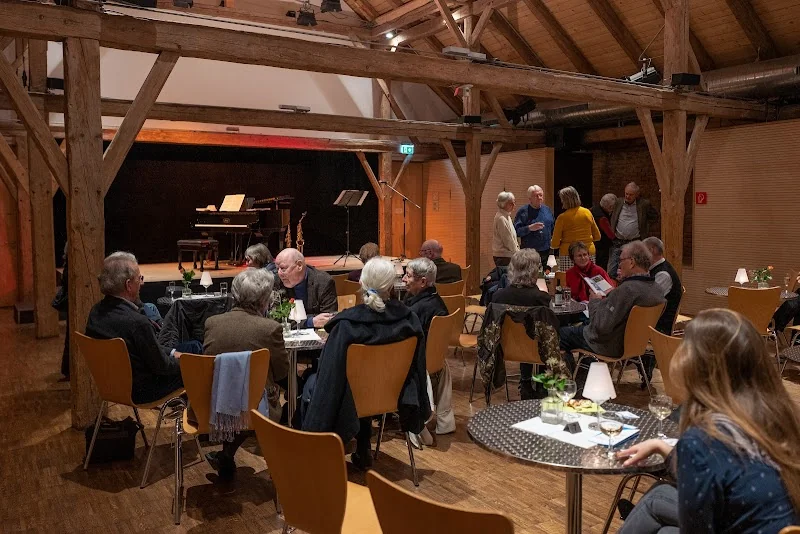
The Pfarrstadl Weßling at the address Am Kreuzberg 3 in 82234 Weßling is a historically grown event venue with its own character and clear practical function. The building is a two-story single-gable farm from 1864, adjoining the former rectory, and was previously used for storing the harvest of the agricultural land belonging to the parish estate. In 2000, it was renovated and converted into the current assembly venue. This connection of history, renovation, and current use makes the place interesting for visitors who are looking for not just a hall, but a space with a developed identity. The parish community of Weßling describes the Pfarrstadl as a place with a wide-ranging program that includes classical concerts to cabaret. Those who want to orient themselves in advance can find information on seating plans, room photos, and usage rules on the official page, allowing for well-prepared planning of a visit or rental. ([pg-wessling.de](https://www.pg-wessling.de/pfarrstadel/))
Program, Concerts, and Cabaret at the Pfarrstadl Weßling
The official profile of the Pfarrstadl Weßling is clear: This is not about a mono-functional hall, but about a versatile assembly venue with cultural and community engagement. The parish community explicitly mentions a wide-ranging program that includes classical concerts to cabaret. This variety shows that the Pfarrstadl is a place where musical formats and spoken word stages have their place, just as events with a calm, personal atmosphere do. For search intentions around “program,” “concert,” and “cabaret,” this is important because interested parties immediately understand that the location is not only intended for church or internal meetings but also for cultural evenings with an audience. Especially because the Pfarrstadl, as a renovated historical building, does not appear like a neutral event box, a special framework is created that can accommodate many formats. ([pg-wessling.de](https://www.pg-wessling.de/pfarrstadel/))
Additionally, the Pfarrstadl is not limited to individual events but is also used within the parish community for different groups and course offerings. On the official page of the Alpha course, the Pfarrstadl Weßling is explicitly mentioned as a meeting point, which shows that the space also plays a role for discussion formats, course evenings, and community-oriented events. This makes it clear: The place functions not only as a stage but also as a meeting point for exchange and encounter. From an SEO perspective, this is relevant because search queries like “program,” “events,” “concert,” or “cabaret” are supported by real usage. The Pfarrstadl thus connects culture, community life, and practical flexibility. Those looking for a location where calm, focused, and atmospheric events can take place will find a historical environment with recognizable event logic here. ([pg-wessling.de](https://www.pg-wessling.de/alphakurs/?utm_source=openai))
Seating Plan, Seating Arrangement, and Capacity at the Pfarrstadl
A central topic at any event venue is the question of seating, sightlines, and room layout. Here, the Pfarrstadl Weßling offers very concrete information: On the official page, seating plans for the ground floor as well as for the Ulrichsaal are available, in variants for 90 and 162 people. This is particularly helpful for planning, as it can be derived that the space does not only have a fixed standard form but can be arranged differently depending on the occasion. For smaller formats, a more compact seating arrangement may be sensible, while a denser layout is possible for larger evenings. So, those searching for a “seating plan” or “seating arrangement” will find not only a theoretical description here but concrete plans provided by the location. The official documentation makes it clear that the space can be professionally prepared for different visitor numbers. ([pg-wessling.de](https://www.pg-wessling.de/pfarrstadel/bestuhlungsplaene-fuer-den-pfarrstadel/))
The indicated number of 162 people is a particularly important reference point. For many users, this is the obvious upper limit when it comes to the Ulrichsaal in a larger seating variant. At the same time, the existence of a 90-person plan shows that the location is also suitable for medium-sized and more intimate formats. This is an advantage for events that should not take place in an oversized environment but in a space with manageable distance to the audience. Those searching for the keywords “seating plan,” “seating arrangement,” or “seats” usually want exactly this clarity: How many people fit in, and how flexible is the arrangement? The Pfarrstadl answers these questions quite transparently on the official page. This makes the location not only appear historical but also well-structured organizationally, which is a strong argument for organizers. ([pg-wessling.de](https://www.pg-wessling.de/pfarrstadel/bestuhlungsplaene-fuer-den-pfarrstadel/))
Directions, Parking, and Quiet Arrival at the Pfarrstadl
Regarding directions and parking, the Pfarrstadl Weßling is very clearly regulated. The official room usage page explains that for fire safety reasons, no vehicles may be parked on the premises. Vehicles should be driven out of the premises after unloading. Therefore, those arriving with materials, catering, or technology should plan the logistics so that loading and unloading occurs quickly and the vehicle is then parked outside the premises. Additionally, the page points out parking opportunities around the Pfarrstadl. For visitors, this means: do not park on the property, but plan for the surrounding area and the available parking options there. For search queries around “parking” and “directions,” this information is crucial because it provides real, practical advice instead of general platitudes. ([pg-wessling.de](https://www.pg-wessling.de/pfarrstadel/merkblatt-zur-raumnutzung/))
Equally important are the rules of conduct in the vicinity of the building, as the Pfarrstadl is located in a residential area. The church requests that absolute silence be maintained outside the building after 10:00 PM. Additionally, departures should be quiet and without disturbing noises, and electronic amplifiers and music devices should also be set to room volume after 10:00 PM. This makes it clear that while the Pfarrstadl is open for events, its use requires consideration for the neighborhood. There is also another safety aspect: multiple highly sensitive smoke detectors are installed, which directly alert the fire department in case of danger. All these notes are not trivial but part of the real usage conditions. Those looking for an event location with clear rules and understandable processes will find precise orientation here. ([pg-wessling.de](https://www.pg-wessling.de/pfarrstadel/merkblatt-zur-raumnutzung/))
Pfarrstadl Weßling Photos: Images of the Rooms and Impressions
For many interested parties, the decision for a location begins not only with a booking but with a visual impression. The Pfarrstadl Weßling offers a dedicated page with images of the rooms. There, the foyer on the ground floor, the foyer on the upper floor, the Ulrichsaal, as well as the Georgssaal and Laurentiussaal are shown. These room names already indicate that there is a differentiated interior structure and not just a single large hall. For the keyword logic around “photos,” this is particularly valuable because the official appearance supports exactly this search intent: Those looking for a picture of the location will find several clearly named areas on the website that provide a realistic impression in advance. Images help in determining whether an event should appear more festive, calm, communicative, or formal. Especially in a historical building, the visual impression is often a central decision criterion. ([pg-wessling.de](https://www.pg-wessling.de/pfarrstadel/bilder-der-raeume/))
Even without additional descriptions of the interior furnishings, the structure of the named rooms already says a lot. Foyer areas indicate a reception and transition space, while the Ulrichsaal appears as the central event space, and the hall names Georgssaal and Laurentiussaal suggest further usable areas. This is helpful for organizers because visitor flows, cloakrooms, greetings, or smaller side formats can be better planned. The official image page thus provides not only a visual promise but also spatial orientation. In conjunction with the seating plans, a comprehensible overall picture emerges: Here you can see the rooms, check the seating, and then decide which setup fits. This transparency makes the Pfarrstadl relevant for search queries about photos, room overviews, and hall impressions. ([pg-wessling.de](https://www.pg-wessling.de/pfarrstadel/bilder-der-raeume/))
Renting Pfarrstadl Weßling: Room Usage, Contact, and House Rules
The Pfarrstadl Weßling can explicitly be rented, and the official website provides concrete points of contact for this. The contact person is Mr. Rüba in the parish office Weßling; the parish office can be reached at the phone number 08153 / 3415, and the email address is pfarrstadel.wessling@bistum-augsburg.de. The opening hours for Pfarrstadl inquiries are Tuesdays from 9:00 AM to 12:00 PM. This makes the path to booking clearly regulated and understandable for interested parties. Particularly practical is that the official page not only names a contact possibility but also points out the organizational framework. Therefore, those wishing to rent the Pfarrstadl should inquire early and coordinate the scheduling with the parish office. The official structure signals: The space is available, but the use follows a fixed process. This is particularly relevant for search terms like “rent,” “room usage,” or “contact person.” ([pg-wessling.de](https://www.pg-wessling.de/pfarrstadel/))
The house and usage rules are also formulated very concretely and are important for any serious event planning. The final cleaning, including wet cleaning of the kitchen, sanitary areas, stairs, and entrance areas, must be carried out by the user. Desired dates should be reported as early as possible; if a confirmed date is not canceled at least 14 days in advance, 30 percent of the incurred fees will be charged. The landlord may retain the deposit in whole or in part in case of negligent treatment, damages, gross soiling, or inadequate final cleaning. Additionally, the organizer is liable for property and personal damages, and event liability insurance is recommended. This information shows that the location is not only attractive but also organized with clear responsibilities. For users, this means planning security, provided that the guidelines are observed. ([pg-wessling.de](https://www.pg-wessling.de/pfarrstadel/bestuhlungsplaene-fuer-den-pfarrstadel/))
History of the Pfarrstadl: Single-Gable Farm from 1864 and Renovation in 2000
The history of the Pfarrstadl is an essential part of its appeal. The building was constructed in 1864 as a two-story single-gable farm and initially served the agriculture of the parish estate. This origin explains why the place still possesses a certain grounding and authenticity today, despite modern use. It is not an arbitrarily constructed event space but a building with a usage biography. The connection to the former rectory is also important because it shows the historical context of the site. The description of the parish community makes it clear that the renovation in 2000 marked the transition from agricultural use to the current assembly venue. This transformation makes the Pfarrstadl interesting for many visitors: It is old enough to have character and modern enough to meaningfully host events. ([pg-wessling.de](https://www.pg-wessling.de/pfarrstadel/))
This history also gives rise to the special role of the Pfarrstadl in today’s Weßling life. A historical building that has been renovated and opened for encounters creates a different atmosphere than a stark new building. This applies to concerts as well as to cabaret, course evenings, or meetings. The official description states that the Pfarrstadl is now an assembly venue, and therein lies its added value: The old has not been museum-conserved but transformed into a functioning form for current use. In combination with the rooms, the seating plans, and the clear usage rules, a place emerges where history is not only told but practically experienced. So, those searching for an event location with a real background will find more than just an address in the Pfarrstadl Weßling. It is a house with a past, with a regulated present, and with a clear role in community life. ([pg-wessling.de](https://www.pg-wessling.de/pfarrstadel/))
Sources:
Mehr anzeigenWeniger anzeigen
Pfarrstadl Weßling | Photos & Seating Plan
The Pfarrstadl Weßling at the address Am Kreuzberg 3 in 82234 Weßling is a historically grown event venue with its own character and clear practical function. The building is a two-story single-gable farm from 1864, adjoining the former rectory, and was previously used for storing the harvest of the agricultural land belonging to the parish estate. In 2000, it was renovated and converted into the current assembly venue. This connection of history, renovation, and current use makes the place interesting for visitors who are looking for not just a hall, but a space with a developed identity. The parish community of Weßling describes the Pfarrstadl as a place with a wide-ranging program that includes classical concerts to cabaret. Those who want to orient themselves in advance can find information on seating plans, room photos, and usage rules on the official page, allowing for well-prepared planning of a visit or rental. ([pg-wessling.de](https://www.pg-wessling.de/pfarrstadel/))
Program, Concerts, and Cabaret at the Pfarrstadl Weßling
The official profile of the Pfarrstadl Weßling is clear: This is not about a mono-functional hall, but about a versatile assembly venue with cultural and community engagement. The parish community explicitly mentions a wide-ranging program that includes classical concerts to cabaret. This variety shows that the Pfarrstadl is a place where musical formats and spoken word stages have their place, just as events with a calm, personal atmosphere do. For search intentions around “program,” “concert,” and “cabaret,” this is important because interested parties immediately understand that the location is not only intended for church or internal meetings but also for cultural evenings with an audience. Especially because the Pfarrstadl, as a renovated historical building, does not appear like a neutral event box, a special framework is created that can accommodate many formats. ([pg-wessling.de](https://www.pg-wessling.de/pfarrstadel/))
Additionally, the Pfarrstadl is not limited to individual events but is also used within the parish community for different groups and course offerings. On the official page of the Alpha course, the Pfarrstadl Weßling is explicitly mentioned as a meeting point, which shows that the space also plays a role for discussion formats, course evenings, and community-oriented events. This makes it clear: The place functions not only as a stage but also as a meeting point for exchange and encounter. From an SEO perspective, this is relevant because search queries like “program,” “events,” “concert,” or “cabaret” are supported by real usage. The Pfarrstadl thus connects culture, community life, and practical flexibility. Those looking for a location where calm, focused, and atmospheric events can take place will find a historical environment with recognizable event logic here. ([pg-wessling.de](https://www.pg-wessling.de/alphakurs/?utm_source=openai))
Seating Plan, Seating Arrangement, and Capacity at the Pfarrstadl
A central topic at any event venue is the question of seating, sightlines, and room layout. Here, the Pfarrstadl Weßling offers very concrete information: On the official page, seating plans for the ground floor as well as for the Ulrichsaal are available, in variants for 90 and 162 people. This is particularly helpful for planning, as it can be derived that the space does not only have a fixed standard form but can be arranged differently depending on the occasion. For smaller formats, a more compact seating arrangement may be sensible, while a denser layout is possible for larger evenings. So, those searching for a “seating plan” or “seating arrangement” will find not only a theoretical description here but concrete plans provided by the location. The official documentation makes it clear that the space can be professionally prepared for different visitor numbers. ([pg-wessling.de](https://www.pg-wessling.de/pfarrstadel/bestuhlungsplaene-fuer-den-pfarrstadel/))
The indicated number of 162 people is a particularly important reference point. For many users, this is the obvious upper limit when it comes to the Ulrichsaal in a larger seating variant. At the same time, the existence of a 90-person plan shows that the location is also suitable for medium-sized and more intimate formats. This is an advantage for events that should not take place in an oversized environment but in a space with manageable distance to the audience. Those searching for the keywords “seating plan,” “seating arrangement,” or “seats” usually want exactly this clarity: How many people fit in, and how flexible is the arrangement? The Pfarrstadl answers these questions quite transparently on the official page. This makes the location not only appear historical but also well-structured organizationally, which is a strong argument for organizers. ([pg-wessling.de](https://www.pg-wessling.de/pfarrstadel/bestuhlungsplaene-fuer-den-pfarrstadel/))
Directions, Parking, and Quiet Arrival at the Pfarrstadl
Regarding directions and parking, the Pfarrstadl Weßling is very clearly regulated. The official room usage page explains that for fire safety reasons, no vehicles may be parked on the premises. Vehicles should be driven out of the premises after unloading. Therefore, those arriving with materials, catering, or technology should plan the logistics so that loading and unloading occurs quickly and the vehicle is then parked outside the premises. Additionally, the page points out parking opportunities around the Pfarrstadl. For visitors, this means: do not park on the property, but plan for the surrounding area and the available parking options there. For search queries around “parking” and “directions,” this information is crucial because it provides real, practical advice instead of general platitudes. ([pg-wessling.de](https://www.pg-wessling.de/pfarrstadel/merkblatt-zur-raumnutzung/))
Equally important are the rules of conduct in the vicinity of the building, as the Pfarrstadl is located in a residential area. The church requests that absolute silence be maintained outside the building after 10:00 PM. Additionally, departures should be quiet and without disturbing noises, and electronic amplifiers and music devices should also be set to room volume after 10:00 PM. This makes it clear that while the Pfarrstadl is open for events, its use requires consideration for the neighborhood. There is also another safety aspect: multiple highly sensitive smoke detectors are installed, which directly alert the fire department in case of danger. All these notes are not trivial but part of the real usage conditions. Those looking for an event location with clear rules and understandable processes will find precise orientation here. ([pg-wessling.de](https://www.pg-wessling.de/pfarrstadel/merkblatt-zur-raumnutzung/))
Pfarrstadl Weßling Photos: Images of the Rooms and Impressions
For many interested parties, the decision for a location begins not only with a booking but with a visual impression. The Pfarrstadl Weßling offers a dedicated page with images of the rooms. There, the foyer on the ground floor, the foyer on the upper floor, the Ulrichsaal, as well as the Georgssaal and Laurentiussaal are shown. These room names already indicate that there is a differentiated interior structure and not just a single large hall. For the keyword logic around “photos,” this is particularly valuable because the official appearance supports exactly this search intent: Those looking for a picture of the location will find several clearly named areas on the website that provide a realistic impression in advance. Images help in determining whether an event should appear more festive, calm, communicative, or formal. Especially in a historical building, the visual impression is often a central decision criterion. ([pg-wessling.de](https://www.pg-wessling.de/pfarrstadel/bilder-der-raeume/))
Even without additional descriptions of the interior furnishings, the structure of the named rooms already says a lot. Foyer areas indicate a reception and transition space, while the Ulrichsaal appears as the central event space, and the hall names Georgssaal and Laurentiussaal suggest further usable areas. This is helpful for organizers because visitor flows, cloakrooms, greetings, or smaller side formats can be better planned. The official image page thus provides not only a visual promise but also spatial orientation. In conjunction with the seating plans, a comprehensible overall picture emerges: Here you can see the rooms, check the seating, and then decide which setup fits. This transparency makes the Pfarrstadl relevant for search queries about photos, room overviews, and hall impressions. ([pg-wessling.de](https://www.pg-wessling.de/pfarrstadel/bilder-der-raeume/))
Renting Pfarrstadl Weßling: Room Usage, Contact, and House Rules
The Pfarrstadl Weßling can explicitly be rented, and the official website provides concrete points of contact for this. The contact person is Mr. Rüba in the parish office Weßling; the parish office can be reached at the phone number 08153 / 3415, and the email address is pfarrstadel.wessling@bistum-augsburg.de. The opening hours for Pfarrstadl inquiries are Tuesdays from 9:00 AM to 12:00 PM. This makes the path to booking clearly regulated and understandable for interested parties. Particularly practical is that the official page not only names a contact possibility but also points out the organizational framework. Therefore, those wishing to rent the Pfarrstadl should inquire early and coordinate the scheduling with the parish office. The official structure signals: The space is available, but the use follows a fixed process. This is particularly relevant for search terms like “rent,” “room usage,” or “contact person.” ([pg-wessling.de](https://www.pg-wessling.de/pfarrstadel/))
The house and usage rules are also formulated very concretely and are important for any serious event planning. The final cleaning, including wet cleaning of the kitchen, sanitary areas, stairs, and entrance areas, must be carried out by the user. Desired dates should be reported as early as possible; if a confirmed date is not canceled at least 14 days in advance, 30 percent of the incurred fees will be charged. The landlord may retain the deposit in whole or in part in case of negligent treatment, damages, gross soiling, or inadequate final cleaning. Additionally, the organizer is liable for property and personal damages, and event liability insurance is recommended. This information shows that the location is not only attractive but also organized with clear responsibilities. For users, this means planning security, provided that the guidelines are observed. ([pg-wessling.de](https://www.pg-wessling.de/pfarrstadel/bestuhlungsplaene-fuer-den-pfarrstadel/))
History of the Pfarrstadl: Single-Gable Farm from 1864 and Renovation in 2000
The history of the Pfarrstadl is an essential part of its appeal. The building was constructed in 1864 as a two-story single-gable farm and initially served the agriculture of the parish estate. This origin explains why the place still possesses a certain grounding and authenticity today, despite modern use. It is not an arbitrarily constructed event space but a building with a usage biography. The connection to the former rectory is also important because it shows the historical context of the site. The description of the parish community makes it clear that the renovation in 2000 marked the transition from agricultural use to the current assembly venue. This transformation makes the Pfarrstadl interesting for many visitors: It is old enough to have character and modern enough to meaningfully host events. ([pg-wessling.de](https://www.pg-wessling.de/pfarrstadel/))
This history also gives rise to the special role of the Pfarrstadl in today’s Weßling life. A historical building that has been renovated and opened for encounters creates a different atmosphere than a stark new building. This applies to concerts as well as to cabaret, course evenings, or meetings. The official description states that the Pfarrstadl is now an assembly venue, and therein lies its added value: The old has not been museum-conserved but transformed into a functioning form for current use. In combination with the rooms, the seating plans, and the clear usage rules, a place emerges where history is not only told but practically experienced. So, those searching for an event location with a real background will find more than just an address in the Pfarrstadl Weßling. It is a house with a past, with a regulated present, and with a clear role in community life. ([pg-wessling.de](https://www.pg-wessling.de/pfarrstadel/))
Sources:
Pfarrstadl Weßling | Photos & Seating Plan
The Pfarrstadl Weßling at the address Am Kreuzberg 3 in 82234 Weßling is a historically grown event venue with its own character and clear practical function. The building is a two-story single-gable farm from 1864, adjoining the former rectory, and was previously used for storing the harvest of the agricultural land belonging to the parish estate. In 2000, it was renovated and converted into the current assembly venue. This connection of history, renovation, and current use makes the place interesting for visitors who are looking for not just a hall, but a space with a developed identity. The parish community of Weßling describes the Pfarrstadl as a place with a wide-ranging program that includes classical concerts to cabaret. Those who want to orient themselves in advance can find information on seating plans, room photos, and usage rules on the official page, allowing for well-prepared planning of a visit or rental. ([pg-wessling.de](https://www.pg-wessling.de/pfarrstadel/))
Program, Concerts, and Cabaret at the Pfarrstadl Weßling
The official profile of the Pfarrstadl Weßling is clear: This is not about a mono-functional hall, but about a versatile assembly venue with cultural and community engagement. The parish community explicitly mentions a wide-ranging program that includes classical concerts to cabaret. This variety shows that the Pfarrstadl is a place where musical formats and spoken word stages have their place, just as events with a calm, personal atmosphere do. For search intentions around “program,” “concert,” and “cabaret,” this is important because interested parties immediately understand that the location is not only intended for church or internal meetings but also for cultural evenings with an audience. Especially because the Pfarrstadl, as a renovated historical building, does not appear like a neutral event box, a special framework is created that can accommodate many formats. ([pg-wessling.de](https://www.pg-wessling.de/pfarrstadel/))
Additionally, the Pfarrstadl is not limited to individual events but is also used within the parish community for different groups and course offerings. On the official page of the Alpha course, the Pfarrstadl Weßling is explicitly mentioned as a meeting point, which shows that the space also plays a role for discussion formats, course evenings, and community-oriented events. This makes it clear: The place functions not only as a stage but also as a meeting point for exchange and encounter. From an SEO perspective, this is relevant because search queries like “program,” “events,” “concert,” or “cabaret” are supported by real usage. The Pfarrstadl thus connects culture, community life, and practical flexibility. Those looking for a location where calm, focused, and atmospheric events can take place will find a historical environment with recognizable event logic here. ([pg-wessling.de](https://www.pg-wessling.de/alphakurs/?utm_source=openai))
Seating Plan, Seating Arrangement, and Capacity at the Pfarrstadl
A central topic at any event venue is the question of seating, sightlines, and room layout. Here, the Pfarrstadl Weßling offers very concrete information: On the official page, seating plans for the ground floor as well as for the Ulrichsaal are available, in variants for 90 and 162 people. This is particularly helpful for planning, as it can be derived that the space does not only have a fixed standard form but can be arranged differently depending on the occasion. For smaller formats, a more compact seating arrangement may be sensible, while a denser layout is possible for larger evenings. So, those searching for a “seating plan” or “seating arrangement” will find not only a theoretical description here but concrete plans provided by the location. The official documentation makes it clear that the space can be professionally prepared for different visitor numbers. ([pg-wessling.de](https://www.pg-wessling.de/pfarrstadel/bestuhlungsplaene-fuer-den-pfarrstadel/))
The indicated number of 162 people is a particularly important reference point. For many users, this is the obvious upper limit when it comes to the Ulrichsaal in a larger seating variant. At the same time, the existence of a 90-person plan shows that the location is also suitable for medium-sized and more intimate formats. This is an advantage for events that should not take place in an oversized environment but in a space with manageable distance to the audience. Those searching for the keywords “seating plan,” “seating arrangement,” or “seats” usually want exactly this clarity: How many people fit in, and how flexible is the arrangement? The Pfarrstadl answers these questions quite transparently on the official page. This makes the location not only appear historical but also well-structured organizationally, which is a strong argument for organizers. ([pg-wessling.de](https://www.pg-wessling.de/pfarrstadel/bestuhlungsplaene-fuer-den-pfarrstadel/))
Directions, Parking, and Quiet Arrival at the Pfarrstadl
Regarding directions and parking, the Pfarrstadl Weßling is very clearly regulated. The official room usage page explains that for fire safety reasons, no vehicles may be parked on the premises. Vehicles should be driven out of the premises after unloading. Therefore, those arriving with materials, catering, or technology should plan the logistics so that loading and unloading occurs quickly and the vehicle is then parked outside the premises. Additionally, the page points out parking opportunities around the Pfarrstadl. For visitors, this means: do not park on the property, but plan for the surrounding area and the available parking options there. For search queries around “parking” and “directions,” this information is crucial because it provides real, practical advice instead of general platitudes. ([pg-wessling.de](https://www.pg-wessling.de/pfarrstadel/merkblatt-zur-raumnutzung/))
Equally important are the rules of conduct in the vicinity of the building, as the Pfarrstadl is located in a residential area. The church requests that absolute silence be maintained outside the building after 10:00 PM. Additionally, departures should be quiet and without disturbing noises, and electronic amplifiers and music devices should also be set to room volume after 10:00 PM. This makes it clear that while the Pfarrstadl is open for events, its use requires consideration for the neighborhood. There is also another safety aspect: multiple highly sensitive smoke detectors are installed, which directly alert the fire department in case of danger. All these notes are not trivial but part of the real usage conditions. Those looking for an event location with clear rules and understandable processes will find precise orientation here. ([pg-wessling.de](https://www.pg-wessling.de/pfarrstadel/merkblatt-zur-raumnutzung/))
Pfarrstadl Weßling Photos: Images of the Rooms and Impressions
For many interested parties, the decision for a location begins not only with a booking but with a visual impression. The Pfarrstadl Weßling offers a dedicated page with images of the rooms. There, the foyer on the ground floor, the foyer on the upper floor, the Ulrichsaal, as well as the Georgssaal and Laurentiussaal are shown. These room names already indicate that there is a differentiated interior structure and not just a single large hall. For the keyword logic around “photos,” this is particularly valuable because the official appearance supports exactly this search intent: Those looking for a picture of the location will find several clearly named areas on the website that provide a realistic impression in advance. Images help in determining whether an event should appear more festive, calm, communicative, or formal. Especially in a historical building, the visual impression is often a central decision criterion. ([pg-wessling.de](https://www.pg-wessling.de/pfarrstadel/bilder-der-raeume/))
Even without additional descriptions of the interior furnishings, the structure of the named rooms already says a lot. Foyer areas indicate a reception and transition space, while the Ulrichsaal appears as the central event space, and the hall names Georgssaal and Laurentiussaal suggest further usable areas. This is helpful for organizers because visitor flows, cloakrooms, greetings, or smaller side formats can be better planned. The official image page thus provides not only a visual promise but also spatial orientation. In conjunction with the seating plans, a comprehensible overall picture emerges: Here you can see the rooms, check the seating, and then decide which setup fits. This transparency makes the Pfarrstadl relevant for search queries about photos, room overviews, and hall impressions. ([pg-wessling.de](https://www.pg-wessling.de/pfarrstadel/bilder-der-raeume/))
Renting Pfarrstadl Weßling: Room Usage, Contact, and House Rules
The Pfarrstadl Weßling can explicitly be rented, and the official website provides concrete points of contact for this. The contact person is Mr. Rüba in the parish office Weßling; the parish office can be reached at the phone number 08153 / 3415, and the email address is pfarrstadel.wessling@bistum-augsburg.de. The opening hours for Pfarrstadl inquiries are Tuesdays from 9:00 AM to 12:00 PM. This makes the path to booking clearly regulated and understandable for interested parties. Particularly practical is that the official page not only names a contact possibility but also points out the organizational framework. Therefore, those wishing to rent the Pfarrstadl should inquire early and coordinate the scheduling with the parish office. The official structure signals: The space is available, but the use follows a fixed process. This is particularly relevant for search terms like “rent,” “room usage,” or “contact person.” ([pg-wessling.de](https://www.pg-wessling.de/pfarrstadel/))
The house and usage rules are also formulated very concretely and are important for any serious event planning. The final cleaning, including wet cleaning of the kitchen, sanitary areas, stairs, and entrance areas, must be carried out by the user. Desired dates should be reported as early as possible; if a confirmed date is not canceled at least 14 days in advance, 30 percent of the incurred fees will be charged. The landlord may retain the deposit in whole or in part in case of negligent treatment, damages, gross soiling, or inadequate final cleaning. Additionally, the organizer is liable for property and personal damages, and event liability insurance is recommended. This information shows that the location is not only attractive but also organized with clear responsibilities. For users, this means planning security, provided that the guidelines are observed. ([pg-wessling.de](https://www.pg-wessling.de/pfarrstadel/bestuhlungsplaene-fuer-den-pfarrstadel/))
History of the Pfarrstadl: Single-Gable Farm from 1864 and Renovation in 2000
The history of the Pfarrstadl is an essential part of its appeal. The building was constructed in 1864 as a two-story single-gable farm and initially served the agriculture of the parish estate. This origin explains why the place still possesses a certain grounding and authenticity today, despite modern use. It is not an arbitrarily constructed event space but a building with a usage biography. The connection to the former rectory is also important because it shows the historical context of the site. The description of the parish community makes it clear that the renovation in 2000 marked the transition from agricultural use to the current assembly venue. This transformation makes the Pfarrstadl interesting for many visitors: It is old enough to have character and modern enough to meaningfully host events. ([pg-wessling.de](https://www.pg-wessling.de/pfarrstadel/))
This history also gives rise to the special role of the Pfarrstadl in today’s Weßling life. A historical building that has been renovated and opened for encounters creates a different atmosphere than a stark new building. This applies to concerts as well as to cabaret, course evenings, or meetings. The official description states that the Pfarrstadl is now an assembly venue, and therein lies its added value: The old has not been museum-conserved but transformed into a functioning form for current use. In combination with the rooms, the seating plans, and the clear usage rules, a place emerges where history is not only told but practically experienced. So, those searching for an event location with a real background will find more than just an address in the Pfarrstadl Weßling. It is a house with a past, with a regulated present, and with a clear role in community life. ([pg-wessling.de](https://www.pg-wessling.de/pfarrstadel/))
Sources:
Upcoming Events
No events found
Frequently Asked Questions
Reviews
Paulin Kantue
26. February 2023
Really nice venue. Had a great evening listening to some smooth jazz music.
Lissy Radde
9. November 2025
Beautiful location 🖼️🎨🖌️🤩
Hannerl Hasu
2. October 2025
Ein wundervoller Ambieten der Pfarrstadl. Sehr zu empfehlen. Es gibt einen Auftug in den ersten Stock. Also auch für behinderte sehr zu empfehlen.
King G
24. February 2026
Very tastefully renovated. It's a great place for all events.
Michael Schmidt
11. May 2025
Very nicely arranged, a great place. For example, yesterday the master pieces of the carpenters' guild were exhibited there.