
Possenhofener Str. 5, Starnberg
Possenhofener Str. 5, 82319 Starnberg, Germany
Museum Starnberger See | Shipping & Opening Hours
The Museum Starnberger See is one of the most exciting cultural addresses in Starnberg and is of interest to anyone looking for a museum in Starnberg, in the district of Starnberg, or in the vicinity of Lake Starnberg. Just a few steps from the lakeshore, the building combines historical structures, a modern extension, and a spacious garden into a place where history is not only exhibited but can also be experienced spatially. The city of Starnberg describes the museum as a meeting place of past and present; the official museum website adds that permanent exhibitions, special exhibitions, projects, and events take place here. This combination is what makes it appealing: those who want to combine lake history, Bavarian culture, historical architecture, and a relaxed museum visit will find a versatile destination for a short city stroll or a longer day trip. ([starnberg.de](https://www.starnberg.de/buergerservice-verwaltung/stadtverwaltung/aemter-und-staedtische-einrichtungen/museum-starnberger-see))
From an SEO perspective, the frequent search queries reflect a clear interest in practical topics: visitors want to know what the museum shows, how to get there, where to park, when it is open, and what special features the house offers. This is why this text focuses on shipping, Lochmannhaus, opening hours, directions, parking, accessibility, and current exhibitions. The content is based on the official museum information and supplementary entries from the city of Starnberg and the museums in Bavaria. This creates a reliable overview for anyone who wants to visit the Museum Starnberger See purposefully or research in advance. ([museum-starnberger-see.de](https://www.museum-starnberger-see.de/en/visit/transportation))
History of the Museum Starnberger See
The history of the museum begins with the commitment of art-interested individuals from the Starnberg community. From a regional collection and preservation movement emerged the initiative to secure the historical, cultural, and artistic heritage of the area. The first name was Museum für den Würmseegau; thus, the focus was already early on the identity of the then lake region. A significant role was played by the doctor Martin Penzl, to whom the acquisition of the important figure of the Female Saint of Starnberg by Ignaz Günther is attributed. With the support of the city council, the Lochmannhaus was acquired in 1912, which at that time already served as a monument-worthy historical core for the future museum. ([museum-starnberger-see.de](https://www.museum-starnberger-see.de/en/museum/history))
After the founding of an administrative association in 1913, the museum was opened on July 9, 1914. The opening ceremony was a social event of supra-regional significance, as King Ludwig III of Bavaria and his wife personally attended. The museum's website reminds us that the opening took place shortly before the First World War, and the institution thus grew into a historically charged era. During the time of National Socialism, the association was dissolved, responsibility passed to the city, and after the war, the museum remained under municipal sponsorship. After the restoration of the Lochmannhaus, it reopened in 1985 as the Starnberg Local History Museum, before the modern extension by Guggenbichler and Netzer was added in 2008. Since then, the house has been called Museum Starnberger See and combines tradition with contemporary presentation. ([museum-starnberger-see.de](https://www.museum-starnberger-see.de/en/museum/history))
This historical arc is particularly important for search intentions around Museum Landkreis Starnberg or Museum Starnberg surroundings because the house not only shows exhibits but is also part of the regional memory culture. It exemplifies the development of Starnberg from a former fishing village to a town, the transformation of the lake from a courtly stage to a leisure and cultural region, and the question of how a local collection remains relevant over more than a century. The museum is thus not merely a place for past things but an active bearer of regional identity that continually retells its history and translates it into current exhibitions, guided tours, and events. ([starnberg.de](https://www.starnberg.de/buergerservice-verwaltung/stadtverwaltung/aemter-und-staedtische-einrichtungen/museum-starnberger-see))
Permanent Exhibition on Shipping at Lake Starnberg
The permanent exhibition is the heart of the museum and delves deep into the history of Lake Starnberg. It tells of fishing traditions, early boat forms, courtly representation, new transportation routes, and the transformation of the region since modern times. A special entry point is an ancient dugout canoe that makes the early uses of the lake tangible and illustrates the long continuity of human activity at the water. The exhibition does not present this history dryly chronologically but as a development of mobility, power, and everyday life: first the lake as a habitat and food source, later as a stage for princes and kings, and finally as a landscape of bourgeois summer freshness and tourism. This is precisely what attracts visitors searching for Starnberger See Museum or Museum Starnberg See. ([museum-starnberger-see.de](https://www.museum-starnberger-see.de/en/exhibitions/permanent-exhibition))
A central theme is the magnificent ships of the Wittelsbach family. The museum shows how the Bavarian rulers used the lake for festivities, hunts, and representative trips and what significance this shipping had for the region's reputation. Not only models and individual objects are presented, but also larger historical contexts are explained: the construction of boats, the building of boathouses, the staging of courtly power on the water, and the transition to steamships and modern mobility. The permanent exhibition also addresses the emergence of the railway line and steam shipping as well as the development of villas along the lake. It becomes clear that Lake Starnberg is not only a natural space but also a historically condensed cultural space. ([museum-starnberger-see.de](https://www.museum-starnberger-see.de/en/exhibitions/permanent-exhibition))
Particularly impressive is the presentation of the Delphin, the only fully preserved ship from the royal representative fleet. The object makes the courtly lake culture understandable at a glance and is the highlight of the tour for many guests. It is complemented by a view of the legendary Bucentaur, of which no original exists anymore, but a model and some original parts are preserved. This combination of original, model, and narrative gives depth to the exhibition and clarifies how closely the lake was connected to the self-understanding of the Wittelsbach family. Therefore, those who use the search terms shipping Starnberger See Museum or permanent exhibition Starnberger See will find exactly the historical core that continues to shape the region today. ([museum-starnberger-see.de](https://www.museum-starnberger-see.de/en/exhibitions/permanent-exhibition))
Lochmannhaus and Historical Living Culture
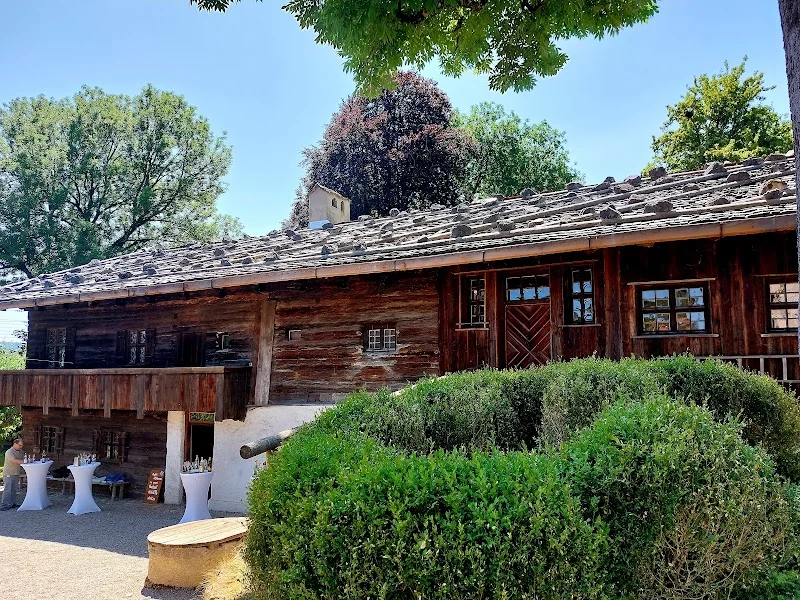
The Lochmannhaus is much more than a building within the museum: it is itself one of the most important exhibits. The historical core of the house dates back to the early modern period; investigations show that parts of the construction come from the early 16th century and that the wood of the upper fittings was felled in 1520. In its current form, the building goes back to a renovation or reconstruction around 1691 to 1693. Among other things, a kitchen with an open hearth has been preserved, which makes the everyday life of past centuries directly experienceable. The Lochmannhaus is particularly fascinating for visitors because it not only informs about life by the lake but also architecturally embodies that life. ([museum-starnberger-see.de](https://www.museum-starnberger-see.de/en/exhibitions/collection/lochmann-house))
Particularly noteworthy is the double function of the house. It was once both a farmhouse and a noble residence and had two separate living units, each with a living room, kitchen, and bedroom. The noble side lived upstairs, while the tenant family lived downstairs, and the two levels were structurally separated for a long time. It was not until the 19th century that internal connections were created after the entire farmstead had passed into the possession of the tenant family. This spatial division tells a lot about the social history of the region, about ownership structures, and about the contrast between rural work and aristocratic representation. In a museum that deals with Starnberger See history, the Lochmannhaus is therefore a key object because it bundles several narrative strands: living, working, power, and regional continuity. ([museum-starnberger-see.de](https://www.museum-starnberger-see.de/en/exhibitions/collection/lochmann-house))
The location of the house is also symbolic. Even before the railway line changed the landscape in 1865, the farm bordered directly on the lake. A description of the property from 1636 also mentions that it stood amidst an orchard, thus in an idyllic but also productive cultural landscape. This connection between usable space and representation, between peasant everyday culture and noble living culture, makes the Lochmannhaus particularly rewarding for families, school classes, and culturally interested visitors. Those searching for Lochmannhaus, Museum Starnberger See, or Museum in Starnberg will find not just an old house but an authentic piece of social history of the lake. ([museum-starnberger-see.de](https://www.museum-starnberger-see.de/en/exhibitions/collection/lochmann-house))
Opening Hours, Admission, and Museum Sunday
For practical planning, the museum is uncomplicated. According to the official website, it is open from Wednesday to Friday from 2 PM to 6 PM, and on Saturdays, Sundays, and public holidays from 11 AM to 6 PM. The house is closed on Mondays and Tuesdays, as well as on December 24 and 31. The city of Starnberg confirms the same times. Additionally, the museum points out that during exhibition changes, certain areas may be temporarily closed. Therefore, anyone wanting to combine a visit with a longer stay at the lake should check the opening hours in advance and also pay attention to possible special dates for guided tours or events. ([museum-starnberger-see.de](https://www.museum-starnberger-see.de/en/visit/informationen-1))
The admission prices are also clearly structured. Regular admission costs 7 euros, reduced 5 euros, families pay 8 euros. Visitors under 18 years receive free admission, and on the first Sunday of the month, there is Museum Sunday with an admission price of 1 euro. This is particularly attractive for families, locals, and guests who want to plan their outing flexibly. For search queries like admission Museum Starnberger See or opening hours Museum Starnberger See, these are exactly the pieces of information that are important before making a decision. With the affordable pricing structure, the museum remains a low-threshold cultural offer that allows both spontaneous visits and planned tours. ([museum-starnberger-see.de](https://www.museum-starnberger-see.de/en/visit/informationen-1))
Additionally, the museum opens outside regular hours upon request for school classes and groups. This is a practical advantage for educational institutions and travel groups who want to structure their day at the lake meaningfully. Especially in conjunction with the historical collection, the changing exhibition practice, and the special building ensemble, the house becomes a place that is interesting not only for individual visitors but also works very well for organized visits. Those looking for a museum in the district of Starnberg that combines accessibility, moderate prices, and cultural substance will find a balanced offer here. ([museum-starnberger-see.de](https://www.museum-starnberger-see.de/en/visit/informationen-1))
Directions, Parking, and Accessibility
The access to the Museum Starnberger See is well organized and designed for different means of transport. By train, one can reach Starnberg See station from Munich in about 20 to 30 minutes; from there, it is only about a three-minute walk along the lake to the museum. Alternatively, bus 964 stops directly in front of the building. For those arriving by car, follow the signs to Starnberg See station and from there the directions to the museum. Parking spaces are located between Bahnhofplatz and the museum, making arrival particularly convenient. For tour buses, there is a drop-off point directly in front of the museum and designated parking spaces at the station. This combination makes the house practical for day trips, group travels, and spontaneous visits to Starnberg alike. ([museum-starnberger-see.de](https://www.museum-starnberger-see.de/en/visit/transportation))
The accessibility has also been taken into account. Visitors with limited mobility should use the entrance on Possenhofener Straße. In the new building, all exhibition rooms and other accessible areas are reachable via an elevator, and there are also accessible restrooms both in the museum and in the café. Outside, disabled parking spaces are available. At the same time, the historical Lochmannhaus is only partially accessible due to its historical structure, which is understandable for a listed building. For guided tours and lectures, there is also a hearing system, and in the galleries, folding seating is available as rest or walking aids. Assistance dogs are also allowed upon presentation of proof. This shows that the museum can harmoniously combine historical preservation and modern visitor-friendliness. ([museum-starnberger-see.de](https://www.museum-starnberger-see.de/en/visit/transportation))
Especially for the frequently searched topics directions Museum Starnberger See and parking Museum Starnberger See, the house provides clear answers. The location near the station and shore, the short walking distance, the bus connection, and the special situation with visitor and bus parking make orientation easy. For people traveling from Munich or the surrounding area, this is a real advantage, as no complicated city center parking is necessary. Those who want to combine their museum visit with a walk by the lake, a café visit, or another Starnberg program can thus flexibly design their stay. ([museum-starnberger-see.de](https://www.museum-starnberger-see.de/en/visit/transportation))
Current Exhibitions, Guided Tours, and Museum Café
The museum is not a static local museum but visibly works with changing formats. The official website announces not only the permanent exhibition but also projects, events, and special exhibitions. At the time of research, among other things, Chamber Play Contemporary Art in the Local History Museum from March to November 2026 and Heinz Butz A Quiet Avant-Gardist in Upper Bavaria until May 3, 2026, were on the program. This shows that the museum does not view regional history in isolation but relates it to contemporary art and newer cultural-historical perspectives. For visitors searching for program, exhibition, or Museum Starnberg, this is a good sign: the house is evolving content-wise and thus remains interesting for repeat visits. ([museum-starnberger-see.de](https://www.museum-starnberger-see.de/en/exhibitions/on-view))
The museum is also broadly positioned educationally. Group tours and offers for young visitors are expressly provided on the website, and special openings for school classes or groups outside regular hours are possible upon request. This makes the museum an attractive destination for teachers, clubs, and travel groups who want not just to look but to understand. In addition, there is a museum and garden café that, according to the city and museum, fits into the connection between historical estate and modern new building. It offers regional products and thus fits well with the quiet, location-based character of the house. Therefore, those who want to combine a relaxed museum visit with a break in the green will find more here than just exhibition rooms. ([starnberg.de](https://www.starnberg.de/buergerservice-verwaltung/stadtverwaltung/aemter-und-staedtische-einrichtungen/museum-starnberger-see))
For the everyday life of visitors, this mixture is crucial: current content, family-friendly opening hours, a café, good accessibility, and a garden that invites you to linger. The museum is thus not only a station on the cultural map of Starnberg but also a place for short and longer stays. Particularly appealing is that here a historical farmhouse and noble house, a modern extension, a café, and a garden work together. Therefore, those searching for Museum Starnberger See with a guided tour, Museum Starnberger See café, or Museum Starnberg surroundings will receive a comprehensive package of history, relaxation, and culture. ([starnberg.de](https://www.starnberg.de/buergerservice-verwaltung/stadtverwaltung/aemter-und-staedtische-einrichtungen/museum-starnberger-see))
Why a Visit is Worthwhile for Starnberg and Surroundings
The Museum Starnberger See is particularly interesting for people who want to understand the region rather than just see it superficially. It tells the story of the lake from the first fishermen through courtly shipping to summer freshness and modern cultural tourism. At the same time, it shows how closely Starnberg itself is connected to the lake and how the city has developed from a smaller lakeside town to a culturally charged destination. Therefore, anyone traveling in the district of Starnberg, in the vicinity of the lake, or on a weekend trip will find a compact, content-rich museum with a strong local connection. Especially for guests seeking a counterpoint to purely natural or walking destinations, the house offers the perfect complement. ([starnberg.de](https://www.starnberg.de/buergerservice-verwaltung/stadtverwaltung/aemter-und-staedtische-einrichtungen/museum-starnberger-see))
For families, cultural travelers, and locals, it is also attractive that the museum connects various interests. Children can discover historical ships, old house forms, and illustrative objects; adults gain in-depth insights into regional history; and everyone benefits from the quiet location, the café, and the outdoor areas. Additionally, the visit is neither time-consuming nor financially overwhelming: the opening hours are clear, the admission prices moderate, and Museum Sunday particularly accessible. In conjunction with the good train and bus connections, the house is also excellent for a half-day at the lake. Therefore, those searching for a museum in Starnberg, Museum Landkreis Starnberg, or a culturally strong destination at Lake Starnberg make a very good choice with this museum. ([museum-starnberger-see.de](https://www.museum-starnberger-see.de/en/visit/informationen-1))
In the end, this is precisely the strength of the Museum Starnberger See: it is small enough to feel personal and yet rich enough to open multiple layers of history. The Lochmannhaus gives the place authenticity, the permanent exhibition gives it depth, the new building provides contemporary presentation options, and the program with special exhibitions and events keeps it alive. Therefore, anyone looking for a cultural address that deals with shipping, regional history, historical architecture, and the special character of Lake Starnberg should definitely add this museum to their list. ([starnberg.de](https://www.starnberg.de/buergerservice-verwaltung/stadtverwaltung/aemter-und-staedtische-einrichtungen/museum-starnberger-see))
Sources:
- Museum Starnberger See - Official Website
- Museum Starnberger See - History
- Museum Starnberger See - Permanent Exhibition
- Museum Starnberger See - Lochmann House
- Museum Starnberger See - Opening hours & Admission
- Museum Starnberger See - Transportation
- Museum Starnberger See - On View
- City of Starnberg - Museum Starnberger See
- Museums in Bavaria - Museum Starnberger See
Show moreShow less
Museum Starnberger See | Shipping & Opening Hours
The Museum Starnberger See is one of the most exciting cultural addresses in Starnberg and is of interest to anyone looking for a museum in Starnberg, in the district of Starnberg, or in the vicinity of Lake Starnberg. Just a few steps from the lakeshore, the building combines historical structures, a modern extension, and a spacious garden into a place where history is not only exhibited but can also be experienced spatially. The city of Starnberg describes the museum as a meeting place of past and present; the official museum website adds that permanent exhibitions, special exhibitions, projects, and events take place here. This combination is what makes it appealing: those who want to combine lake history, Bavarian culture, historical architecture, and a relaxed museum visit will find a versatile destination for a short city stroll or a longer day trip. ([starnberg.de](https://www.starnberg.de/buergerservice-verwaltung/stadtverwaltung/aemter-und-staedtische-einrichtungen/museum-starnberger-see))
From an SEO perspective, the frequent search queries reflect a clear interest in practical topics: visitors want to know what the museum shows, how to get there, where to park, when it is open, and what special features the house offers. This is why this text focuses on shipping, Lochmannhaus, opening hours, directions, parking, accessibility, and current exhibitions. The content is based on the official museum information and supplementary entries from the city of Starnberg and the museums in Bavaria. This creates a reliable overview for anyone who wants to visit the Museum Starnberger See purposefully or research in advance. ([museum-starnberger-see.de](https://www.museum-starnberger-see.de/en/visit/transportation))
History of the Museum Starnberger See
The history of the museum begins with the commitment of art-interested individuals from the Starnberg community. From a regional collection and preservation movement emerged the initiative to secure the historical, cultural, and artistic heritage of the area. The first name was Museum für den Würmseegau; thus, the focus was already early on the identity of the then lake region. A significant role was played by the doctor Martin Penzl, to whom the acquisition of the important figure of the Female Saint of Starnberg by Ignaz Günther is attributed. With the support of the city council, the Lochmannhaus was acquired in 1912, which at that time already served as a monument-worthy historical core for the future museum. ([museum-starnberger-see.de](https://www.museum-starnberger-see.de/en/museum/history))
After the founding of an administrative association in 1913, the museum was opened on July 9, 1914. The opening ceremony was a social event of supra-regional significance, as King Ludwig III of Bavaria and his wife personally attended. The museum's website reminds us that the opening took place shortly before the First World War, and the institution thus grew into a historically charged era. During the time of National Socialism, the association was dissolved, responsibility passed to the city, and after the war, the museum remained under municipal sponsorship. After the restoration of the Lochmannhaus, it reopened in 1985 as the Starnberg Local History Museum, before the modern extension by Guggenbichler and Netzer was added in 2008. Since then, the house has been called Museum Starnberger See and combines tradition with contemporary presentation. ([museum-starnberger-see.de](https://www.museum-starnberger-see.de/en/museum/history))
This historical arc is particularly important for search intentions around Museum Landkreis Starnberg or Museum Starnberg surroundings because the house not only shows exhibits but is also part of the regional memory culture. It exemplifies the development of Starnberg from a former fishing village to a town, the transformation of the lake from a courtly stage to a leisure and cultural region, and the question of how a local collection remains relevant over more than a century. The museum is thus not merely a place for past things but an active bearer of regional identity that continually retells its history and translates it into current exhibitions, guided tours, and events. ([starnberg.de](https://www.starnberg.de/buergerservice-verwaltung/stadtverwaltung/aemter-und-staedtische-einrichtungen/museum-starnberger-see))
Permanent Exhibition on Shipping at Lake Starnberg
The permanent exhibition is the heart of the museum and delves deep into the history of Lake Starnberg. It tells of fishing traditions, early boat forms, courtly representation, new transportation routes, and the transformation of the region since modern times. A special entry point is an ancient dugout canoe that makes the early uses of the lake tangible and illustrates the long continuity of human activity at the water. The exhibition does not present this history dryly chronologically but as a development of mobility, power, and everyday life: first the lake as a habitat and food source, later as a stage for princes and kings, and finally as a landscape of bourgeois summer freshness and tourism. This is precisely what attracts visitors searching for Starnberger See Museum or Museum Starnberg See. ([museum-starnberger-see.de](https://www.museum-starnberger-see.de/en/exhibitions/permanent-exhibition))
A central theme is the magnificent ships of the Wittelsbach family. The museum shows how the Bavarian rulers used the lake for festivities, hunts, and representative trips and what significance this shipping had for the region's reputation. Not only models and individual objects are presented, but also larger historical contexts are explained: the construction of boats, the building of boathouses, the staging of courtly power on the water, and the transition to steamships and modern mobility. The permanent exhibition also addresses the emergence of the railway line and steam shipping as well as the development of villas along the lake. It becomes clear that Lake Starnberg is not only a natural space but also a historically condensed cultural space. ([museum-starnberger-see.de](https://www.museum-starnberger-see.de/en/exhibitions/permanent-exhibition))
Particularly impressive is the presentation of the Delphin, the only fully preserved ship from the royal representative fleet. The object makes the courtly lake culture understandable at a glance and is the highlight of the tour for many guests. It is complemented by a view of the legendary Bucentaur, of which no original exists anymore, but a model and some original parts are preserved. This combination of original, model, and narrative gives depth to the exhibition and clarifies how closely the lake was connected to the self-understanding of the Wittelsbach family. Therefore, those who use the search terms shipping Starnberger See Museum or permanent exhibition Starnberger See will find exactly the historical core that continues to shape the region today. ([museum-starnberger-see.de](https://www.museum-starnberger-see.de/en/exhibitions/permanent-exhibition))
Lochmannhaus and Historical Living Culture
The Lochmannhaus is much more than a building within the museum: it is itself one of the most important exhibits. The historical core of the house dates back to the early modern period; investigations show that parts of the construction come from the early 16th century and that the wood of the upper fittings was felled in 1520. In its current form, the building goes back to a renovation or reconstruction around 1691 to 1693. Among other things, a kitchen with an open hearth has been preserved, which makes the everyday life of past centuries directly experienceable. The Lochmannhaus is particularly fascinating for visitors because it not only informs about life by the lake but also architecturally embodies that life. ([museum-starnberger-see.de](https://www.museum-starnberger-see.de/en/exhibitions/collection/lochmann-house))
Particularly noteworthy is the double function of the house. It was once both a farmhouse and a noble residence and had two separate living units, each with a living room, kitchen, and bedroom. The noble side lived upstairs, while the tenant family lived downstairs, and the two levels were structurally separated for a long time. It was not until the 19th century that internal connections were created after the entire farmstead had passed into the possession of the tenant family. This spatial division tells a lot about the social history of the region, about ownership structures, and about the contrast between rural work and aristocratic representation. In a museum that deals with Starnberger See history, the Lochmannhaus is therefore a key object because it bundles several narrative strands: living, working, power, and regional continuity. ([museum-starnberger-see.de](https://www.museum-starnberger-see.de/en/exhibitions/collection/lochmann-house))
The location of the house is also symbolic. Even before the railway line changed the landscape in 1865, the farm bordered directly on the lake. A description of the property from 1636 also mentions that it stood amidst an orchard, thus in an idyllic but also productive cultural landscape. This connection between usable space and representation, between peasant everyday culture and noble living culture, makes the Lochmannhaus particularly rewarding for families, school classes, and culturally interested visitors. Those searching for Lochmannhaus, Museum Starnberger See, or Museum in Starnberg will find not just an old house but an authentic piece of social history of the lake. ([museum-starnberger-see.de](https://www.museum-starnberger-see.de/en/exhibitions/collection/lochmann-house))
Opening Hours, Admission, and Museum Sunday
For practical planning, the museum is uncomplicated. According to the official website, it is open from Wednesday to Friday from 2 PM to 6 PM, and on Saturdays, Sundays, and public holidays from 11 AM to 6 PM. The house is closed on Mondays and Tuesdays, as well as on December 24 and 31. The city of Starnberg confirms the same times. Additionally, the museum points out that during exhibition changes, certain areas may be temporarily closed. Therefore, anyone wanting to combine a visit with a longer stay at the lake should check the opening hours in advance and also pay attention to possible special dates for guided tours or events. ([museum-starnberger-see.de](https://www.museum-starnberger-see.de/en/visit/informationen-1))
The admission prices are also clearly structured. Regular admission costs 7 euros, reduced 5 euros, families pay 8 euros. Visitors under 18 years receive free admission, and on the first Sunday of the month, there is Museum Sunday with an admission price of 1 euro. This is particularly attractive for families, locals, and guests who want to plan their outing flexibly. For search queries like admission Museum Starnberger See or opening hours Museum Starnberger See, these are exactly the pieces of information that are important before making a decision. With the affordable pricing structure, the museum remains a low-threshold cultural offer that allows both spontaneous visits and planned tours. ([museum-starnberger-see.de](https://www.museum-starnberger-see.de/en/visit/informationen-1))
Additionally, the museum opens outside regular hours upon request for school classes and groups. This is a practical advantage for educational institutions and travel groups who want to structure their day at the lake meaningfully. Especially in conjunction with the historical collection, the changing exhibition practice, and the special building ensemble, the house becomes a place that is interesting not only for individual visitors but also works very well for organized visits. Those looking for a museum in the district of Starnberg that combines accessibility, moderate prices, and cultural substance will find a balanced offer here. ([museum-starnberger-see.de](https://www.museum-starnberger-see.de/en/visit/informationen-1))
Directions, Parking, and Accessibility
The access to the Museum Starnberger See is well organized and designed for different means of transport. By train, one can reach Starnberg See station from Munich in about 20 to 30 minutes; from there, it is only about a three-minute walk along the lake to the museum. Alternatively, bus 964 stops directly in front of the building. For those arriving by car, follow the signs to Starnberg See station and from there the directions to the museum. Parking spaces are located between Bahnhofplatz and the museum, making arrival particularly convenient. For tour buses, there is a drop-off point directly in front of the museum and designated parking spaces at the station. This combination makes the house practical for day trips, group travels, and spontaneous visits to Starnberg alike. ([museum-starnberger-see.de](https://www.museum-starnberger-see.de/en/visit/transportation))
The accessibility has also been taken into account. Visitors with limited mobility should use the entrance on Possenhofener Straße. In the new building, all exhibition rooms and other accessible areas are reachable via an elevator, and there are also accessible restrooms both in the museum and in the café. Outside, disabled parking spaces are available. At the same time, the historical Lochmannhaus is only partially accessible due to its historical structure, which is understandable for a listed building. For guided tours and lectures, there is also a hearing system, and in the galleries, folding seating is available as rest or walking aids. Assistance dogs are also allowed upon presentation of proof. This shows that the museum can harmoniously combine historical preservation and modern visitor-friendliness. ([museum-starnberger-see.de](https://www.museum-starnberger-see.de/en/visit/transportation))
Especially for the frequently searched topics directions Museum Starnberger See and parking Museum Starnberger See, the house provides clear answers. The location near the station and shore, the short walking distance, the bus connection, and the special situation with visitor and bus parking make orientation easy. For people traveling from Munich or the surrounding area, this is a real advantage, as no complicated city center parking is necessary. Those who want to combine their museum visit with a walk by the lake, a café visit, or another Starnberg program can thus flexibly design their stay. ([museum-starnberger-see.de](https://www.museum-starnberger-see.de/en/visit/transportation))
Current Exhibitions, Guided Tours, and Museum Café
The museum is not a static local museum but visibly works with changing formats. The official website announces not only the permanent exhibition but also projects, events, and special exhibitions. At the time of research, among other things, Chamber Play Contemporary Art in the Local History Museum from March to November 2026 and Heinz Butz A Quiet Avant-Gardist in Upper Bavaria until May 3, 2026, were on the program. This shows that the museum does not view regional history in isolation but relates it to contemporary art and newer cultural-historical perspectives. For visitors searching for program, exhibition, or Museum Starnberg, this is a good sign: the house is evolving content-wise and thus remains interesting for repeat visits. ([museum-starnberger-see.de](https://www.museum-starnberger-see.de/en/exhibitions/on-view))
The museum is also broadly positioned educationally. Group tours and offers for young visitors are expressly provided on the website, and special openings for school classes or groups outside regular hours are possible upon request. This makes the museum an attractive destination for teachers, clubs, and travel groups who want not just to look but to understand. In addition, there is a museum and garden café that, according to the city and museum, fits into the connection between historical estate and modern new building. It offers regional products and thus fits well with the quiet, location-based character of the house. Therefore, those who want to combine a relaxed museum visit with a break in the green will find more here than just exhibition rooms. ([starnberg.de](https://www.starnberg.de/buergerservice-verwaltung/stadtverwaltung/aemter-und-staedtische-einrichtungen/museum-starnberger-see))
For the everyday life of visitors, this mixture is crucial: current content, family-friendly opening hours, a café, good accessibility, and a garden that invites you to linger. The museum is thus not only a station on the cultural map of Starnberg but also a place for short and longer stays. Particularly appealing is that here a historical farmhouse and noble house, a modern extension, a café, and a garden work together. Therefore, those searching for Museum Starnberger See with a guided tour, Museum Starnberger See café, or Museum Starnberg surroundings will receive a comprehensive package of history, relaxation, and culture. ([starnberg.de](https://www.starnberg.de/buergerservice-verwaltung/stadtverwaltung/aemter-und-staedtische-einrichtungen/museum-starnberger-see))
Why a Visit is Worthwhile for Starnberg and Surroundings
The Museum Starnberger See is particularly interesting for people who want to understand the region rather than just see it superficially. It tells the story of the lake from the first fishermen through courtly shipping to summer freshness and modern cultural tourism. At the same time, it shows how closely Starnberg itself is connected to the lake and how the city has developed from a smaller lakeside town to a culturally charged destination. Therefore, anyone traveling in the district of Starnberg, in the vicinity of the lake, or on a weekend trip will find a compact, content-rich museum with a strong local connection. Especially for guests seeking a counterpoint to purely natural or walking destinations, the house offers the perfect complement. ([starnberg.de](https://www.starnberg.de/buergerservice-verwaltung/stadtverwaltung/aemter-und-staedtische-einrichtungen/museum-starnberger-see))
For families, cultural travelers, and locals, it is also attractive that the museum connects various interests. Children can discover historical ships, old house forms, and illustrative objects; adults gain in-depth insights into regional history; and everyone benefits from the quiet location, the café, and the outdoor areas. Additionally, the visit is neither time-consuming nor financially overwhelming: the opening hours are clear, the admission prices moderate, and Museum Sunday particularly accessible. In conjunction with the good train and bus connections, the house is also excellent for a half-day at the lake. Therefore, those searching for a museum in Starnberg, Museum Landkreis Starnberg, or a culturally strong destination at Lake Starnberg make a very good choice with this museum. ([museum-starnberger-see.de](https://www.museum-starnberger-see.de/en/visit/informationen-1))
In the end, this is precisely the strength of the Museum Starnberger See: it is small enough to feel personal and yet rich enough to open multiple layers of history. The Lochmannhaus gives the place authenticity, the permanent exhibition gives it depth, the new building provides contemporary presentation options, and the program with special exhibitions and events keeps it alive. Therefore, anyone looking for a cultural address that deals with shipping, regional history, historical architecture, and the special character of Lake Starnberg should definitely add this museum to their list. ([starnberg.de](https://www.starnberg.de/buergerservice-verwaltung/stadtverwaltung/aemter-und-staedtische-einrichtungen/museum-starnberger-see))
Sources:
- Museum Starnberger See - Official Website
- Museum Starnberger See - History
- Museum Starnberger See - Permanent Exhibition
- Museum Starnberger See - Lochmann House
- Museum Starnberger See - Opening hours & Admission
- Museum Starnberger See - Transportation
- Museum Starnberger See - On View
- City of Starnberg - Museum Starnberger See
- Museums in Bavaria - Museum Starnberger See
Museum Starnberger See | Shipping & Opening Hours
The Museum Starnberger See is one of the most exciting cultural addresses in Starnberg and is of interest to anyone looking for a museum in Starnberg, in the district of Starnberg, or in the vicinity of Lake Starnberg. Just a few steps from the lakeshore, the building combines historical structures, a modern extension, and a spacious garden into a place where history is not only exhibited but can also be experienced spatially. The city of Starnberg describes the museum as a meeting place of past and present; the official museum website adds that permanent exhibitions, special exhibitions, projects, and events take place here. This combination is what makes it appealing: those who want to combine lake history, Bavarian culture, historical architecture, and a relaxed museum visit will find a versatile destination for a short city stroll or a longer day trip. ([starnberg.de](https://www.starnberg.de/buergerservice-verwaltung/stadtverwaltung/aemter-und-staedtische-einrichtungen/museum-starnberger-see))
From an SEO perspective, the frequent search queries reflect a clear interest in practical topics: visitors want to know what the museum shows, how to get there, where to park, when it is open, and what special features the house offers. This is why this text focuses on shipping, Lochmannhaus, opening hours, directions, parking, accessibility, and current exhibitions. The content is based on the official museum information and supplementary entries from the city of Starnberg and the museums in Bavaria. This creates a reliable overview for anyone who wants to visit the Museum Starnberger See purposefully or research in advance. ([museum-starnberger-see.de](https://www.museum-starnberger-see.de/en/visit/transportation))
History of the Museum Starnberger See
The history of the museum begins with the commitment of art-interested individuals from the Starnberg community. From a regional collection and preservation movement emerged the initiative to secure the historical, cultural, and artistic heritage of the area. The first name was Museum für den Würmseegau; thus, the focus was already early on the identity of the then lake region. A significant role was played by the doctor Martin Penzl, to whom the acquisition of the important figure of the Female Saint of Starnberg by Ignaz Günther is attributed. With the support of the city council, the Lochmannhaus was acquired in 1912, which at that time already served as a monument-worthy historical core for the future museum. ([museum-starnberger-see.de](https://www.museum-starnberger-see.de/en/museum/history))
After the founding of an administrative association in 1913, the museum was opened on July 9, 1914. The opening ceremony was a social event of supra-regional significance, as King Ludwig III of Bavaria and his wife personally attended. The museum's website reminds us that the opening took place shortly before the First World War, and the institution thus grew into a historically charged era. During the time of National Socialism, the association was dissolved, responsibility passed to the city, and after the war, the museum remained under municipal sponsorship. After the restoration of the Lochmannhaus, it reopened in 1985 as the Starnberg Local History Museum, before the modern extension by Guggenbichler and Netzer was added in 2008. Since then, the house has been called Museum Starnberger See and combines tradition with contemporary presentation. ([museum-starnberger-see.de](https://www.museum-starnberger-see.de/en/museum/history))
This historical arc is particularly important for search intentions around Museum Landkreis Starnberg or Museum Starnberg surroundings because the house not only shows exhibits but is also part of the regional memory culture. It exemplifies the development of Starnberg from a former fishing village to a town, the transformation of the lake from a courtly stage to a leisure and cultural region, and the question of how a local collection remains relevant over more than a century. The museum is thus not merely a place for past things but an active bearer of regional identity that continually retells its history and translates it into current exhibitions, guided tours, and events. ([starnberg.de](https://www.starnberg.de/buergerservice-verwaltung/stadtverwaltung/aemter-und-staedtische-einrichtungen/museum-starnberger-see))
Permanent Exhibition on Shipping at Lake Starnberg
The permanent exhibition is the heart of the museum and delves deep into the history of Lake Starnberg. It tells of fishing traditions, early boat forms, courtly representation, new transportation routes, and the transformation of the region since modern times. A special entry point is an ancient dugout canoe that makes the early uses of the lake tangible and illustrates the long continuity of human activity at the water. The exhibition does not present this history dryly chronologically but as a development of mobility, power, and everyday life: first the lake as a habitat and food source, later as a stage for princes and kings, and finally as a landscape of bourgeois summer freshness and tourism. This is precisely what attracts visitors searching for Starnberger See Museum or Museum Starnberg See. ([museum-starnberger-see.de](https://www.museum-starnberger-see.de/en/exhibitions/permanent-exhibition))
A central theme is the magnificent ships of the Wittelsbach family. The museum shows how the Bavarian rulers used the lake for festivities, hunts, and representative trips and what significance this shipping had for the region's reputation. Not only models and individual objects are presented, but also larger historical contexts are explained: the construction of boats, the building of boathouses, the staging of courtly power on the water, and the transition to steamships and modern mobility. The permanent exhibition also addresses the emergence of the railway line and steam shipping as well as the development of villas along the lake. It becomes clear that Lake Starnberg is not only a natural space but also a historically condensed cultural space. ([museum-starnberger-see.de](https://www.museum-starnberger-see.de/en/exhibitions/permanent-exhibition))
Particularly impressive is the presentation of the Delphin, the only fully preserved ship from the royal representative fleet. The object makes the courtly lake culture understandable at a glance and is the highlight of the tour for many guests. It is complemented by a view of the legendary Bucentaur, of which no original exists anymore, but a model and some original parts are preserved. This combination of original, model, and narrative gives depth to the exhibition and clarifies how closely the lake was connected to the self-understanding of the Wittelsbach family. Therefore, those who use the search terms shipping Starnberger See Museum or permanent exhibition Starnberger See will find exactly the historical core that continues to shape the region today. ([museum-starnberger-see.de](https://www.museum-starnberger-see.de/en/exhibitions/permanent-exhibition))
Lochmannhaus and Historical Living Culture
The Lochmannhaus is much more than a building within the museum: it is itself one of the most important exhibits. The historical core of the house dates back to the early modern period; investigations show that parts of the construction come from the early 16th century and that the wood of the upper fittings was felled in 1520. In its current form, the building goes back to a renovation or reconstruction around 1691 to 1693. Among other things, a kitchen with an open hearth has been preserved, which makes the everyday life of past centuries directly experienceable. The Lochmannhaus is particularly fascinating for visitors because it not only informs about life by the lake but also architecturally embodies that life. ([museum-starnberger-see.de](https://www.museum-starnberger-see.de/en/exhibitions/collection/lochmann-house))
Particularly noteworthy is the double function of the house. It was once both a farmhouse and a noble residence and had two separate living units, each with a living room, kitchen, and bedroom. The noble side lived upstairs, while the tenant family lived downstairs, and the two levels were structurally separated for a long time. It was not until the 19th century that internal connections were created after the entire farmstead had passed into the possession of the tenant family. This spatial division tells a lot about the social history of the region, about ownership structures, and about the contrast between rural work and aristocratic representation. In a museum that deals with Starnberger See history, the Lochmannhaus is therefore a key object because it bundles several narrative strands: living, working, power, and regional continuity. ([museum-starnberger-see.de](https://www.museum-starnberger-see.de/en/exhibitions/collection/lochmann-house))
The location of the house is also symbolic. Even before the railway line changed the landscape in 1865, the farm bordered directly on the lake. A description of the property from 1636 also mentions that it stood amidst an orchard, thus in an idyllic but also productive cultural landscape. This connection between usable space and representation, between peasant everyday culture and noble living culture, makes the Lochmannhaus particularly rewarding for families, school classes, and culturally interested visitors. Those searching for Lochmannhaus, Museum Starnberger See, or Museum in Starnberg will find not just an old house but an authentic piece of social history of the lake. ([museum-starnberger-see.de](https://www.museum-starnberger-see.de/en/exhibitions/collection/lochmann-house))
Opening Hours, Admission, and Museum Sunday
For practical planning, the museum is uncomplicated. According to the official website, it is open from Wednesday to Friday from 2 PM to 6 PM, and on Saturdays, Sundays, and public holidays from 11 AM to 6 PM. The house is closed on Mondays and Tuesdays, as well as on December 24 and 31. The city of Starnberg confirms the same times. Additionally, the museum points out that during exhibition changes, certain areas may be temporarily closed. Therefore, anyone wanting to combine a visit with a longer stay at the lake should check the opening hours in advance and also pay attention to possible special dates for guided tours or events. ([museum-starnberger-see.de](https://www.museum-starnberger-see.de/en/visit/informationen-1))
The admission prices are also clearly structured. Regular admission costs 7 euros, reduced 5 euros, families pay 8 euros. Visitors under 18 years receive free admission, and on the first Sunday of the month, there is Museum Sunday with an admission price of 1 euro. This is particularly attractive for families, locals, and guests who want to plan their outing flexibly. For search queries like admission Museum Starnberger See or opening hours Museum Starnberger See, these are exactly the pieces of information that are important before making a decision. With the affordable pricing structure, the museum remains a low-threshold cultural offer that allows both spontaneous visits and planned tours. ([museum-starnberger-see.de](https://www.museum-starnberger-see.de/en/visit/informationen-1))
Additionally, the museum opens outside regular hours upon request for school classes and groups. This is a practical advantage for educational institutions and travel groups who want to structure their day at the lake meaningfully. Especially in conjunction with the historical collection, the changing exhibition practice, and the special building ensemble, the house becomes a place that is interesting not only for individual visitors but also works very well for organized visits. Those looking for a museum in the district of Starnberg that combines accessibility, moderate prices, and cultural substance will find a balanced offer here. ([museum-starnberger-see.de](https://www.museum-starnberger-see.de/en/visit/informationen-1))
Directions, Parking, and Accessibility
The access to the Museum Starnberger See is well organized and designed for different means of transport. By train, one can reach Starnberg See station from Munich in about 20 to 30 minutes; from there, it is only about a three-minute walk along the lake to the museum. Alternatively, bus 964 stops directly in front of the building. For those arriving by car, follow the signs to Starnberg See station and from there the directions to the museum. Parking spaces are located between Bahnhofplatz and the museum, making arrival particularly convenient. For tour buses, there is a drop-off point directly in front of the museum and designated parking spaces at the station. This combination makes the house practical for day trips, group travels, and spontaneous visits to Starnberg alike. ([museum-starnberger-see.de](https://www.museum-starnberger-see.de/en/visit/transportation))
The accessibility has also been taken into account. Visitors with limited mobility should use the entrance on Possenhofener Straße. In the new building, all exhibition rooms and other accessible areas are reachable via an elevator, and there are also accessible restrooms both in the museum and in the café. Outside, disabled parking spaces are available. At the same time, the historical Lochmannhaus is only partially accessible due to its historical structure, which is understandable for a listed building. For guided tours and lectures, there is also a hearing system, and in the galleries, folding seating is available as rest or walking aids. Assistance dogs are also allowed upon presentation of proof. This shows that the museum can harmoniously combine historical preservation and modern visitor-friendliness. ([museum-starnberger-see.de](https://www.museum-starnberger-see.de/en/visit/transportation))
Especially for the frequently searched topics directions Museum Starnberger See and parking Museum Starnberger See, the house provides clear answers. The location near the station and shore, the short walking distance, the bus connection, and the special situation with visitor and bus parking make orientation easy. For people traveling from Munich or the surrounding area, this is a real advantage, as no complicated city center parking is necessary. Those who want to combine their museum visit with a walk by the lake, a café visit, or another Starnberg program can thus flexibly design their stay. ([museum-starnberger-see.de](https://www.museum-starnberger-see.de/en/visit/transportation))
Current Exhibitions, Guided Tours, and Museum Café
The museum is not a static local museum but visibly works with changing formats. The official website announces not only the permanent exhibition but also projects, events, and special exhibitions. At the time of research, among other things, Chamber Play Contemporary Art in the Local History Museum from March to November 2026 and Heinz Butz A Quiet Avant-Gardist in Upper Bavaria until May 3, 2026, were on the program. This shows that the museum does not view regional history in isolation but relates it to contemporary art and newer cultural-historical perspectives. For visitors searching for program, exhibition, or Museum Starnberg, this is a good sign: the house is evolving content-wise and thus remains interesting for repeat visits. ([museum-starnberger-see.de](https://www.museum-starnberger-see.de/en/exhibitions/on-view))
The museum is also broadly positioned educationally. Group tours and offers for young visitors are expressly provided on the website, and special openings for school classes or groups outside regular hours are possible upon request. This makes the museum an attractive destination for teachers, clubs, and travel groups who want not just to look but to understand. In addition, there is a museum and garden café that, according to the city and museum, fits into the connection between historical estate and modern new building. It offers regional products and thus fits well with the quiet, location-based character of the house. Therefore, those who want to combine a relaxed museum visit with a break in the green will find more here than just exhibition rooms. ([starnberg.de](https://www.starnberg.de/buergerservice-verwaltung/stadtverwaltung/aemter-und-staedtische-einrichtungen/museum-starnberger-see))
For the everyday life of visitors, this mixture is crucial: current content, family-friendly opening hours, a café, good accessibility, and a garden that invites you to linger. The museum is thus not only a station on the cultural map of Starnberg but also a place for short and longer stays. Particularly appealing is that here a historical farmhouse and noble house, a modern extension, a café, and a garden work together. Therefore, those searching for Museum Starnberger See with a guided tour, Museum Starnberger See café, or Museum Starnberg surroundings will receive a comprehensive package of history, relaxation, and culture. ([starnberg.de](https://www.starnberg.de/buergerservice-verwaltung/stadtverwaltung/aemter-und-staedtische-einrichtungen/museum-starnberger-see))
Why a Visit is Worthwhile for Starnberg and Surroundings
The Museum Starnberger See is particularly interesting for people who want to understand the region rather than just see it superficially. It tells the story of the lake from the first fishermen through courtly shipping to summer freshness and modern cultural tourism. At the same time, it shows how closely Starnberg itself is connected to the lake and how the city has developed from a smaller lakeside town to a culturally charged destination. Therefore, anyone traveling in the district of Starnberg, in the vicinity of the lake, or on a weekend trip will find a compact, content-rich museum with a strong local connection. Especially for guests seeking a counterpoint to purely natural or walking destinations, the house offers the perfect complement. ([starnberg.de](https://www.starnberg.de/buergerservice-verwaltung/stadtverwaltung/aemter-und-staedtische-einrichtungen/museum-starnberger-see))
For families, cultural travelers, and locals, it is also attractive that the museum connects various interests. Children can discover historical ships, old house forms, and illustrative objects; adults gain in-depth insights into regional history; and everyone benefits from the quiet location, the café, and the outdoor areas. Additionally, the visit is neither time-consuming nor financially overwhelming: the opening hours are clear, the admission prices moderate, and Museum Sunday particularly accessible. In conjunction with the good train and bus connections, the house is also excellent for a half-day at the lake. Therefore, those searching for a museum in Starnberg, Museum Landkreis Starnberg, or a culturally strong destination at Lake Starnberg make a very good choice with this museum. ([museum-starnberger-see.de](https://www.museum-starnberger-see.de/en/visit/informationen-1))
In the end, this is precisely the strength of the Museum Starnberger See: it is small enough to feel personal and yet rich enough to open multiple layers of history. The Lochmannhaus gives the place authenticity, the permanent exhibition gives it depth, the new building provides contemporary presentation options, and the program with special exhibitions and events keeps it alive. Therefore, anyone looking for a cultural address that deals with shipping, regional history, historical architecture, and the special character of Lake Starnberg should definitely add this museum to their list. ([starnberg.de](https://www.starnberg.de/buergerservice-verwaltung/stadtverwaltung/aemter-und-staedtische-einrichtungen/museum-starnberger-see))
Sources:
- Museum Starnberger See - Official Website
- Museum Starnberger See - History
- Museum Starnberger See - Permanent Exhibition
- Museum Starnberger See - Lochmann House
- Museum Starnberger See - Opening hours & Admission
- Museum Starnberger See - Transportation
- Museum Starnberger See - On View
- City of Starnberg - Museum Starnberger See
- Museums in Bavaria - Museum Starnberger See
Upcoming Events
No events found
Frequently Asked Questions
Reviews
Abdullah Çetinkaya
26. November 2023
A relatively small but nice museum, as it's obvious from the name it's a museum about the lake. You will mostly learn about ships and boats of Bavarian rulers on the top 2 floors. My favourite thing was the old 500 years old, Lochmann Haus.
david antoun
9. July 2024
3 floors of old bavarian paintings, boat models and story of Starnberg sea life under the reigns of different kings. The next part is a visit to an old fishermen house which was really kept from the late 1900's.
Artem Khvastunov
5. January 2022
Small but nice museum that tells history of Starnberger See. Inside you can find a couple of lake boats and a few paintings. Additionally, there's an exhibition Im Schein der Sterne about stars and space with a portion of contemporary art. All in all, well-spent time.
Konstantinos Karamfylidis
30. December 2021
Small museum contains mostly the story of the lake. Very kids friendly and with a charming tiny Cafe. Very well spent two hours.
Elisabeth Bujtor
3. July 2023
Enter 1 Euro for everyone. Fantastic! Not lighted every place. Paintings installations are focused on global warming. Interesting.