

Utting am Ammersee
Ludwigstraße 12, 86919 Utting am Ammersee, Deutschland
Ludwigstraße 12 | Church & Services
Ludwigstraße 12 in Utting am Ammersee is much more than a sober address point. In search results, event pages of the community, and information from the parish community, the parish church of Mariä Heimsuchung appears here, which belongs to the parish community of Utting-Schondorf in the deanery of Landsberg in the Diocese of Augsburg. Utting itself is located on the western shore of Lake Ammersee, about 45 kilometers west of Munich on the A96 at the Greifenberg exit. This mixture of location, church function, and cultural presence explains why the address is repeatedly searched. Those searching for Ludwigstraße 12 often mean not just a street, but a place with history, music, services, and regional significance. It is important to note: In the available sources, the church sometimes appears under Ludwigstraße 12, while the parish office of the parish community is located at Ludwigstraße 14. For visitors, seekers, and interested parties, the church is thus a developed part of the town center and at the same time a true landmark with religious, architectural, and cultural impact. ([pg-utting.de](https://pg-utting.de/wir-ueber-uns/?utm_source=openai))
Services, Dates, and Church Life
The strongest search intention around Ludwigstraße 12 is not purely geographical, but practical: people are looking for services, dates, church life, and specific events. For this purpose, the parish church of Mariä Heimsuchung in Utting is a lively place. On the homepage of the parish community, Holy Masses, rosary prayers, festive services, and other liturgical offerings are regularly published. Specific dates such as Easter Monday, rosary, children's way of the cross, or thanksgiving service also appear there. Additionally, the community of Utting announces events such as the star singers' sending, the St. Martin's procession, or church music concerts directly at the parish church. This clearly shows: The church is not a silent museum object, but an actively used center of village life. For seekers, this is particularly relevant because the relevance of the address is not limited to a single event. Those searching for “services Utting” or “events church Utting” land at a place where the liturgical year and local community are closely connected. Weddings and other sacramental celebrations are also part of the official service profile of the parish community, which underscores the character of the church as a fully utilized parish church. Especially in smaller towns, this connection between spiritual everyday life and public presence is important because it explains why an address like Ludwigstraße 12 appears repeatedly in calendars, announcements, and online event entries over decades. ([pg-utting.de](https://pg-utting.de/?utm_source=openai))
History of the Parish Church of Mariä Heimsuchung
The history of the parish church of Mariä Heimsuchung goes back far before the current building. According to the official information from the parish community, there was a Romanesque predecessor building here in the Middle Ages, a choir tower church with a squat gable roof. In the late Gothic period, a new building was erected, while the older tower was preserved. Several renovations followed that gradually changed the appearance and transformed the church into the Baroque style. A significant event was the year 1769 when the dilapidated tower collapsed due to an earthquake. Between 1773 and 1774, it was rebuilt according to the plans of Leonhard Matthäus Gießl or Franz Anton Kirchgrabner. Even later, in 1819, the side walls of the nave had to be renewed due to the risk of collapse, as did the west gable. At the same time, the choir walls were raised, giving the church a continuous ridge. The present form is therefore not the work of a single construction year, but the result of a long construction history in which reconstruction, adaptation, and further development interweave. The Wikipedia representation adds to this line by classifying it as a hall church with a nave on old foundations and makes it clear that the tower stands on the foundations of a Romanesque choir tower. Additionally, the church is listed as a historical monument, which underscores its historical significance in the local landscape. Therefore, those searching for the address Ludwigstraße 12 are also looking for a piece of construction history of the Ammersee region. ([pg-utting.de](https://pg-utting.de/wir-ueber-uns/pfarrkirche-mari-heimsuchung-utting/))
Interestingly, while the church has historically grown, its effect does not appear outdated. The parish community describes the church from 1819 as a building that still shows late Baroque elements, even though classicism had long dominated elsewhere. This mixture of persistence and change is what makes the building appealing. It is a place that visibly carries the fractures of its history: Romanesque foundations, late Gothic new building, Baroque expansion, tower reconstruction after the collapse, adaptations in the 19th century, and finally expansions in the present. For SEO and content relevance, this is important because seekers looking for “history of the church Utting” usually want not just dates but also to understand the meaning behind them. The parish church of Mariä Heimsuchung exemplifies many churches in Upper Bavaria that have been developed over centuries without losing their identity. This also explains why the church is perceived today as both a liturgical space and a historical building. The address on Ludwigstraße is therefore not just a map point, but a documented testimony of regional construction and faith history. ([pg-utting.de](https://pg-utting.de/wir-ueber-uns/pfarrkirche-mari-heimsuchung-utting/))
Architecture, Interior, and Baroque Details
Architecturally, the parish church of Mariä Heimsuchung is a multifaceted building. The Wikipedia description refers to a hall church with a nave, a recessed and three-sided closed choir, and a church tower with a square floor plan at the front of the choir. The tower stands on the foundations of the Romanesque choir tower and ends in an onion dome, a very typical element of South German sacral architecture. Outside, the clock faces of the tower clock and the bell level with three bells are also striking. A forebuilding on the west side leads to the former portal, while a new church nave was added on the north side in 1987/88. The official site of the parish community adds this perspective with the extension built in 1986, which is accessed through an opening in the north wall. There, a freestanding building with a light-giving surrounding wall and a kind of dome vault on pillars was created. This is particularly interesting because the extension does not appear as a foreign body but consciously takes references to the old church. The steel structure of the dome reflects the arch vault and the ribbed caps of the historical church space inside and is expressed outwardly in the roof shape. Thus, a connection between old substance and modern addition is created, which appears very characteristic in the village space. Therefore, those visiting the church today perceive not only a historical core but also a consciously developed space that brings together liturgical use and architectural adaptation. ([de.wikipedia.org](https://de.wikipedia.org/wiki/Mari%C3%A4_Heimsuchung_%28Utting_am_Ammersee%29))
The interior also tells of the church's development. According to Wikipedia, the high altar retable depicts the theme of Mariä Heimsuchung, i.e., the encounter of the Virgin Mary with her relative Elizabeth. To the left and right of the altar stand the statues of Saint Benedict of Nursia and Saint Augustine of Hippo. The Baroque pulpit was designed by Lorenz Luidl and features reliefs of the four evangelists. Such elements are not only of art historical interest to visitors but also help to understand the liturgical order of the space. The official website also mentions that the double west gallery was replaced in 1986 by a simple gallery that now provides space for the organ and musicians. This is a good example of how a historical church space can be functionally adapted without losing its identity. The building thus remains flexibly usable: for community services, for choir and organ music, for festive liturgy, and for quiet contemplation of historical furnishings. This combination makes Ludwigstraße 12 particularly interesting for local search queries because users find not just an address but a place with visible, tangible, and audible history. ([de.wikipedia.org](https://de.wikipedia.org/wiki/Mari%C3%A4_Heimsuchung_%28Utting_am_Ammersee%29))
Organ, Music, and Concerts in the Church
A central theme around the parish church of Mariä Heimsuchung is the organ. The organ database Organ index lists an instrument from the company Riegner & Friedrich built in 1993 for Utting am Ammersee. It has 24 registers, two manuals, and a pedal, is mechanically built, and is tuned in Werckmeister III. Thus, the organ belongs to the instruments that can be used both liturgically and concertantly in a versatile way. The community of Utting has explicitly highlighted the organ as part of the festival “Mächtige Klänge” and described that it was completed in 1993 and is considered a special instrument in the region. In connection with the gallery, which was adapted for organ and musicians in 1986 according to the parish community, a clear picture emerges: Music is not an addition in this church but part of the spatial concept. This makes Ludwigstraße 12 particularly relevant for search queries like “organ Mariä Heimsuchung” or “church concert Utting.” The church is not only a place of celebration but also a resonance space for sophisticated music. Additionally, the community and the parish regularly publish events or musically accompanied services, indicating a vibrant church music tradition. The church choir of the parish is also publicly mentioned, making it clear how closely community, liturgy, and music work together. For visitors, this is attractive because they can not only view history here but also experience sound. And for SEO, it is valuable because the search intention around a parish church increasingly includes cultural use, organ, and concerts. ([organindex.de](https://organindex.de/index.php?title=Utting_am_Ammersee%2C_Mari%C3%A4_Heimsuchung))
It is particularly interesting that the organ is not just an inventory piece but part of the regional perception of the church. In connection with the festival “Mächtige Klänge,” it was described as an instrument unmatched in the wide area, and concert organist Johannes Skudlik included it among the festival venues. This is a good indication that the church also receives attention beyond the immediate community context. Such indications are important for seekers looking for special church spaces or regional concert venues. At the same time, the organ remains firmly anchored in liturgical use, as the parish community emphasizes the space for organ and musicians in the gallery. Thus, a connection between monument value and contemporary culture is created. The church on Ludwigstraße is therefore not only historically interesting but also musically productive. Those searching for events, organ, or concert in Utting today find a place where sacred space and sound practice meet very concretely. This is a strong argument for the relevance of the address in the local and regional search environment. ([utting.de](https://www.utting.de/event/maechtige-klaenge-orgelkonzert-in-der-pfarrkirche-mariae-heimsuchung/?utm_source=openai))
Directions, Address, and Orientation in Utting
For practical orientation, the address is a small but important special case. In the event notices of the community and in ticket and date pages, the parish church of Mariä Heimsuchung is given as Ludwigstraße 12 in Utting am Ammersee. The parish community, on the other hand, lists its parish office at Ludwigstraße 14. For users, this means: Those searching for the church should focus on the church address and the church's town center, not on the administrative office. The community of Utting describes the place as a community on the western shore of Lake Ammersee, about 45 kilometers west of Munich. The parish community adds that Utting and Schondorf are located on the A96 and are accessible via the Greifenberg exit. These indications help with travel very concretely because they locate the area: Utting is not an anonymous suburb but a clearly defined Ammersee town with tourism, a town center, and a developed structure. For seekers, this classification is valuable because the street sounds small but is located in a historically and touristically shaped environment. Therefore, those coming by car should keep an eye on the town center and the signage around the church, while train and regional connections through the town of Utting also seem plausible. The verified pages do not mention a large visitor parking lot for the church, which is why orientation in the town center and a little time buffer in practice are sensible. This assessment is a conclusion drawn from the available address and event information and is not an officially designated parking hint. ([utting.de](https://www.utting.de/event/maechtige-klaenge-orgelkonzert-in-der-pfarrkirche-mariae-heimsuchung/?utm_source=openai))
Especially for churches in the town center, the combination of address, church square, and nearby public spaces is relevant. The community often names the church square of Mariä Heimsuchung or the church itself as the event location for events at the church site. This shows that the area around the parish church is used not only liturgically but also as a meeting point in village life. For visitors, this means: Those searching for “directions Ludwigstraße 12 Utting” should think less of an isolated entrance and more of a centrally located church space in the historic town center. This can sometimes make orientation on maps and navigation systems a bit misleading because the street, parish office, and church square can easily be confused. The clean separation of sources is therefore all the more helpful: church under Ludwigstraße 12, parish office under Ludwigstraße 14, location on Lake Ammersee, regional connection via the A96. This way, the target address can be understood without detours. For SEO and content, this is important because users with local information needs usually have very specific questions: Where exactly is the church? How do you get there? Where does the church square begin? And which address applies for events? The collected sources provide a reliable, albeit not fully detailed answer to these questions. ([utting.de](https://www.utting.de/event/st-martins-umzug/?utm_source=openai))
Weddings, Use, and Practical Tips
The parish church of Mariä Heimsuchung is not only a place for Sunday services but also a classic wedding church and a space for special life events. The parish community explicitly informs on its page about the sacrament of marriage and the organizational steps for weddings in the churches of Utting and Schondorf. This shows that Ludwigstraße 12 is practically important for people seeking a festive, sacred setting for marriage, blessing, or other life stages. This is where the address becomes relevant for search terms like “wedding church Utting,” “parish church Mariä Heimsuchung,” or “church wedding Ammersee.” At the same time, the community repeatedly refers to events such as the St. Martin's procession, Easter services, or musical formats that take place at or in the church. The place thus fulfills several functions at once: religious, communal, cultural, and memorial. For a local SEO profile, this is ideal because the search intention is not limited to a single purpose. Some users simply want the address, others the history, and still others an event location or a space for church celebrations. The parish church of Mariä Heimsuchung unites these roles in a small space, making it a remarkably versatile address. Especially in smaller towns, this is a strong advantage because the church is perceived as an identity-forming center and not just as a building on the edge of perception. ([pg-utting.de](https://pg-utting.de/seelsorge-der-pfarreiengemeinschaft-utting-schondorf/eheschliessung-trauungen/?utm_source=openai))
Therefore, those searching for Ludwigstraße 12 are usually looking for a true multipurpose address of the town: church, history, music, and community life in one. This also explains why the church is so present in the local online appearance. It appears on the website of the parish community, in the event lists of the community, in the organ database, and in culture-related entries in the region. For visitors, this presence is helpful because it quickly answers the most important questions: Is this a parish church? Yes. Are there regular services? Yes. Is there musical use? Yes. Is the church historically relevant? Yes. That is precisely why the address is well suited for an SEO-focused presentation that responds not only to search engines but also to genuine visiting intentions. The following sources show the most important reliable foundations for this classification and document the historical, liturgical, and musical significance of the place in the town center of Utting am Ammersee. ([pg-utting.de](https://pg-utting.de/wir-ueber-uns/pfarrkirche-mari-heimsuchung-utting/))
Sources:
- Parish Community Utting-Schondorf – Parish Church of Mariä Heimsuchung, Utting ([pg-utting.de](https://pg-utting.de/wir-ueber-uns/pfarrkirche-mari-heimsuchung-utting/))
- Wikipedia – Mariä Heimsuchung (Utting am Ammersee) ([de.wikipedia.org](https://de.wikipedia.org/wiki/Mari%C3%A4_Heimsuchung_%28Utting_am_Ammersee%29))
- Organ index – Utting am Ammersee, Mariä Heimsuchung ([organindex.de](https://organindex.de/index.php?title=Utting_am_Ammersee%2C_Mari%C3%A4_Heimsuchung))
- Community Utting am Ammersee – Events and Church Mariä Heimsuchung ([utting.de](https://www.utting.de/event/maechtige-klaenge-orgelkonzert-in-der-pfarrkirche-mariae-heimsuchung/?utm_source=openai))
- Parish Community Utting-Schondorf – Homepage, Services, and Sacrament of Marriage ([pg-utting.de](https://pg-utting.de/?utm_source=openai))
Show moreShow less
Ludwigstraße 12 | Church & Services
Ludwigstraße 12 in Utting am Ammersee is much more than a sober address point. In search results, event pages of the community, and information from the parish community, the parish church of Mariä Heimsuchung appears here, which belongs to the parish community of Utting-Schondorf in the deanery of Landsberg in the Diocese of Augsburg. Utting itself is located on the western shore of Lake Ammersee, about 45 kilometers west of Munich on the A96 at the Greifenberg exit. This mixture of location, church function, and cultural presence explains why the address is repeatedly searched. Those searching for Ludwigstraße 12 often mean not just a street, but a place with history, music, services, and regional significance. It is important to note: In the available sources, the church sometimes appears under Ludwigstraße 12, while the parish office of the parish community is located at Ludwigstraße 14. For visitors, seekers, and interested parties, the church is thus a developed part of the town center and at the same time a true landmark with religious, architectural, and cultural impact. ([pg-utting.de](https://pg-utting.de/wir-ueber-uns/?utm_source=openai))
Services, Dates, and Church Life
The strongest search intention around Ludwigstraße 12 is not purely geographical, but practical: people are looking for services, dates, church life, and specific events. For this purpose, the parish church of Mariä Heimsuchung in Utting is a lively place. On the homepage of the parish community, Holy Masses, rosary prayers, festive services, and other liturgical offerings are regularly published. Specific dates such as Easter Monday, rosary, children's way of the cross, or thanksgiving service also appear there. Additionally, the community of Utting announces events such as the star singers' sending, the St. Martin's procession, or church music concerts directly at the parish church. This clearly shows: The church is not a silent museum object, but an actively used center of village life. For seekers, this is particularly relevant because the relevance of the address is not limited to a single event. Those searching for “services Utting” or “events church Utting” land at a place where the liturgical year and local community are closely connected. Weddings and other sacramental celebrations are also part of the official service profile of the parish community, which underscores the character of the church as a fully utilized parish church. Especially in smaller towns, this connection between spiritual everyday life and public presence is important because it explains why an address like Ludwigstraße 12 appears repeatedly in calendars, announcements, and online event entries over decades. ([pg-utting.de](https://pg-utting.de/?utm_source=openai))
History of the Parish Church of Mariä Heimsuchung
The history of the parish church of Mariä Heimsuchung goes back far before the current building. According to the official information from the parish community, there was a Romanesque predecessor building here in the Middle Ages, a choir tower church with a squat gable roof. In the late Gothic period, a new building was erected, while the older tower was preserved. Several renovations followed that gradually changed the appearance and transformed the church into the Baroque style. A significant event was the year 1769 when the dilapidated tower collapsed due to an earthquake. Between 1773 and 1774, it was rebuilt according to the plans of Leonhard Matthäus Gießl or Franz Anton Kirchgrabner. Even later, in 1819, the side walls of the nave had to be renewed due to the risk of collapse, as did the west gable. At the same time, the choir walls were raised, giving the church a continuous ridge. The present form is therefore not the work of a single construction year, but the result of a long construction history in which reconstruction, adaptation, and further development interweave. The Wikipedia representation adds to this line by classifying it as a hall church with a nave on old foundations and makes it clear that the tower stands on the foundations of a Romanesque choir tower. Additionally, the church is listed as a historical monument, which underscores its historical significance in the local landscape. Therefore, those searching for the address Ludwigstraße 12 are also looking for a piece of construction history of the Ammersee region. ([pg-utting.de](https://pg-utting.de/wir-ueber-uns/pfarrkirche-mari-heimsuchung-utting/))
Interestingly, while the church has historically grown, its effect does not appear outdated. The parish community describes the church from 1819 as a building that still shows late Baroque elements, even though classicism had long dominated elsewhere. This mixture of persistence and change is what makes the building appealing. It is a place that visibly carries the fractures of its history: Romanesque foundations, late Gothic new building, Baroque expansion, tower reconstruction after the collapse, adaptations in the 19th century, and finally expansions in the present. For SEO and content relevance, this is important because seekers looking for “history of the church Utting” usually want not just dates but also to understand the meaning behind them. The parish church of Mariä Heimsuchung exemplifies many churches in Upper Bavaria that have been developed over centuries without losing their identity. This also explains why the church is perceived today as both a liturgical space and a historical building. The address on Ludwigstraße is therefore not just a map point, but a documented testimony of regional construction and faith history. ([pg-utting.de](https://pg-utting.de/wir-ueber-uns/pfarrkirche-mari-heimsuchung-utting/))
Architecture, Interior, and Baroque Details
Architecturally, the parish church of Mariä Heimsuchung is a multifaceted building. The Wikipedia description refers to a hall church with a nave, a recessed and three-sided closed choir, and a church tower with a square floor plan at the front of the choir. The tower stands on the foundations of the Romanesque choir tower and ends in an onion dome, a very typical element of South German sacral architecture. Outside, the clock faces of the tower clock and the bell level with three bells are also striking. A forebuilding on the west side leads to the former portal, while a new church nave was added on the north side in 1987/88. The official site of the parish community adds this perspective with the extension built in 1986, which is accessed through an opening in the north wall. There, a freestanding building with a light-giving surrounding wall and a kind of dome vault on pillars was created. This is particularly interesting because the extension does not appear as a foreign body but consciously takes references to the old church. The steel structure of the dome reflects the arch vault and the ribbed caps of the historical church space inside and is expressed outwardly in the roof shape. Thus, a connection between old substance and modern addition is created, which appears very characteristic in the village space. Therefore, those visiting the church today perceive not only a historical core but also a consciously developed space that brings together liturgical use and architectural adaptation. ([de.wikipedia.org](https://de.wikipedia.org/wiki/Mari%C3%A4_Heimsuchung_%28Utting_am_Ammersee%29))
The interior also tells of the church's development. According to Wikipedia, the high altar retable depicts the theme of Mariä Heimsuchung, i.e., the encounter of the Virgin Mary with her relative Elizabeth. To the left and right of the altar stand the statues of Saint Benedict of Nursia and Saint Augustine of Hippo. The Baroque pulpit was designed by Lorenz Luidl and features reliefs of the four evangelists. Such elements are not only of art historical interest to visitors but also help to understand the liturgical order of the space. The official website also mentions that the double west gallery was replaced in 1986 by a simple gallery that now provides space for the organ and musicians. This is a good example of how a historical church space can be functionally adapted without losing its identity. The building thus remains flexibly usable: for community services, for choir and organ music, for festive liturgy, and for quiet contemplation of historical furnishings. This combination makes Ludwigstraße 12 particularly interesting for local search queries because users find not just an address but a place with visible, tangible, and audible history. ([de.wikipedia.org](https://de.wikipedia.org/wiki/Mari%C3%A4_Heimsuchung_%28Utting_am_Ammersee%29))
Organ, Music, and Concerts in the Church
A central theme around the parish church of Mariä Heimsuchung is the organ. The organ database Organ index lists an instrument from the company Riegner & Friedrich built in 1993 for Utting am Ammersee. It has 24 registers, two manuals, and a pedal, is mechanically built, and is tuned in Werckmeister III. Thus, the organ belongs to the instruments that can be used both liturgically and concertantly in a versatile way. The community of Utting has explicitly highlighted the organ as part of the festival “Mächtige Klänge” and described that it was completed in 1993 and is considered a special instrument in the region. In connection with the gallery, which was adapted for organ and musicians in 1986 according to the parish community, a clear picture emerges: Music is not an addition in this church but part of the spatial concept. This makes Ludwigstraße 12 particularly relevant for search queries like “organ Mariä Heimsuchung” or “church concert Utting.” The church is not only a place of celebration but also a resonance space for sophisticated music. Additionally, the community and the parish regularly publish events or musically accompanied services, indicating a vibrant church music tradition. The church choir of the parish is also publicly mentioned, making it clear how closely community, liturgy, and music work together. For visitors, this is attractive because they can not only view history here but also experience sound. And for SEO, it is valuable because the search intention around a parish church increasingly includes cultural use, organ, and concerts. ([organindex.de](https://organindex.de/index.php?title=Utting_am_Ammersee%2C_Mari%C3%A4_Heimsuchung))
It is particularly interesting that the organ is not just an inventory piece but part of the regional perception of the church. In connection with the festival “Mächtige Klänge,” it was described as an instrument unmatched in the wide area, and concert organist Johannes Skudlik included it among the festival venues. This is a good indication that the church also receives attention beyond the immediate community context. Such indications are important for seekers looking for special church spaces or regional concert venues. At the same time, the organ remains firmly anchored in liturgical use, as the parish community emphasizes the space for organ and musicians in the gallery. Thus, a connection between monument value and contemporary culture is created. The church on Ludwigstraße is therefore not only historically interesting but also musically productive. Those searching for events, organ, or concert in Utting today find a place where sacred space and sound practice meet very concretely. This is a strong argument for the relevance of the address in the local and regional search environment. ([utting.de](https://www.utting.de/event/maechtige-klaenge-orgelkonzert-in-der-pfarrkirche-mariae-heimsuchung/?utm_source=openai))
Directions, Address, and Orientation in Utting
For practical orientation, the address is a small but important special case. In the event notices of the community and in ticket and date pages, the parish church of Mariä Heimsuchung is given as Ludwigstraße 12 in Utting am Ammersee. The parish community, on the other hand, lists its parish office at Ludwigstraße 14. For users, this means: Those searching for the church should focus on the church address and the church's town center, not on the administrative office. The community of Utting describes the place as a community on the western shore of Lake Ammersee, about 45 kilometers west of Munich. The parish community adds that Utting and Schondorf are located on the A96 and are accessible via the Greifenberg exit. These indications help with travel very concretely because they locate the area: Utting is not an anonymous suburb but a clearly defined Ammersee town with tourism, a town center, and a developed structure. For seekers, this classification is valuable because the street sounds small but is located in a historically and touristically shaped environment. Therefore, those coming by car should keep an eye on the town center and the signage around the church, while train and regional connections through the town of Utting also seem plausible. The verified pages do not mention a large visitor parking lot for the church, which is why orientation in the town center and a little time buffer in practice are sensible. This assessment is a conclusion drawn from the available address and event information and is not an officially designated parking hint. ([utting.de](https://www.utting.de/event/maechtige-klaenge-orgelkonzert-in-der-pfarrkirche-mariae-heimsuchung/?utm_source=openai))
Especially for churches in the town center, the combination of address, church square, and nearby public spaces is relevant. The community often names the church square of Mariä Heimsuchung or the church itself as the event location for events at the church site. This shows that the area around the parish church is used not only liturgically but also as a meeting point in village life. For visitors, this means: Those searching for “directions Ludwigstraße 12 Utting” should think less of an isolated entrance and more of a centrally located church space in the historic town center. This can sometimes make orientation on maps and navigation systems a bit misleading because the street, parish office, and church square can easily be confused. The clean separation of sources is therefore all the more helpful: church under Ludwigstraße 12, parish office under Ludwigstraße 14, location on Lake Ammersee, regional connection via the A96. This way, the target address can be understood without detours. For SEO and content, this is important because users with local information needs usually have very specific questions: Where exactly is the church? How do you get there? Where does the church square begin? And which address applies for events? The collected sources provide a reliable, albeit not fully detailed answer to these questions. ([utting.de](https://www.utting.de/event/st-martins-umzug/?utm_source=openai))
Weddings, Use, and Practical Tips
The parish church of Mariä Heimsuchung is not only a place for Sunday services but also a classic wedding church and a space for special life events. The parish community explicitly informs on its page about the sacrament of marriage and the organizational steps for weddings in the churches of Utting and Schondorf. This shows that Ludwigstraße 12 is practically important for people seeking a festive, sacred setting for marriage, blessing, or other life stages. This is where the address becomes relevant for search terms like “wedding church Utting,” “parish church Mariä Heimsuchung,” or “church wedding Ammersee.” At the same time, the community repeatedly refers to events such as the St. Martin's procession, Easter services, or musical formats that take place at or in the church. The place thus fulfills several functions at once: religious, communal, cultural, and memorial. For a local SEO profile, this is ideal because the search intention is not limited to a single purpose. Some users simply want the address, others the history, and still others an event location or a space for church celebrations. The parish church of Mariä Heimsuchung unites these roles in a small space, making it a remarkably versatile address. Especially in smaller towns, this is a strong advantage because the church is perceived as an identity-forming center and not just as a building on the edge of perception. ([pg-utting.de](https://pg-utting.de/seelsorge-der-pfarreiengemeinschaft-utting-schondorf/eheschliessung-trauungen/?utm_source=openai))
Therefore, those searching for Ludwigstraße 12 are usually looking for a true multipurpose address of the town: church, history, music, and community life in one. This also explains why the church is so present in the local online appearance. It appears on the website of the parish community, in the event lists of the community, in the organ database, and in culture-related entries in the region. For visitors, this presence is helpful because it quickly answers the most important questions: Is this a parish church? Yes. Are there regular services? Yes. Is there musical use? Yes. Is the church historically relevant? Yes. That is precisely why the address is well suited for an SEO-focused presentation that responds not only to search engines but also to genuine visiting intentions. The following sources show the most important reliable foundations for this classification and document the historical, liturgical, and musical significance of the place in the town center of Utting am Ammersee. ([pg-utting.de](https://pg-utting.de/wir-ueber-uns/pfarrkirche-mari-heimsuchung-utting/))
Sources:
- Parish Community Utting-Schondorf – Parish Church of Mariä Heimsuchung, Utting ([pg-utting.de](https://pg-utting.de/wir-ueber-uns/pfarrkirche-mari-heimsuchung-utting/))
- Wikipedia – Mariä Heimsuchung (Utting am Ammersee) ([de.wikipedia.org](https://de.wikipedia.org/wiki/Mari%C3%A4_Heimsuchung_%28Utting_am_Ammersee%29))
- Organ index – Utting am Ammersee, Mariä Heimsuchung ([organindex.de](https://organindex.de/index.php?title=Utting_am_Ammersee%2C_Mari%C3%A4_Heimsuchung))
- Community Utting am Ammersee – Events and Church Mariä Heimsuchung ([utting.de](https://www.utting.de/event/maechtige-klaenge-orgelkonzert-in-der-pfarrkirche-mariae-heimsuchung/?utm_source=openai))
- Parish Community Utting-Schondorf – Homepage, Services, and Sacrament of Marriage ([pg-utting.de](https://pg-utting.de/?utm_source=openai))
Ludwigstraße 12 | Church & Services
Ludwigstraße 12 in Utting am Ammersee is much more than a sober address point. In search results, event pages of the community, and information from the parish community, the parish church of Mariä Heimsuchung appears here, which belongs to the parish community of Utting-Schondorf in the deanery of Landsberg in the Diocese of Augsburg. Utting itself is located on the western shore of Lake Ammersee, about 45 kilometers west of Munich on the A96 at the Greifenberg exit. This mixture of location, church function, and cultural presence explains why the address is repeatedly searched. Those searching for Ludwigstraße 12 often mean not just a street, but a place with history, music, services, and regional significance. It is important to note: In the available sources, the church sometimes appears under Ludwigstraße 12, while the parish office of the parish community is located at Ludwigstraße 14. For visitors, seekers, and interested parties, the church is thus a developed part of the town center and at the same time a true landmark with religious, architectural, and cultural impact. ([pg-utting.de](https://pg-utting.de/wir-ueber-uns/?utm_source=openai))
Services, Dates, and Church Life
The strongest search intention around Ludwigstraße 12 is not purely geographical, but practical: people are looking for services, dates, church life, and specific events. For this purpose, the parish church of Mariä Heimsuchung in Utting is a lively place. On the homepage of the parish community, Holy Masses, rosary prayers, festive services, and other liturgical offerings are regularly published. Specific dates such as Easter Monday, rosary, children's way of the cross, or thanksgiving service also appear there. Additionally, the community of Utting announces events such as the star singers' sending, the St. Martin's procession, or church music concerts directly at the parish church. This clearly shows: The church is not a silent museum object, but an actively used center of village life. For seekers, this is particularly relevant because the relevance of the address is not limited to a single event. Those searching for “services Utting” or “events church Utting” land at a place where the liturgical year and local community are closely connected. Weddings and other sacramental celebrations are also part of the official service profile of the parish community, which underscores the character of the church as a fully utilized parish church. Especially in smaller towns, this connection between spiritual everyday life and public presence is important because it explains why an address like Ludwigstraße 12 appears repeatedly in calendars, announcements, and online event entries over decades. ([pg-utting.de](https://pg-utting.de/?utm_source=openai))
History of the Parish Church of Mariä Heimsuchung
The history of the parish church of Mariä Heimsuchung goes back far before the current building. According to the official information from the parish community, there was a Romanesque predecessor building here in the Middle Ages, a choir tower church with a squat gable roof. In the late Gothic period, a new building was erected, while the older tower was preserved. Several renovations followed that gradually changed the appearance and transformed the church into the Baroque style. A significant event was the year 1769 when the dilapidated tower collapsed due to an earthquake. Between 1773 and 1774, it was rebuilt according to the plans of Leonhard Matthäus Gießl or Franz Anton Kirchgrabner. Even later, in 1819, the side walls of the nave had to be renewed due to the risk of collapse, as did the west gable. At the same time, the choir walls were raised, giving the church a continuous ridge. The present form is therefore not the work of a single construction year, but the result of a long construction history in which reconstruction, adaptation, and further development interweave. The Wikipedia representation adds to this line by classifying it as a hall church with a nave on old foundations and makes it clear that the tower stands on the foundations of a Romanesque choir tower. Additionally, the church is listed as a historical monument, which underscores its historical significance in the local landscape. Therefore, those searching for the address Ludwigstraße 12 are also looking for a piece of construction history of the Ammersee region. ([pg-utting.de](https://pg-utting.de/wir-ueber-uns/pfarrkirche-mari-heimsuchung-utting/))
Interestingly, while the church has historically grown, its effect does not appear outdated. The parish community describes the church from 1819 as a building that still shows late Baroque elements, even though classicism had long dominated elsewhere. This mixture of persistence and change is what makes the building appealing. It is a place that visibly carries the fractures of its history: Romanesque foundations, late Gothic new building, Baroque expansion, tower reconstruction after the collapse, adaptations in the 19th century, and finally expansions in the present. For SEO and content relevance, this is important because seekers looking for “history of the church Utting” usually want not just dates but also to understand the meaning behind them. The parish church of Mariä Heimsuchung exemplifies many churches in Upper Bavaria that have been developed over centuries without losing their identity. This also explains why the church is perceived today as both a liturgical space and a historical building. The address on Ludwigstraße is therefore not just a map point, but a documented testimony of regional construction and faith history. ([pg-utting.de](https://pg-utting.de/wir-ueber-uns/pfarrkirche-mari-heimsuchung-utting/))
Architecture, Interior, and Baroque Details
Architecturally, the parish church of Mariä Heimsuchung is a multifaceted building. The Wikipedia description refers to a hall church with a nave, a recessed and three-sided closed choir, and a church tower with a square floor plan at the front of the choir. The tower stands on the foundations of the Romanesque choir tower and ends in an onion dome, a very typical element of South German sacral architecture. Outside, the clock faces of the tower clock and the bell level with three bells are also striking. A forebuilding on the west side leads to the former portal, while a new church nave was added on the north side in 1987/88. The official site of the parish community adds this perspective with the extension built in 1986, which is accessed through an opening in the north wall. There, a freestanding building with a light-giving surrounding wall and a kind of dome vault on pillars was created. This is particularly interesting because the extension does not appear as a foreign body but consciously takes references to the old church. The steel structure of the dome reflects the arch vault and the ribbed caps of the historical church space inside and is expressed outwardly in the roof shape. Thus, a connection between old substance and modern addition is created, which appears very characteristic in the village space. Therefore, those visiting the church today perceive not only a historical core but also a consciously developed space that brings together liturgical use and architectural adaptation. ([de.wikipedia.org](https://de.wikipedia.org/wiki/Mari%C3%A4_Heimsuchung_%28Utting_am_Ammersee%29))
The interior also tells of the church's development. According to Wikipedia, the high altar retable depicts the theme of Mariä Heimsuchung, i.e., the encounter of the Virgin Mary with her relative Elizabeth. To the left and right of the altar stand the statues of Saint Benedict of Nursia and Saint Augustine of Hippo. The Baroque pulpit was designed by Lorenz Luidl and features reliefs of the four evangelists. Such elements are not only of art historical interest to visitors but also help to understand the liturgical order of the space. The official website also mentions that the double west gallery was replaced in 1986 by a simple gallery that now provides space for the organ and musicians. This is a good example of how a historical church space can be functionally adapted without losing its identity. The building thus remains flexibly usable: for community services, for choir and organ music, for festive liturgy, and for quiet contemplation of historical furnishings. This combination makes Ludwigstraße 12 particularly interesting for local search queries because users find not just an address but a place with visible, tangible, and audible history. ([de.wikipedia.org](https://de.wikipedia.org/wiki/Mari%C3%A4_Heimsuchung_%28Utting_am_Ammersee%29))
Organ, Music, and Concerts in the Church
A central theme around the parish church of Mariä Heimsuchung is the organ. The organ database Organ index lists an instrument from the company Riegner & Friedrich built in 1993 for Utting am Ammersee. It has 24 registers, two manuals, and a pedal, is mechanically built, and is tuned in Werckmeister III. Thus, the organ belongs to the instruments that can be used both liturgically and concertantly in a versatile way. The community of Utting has explicitly highlighted the organ as part of the festival “Mächtige Klänge” and described that it was completed in 1993 and is considered a special instrument in the region. In connection with the gallery, which was adapted for organ and musicians in 1986 according to the parish community, a clear picture emerges: Music is not an addition in this church but part of the spatial concept. This makes Ludwigstraße 12 particularly relevant for search queries like “organ Mariä Heimsuchung” or “church concert Utting.” The church is not only a place of celebration but also a resonance space for sophisticated music. Additionally, the community and the parish regularly publish events or musically accompanied services, indicating a vibrant church music tradition. The church choir of the parish is also publicly mentioned, making it clear how closely community, liturgy, and music work together. For visitors, this is attractive because they can not only view history here but also experience sound. And for SEO, it is valuable because the search intention around a parish church increasingly includes cultural use, organ, and concerts. ([organindex.de](https://organindex.de/index.php?title=Utting_am_Ammersee%2C_Mari%C3%A4_Heimsuchung))
It is particularly interesting that the organ is not just an inventory piece but part of the regional perception of the church. In connection with the festival “Mächtige Klänge,” it was described as an instrument unmatched in the wide area, and concert organist Johannes Skudlik included it among the festival venues. This is a good indication that the church also receives attention beyond the immediate community context. Such indications are important for seekers looking for special church spaces or regional concert venues. At the same time, the organ remains firmly anchored in liturgical use, as the parish community emphasizes the space for organ and musicians in the gallery. Thus, a connection between monument value and contemporary culture is created. The church on Ludwigstraße is therefore not only historically interesting but also musically productive. Those searching for events, organ, or concert in Utting today find a place where sacred space and sound practice meet very concretely. This is a strong argument for the relevance of the address in the local and regional search environment. ([utting.de](https://www.utting.de/event/maechtige-klaenge-orgelkonzert-in-der-pfarrkirche-mariae-heimsuchung/?utm_source=openai))
Directions, Address, and Orientation in Utting
For practical orientation, the address is a small but important special case. In the event notices of the community and in ticket and date pages, the parish church of Mariä Heimsuchung is given as Ludwigstraße 12 in Utting am Ammersee. The parish community, on the other hand, lists its parish office at Ludwigstraße 14. For users, this means: Those searching for the church should focus on the church address and the church's town center, not on the administrative office. The community of Utting describes the place as a community on the western shore of Lake Ammersee, about 45 kilometers west of Munich. The parish community adds that Utting and Schondorf are located on the A96 and are accessible via the Greifenberg exit. These indications help with travel very concretely because they locate the area: Utting is not an anonymous suburb but a clearly defined Ammersee town with tourism, a town center, and a developed structure. For seekers, this classification is valuable because the street sounds small but is located in a historically and touristically shaped environment. Therefore, those coming by car should keep an eye on the town center and the signage around the church, while train and regional connections through the town of Utting also seem plausible. The verified pages do not mention a large visitor parking lot for the church, which is why orientation in the town center and a little time buffer in practice are sensible. This assessment is a conclusion drawn from the available address and event information and is not an officially designated parking hint. ([utting.de](https://www.utting.de/event/maechtige-klaenge-orgelkonzert-in-der-pfarrkirche-mariae-heimsuchung/?utm_source=openai))
Especially for churches in the town center, the combination of address, church square, and nearby public spaces is relevant. The community often names the church square of Mariä Heimsuchung or the church itself as the event location for events at the church site. This shows that the area around the parish church is used not only liturgically but also as a meeting point in village life. For visitors, this means: Those searching for “directions Ludwigstraße 12 Utting” should think less of an isolated entrance and more of a centrally located church space in the historic town center. This can sometimes make orientation on maps and navigation systems a bit misleading because the street, parish office, and church square can easily be confused. The clean separation of sources is therefore all the more helpful: church under Ludwigstraße 12, parish office under Ludwigstraße 14, location on Lake Ammersee, regional connection via the A96. This way, the target address can be understood without detours. For SEO and content, this is important because users with local information needs usually have very specific questions: Where exactly is the church? How do you get there? Where does the church square begin? And which address applies for events? The collected sources provide a reliable, albeit not fully detailed answer to these questions. ([utting.de](https://www.utting.de/event/st-martins-umzug/?utm_source=openai))
Weddings, Use, and Practical Tips
The parish church of Mariä Heimsuchung is not only a place for Sunday services but also a classic wedding church and a space for special life events. The parish community explicitly informs on its page about the sacrament of marriage and the organizational steps for weddings in the churches of Utting and Schondorf. This shows that Ludwigstraße 12 is practically important for people seeking a festive, sacred setting for marriage, blessing, or other life stages. This is where the address becomes relevant for search terms like “wedding church Utting,” “parish church Mariä Heimsuchung,” or “church wedding Ammersee.” At the same time, the community repeatedly refers to events such as the St. Martin's procession, Easter services, or musical formats that take place at or in the church. The place thus fulfills several functions at once: religious, communal, cultural, and memorial. For a local SEO profile, this is ideal because the search intention is not limited to a single purpose. Some users simply want the address, others the history, and still others an event location or a space for church celebrations. The parish church of Mariä Heimsuchung unites these roles in a small space, making it a remarkably versatile address. Especially in smaller towns, this is a strong advantage because the church is perceived as an identity-forming center and not just as a building on the edge of perception. ([pg-utting.de](https://pg-utting.de/seelsorge-der-pfarreiengemeinschaft-utting-schondorf/eheschliessung-trauungen/?utm_source=openai))
Therefore, those searching for Ludwigstraße 12 are usually looking for a true multipurpose address of the town: church, history, music, and community life in one. This also explains why the church is so present in the local online appearance. It appears on the website of the parish community, in the event lists of the community, in the organ database, and in culture-related entries in the region. For visitors, this presence is helpful because it quickly answers the most important questions: Is this a parish church? Yes. Are there regular services? Yes. Is there musical use? Yes. Is the church historically relevant? Yes. That is precisely why the address is well suited for an SEO-focused presentation that responds not only to search engines but also to genuine visiting intentions. The following sources show the most important reliable foundations for this classification and document the historical, liturgical, and musical significance of the place in the town center of Utting am Ammersee. ([pg-utting.de](https://pg-utting.de/wir-ueber-uns/pfarrkirche-mari-heimsuchung-utting/))
Sources:
- Parish Community Utting-Schondorf – Parish Church of Mariä Heimsuchung, Utting ([pg-utting.de](https://pg-utting.de/wir-ueber-uns/pfarrkirche-mari-heimsuchung-utting/))
- Wikipedia – Mariä Heimsuchung (Utting am Ammersee) ([de.wikipedia.org](https://de.wikipedia.org/wiki/Mari%C3%A4_Heimsuchung_%28Utting_am_Ammersee%29))
- Organ index – Utting am Ammersee, Mariä Heimsuchung ([organindex.de](https://organindex.de/index.php?title=Utting_am_Ammersee%2C_Mari%C3%A4_Heimsuchung))
- Community Utting am Ammersee – Events and Church Mariä Heimsuchung ([utting.de](https://www.utting.de/event/maechtige-klaenge-orgelkonzert-in-der-pfarrkirche-mariae-heimsuchung/?utm_source=openai))
- Parish Community Utting-Schondorf – Homepage, Services, and Sacrament of Marriage ([pg-utting.de](https://pg-utting.de/?utm_source=openai))
Upcoming Events
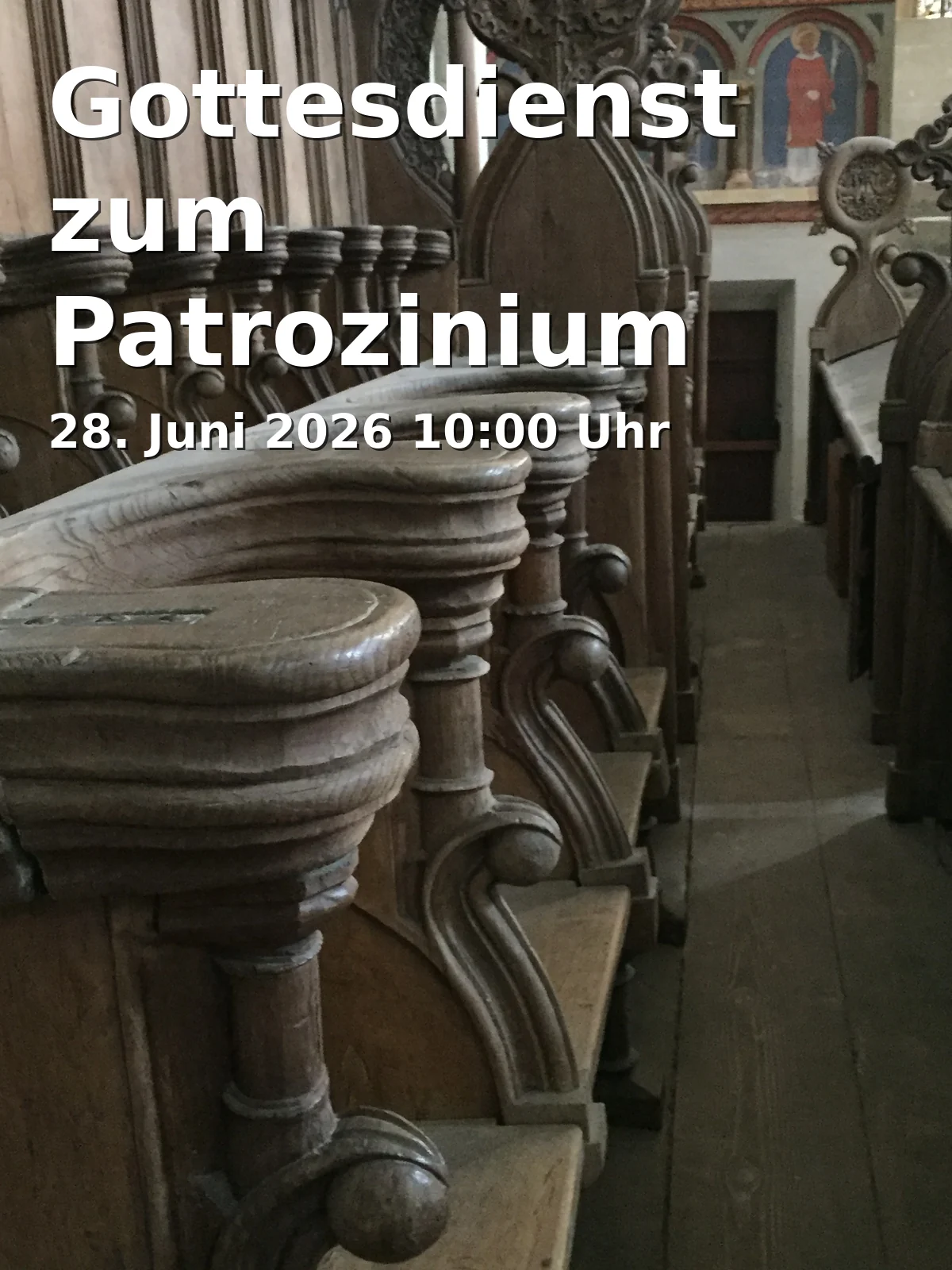
Service for the Feast of the Patron Saint
Festive service for the Feast of the Patron Saint in Utting: Liturgy, church choir, and church café connect faith and community. 28.06.2026, 10 AM. #Church #Utting
Exhibition 'Flair of the Fleeting' in Dießen
Experience the fascinating exhibition 'Flair of the Fleeting' by Rosina Zimmermann and Gabriele Strehlau at the Cultural Forum Blue House in Dießen.
Frequently Asked Questions
Reviews
No reviews found