
Eresing
86941 Eresing-St. Ottilien, Deutschland
Herz-Jesu Monastery Church | History & Services
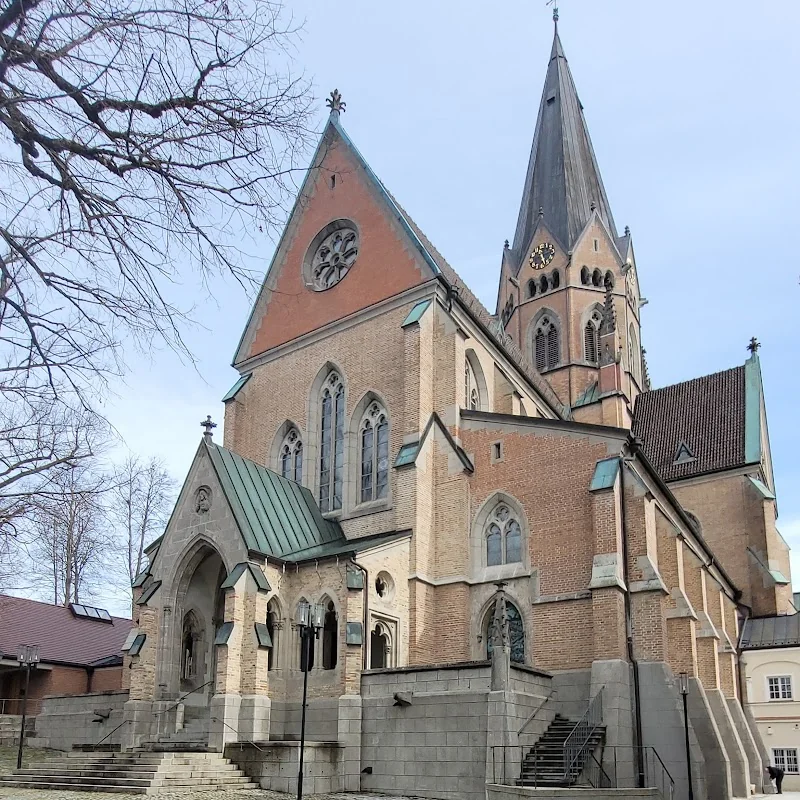
The Herz-Jesu Monastery Church in St. Ottilien is not only a striking building but also the liturgical heart of the Archabbey and a place where monastic silence, music, and lived hospitality come together. The extensive monastery village has developed over more than a hundred years; the church was built in a neo-Gothic style according to plans by Hans Schurr and prominently features its 75-meter tower, which is visible from afar. Those looking for a monastery church that combines history, prayer, and visitor friendliness will find an extraordinary place here in a quiet location near Eresing. ([erzabtei.de](https://erzabtei.de/kloster))
History and Architecture of the Herz-Jesu Monastery Church
The history of the Herz-Jesu Monastery Church is closely linked to the growth of the Archabbey of St. Ottilien. According to the official monastery chronicle, the church was built from 1897 to 1899 and consecrated on June 29, 1903. The building is oriented towards medieval Cistercian models, characterized by a clear, monastically influenced design language that does not rely on overload but on dignity, order, and spiritual gathering. The Munich architect Hans Schurr designed a neo-Gothic church, whose massive crossing tower at 75 meters high dominates the entire monastery grounds and is visible from a considerable distance. The combination of neo-Gothic structure, restrained color scheme, and calm interior gives the church a quiet, almost contemplative presence that precisely describes the character of the place. ([erzabtei.de](https://erzabtei.de/kloster))
The integration of the church into the overall complex is also remarkable. To the south and east, it is flanked by monastery buildings, which include the chapter house, postulancy, novitiate, and refectory. To the west, residential cells, guest areas, and administrative rooms are adjacent, while to the north, the Ottilien Chapel and the retreat house complement the picture. Thus, the church is not isolated but deliberately designed as the center of an entire monastic life world. This is precisely what makes its charm: it stands not only for sacred architecture but also for the everyday life of a Benedictine monastery village, where prayer, work, education, and hospitality are closely intertwined. Therefore, anyone visiting the monastery church also experiences the order of a grown community and the history of a place that has developed from monastic life. ([erzabtei.de](https://erzabtei.de/kloster))
Services, Prayer, and Gregorian Chant
The Herz-Jesu Monastery Church is not an ordinary parish church but the abbey church of the missionary Benedictines of St. Ottilien. Nevertheless, or precisely because of this, many guests come to the services because they want to experience a dignified liturgy and Gregorian chant here. The official Archabbey describes the church as a center for the monks' exchange with God and emphasizes that visitors are warmly invited to the prayer times. For many people, this combination of monastic tranquility, open doors, and binding liturgy is the reason why they visit St. Ottilien. The church is intentionally a place where not only community life but also spiritual searching and personal retreat can unfold. ([erzabtei.de](https://erzabtei.de/kloster))
Particularly defining is the open attitude towards guests. The Archabbey explicitly invites people of all religious affiliations to participate in courses, retreats, or simply in the prayer times at the monastery church. The liturgical life is complemented by regular formats such as the monthly youth vespers, which take place on the first Friday of each month in the Herz-Jesu Church and are aimed at young people and young adults. Additionally, there are major feasts, convent services, and other services throughout the year, which are announced on the Archabbey's event page. So, anyone searching for St. Ottilien service times or a place for quiet devotion will find here a liturgical offering that connects tradition and present and makes the church an experience of a living spiritual space. ([erzabtei.de](https://erzabtei.de/gaesteundkurse))
The monastic prayer culture also remains present digitally. The Archabbey's pages refer to live prayer times and an audio stream, allowing interested individuals to follow the rhythm of the monastery not only on-site but also from afar. This aligns with the overall orientation of the house: the church is not merely a sight but the place where the Benedictine Liturgy of the Hours, the Eucharist, and the quiet presence of the convent converge. This gives the visit a dual quality: it is, on one hand, an architectural and cultural impression, and on the other, a concrete access to a lived monastic spirituality that remains visible in St. Ottilien to this day. ([erzabtei.de](https://www.erzabtei.de/?page=0&utm_source=openai))
Arrival, Train Station, and Parking in St. Ottilien
St. Ottilien is remarkably well-connected for arrival, even though the place deliberately appears quiet and rural. The official corporate and monastery information describes St. Ottilien as a location about 40 kilometers west of Munich and 35 kilometers south of Augsburg, roughly halfway between Landsberg and Fürstenfeldbruck. The monastery village is located on the A96 towards Munich-Lindau and has its own train station on the Augsburg-Weilheim railway line. Additionally, Geltendorf station is only about two kilometers away and can be reached on foot in about 20 minutes. This location makes the monastery church easily accessible for both regional visitors and day guests from the greater Munich and Augsburg area. ([erzabtei.de](https://www.erzabtei.de/sites/default/files/konzerte/OttilianerKonzertprogramm2026.pdf?utm_source=openai))
Those arriving by train can choose between the direct stop at St. Ottilien and Geltendorf station. The official arrival description mentions the route for pedestrians from Geltendorf via the underpass and then a pedestrian alley to St. Ottilien; a taxi connection is usually also possible. Those coming by car should take the A96 and choose the Windach or Schöffelding exit, then continue towards Eresing and St. Ottilien. For many visitors, this combination of train connection and proximity to the highway is a practical advantage, as it allows for a flexible visit to the monastery as a day trip or as part of a larger Ammersee or Landsberg tour. ([erzabtei.de](https://www.erzabtei.de/sites/default/files/konzerte/OttilianerKonzertprogramm2026.pdf?utm_source=openai))
There are also specific guidelines for parking. The official monastery plan indicates a parking lot on the premises, which makes orientation easier for guests. Furthermore, the Archabbey reports that since 2016, a northern parking lot for motorhome travelers has been opened, and in event contexts, the parking lot at the monastery guesthouse is occasionally mentioned as a meeting point. Additionally, since 2013, all buildings in St. Ottilien have house numbers to facilitate orientation on the premises for visitors. For searching users looking for St. Ottilien parking or a clear route description, this is an important practical advantage: arrival is not only possible but systematically prepared through official signage, house numbers, and parking information. ([erzabtei.de](https://erzabtei.de/klosterplan?utm_source=openai))
Events, Youth Vespers, and Concerts
The Herz-Jesu Monastery Church is a place of prayer but also a space for special events that go far beyond the classic service. On the official event page of the Archabbey, major feasts, pilgrimages, profession anniversaries, youth vespers, and other liturgical dates can be found. It is particularly striking that the church is not understood as a closed interior space but as an open center of a lively monastery village. For visitors searching for St. Ottilien events or a special spiritual occurrence, a varied annual cycle unfolds here, supported by liturgy yet appealing to different target groups. The Archabbey continuously publishes these dates, making it visible that the church is not only historically significant but also currently active. ([erzabtei.de](https://erzabtei.de/veranstaltungen.html?utm_source=openai))
A particularly illustrative example is the monthly youth vesper in the Herz-Jesu Church. It is aimed at young people and young adults and combines communal singing and praying with a simple yet clear spiritual framework. At the same time, concerts are regularly held in the monastery church in St. Ottilien. The Archabbey reports, for example, about a Liberation Concert as part of the Ammersee Serenade that took place in the church and commemorated the liberation concert of the DP Hospital 80 years ago. The concert programs of the house also list the monastery church as a concert venue. Thus, the church is not only a liturgical space but also a place where music, memory, and monastic atmosphere come together. ([erzabtei.de](https://erzabtei.de/veranstaltungen.html?utm_source=openai))
Additionally, the cultural openness of the entire monastery complex is noteworthy. The Archabbey refers to art exhibitions of the monastery gallery, lectures, monastic festivals, and a variety of other formats that make the place attractive for different interest groups. Therefore, anyone who wants to see not just a church but experience a lively spiritual and cultural microcosm will find it here. For SEO searches, this is important because terms like program, events, youth vesper, concert, and service times in St. Ottilien actually refer to a real offering. The Herz-Jesu Monastery Church thus represents a place with both tradition and present: it remains a sacred center while also opening up to people seeking music, faith, and tranquility in a special setting. ([erzabtei.de](https://erzabtei.de/veranstaltungen?utm_source=openai))
Monastery Complex, Guest House, and Visitor Offers
St. Ottilien is not just a single church but a developed monastery village with an extraordinarily dense mix of spiritual life, education, work, and hospitality. The official history describes the place as a complex with a gymnasium, retreat and guest houses, publishing house, workshops, agriculture, and horticulture. Additionally, the monastery plan shows how closely the monk community, school, culture, craftsmanship, and provision lie side by side. This is particularly interesting for visitors because the Herz-Jesu Monastery Church always serves as an entrance to a larger experience: those who visit the church also discover the structure of a functioning monastery operation and the diversity of a place that is not museum-like but lives from daily work. ([erzabtei.de](https://erzabtei.de/geschichte))
The Archabbey emphasizes that guests and visitors are welcome regardless of their religious affiliation. The guest house aims not just to be a place for overnight stays but a place where one can experience the monastic rhythm and atmosphere. Additionally, there are course offerings, retreats, conversation opportunities, and quiet spaces, including the Ottilien Chapel and two meditation rooms. For those planning more than a short visit, there are also content and spatially suitable offers for a longer stay. This is an important added value, especially for people seeking peace, spiritual orientation, or a conscious pause. The monastery church thus becomes the starting point of a whole visitor experience that connects prayer, retreat, and encounter. ([erzabtei.de](https://erzabtei.de/gaesteundkurse))
The orientation on the premises is also clearly structured. Since January 1, 2013, all buildings in St. Ottilien have house numbers so that visitors can find their way more easily and mail can be delivered clearly. For guests, this means: monastery plan, signposts, and house number system make the large area surprisingly accessible. Among the defining places of the complex are, in addition to the Herz-Jesu Church, the Mission Museum, the Ottilien Chapel, the guest house, the monastery inn, the monastery shop, and other facilities. Those planning a stay can thus combine a visit to the church with a tour of the grounds and experience St. Ottilien not as a single object but as a multifaceted monastery space with clear internal order. ([erzabtei.de](https://erzabtei.de/klosterplan?utm_source=openai))
Bells, Mission Museum, and Quiet Particularities
A special part of the history of the monastery church is its bells. The official bell page reports that the newly built Herz-Jesu Church initially had no bells at its consecration in 1903. The first bell was cast in 1905, and its sound was described as very good and festive. Later, the bells were removed during World War II, and after the return of the monastery, a new set of bells was created in several stages, including the Benedictus bell and the large Salvator bell, which was installed in the tower in 1949. This bell history shows that the church plays a significant role not only architecturally but also acoustically for the monastery village. The ringing is part of the prayer rhythm, remembrance, and festive order of the place. ([erzabtei.de](https://erzabtei.de/glocken.html))
Another highlight is the Mission Museum, which is located in the basement of the sacristy building. Thus, the Herz-Jesu Monastery Church connects its sacred function with the history of missions and the worldwide activities of the missionary Benedictines. Those interested in monastic life, religious history, and the role of St. Ottilien as a mission center will find a densely packed point of reference here. The church is therefore not only a space for liturgical celebrations but also a place where the identity of the Archabbey becomes visible: prayer, mission, education, and hospitality interweave. This is precisely what gives the entire complex its special aura. ([erzabtei.de](https://erzabtei.de/kloster))
Therefore, those visiting St. Ottilien experience more than just a single sight. The Herz-Jesu Monastery Church stands for an attitude that combines openness with monastic focus: the church is open, guests are welcome, services are lively, and at the same time, the place remains characterized by silence and dignity. Whether one comes for the history, for the Gregorian chant, for a youth vesper, for a concert, or simply for the special atmosphere, the Archabbey offers a clear, authentic framework. This is precisely what makes the Herz-Jesu Monastery Church a destination that is not only looked at but experienced. ([erzabtei.de](https://erzabtei.de/kloster))
Sources:
Mehr anzeigenWeniger anzeigen
Herz-Jesu Monastery Church | History & Services
The Herz-Jesu Monastery Church in St. Ottilien is not only a striking building but also the liturgical heart of the Archabbey and a place where monastic silence, music, and lived hospitality come together. The extensive monastery village has developed over more than a hundred years; the church was built in a neo-Gothic style according to plans by Hans Schurr and prominently features its 75-meter tower, which is visible from afar. Those looking for a monastery church that combines history, prayer, and visitor friendliness will find an extraordinary place here in a quiet location near Eresing. ([erzabtei.de](https://erzabtei.de/kloster))
History and Architecture of the Herz-Jesu Monastery Church
The history of the Herz-Jesu Monastery Church is closely linked to the growth of the Archabbey of St. Ottilien. According to the official monastery chronicle, the church was built from 1897 to 1899 and consecrated on June 29, 1903. The building is oriented towards medieval Cistercian models, characterized by a clear, monastically influenced design language that does not rely on overload but on dignity, order, and spiritual gathering. The Munich architect Hans Schurr designed a neo-Gothic church, whose massive crossing tower at 75 meters high dominates the entire monastery grounds and is visible from a considerable distance. The combination of neo-Gothic structure, restrained color scheme, and calm interior gives the church a quiet, almost contemplative presence that precisely describes the character of the place. ([erzabtei.de](https://erzabtei.de/kloster))
The integration of the church into the overall complex is also remarkable. To the south and east, it is flanked by monastery buildings, which include the chapter house, postulancy, novitiate, and refectory. To the west, residential cells, guest areas, and administrative rooms are adjacent, while to the north, the Ottilien Chapel and the retreat house complement the picture. Thus, the church is not isolated but deliberately designed as the center of an entire monastic life world. This is precisely what makes its charm: it stands not only for sacred architecture but also for the everyday life of a Benedictine monastery village, where prayer, work, education, and hospitality are closely intertwined. Therefore, anyone visiting the monastery church also experiences the order of a grown community and the history of a place that has developed from monastic life. ([erzabtei.de](https://erzabtei.de/kloster))
Services, Prayer, and Gregorian Chant
The Herz-Jesu Monastery Church is not an ordinary parish church but the abbey church of the missionary Benedictines of St. Ottilien. Nevertheless, or precisely because of this, many guests come to the services because they want to experience a dignified liturgy and Gregorian chant here. The official Archabbey describes the church as a center for the monks' exchange with God and emphasizes that visitors are warmly invited to the prayer times. For many people, this combination of monastic tranquility, open doors, and binding liturgy is the reason why they visit St. Ottilien. The church is intentionally a place where not only community life but also spiritual searching and personal retreat can unfold. ([erzabtei.de](https://erzabtei.de/kloster))
Particularly defining is the open attitude towards guests. The Archabbey explicitly invites people of all religious affiliations to participate in courses, retreats, or simply in the prayer times at the monastery church. The liturgical life is complemented by regular formats such as the monthly youth vespers, which take place on the first Friday of each month in the Herz-Jesu Church and are aimed at young people and young adults. Additionally, there are major feasts, convent services, and other services throughout the year, which are announced on the Archabbey's event page. So, anyone searching for St. Ottilien service times or a place for quiet devotion will find here a liturgical offering that connects tradition and present and makes the church an experience of a living spiritual space. ([erzabtei.de](https://erzabtei.de/gaesteundkurse))
The monastic prayer culture also remains present digitally. The Archabbey's pages refer to live prayer times and an audio stream, allowing interested individuals to follow the rhythm of the monastery not only on-site but also from afar. This aligns with the overall orientation of the house: the church is not merely a sight but the place where the Benedictine Liturgy of the Hours, the Eucharist, and the quiet presence of the convent converge. This gives the visit a dual quality: it is, on one hand, an architectural and cultural impression, and on the other, a concrete access to a lived monastic spirituality that remains visible in St. Ottilien to this day. ([erzabtei.de](https://www.erzabtei.de/?page=0&utm_source=openai))
Arrival, Train Station, and Parking in St. Ottilien
St. Ottilien is remarkably well-connected for arrival, even though the place deliberately appears quiet and rural. The official corporate and monastery information describes St. Ottilien as a location about 40 kilometers west of Munich and 35 kilometers south of Augsburg, roughly halfway between Landsberg and Fürstenfeldbruck. The monastery village is located on the A96 towards Munich-Lindau and has its own train station on the Augsburg-Weilheim railway line. Additionally, Geltendorf station is only about two kilometers away and can be reached on foot in about 20 minutes. This location makes the monastery church easily accessible for both regional visitors and day guests from the greater Munich and Augsburg area. ([erzabtei.de](https://www.erzabtei.de/sites/default/files/konzerte/OttilianerKonzertprogramm2026.pdf?utm_source=openai))
Those arriving by train can choose between the direct stop at St. Ottilien and Geltendorf station. The official arrival description mentions the route for pedestrians from Geltendorf via the underpass and then a pedestrian alley to St. Ottilien; a taxi connection is usually also possible. Those coming by car should take the A96 and choose the Windach or Schöffelding exit, then continue towards Eresing and St. Ottilien. For many visitors, this combination of train connection and proximity to the highway is a practical advantage, as it allows for a flexible visit to the monastery as a day trip or as part of a larger Ammersee or Landsberg tour. ([erzabtei.de](https://www.erzabtei.de/sites/default/files/konzerte/OttilianerKonzertprogramm2026.pdf?utm_source=openai))
There are also specific guidelines for parking. The official monastery plan indicates a parking lot on the premises, which makes orientation easier for guests. Furthermore, the Archabbey reports that since 2016, a northern parking lot for motorhome travelers has been opened, and in event contexts, the parking lot at the monastery guesthouse is occasionally mentioned as a meeting point. Additionally, since 2013, all buildings in St. Ottilien have house numbers to facilitate orientation on the premises for visitors. For searching users looking for St. Ottilien parking or a clear route description, this is an important practical advantage: arrival is not only possible but systematically prepared through official signage, house numbers, and parking information. ([erzabtei.de](https://erzabtei.de/klosterplan?utm_source=openai))
Events, Youth Vespers, and Concerts
The Herz-Jesu Monastery Church is a place of prayer but also a space for special events that go far beyond the classic service. On the official event page of the Archabbey, major feasts, pilgrimages, profession anniversaries, youth vespers, and other liturgical dates can be found. It is particularly striking that the church is not understood as a closed interior space but as an open center of a lively monastery village. For visitors searching for St. Ottilien events or a special spiritual occurrence, a varied annual cycle unfolds here, supported by liturgy yet appealing to different target groups. The Archabbey continuously publishes these dates, making it visible that the church is not only historically significant but also currently active. ([erzabtei.de](https://erzabtei.de/veranstaltungen.html?utm_source=openai))
A particularly illustrative example is the monthly youth vesper in the Herz-Jesu Church. It is aimed at young people and young adults and combines communal singing and praying with a simple yet clear spiritual framework. At the same time, concerts are regularly held in the monastery church in St. Ottilien. The Archabbey reports, for example, about a Liberation Concert as part of the Ammersee Serenade that took place in the church and commemorated the liberation concert of the DP Hospital 80 years ago. The concert programs of the house also list the monastery church as a concert venue. Thus, the church is not only a liturgical space but also a place where music, memory, and monastic atmosphere come together. ([erzabtei.de](https://erzabtei.de/veranstaltungen.html?utm_source=openai))
Additionally, the cultural openness of the entire monastery complex is noteworthy. The Archabbey refers to art exhibitions of the monastery gallery, lectures, monastic festivals, and a variety of other formats that make the place attractive for different interest groups. Therefore, anyone who wants to see not just a church but experience a lively spiritual and cultural microcosm will find it here. For SEO searches, this is important because terms like program, events, youth vesper, concert, and service times in St. Ottilien actually refer to a real offering. The Herz-Jesu Monastery Church thus represents a place with both tradition and present: it remains a sacred center while also opening up to people seeking music, faith, and tranquility in a special setting. ([erzabtei.de](https://erzabtei.de/veranstaltungen?utm_source=openai))
Monastery Complex, Guest House, and Visitor Offers
St. Ottilien is not just a single church but a developed monastery village with an extraordinarily dense mix of spiritual life, education, work, and hospitality. The official history describes the place as a complex with a gymnasium, retreat and guest houses, publishing house, workshops, agriculture, and horticulture. Additionally, the monastery plan shows how closely the monk community, school, culture, craftsmanship, and provision lie side by side. This is particularly interesting for visitors because the Herz-Jesu Monastery Church always serves as an entrance to a larger experience: those who visit the church also discover the structure of a functioning monastery operation and the diversity of a place that is not museum-like but lives from daily work. ([erzabtei.de](https://erzabtei.de/geschichte))
The Archabbey emphasizes that guests and visitors are welcome regardless of their religious affiliation. The guest house aims not just to be a place for overnight stays but a place where one can experience the monastic rhythm and atmosphere. Additionally, there are course offerings, retreats, conversation opportunities, and quiet spaces, including the Ottilien Chapel and two meditation rooms. For those planning more than a short visit, there are also content and spatially suitable offers for a longer stay. This is an important added value, especially for people seeking peace, spiritual orientation, or a conscious pause. The monastery church thus becomes the starting point of a whole visitor experience that connects prayer, retreat, and encounter. ([erzabtei.de](https://erzabtei.de/gaesteundkurse))
The orientation on the premises is also clearly structured. Since January 1, 2013, all buildings in St. Ottilien have house numbers so that visitors can find their way more easily and mail can be delivered clearly. For guests, this means: monastery plan, signposts, and house number system make the large area surprisingly accessible. Among the defining places of the complex are, in addition to the Herz-Jesu Church, the Mission Museum, the Ottilien Chapel, the guest house, the monastery inn, the monastery shop, and other facilities. Those planning a stay can thus combine a visit to the church with a tour of the grounds and experience St. Ottilien not as a single object but as a multifaceted monastery space with clear internal order. ([erzabtei.de](https://erzabtei.de/klosterplan?utm_source=openai))
Bells, Mission Museum, and Quiet Particularities
A special part of the history of the monastery church is its bells. The official bell page reports that the newly built Herz-Jesu Church initially had no bells at its consecration in 1903. The first bell was cast in 1905, and its sound was described as very good and festive. Later, the bells were removed during World War II, and after the return of the monastery, a new set of bells was created in several stages, including the Benedictus bell and the large Salvator bell, which was installed in the tower in 1949. This bell history shows that the church plays a significant role not only architecturally but also acoustically for the monastery village. The ringing is part of the prayer rhythm, remembrance, and festive order of the place. ([erzabtei.de](https://erzabtei.de/glocken.html))
Another highlight is the Mission Museum, which is located in the basement of the sacristy building. Thus, the Herz-Jesu Monastery Church connects its sacred function with the history of missions and the worldwide activities of the missionary Benedictines. Those interested in monastic life, religious history, and the role of St. Ottilien as a mission center will find a densely packed point of reference here. The church is therefore not only a space for liturgical celebrations but also a place where the identity of the Archabbey becomes visible: prayer, mission, education, and hospitality interweave. This is precisely what gives the entire complex its special aura. ([erzabtei.de](https://erzabtei.de/kloster))
Therefore, those visiting St. Ottilien experience more than just a single sight. The Herz-Jesu Monastery Church stands for an attitude that combines openness with monastic focus: the church is open, guests are welcome, services are lively, and at the same time, the place remains characterized by silence and dignity. Whether one comes for the history, for the Gregorian chant, for a youth vesper, for a concert, or simply for the special atmosphere, the Archabbey offers a clear, authentic framework. This is precisely what makes the Herz-Jesu Monastery Church a destination that is not only looked at but experienced. ([erzabtei.de](https://erzabtei.de/kloster))
Sources:
Herz-Jesu Monastery Church | History & Services
The Herz-Jesu Monastery Church in St. Ottilien is not only a striking building but also the liturgical heart of the Archabbey and a place where monastic silence, music, and lived hospitality come together. The extensive monastery village has developed over more than a hundred years; the church was built in a neo-Gothic style according to plans by Hans Schurr and prominently features its 75-meter tower, which is visible from afar. Those looking for a monastery church that combines history, prayer, and visitor friendliness will find an extraordinary place here in a quiet location near Eresing. ([erzabtei.de](https://erzabtei.de/kloster))
History and Architecture of the Herz-Jesu Monastery Church
The history of the Herz-Jesu Monastery Church is closely linked to the growth of the Archabbey of St. Ottilien. According to the official monastery chronicle, the church was built from 1897 to 1899 and consecrated on June 29, 1903. The building is oriented towards medieval Cistercian models, characterized by a clear, monastically influenced design language that does not rely on overload but on dignity, order, and spiritual gathering. The Munich architect Hans Schurr designed a neo-Gothic church, whose massive crossing tower at 75 meters high dominates the entire monastery grounds and is visible from a considerable distance. The combination of neo-Gothic structure, restrained color scheme, and calm interior gives the church a quiet, almost contemplative presence that precisely describes the character of the place. ([erzabtei.de](https://erzabtei.de/kloster))
The integration of the church into the overall complex is also remarkable. To the south and east, it is flanked by monastery buildings, which include the chapter house, postulancy, novitiate, and refectory. To the west, residential cells, guest areas, and administrative rooms are adjacent, while to the north, the Ottilien Chapel and the retreat house complement the picture. Thus, the church is not isolated but deliberately designed as the center of an entire monastic life world. This is precisely what makes its charm: it stands not only for sacred architecture but also for the everyday life of a Benedictine monastery village, where prayer, work, education, and hospitality are closely intertwined. Therefore, anyone visiting the monastery church also experiences the order of a grown community and the history of a place that has developed from monastic life. ([erzabtei.de](https://erzabtei.de/kloster))
Services, Prayer, and Gregorian Chant
The Herz-Jesu Monastery Church is not an ordinary parish church but the abbey church of the missionary Benedictines of St. Ottilien. Nevertheless, or precisely because of this, many guests come to the services because they want to experience a dignified liturgy and Gregorian chant here. The official Archabbey describes the church as a center for the monks' exchange with God and emphasizes that visitors are warmly invited to the prayer times. For many people, this combination of monastic tranquility, open doors, and binding liturgy is the reason why they visit St. Ottilien. The church is intentionally a place where not only community life but also spiritual searching and personal retreat can unfold. ([erzabtei.de](https://erzabtei.de/kloster))
Particularly defining is the open attitude towards guests. The Archabbey explicitly invites people of all religious affiliations to participate in courses, retreats, or simply in the prayer times at the monastery church. The liturgical life is complemented by regular formats such as the monthly youth vespers, which take place on the first Friday of each month in the Herz-Jesu Church and are aimed at young people and young adults. Additionally, there are major feasts, convent services, and other services throughout the year, which are announced on the Archabbey's event page. So, anyone searching for St. Ottilien service times or a place for quiet devotion will find here a liturgical offering that connects tradition and present and makes the church an experience of a living spiritual space. ([erzabtei.de](https://erzabtei.de/gaesteundkurse))
The monastic prayer culture also remains present digitally. The Archabbey's pages refer to live prayer times and an audio stream, allowing interested individuals to follow the rhythm of the monastery not only on-site but also from afar. This aligns with the overall orientation of the house: the church is not merely a sight but the place where the Benedictine Liturgy of the Hours, the Eucharist, and the quiet presence of the convent converge. This gives the visit a dual quality: it is, on one hand, an architectural and cultural impression, and on the other, a concrete access to a lived monastic spirituality that remains visible in St. Ottilien to this day. ([erzabtei.de](https://www.erzabtei.de/?page=0&utm_source=openai))
Arrival, Train Station, and Parking in St. Ottilien
St. Ottilien is remarkably well-connected for arrival, even though the place deliberately appears quiet and rural. The official corporate and monastery information describes St. Ottilien as a location about 40 kilometers west of Munich and 35 kilometers south of Augsburg, roughly halfway between Landsberg and Fürstenfeldbruck. The monastery village is located on the A96 towards Munich-Lindau and has its own train station on the Augsburg-Weilheim railway line. Additionally, Geltendorf station is only about two kilometers away and can be reached on foot in about 20 minutes. This location makes the monastery church easily accessible for both regional visitors and day guests from the greater Munich and Augsburg area. ([erzabtei.de](https://www.erzabtei.de/sites/default/files/konzerte/OttilianerKonzertprogramm2026.pdf?utm_source=openai))
Those arriving by train can choose between the direct stop at St. Ottilien and Geltendorf station. The official arrival description mentions the route for pedestrians from Geltendorf via the underpass and then a pedestrian alley to St. Ottilien; a taxi connection is usually also possible. Those coming by car should take the A96 and choose the Windach or Schöffelding exit, then continue towards Eresing and St. Ottilien. For many visitors, this combination of train connection and proximity to the highway is a practical advantage, as it allows for a flexible visit to the monastery as a day trip or as part of a larger Ammersee or Landsberg tour. ([erzabtei.de](https://www.erzabtei.de/sites/default/files/konzerte/OttilianerKonzertprogramm2026.pdf?utm_source=openai))
There are also specific guidelines for parking. The official monastery plan indicates a parking lot on the premises, which makes orientation easier for guests. Furthermore, the Archabbey reports that since 2016, a northern parking lot for motorhome travelers has been opened, and in event contexts, the parking lot at the monastery guesthouse is occasionally mentioned as a meeting point. Additionally, since 2013, all buildings in St. Ottilien have house numbers to facilitate orientation on the premises for visitors. For searching users looking for St. Ottilien parking or a clear route description, this is an important practical advantage: arrival is not only possible but systematically prepared through official signage, house numbers, and parking information. ([erzabtei.de](https://erzabtei.de/klosterplan?utm_source=openai))
Events, Youth Vespers, and Concerts
The Herz-Jesu Monastery Church is a place of prayer but also a space for special events that go far beyond the classic service. On the official event page of the Archabbey, major feasts, pilgrimages, profession anniversaries, youth vespers, and other liturgical dates can be found. It is particularly striking that the church is not understood as a closed interior space but as an open center of a lively monastery village. For visitors searching for St. Ottilien events or a special spiritual occurrence, a varied annual cycle unfolds here, supported by liturgy yet appealing to different target groups. The Archabbey continuously publishes these dates, making it visible that the church is not only historically significant but also currently active. ([erzabtei.de](https://erzabtei.de/veranstaltungen.html?utm_source=openai))
A particularly illustrative example is the monthly youth vesper in the Herz-Jesu Church. It is aimed at young people and young adults and combines communal singing and praying with a simple yet clear spiritual framework. At the same time, concerts are regularly held in the monastery church in St. Ottilien. The Archabbey reports, for example, about a Liberation Concert as part of the Ammersee Serenade that took place in the church and commemorated the liberation concert of the DP Hospital 80 years ago. The concert programs of the house also list the monastery church as a concert venue. Thus, the church is not only a liturgical space but also a place where music, memory, and monastic atmosphere come together. ([erzabtei.de](https://erzabtei.de/veranstaltungen.html?utm_source=openai))
Additionally, the cultural openness of the entire monastery complex is noteworthy. The Archabbey refers to art exhibitions of the monastery gallery, lectures, monastic festivals, and a variety of other formats that make the place attractive for different interest groups. Therefore, anyone who wants to see not just a church but experience a lively spiritual and cultural microcosm will find it here. For SEO searches, this is important because terms like program, events, youth vesper, concert, and service times in St. Ottilien actually refer to a real offering. The Herz-Jesu Monastery Church thus represents a place with both tradition and present: it remains a sacred center while also opening up to people seeking music, faith, and tranquility in a special setting. ([erzabtei.de](https://erzabtei.de/veranstaltungen?utm_source=openai))
Monastery Complex, Guest House, and Visitor Offers
St. Ottilien is not just a single church but a developed monastery village with an extraordinarily dense mix of spiritual life, education, work, and hospitality. The official history describes the place as a complex with a gymnasium, retreat and guest houses, publishing house, workshops, agriculture, and horticulture. Additionally, the monastery plan shows how closely the monk community, school, culture, craftsmanship, and provision lie side by side. This is particularly interesting for visitors because the Herz-Jesu Monastery Church always serves as an entrance to a larger experience: those who visit the church also discover the structure of a functioning monastery operation and the diversity of a place that is not museum-like but lives from daily work. ([erzabtei.de](https://erzabtei.de/geschichte))
The Archabbey emphasizes that guests and visitors are welcome regardless of their religious affiliation. The guest house aims not just to be a place for overnight stays but a place where one can experience the monastic rhythm and atmosphere. Additionally, there are course offerings, retreats, conversation opportunities, and quiet spaces, including the Ottilien Chapel and two meditation rooms. For those planning more than a short visit, there are also content and spatially suitable offers for a longer stay. This is an important added value, especially for people seeking peace, spiritual orientation, or a conscious pause. The monastery church thus becomes the starting point of a whole visitor experience that connects prayer, retreat, and encounter. ([erzabtei.de](https://erzabtei.de/gaesteundkurse))
The orientation on the premises is also clearly structured. Since January 1, 2013, all buildings in St. Ottilien have house numbers so that visitors can find their way more easily and mail can be delivered clearly. For guests, this means: monastery plan, signposts, and house number system make the large area surprisingly accessible. Among the defining places of the complex are, in addition to the Herz-Jesu Church, the Mission Museum, the Ottilien Chapel, the guest house, the monastery inn, the monastery shop, and other facilities. Those planning a stay can thus combine a visit to the church with a tour of the grounds and experience St. Ottilien not as a single object but as a multifaceted monastery space with clear internal order. ([erzabtei.de](https://erzabtei.de/klosterplan?utm_source=openai))
Bells, Mission Museum, and Quiet Particularities
A special part of the history of the monastery church is its bells. The official bell page reports that the newly built Herz-Jesu Church initially had no bells at its consecration in 1903. The first bell was cast in 1905, and its sound was described as very good and festive. Later, the bells were removed during World War II, and after the return of the monastery, a new set of bells was created in several stages, including the Benedictus bell and the large Salvator bell, which was installed in the tower in 1949. This bell history shows that the church plays a significant role not only architecturally but also acoustically for the monastery village. The ringing is part of the prayer rhythm, remembrance, and festive order of the place. ([erzabtei.de](https://erzabtei.de/glocken.html))
Another highlight is the Mission Museum, which is located in the basement of the sacristy building. Thus, the Herz-Jesu Monastery Church connects its sacred function with the history of missions and the worldwide activities of the missionary Benedictines. Those interested in monastic life, religious history, and the role of St. Ottilien as a mission center will find a densely packed point of reference here. The church is therefore not only a space for liturgical celebrations but also a place where the identity of the Archabbey becomes visible: prayer, mission, education, and hospitality interweave. This is precisely what gives the entire complex its special aura. ([erzabtei.de](https://erzabtei.de/kloster))
Therefore, those visiting St. Ottilien experience more than just a single sight. The Herz-Jesu Monastery Church stands for an attitude that combines openness with monastic focus: the church is open, guests are welcome, services are lively, and at the same time, the place remains characterized by silence and dignity. Whether one comes for the history, for the Gregorian chant, for a youth vesper, for a concert, or simply for the special atmosphere, the Archabbey offers a clear, authentic framework. This is precisely what makes the Herz-Jesu Monastery Church a destination that is not only looked at but experienced. ([erzabtei.de](https://erzabtei.de/kloster))
Sources:
Frequently Asked Questions
Reviews
No reviews found