
Dießen am Ammersee
Moosflecklweg 1, 86911 Dießen am Ammersee, Deutschland
Chapel of Our Lady | Bierdorf & Marian History
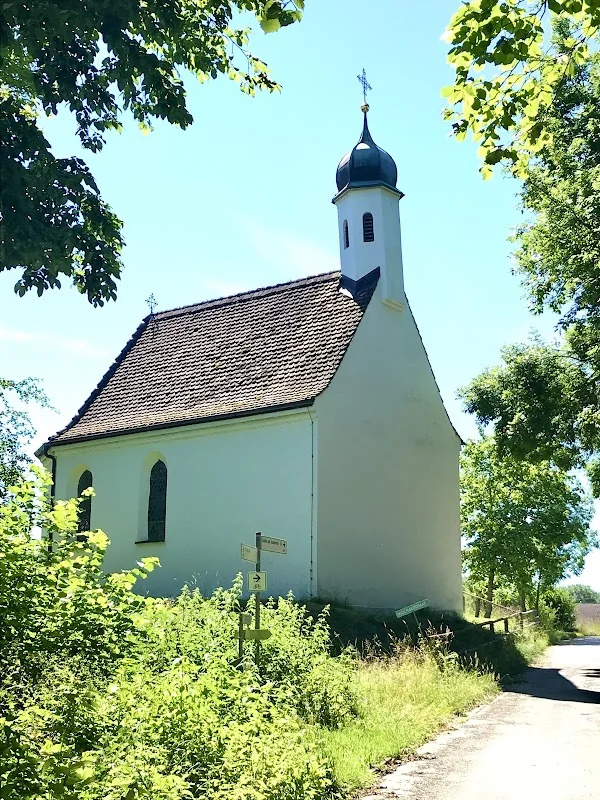
The Chapel of Our Lady of Visitation in Bierdorf is not a monumental event building, but a small, historically charged Marian site on a hill in the district of Bierdorf in Dießen am Ammersee. It is precisely this mix of location, age, state of preservation, and vibrant use that makes it so exciting for visitors: The chapel was built during the time of the Dießen monastery, was later preserved by Bierdorf farmers, and today serves as both a quiet place of devotion and a cultural anchor point in the chapel landscape around Lake Ammersee. Anyone traveling from Dießen towards Riederau quickly realizes that here stands not just a building, but a piece of regional identity that has been cared for, renewed, and filled with life over the centuries. ([ammerseerenade.de](https://www.ammerseerenade.de/home/kapellentag/westroute/kapelle-mariae-heimsuchung-bierdorf/))
History of the Chapel of Our Lady in Bierdorf
The historical depth of this chapel begins with its construction by the Dießen monastery between 1607 and 1609. The official representation of the municipality of Dießen states that the chapel was built in 1607; the AMMERSEErenade specifies the construction period as 1607 to 1609 and describes the location on a small hill in Bierdorf. Thus, the building belongs to the early Baroque chapels in western Upper Bavaria and at the same time to the structures that particularly clearly demonstrate the transition from monastic influence to peasant responsibility. For regional history, it is important that Bierdorf is not just a random place along the way, but a developed hamlet whose founding, according to tourist representation, dates back to around the year 1000 and which lies on an old Roman road. Thus, the chapel connects religious, transportation history, and village traditions in a small space. ([diessen.de](https://www.diessen.de/kultur-freizeit/kultur-geniessen/sehenswuerdigkeiten/kapellen))
Particularly formative is the history after the secularization. The Landsberg district explicitly describes that the chapel was to be abandoned and demolished during this phase, before six farmers from the hamlet of Bierdorf bought and saved it in an exemplary action. This decision is more than a footnote: it explains why the chapel still exists today not only as a monument but has remained a place of identity in family and village ownership. The district also emphasizes that the Bierdorf residents have been maintaining their chapel structurally for nearly 200 years and at the same time filling it with life. Regular services on special occasions keep the Marian devotion alive at the site. Exactly therein lies part of its fascination: the chapel is neither museum-frozen nor arbitrarily modernized, but a historical building with continuous religious and social use. ([landkreis-landsberg.de](https://www.landkreis-landsberg.de/literatur-zum-landkreis/))
Even the view of the community and tourism information shows how naturally the chapel is embedded in the image of Dießen. It appears in the municipal chapel overview and in the local map, its location is clearly described, and at the same time, it is placed in the much larger chapel culture of the Ammersee area. This is important from an SEO and content perspective because the search intent behind terms like chapel of our lady or chapel of visitation usually aims not just at a mere address but at origin, significance, and historical classification. Exactly here, Bierdorf provides a strong story: monastery construction, peasant rescue, decades of care, and a place that, despite its small size, carries remarkably much cultural memory. ([diessen.de](https://www.diessen.de/kultur-freizeit/kultur-geniessen/sehenswuerdigkeiten/kapellen))
Furnishings, Altar, and Onion Dome
The interior furnishings are one of the reasons why the chapel is repeatedly highlighted in professional and tourist descriptions. The AMMERSEErenade names characteristic elements such as a Renaissance door, a Gothic vault, Romanesque relief tiles, painted benches, and a unique peasant Baroque altar. Additionally, there is an altar from around 1606 and a figure of the Virgin Mary from around 1624. The municipality of Dießen adds that an unusually rich interior decoration has been preserved. The charm of this space lies precisely in the overlay of different epochs: Renaissance, Gothic, Romanesque, and peasant Baroque do not stand separately next to each other but together form a compact testimony of art and devotion. For visitors, this means that not only a single image or a single altarpiece is worth seeing, but the entire spatial structure. ([ammerseerenade.de](https://www.ammerseerenade.de/home/kapellentag/westroute/kapelle-mariae-heimsuchung-bierdorf/))
A particularly often mentioned detail is the onion dome. The chapel is described in the AMMERSEErenade as a building with the first onion dome in Upper Bavaria. This is a striking statement that immediately makes the historical special status of the building visible. This image is complemented by other material peculiarities: the door still has the original lock from 1607, and the floor comes from the burned Romanesque monastery church in Dießen. Such details are particularly valuable for monument enthusiasts because they show that the chapel not only appears old on the outside but has actually preserved numerous original and reused components. The renovation from 2010 to 2014 also belongs in this context, as it shows that the place has been actively maintained and professionally preserved without losing its historical character. ([ammerseerenade.de](https://www.ammerseerenade.de/home/kapellentag/westroute/kapelle-mariae-heimsuchung-bierdorf/))
Anyone looking at the furnishings also recognizes that the chapel was not conceived as an arbitrary village chapel. The Landsberg district designates it as a hamlet chapel from 1607 with the earliest preserved high altar of the 17th century in the district and with figures from the Weilheim sculptor tradition. This classification makes the significance for regional art history clear. The altar is not just a beautiful decoration but a core piece of art history of the entire ensemble. It is precisely the combination of an early-dated altar, precious interior furnishings, and small room size that explains why the chapel is repeatedly described as outstanding in professional texts, tourist information, and regional publications. It is an example of how concentrated art, faith, and local history can come together in Upper Bavaria in the 17th century. ([landkreis-landsberg.de](https://www.landkreis-landsberg.de/landkreis/kirchen-kapellen/))
Access and Location in Bierdorf
The location of the chapel is easily understandable for visitors and simultaneously typical for a historical hamlet chapel. The official address is Moosflecklweg 1 in 86911 Dießen am Ammersee, district of Bierdorf. The municipality describes the location as a small hill in Bierdorf, on the road from Dießen to Riederau with the turnoff to Bierdorf. The Schondorf tourism site adds that Bierdorf lies on an old Roman road and that the chapel is worth seeing inside. Therefore, anyone coming from Dießen or from the Riederau side reaches not only a single destination but moves through a landscape where road, village development, and historical pathways are closely interconnected. ([diessen.de](https://www.diessen.de/kultur-freizeit/kultur-geniessen/sehenswuerdigkeiten/kapellen))
For practical planning, it is important that the chapel functions more as a destination for a walk, a village round, or a cultural-historical discovery tour than as a large destination with event infrastructure. The sources do not mention a large parking lot or a modern hall access but locate the site within the developed structure of the hamlet. This fits the character of the building: the chapel should be experienced by reaching it via the small village road, the hill, and the historical context. Anyone visiting the Ammersee area can easily combine the route with other stops, such as the lakeshore region of Dießen, St. Alban, or the chapels and churches in the surrounding area. Thus, the journey itself becomes part of the experience, not just a technical side issue. ([schondorf-ammersee.de](https://www.schondorf-ammersee.de/kultur-freizeit/tourismus))
The chapel is also present in the regional path network. The Schondorf tourism description explicitly mentions Bierdorf along the Ammersee high trail and continues the descent towards the lakeshore and Dießen from there. This shows that the chapel does not stand isolated but lies in a landscape that is attractive for hikers, culture enthusiasts, and those seeking peace alike. Anyone who wants to experience Lake Ammersee not only with a promenade but also with its village and chapel paths finds a particularly strong stop in Bierdorf. The combination of a small height, historical path system, and rural embedding makes the location very characteristic. ([schondorf-ammersee.de](https://www.schondorf-ammersee.de/kultur-freizeit/tourismus))
Capacity, Use, and Special Occasions
With 50 seats, the chapel is deliberately small in size. This number is mentioned in the chapel day documents of the AMMERSEErenade and conveys very well what kind of space visitors can expect: not a large event venue, but a concentrated, intimate place with immediate proximity between architecture, art, and audience. Especially in the context of music, spoken contributions, or silent devotion, this size is ideal because it creates a dense atmosphere. The chapel is thus suitable for special formats where not mass but closeness and resonance count. At the same time, the seating capacity emphasizes that the historical character has been preserved and that the space has not been converted for maximum visitor numbers. ([ammerseerenade.de](https://www.ammerseerenade.de/home/kapellentag/westroute/kapelle-mariae-heimsuchung-bierdorf/))
The actual use is shaped by tradition. The Landsberg district emphasizes regular services on special occasions and describes that the Bierdorf residents have not only maintained their chapel for almost 200 years but also filled it with life. This means: the chapel is not a decommissioned museum object but a place that is supported by its surroundings. For search queries related to services Bierdorf or chapel services Bierdorf, this is the crucial information. It is less about a constantly open large operation and more about a religious gem that is liturgically used at selected times and remains anchored in the village community. ([landkreis-landsberg.de](https://www.landkreis-landsberg.de/literatur-zum-landkreis/))
Cultural formats have also found their place at this site. The chapel is listed in the AMMERSEErenade as a station of the chapel day, and the festival publications show that musical and spiritual encounters can take place there in a small setting. This is important for positioning in the SEO context: those searching for chapel day Ammersee or chapels at Lake Ammersee do not end up at an event hall in Bierdorf but at a place where music and history come together in a consciously small form. This framework is what makes it appealing. The chapel is large enough to be experienced and small enough to convey silence, concentration, and authentic closeness. ([ammerseerenade.de](https://www.ammerseerenade.de/wp-content/uploads/2023/08/Kapellentag_Folder_2023_RZ_web_compressed_neu.pdf))
Marian Devotion, Ownership, and Tradition
A central theme surrounding the chapel is the enduring Marian devotion in Bierdorf. The Landsberg district states very clearly that the Bierdorf residents not only maintain their chapel structurally but also fill it with life; this tradition has remained alive through regular services on special occasions. At the same time, the municipal representation points out that the chapel has been in the possession of the Bierdorf farmers since 1805. Thus, the ownership and usage history is unusually clear: an originally monastic building was taken over, preserved, and is still responsibly managed by the village community. For visitors, this is an important key to understanding the place, as the chapel is not only an artistic monument but also an expression of a peasant protective and responsibility community. ([landkreis-landsberg.de](https://www.landkreis-landsberg.de/literatur-zum-landkreis/))
This change of ownership also explains why the chapel remains so strongly connected to the identity of Bierdorf. The regional culture around Lake Ammersee thrives on such places where piety, local history, and willingness to care come together. The district emphasizes that this chapel has been treated extensively in historical and art historical contexts; it also refers to the numerous chapels in the district that are considered testimonies of a rich religious landscape. Bierdorf is one of the particularly prominent stations because here there is not only a beautiful building but also an exemplary preservation history. This makes the chapel interesting for cultural historical visitors as well as for people simply seeking a quiet place. ([landkreis-landsberg.de](https://www.landkreis-landsberg.de/literatur-zum-landkreis/))
In the overall view, the chapel is therefore a place of remembrance for the region. It tells of monastic rule, secularization, peasant ownership, renovation, and recurring use. It also tells how a small district of Lake Ammersee has not lost its history. The connection of the patronage of the Visitation of Mary, the designation as Our Lady, and the vibrant use creates a strong emotional and at the same time factual attraction. Those looking for a Marian chapel with genuine tradition will find here not a decorative backdrop but a grown, seriously maintained cultural heritage. ([ammerseerenade.de](https://www.ammerseerenade.de/home/kapellentag/westroute/kapelle-mariae-heimsuchung-bierdorf/))
The Chapel in the Ammersee Area and at Chapel Day
In the regional context, the chapel belongs to a whole culture and church landscape around Lake Ammersee. The Landsberg district explicitly places Bierdorf among a series of remarkable churches and chapels in the district, and the Schondorf tourism site emphasizes the landscape connection through the Roman road, the lakeshore, and the hiking trails. The chapel is thus not just a single object but part of a network of paths, villages, ecclesiastical small architectures, and historical sites. This is particularly important for visitors exploring Dießen am Ammersee: a stop in Bierdorf can be well combined with walks, lakeshore sections, and other chapels. ([landkreis-landsberg.de](https://www.landkreis-landsberg.de/landkreis/kirchen-kapellen/))
This connection becomes particularly lively on the Chapel Day of the AMMERSEErenade. The festival documents list Bierdorf as a station with 50 seats and describe the chapel not only as a historical sight but as a space suitable for music and concentrated encounters. This makes it clear that the building still fulfills a cultural function today without losing its sacred core. For external perception, this is valuable because it connects the search terms chapel day Ammersee, chapels at Lake Ammersee, and chapel Dießen at Lake Ammersee with real, verifiable content. The chapel remains what it has been for centuries: a small, quiet, yet strong place between piety, village history, and regional culture. ([ammerseerenade.de](https://www.ammerseerenade.de/wp-content/uploads/2023/08/Kapellentag_Folder_2023_RZ_web_compressed_neu.pdf))
Thus, anyone visiting the chapel experiences more than a brief photo stop. The path leads to a district that has grown historically, to a chapel that has existed since the early 17th century, and to a space whose furnishings, ownership history, and use are unusually well documented. This is one of the reasons why the Chapel of Our Lady of Visitation in Bierdorf remains so exciting for both search engines and real visitors: it unites clear facts, strong images, and an unadulterated regional identity. Exactly for this reason, it is a very good example of how a small building can become a significant cultural place of remembrance. ([diessen.de](https://www.diessen.de/kultur-freizeit/kultur-geniessen/sehenswuerdigkeiten/kapellen))
Sources:
Mehr anzeigenWeniger anzeigen
Chapel of Our Lady | Bierdorf & Marian History
The Chapel of Our Lady of Visitation in Bierdorf is not a monumental event building, but a small, historically charged Marian site on a hill in the district of Bierdorf in Dießen am Ammersee. It is precisely this mix of location, age, state of preservation, and vibrant use that makes it so exciting for visitors: The chapel was built during the time of the Dießen monastery, was later preserved by Bierdorf farmers, and today serves as both a quiet place of devotion and a cultural anchor point in the chapel landscape around Lake Ammersee. Anyone traveling from Dießen towards Riederau quickly realizes that here stands not just a building, but a piece of regional identity that has been cared for, renewed, and filled with life over the centuries. ([ammerseerenade.de](https://www.ammerseerenade.de/home/kapellentag/westroute/kapelle-mariae-heimsuchung-bierdorf/))
History of the Chapel of Our Lady in Bierdorf
The historical depth of this chapel begins with its construction by the Dießen monastery between 1607 and 1609. The official representation of the municipality of Dießen states that the chapel was built in 1607; the AMMERSEErenade specifies the construction period as 1607 to 1609 and describes the location on a small hill in Bierdorf. Thus, the building belongs to the early Baroque chapels in western Upper Bavaria and at the same time to the structures that particularly clearly demonstrate the transition from monastic influence to peasant responsibility. For regional history, it is important that Bierdorf is not just a random place along the way, but a developed hamlet whose founding, according to tourist representation, dates back to around the year 1000 and which lies on an old Roman road. Thus, the chapel connects religious, transportation history, and village traditions in a small space. ([diessen.de](https://www.diessen.de/kultur-freizeit/kultur-geniessen/sehenswuerdigkeiten/kapellen))
Particularly formative is the history after the secularization. The Landsberg district explicitly describes that the chapel was to be abandoned and demolished during this phase, before six farmers from the hamlet of Bierdorf bought and saved it in an exemplary action. This decision is more than a footnote: it explains why the chapel still exists today not only as a monument but has remained a place of identity in family and village ownership. The district also emphasizes that the Bierdorf residents have been maintaining their chapel structurally for nearly 200 years and at the same time filling it with life. Regular services on special occasions keep the Marian devotion alive at the site. Exactly therein lies part of its fascination: the chapel is neither museum-frozen nor arbitrarily modernized, but a historical building with continuous religious and social use. ([landkreis-landsberg.de](https://www.landkreis-landsberg.de/literatur-zum-landkreis/))
Even the view of the community and tourism information shows how naturally the chapel is embedded in the image of Dießen. It appears in the municipal chapel overview and in the local map, its location is clearly described, and at the same time, it is placed in the much larger chapel culture of the Ammersee area. This is important from an SEO and content perspective because the search intent behind terms like chapel of our lady or chapel of visitation usually aims not just at a mere address but at origin, significance, and historical classification. Exactly here, Bierdorf provides a strong story: monastery construction, peasant rescue, decades of care, and a place that, despite its small size, carries remarkably much cultural memory. ([diessen.de](https://www.diessen.de/kultur-freizeit/kultur-geniessen/sehenswuerdigkeiten/kapellen))
Furnishings, Altar, and Onion Dome
The interior furnishings are one of the reasons why the chapel is repeatedly highlighted in professional and tourist descriptions. The AMMERSEErenade names characteristic elements such as a Renaissance door, a Gothic vault, Romanesque relief tiles, painted benches, and a unique peasant Baroque altar. Additionally, there is an altar from around 1606 and a figure of the Virgin Mary from around 1624. The municipality of Dießen adds that an unusually rich interior decoration has been preserved. The charm of this space lies precisely in the overlay of different epochs: Renaissance, Gothic, Romanesque, and peasant Baroque do not stand separately next to each other but together form a compact testimony of art and devotion. For visitors, this means that not only a single image or a single altarpiece is worth seeing, but the entire spatial structure. ([ammerseerenade.de](https://www.ammerseerenade.de/home/kapellentag/westroute/kapelle-mariae-heimsuchung-bierdorf/))
A particularly often mentioned detail is the onion dome. The chapel is described in the AMMERSEErenade as a building with the first onion dome in Upper Bavaria. This is a striking statement that immediately makes the historical special status of the building visible. This image is complemented by other material peculiarities: the door still has the original lock from 1607, and the floor comes from the burned Romanesque monastery church in Dießen. Such details are particularly valuable for monument enthusiasts because they show that the chapel not only appears old on the outside but has actually preserved numerous original and reused components. The renovation from 2010 to 2014 also belongs in this context, as it shows that the place has been actively maintained and professionally preserved without losing its historical character. ([ammerseerenade.de](https://www.ammerseerenade.de/home/kapellentag/westroute/kapelle-mariae-heimsuchung-bierdorf/))
Anyone looking at the furnishings also recognizes that the chapel was not conceived as an arbitrary village chapel. The Landsberg district designates it as a hamlet chapel from 1607 with the earliest preserved high altar of the 17th century in the district and with figures from the Weilheim sculptor tradition. This classification makes the significance for regional art history clear. The altar is not just a beautiful decoration but a core piece of art history of the entire ensemble. It is precisely the combination of an early-dated altar, precious interior furnishings, and small room size that explains why the chapel is repeatedly described as outstanding in professional texts, tourist information, and regional publications. It is an example of how concentrated art, faith, and local history can come together in Upper Bavaria in the 17th century. ([landkreis-landsberg.de](https://www.landkreis-landsberg.de/landkreis/kirchen-kapellen/))
Access and Location in Bierdorf
The location of the chapel is easily understandable for visitors and simultaneously typical for a historical hamlet chapel. The official address is Moosflecklweg 1 in 86911 Dießen am Ammersee, district of Bierdorf. The municipality describes the location as a small hill in Bierdorf, on the road from Dießen to Riederau with the turnoff to Bierdorf. The Schondorf tourism site adds that Bierdorf lies on an old Roman road and that the chapel is worth seeing inside. Therefore, anyone coming from Dießen or from the Riederau side reaches not only a single destination but moves through a landscape where road, village development, and historical pathways are closely interconnected. ([diessen.de](https://www.diessen.de/kultur-freizeit/kultur-geniessen/sehenswuerdigkeiten/kapellen))
For practical planning, it is important that the chapel functions more as a destination for a walk, a village round, or a cultural-historical discovery tour than as a large destination with event infrastructure. The sources do not mention a large parking lot or a modern hall access but locate the site within the developed structure of the hamlet. This fits the character of the building: the chapel should be experienced by reaching it via the small village road, the hill, and the historical context. Anyone visiting the Ammersee area can easily combine the route with other stops, such as the lakeshore region of Dießen, St. Alban, or the chapels and churches in the surrounding area. Thus, the journey itself becomes part of the experience, not just a technical side issue. ([schondorf-ammersee.de](https://www.schondorf-ammersee.de/kultur-freizeit/tourismus))
The chapel is also present in the regional path network. The Schondorf tourism description explicitly mentions Bierdorf along the Ammersee high trail and continues the descent towards the lakeshore and Dießen from there. This shows that the chapel does not stand isolated but lies in a landscape that is attractive for hikers, culture enthusiasts, and those seeking peace alike. Anyone who wants to experience Lake Ammersee not only with a promenade but also with its village and chapel paths finds a particularly strong stop in Bierdorf. The combination of a small height, historical path system, and rural embedding makes the location very characteristic. ([schondorf-ammersee.de](https://www.schondorf-ammersee.de/kultur-freizeit/tourismus))
Capacity, Use, and Special Occasions
With 50 seats, the chapel is deliberately small in size. This number is mentioned in the chapel day documents of the AMMERSEErenade and conveys very well what kind of space visitors can expect: not a large event venue, but a concentrated, intimate place with immediate proximity between architecture, art, and audience. Especially in the context of music, spoken contributions, or silent devotion, this size is ideal because it creates a dense atmosphere. The chapel is thus suitable for special formats where not mass but closeness and resonance count. At the same time, the seating capacity emphasizes that the historical character has been preserved and that the space has not been converted for maximum visitor numbers. ([ammerseerenade.de](https://www.ammerseerenade.de/home/kapellentag/westroute/kapelle-mariae-heimsuchung-bierdorf/))
The actual use is shaped by tradition. The Landsberg district emphasizes regular services on special occasions and describes that the Bierdorf residents have not only maintained their chapel for almost 200 years but also filled it with life. This means: the chapel is not a decommissioned museum object but a place that is supported by its surroundings. For search queries related to services Bierdorf or chapel services Bierdorf, this is the crucial information. It is less about a constantly open large operation and more about a religious gem that is liturgically used at selected times and remains anchored in the village community. ([landkreis-landsberg.de](https://www.landkreis-landsberg.de/literatur-zum-landkreis/))
Cultural formats have also found their place at this site. The chapel is listed in the AMMERSEErenade as a station of the chapel day, and the festival publications show that musical and spiritual encounters can take place there in a small setting. This is important for positioning in the SEO context: those searching for chapel day Ammersee or chapels at Lake Ammersee do not end up at an event hall in Bierdorf but at a place where music and history come together in a consciously small form. This framework is what makes it appealing. The chapel is large enough to be experienced and small enough to convey silence, concentration, and authentic closeness. ([ammerseerenade.de](https://www.ammerseerenade.de/wp-content/uploads/2023/08/Kapellentag_Folder_2023_RZ_web_compressed_neu.pdf))
Marian Devotion, Ownership, and Tradition
A central theme surrounding the chapel is the enduring Marian devotion in Bierdorf. The Landsberg district states very clearly that the Bierdorf residents not only maintain their chapel structurally but also fill it with life; this tradition has remained alive through regular services on special occasions. At the same time, the municipal representation points out that the chapel has been in the possession of the Bierdorf farmers since 1805. Thus, the ownership and usage history is unusually clear: an originally monastic building was taken over, preserved, and is still responsibly managed by the village community. For visitors, this is an important key to understanding the place, as the chapel is not only an artistic monument but also an expression of a peasant protective and responsibility community. ([landkreis-landsberg.de](https://www.landkreis-landsberg.de/literatur-zum-landkreis/))
This change of ownership also explains why the chapel remains so strongly connected to the identity of Bierdorf. The regional culture around Lake Ammersee thrives on such places where piety, local history, and willingness to care come together. The district emphasizes that this chapel has been treated extensively in historical and art historical contexts; it also refers to the numerous chapels in the district that are considered testimonies of a rich religious landscape. Bierdorf is one of the particularly prominent stations because here there is not only a beautiful building but also an exemplary preservation history. This makes the chapel interesting for cultural historical visitors as well as for people simply seeking a quiet place. ([landkreis-landsberg.de](https://www.landkreis-landsberg.de/literatur-zum-landkreis/))
In the overall view, the chapel is therefore a place of remembrance for the region. It tells of monastic rule, secularization, peasant ownership, renovation, and recurring use. It also tells how a small district of Lake Ammersee has not lost its history. The connection of the patronage of the Visitation of Mary, the designation as Our Lady, and the vibrant use creates a strong emotional and at the same time factual attraction. Those looking for a Marian chapel with genuine tradition will find here not a decorative backdrop but a grown, seriously maintained cultural heritage. ([ammerseerenade.de](https://www.ammerseerenade.de/home/kapellentag/westroute/kapelle-mariae-heimsuchung-bierdorf/))
The Chapel in the Ammersee Area and at Chapel Day
In the regional context, the chapel belongs to a whole culture and church landscape around Lake Ammersee. The Landsberg district explicitly places Bierdorf among a series of remarkable churches and chapels in the district, and the Schondorf tourism site emphasizes the landscape connection through the Roman road, the lakeshore, and the hiking trails. The chapel is thus not just a single object but part of a network of paths, villages, ecclesiastical small architectures, and historical sites. This is particularly important for visitors exploring Dießen am Ammersee: a stop in Bierdorf can be well combined with walks, lakeshore sections, and other chapels. ([landkreis-landsberg.de](https://www.landkreis-landsberg.de/landkreis/kirchen-kapellen/))
This connection becomes particularly lively on the Chapel Day of the AMMERSEErenade. The festival documents list Bierdorf as a station with 50 seats and describe the chapel not only as a historical sight but as a space suitable for music and concentrated encounters. This makes it clear that the building still fulfills a cultural function today without losing its sacred core. For external perception, this is valuable because it connects the search terms chapel day Ammersee, chapels at Lake Ammersee, and chapel Dießen at Lake Ammersee with real, verifiable content. The chapel remains what it has been for centuries: a small, quiet, yet strong place between piety, village history, and regional culture. ([ammerseerenade.de](https://www.ammerseerenade.de/wp-content/uploads/2023/08/Kapellentag_Folder_2023_RZ_web_compressed_neu.pdf))
Thus, anyone visiting the chapel experiences more than a brief photo stop. The path leads to a district that has grown historically, to a chapel that has existed since the early 17th century, and to a space whose furnishings, ownership history, and use are unusually well documented. This is one of the reasons why the Chapel of Our Lady of Visitation in Bierdorf remains so exciting for both search engines and real visitors: it unites clear facts, strong images, and an unadulterated regional identity. Exactly for this reason, it is a very good example of how a small building can become a significant cultural place of remembrance. ([diessen.de](https://www.diessen.de/kultur-freizeit/kultur-geniessen/sehenswuerdigkeiten/kapellen))
Sources:
Chapel of Our Lady | Bierdorf & Marian History
The Chapel of Our Lady of Visitation in Bierdorf is not a monumental event building, but a small, historically charged Marian site on a hill in the district of Bierdorf in Dießen am Ammersee. It is precisely this mix of location, age, state of preservation, and vibrant use that makes it so exciting for visitors: The chapel was built during the time of the Dießen monastery, was later preserved by Bierdorf farmers, and today serves as both a quiet place of devotion and a cultural anchor point in the chapel landscape around Lake Ammersee. Anyone traveling from Dießen towards Riederau quickly realizes that here stands not just a building, but a piece of regional identity that has been cared for, renewed, and filled with life over the centuries. ([ammerseerenade.de](https://www.ammerseerenade.de/home/kapellentag/westroute/kapelle-mariae-heimsuchung-bierdorf/))
History of the Chapel of Our Lady in Bierdorf
The historical depth of this chapel begins with its construction by the Dießen monastery between 1607 and 1609. The official representation of the municipality of Dießen states that the chapel was built in 1607; the AMMERSEErenade specifies the construction period as 1607 to 1609 and describes the location on a small hill in Bierdorf. Thus, the building belongs to the early Baroque chapels in western Upper Bavaria and at the same time to the structures that particularly clearly demonstrate the transition from monastic influence to peasant responsibility. For regional history, it is important that Bierdorf is not just a random place along the way, but a developed hamlet whose founding, according to tourist representation, dates back to around the year 1000 and which lies on an old Roman road. Thus, the chapel connects religious, transportation history, and village traditions in a small space. ([diessen.de](https://www.diessen.de/kultur-freizeit/kultur-geniessen/sehenswuerdigkeiten/kapellen))
Particularly formative is the history after the secularization. The Landsberg district explicitly describes that the chapel was to be abandoned and demolished during this phase, before six farmers from the hamlet of Bierdorf bought and saved it in an exemplary action. This decision is more than a footnote: it explains why the chapel still exists today not only as a monument but has remained a place of identity in family and village ownership. The district also emphasizes that the Bierdorf residents have been maintaining their chapel structurally for nearly 200 years and at the same time filling it with life. Regular services on special occasions keep the Marian devotion alive at the site. Exactly therein lies part of its fascination: the chapel is neither museum-frozen nor arbitrarily modernized, but a historical building with continuous religious and social use. ([landkreis-landsberg.de](https://www.landkreis-landsberg.de/literatur-zum-landkreis/))
Even the view of the community and tourism information shows how naturally the chapel is embedded in the image of Dießen. It appears in the municipal chapel overview and in the local map, its location is clearly described, and at the same time, it is placed in the much larger chapel culture of the Ammersee area. This is important from an SEO and content perspective because the search intent behind terms like chapel of our lady or chapel of visitation usually aims not just at a mere address but at origin, significance, and historical classification. Exactly here, Bierdorf provides a strong story: monastery construction, peasant rescue, decades of care, and a place that, despite its small size, carries remarkably much cultural memory. ([diessen.de](https://www.diessen.de/kultur-freizeit/kultur-geniessen/sehenswuerdigkeiten/kapellen))
Furnishings, Altar, and Onion Dome
The interior furnishings are one of the reasons why the chapel is repeatedly highlighted in professional and tourist descriptions. The AMMERSEErenade names characteristic elements such as a Renaissance door, a Gothic vault, Romanesque relief tiles, painted benches, and a unique peasant Baroque altar. Additionally, there is an altar from around 1606 and a figure of the Virgin Mary from around 1624. The municipality of Dießen adds that an unusually rich interior decoration has been preserved. The charm of this space lies precisely in the overlay of different epochs: Renaissance, Gothic, Romanesque, and peasant Baroque do not stand separately next to each other but together form a compact testimony of art and devotion. For visitors, this means that not only a single image or a single altarpiece is worth seeing, but the entire spatial structure. ([ammerseerenade.de](https://www.ammerseerenade.de/home/kapellentag/westroute/kapelle-mariae-heimsuchung-bierdorf/))
A particularly often mentioned detail is the onion dome. The chapel is described in the AMMERSEErenade as a building with the first onion dome in Upper Bavaria. This is a striking statement that immediately makes the historical special status of the building visible. This image is complemented by other material peculiarities: the door still has the original lock from 1607, and the floor comes from the burned Romanesque monastery church in Dießen. Such details are particularly valuable for monument enthusiasts because they show that the chapel not only appears old on the outside but has actually preserved numerous original and reused components. The renovation from 2010 to 2014 also belongs in this context, as it shows that the place has been actively maintained and professionally preserved without losing its historical character. ([ammerseerenade.de](https://www.ammerseerenade.de/home/kapellentag/westroute/kapelle-mariae-heimsuchung-bierdorf/))
Anyone looking at the furnishings also recognizes that the chapel was not conceived as an arbitrary village chapel. The Landsberg district designates it as a hamlet chapel from 1607 with the earliest preserved high altar of the 17th century in the district and with figures from the Weilheim sculptor tradition. This classification makes the significance for regional art history clear. The altar is not just a beautiful decoration but a core piece of art history of the entire ensemble. It is precisely the combination of an early-dated altar, precious interior furnishings, and small room size that explains why the chapel is repeatedly described as outstanding in professional texts, tourist information, and regional publications. It is an example of how concentrated art, faith, and local history can come together in Upper Bavaria in the 17th century. ([landkreis-landsberg.de](https://www.landkreis-landsberg.de/landkreis/kirchen-kapellen/))
Access and Location in Bierdorf
The location of the chapel is easily understandable for visitors and simultaneously typical for a historical hamlet chapel. The official address is Moosflecklweg 1 in 86911 Dießen am Ammersee, district of Bierdorf. The municipality describes the location as a small hill in Bierdorf, on the road from Dießen to Riederau with the turnoff to Bierdorf. The Schondorf tourism site adds that Bierdorf lies on an old Roman road and that the chapel is worth seeing inside. Therefore, anyone coming from Dießen or from the Riederau side reaches not only a single destination but moves through a landscape where road, village development, and historical pathways are closely interconnected. ([diessen.de](https://www.diessen.de/kultur-freizeit/kultur-geniessen/sehenswuerdigkeiten/kapellen))
For practical planning, it is important that the chapel functions more as a destination for a walk, a village round, or a cultural-historical discovery tour than as a large destination with event infrastructure. The sources do not mention a large parking lot or a modern hall access but locate the site within the developed structure of the hamlet. This fits the character of the building: the chapel should be experienced by reaching it via the small village road, the hill, and the historical context. Anyone visiting the Ammersee area can easily combine the route with other stops, such as the lakeshore region of Dießen, St. Alban, or the chapels and churches in the surrounding area. Thus, the journey itself becomes part of the experience, not just a technical side issue. ([schondorf-ammersee.de](https://www.schondorf-ammersee.de/kultur-freizeit/tourismus))
The chapel is also present in the regional path network. The Schondorf tourism description explicitly mentions Bierdorf along the Ammersee high trail and continues the descent towards the lakeshore and Dießen from there. This shows that the chapel does not stand isolated but lies in a landscape that is attractive for hikers, culture enthusiasts, and those seeking peace alike. Anyone who wants to experience Lake Ammersee not only with a promenade but also with its village and chapel paths finds a particularly strong stop in Bierdorf. The combination of a small height, historical path system, and rural embedding makes the location very characteristic. ([schondorf-ammersee.de](https://www.schondorf-ammersee.de/kultur-freizeit/tourismus))
Capacity, Use, and Special Occasions
With 50 seats, the chapel is deliberately small in size. This number is mentioned in the chapel day documents of the AMMERSEErenade and conveys very well what kind of space visitors can expect: not a large event venue, but a concentrated, intimate place with immediate proximity between architecture, art, and audience. Especially in the context of music, spoken contributions, or silent devotion, this size is ideal because it creates a dense atmosphere. The chapel is thus suitable for special formats where not mass but closeness and resonance count. At the same time, the seating capacity emphasizes that the historical character has been preserved and that the space has not been converted for maximum visitor numbers. ([ammerseerenade.de](https://www.ammerseerenade.de/home/kapellentag/westroute/kapelle-mariae-heimsuchung-bierdorf/))
The actual use is shaped by tradition. The Landsberg district emphasizes regular services on special occasions and describes that the Bierdorf residents have not only maintained their chapel for almost 200 years but also filled it with life. This means: the chapel is not a decommissioned museum object but a place that is supported by its surroundings. For search queries related to services Bierdorf or chapel services Bierdorf, this is the crucial information. It is less about a constantly open large operation and more about a religious gem that is liturgically used at selected times and remains anchored in the village community. ([landkreis-landsberg.de](https://www.landkreis-landsberg.de/literatur-zum-landkreis/))
Cultural formats have also found their place at this site. The chapel is listed in the AMMERSEErenade as a station of the chapel day, and the festival publications show that musical and spiritual encounters can take place there in a small setting. This is important for positioning in the SEO context: those searching for chapel day Ammersee or chapels at Lake Ammersee do not end up at an event hall in Bierdorf but at a place where music and history come together in a consciously small form. This framework is what makes it appealing. The chapel is large enough to be experienced and small enough to convey silence, concentration, and authentic closeness. ([ammerseerenade.de](https://www.ammerseerenade.de/wp-content/uploads/2023/08/Kapellentag_Folder_2023_RZ_web_compressed_neu.pdf))
Marian Devotion, Ownership, and Tradition
A central theme surrounding the chapel is the enduring Marian devotion in Bierdorf. The Landsberg district states very clearly that the Bierdorf residents not only maintain their chapel structurally but also fill it with life; this tradition has remained alive through regular services on special occasions. At the same time, the municipal representation points out that the chapel has been in the possession of the Bierdorf farmers since 1805. Thus, the ownership and usage history is unusually clear: an originally monastic building was taken over, preserved, and is still responsibly managed by the village community. For visitors, this is an important key to understanding the place, as the chapel is not only an artistic monument but also an expression of a peasant protective and responsibility community. ([landkreis-landsberg.de](https://www.landkreis-landsberg.de/literatur-zum-landkreis/))
This change of ownership also explains why the chapel remains so strongly connected to the identity of Bierdorf. The regional culture around Lake Ammersee thrives on such places where piety, local history, and willingness to care come together. The district emphasizes that this chapel has been treated extensively in historical and art historical contexts; it also refers to the numerous chapels in the district that are considered testimonies of a rich religious landscape. Bierdorf is one of the particularly prominent stations because here there is not only a beautiful building but also an exemplary preservation history. This makes the chapel interesting for cultural historical visitors as well as for people simply seeking a quiet place. ([landkreis-landsberg.de](https://www.landkreis-landsberg.de/literatur-zum-landkreis/))
In the overall view, the chapel is therefore a place of remembrance for the region. It tells of monastic rule, secularization, peasant ownership, renovation, and recurring use. It also tells how a small district of Lake Ammersee has not lost its history. The connection of the patronage of the Visitation of Mary, the designation as Our Lady, and the vibrant use creates a strong emotional and at the same time factual attraction. Those looking for a Marian chapel with genuine tradition will find here not a decorative backdrop but a grown, seriously maintained cultural heritage. ([ammerseerenade.de](https://www.ammerseerenade.de/home/kapellentag/westroute/kapelle-mariae-heimsuchung-bierdorf/))
The Chapel in the Ammersee Area and at Chapel Day
In the regional context, the chapel belongs to a whole culture and church landscape around Lake Ammersee. The Landsberg district explicitly places Bierdorf among a series of remarkable churches and chapels in the district, and the Schondorf tourism site emphasizes the landscape connection through the Roman road, the lakeshore, and the hiking trails. The chapel is thus not just a single object but part of a network of paths, villages, ecclesiastical small architectures, and historical sites. This is particularly important for visitors exploring Dießen am Ammersee: a stop in Bierdorf can be well combined with walks, lakeshore sections, and other chapels. ([landkreis-landsberg.de](https://www.landkreis-landsberg.de/landkreis/kirchen-kapellen/))
This connection becomes particularly lively on the Chapel Day of the AMMERSEErenade. The festival documents list Bierdorf as a station with 50 seats and describe the chapel not only as a historical sight but as a space suitable for music and concentrated encounters. This makes it clear that the building still fulfills a cultural function today without losing its sacred core. For external perception, this is valuable because it connects the search terms chapel day Ammersee, chapels at Lake Ammersee, and chapel Dießen at Lake Ammersee with real, verifiable content. The chapel remains what it has been for centuries: a small, quiet, yet strong place between piety, village history, and regional culture. ([ammerseerenade.de](https://www.ammerseerenade.de/wp-content/uploads/2023/08/Kapellentag_Folder_2023_RZ_web_compressed_neu.pdf))
Thus, anyone visiting the chapel experiences more than a brief photo stop. The path leads to a district that has grown historically, to a chapel that has existed since the early 17th century, and to a space whose furnishings, ownership history, and use are unusually well documented. This is one of the reasons why the Chapel of Our Lady of Visitation in Bierdorf remains so exciting for both search engines and real visitors: it unites clear facts, strong images, and an unadulterated regional identity. Exactly for this reason, it is a very good example of how a small building can become a significant cultural place of remembrance. ([diessen.de](https://www.diessen.de/kultur-freizeit/kultur-geniessen/sehenswuerdigkeiten/kapellen))
Sources:
Frequently Asked Questions
Reviews
No reviews found