
Iffeldorf
82393 Iffeldorf, Deutschland
Iffeldorf | Osterseen & Gut Aiderbichl
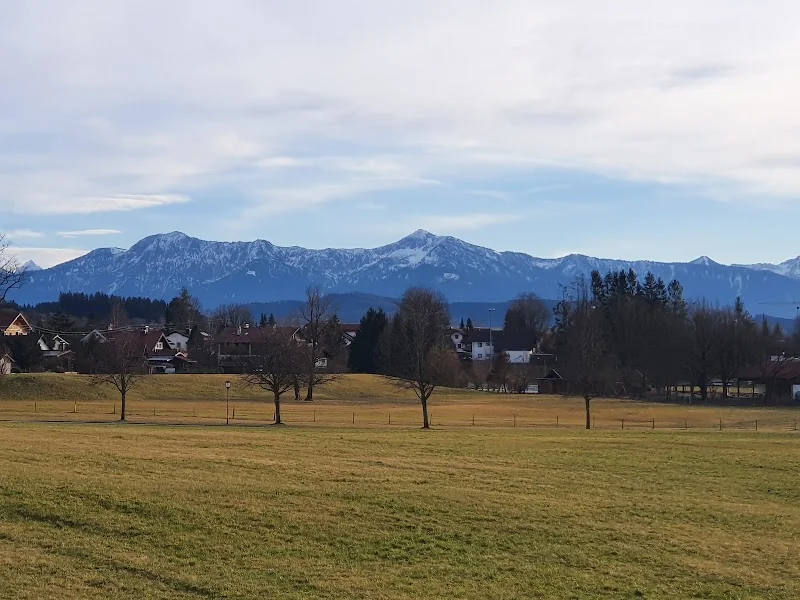
Iffeldorf is a municipality in the Upper Bavarian district of Weilheim-Schongau, known for its special location on the edge of the Osterseen, its quiet pre-Alpine landscape, and surprisingly many excursion destinations in a small area. The place is situated at an altitude of 603 m, covers 2,760.7 hectares, and has around 2,800 inhabitants. Therefore, those searching for Iffeldorf often mean not just the name of the village itself, but a whole bundle of interests: nature, lakes, animals, culture, gastronomy, accommodation, golf, and practical questions about access, parking, and maps. This very mix makes Iffeldorf so attractive for day visitors, weekend guests, and everyone who wants to experience the quieter, nature-oriented side of the Bavarian uplands. Particularly characteristic is the landscape shaped by the Ice Age around the Osterseen, which are among the most prominent natural sites in the region. At the same time, Iffeldorf has a profile that goes far beyond a typical village with Gut Aiderbichl, the parish church of St. Vitus, the Holy Grave, the country inn Osterseen, other hosts in the village plan, and two golf courses. Additionally, there is good transport connectivity via the A95 and the Iffeldorf train station on the Munich-Tutzing-Kochel am See line. The limnological station of the Technical University of Munich also operates in the village center, which is why Iffeldorf is also described as a university village. This combination of nature, science, tradition, and leisure activities gives the place a surprising depth and makes it a destination that is not only visited but often rediscovered with pleasure.
Nature Reserve Osterseen, Swimming and Hiking in Iffeldorf
The Osterseen are the heart of Iffeldorf and for many visitors the main reason to come here at all. The municipality describes the area as a chain of 19 lakes that lie like pearls amidst forests and moors. This landscape was shaped during the Ice Age and is one of the most impressive glacial landscapes in the Bavarian Alpine foothills. The southernmost part of the lakes is located in Iffeldorf, while the chain extends as far as Seeshaupt. The relationship between water, moor, reeds, forest, and open shore zones creates an atmosphere that varies greatly depending on the time of day: often calm and foggy in the morning, soft and quiet in the evening, and clear, bright, and ideal for walks in between. Botanically, the area is also extraordinary. The municipality highlights the wealth of aquatic plants, especially the variety of bladderwort species. White water lilies and yellow pond lilies grow along the reed edges and in the connections between the lakes. For nature lovers, this is a landscape that is not only suitable for photography but also for understanding how sensitive such an ecosystem is. The municipality also points out that the Osterseen have been under landscape and nature protection since 1981 and were designated as a SPA and FFH area in May 1997. This underscores the high protection status and explains why consideration and adherence to paths are particularly important here.
For visitors, the Osterseen are primarily a popular hiking region. The municipality names official bathing spots on the eastern shore of the Großer Ostersee, at the eastern Breienauersee, as well as on the southern and eastern shores of the Fohnsee, where fees may apply. This makes Iffeldorf interesting for both quiet nature walks and a classic day at the beach. At the same time, the area is not a noisy amusement park but a place where nature experience and conservation thought belong together. Those who are out and about here quickly realize that the Osterseen do not consist of a single viewpoint but of many small perspectives, transitions, and paths. That is exactly what makes it appealing: one discovers new sightlines, different shores, varied vegetation, and a landscape that, despite its proximity to Munich, appears remarkably untouched. In practice, this means: Iffeldorf is an excellent starting point for a relaxed day in nature, for a longer round by the water, or for a mix of swimming, hiking, and dining. Those searching for 'iffeldorf osterseen', 'iffeldorf swimming', or 'iffeldorf hiking' will not find an artificial backdrop here but a genuine natural landscape with clear rules, high recreational value, and strong recognition character.
The surroundings also contribute to the popularity of the Osterseen. About one-third of the municipal area is forested, and in the landscape shaped by the Ice Age, different forest communities have developed. The municipality also mentions numerous marked hiking trails and refers to the long-distance hiking trail Prälatenweg and the long-distance cycling route Prälatenroute, which run through the village. This makes Iffeldorf interesting not only for pure lake visitors but also for hikers and cyclists. Those looking for a quiet base for a stay in the Upper Bavarian lake district will find here the rare combination of water, forest, moor, and gentle hilly landscape. This is precisely why Iffeldorf is so special for visitors who want to avoid classic mass tourism and prefer to be close to nature. The Osterseen are the overarching theme that overshadows almost all other inquiries: those searching for maps, access, or parking usually also end up at the lakes, as they form the visual and emotional center of the place. Iffeldorf is thus an example of how strongly a place can be shaped by a single natural riddle, in this case, a glacial lake chain.
Gut Aiderbichl Iffeldorf: Animals, Experiences, and Access
Gut Aiderbichl Iffeldorf is one of the most well-known destinations in the municipality and a strong magnet for families, animal lovers, and day-trippers. According to the municipality, more than 300 rescued animals have found a new home at the estate. These include horses, cattle, pigs, dogs, cats, some llamas, and the camel lady Franziska. The official description emphasizes not only the animal experience but also the idea behind it: humans and animals should be brought together in a protected environment so that visitors can experience and reflect on respectful treatment of animals. This very mix of sanctuary, learning place, and excursion destination makes Gut Aiderbichl Iffeldorf so special. Visitors encounter not only individual animals but also experience large stables, pastures, an extraordinary cat and dog facility, as well as exhibitions and video presentations. The offer is complemented by a vegetarian-vegan restaurant where one can recharge after the tour. Thus, Gut Aiderbichl is not only a place to look but also a place to linger. The official address is Osterseehof 1 in 82393 Iffeldorf. Therefore, those searching for 'gut aiderbichl iffeldorf' will not find a small museum but a lively sanctuary with a clear focus on animal welfare, education, and relaxation.
Accessibility is also important for visitors and is well solved. According to the official website, Gut Aiderbichl Iffeldorf is located near Munich and is accessible by car as well as by public transport. By car, you take the A95, exit Penzberg/Iffeldorf. Munich can be reached in less than half an hour, depending on the starting point. For train travelers, the official site refers to the Iffeldorf train station; from there, it is about a 30 to 40-minute walk to the estate. Additionally, Gut Aiderbichl has large parking areas, making the place particularly pleasant for family outings and group visits. This fits well with the character of the estate, which also regularly appears in the municipality's events, such as Advent and autumn markets. Thus, the location is not only perceived as a zoo in the narrower sense but as a versatile experience site with regional significance. The themes of animals, parking, maps, and access are particularly closely linked here, as many visitors combine their visit with a walk through the landscape, a detour to the Osterseen, or a restaurant visit. Iffeldorf benefits from a destination that appeals emotionally while also providing a practical excursion logic: arrive, experience animals, eat well, move on, or simply stay longer.
Characteristic of Gut Aiderbichl is also that it is not staged as a loud leisure product. The place thrives on closeness, tranquility, and a respectful presentation of the animals. For many visitors, this is precisely the appeal. One does not come here to see spectacle but to experience a different form of excursion: slower, more empathetic, and more focused on encounters. Those traveling with children benefit from the easily understandable paths, the diversity of animals, and the clear concept. Those coming without children find a place where nature, animal protection, and landscape connect almost seamlessly. In the search logic surrounding Iffeldorf, Gut Aiderbichl is therefore a central theme that naturally brings together terms like 'animals', 'parking', 'maps', and 'access'. Together with the Osterseen, it forms the strongest reason for visiting the municipality and thus one of the most important pillars for local visibility online and on-site.
Dining, Hotel, and Accommodation in Iffeldorf
Those searching for 'iffeldorf restaurant' or 'iffeldorf hotel' will often come across the Landgasthof Osterseen in the municipality. The official municipal website lists it as accommodation with 51 beds and 24 double rooms for single use. Additionally, there is a sun terrace overlooking the Osterseen, a friendly, rural-elegant atmosphere, sauna, reading room, and a culinary offer with a rich breakfast buffet, three courses as part of half or full board, as well as vegetarian, regional, and seasonal dishes. Thus, the Landgasthof is not only a classic hotel but also a typical place for connoisseurs who want to combine an overnight stay with a panorama and good cuisine. Its location at Hofmark 9 makes it particularly attractive for guests who want to start directly to the lakes in the morning or enjoy a quiet meal after an excursion in the evening. Especially in connection with the search terms 'iffeldorf landgasthof' and 'iffeldorf hotel', it is a clear anchor point because it offers exactly the mix of accommodation and dining that visitors often seek in the region.
Additionally, the municipality also points to another popular dining option with the Vitus. After a walk at the Osterseen, a visit to the Vitus in Iffeldorf is recommended. According to the official description, breakfast is served from 9 am, with daily changing lunch dishes, a daily selection of homemade cakes, bar service with homemade spritzers and cocktails, and from June on Saturdays, a BBQ grill buffet on the sun terrace in nice weather. The address is St.-Vitus-Platz 1 in 82393 Iffeldorf. Thus, Iffeldorf also covers the area of 'restaurant' in a very natural way: not with a large gastro mile but with a few, well-suited offers that fit well into the relaxed village structure. For visitors, this means: one can combine a day at the Osterseen with a break at the Vitus or with dinner or an overnight stay at the Landgasthof Osterseen without having to travel far. These short distances are a significant advantage in Iffeldorf. The municipality thus appears compact but by no means monotonous. Rather, the gastronomic offer is placed in such a way that it complements the excursion destinations instead of competing with them. This fits ideally with a place where nature experience and dining traditionally go hand in hand.
The municipality is also attractive for longer stays because it does not rely on a single host. The village plan and host information list further accommodations and addresses, making Iffeldorf suitable for different types of travel: for a night on the road, for a weekend by the lake, or for a relaxation stay in the pre-Alps. The search for 'iffeldorf hotel' thus does not refer to a large chain but to a regionally shaped place with an individual atmosphere. Especially the Landgasthof Osterseen meets many expectations for a stay in Upper Bavaria: good location, lake view, family hospitality, solid facilities, and a direct connection to the landscape. For guests who want to experience the Osterseen early in the morning or in the quiet evening hours, this is a clear advantage. In combination with Gut Aiderbichl and the cultural sites in the center, a harmonious overall picture emerges: Iffeldorf is not a destination for a single program point but for a whole day or more, where dining, overnight stays, and excursions intertwine.
Golf with Alpine View in Iffeldorf
Golf is also one of the strong search themes around Iffeldorf, as the municipality names two beautiful golf courses in a magnificent landscape: the Golfanlage Iffeldorf and the St. Eurach Land & Golfclub. Especially the St. Eurach Land & Golfclub is a very striking example of how well sport and landscape connect here. The official website describes it as a place for golfing pleasure since 1973 and highlights the spectacular view of the Alps, which ranges from the Benediktenwand over the Karwendel mountains and the Wetterstein mountains with the Zugspitze to the Allgäu Alps. This makes the course not only interesting from a sporting perspective but also exceptionally scenic. Additionally, the club refers to high nature and environmental standards and a gold certification as part of the 'Golf & Nature' program. Thus, the course fits perfectly into the surroundings of Iffeldorf, which is already strongly characterized by nature, lakes, and wide views.
For players searching for 'iffeldorf golf', the combination of tranquility, sporting quality, and alpine backdrop is particularly relevant. The club's website mentions a championship course with a challenging profile, a driving range, a short-game area, a golf school, the possibility to use golf carts, and a restaurant open daily from 11 am. Guests are also explicitly welcome. This shows that golf in Iffeldorf is not understood as an isolated club theme but as part of the regional leisure landscape. Therefore, those visiting the place can connect very different activities: a round of golf in the morning, a meal at noon, the Osterseen or Gut Aiderbichl in the afternoon. The scenic embedding of the course also makes it interesting for accompanying persons who do not play themselves but still want to enjoy the wide sightlines and the calm atmosphere. Iffeldorf benefits from this sporting addition as it rounds out the profile of the place and makes it more attractive for longer stays.
It is particularly interesting that golf in Iffeldorf does not refer to just a single facility. The reference to two golf courses shows that the municipality is located in a region where the sport is firmly established. For the place itself, this means additional visibility in search queries that go beyond pure nature themes. Those searching for maps, access, or hotels will quickly also find golf, as visitors like to combine their stay with a round of sport. In summary, golf in Iffeldorf is therefore not an isolated topic but part of a larger experience space that connects nature, relaxation, and high-quality leisure. This is precisely why the golf courses are among the most important relevant search terms when it comes to a modern, search engine-strong representation of the place.
St. Vitus, the Holy Grave, and the History of the Place
The historical and cultural side of Iffeldorf is primarily visible through the parish church of St. Vitus and the Holy Grave. The municipality describes St. Vitus as an art-historical jewel with a Gothic core. The original church was destroyed in the great fire of 1699, reconstruction began immediately, and the consecration is documented for 1708. In the mid-18th century, the church received its Rococo interior. The delicately framed Wessobrunner stucco by Franz Xaver Schmuzer and the frescoes by Johann Jakob Zeiller from Tyrol are particularly highlighted. Thus, St. Vitus is not only a house of worship but also a significant testimony to Bavarian church art. Those interested in customs, architecture, or local history will find a central reference point here. The square around the church also plays a role, as regular events such as May festivals, Christmas markets, or other village events take place in Iffeldorf. Therefore, the search term 'iffeldorf st vitus' leads not only to a church building but to a vibrant village center.
The Holy Grave in Iffeldorf is even more special. On the parish's website, it is described as a rarely preserved, two-story Holy Grave, which was acquired by the municipality in 1895 and financed with donations. Art historically, it is attributed to the early Art Nouveau. The construction of transparent glass mosaics is a great rarity in Germany. This very mix of piety, craftsmanship, and historical preservation makes the Holy Grave an extraordinary detail that distinguishes Iffeldorf from many other places. It stands for a form of local cultural history that is not loud but very distinctive. For visitors searching for 'iffeldorf holy grave', this is not just a church object but a piece of living memory of liturgy and popular piety.
The history of the place itself goes back a long way. The municipality reminds that Iffeldorf was once a Hofmark, initially owned by the Mochfreien von Iffeldorf and later by the Counts of Eschenlohe. Ownership, nobility, and monastery connections shaped the place for centuries. In 1653, the Hofmark was sold to the Wessobrunn monastery. The fire of 1698 or 1699 left deep traces, and with the secularization of 1803, the spiritual rule ended definitively. This historical depth explains why Iffeldorf is more than just a beautiful place by the lake. The municipality combines landscape quality with a dense cultural heritage. Additionally, there is the uniqueness that the Technical University of Munich has a limnological station here. Therefore, the municipality also refers to Iffeldorf as a university village. Thus, science, sacred art, and village tradition meet in Iffeldorf. Anyone wanting to understand the municipality through its sights should therefore keep both St. Vitus and the Holy Grave as well as the historical development of the Hofmark and the modern research presence in mind. This connection of past and present makes Iffeldorf interesting in the long term and distinguishes it from many purely tourist destinations.
Access, Maps, and Practical Information for Iffeldorf
In search queries like 'iffeldorf maps', 'iffeldorf access', or 'iffeldorf postal code', it often concerns practical orientation. Here, the municipality scores with a clear location description and good accessibility. Iffeldorf is located in the district of Weilheim-Schongau, has the postal code 82393, and is well connected via the A95. The municipality explicitly mentions the motorway exit Penzberg/Iffeldorf and also refers to the federal train station Iffeldorf on the Munich-Tutzing-Kochel am See line. For visitors, this means: the place is easily accessible by both car and train. This is particularly important for day trips to the Osterseen or to Gut Aiderbichl, as many guests are looking not only for the destination itself but also for the best way to get there. The fact that the municipality offers a village plan with OSM map function on its website further facilitates orientation. This allows addresses, paths, and important places in the center to be quickly found. This is especially practical when one wants to switch between the church, restaurant, accommodation, train station, and nature area.
For concrete visit planning, it is also useful to distinguish between the different destinations in the village. Gut Aiderbichl is located at Osterseehof and is very well accessible by car via the A95. The Osterseen, on the other hand, are best accessed via official paths and designated entrances. The municipal area itself is compact, but the paths to individual destinations can still vary in length. Therefore, maps and village plans are not just accessories here but real orientation aids. Also, those searching for 'iffeldorf parking' often mean either the visit of a specific excursion destination or the question of where one can stop between the various stations of the day. Iffeldorf is well suited for this because the destinations group sensibly: nature around the lakes, animals at Gut Aiderbichl, dining in the village, accommodation at the Landgasthof, culture in St. Vitus, and sports at the golf courses. All of this lies within a radius that can be well planned for a day trip or a whole weekend.
It is also practical that Iffeldorf is a place of manageable size but with many functions. There is the municipal administration, the train station, public infrastructure, hosts, gastronomy, leisure offers, and cultural places. For visitors, this is often more pleasant than a large, anonymous tourist location. One can orient oneself without losing the character of the village. For this reason, terms like map view, address, postal code, train station, and access are not just technical search terms but part of the actual travel experience. Iffeldorf is a place that is easy to find but is only truly understood on-site. The landscape sets the tone, but good accessibility ensures that a spontaneous trip can quickly turn into a well-planned stay.
Sources:
- Municipality of Iffeldorf - Iffeldorf Today
- Municipality of Iffeldorf - Nature Reserve Osterseen
- Gut Aiderbichl - Iffeldorf near Munich
- Municipality of Iffeldorf - Food and Drink
- Catholic House for Children St. Vitus - Holy Grave
- St. Eurach Land & Golfclub - Official Website
- Municipality of Iffeldorf - Schools and Limnological Station
Mehr anzeigenWeniger anzeigen
Iffeldorf | Osterseen & Gut Aiderbichl
Iffeldorf is a municipality in the Upper Bavarian district of Weilheim-Schongau, known for its special location on the edge of the Osterseen, its quiet pre-Alpine landscape, and surprisingly many excursion destinations in a small area. The place is situated at an altitude of 603 m, covers 2,760.7 hectares, and has around 2,800 inhabitants. Therefore, those searching for Iffeldorf often mean not just the name of the village itself, but a whole bundle of interests: nature, lakes, animals, culture, gastronomy, accommodation, golf, and practical questions about access, parking, and maps. This very mix makes Iffeldorf so attractive for day visitors, weekend guests, and everyone who wants to experience the quieter, nature-oriented side of the Bavarian uplands. Particularly characteristic is the landscape shaped by the Ice Age around the Osterseen, which are among the most prominent natural sites in the region. At the same time, Iffeldorf has a profile that goes far beyond a typical village with Gut Aiderbichl, the parish church of St. Vitus, the Holy Grave, the country inn Osterseen, other hosts in the village plan, and two golf courses. Additionally, there is good transport connectivity via the A95 and the Iffeldorf train station on the Munich-Tutzing-Kochel am See line. The limnological station of the Technical University of Munich also operates in the village center, which is why Iffeldorf is also described as a university village. This combination of nature, science, tradition, and leisure activities gives the place a surprising depth and makes it a destination that is not only visited but often rediscovered with pleasure.
Nature Reserve Osterseen, Swimming and Hiking in Iffeldorf
The Osterseen are the heart of Iffeldorf and for many visitors the main reason to come here at all. The municipality describes the area as a chain of 19 lakes that lie like pearls amidst forests and moors. This landscape was shaped during the Ice Age and is one of the most impressive glacial landscapes in the Bavarian Alpine foothills. The southernmost part of the lakes is located in Iffeldorf, while the chain extends as far as Seeshaupt. The relationship between water, moor, reeds, forest, and open shore zones creates an atmosphere that varies greatly depending on the time of day: often calm and foggy in the morning, soft and quiet in the evening, and clear, bright, and ideal for walks in between. Botanically, the area is also extraordinary. The municipality highlights the wealth of aquatic plants, especially the variety of bladderwort species. White water lilies and yellow pond lilies grow along the reed edges and in the connections between the lakes. For nature lovers, this is a landscape that is not only suitable for photography but also for understanding how sensitive such an ecosystem is. The municipality also points out that the Osterseen have been under landscape and nature protection since 1981 and were designated as a SPA and FFH area in May 1997. This underscores the high protection status and explains why consideration and adherence to paths are particularly important here.
For visitors, the Osterseen are primarily a popular hiking region. The municipality names official bathing spots on the eastern shore of the Großer Ostersee, at the eastern Breienauersee, as well as on the southern and eastern shores of the Fohnsee, where fees may apply. This makes Iffeldorf interesting for both quiet nature walks and a classic day at the beach. At the same time, the area is not a noisy amusement park but a place where nature experience and conservation thought belong together. Those who are out and about here quickly realize that the Osterseen do not consist of a single viewpoint but of many small perspectives, transitions, and paths. That is exactly what makes it appealing: one discovers new sightlines, different shores, varied vegetation, and a landscape that, despite its proximity to Munich, appears remarkably untouched. In practice, this means: Iffeldorf is an excellent starting point for a relaxed day in nature, for a longer round by the water, or for a mix of swimming, hiking, and dining. Those searching for 'iffeldorf osterseen', 'iffeldorf swimming', or 'iffeldorf hiking' will not find an artificial backdrop here but a genuine natural landscape with clear rules, high recreational value, and strong recognition character.
The surroundings also contribute to the popularity of the Osterseen. About one-third of the municipal area is forested, and in the landscape shaped by the Ice Age, different forest communities have developed. The municipality also mentions numerous marked hiking trails and refers to the long-distance hiking trail Prälatenweg and the long-distance cycling route Prälatenroute, which run through the village. This makes Iffeldorf interesting not only for pure lake visitors but also for hikers and cyclists. Those looking for a quiet base for a stay in the Upper Bavarian lake district will find here the rare combination of water, forest, moor, and gentle hilly landscape. This is precisely why Iffeldorf is so special for visitors who want to avoid classic mass tourism and prefer to be close to nature. The Osterseen are the overarching theme that overshadows almost all other inquiries: those searching for maps, access, or parking usually also end up at the lakes, as they form the visual and emotional center of the place. Iffeldorf is thus an example of how strongly a place can be shaped by a single natural riddle, in this case, a glacial lake chain.
Gut Aiderbichl Iffeldorf: Animals, Experiences, and Access
Gut Aiderbichl Iffeldorf is one of the most well-known destinations in the municipality and a strong magnet for families, animal lovers, and day-trippers. According to the municipality, more than 300 rescued animals have found a new home at the estate. These include horses, cattle, pigs, dogs, cats, some llamas, and the camel lady Franziska. The official description emphasizes not only the animal experience but also the idea behind it: humans and animals should be brought together in a protected environment so that visitors can experience and reflect on respectful treatment of animals. This very mix of sanctuary, learning place, and excursion destination makes Gut Aiderbichl Iffeldorf so special. Visitors encounter not only individual animals but also experience large stables, pastures, an extraordinary cat and dog facility, as well as exhibitions and video presentations. The offer is complemented by a vegetarian-vegan restaurant where one can recharge after the tour. Thus, Gut Aiderbichl is not only a place to look but also a place to linger. The official address is Osterseehof 1 in 82393 Iffeldorf. Therefore, those searching for 'gut aiderbichl iffeldorf' will not find a small museum but a lively sanctuary with a clear focus on animal welfare, education, and relaxation.
Accessibility is also important for visitors and is well solved. According to the official website, Gut Aiderbichl Iffeldorf is located near Munich and is accessible by car as well as by public transport. By car, you take the A95, exit Penzberg/Iffeldorf. Munich can be reached in less than half an hour, depending on the starting point. For train travelers, the official site refers to the Iffeldorf train station; from there, it is about a 30 to 40-minute walk to the estate. Additionally, Gut Aiderbichl has large parking areas, making the place particularly pleasant for family outings and group visits. This fits well with the character of the estate, which also regularly appears in the municipality's events, such as Advent and autumn markets. Thus, the location is not only perceived as a zoo in the narrower sense but as a versatile experience site with regional significance. The themes of animals, parking, maps, and access are particularly closely linked here, as many visitors combine their visit with a walk through the landscape, a detour to the Osterseen, or a restaurant visit. Iffeldorf benefits from a destination that appeals emotionally while also providing a practical excursion logic: arrive, experience animals, eat well, move on, or simply stay longer.
Characteristic of Gut Aiderbichl is also that it is not staged as a loud leisure product. The place thrives on closeness, tranquility, and a respectful presentation of the animals. For many visitors, this is precisely the appeal. One does not come here to see spectacle but to experience a different form of excursion: slower, more empathetic, and more focused on encounters. Those traveling with children benefit from the easily understandable paths, the diversity of animals, and the clear concept. Those coming without children find a place where nature, animal protection, and landscape connect almost seamlessly. In the search logic surrounding Iffeldorf, Gut Aiderbichl is therefore a central theme that naturally brings together terms like 'animals', 'parking', 'maps', and 'access'. Together with the Osterseen, it forms the strongest reason for visiting the municipality and thus one of the most important pillars for local visibility online and on-site.
Dining, Hotel, and Accommodation in Iffeldorf
Those searching for 'iffeldorf restaurant' or 'iffeldorf hotel' will often come across the Landgasthof Osterseen in the municipality. The official municipal website lists it as accommodation with 51 beds and 24 double rooms for single use. Additionally, there is a sun terrace overlooking the Osterseen, a friendly, rural-elegant atmosphere, sauna, reading room, and a culinary offer with a rich breakfast buffet, three courses as part of half or full board, as well as vegetarian, regional, and seasonal dishes. Thus, the Landgasthof is not only a classic hotel but also a typical place for connoisseurs who want to combine an overnight stay with a panorama and good cuisine. Its location at Hofmark 9 makes it particularly attractive for guests who want to start directly to the lakes in the morning or enjoy a quiet meal after an excursion in the evening. Especially in connection with the search terms 'iffeldorf landgasthof' and 'iffeldorf hotel', it is a clear anchor point because it offers exactly the mix of accommodation and dining that visitors often seek in the region.
Additionally, the municipality also points to another popular dining option with the Vitus. After a walk at the Osterseen, a visit to the Vitus in Iffeldorf is recommended. According to the official description, breakfast is served from 9 am, with daily changing lunch dishes, a daily selection of homemade cakes, bar service with homemade spritzers and cocktails, and from June on Saturdays, a BBQ grill buffet on the sun terrace in nice weather. The address is St.-Vitus-Platz 1 in 82393 Iffeldorf. Thus, Iffeldorf also covers the area of 'restaurant' in a very natural way: not with a large gastro mile but with a few, well-suited offers that fit well into the relaxed village structure. For visitors, this means: one can combine a day at the Osterseen with a break at the Vitus or with dinner or an overnight stay at the Landgasthof Osterseen without having to travel far. These short distances are a significant advantage in Iffeldorf. The municipality thus appears compact but by no means monotonous. Rather, the gastronomic offer is placed in such a way that it complements the excursion destinations instead of competing with them. This fits ideally with a place where nature experience and dining traditionally go hand in hand.
The municipality is also attractive for longer stays because it does not rely on a single host. The village plan and host information list further accommodations and addresses, making Iffeldorf suitable for different types of travel: for a night on the road, for a weekend by the lake, or for a relaxation stay in the pre-Alps. The search for 'iffeldorf hotel' thus does not refer to a large chain but to a regionally shaped place with an individual atmosphere. Especially the Landgasthof Osterseen meets many expectations for a stay in Upper Bavaria: good location, lake view, family hospitality, solid facilities, and a direct connection to the landscape. For guests who want to experience the Osterseen early in the morning or in the quiet evening hours, this is a clear advantage. In combination with Gut Aiderbichl and the cultural sites in the center, a harmonious overall picture emerges: Iffeldorf is not a destination for a single program point but for a whole day or more, where dining, overnight stays, and excursions intertwine.
Golf with Alpine View in Iffeldorf
Golf is also one of the strong search themes around Iffeldorf, as the municipality names two beautiful golf courses in a magnificent landscape: the Golfanlage Iffeldorf and the St. Eurach Land & Golfclub. Especially the St. Eurach Land & Golfclub is a very striking example of how well sport and landscape connect here. The official website describes it as a place for golfing pleasure since 1973 and highlights the spectacular view of the Alps, which ranges from the Benediktenwand over the Karwendel mountains and the Wetterstein mountains with the Zugspitze to the Allgäu Alps. This makes the course not only interesting from a sporting perspective but also exceptionally scenic. Additionally, the club refers to high nature and environmental standards and a gold certification as part of the 'Golf & Nature' program. Thus, the course fits perfectly into the surroundings of Iffeldorf, which is already strongly characterized by nature, lakes, and wide views.
For players searching for 'iffeldorf golf', the combination of tranquility, sporting quality, and alpine backdrop is particularly relevant. The club's website mentions a championship course with a challenging profile, a driving range, a short-game area, a golf school, the possibility to use golf carts, and a restaurant open daily from 11 am. Guests are also explicitly welcome. This shows that golf in Iffeldorf is not understood as an isolated club theme but as part of the regional leisure landscape. Therefore, those visiting the place can connect very different activities: a round of golf in the morning, a meal at noon, the Osterseen or Gut Aiderbichl in the afternoon. The scenic embedding of the course also makes it interesting for accompanying persons who do not play themselves but still want to enjoy the wide sightlines and the calm atmosphere. Iffeldorf benefits from this sporting addition as it rounds out the profile of the place and makes it more attractive for longer stays.
It is particularly interesting that golf in Iffeldorf does not refer to just a single facility. The reference to two golf courses shows that the municipality is located in a region where the sport is firmly established. For the place itself, this means additional visibility in search queries that go beyond pure nature themes. Those searching for maps, access, or hotels will quickly also find golf, as visitors like to combine their stay with a round of sport. In summary, golf in Iffeldorf is therefore not an isolated topic but part of a larger experience space that connects nature, relaxation, and high-quality leisure. This is precisely why the golf courses are among the most important relevant search terms when it comes to a modern, search engine-strong representation of the place.
St. Vitus, the Holy Grave, and the History of the Place
The historical and cultural side of Iffeldorf is primarily visible through the parish church of St. Vitus and the Holy Grave. The municipality describes St. Vitus as an art-historical jewel with a Gothic core. The original church was destroyed in the great fire of 1699, reconstruction began immediately, and the consecration is documented for 1708. In the mid-18th century, the church received its Rococo interior. The delicately framed Wessobrunner stucco by Franz Xaver Schmuzer and the frescoes by Johann Jakob Zeiller from Tyrol are particularly highlighted. Thus, St. Vitus is not only a house of worship but also a significant testimony to Bavarian church art. Those interested in customs, architecture, or local history will find a central reference point here. The square around the church also plays a role, as regular events such as May festivals, Christmas markets, or other village events take place in Iffeldorf. Therefore, the search term 'iffeldorf st vitus' leads not only to a church building but to a vibrant village center.
The Holy Grave in Iffeldorf is even more special. On the parish's website, it is described as a rarely preserved, two-story Holy Grave, which was acquired by the municipality in 1895 and financed with donations. Art historically, it is attributed to the early Art Nouveau. The construction of transparent glass mosaics is a great rarity in Germany. This very mix of piety, craftsmanship, and historical preservation makes the Holy Grave an extraordinary detail that distinguishes Iffeldorf from many other places. It stands for a form of local cultural history that is not loud but very distinctive. For visitors searching for 'iffeldorf holy grave', this is not just a church object but a piece of living memory of liturgy and popular piety.
The history of the place itself goes back a long way. The municipality reminds that Iffeldorf was once a Hofmark, initially owned by the Mochfreien von Iffeldorf and later by the Counts of Eschenlohe. Ownership, nobility, and monastery connections shaped the place for centuries. In 1653, the Hofmark was sold to the Wessobrunn monastery. The fire of 1698 or 1699 left deep traces, and with the secularization of 1803, the spiritual rule ended definitively. This historical depth explains why Iffeldorf is more than just a beautiful place by the lake. The municipality combines landscape quality with a dense cultural heritage. Additionally, there is the uniqueness that the Technical University of Munich has a limnological station here. Therefore, the municipality also refers to Iffeldorf as a university village. Thus, science, sacred art, and village tradition meet in Iffeldorf. Anyone wanting to understand the municipality through its sights should therefore keep both St. Vitus and the Holy Grave as well as the historical development of the Hofmark and the modern research presence in mind. This connection of past and present makes Iffeldorf interesting in the long term and distinguishes it from many purely tourist destinations.
Access, Maps, and Practical Information for Iffeldorf
In search queries like 'iffeldorf maps', 'iffeldorf access', or 'iffeldorf postal code', it often concerns practical orientation. Here, the municipality scores with a clear location description and good accessibility. Iffeldorf is located in the district of Weilheim-Schongau, has the postal code 82393, and is well connected via the A95. The municipality explicitly mentions the motorway exit Penzberg/Iffeldorf and also refers to the federal train station Iffeldorf on the Munich-Tutzing-Kochel am See line. For visitors, this means: the place is easily accessible by both car and train. This is particularly important for day trips to the Osterseen or to Gut Aiderbichl, as many guests are looking not only for the destination itself but also for the best way to get there. The fact that the municipality offers a village plan with OSM map function on its website further facilitates orientation. This allows addresses, paths, and important places in the center to be quickly found. This is especially practical when one wants to switch between the church, restaurant, accommodation, train station, and nature area.
For concrete visit planning, it is also useful to distinguish between the different destinations in the village. Gut Aiderbichl is located at Osterseehof and is very well accessible by car via the A95. The Osterseen, on the other hand, are best accessed via official paths and designated entrances. The municipal area itself is compact, but the paths to individual destinations can still vary in length. Therefore, maps and village plans are not just accessories here but real orientation aids. Also, those searching for 'iffeldorf parking' often mean either the visit of a specific excursion destination or the question of where one can stop between the various stations of the day. Iffeldorf is well suited for this because the destinations group sensibly: nature around the lakes, animals at Gut Aiderbichl, dining in the village, accommodation at the Landgasthof, culture in St. Vitus, and sports at the golf courses. All of this lies within a radius that can be well planned for a day trip or a whole weekend.
It is also practical that Iffeldorf is a place of manageable size but with many functions. There is the municipal administration, the train station, public infrastructure, hosts, gastronomy, leisure offers, and cultural places. For visitors, this is often more pleasant than a large, anonymous tourist location. One can orient oneself without losing the character of the village. For this reason, terms like map view, address, postal code, train station, and access are not just technical search terms but part of the actual travel experience. Iffeldorf is a place that is easy to find but is only truly understood on-site. The landscape sets the tone, but good accessibility ensures that a spontaneous trip can quickly turn into a well-planned stay.
Sources:
- Municipality of Iffeldorf - Iffeldorf Today
- Municipality of Iffeldorf - Nature Reserve Osterseen
- Gut Aiderbichl - Iffeldorf near Munich
- Municipality of Iffeldorf - Food and Drink
- Catholic House for Children St. Vitus - Holy Grave
- St. Eurach Land & Golfclub - Official Website
- Municipality of Iffeldorf - Schools and Limnological Station
Iffeldorf | Osterseen & Gut Aiderbichl
Iffeldorf is a municipality in the Upper Bavarian district of Weilheim-Schongau, known for its special location on the edge of the Osterseen, its quiet pre-Alpine landscape, and surprisingly many excursion destinations in a small area. The place is situated at an altitude of 603 m, covers 2,760.7 hectares, and has around 2,800 inhabitants. Therefore, those searching for Iffeldorf often mean not just the name of the village itself, but a whole bundle of interests: nature, lakes, animals, culture, gastronomy, accommodation, golf, and practical questions about access, parking, and maps. This very mix makes Iffeldorf so attractive for day visitors, weekend guests, and everyone who wants to experience the quieter, nature-oriented side of the Bavarian uplands. Particularly characteristic is the landscape shaped by the Ice Age around the Osterseen, which are among the most prominent natural sites in the region. At the same time, Iffeldorf has a profile that goes far beyond a typical village with Gut Aiderbichl, the parish church of St. Vitus, the Holy Grave, the country inn Osterseen, other hosts in the village plan, and two golf courses. Additionally, there is good transport connectivity via the A95 and the Iffeldorf train station on the Munich-Tutzing-Kochel am See line. The limnological station of the Technical University of Munich also operates in the village center, which is why Iffeldorf is also described as a university village. This combination of nature, science, tradition, and leisure activities gives the place a surprising depth and makes it a destination that is not only visited but often rediscovered with pleasure.
Nature Reserve Osterseen, Swimming and Hiking in Iffeldorf
The Osterseen are the heart of Iffeldorf and for many visitors the main reason to come here at all. The municipality describes the area as a chain of 19 lakes that lie like pearls amidst forests and moors. This landscape was shaped during the Ice Age and is one of the most impressive glacial landscapes in the Bavarian Alpine foothills. The southernmost part of the lakes is located in Iffeldorf, while the chain extends as far as Seeshaupt. The relationship between water, moor, reeds, forest, and open shore zones creates an atmosphere that varies greatly depending on the time of day: often calm and foggy in the morning, soft and quiet in the evening, and clear, bright, and ideal for walks in between. Botanically, the area is also extraordinary. The municipality highlights the wealth of aquatic plants, especially the variety of bladderwort species. White water lilies and yellow pond lilies grow along the reed edges and in the connections between the lakes. For nature lovers, this is a landscape that is not only suitable for photography but also for understanding how sensitive such an ecosystem is. The municipality also points out that the Osterseen have been under landscape and nature protection since 1981 and were designated as a SPA and FFH area in May 1997. This underscores the high protection status and explains why consideration and adherence to paths are particularly important here.
For visitors, the Osterseen are primarily a popular hiking region. The municipality names official bathing spots on the eastern shore of the Großer Ostersee, at the eastern Breienauersee, as well as on the southern and eastern shores of the Fohnsee, where fees may apply. This makes Iffeldorf interesting for both quiet nature walks and a classic day at the beach. At the same time, the area is not a noisy amusement park but a place where nature experience and conservation thought belong together. Those who are out and about here quickly realize that the Osterseen do not consist of a single viewpoint but of many small perspectives, transitions, and paths. That is exactly what makes it appealing: one discovers new sightlines, different shores, varied vegetation, and a landscape that, despite its proximity to Munich, appears remarkably untouched. In practice, this means: Iffeldorf is an excellent starting point for a relaxed day in nature, for a longer round by the water, or for a mix of swimming, hiking, and dining. Those searching for 'iffeldorf osterseen', 'iffeldorf swimming', or 'iffeldorf hiking' will not find an artificial backdrop here but a genuine natural landscape with clear rules, high recreational value, and strong recognition character.
The surroundings also contribute to the popularity of the Osterseen. About one-third of the municipal area is forested, and in the landscape shaped by the Ice Age, different forest communities have developed. The municipality also mentions numerous marked hiking trails and refers to the long-distance hiking trail Prälatenweg and the long-distance cycling route Prälatenroute, which run through the village. This makes Iffeldorf interesting not only for pure lake visitors but also for hikers and cyclists. Those looking for a quiet base for a stay in the Upper Bavarian lake district will find here the rare combination of water, forest, moor, and gentle hilly landscape. This is precisely why Iffeldorf is so special for visitors who want to avoid classic mass tourism and prefer to be close to nature. The Osterseen are the overarching theme that overshadows almost all other inquiries: those searching for maps, access, or parking usually also end up at the lakes, as they form the visual and emotional center of the place. Iffeldorf is thus an example of how strongly a place can be shaped by a single natural riddle, in this case, a glacial lake chain.
Gut Aiderbichl Iffeldorf: Animals, Experiences, and Access
Gut Aiderbichl Iffeldorf is one of the most well-known destinations in the municipality and a strong magnet for families, animal lovers, and day-trippers. According to the municipality, more than 300 rescued animals have found a new home at the estate. These include horses, cattle, pigs, dogs, cats, some llamas, and the camel lady Franziska. The official description emphasizes not only the animal experience but also the idea behind it: humans and animals should be brought together in a protected environment so that visitors can experience and reflect on respectful treatment of animals. This very mix of sanctuary, learning place, and excursion destination makes Gut Aiderbichl Iffeldorf so special. Visitors encounter not only individual animals but also experience large stables, pastures, an extraordinary cat and dog facility, as well as exhibitions and video presentations. The offer is complemented by a vegetarian-vegan restaurant where one can recharge after the tour. Thus, Gut Aiderbichl is not only a place to look but also a place to linger. The official address is Osterseehof 1 in 82393 Iffeldorf. Therefore, those searching for 'gut aiderbichl iffeldorf' will not find a small museum but a lively sanctuary with a clear focus on animal welfare, education, and relaxation.
Accessibility is also important for visitors and is well solved. According to the official website, Gut Aiderbichl Iffeldorf is located near Munich and is accessible by car as well as by public transport. By car, you take the A95, exit Penzberg/Iffeldorf. Munich can be reached in less than half an hour, depending on the starting point. For train travelers, the official site refers to the Iffeldorf train station; from there, it is about a 30 to 40-minute walk to the estate. Additionally, Gut Aiderbichl has large parking areas, making the place particularly pleasant for family outings and group visits. This fits well with the character of the estate, which also regularly appears in the municipality's events, such as Advent and autumn markets. Thus, the location is not only perceived as a zoo in the narrower sense but as a versatile experience site with regional significance. The themes of animals, parking, maps, and access are particularly closely linked here, as many visitors combine their visit with a walk through the landscape, a detour to the Osterseen, or a restaurant visit. Iffeldorf benefits from a destination that appeals emotionally while also providing a practical excursion logic: arrive, experience animals, eat well, move on, or simply stay longer.
Characteristic of Gut Aiderbichl is also that it is not staged as a loud leisure product. The place thrives on closeness, tranquility, and a respectful presentation of the animals. For many visitors, this is precisely the appeal. One does not come here to see spectacle but to experience a different form of excursion: slower, more empathetic, and more focused on encounters. Those traveling with children benefit from the easily understandable paths, the diversity of animals, and the clear concept. Those coming without children find a place where nature, animal protection, and landscape connect almost seamlessly. In the search logic surrounding Iffeldorf, Gut Aiderbichl is therefore a central theme that naturally brings together terms like 'animals', 'parking', 'maps', and 'access'. Together with the Osterseen, it forms the strongest reason for visiting the municipality and thus one of the most important pillars for local visibility online and on-site.
Dining, Hotel, and Accommodation in Iffeldorf
Those searching for 'iffeldorf restaurant' or 'iffeldorf hotel' will often come across the Landgasthof Osterseen in the municipality. The official municipal website lists it as accommodation with 51 beds and 24 double rooms for single use. Additionally, there is a sun terrace overlooking the Osterseen, a friendly, rural-elegant atmosphere, sauna, reading room, and a culinary offer with a rich breakfast buffet, three courses as part of half or full board, as well as vegetarian, regional, and seasonal dishes. Thus, the Landgasthof is not only a classic hotel but also a typical place for connoisseurs who want to combine an overnight stay with a panorama and good cuisine. Its location at Hofmark 9 makes it particularly attractive for guests who want to start directly to the lakes in the morning or enjoy a quiet meal after an excursion in the evening. Especially in connection with the search terms 'iffeldorf landgasthof' and 'iffeldorf hotel', it is a clear anchor point because it offers exactly the mix of accommodation and dining that visitors often seek in the region.
Additionally, the municipality also points to another popular dining option with the Vitus. After a walk at the Osterseen, a visit to the Vitus in Iffeldorf is recommended. According to the official description, breakfast is served from 9 am, with daily changing lunch dishes, a daily selection of homemade cakes, bar service with homemade spritzers and cocktails, and from June on Saturdays, a BBQ grill buffet on the sun terrace in nice weather. The address is St.-Vitus-Platz 1 in 82393 Iffeldorf. Thus, Iffeldorf also covers the area of 'restaurant' in a very natural way: not with a large gastro mile but with a few, well-suited offers that fit well into the relaxed village structure. For visitors, this means: one can combine a day at the Osterseen with a break at the Vitus or with dinner or an overnight stay at the Landgasthof Osterseen without having to travel far. These short distances are a significant advantage in Iffeldorf. The municipality thus appears compact but by no means monotonous. Rather, the gastronomic offer is placed in such a way that it complements the excursion destinations instead of competing with them. This fits ideally with a place where nature experience and dining traditionally go hand in hand.
The municipality is also attractive for longer stays because it does not rely on a single host. The village plan and host information list further accommodations and addresses, making Iffeldorf suitable for different types of travel: for a night on the road, for a weekend by the lake, or for a relaxation stay in the pre-Alps. The search for 'iffeldorf hotel' thus does not refer to a large chain but to a regionally shaped place with an individual atmosphere. Especially the Landgasthof Osterseen meets many expectations for a stay in Upper Bavaria: good location, lake view, family hospitality, solid facilities, and a direct connection to the landscape. For guests who want to experience the Osterseen early in the morning or in the quiet evening hours, this is a clear advantage. In combination with Gut Aiderbichl and the cultural sites in the center, a harmonious overall picture emerges: Iffeldorf is not a destination for a single program point but for a whole day or more, where dining, overnight stays, and excursions intertwine.
Golf with Alpine View in Iffeldorf
Golf is also one of the strong search themes around Iffeldorf, as the municipality names two beautiful golf courses in a magnificent landscape: the Golfanlage Iffeldorf and the St. Eurach Land & Golfclub. Especially the St. Eurach Land & Golfclub is a very striking example of how well sport and landscape connect here. The official website describes it as a place for golfing pleasure since 1973 and highlights the spectacular view of the Alps, which ranges from the Benediktenwand over the Karwendel mountains and the Wetterstein mountains with the Zugspitze to the Allgäu Alps. This makes the course not only interesting from a sporting perspective but also exceptionally scenic. Additionally, the club refers to high nature and environmental standards and a gold certification as part of the 'Golf & Nature' program. Thus, the course fits perfectly into the surroundings of Iffeldorf, which is already strongly characterized by nature, lakes, and wide views.
For players searching for 'iffeldorf golf', the combination of tranquility, sporting quality, and alpine backdrop is particularly relevant. The club's website mentions a championship course with a challenging profile, a driving range, a short-game area, a golf school, the possibility to use golf carts, and a restaurant open daily from 11 am. Guests are also explicitly welcome. This shows that golf in Iffeldorf is not understood as an isolated club theme but as part of the regional leisure landscape. Therefore, those visiting the place can connect very different activities: a round of golf in the morning, a meal at noon, the Osterseen or Gut Aiderbichl in the afternoon. The scenic embedding of the course also makes it interesting for accompanying persons who do not play themselves but still want to enjoy the wide sightlines and the calm atmosphere. Iffeldorf benefits from this sporting addition as it rounds out the profile of the place and makes it more attractive for longer stays.
It is particularly interesting that golf in Iffeldorf does not refer to just a single facility. The reference to two golf courses shows that the municipality is located in a region where the sport is firmly established. For the place itself, this means additional visibility in search queries that go beyond pure nature themes. Those searching for maps, access, or hotels will quickly also find golf, as visitors like to combine their stay with a round of sport. In summary, golf in Iffeldorf is therefore not an isolated topic but part of a larger experience space that connects nature, relaxation, and high-quality leisure. This is precisely why the golf courses are among the most important relevant search terms when it comes to a modern, search engine-strong representation of the place.
St. Vitus, the Holy Grave, and the History of the Place
The historical and cultural side of Iffeldorf is primarily visible through the parish church of St. Vitus and the Holy Grave. The municipality describes St. Vitus as an art-historical jewel with a Gothic core. The original church was destroyed in the great fire of 1699, reconstruction began immediately, and the consecration is documented for 1708. In the mid-18th century, the church received its Rococo interior. The delicately framed Wessobrunner stucco by Franz Xaver Schmuzer and the frescoes by Johann Jakob Zeiller from Tyrol are particularly highlighted. Thus, St. Vitus is not only a house of worship but also a significant testimony to Bavarian church art. Those interested in customs, architecture, or local history will find a central reference point here. The square around the church also plays a role, as regular events such as May festivals, Christmas markets, or other village events take place in Iffeldorf. Therefore, the search term 'iffeldorf st vitus' leads not only to a church building but to a vibrant village center.
The Holy Grave in Iffeldorf is even more special. On the parish's website, it is described as a rarely preserved, two-story Holy Grave, which was acquired by the municipality in 1895 and financed with donations. Art historically, it is attributed to the early Art Nouveau. The construction of transparent glass mosaics is a great rarity in Germany. This very mix of piety, craftsmanship, and historical preservation makes the Holy Grave an extraordinary detail that distinguishes Iffeldorf from many other places. It stands for a form of local cultural history that is not loud but very distinctive. For visitors searching for 'iffeldorf holy grave', this is not just a church object but a piece of living memory of liturgy and popular piety.
The history of the place itself goes back a long way. The municipality reminds that Iffeldorf was once a Hofmark, initially owned by the Mochfreien von Iffeldorf and later by the Counts of Eschenlohe. Ownership, nobility, and monastery connections shaped the place for centuries. In 1653, the Hofmark was sold to the Wessobrunn monastery. The fire of 1698 or 1699 left deep traces, and with the secularization of 1803, the spiritual rule ended definitively. This historical depth explains why Iffeldorf is more than just a beautiful place by the lake. The municipality combines landscape quality with a dense cultural heritage. Additionally, there is the uniqueness that the Technical University of Munich has a limnological station here. Therefore, the municipality also refers to Iffeldorf as a university village. Thus, science, sacred art, and village tradition meet in Iffeldorf. Anyone wanting to understand the municipality through its sights should therefore keep both St. Vitus and the Holy Grave as well as the historical development of the Hofmark and the modern research presence in mind. This connection of past and present makes Iffeldorf interesting in the long term and distinguishes it from many purely tourist destinations.
Access, Maps, and Practical Information for Iffeldorf
In search queries like 'iffeldorf maps', 'iffeldorf access', or 'iffeldorf postal code', it often concerns practical orientation. Here, the municipality scores with a clear location description and good accessibility. Iffeldorf is located in the district of Weilheim-Schongau, has the postal code 82393, and is well connected via the A95. The municipality explicitly mentions the motorway exit Penzberg/Iffeldorf and also refers to the federal train station Iffeldorf on the Munich-Tutzing-Kochel am See line. For visitors, this means: the place is easily accessible by both car and train. This is particularly important for day trips to the Osterseen or to Gut Aiderbichl, as many guests are looking not only for the destination itself but also for the best way to get there. The fact that the municipality offers a village plan with OSM map function on its website further facilitates orientation. This allows addresses, paths, and important places in the center to be quickly found. This is especially practical when one wants to switch between the church, restaurant, accommodation, train station, and nature area.
For concrete visit planning, it is also useful to distinguish between the different destinations in the village. Gut Aiderbichl is located at Osterseehof and is very well accessible by car via the A95. The Osterseen, on the other hand, are best accessed via official paths and designated entrances. The municipal area itself is compact, but the paths to individual destinations can still vary in length. Therefore, maps and village plans are not just accessories here but real orientation aids. Also, those searching for 'iffeldorf parking' often mean either the visit of a specific excursion destination or the question of where one can stop between the various stations of the day. Iffeldorf is well suited for this because the destinations group sensibly: nature around the lakes, animals at Gut Aiderbichl, dining in the village, accommodation at the Landgasthof, culture in St. Vitus, and sports at the golf courses. All of this lies within a radius that can be well planned for a day trip or a whole weekend.
It is also practical that Iffeldorf is a place of manageable size but with many functions. There is the municipal administration, the train station, public infrastructure, hosts, gastronomy, leisure offers, and cultural places. For visitors, this is often more pleasant than a large, anonymous tourist location. One can orient oneself without losing the character of the village. For this reason, terms like map view, address, postal code, train station, and access are not just technical search terms but part of the actual travel experience. Iffeldorf is a place that is easy to find but is only truly understood on-site. The landscape sets the tone, but good accessibility ensures that a spontaneous trip can quickly turn into a well-planned stay.
Sources:
- Municipality of Iffeldorf - Iffeldorf Today
- Municipality of Iffeldorf - Nature Reserve Osterseen
- Gut Aiderbichl - Iffeldorf near Munich
- Municipality of Iffeldorf - Food and Drink
- Catholic House for Children St. Vitus - Holy Grave
- St. Eurach Land & Golfclub - Official Website
- Municipality of Iffeldorf - Schools and Limnological Station
Upcoming Events
No events found
Frequently Asked Questions
Reviews
Jakob
6. October 2025
It's just a train station, nothing special. No restrooms but plenty of free parking.
Chronoptis
29. August 2018
So far, the train to Munich has had no delays. There might be track work once a year up to Tutzing, but there's a bus replacement service for that.
Curt Siegel
7. April 2024
Idyllic, peaceful, pure nature.
Thomas Rappl
9. May 2022
Good parking for a walk.
Alex Kießling
22. April 2026
No comment.