
Am Krautgarten 25, Greifenberg
Am Krautgarten 25, 86926 Greifenberg, Germany
Greifenberger Institute for Musical Instrument Studies | Photos
The Greifenberger Institute for Musical Instrument Studies in Greifenberg is much more than a classic research address. It combines scientific work, artisanal reconstruction, collection care, knowledge transfer, and vibrant music practice in one place. According to its own description, the institute works on the research and documentation of historical musical instruments, scientific replicas, and the dissemination of knowledge about instruments and their time of origin. Visitors will encounter not only a workshop here but also a cultural environment that connects originals, reconstructions, texts, media, and concert experiences. The address at Krautgarten 25 in 86926 Greifenberg has been closely associated with this work for years, and the website provides information about the collection as well as the event program and contact details. ([greifenberger-institut.de](https://www.greifenberger-institut.de/?utm_source=openai))
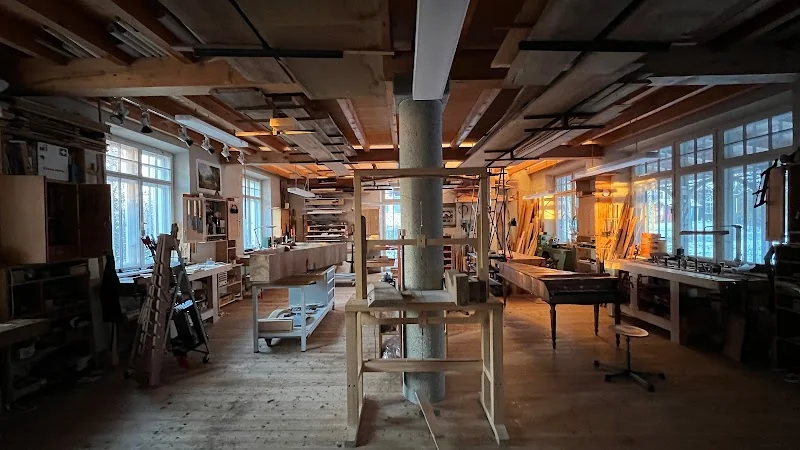
For people looking for photos, impressions, or a first visual overview, the institute is particularly exciting because it presents its instruments and fields of work with clear visual motifs: historical keyboard instruments, scientific replicas, workshop work, 3D scanning, and exhibition materials. At the same time, the Greifenberger Institute is not just a place for specialists. It is aimed at everyone who wants to experience historical sound culture and opens its collection, according to its own statement, also in the virtual museum and through individual tours upon request. Thus, the location is suitable for both culture-interested guests and travelers specifically looking for a special music and research site in Upper Bavaria. The combination of museum, workshop, and concert venue makes the location unique and ensures that the photos not only show rooms but also make a whole concept of research, sound, and craftsmanship visible. ([greifenberger-institut.de](https://www.greifenberger-institut.de/?utm_source=openai))
Photos, Collection, and Virtual Insights at the Greifenberger Institute
The collection of the Greifenberger Institute is one of the most important reasons why this location is so frequently searched online. The official website showcases stringed keyboard instruments in their original form and scientific replicas, along with images from the workshop and the virtual exhibition. The focus on historical keyboard instruments, especially grand pianos and square pianos, is particularly prominent. The collection includes instruments such as the Stein-Schule grand piano from around 1780, a P. A. Bossi from 1802, a Louis-Dulcken grand piano from 1805, a John Broadwood from 1810, a Gregor Deiß grand piano from 1815, and a J. Böhm from around 1825. Among the square pianos, Thomas Haxby 1781, Clementi & Co. New Patent around 1801, John Broadwood 1792, Joseph Dale & Sons around 1803, and Dieudonné & Schiedmayer around 1810 are mentioned. This variety shows that the institute not only collects but also purposefully documents sound and construction history. ([greifenberger-institut.de](https://www.greifenberger-institut.de/dt/Sammlung-des-Instituts/Sammlung.php))
Another visual and content-related advantage for seekers lies in the fact that the institute does not understand its collection as a static depot. The instruments serve as a research basis, as templates for reconstructions, and as teaching materials for the development of piano and keyboard instrument construction. The homepage also points to the virtual museum, where the collection can be experienced digitally. Therefore, those searching for photos of the Greifenberger Institute will find not only views of the building but especially images of instruments, workshop details, and the historical materiality for which the institute is known. This mixture of originals and scientific replicas creates a special impression: it is not about decorative exhibitions but about the practical question of how historical instruments were built, used, altered, and understood again. The visual language supports this claim and makes the research work immediately visible to visitors. ([greifenberger-institut.de](https://www.greifenberger-institut.de/?utm_source=openai))
Workshop Concerts, Program, and Tickets
The workshop concerts are a central search topic around the Greifenberger Institute because they transform the research site into a lively concert venue. Official program pages regularly document concerts, music festivals, and thematically very diverse evenings, such as those featuring violin sonatas, baroque music, song programs, or chamber music. The event pages also make it clear that the institute has maintained a continuous concert series for many years. An official flyer even states that the workshop concerts have been held for 30 years, highlighting the long local anchoring and the growing role of the house as a musical meeting point. The audience does not experience an anonymous large stage there but a very direct setting in which historical instruments are played in the appropriate repertoire. ([greifenberger-institut.de](https://greifenberger-institut.de/dt/Konzertkalender/programm2025.php?utm_source=openai))
For those interested in tickets, the information is particularly practical: the official pages provide details on ticket prices, box office, and advance sales. For 2024, a price of 20 euros is mentioned, along with free admission for children, students, and pupils, tickets at the day or evening box office, and online advance sales. The online ticket service closes, according to the notes, two hours before the event starts. For 2025, the institute also informs about a new digital ticket partner, through which advance sales via an external platform will be possible, with the fees being covered according to the announcement. Additionally, the institute points out a monthly newsletter that allows interested parties to stay informed about upcoming events. This mix of tradition and digital organization makes the house conveniently planable for visitors. Therefore, those searching for workshop concerts, tickets, programs, or dates will find a well-developed yet well-organized offering with a clear focus on historical performance practice. ([greifenberger-institut.de](https://greifenberger-institut.de/dt/Konzertkalender/programm2025.php?utm_source=openai))
Research, Documentation, and Scientific Replicas
The Greifenberger Institute explicitly sees itself as a research facility for historical musical instruments. The website describes that the cultural techniques of production and design are being newly researched and tested again through artisanal replication. CAD drawings and archival research provide the basis for precisely documenting instruments and later scientifically reconstructing them. This is complemented by methods such as measurement documentation, physical-technical investigations, age and material determination, and the analysis of manufacturing techniques. This approach is important because the institute wants to understand historical instruments not just by looking at them but in their technical logic. The instruments are seen here as carriers of sound ideas, artisanal knowledge, and cultural-historical information. ([greifenberger-institut.de](https://www.greifenberger-institut.de/en/institut/institut.php?utm_source=openai))
Particularly striking is the idea of scientific replication. The institute explains that based on the findings and documentation, as accurate reconstructions as possible are created, executed with historical tools and methods. Thus, it is not simply about copying but understanding how an instrument was conceived and crafted in its time. The collection therefore contains not only originals but also reconstructions that themselves become research objects. This is linked on the homepage with research and documentation, research replication, and knowledge transfer. Such replicas serve practical testing in music, the investigation of aging processes, and the question of how historical manufacturing technologies can be understood practically today. This is crucial for the location because its profile arises precisely from this connection between theory and practice. Those visiting the rooms see not only a result but a thought and working process that brings together history, craftsmanship, and sound in real time. ([greifenberger-institut.de](https://www.greifenberger-institut.de/dt/Sammlung-des-Instituts/Sammlung.php))
Guided Tours, Contact, and On-Site Visits
A visit to the Greifenberger Institute is primarily interesting for people seeking a personal, professionally shaped, and yet accessible atmosphere. The official website mentions individual tours upon request and refers to the fact that the collection can be experienced in the exhibition or in the virtual museum. This is attractive for groups, music lovers, professionals, and culture-interested travelers alike. The place is thus not only a research site but also an address for insights into historical instruments, workshop processes, and musical contexts. The contact details are clearly available: At Krautgarten 25 in 86926 Greifenberg, phone 08192 8747, and the mentioned email address of the institute. Therefore, anyone planning a tour, a visit, or a thematic inquiry will find quick and direct contact options. ([greifenberger-institut.de](https://www.greifenberger-institut.de/en/kontakt/?utm_source=openai))
For visitors who come primarily for an event, the address is also important, as workshop concerts and other formats take place at this exact location. The character of the house remains deliberately manageable and personal. Instead of a large standard tour, the focus is on encounters with instruments, people, and knowledge. This closeness is visible in several impressions around the institute: the rooms are designed for concentrated perception, the collection is not overwhelming in size but carefully explained, and the workshop concerts thrive on the special connection between sound, space, and historical technique. Therefore, those looking for a visit should think more of a specialized cultural venue than a conventional museum with long pathways and standardized processes. This makes planning simple and the experience often more intense. ([greifenberger-institut.de](https://www.greifenberger-institut.de/?utm_source=openai))
Directions, Parking, and Practical Tips for Greifenberg
The practical journey to the Greifenberger Institute is uncomplicated because the address is clearly indicated: At Krautgarten 25 in Greifenberg. However, those arriving by car should note that the official event information does not promise large, separate parking areas. A current flyer explicitly mentions parking spaces in the vicinity. This is a helpful hint, as visitors can arrive better with some advance notice. At the same time, the same event information shows that the place is rather small and personally organized. The published availability of 60 seats makes it clear that it is a manageable setting in which arrival and orientation remain relatively relaxed. ([kreiskulturtage-landsberg.de](https://kreiskulturtage-landsberg.de/wp-content/uploads/2022/01/KULTURTAGE_programmfolder_inhalt_2022-01-20.pdf?utm_source=openai))
Accessibility is only partially indicated in the available event information. For a specific event, the parking situation and accessibility are described with the note that it is partially barrier-free. Therefore, those with specific needs should inquire directly in advance rather than relying on general assumptions. This is precisely why the official contact option is so important: the institute is reachable, the address is clear, and special questions about arrival, seating situation, or access can be clarified before a visit. For inquiries regarding directions, parking, and practical tips, this is particularly relevant because the house is not a mass location but a specialized cultural venue with limited, deliberately intimate capacity. This small scale is part of the experience of the institute and supports the closeness between the audience, instruments, and presenters. ([kreiskulturtage-landsberg.de](https://kreiskulturtage-landsberg.de/wp-content/uploads/2022/01/KULTURTAGE_programmfolder_inhalt_2022-01-20.pdf?utm_source=openai))
History of the Institute and its Role in Greifenberg
The history of the Greifenberger Institute begins with a long lead-up of the collection and does not end with a founding date. According to the official representation, a collection of representative fortepianos has been built up since 1994, with a focus on grand pianos from southern German piano makers. The actual founding as a gGmbH is indicated by MIZ as 2007. This makes it understandable why the institute today is both a collection and a research workshop and event venue: it has developed from historical work on instruments into an institutional form that unites research, preservation, and dissemination. The founder and director Helmut Balk is described on the official pages as the initiator of the concepts and the head of the house. The MIZ representation also mentions Dr. Margarete Madelung and the gGmbH structure. ([greifenberger-institut.de](https://www.greifenberger-institut.de/dt/Sammlung-des-Instituts/Sammlung.php?utm_source=openai))
The role of the institute in Greifenberg is also evident in that it is described not only as a research site but explicitly as a training institution for instrument makers, as a museum, and as a concert venue. This triad is central to the identity of the house. The institute thus promotes not only knowledge but also artisanal transmission and artistic practice. The location by Lake Ammersee thus receives a clear profile: here, musical heritage is not merely managed but actively questioned, reconstructed, and played. Especially at a time when many visitors are looking for special, authentic cultural venues, the Greifenberger Institute is a strong example of how research and experience can go hand in hand. Those searching for a location with history, sound, artisanal precision, and a well-maintained event profile will find an unusually dense and credible address in Greifenberg. ([greifenberger-institut.de](https://www.greifenberger-institut.de/fr/Weitere-Veranstaltungen.php?utm_source=openai))
Sources:
Show moreShow less
Greifenberger Institute for Musical Instrument Studies | Photos
The Greifenberger Institute for Musical Instrument Studies in Greifenberg is much more than a classic research address. It combines scientific work, artisanal reconstruction, collection care, knowledge transfer, and vibrant music practice in one place. According to its own description, the institute works on the research and documentation of historical musical instruments, scientific replicas, and the dissemination of knowledge about instruments and their time of origin. Visitors will encounter not only a workshop here but also a cultural environment that connects originals, reconstructions, texts, media, and concert experiences. The address at Krautgarten 25 in 86926 Greifenberg has been closely associated with this work for years, and the website provides information about the collection as well as the event program and contact details. ([greifenberger-institut.de](https://www.greifenberger-institut.de/?utm_source=openai))
For people looking for photos, impressions, or a first visual overview, the institute is particularly exciting because it presents its instruments and fields of work with clear visual motifs: historical keyboard instruments, scientific replicas, workshop work, 3D scanning, and exhibition materials. At the same time, the Greifenberger Institute is not just a place for specialists. It is aimed at everyone who wants to experience historical sound culture and opens its collection, according to its own statement, also in the virtual museum and through individual tours upon request. Thus, the location is suitable for both culture-interested guests and travelers specifically looking for a special music and research site in Upper Bavaria. The combination of museum, workshop, and concert venue makes the location unique and ensures that the photos not only show rooms but also make a whole concept of research, sound, and craftsmanship visible. ([greifenberger-institut.de](https://www.greifenberger-institut.de/?utm_source=openai))
Photos, Collection, and Virtual Insights at the Greifenberger Institute
The collection of the Greifenberger Institute is one of the most important reasons why this location is so frequently searched online. The official website showcases stringed keyboard instruments in their original form and scientific replicas, along with images from the workshop and the virtual exhibition. The focus on historical keyboard instruments, especially grand pianos and square pianos, is particularly prominent. The collection includes instruments such as the Stein-Schule grand piano from around 1780, a P. A. Bossi from 1802, a Louis-Dulcken grand piano from 1805, a John Broadwood from 1810, a Gregor Deiß grand piano from 1815, and a J. Böhm from around 1825. Among the square pianos, Thomas Haxby 1781, Clementi & Co. New Patent around 1801, John Broadwood 1792, Joseph Dale & Sons around 1803, and Dieudonné & Schiedmayer around 1810 are mentioned. This variety shows that the institute not only collects but also purposefully documents sound and construction history. ([greifenberger-institut.de](https://www.greifenberger-institut.de/dt/Sammlung-des-Instituts/Sammlung.php))
Another visual and content-related advantage for seekers lies in the fact that the institute does not understand its collection as a static depot. The instruments serve as a research basis, as templates for reconstructions, and as teaching materials for the development of piano and keyboard instrument construction. The homepage also points to the virtual museum, where the collection can be experienced digitally. Therefore, those searching for photos of the Greifenberger Institute will find not only views of the building but especially images of instruments, workshop details, and the historical materiality for which the institute is known. This mixture of originals and scientific replicas creates a special impression: it is not about decorative exhibitions but about the practical question of how historical instruments were built, used, altered, and understood again. The visual language supports this claim and makes the research work immediately visible to visitors. ([greifenberger-institut.de](https://www.greifenberger-institut.de/?utm_source=openai))
Workshop Concerts, Program, and Tickets
The workshop concerts are a central search topic around the Greifenberger Institute because they transform the research site into a lively concert venue. Official program pages regularly document concerts, music festivals, and thematically very diverse evenings, such as those featuring violin sonatas, baroque music, song programs, or chamber music. The event pages also make it clear that the institute has maintained a continuous concert series for many years. An official flyer even states that the workshop concerts have been held for 30 years, highlighting the long local anchoring and the growing role of the house as a musical meeting point. The audience does not experience an anonymous large stage there but a very direct setting in which historical instruments are played in the appropriate repertoire. ([greifenberger-institut.de](https://greifenberger-institut.de/dt/Konzertkalender/programm2025.php?utm_source=openai))
For those interested in tickets, the information is particularly practical: the official pages provide details on ticket prices, box office, and advance sales. For 2024, a price of 20 euros is mentioned, along with free admission for children, students, and pupils, tickets at the day or evening box office, and online advance sales. The online ticket service closes, according to the notes, two hours before the event starts. For 2025, the institute also informs about a new digital ticket partner, through which advance sales via an external platform will be possible, with the fees being covered according to the announcement. Additionally, the institute points out a monthly newsletter that allows interested parties to stay informed about upcoming events. This mix of tradition and digital organization makes the house conveniently planable for visitors. Therefore, those searching for workshop concerts, tickets, programs, or dates will find a well-developed yet well-organized offering with a clear focus on historical performance practice. ([greifenberger-institut.de](https://greifenberger-institut.de/dt/Konzertkalender/programm2025.php?utm_source=openai))
Research, Documentation, and Scientific Replicas
The Greifenberger Institute explicitly sees itself as a research facility for historical musical instruments. The website describes that the cultural techniques of production and design are being newly researched and tested again through artisanal replication. CAD drawings and archival research provide the basis for precisely documenting instruments and later scientifically reconstructing them. This is complemented by methods such as measurement documentation, physical-technical investigations, age and material determination, and the analysis of manufacturing techniques. This approach is important because the institute wants to understand historical instruments not just by looking at them but in their technical logic. The instruments are seen here as carriers of sound ideas, artisanal knowledge, and cultural-historical information. ([greifenberger-institut.de](https://www.greifenberger-institut.de/en/institut/institut.php?utm_source=openai))
Particularly striking is the idea of scientific replication. The institute explains that based on the findings and documentation, as accurate reconstructions as possible are created, executed with historical tools and methods. Thus, it is not simply about copying but understanding how an instrument was conceived and crafted in its time. The collection therefore contains not only originals but also reconstructions that themselves become research objects. This is linked on the homepage with research and documentation, research replication, and knowledge transfer. Such replicas serve practical testing in music, the investigation of aging processes, and the question of how historical manufacturing technologies can be understood practically today. This is crucial for the location because its profile arises precisely from this connection between theory and practice. Those visiting the rooms see not only a result but a thought and working process that brings together history, craftsmanship, and sound in real time. ([greifenberger-institut.de](https://www.greifenberger-institut.de/dt/Sammlung-des-Instituts/Sammlung.php))
Guided Tours, Contact, and On-Site Visits
A visit to the Greifenberger Institute is primarily interesting for people seeking a personal, professionally shaped, and yet accessible atmosphere. The official website mentions individual tours upon request and refers to the fact that the collection can be experienced in the exhibition or in the virtual museum. This is attractive for groups, music lovers, professionals, and culture-interested travelers alike. The place is thus not only a research site but also an address for insights into historical instruments, workshop processes, and musical contexts. The contact details are clearly available: At Krautgarten 25 in 86926 Greifenberg, phone 08192 8747, and the mentioned email address of the institute. Therefore, anyone planning a tour, a visit, or a thematic inquiry will find quick and direct contact options. ([greifenberger-institut.de](https://www.greifenberger-institut.de/en/kontakt/?utm_source=openai))
For visitors who come primarily for an event, the address is also important, as workshop concerts and other formats take place at this exact location. The character of the house remains deliberately manageable and personal. Instead of a large standard tour, the focus is on encounters with instruments, people, and knowledge. This closeness is visible in several impressions around the institute: the rooms are designed for concentrated perception, the collection is not overwhelming in size but carefully explained, and the workshop concerts thrive on the special connection between sound, space, and historical technique. Therefore, those looking for a visit should think more of a specialized cultural venue than a conventional museum with long pathways and standardized processes. This makes planning simple and the experience often more intense. ([greifenberger-institut.de](https://www.greifenberger-institut.de/?utm_source=openai))
Directions, Parking, and Practical Tips for Greifenberg
The practical journey to the Greifenberger Institute is uncomplicated because the address is clearly indicated: At Krautgarten 25 in Greifenberg. However, those arriving by car should note that the official event information does not promise large, separate parking areas. A current flyer explicitly mentions parking spaces in the vicinity. This is a helpful hint, as visitors can arrive better with some advance notice. At the same time, the same event information shows that the place is rather small and personally organized. The published availability of 60 seats makes it clear that it is a manageable setting in which arrival and orientation remain relatively relaxed. ([kreiskulturtage-landsberg.de](https://kreiskulturtage-landsberg.de/wp-content/uploads/2022/01/KULTURTAGE_programmfolder_inhalt_2022-01-20.pdf?utm_source=openai))
Accessibility is only partially indicated in the available event information. For a specific event, the parking situation and accessibility are described with the note that it is partially barrier-free. Therefore, those with specific needs should inquire directly in advance rather than relying on general assumptions. This is precisely why the official contact option is so important: the institute is reachable, the address is clear, and special questions about arrival, seating situation, or access can be clarified before a visit. For inquiries regarding directions, parking, and practical tips, this is particularly relevant because the house is not a mass location but a specialized cultural venue with limited, deliberately intimate capacity. This small scale is part of the experience of the institute and supports the closeness between the audience, instruments, and presenters. ([kreiskulturtage-landsberg.de](https://kreiskulturtage-landsberg.de/wp-content/uploads/2022/01/KULTURTAGE_programmfolder_inhalt_2022-01-20.pdf?utm_source=openai))
History of the Institute and its Role in Greifenberg
The history of the Greifenberger Institute begins with a long lead-up of the collection and does not end with a founding date. According to the official representation, a collection of representative fortepianos has been built up since 1994, with a focus on grand pianos from southern German piano makers. The actual founding as a gGmbH is indicated by MIZ as 2007. This makes it understandable why the institute today is both a collection and a research workshop and event venue: it has developed from historical work on instruments into an institutional form that unites research, preservation, and dissemination. The founder and director Helmut Balk is described on the official pages as the initiator of the concepts and the head of the house. The MIZ representation also mentions Dr. Margarete Madelung and the gGmbH structure. ([greifenberger-institut.de](https://www.greifenberger-institut.de/dt/Sammlung-des-Instituts/Sammlung.php?utm_source=openai))
The role of the institute in Greifenberg is also evident in that it is described not only as a research site but explicitly as a training institution for instrument makers, as a museum, and as a concert venue. This triad is central to the identity of the house. The institute thus promotes not only knowledge but also artisanal transmission and artistic practice. The location by Lake Ammersee thus receives a clear profile: here, musical heritage is not merely managed but actively questioned, reconstructed, and played. Especially at a time when many visitors are looking for special, authentic cultural venues, the Greifenberger Institute is a strong example of how research and experience can go hand in hand. Those searching for a location with history, sound, artisanal precision, and a well-maintained event profile will find an unusually dense and credible address in Greifenberg. ([greifenberger-institut.de](https://www.greifenberger-institut.de/fr/Weitere-Veranstaltungen.php?utm_source=openai))
Sources:
Greifenberger Institute for Musical Instrument Studies | Photos
The Greifenberger Institute for Musical Instrument Studies in Greifenberg is much more than a classic research address. It combines scientific work, artisanal reconstruction, collection care, knowledge transfer, and vibrant music practice in one place. According to its own description, the institute works on the research and documentation of historical musical instruments, scientific replicas, and the dissemination of knowledge about instruments and their time of origin. Visitors will encounter not only a workshop here but also a cultural environment that connects originals, reconstructions, texts, media, and concert experiences. The address at Krautgarten 25 in 86926 Greifenberg has been closely associated with this work for years, and the website provides information about the collection as well as the event program and contact details. ([greifenberger-institut.de](https://www.greifenberger-institut.de/?utm_source=openai))
For people looking for photos, impressions, or a first visual overview, the institute is particularly exciting because it presents its instruments and fields of work with clear visual motifs: historical keyboard instruments, scientific replicas, workshop work, 3D scanning, and exhibition materials. At the same time, the Greifenberger Institute is not just a place for specialists. It is aimed at everyone who wants to experience historical sound culture and opens its collection, according to its own statement, also in the virtual museum and through individual tours upon request. Thus, the location is suitable for both culture-interested guests and travelers specifically looking for a special music and research site in Upper Bavaria. The combination of museum, workshop, and concert venue makes the location unique and ensures that the photos not only show rooms but also make a whole concept of research, sound, and craftsmanship visible. ([greifenberger-institut.de](https://www.greifenberger-institut.de/?utm_source=openai))
Photos, Collection, and Virtual Insights at the Greifenberger Institute
The collection of the Greifenberger Institute is one of the most important reasons why this location is so frequently searched online. The official website showcases stringed keyboard instruments in their original form and scientific replicas, along with images from the workshop and the virtual exhibition. The focus on historical keyboard instruments, especially grand pianos and square pianos, is particularly prominent. The collection includes instruments such as the Stein-Schule grand piano from around 1780, a P. A. Bossi from 1802, a Louis-Dulcken grand piano from 1805, a John Broadwood from 1810, a Gregor Deiß grand piano from 1815, and a J. Böhm from around 1825. Among the square pianos, Thomas Haxby 1781, Clementi & Co. New Patent around 1801, John Broadwood 1792, Joseph Dale & Sons around 1803, and Dieudonné & Schiedmayer around 1810 are mentioned. This variety shows that the institute not only collects but also purposefully documents sound and construction history. ([greifenberger-institut.de](https://www.greifenberger-institut.de/dt/Sammlung-des-Instituts/Sammlung.php))
Another visual and content-related advantage for seekers lies in the fact that the institute does not understand its collection as a static depot. The instruments serve as a research basis, as templates for reconstructions, and as teaching materials for the development of piano and keyboard instrument construction. The homepage also points to the virtual museum, where the collection can be experienced digitally. Therefore, those searching for photos of the Greifenberger Institute will find not only views of the building but especially images of instruments, workshop details, and the historical materiality for which the institute is known. This mixture of originals and scientific replicas creates a special impression: it is not about decorative exhibitions but about the practical question of how historical instruments were built, used, altered, and understood again. The visual language supports this claim and makes the research work immediately visible to visitors. ([greifenberger-institut.de](https://www.greifenberger-institut.de/?utm_source=openai))
Workshop Concerts, Program, and Tickets
The workshop concerts are a central search topic around the Greifenberger Institute because they transform the research site into a lively concert venue. Official program pages regularly document concerts, music festivals, and thematically very diverse evenings, such as those featuring violin sonatas, baroque music, song programs, or chamber music. The event pages also make it clear that the institute has maintained a continuous concert series for many years. An official flyer even states that the workshop concerts have been held for 30 years, highlighting the long local anchoring and the growing role of the house as a musical meeting point. The audience does not experience an anonymous large stage there but a very direct setting in which historical instruments are played in the appropriate repertoire. ([greifenberger-institut.de](https://greifenberger-institut.de/dt/Konzertkalender/programm2025.php?utm_source=openai))
For those interested in tickets, the information is particularly practical: the official pages provide details on ticket prices, box office, and advance sales. For 2024, a price of 20 euros is mentioned, along with free admission for children, students, and pupils, tickets at the day or evening box office, and online advance sales. The online ticket service closes, according to the notes, two hours before the event starts. For 2025, the institute also informs about a new digital ticket partner, through which advance sales via an external platform will be possible, with the fees being covered according to the announcement. Additionally, the institute points out a monthly newsletter that allows interested parties to stay informed about upcoming events. This mix of tradition and digital organization makes the house conveniently planable for visitors. Therefore, those searching for workshop concerts, tickets, programs, or dates will find a well-developed yet well-organized offering with a clear focus on historical performance practice. ([greifenberger-institut.de](https://greifenberger-institut.de/dt/Konzertkalender/programm2025.php?utm_source=openai))
Research, Documentation, and Scientific Replicas
The Greifenberger Institute explicitly sees itself as a research facility for historical musical instruments. The website describes that the cultural techniques of production and design are being newly researched and tested again through artisanal replication. CAD drawings and archival research provide the basis for precisely documenting instruments and later scientifically reconstructing them. This is complemented by methods such as measurement documentation, physical-technical investigations, age and material determination, and the analysis of manufacturing techniques. This approach is important because the institute wants to understand historical instruments not just by looking at them but in their technical logic. The instruments are seen here as carriers of sound ideas, artisanal knowledge, and cultural-historical information. ([greifenberger-institut.de](https://www.greifenberger-institut.de/en/institut/institut.php?utm_source=openai))
Particularly striking is the idea of scientific replication. The institute explains that based on the findings and documentation, as accurate reconstructions as possible are created, executed with historical tools and methods. Thus, it is not simply about copying but understanding how an instrument was conceived and crafted in its time. The collection therefore contains not only originals but also reconstructions that themselves become research objects. This is linked on the homepage with research and documentation, research replication, and knowledge transfer. Such replicas serve practical testing in music, the investigation of aging processes, and the question of how historical manufacturing technologies can be understood practically today. This is crucial for the location because its profile arises precisely from this connection between theory and practice. Those visiting the rooms see not only a result but a thought and working process that brings together history, craftsmanship, and sound in real time. ([greifenberger-institut.de](https://www.greifenberger-institut.de/dt/Sammlung-des-Instituts/Sammlung.php))
Guided Tours, Contact, and On-Site Visits
A visit to the Greifenberger Institute is primarily interesting for people seeking a personal, professionally shaped, and yet accessible atmosphere. The official website mentions individual tours upon request and refers to the fact that the collection can be experienced in the exhibition or in the virtual museum. This is attractive for groups, music lovers, professionals, and culture-interested travelers alike. The place is thus not only a research site but also an address for insights into historical instruments, workshop processes, and musical contexts. The contact details are clearly available: At Krautgarten 25 in 86926 Greifenberg, phone 08192 8747, and the mentioned email address of the institute. Therefore, anyone planning a tour, a visit, or a thematic inquiry will find quick and direct contact options. ([greifenberger-institut.de](https://www.greifenberger-institut.de/en/kontakt/?utm_source=openai))
For visitors who come primarily for an event, the address is also important, as workshop concerts and other formats take place at this exact location. The character of the house remains deliberately manageable and personal. Instead of a large standard tour, the focus is on encounters with instruments, people, and knowledge. This closeness is visible in several impressions around the institute: the rooms are designed for concentrated perception, the collection is not overwhelming in size but carefully explained, and the workshop concerts thrive on the special connection between sound, space, and historical technique. Therefore, those looking for a visit should think more of a specialized cultural venue than a conventional museum with long pathways and standardized processes. This makes planning simple and the experience often more intense. ([greifenberger-institut.de](https://www.greifenberger-institut.de/?utm_source=openai))
Directions, Parking, and Practical Tips for Greifenberg
The practical journey to the Greifenberger Institute is uncomplicated because the address is clearly indicated: At Krautgarten 25 in Greifenberg. However, those arriving by car should note that the official event information does not promise large, separate parking areas. A current flyer explicitly mentions parking spaces in the vicinity. This is a helpful hint, as visitors can arrive better with some advance notice. At the same time, the same event information shows that the place is rather small and personally organized. The published availability of 60 seats makes it clear that it is a manageable setting in which arrival and orientation remain relatively relaxed. ([kreiskulturtage-landsberg.de](https://kreiskulturtage-landsberg.de/wp-content/uploads/2022/01/KULTURTAGE_programmfolder_inhalt_2022-01-20.pdf?utm_source=openai))
Accessibility is only partially indicated in the available event information. For a specific event, the parking situation and accessibility are described with the note that it is partially barrier-free. Therefore, those with specific needs should inquire directly in advance rather than relying on general assumptions. This is precisely why the official contact option is so important: the institute is reachable, the address is clear, and special questions about arrival, seating situation, or access can be clarified before a visit. For inquiries regarding directions, parking, and practical tips, this is particularly relevant because the house is not a mass location but a specialized cultural venue with limited, deliberately intimate capacity. This small scale is part of the experience of the institute and supports the closeness between the audience, instruments, and presenters. ([kreiskulturtage-landsberg.de](https://kreiskulturtage-landsberg.de/wp-content/uploads/2022/01/KULTURTAGE_programmfolder_inhalt_2022-01-20.pdf?utm_source=openai))
History of the Institute and its Role in Greifenberg
The history of the Greifenberger Institute begins with a long lead-up of the collection and does not end with a founding date. According to the official representation, a collection of representative fortepianos has been built up since 1994, with a focus on grand pianos from southern German piano makers. The actual founding as a gGmbH is indicated by MIZ as 2007. This makes it understandable why the institute today is both a collection and a research workshop and event venue: it has developed from historical work on instruments into an institutional form that unites research, preservation, and dissemination. The founder and director Helmut Balk is described on the official pages as the initiator of the concepts and the head of the house. The MIZ representation also mentions Dr. Margarete Madelung and the gGmbH structure. ([greifenberger-institut.de](https://www.greifenberger-institut.de/dt/Sammlung-des-Instituts/Sammlung.php?utm_source=openai))
The role of the institute in Greifenberg is also evident in that it is described not only as a research site but explicitly as a training institution for instrument makers, as a museum, and as a concert venue. This triad is central to the identity of the house. The institute thus promotes not only knowledge but also artisanal transmission and artistic practice. The location by Lake Ammersee thus receives a clear profile: here, musical heritage is not merely managed but actively questioned, reconstructed, and played. Especially at a time when many visitors are looking for special, authentic cultural venues, the Greifenberger Institute is a strong example of how research and experience can go hand in hand. Those searching for a location with history, sound, artisanal precision, and a well-maintained event profile will find an unusually dense and credible address in Greifenberg. ([greifenberger-institut.de](https://www.greifenberger-institut.de/fr/Weitere-Veranstaltungen.php?utm_source=openai))
Sources:
Upcoming Events
No events found
Frequently Asked Questions
Reviews
Helmuth Ellmeier
24. June 2022
A workshop concert in Greifenberg is always an experience – in summer it's also an open-air concert. It's manageable in size, almost intimate, and you're close to the artists.
Jochen Twiehaus
22. September 2021
A very exciting company
Costantino Mastroprimiano
22. January 2026
Claudio Imarisio
9. August 2020