
Dießen am Ammersee
Fischermartlstraße 15, 86911 Dießen am Ammersee, Deutschland
Friedenskirche Dießen | Photos & History
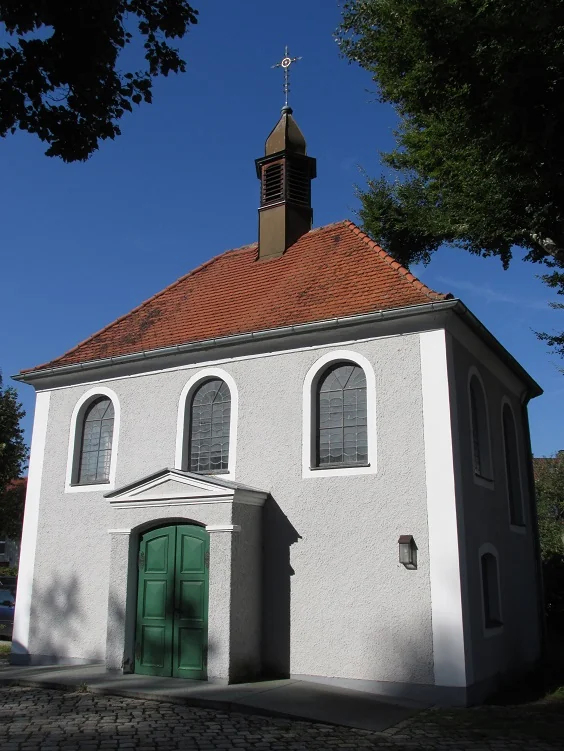
The Friedenskirche Dießen is a Protestant church on the western shore of Lake Ammersee and belongs to the parish of Dießen-Utting, which identifies itself as Ammersee-West. For visitors, it is more than just a place of worship: it is a grown community space where history, devotion, and everyday life come together closely. The current location at Fischermartlstraße 15 in Dießen am Ammersee is listed in the parish's contact details and in business directories; directly opposite is the parish house at Fischermartlstraße 14 at Jocherplatz. Its roots go back to the first services in 1851, while the current church building was developed from an earlier shooting house and consecrated as a prayer house in 1900. This mixture of modest size, rich history, and vibrant use makes the Friedenskirche Dießen a place that provides answers to inquiries about photos, images, directions, parking, and history alike. ([deutschebiz.de](https://www.deutschebiz.de/friedenskirche-evangelisch-lutherische_21Q-08806-7234?utm_source=openai))
Photos, Images, and the Special Atmosphere of Friedenskirche Dießen
Those searching for Friedenskirche Dießen photos or images of the Friedenskirche Dießen will find not only the church description on the parish page but also a photo gallery with numerous image series from community life. There, services, festivals, renovation and construction phases, as well as special community actions are documented. This is important for search intent because the Friedenskirche is visible not only as a building but as a living place: people in front of the church, groups at Jocherplatz, services throughout the year, and the atmosphere around the church convey an image that goes beyond a mere address line. Especially for a small church, the visual impact is often decisive. The Friedenskirche Dießen appears in such images approachable, calm, and strongly connected to the place. Those making travel plans or preparing for a wedding, a service, or a community festival quickly get a sense of how the place feels through pictures. ([evangelisch-am-ammersee.de](https://www.evangelisch-am-ammersee.de/unsere-gemeinde/friedenskirche-diessen))
Architecturally, the Friedenskirche Dießen is intentionally not a monumental sacred building but a historically grown, rather intimate church space. The chronicle describes that in 1899, the site of the old shooting range along with the shooting house was acquired and remodeled by the Dießen master mason Michael Enzensperger: the intermediate floor was removed, and the former west wall received an apse-like extension for the altar. In 1900, this new church, then mostly called a prayer house or prayer hall, was consecrated. This construction history also explains the special effect of the space: simple, concentrated, and oriented towards liturgical use. This fits perfectly with formats like evening devotion, Taizé, pastoral care, or weddings, where closeness and calm are more important than size. So, those looking for pictures of the Friedenskirche often seek an atmosphere that is not loud but clear and friendly. ([evangelisch-am-ammersee.de](https://www.evangelisch-am-ammersee.de/unsere-gemeinde/friedenskirche-diessen))
Directions, Address, and Parking at Friedenskirche Dießen
The practical orientation is simple: The Friedenskirche Dießen is located in Dießen am Ammersee at Fischermartlstraße 15; the parish refers to the opposite parish house at Fischermartlstraße 14 at Jocherplatz. This places the church in a very compact, easily memorable environment that is pleasant for visitors. Those arriving by car should pay attention not only to the immediate surroundings but also to the municipal parking management of Dießen. The market of Dießen indicates a fee time for managed areas daily from 9 am to 5 pm, with a special rule in front of the Marienmünster and at the Klosterhof; the first 30 minutes are free of charge, after which graduated fees apply. Therefore, for short visits, it is sensible to check the parking zones before heading to the church. ([deutschebiz.de](https://www.deutschebiz.de/friedenskirche-evangelisch-lutherische_21Q-08806-7234?utm_source=openai))
For inquiries about directions and parking, it is also important to note that the church is not isolated but embedded in a grown town center. The parish house is directly opposite, and community activities regularly take place around Jocherplatz, such as the Advent market or open-air services. This makes the area well usable for pedestrians, cyclists, and families. Those connecting a visit to the Friedenskirche with a trip to Lake Ammersee can sensibly combine the walk to the church with a stroll through the town. The practical advantage: one reaches the church quickly but does not stop at just the address, instead experiencing a piece of local community life right in Dießen. ([evangelisch-am-ammersee.de](https://www.evangelisch-am-ammersee.de/unsere-gemeinde?utm_source=openai))
History of Friedenskirche Dießen from the First Service to Today
The history of Friedenskirche Dießen does not begin with the building from 1900 but with the Protestant groups on the western shore of Lake Ammersee. The official chronicle reports of a first service in 1851. Before that, the southern Bavarian Protestant families often met in private homes because the journey to Munich or Augsburg was long. Around 1850, the position of the so-called traveling preacher was created to visit these groups in Upper and Lower Bavaria and celebrate services with them. From 1851, there was initially an annual service with communion in Dießen, and from 1859, there were two services a year after a second traveling preacher began his service. In 1884, the station was assigned to a third traveling preacher in Weilheim. This early history shows that the Friedenskirche did not arise by chance but from a genuine need for regular Protestant presence by the lake. ([evangelisch-am-ammersee.de](https://www.evangelisch-am-ammersee.de/unsere-gemeinde/friedenskirche-diessen))
From the growing number of parish members, the desire for a permanent place of worship developed. Therefore, in 1893, monthly services became possible; in 1898, Dießen Protestants founded an Evangelical Association, and in 1899, they acquired the site of the old shooting range with the shooting house. The remodeling by Michael Enzensperger was pragmatic and symbolic at the same time: from a secular existing building, a sacred space with altar apse was created. On July 29, 1900, the new church could be consecrated. Later, the parish structure changed further: in 1926, the Ammersee-West shore became a daughter church community of Weilheim, and in 1947, the parish grew to over 3000 members due to immigration and refugees and was transformed into an independent Evangelical-Lutheran parish of Dießen-Utting. Today, it has become the Ammersee-West parish with two centers in Dießen and Utting. ([evangelisch-am-ammersee.de](https://www.evangelisch-am-ammersee.de/unsere-gemeinde/friedenskirche-diessen))
Services, Evening Devotions, and Events at Friedenskirche
The Friedenskirche Dießen is not only a historical monument but also an active place of worship. It is particularly known for the evening devotion on the 7th at 7: Since September, the parish in Dießen has celebrated an evening devotion in the Friedenskirche on the 7th of each month at 7 pm, lasting about 30 minutes. The format combines impulses, songs, thoughts, prayers, and Bible verses; modern and classical songs alternate with elements from Taizé and the evening prayer according to Luther. For those seeking a calm, short, and meditative approach, this is an important search term and a true profile feature of the church. Thus, the Friedenskirche is not only a place for Sunday services but also for consciously decelerated evening moments where music and silence have space. ([evangelisch-am-ammersee.de](https://www.evangelisch-am-ammersee.de/taize-andacht?utm_source=openai))
This is complemented by further series and special services. The parish invites to Ratatouille services, which take place as evening services in the Friedenskirche; on the parish page, it is explicitly mentioned that there is a service on the third Sunday of the month at 7 pm. Additionally, there are extraordinary formats such as the MoVe service at Jocherplatz in front of the Friedenskirche, which is celebrated in the church in bad weather. The Friedenskirche also appears in community life on festive days, such as at the Christmas Eve service or during Easter evening formats. Therefore, those searching for programs, services, or events will not find a quiet museum building but a place with regular spiritual life and changing formats. ([evangelisch-am-ammersee.de](https://www.evangelisch-am-ammersee.de/ratatouille-gottesdienst?utm_source=openai))
Parish House, Weddings, and Life at Jocherplatz
The life around the Friedenskirche includes the parish house directly. The parish describes itself as a community of about 4500 people from 19 places on the western shore of Lake Ammersee and emphasizes that two parish centers in Dießen and Utting carry everyday life. In the navigation and parish pages, numerous groups and offerings are visible: children's work, youth, adults, choir, brass choir, visitation service, church cinema, and other formats. For visitors, this also explains why the Friedenskirche often appears in search queries together with parish house, group work, or events. The place is not just a space for worship but the center of a diverse community life that connects generations and life situations. This makes the church particularly interesting for people seeking a lively, open, and at the same time manageable Protestant parish structure. ([evangelisch-am-ammersee.de](https://www.evangelisch-am-ammersee.de/unsere-gemeinde?utm_source=openai))
The Friedenskirche also plays a role in special life moments. The parish explicitly names it as one of the wonderful places for weddings on the western shore of Lake Ammersee. At the same time, the Advent market shows how closely the church, parish house, and Jocherplatz are intertwined spatially and thematically: outside on the square, in the parish house, and in the Friedenskirche, different offerings take place during the Advent season, from market stalls to services. This connection of festive framework, community, and manageable size is one reason why the church remains interesting for weddings, community festivals, and seasonal events. Therefore, those searching for wedding Friedenskirche Dießen or events are truly looking for a place where personal occasions and community atmosphere can be well connected. ([evangelisch-am-ammersee.de](https://www.evangelisch-am-ammersee.de/kirche-im-lebenslauf/hochzeit?utm_source=openai))
Practical Tips for Visitors and Why a Visit is Worthwhile
For planning a visit, it is worthwhile to look at three points: first, the occasion, second, the season, and third, the environment. Those searching for photos will especially appreciate the calm, small church atmosphere and the proximity to Jocherplatz. Those seeking history will find a place with early Protestant roots from 1851 and a church building from 1900 that arose from local history. Those looking for services will find regular evening formats like Taizé, Ratatouille, and festive services throughout the church year. And those coming by car should keep an eye on the municipal parking zones of Dießen, as the town center has managed areas with clear fee rules. This mixture of tradition, everyday life, and practical accessibility makes the location attractive: the church is easy to find, anchored in the community, and at the same time a good starting point for a short visit in Dießen am Ammersee. ([evangelisch-am-ammersee.de](https://www.evangelisch-am-ammersee.de/unsere-gemeinde/friedenskirche-diessen))
Those planning their stay at Lake Ammersee can easily combine a visit to the Friedenskirche with a walk through Dießen. The parish itself maintains a clear, friendly profile and shows in its photo gallery as well as in the current pages that new things are constantly emerging here: services, festive days, community, construction, and memory images belong together. This is exactly what makes the Friedenskirche Dießen so relevant for inquiries about images, directions, parking, history, and programs. It is a small church with great storytelling value, where the character of the place is condensed. Those who visit it do not experience a loud spectacle but a grown, calm, and credible Protestant presence on the western shore of Lake Ammersee. ([evangelisch-am-ammersee.de](https://www.evangelisch-am-ammersee.de/unsere-gemeinde/friedenskirche-diessen))
Sources:
Mehr anzeigenWeniger anzeigen
Friedenskirche Dießen | Photos & History
The Friedenskirche Dießen is a Protestant church on the western shore of Lake Ammersee and belongs to the parish of Dießen-Utting, which identifies itself as Ammersee-West. For visitors, it is more than just a place of worship: it is a grown community space where history, devotion, and everyday life come together closely. The current location at Fischermartlstraße 15 in Dießen am Ammersee is listed in the parish's contact details and in business directories; directly opposite is the parish house at Fischermartlstraße 14 at Jocherplatz. Its roots go back to the first services in 1851, while the current church building was developed from an earlier shooting house and consecrated as a prayer house in 1900. This mixture of modest size, rich history, and vibrant use makes the Friedenskirche Dießen a place that provides answers to inquiries about photos, images, directions, parking, and history alike. ([deutschebiz.de](https://www.deutschebiz.de/friedenskirche-evangelisch-lutherische_21Q-08806-7234?utm_source=openai))
Photos, Images, and the Special Atmosphere of Friedenskirche Dießen
Those searching for Friedenskirche Dießen photos or images of the Friedenskirche Dießen will find not only the church description on the parish page but also a photo gallery with numerous image series from community life. There, services, festivals, renovation and construction phases, as well as special community actions are documented. This is important for search intent because the Friedenskirche is visible not only as a building but as a living place: people in front of the church, groups at Jocherplatz, services throughout the year, and the atmosphere around the church convey an image that goes beyond a mere address line. Especially for a small church, the visual impact is often decisive. The Friedenskirche Dießen appears in such images approachable, calm, and strongly connected to the place. Those making travel plans or preparing for a wedding, a service, or a community festival quickly get a sense of how the place feels through pictures. ([evangelisch-am-ammersee.de](https://www.evangelisch-am-ammersee.de/unsere-gemeinde/friedenskirche-diessen))
Architecturally, the Friedenskirche Dießen is intentionally not a monumental sacred building but a historically grown, rather intimate church space. The chronicle describes that in 1899, the site of the old shooting range along with the shooting house was acquired and remodeled by the Dießen master mason Michael Enzensperger: the intermediate floor was removed, and the former west wall received an apse-like extension for the altar. In 1900, this new church, then mostly called a prayer house or prayer hall, was consecrated. This construction history also explains the special effect of the space: simple, concentrated, and oriented towards liturgical use. This fits perfectly with formats like evening devotion, Taizé, pastoral care, or weddings, where closeness and calm are more important than size. So, those looking for pictures of the Friedenskirche often seek an atmosphere that is not loud but clear and friendly. ([evangelisch-am-ammersee.de](https://www.evangelisch-am-ammersee.de/unsere-gemeinde/friedenskirche-diessen))
Directions, Address, and Parking at Friedenskirche Dießen
The practical orientation is simple: The Friedenskirche Dießen is located in Dießen am Ammersee at Fischermartlstraße 15; the parish refers to the opposite parish house at Fischermartlstraße 14 at Jocherplatz. This places the church in a very compact, easily memorable environment that is pleasant for visitors. Those arriving by car should pay attention not only to the immediate surroundings but also to the municipal parking management of Dießen. The market of Dießen indicates a fee time for managed areas daily from 9 am to 5 pm, with a special rule in front of the Marienmünster and at the Klosterhof; the first 30 minutes are free of charge, after which graduated fees apply. Therefore, for short visits, it is sensible to check the parking zones before heading to the church. ([deutschebiz.de](https://www.deutschebiz.de/friedenskirche-evangelisch-lutherische_21Q-08806-7234?utm_source=openai))
For inquiries about directions and parking, it is also important to note that the church is not isolated but embedded in a grown town center. The parish house is directly opposite, and community activities regularly take place around Jocherplatz, such as the Advent market or open-air services. This makes the area well usable for pedestrians, cyclists, and families. Those connecting a visit to the Friedenskirche with a trip to Lake Ammersee can sensibly combine the walk to the church with a stroll through the town. The practical advantage: one reaches the church quickly but does not stop at just the address, instead experiencing a piece of local community life right in Dießen. ([evangelisch-am-ammersee.de](https://www.evangelisch-am-ammersee.de/unsere-gemeinde?utm_source=openai))
History of Friedenskirche Dießen from the First Service to Today
The history of Friedenskirche Dießen does not begin with the building from 1900 but with the Protestant groups on the western shore of Lake Ammersee. The official chronicle reports of a first service in 1851. Before that, the southern Bavarian Protestant families often met in private homes because the journey to Munich or Augsburg was long. Around 1850, the position of the so-called traveling preacher was created to visit these groups in Upper and Lower Bavaria and celebrate services with them. From 1851, there was initially an annual service with communion in Dießen, and from 1859, there were two services a year after a second traveling preacher began his service. In 1884, the station was assigned to a third traveling preacher in Weilheim. This early history shows that the Friedenskirche did not arise by chance but from a genuine need for regular Protestant presence by the lake. ([evangelisch-am-ammersee.de](https://www.evangelisch-am-ammersee.de/unsere-gemeinde/friedenskirche-diessen))
From the growing number of parish members, the desire for a permanent place of worship developed. Therefore, in 1893, monthly services became possible; in 1898, Dießen Protestants founded an Evangelical Association, and in 1899, they acquired the site of the old shooting range with the shooting house. The remodeling by Michael Enzensperger was pragmatic and symbolic at the same time: from a secular existing building, a sacred space with altar apse was created. On July 29, 1900, the new church could be consecrated. Later, the parish structure changed further: in 1926, the Ammersee-West shore became a daughter church community of Weilheim, and in 1947, the parish grew to over 3000 members due to immigration and refugees and was transformed into an independent Evangelical-Lutheran parish of Dießen-Utting. Today, it has become the Ammersee-West parish with two centers in Dießen and Utting. ([evangelisch-am-ammersee.de](https://www.evangelisch-am-ammersee.de/unsere-gemeinde/friedenskirche-diessen))
Services, Evening Devotions, and Events at Friedenskirche
The Friedenskirche Dießen is not only a historical monument but also an active place of worship. It is particularly known for the evening devotion on the 7th at 7: Since September, the parish in Dießen has celebrated an evening devotion in the Friedenskirche on the 7th of each month at 7 pm, lasting about 30 minutes. The format combines impulses, songs, thoughts, prayers, and Bible verses; modern and classical songs alternate with elements from Taizé and the evening prayer according to Luther. For those seeking a calm, short, and meditative approach, this is an important search term and a true profile feature of the church. Thus, the Friedenskirche is not only a place for Sunday services but also for consciously decelerated evening moments where music and silence have space. ([evangelisch-am-ammersee.de](https://www.evangelisch-am-ammersee.de/taize-andacht?utm_source=openai))
This is complemented by further series and special services. The parish invites to Ratatouille services, which take place as evening services in the Friedenskirche; on the parish page, it is explicitly mentioned that there is a service on the third Sunday of the month at 7 pm. Additionally, there are extraordinary formats such as the MoVe service at Jocherplatz in front of the Friedenskirche, which is celebrated in the church in bad weather. The Friedenskirche also appears in community life on festive days, such as at the Christmas Eve service or during Easter evening formats. Therefore, those searching for programs, services, or events will not find a quiet museum building but a place with regular spiritual life and changing formats. ([evangelisch-am-ammersee.de](https://www.evangelisch-am-ammersee.de/ratatouille-gottesdienst?utm_source=openai))
Parish House, Weddings, and Life at Jocherplatz
The life around the Friedenskirche includes the parish house directly. The parish describes itself as a community of about 4500 people from 19 places on the western shore of Lake Ammersee and emphasizes that two parish centers in Dießen and Utting carry everyday life. In the navigation and parish pages, numerous groups and offerings are visible: children's work, youth, adults, choir, brass choir, visitation service, church cinema, and other formats. For visitors, this also explains why the Friedenskirche often appears in search queries together with parish house, group work, or events. The place is not just a space for worship but the center of a diverse community life that connects generations and life situations. This makes the church particularly interesting for people seeking a lively, open, and at the same time manageable Protestant parish structure. ([evangelisch-am-ammersee.de](https://www.evangelisch-am-ammersee.de/unsere-gemeinde?utm_source=openai))
The Friedenskirche also plays a role in special life moments. The parish explicitly names it as one of the wonderful places for weddings on the western shore of Lake Ammersee. At the same time, the Advent market shows how closely the church, parish house, and Jocherplatz are intertwined spatially and thematically: outside on the square, in the parish house, and in the Friedenskirche, different offerings take place during the Advent season, from market stalls to services. This connection of festive framework, community, and manageable size is one reason why the church remains interesting for weddings, community festivals, and seasonal events. Therefore, those searching for wedding Friedenskirche Dießen or events are truly looking for a place where personal occasions and community atmosphere can be well connected. ([evangelisch-am-ammersee.de](https://www.evangelisch-am-ammersee.de/kirche-im-lebenslauf/hochzeit?utm_source=openai))
Practical Tips for Visitors and Why a Visit is Worthwhile
For planning a visit, it is worthwhile to look at three points: first, the occasion, second, the season, and third, the environment. Those searching for photos will especially appreciate the calm, small church atmosphere and the proximity to Jocherplatz. Those seeking history will find a place with early Protestant roots from 1851 and a church building from 1900 that arose from local history. Those looking for services will find regular evening formats like Taizé, Ratatouille, and festive services throughout the church year. And those coming by car should keep an eye on the municipal parking zones of Dießen, as the town center has managed areas with clear fee rules. This mixture of tradition, everyday life, and practical accessibility makes the location attractive: the church is easy to find, anchored in the community, and at the same time a good starting point for a short visit in Dießen am Ammersee. ([evangelisch-am-ammersee.de](https://www.evangelisch-am-ammersee.de/unsere-gemeinde/friedenskirche-diessen))
Those planning their stay at Lake Ammersee can easily combine a visit to the Friedenskirche with a walk through Dießen. The parish itself maintains a clear, friendly profile and shows in its photo gallery as well as in the current pages that new things are constantly emerging here: services, festive days, community, construction, and memory images belong together. This is exactly what makes the Friedenskirche Dießen so relevant for inquiries about images, directions, parking, history, and programs. It is a small church with great storytelling value, where the character of the place is condensed. Those who visit it do not experience a loud spectacle but a grown, calm, and credible Protestant presence on the western shore of Lake Ammersee. ([evangelisch-am-ammersee.de](https://www.evangelisch-am-ammersee.de/unsere-gemeinde/friedenskirche-diessen))
Sources:
Friedenskirche Dießen | Photos & History
The Friedenskirche Dießen is a Protestant church on the western shore of Lake Ammersee and belongs to the parish of Dießen-Utting, which identifies itself as Ammersee-West. For visitors, it is more than just a place of worship: it is a grown community space where history, devotion, and everyday life come together closely. The current location at Fischermartlstraße 15 in Dießen am Ammersee is listed in the parish's contact details and in business directories; directly opposite is the parish house at Fischermartlstraße 14 at Jocherplatz. Its roots go back to the first services in 1851, while the current church building was developed from an earlier shooting house and consecrated as a prayer house in 1900. This mixture of modest size, rich history, and vibrant use makes the Friedenskirche Dießen a place that provides answers to inquiries about photos, images, directions, parking, and history alike. ([deutschebiz.de](https://www.deutschebiz.de/friedenskirche-evangelisch-lutherische_21Q-08806-7234?utm_source=openai))
Photos, Images, and the Special Atmosphere of Friedenskirche Dießen
Those searching for Friedenskirche Dießen photos or images of the Friedenskirche Dießen will find not only the church description on the parish page but also a photo gallery with numerous image series from community life. There, services, festivals, renovation and construction phases, as well as special community actions are documented. This is important for search intent because the Friedenskirche is visible not only as a building but as a living place: people in front of the church, groups at Jocherplatz, services throughout the year, and the atmosphere around the church convey an image that goes beyond a mere address line. Especially for a small church, the visual impact is often decisive. The Friedenskirche Dießen appears in such images approachable, calm, and strongly connected to the place. Those making travel plans or preparing for a wedding, a service, or a community festival quickly get a sense of how the place feels through pictures. ([evangelisch-am-ammersee.de](https://www.evangelisch-am-ammersee.de/unsere-gemeinde/friedenskirche-diessen))
Architecturally, the Friedenskirche Dießen is intentionally not a monumental sacred building but a historically grown, rather intimate church space. The chronicle describes that in 1899, the site of the old shooting range along with the shooting house was acquired and remodeled by the Dießen master mason Michael Enzensperger: the intermediate floor was removed, and the former west wall received an apse-like extension for the altar. In 1900, this new church, then mostly called a prayer house or prayer hall, was consecrated. This construction history also explains the special effect of the space: simple, concentrated, and oriented towards liturgical use. This fits perfectly with formats like evening devotion, Taizé, pastoral care, or weddings, where closeness and calm are more important than size. So, those looking for pictures of the Friedenskirche often seek an atmosphere that is not loud but clear and friendly. ([evangelisch-am-ammersee.de](https://www.evangelisch-am-ammersee.de/unsere-gemeinde/friedenskirche-diessen))
Directions, Address, and Parking at Friedenskirche Dießen
The practical orientation is simple: The Friedenskirche Dießen is located in Dießen am Ammersee at Fischermartlstraße 15; the parish refers to the opposite parish house at Fischermartlstraße 14 at Jocherplatz. This places the church in a very compact, easily memorable environment that is pleasant for visitors. Those arriving by car should pay attention not only to the immediate surroundings but also to the municipal parking management of Dießen. The market of Dießen indicates a fee time for managed areas daily from 9 am to 5 pm, with a special rule in front of the Marienmünster and at the Klosterhof; the first 30 minutes are free of charge, after which graduated fees apply. Therefore, for short visits, it is sensible to check the parking zones before heading to the church. ([deutschebiz.de](https://www.deutschebiz.de/friedenskirche-evangelisch-lutherische_21Q-08806-7234?utm_source=openai))
For inquiries about directions and parking, it is also important to note that the church is not isolated but embedded in a grown town center. The parish house is directly opposite, and community activities regularly take place around Jocherplatz, such as the Advent market or open-air services. This makes the area well usable for pedestrians, cyclists, and families. Those connecting a visit to the Friedenskirche with a trip to Lake Ammersee can sensibly combine the walk to the church with a stroll through the town. The practical advantage: one reaches the church quickly but does not stop at just the address, instead experiencing a piece of local community life right in Dießen. ([evangelisch-am-ammersee.de](https://www.evangelisch-am-ammersee.de/unsere-gemeinde?utm_source=openai))
History of Friedenskirche Dießen from the First Service to Today
The history of Friedenskirche Dießen does not begin with the building from 1900 but with the Protestant groups on the western shore of Lake Ammersee. The official chronicle reports of a first service in 1851. Before that, the southern Bavarian Protestant families often met in private homes because the journey to Munich or Augsburg was long. Around 1850, the position of the so-called traveling preacher was created to visit these groups in Upper and Lower Bavaria and celebrate services with them. From 1851, there was initially an annual service with communion in Dießen, and from 1859, there were two services a year after a second traveling preacher began his service. In 1884, the station was assigned to a third traveling preacher in Weilheim. This early history shows that the Friedenskirche did not arise by chance but from a genuine need for regular Protestant presence by the lake. ([evangelisch-am-ammersee.de](https://www.evangelisch-am-ammersee.de/unsere-gemeinde/friedenskirche-diessen))
From the growing number of parish members, the desire for a permanent place of worship developed. Therefore, in 1893, monthly services became possible; in 1898, Dießen Protestants founded an Evangelical Association, and in 1899, they acquired the site of the old shooting range with the shooting house. The remodeling by Michael Enzensperger was pragmatic and symbolic at the same time: from a secular existing building, a sacred space with altar apse was created. On July 29, 1900, the new church could be consecrated. Later, the parish structure changed further: in 1926, the Ammersee-West shore became a daughter church community of Weilheim, and in 1947, the parish grew to over 3000 members due to immigration and refugees and was transformed into an independent Evangelical-Lutheran parish of Dießen-Utting. Today, it has become the Ammersee-West parish with two centers in Dießen and Utting. ([evangelisch-am-ammersee.de](https://www.evangelisch-am-ammersee.de/unsere-gemeinde/friedenskirche-diessen))
Services, Evening Devotions, and Events at Friedenskirche
The Friedenskirche Dießen is not only a historical monument but also an active place of worship. It is particularly known for the evening devotion on the 7th at 7: Since September, the parish in Dießen has celebrated an evening devotion in the Friedenskirche on the 7th of each month at 7 pm, lasting about 30 minutes. The format combines impulses, songs, thoughts, prayers, and Bible verses; modern and classical songs alternate with elements from Taizé and the evening prayer according to Luther. For those seeking a calm, short, and meditative approach, this is an important search term and a true profile feature of the church. Thus, the Friedenskirche is not only a place for Sunday services but also for consciously decelerated evening moments where music and silence have space. ([evangelisch-am-ammersee.de](https://www.evangelisch-am-ammersee.de/taize-andacht?utm_source=openai))
This is complemented by further series and special services. The parish invites to Ratatouille services, which take place as evening services in the Friedenskirche; on the parish page, it is explicitly mentioned that there is a service on the third Sunday of the month at 7 pm. Additionally, there are extraordinary formats such as the MoVe service at Jocherplatz in front of the Friedenskirche, which is celebrated in the church in bad weather. The Friedenskirche also appears in community life on festive days, such as at the Christmas Eve service or during Easter evening formats. Therefore, those searching for programs, services, or events will not find a quiet museum building but a place with regular spiritual life and changing formats. ([evangelisch-am-ammersee.de](https://www.evangelisch-am-ammersee.de/ratatouille-gottesdienst?utm_source=openai))
Parish House, Weddings, and Life at Jocherplatz
The life around the Friedenskirche includes the parish house directly. The parish describes itself as a community of about 4500 people from 19 places on the western shore of Lake Ammersee and emphasizes that two parish centers in Dießen and Utting carry everyday life. In the navigation and parish pages, numerous groups and offerings are visible: children's work, youth, adults, choir, brass choir, visitation service, church cinema, and other formats. For visitors, this also explains why the Friedenskirche often appears in search queries together with parish house, group work, or events. The place is not just a space for worship but the center of a diverse community life that connects generations and life situations. This makes the church particularly interesting for people seeking a lively, open, and at the same time manageable Protestant parish structure. ([evangelisch-am-ammersee.de](https://www.evangelisch-am-ammersee.de/unsere-gemeinde?utm_source=openai))
The Friedenskirche also plays a role in special life moments. The parish explicitly names it as one of the wonderful places for weddings on the western shore of Lake Ammersee. At the same time, the Advent market shows how closely the church, parish house, and Jocherplatz are intertwined spatially and thematically: outside on the square, in the parish house, and in the Friedenskirche, different offerings take place during the Advent season, from market stalls to services. This connection of festive framework, community, and manageable size is one reason why the church remains interesting for weddings, community festivals, and seasonal events. Therefore, those searching for wedding Friedenskirche Dießen or events are truly looking for a place where personal occasions and community atmosphere can be well connected. ([evangelisch-am-ammersee.de](https://www.evangelisch-am-ammersee.de/kirche-im-lebenslauf/hochzeit?utm_source=openai))
Practical Tips for Visitors and Why a Visit is Worthwhile
For planning a visit, it is worthwhile to look at three points: first, the occasion, second, the season, and third, the environment. Those searching for photos will especially appreciate the calm, small church atmosphere and the proximity to Jocherplatz. Those seeking history will find a place with early Protestant roots from 1851 and a church building from 1900 that arose from local history. Those looking for services will find regular evening formats like Taizé, Ratatouille, and festive services throughout the church year. And those coming by car should keep an eye on the municipal parking zones of Dießen, as the town center has managed areas with clear fee rules. This mixture of tradition, everyday life, and practical accessibility makes the location attractive: the church is easy to find, anchored in the community, and at the same time a good starting point for a short visit in Dießen am Ammersee. ([evangelisch-am-ammersee.de](https://www.evangelisch-am-ammersee.de/unsere-gemeinde/friedenskirche-diessen))
Those planning their stay at Lake Ammersee can easily combine a visit to the Friedenskirche with a walk through Dießen. The parish itself maintains a clear, friendly profile and shows in its photo gallery as well as in the current pages that new things are constantly emerging here: services, festive days, community, construction, and memory images belong together. This is exactly what makes the Friedenskirche Dießen so relevant for inquiries about images, directions, parking, history, and programs. It is a small church with great storytelling value, where the character of the place is condensed. Those who visit it do not experience a loud spectacle but a grown, calm, and credible Protestant presence on the western shore of Lake Ammersee. ([evangelisch-am-ammersee.de](https://www.evangelisch-am-ammersee.de/unsere-gemeinde/friedenskirche-diessen))
Sources:
Upcoming Events
No events found
Frequently Asked Questions
Reviews
No reviews found