
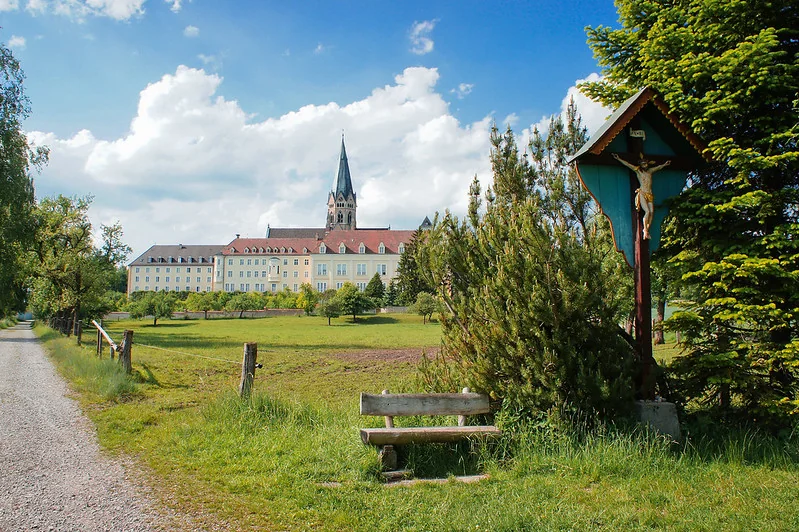
Eresing
Erzabtei 1, 86941 Eresing, Deutschland
Archabbey St. Ottilien | Services & Live Stream
The Archabbey St. Ottilien is much more than a religious site with impressive architecture: it is a vibrant monastic village, a spiritual center, an educational institution, and a place of encounter in the pre-Alpine landscape between Munich and Augsburg. Those who come to St. Ottilien often first look for services, live streams, address, or directions, but quickly discover an ensemble of church, monastic buildings, museum, school, guest house, workshops, gardening, and cultural offerings. This unique mix makes the Archabbey so special: here, Benedictine life, lived hospitality, historical awareness, and an active present-day monastery come together. The grounds are closely connected to Eresing, the official address is Archabbey 1, 86941 St. Ottilien, and the monastery map helps with orientation on the premises since the introduction of house numbers. Therefore, visitors to the Archabbey do not experience a closed sacred space, but a place that prays, works, teaches, welcomes, and remembers daily. ([erzabtei.de](https://www.erzabtei.de/kontakt.html))
Services today, Live Stream, and Downloads
Inquiries about the Archabbey primarily focus on services, live streams, and downloads, and this is no coincidence: the monastery maintains a particularly dense prayer life. The official monastery guide lists, among other things, Vigil and Lauds in the early morning, convent mass, Eucharistic celebration, midday prayer, Vespers, and Compline for weekdays; this illustrates how strongly the daily rhythm is shaped by communal prayer. Additionally, the events page features public appointments such as youth Vespers, monastery tours, Sunday evening masses, and major feasts. Therefore, those searching for services today should not expect just a static calendar, but a lively schedule that aligns with the liturgical times and the special occasions of the community. The Archabbey makes it easy for visitors and co-prayers: on the Archabbey Live page, it refers to the YouTube channel and a pure audio stream without video, which is available during prayer times. There is also a download archive in MP3 format where the prayer times can be listened to again. For people who cannot be on site, this is particularly valuable because digital access does not replace monastic prayer but meaningfully expands it. This creates a modern, easily accessible offering for all who wish to participate live, listen later, or inform themselves about the processes before a visit. The combination of the current event overview, live stream, and archive is therefore one of the strongest digital advantages of the Archabbey. ([erzabtei.de](https://erzabtei.de/sites/default/files/Klosterfuehrer.pdf))
For inquiries such as Archabbey St. Ottilien live stream youtube, the official structure is clear and user-friendly. The page explicitly states the address of the YouTube channel, explains the audio stream without video, and refers to the archive of the last prayer times. This way, spiritual life can not only be visited but also accompanied in everyday life. For example, those seeking a moment of silence in the morning, at noon, or in the evening can orient themselves to the Benedictine Liturgy of the Hours and find very concrete indications on the official pages. Additionally, the download archive shows that the Archabbey does not view its prayer times as exceptions but as a continuous service: the archive contains recordings from various days and times of day, including mass, convent mass, morning prayer, Vespers, midday prayer, and Compline. This regularity shapes the profile of the location and distinguishes St. Ottilien from a classic event venue. At the same time, it makes the Archabbey attractive to visitors seeking a spiritual atmosphere without sacrificing orientation and transparency. Those asking today for a place where prayer, liturgy, and digital reach come together will find a very coherent example in St. Ottilien. ([erzabtei.de](https://erzabtei.de/live?utm_source=openai))
Address, Maps, and Directions to Eresing
The address of the Archabbey St. Ottilien is clear and easy to find: Archabbey 1, 86941 St. Ottilien. The official contact page directly states this address, and the monastery map additionally explains that since January 1, 2013, all buildings in the monastic village have house numbers to facilitate orientation for visitors and mail delivery. For those searching for the location via maps or navigation systems, this is a real advantage, as the Archabbey is organized not as an isolated structure but as a larger complex with several institutions. The monastery guide also describes the location very specifically: St. Ottilien is located about 40 kilometers west of Munich, approximately 35 kilometers south of Augsburg, and roughly halfway between Landsberg and Fürstenfeldbruck. Additionally, there is access to the A96 and to the train: there is a dedicated train station St. Ottilien, and the Geltendorf station is only about two kilometers away. Those arriving by S-Bahn can use the S4 towards Geltendorf. Thus, the Archabbey is easily accessible for both car and train travelers. This practical combination explains why inquiries often include directions, parking, and orientation alongside address and maps. The Archabbey is a place that one consciously approaches, yet remains easily accessible through clear information and understandable signage. ([erzabtei.de](https://www.erzabtei.de/kontakt.html))
Regarding parking, it is evident that the Archabbey communicates specific uses of the grounds beyond mere visitor information. An official post mentions a northern parking lot that has been open since 2016 for motorhome travelers as part of a cooperation; guests use a parking space framed by hedges and trees. While this is not identical to a classic visitor parking lot, it clearly shows that the monastic village also works with practical solutions in the area of arrival and overnight stays. For regular visits, the monastery map is also helpful as it makes visible the many buildings, paths, and facilities and facilitates orientation on the grounds. The house number structure also supports navigation, as the Archabbey is not a monolithic building but a small place with its own functional mix of church, school, guest house, workshops, museum, gastronomy, and administration. Therefore, those arriving by car should not only know the exact address but also understand that the paths on the grounds may sometimes appear more monastic than urban: spacious, quiet, and clearly structured. For visitors, this is pleasant because there is no hustle; at the same time, it requires some attention upon arrival. This is precisely why maps, directions, and orientation in St. Ottilien are so important. ([erzabtei.de](https://www.erzabtei.de/assets/files/missionsblaetter/missionsblaetter202502.pdf))
Monks, History, and Monastic Life
The history of the Archabbey St. Ottilien officially begins in the 19th century but has spiritual roots that reach further back. The official historical text tells that Father Andreas Amrhein founded a community in 1884 in Reichenbach in the Upper Palatinate that wanted to combine Benedictine life and mission. Because Reichenbach was geographically unfavorable and the founding faced ecclesiastical resistance, it was relocated to Emming in Upper Bavaria in 1887. There, there was a small Ottilien chapel, and thus the name St. Ottilien immediately took hold. In the same year, the first group of missionaries was sent to East Africa. In 1902, the monastery was granted the status of an abbey, and in 1914 it was elevated to an archabbey and the main monastery of the missionary Benedictines. The history is therefore not only a local monastic history but also a history of mission and order. Particularly formative were the years of growth under Archabbot Norbert Weber, the upheavals of the interwar period, the dissolution of the monastery in 1941, and the return of the monks in 1945. The time after the war, during which part of the monastery served as a hospital for liberated concentration camp prisoners until 1948, is also inextricably linked to the identity of the place. Today, the community here consists of about 90 Benedictine monks; other brothers work in places like Jakobsberg or Monte Irago and in missionary monasteries on other continents. This makes St. Ottilien a place where local roots and global orientation come together. ([erzabtei.de](https://www.erzabtei.de/geschichte))
Today's monastic life is also clearly shaped by Benedictine principles. The monastery guide describes St. Ottilien as a large monastic village complex, whose center is the Heart of Jesus Church, where church, residential buildings, chapter hall, postulancy, novitiate, refectory, guest house, and missionary museum are functionally interconnected. The Benedictine motto ora et labora is not just a saying but is visible in the spatial and temporal order. The monks do not live in seclusion but are in constant exchange with secular society, for example, through events, spiritual offerings, tours, educational institutions, and social or cultural tasks. The historical text also mentions that over the years, the Archabbey has become a monastic village with a gymnasium, retreat and guest houses, publishing house, workshops, agriculture, and horticulture. This unique atmosphere arises from the fact that St. Ottilien is neither a museum nor a leisure park, but a living place with rules, prayer, work, and hospitality. Those who come here quickly sense that history is not complete but is being continued. The mention of the current Archabbot Wolfgang Öxler and the historically grown community also shows how strongly the present remains connected to tradition. This mixture explains why the Archabbey frequently appears in inquiries about monks, history, and becoming a monk: the place is identity-forming, open, and at the same time deeply related to the order. ([erzabtei.de](https://erzabtei.de/sites/default/files/Klosterfuehrer.pdf))
Bells, Bell Schedule, and the Monastic Church
Those searching for the bell of St. Ottilien quickly land at one of the acoustically most impressive features of the entire area: the ringing of the abbey church. The official bell page explains that the bells structure the daily and yearly rhythm, call to worship, comfort, encourage, and organize the community beyond everyday life. Particularly interesting is that the Archabbey not only describes its bells but also explains and makes them audible. There is a bell schedule in which individual bells or combinations are linked and made directly experienceable via YouTube. The nine bells bear meaningful names such as Christus Salvator, Benediktus, Maria Assumpta, Maria Annuntiata, Ottilia, Apostel, Ulrich, and Konrad, witnesses of faith and Bonifatius. Some come from Karl Czudnochowsky from Erding from the years 1949 and 1950, while the bell of the witnesses of faith is younger and was cast in 2019 by Grassmayr in Innsbruck. Even this naming shows how closely sound, theology, and local identity are intertwined. The bells are not just technical elements but liturgical and symbolic actors. Therefore, when visiting the Archabbey, one does not simply experience a monastery with a bell tower but an acoustically shaped monastic landscape where the ringing marks the day and defines the space. Especially in inquiries such as bell or bell live, there is often more behind it than mere curiosity: it signifies an interest in sound culture, liturgy, and the question of how a traditional monastery remains audible in the digital age. ([erzabtei.de](https://erzabtei.de/glocken))
Equally formative is the Heart of Jesus Church itself. The historical text describes it as a neo-Gothic building constructed from 1897 to 1899 with a 75-meter-high tower that dominates the entire monastery grounds and is visible from a great distance. Built according to the plans of Munich architect Hans Schurr, the church is now one of the landmarks of St. Ottilien. Inside, the simple architecture and subtle color scheme convey a quiet, sublime solemnity. At the same time, the abbey church is not a parish church but a place where many guests appreciate the services and especially the Gregorian chant. Below the sacristy is the missionary museum, which further deepens the spiritual and historical dimension of the place. From a visitor's perspective, this is an important note: the Archabbey is interesting not only because of its liturgy but also because of its architectural ensemble. Church, museum, monastic buildings, and chapel together form a dense fabric of memory, prayer, and art. Therefore, those visiting the place should take their time, not just stop by briefly, but allow the space with its sightlines, its sound, and its history to have an effect on them. This is exactly what makes St. Ottilien a location that frequently appears positively in inquiries for photos, reviews, and highlights. ([erzabtei.de](https://www.erzabtei.de/geschichte))
Internship, Day Care, and Rhabanus-Maurus-Gymnasium
A central part of the Archabbey is the educational sector. The building complex in the east of the monastic village houses the Rhabanus-Maurus-Gymnasium, a former boarding school, and a day care center. This explains why search terms like boarding school, school, and day care are so frequently associated with St. Ottilien: here exists a historically grown school site that is closely connected to the monastery. The official page Youth and School explains that the gymnasium was originally intended for the monastery's offspring but has been open to girls since 1973. Additionally, the learning offerings have been expanded to include a modern language branch. External students go home after classes, while the day care center provides open all-day care. According to the official description, about one-third of the 700 gymnasium students attend this all-day program, where homework, study times, meals, and leisure activities are structured. This makes St. Ottilien not only a spiritual place but also an educational institution with real everyday functions. The Archabbey emphasizes its Benedictine tradition, which shapes the school, care, and education. This connection between monastic spirituality and modern school organization explains why the place remains so present among families, young people, and alumni. Therefore, those searching for boarding school St. Ottilien encounter a historical heritage that has evolved and is now primarily visible as a school and care landscape. ([erzabtei.de](https://erzabtei.de/kloster))
The economic and personnel side of the monastic village also plays a role. On the job postings page, the Archabbey describes itself as a monastery building with a church that is also a whole monastic village with many businesses, where approximately as many employees as monks work. These include, among others, the monastery shop, farm shop, gardening, butcher shop, EOS publishing house, monastery guesthouse, school, day care center, campsite, cultural offerings, and other services. This diversity is often surprising for visitors but explains the high visibility in inquiries for job offers. The Archabbey openly communicates that it is always looking for new employees. This is also an SEO-relevant aspect, as it shows that St. Ottilien is not a static monument but a working organism with various fields of work. In combination with the day care center, the gymnasium, and cultural activities, a lively overall picture emerges: learning, working, praying, and encountering belong together here. Therefore, those planning the location should not only think of the church and monastery but also of the school operation, events, guests, and the many people who support the place daily. This is one of the reasons why St. Ottilien goes far beyond the classic monastic function in regional perception. ([erzabtei.de](https://erzabtei.de/stellenanzeigen.html))
Photos, Facebook, Reviews, and Visiting Tips
For photos and social media, the Archabbey also offers good points of connection. In the official footer, it links to Facebook, YouTube, Flickr, and Instagram; on the bell page, it also refers to a YouTube channel with further information and bell combinations. This is relevant for users with search interests in photos or Facebook, as the Archabbey makes visible where current impressions, images, and videos can be found. The monastery guide complements this digital perspective with a very classic approach: on-site, there are numerous information boards, a tour with more than 40 sights, and a monastery guide available at the gate or in the monastery shop. For visitors, this means that those who want to not just quickly photograph St. Ottilien but truly understand it should take their time and explore the grounds step by step. It is particularly recommended to quietly see the abbey church, the missionary museum, the Ottilien chapel, the peace fountain, the monastery cemetery, and the area around the school. The official events also provide good pointers for a visit, as they publish tours, masses, and recurring formats. In the provided review data, the location also holds 4.7 stars and 1,050 reviews, which further supports the positive overall impression. Together, this creates a strong mix of digital presence, personal experience, and monastic tranquility. This is exactly why many users search not only for the address but for a complete overview with photos, reviews, and practical tips for the first visit. ([erzabtei.de](https://erzabtei.de/glocken))
Sources:
- Archabbey St. Ottilien - Official Website
- Archabbey St. Ottilien - History
- Archabbey St. Ottilien - Live
- Archabbey St. Ottilien - Downloads
- Archabbey St. Ottilien - Contact
- Archabbey St. Ottilien - Our Monastery
- Archabbey St. Ottilien - Events
- Archabbey St. Ottilien - Bells
- Archabbey St. Ottilien - The Bells of the Abbey Church
- Archabbey St. Ottilien - Monastery Map
- Archabbey St. Ottilien - Day Care
- Archabbey St. Ottilien - Youth and School
- Archabbey St. Ottilien - Job Postings
Mehr anzeigenWeniger anzeigen
Archabbey St. Ottilien | Services & Live Stream
The Archabbey St. Ottilien is much more than a religious site with impressive architecture: it is a vibrant monastic village, a spiritual center, an educational institution, and a place of encounter in the pre-Alpine landscape between Munich and Augsburg. Those who come to St. Ottilien often first look for services, live streams, address, or directions, but quickly discover an ensemble of church, monastic buildings, museum, school, guest house, workshops, gardening, and cultural offerings. This unique mix makes the Archabbey so special: here, Benedictine life, lived hospitality, historical awareness, and an active present-day monastery come together. The grounds are closely connected to Eresing, the official address is Archabbey 1, 86941 St. Ottilien, and the monastery map helps with orientation on the premises since the introduction of house numbers. Therefore, visitors to the Archabbey do not experience a closed sacred space, but a place that prays, works, teaches, welcomes, and remembers daily. ([erzabtei.de](https://www.erzabtei.de/kontakt.html))
Services today, Live Stream, and Downloads
Inquiries about the Archabbey primarily focus on services, live streams, and downloads, and this is no coincidence: the monastery maintains a particularly dense prayer life. The official monastery guide lists, among other things, Vigil and Lauds in the early morning, convent mass, Eucharistic celebration, midday prayer, Vespers, and Compline for weekdays; this illustrates how strongly the daily rhythm is shaped by communal prayer. Additionally, the events page features public appointments such as youth Vespers, monastery tours, Sunday evening masses, and major feasts. Therefore, those searching for services today should not expect just a static calendar, but a lively schedule that aligns with the liturgical times and the special occasions of the community. The Archabbey makes it easy for visitors and co-prayers: on the Archabbey Live page, it refers to the YouTube channel and a pure audio stream without video, which is available during prayer times. There is also a download archive in MP3 format where the prayer times can be listened to again. For people who cannot be on site, this is particularly valuable because digital access does not replace monastic prayer but meaningfully expands it. This creates a modern, easily accessible offering for all who wish to participate live, listen later, or inform themselves about the processes before a visit. The combination of the current event overview, live stream, and archive is therefore one of the strongest digital advantages of the Archabbey. ([erzabtei.de](https://erzabtei.de/sites/default/files/Klosterfuehrer.pdf))
For inquiries such as Archabbey St. Ottilien live stream youtube, the official structure is clear and user-friendly. The page explicitly states the address of the YouTube channel, explains the audio stream without video, and refers to the archive of the last prayer times. This way, spiritual life can not only be visited but also accompanied in everyday life. For example, those seeking a moment of silence in the morning, at noon, or in the evening can orient themselves to the Benedictine Liturgy of the Hours and find very concrete indications on the official pages. Additionally, the download archive shows that the Archabbey does not view its prayer times as exceptions but as a continuous service: the archive contains recordings from various days and times of day, including mass, convent mass, morning prayer, Vespers, midday prayer, and Compline. This regularity shapes the profile of the location and distinguishes St. Ottilien from a classic event venue. At the same time, it makes the Archabbey attractive to visitors seeking a spiritual atmosphere without sacrificing orientation and transparency. Those asking today for a place where prayer, liturgy, and digital reach come together will find a very coherent example in St. Ottilien. ([erzabtei.de](https://erzabtei.de/live?utm_source=openai))
Address, Maps, and Directions to Eresing
The address of the Archabbey St. Ottilien is clear and easy to find: Archabbey 1, 86941 St. Ottilien. The official contact page directly states this address, and the monastery map additionally explains that since January 1, 2013, all buildings in the monastic village have house numbers to facilitate orientation for visitors and mail delivery. For those searching for the location via maps or navigation systems, this is a real advantage, as the Archabbey is organized not as an isolated structure but as a larger complex with several institutions. The monastery guide also describes the location very specifically: St. Ottilien is located about 40 kilometers west of Munich, approximately 35 kilometers south of Augsburg, and roughly halfway between Landsberg and Fürstenfeldbruck. Additionally, there is access to the A96 and to the train: there is a dedicated train station St. Ottilien, and the Geltendorf station is only about two kilometers away. Those arriving by S-Bahn can use the S4 towards Geltendorf. Thus, the Archabbey is easily accessible for both car and train travelers. This practical combination explains why inquiries often include directions, parking, and orientation alongside address and maps. The Archabbey is a place that one consciously approaches, yet remains easily accessible through clear information and understandable signage. ([erzabtei.de](https://www.erzabtei.de/kontakt.html))
Regarding parking, it is evident that the Archabbey communicates specific uses of the grounds beyond mere visitor information. An official post mentions a northern parking lot that has been open since 2016 for motorhome travelers as part of a cooperation; guests use a parking space framed by hedges and trees. While this is not identical to a classic visitor parking lot, it clearly shows that the monastic village also works with practical solutions in the area of arrival and overnight stays. For regular visits, the monastery map is also helpful as it makes visible the many buildings, paths, and facilities and facilitates orientation on the grounds. The house number structure also supports navigation, as the Archabbey is not a monolithic building but a small place with its own functional mix of church, school, guest house, workshops, museum, gastronomy, and administration. Therefore, those arriving by car should not only know the exact address but also understand that the paths on the grounds may sometimes appear more monastic than urban: spacious, quiet, and clearly structured. For visitors, this is pleasant because there is no hustle; at the same time, it requires some attention upon arrival. This is precisely why maps, directions, and orientation in St. Ottilien are so important. ([erzabtei.de](https://www.erzabtei.de/assets/files/missionsblaetter/missionsblaetter202502.pdf))
Monks, History, and Monastic Life
The history of the Archabbey St. Ottilien officially begins in the 19th century but has spiritual roots that reach further back. The official historical text tells that Father Andreas Amrhein founded a community in 1884 in Reichenbach in the Upper Palatinate that wanted to combine Benedictine life and mission. Because Reichenbach was geographically unfavorable and the founding faced ecclesiastical resistance, it was relocated to Emming in Upper Bavaria in 1887. There, there was a small Ottilien chapel, and thus the name St. Ottilien immediately took hold. In the same year, the first group of missionaries was sent to East Africa. In 1902, the monastery was granted the status of an abbey, and in 1914 it was elevated to an archabbey and the main monastery of the missionary Benedictines. The history is therefore not only a local monastic history but also a history of mission and order. Particularly formative were the years of growth under Archabbot Norbert Weber, the upheavals of the interwar period, the dissolution of the monastery in 1941, and the return of the monks in 1945. The time after the war, during which part of the monastery served as a hospital for liberated concentration camp prisoners until 1948, is also inextricably linked to the identity of the place. Today, the community here consists of about 90 Benedictine monks; other brothers work in places like Jakobsberg or Monte Irago and in missionary monasteries on other continents. This makes St. Ottilien a place where local roots and global orientation come together. ([erzabtei.de](https://www.erzabtei.de/geschichte))
Today's monastic life is also clearly shaped by Benedictine principles. The monastery guide describes St. Ottilien as a large monastic village complex, whose center is the Heart of Jesus Church, where church, residential buildings, chapter hall, postulancy, novitiate, refectory, guest house, and missionary museum are functionally interconnected. The Benedictine motto ora et labora is not just a saying but is visible in the spatial and temporal order. The monks do not live in seclusion but are in constant exchange with secular society, for example, through events, spiritual offerings, tours, educational institutions, and social or cultural tasks. The historical text also mentions that over the years, the Archabbey has become a monastic village with a gymnasium, retreat and guest houses, publishing house, workshops, agriculture, and horticulture. This unique atmosphere arises from the fact that St. Ottilien is neither a museum nor a leisure park, but a living place with rules, prayer, work, and hospitality. Those who come here quickly sense that history is not complete but is being continued. The mention of the current Archabbot Wolfgang Öxler and the historically grown community also shows how strongly the present remains connected to tradition. This mixture explains why the Archabbey frequently appears in inquiries about monks, history, and becoming a monk: the place is identity-forming, open, and at the same time deeply related to the order. ([erzabtei.de](https://erzabtei.de/sites/default/files/Klosterfuehrer.pdf))
Bells, Bell Schedule, and the Monastic Church
Those searching for the bell of St. Ottilien quickly land at one of the acoustically most impressive features of the entire area: the ringing of the abbey church. The official bell page explains that the bells structure the daily and yearly rhythm, call to worship, comfort, encourage, and organize the community beyond everyday life. Particularly interesting is that the Archabbey not only describes its bells but also explains and makes them audible. There is a bell schedule in which individual bells or combinations are linked and made directly experienceable via YouTube. The nine bells bear meaningful names such as Christus Salvator, Benediktus, Maria Assumpta, Maria Annuntiata, Ottilia, Apostel, Ulrich, and Konrad, witnesses of faith and Bonifatius. Some come from Karl Czudnochowsky from Erding from the years 1949 and 1950, while the bell of the witnesses of faith is younger and was cast in 2019 by Grassmayr in Innsbruck. Even this naming shows how closely sound, theology, and local identity are intertwined. The bells are not just technical elements but liturgical and symbolic actors. Therefore, when visiting the Archabbey, one does not simply experience a monastery with a bell tower but an acoustically shaped monastic landscape where the ringing marks the day and defines the space. Especially in inquiries such as bell or bell live, there is often more behind it than mere curiosity: it signifies an interest in sound culture, liturgy, and the question of how a traditional monastery remains audible in the digital age. ([erzabtei.de](https://erzabtei.de/glocken))
Equally formative is the Heart of Jesus Church itself. The historical text describes it as a neo-Gothic building constructed from 1897 to 1899 with a 75-meter-high tower that dominates the entire monastery grounds and is visible from a great distance. Built according to the plans of Munich architect Hans Schurr, the church is now one of the landmarks of St. Ottilien. Inside, the simple architecture and subtle color scheme convey a quiet, sublime solemnity. At the same time, the abbey church is not a parish church but a place where many guests appreciate the services and especially the Gregorian chant. Below the sacristy is the missionary museum, which further deepens the spiritual and historical dimension of the place. From a visitor's perspective, this is an important note: the Archabbey is interesting not only because of its liturgy but also because of its architectural ensemble. Church, museum, monastic buildings, and chapel together form a dense fabric of memory, prayer, and art. Therefore, those visiting the place should take their time, not just stop by briefly, but allow the space with its sightlines, its sound, and its history to have an effect on them. This is exactly what makes St. Ottilien a location that frequently appears positively in inquiries for photos, reviews, and highlights. ([erzabtei.de](https://www.erzabtei.de/geschichte))
Internship, Day Care, and Rhabanus-Maurus-Gymnasium
A central part of the Archabbey is the educational sector. The building complex in the east of the monastic village houses the Rhabanus-Maurus-Gymnasium, a former boarding school, and a day care center. This explains why search terms like boarding school, school, and day care are so frequently associated with St. Ottilien: here exists a historically grown school site that is closely connected to the monastery. The official page Youth and School explains that the gymnasium was originally intended for the monastery's offspring but has been open to girls since 1973. Additionally, the learning offerings have been expanded to include a modern language branch. External students go home after classes, while the day care center provides open all-day care. According to the official description, about one-third of the 700 gymnasium students attend this all-day program, where homework, study times, meals, and leisure activities are structured. This makes St. Ottilien not only a spiritual place but also an educational institution with real everyday functions. The Archabbey emphasizes its Benedictine tradition, which shapes the school, care, and education. This connection between monastic spirituality and modern school organization explains why the place remains so present among families, young people, and alumni. Therefore, those searching for boarding school St. Ottilien encounter a historical heritage that has evolved and is now primarily visible as a school and care landscape. ([erzabtei.de](https://erzabtei.de/kloster))
The economic and personnel side of the monastic village also plays a role. On the job postings page, the Archabbey describes itself as a monastery building with a church that is also a whole monastic village with many businesses, where approximately as many employees as monks work. These include, among others, the monastery shop, farm shop, gardening, butcher shop, EOS publishing house, monastery guesthouse, school, day care center, campsite, cultural offerings, and other services. This diversity is often surprising for visitors but explains the high visibility in inquiries for job offers. The Archabbey openly communicates that it is always looking for new employees. This is also an SEO-relevant aspect, as it shows that St. Ottilien is not a static monument but a working organism with various fields of work. In combination with the day care center, the gymnasium, and cultural activities, a lively overall picture emerges: learning, working, praying, and encountering belong together here. Therefore, those planning the location should not only think of the church and monastery but also of the school operation, events, guests, and the many people who support the place daily. This is one of the reasons why St. Ottilien goes far beyond the classic monastic function in regional perception. ([erzabtei.de](https://erzabtei.de/stellenanzeigen.html))
Photos, Facebook, Reviews, and Visiting Tips
For photos and social media, the Archabbey also offers good points of connection. In the official footer, it links to Facebook, YouTube, Flickr, and Instagram; on the bell page, it also refers to a YouTube channel with further information and bell combinations. This is relevant for users with search interests in photos or Facebook, as the Archabbey makes visible where current impressions, images, and videos can be found. The monastery guide complements this digital perspective with a very classic approach: on-site, there are numerous information boards, a tour with more than 40 sights, and a monastery guide available at the gate or in the monastery shop. For visitors, this means that those who want to not just quickly photograph St. Ottilien but truly understand it should take their time and explore the grounds step by step. It is particularly recommended to quietly see the abbey church, the missionary museum, the Ottilien chapel, the peace fountain, the monastery cemetery, and the area around the school. The official events also provide good pointers for a visit, as they publish tours, masses, and recurring formats. In the provided review data, the location also holds 4.7 stars and 1,050 reviews, which further supports the positive overall impression. Together, this creates a strong mix of digital presence, personal experience, and monastic tranquility. This is exactly why many users search not only for the address but for a complete overview with photos, reviews, and practical tips for the first visit. ([erzabtei.de](https://erzabtei.de/glocken))
Sources:
- Archabbey St. Ottilien - Official Website
- Archabbey St. Ottilien - History
- Archabbey St. Ottilien - Live
- Archabbey St. Ottilien - Downloads
- Archabbey St. Ottilien - Contact
- Archabbey St. Ottilien - Our Monastery
- Archabbey St. Ottilien - Events
- Archabbey St. Ottilien - Bells
- Archabbey St. Ottilien - The Bells of the Abbey Church
- Archabbey St. Ottilien - Monastery Map
- Archabbey St. Ottilien - Day Care
- Archabbey St. Ottilien - Youth and School
- Archabbey St. Ottilien - Job Postings
Archabbey St. Ottilien | Services & Live Stream
The Archabbey St. Ottilien is much more than a religious site with impressive architecture: it is a vibrant monastic village, a spiritual center, an educational institution, and a place of encounter in the pre-Alpine landscape between Munich and Augsburg. Those who come to St. Ottilien often first look for services, live streams, address, or directions, but quickly discover an ensemble of church, monastic buildings, museum, school, guest house, workshops, gardening, and cultural offerings. This unique mix makes the Archabbey so special: here, Benedictine life, lived hospitality, historical awareness, and an active present-day monastery come together. The grounds are closely connected to Eresing, the official address is Archabbey 1, 86941 St. Ottilien, and the monastery map helps with orientation on the premises since the introduction of house numbers. Therefore, visitors to the Archabbey do not experience a closed sacred space, but a place that prays, works, teaches, welcomes, and remembers daily. ([erzabtei.de](https://www.erzabtei.de/kontakt.html))
Services today, Live Stream, and Downloads
Inquiries about the Archabbey primarily focus on services, live streams, and downloads, and this is no coincidence: the monastery maintains a particularly dense prayer life. The official monastery guide lists, among other things, Vigil and Lauds in the early morning, convent mass, Eucharistic celebration, midday prayer, Vespers, and Compline for weekdays; this illustrates how strongly the daily rhythm is shaped by communal prayer. Additionally, the events page features public appointments such as youth Vespers, monastery tours, Sunday evening masses, and major feasts. Therefore, those searching for services today should not expect just a static calendar, but a lively schedule that aligns with the liturgical times and the special occasions of the community. The Archabbey makes it easy for visitors and co-prayers: on the Archabbey Live page, it refers to the YouTube channel and a pure audio stream without video, which is available during prayer times. There is also a download archive in MP3 format where the prayer times can be listened to again. For people who cannot be on site, this is particularly valuable because digital access does not replace monastic prayer but meaningfully expands it. This creates a modern, easily accessible offering for all who wish to participate live, listen later, or inform themselves about the processes before a visit. The combination of the current event overview, live stream, and archive is therefore one of the strongest digital advantages of the Archabbey. ([erzabtei.de](https://erzabtei.de/sites/default/files/Klosterfuehrer.pdf))
For inquiries such as Archabbey St. Ottilien live stream youtube, the official structure is clear and user-friendly. The page explicitly states the address of the YouTube channel, explains the audio stream without video, and refers to the archive of the last prayer times. This way, spiritual life can not only be visited but also accompanied in everyday life. For example, those seeking a moment of silence in the morning, at noon, or in the evening can orient themselves to the Benedictine Liturgy of the Hours and find very concrete indications on the official pages. Additionally, the download archive shows that the Archabbey does not view its prayer times as exceptions but as a continuous service: the archive contains recordings from various days and times of day, including mass, convent mass, morning prayer, Vespers, midday prayer, and Compline. This regularity shapes the profile of the location and distinguishes St. Ottilien from a classic event venue. At the same time, it makes the Archabbey attractive to visitors seeking a spiritual atmosphere without sacrificing orientation and transparency. Those asking today for a place where prayer, liturgy, and digital reach come together will find a very coherent example in St. Ottilien. ([erzabtei.de](https://erzabtei.de/live?utm_source=openai))
Address, Maps, and Directions to Eresing
The address of the Archabbey St. Ottilien is clear and easy to find: Archabbey 1, 86941 St. Ottilien. The official contact page directly states this address, and the monastery map additionally explains that since January 1, 2013, all buildings in the monastic village have house numbers to facilitate orientation for visitors and mail delivery. For those searching for the location via maps or navigation systems, this is a real advantage, as the Archabbey is organized not as an isolated structure but as a larger complex with several institutions. The monastery guide also describes the location very specifically: St. Ottilien is located about 40 kilometers west of Munich, approximately 35 kilometers south of Augsburg, and roughly halfway between Landsberg and Fürstenfeldbruck. Additionally, there is access to the A96 and to the train: there is a dedicated train station St. Ottilien, and the Geltendorf station is only about two kilometers away. Those arriving by S-Bahn can use the S4 towards Geltendorf. Thus, the Archabbey is easily accessible for both car and train travelers. This practical combination explains why inquiries often include directions, parking, and orientation alongside address and maps. The Archabbey is a place that one consciously approaches, yet remains easily accessible through clear information and understandable signage. ([erzabtei.de](https://www.erzabtei.de/kontakt.html))
Regarding parking, it is evident that the Archabbey communicates specific uses of the grounds beyond mere visitor information. An official post mentions a northern parking lot that has been open since 2016 for motorhome travelers as part of a cooperation; guests use a parking space framed by hedges and trees. While this is not identical to a classic visitor parking lot, it clearly shows that the monastic village also works with practical solutions in the area of arrival and overnight stays. For regular visits, the monastery map is also helpful as it makes visible the many buildings, paths, and facilities and facilitates orientation on the grounds. The house number structure also supports navigation, as the Archabbey is not a monolithic building but a small place with its own functional mix of church, school, guest house, workshops, museum, gastronomy, and administration. Therefore, those arriving by car should not only know the exact address but also understand that the paths on the grounds may sometimes appear more monastic than urban: spacious, quiet, and clearly structured. For visitors, this is pleasant because there is no hustle; at the same time, it requires some attention upon arrival. This is precisely why maps, directions, and orientation in St. Ottilien are so important. ([erzabtei.de](https://www.erzabtei.de/assets/files/missionsblaetter/missionsblaetter202502.pdf))
Monks, History, and Monastic Life
The history of the Archabbey St. Ottilien officially begins in the 19th century but has spiritual roots that reach further back. The official historical text tells that Father Andreas Amrhein founded a community in 1884 in Reichenbach in the Upper Palatinate that wanted to combine Benedictine life and mission. Because Reichenbach was geographically unfavorable and the founding faced ecclesiastical resistance, it was relocated to Emming in Upper Bavaria in 1887. There, there was a small Ottilien chapel, and thus the name St. Ottilien immediately took hold. In the same year, the first group of missionaries was sent to East Africa. In 1902, the monastery was granted the status of an abbey, and in 1914 it was elevated to an archabbey and the main monastery of the missionary Benedictines. The history is therefore not only a local monastic history but also a history of mission and order. Particularly formative were the years of growth under Archabbot Norbert Weber, the upheavals of the interwar period, the dissolution of the monastery in 1941, and the return of the monks in 1945. The time after the war, during which part of the monastery served as a hospital for liberated concentration camp prisoners until 1948, is also inextricably linked to the identity of the place. Today, the community here consists of about 90 Benedictine monks; other brothers work in places like Jakobsberg or Monte Irago and in missionary monasteries on other continents. This makes St. Ottilien a place where local roots and global orientation come together. ([erzabtei.de](https://www.erzabtei.de/geschichte))
Today's monastic life is also clearly shaped by Benedictine principles. The monastery guide describes St. Ottilien as a large monastic village complex, whose center is the Heart of Jesus Church, where church, residential buildings, chapter hall, postulancy, novitiate, refectory, guest house, and missionary museum are functionally interconnected. The Benedictine motto ora et labora is not just a saying but is visible in the spatial and temporal order. The monks do not live in seclusion but are in constant exchange with secular society, for example, through events, spiritual offerings, tours, educational institutions, and social or cultural tasks. The historical text also mentions that over the years, the Archabbey has become a monastic village with a gymnasium, retreat and guest houses, publishing house, workshops, agriculture, and horticulture. This unique atmosphere arises from the fact that St. Ottilien is neither a museum nor a leisure park, but a living place with rules, prayer, work, and hospitality. Those who come here quickly sense that history is not complete but is being continued. The mention of the current Archabbot Wolfgang Öxler and the historically grown community also shows how strongly the present remains connected to tradition. This mixture explains why the Archabbey frequently appears in inquiries about monks, history, and becoming a monk: the place is identity-forming, open, and at the same time deeply related to the order. ([erzabtei.de](https://erzabtei.de/sites/default/files/Klosterfuehrer.pdf))
Bells, Bell Schedule, and the Monastic Church
Those searching for the bell of St. Ottilien quickly land at one of the acoustically most impressive features of the entire area: the ringing of the abbey church. The official bell page explains that the bells structure the daily and yearly rhythm, call to worship, comfort, encourage, and organize the community beyond everyday life. Particularly interesting is that the Archabbey not only describes its bells but also explains and makes them audible. There is a bell schedule in which individual bells or combinations are linked and made directly experienceable via YouTube. The nine bells bear meaningful names such as Christus Salvator, Benediktus, Maria Assumpta, Maria Annuntiata, Ottilia, Apostel, Ulrich, and Konrad, witnesses of faith and Bonifatius. Some come from Karl Czudnochowsky from Erding from the years 1949 and 1950, while the bell of the witnesses of faith is younger and was cast in 2019 by Grassmayr in Innsbruck. Even this naming shows how closely sound, theology, and local identity are intertwined. The bells are not just technical elements but liturgical and symbolic actors. Therefore, when visiting the Archabbey, one does not simply experience a monastery with a bell tower but an acoustically shaped monastic landscape where the ringing marks the day and defines the space. Especially in inquiries such as bell or bell live, there is often more behind it than mere curiosity: it signifies an interest in sound culture, liturgy, and the question of how a traditional monastery remains audible in the digital age. ([erzabtei.de](https://erzabtei.de/glocken))
Equally formative is the Heart of Jesus Church itself. The historical text describes it as a neo-Gothic building constructed from 1897 to 1899 with a 75-meter-high tower that dominates the entire monastery grounds and is visible from a great distance. Built according to the plans of Munich architect Hans Schurr, the church is now one of the landmarks of St. Ottilien. Inside, the simple architecture and subtle color scheme convey a quiet, sublime solemnity. At the same time, the abbey church is not a parish church but a place where many guests appreciate the services and especially the Gregorian chant. Below the sacristy is the missionary museum, which further deepens the spiritual and historical dimension of the place. From a visitor's perspective, this is an important note: the Archabbey is interesting not only because of its liturgy but also because of its architectural ensemble. Church, museum, monastic buildings, and chapel together form a dense fabric of memory, prayer, and art. Therefore, those visiting the place should take their time, not just stop by briefly, but allow the space with its sightlines, its sound, and its history to have an effect on them. This is exactly what makes St. Ottilien a location that frequently appears positively in inquiries for photos, reviews, and highlights. ([erzabtei.de](https://www.erzabtei.de/geschichte))
Internship, Day Care, and Rhabanus-Maurus-Gymnasium
A central part of the Archabbey is the educational sector. The building complex in the east of the monastic village houses the Rhabanus-Maurus-Gymnasium, a former boarding school, and a day care center. This explains why search terms like boarding school, school, and day care are so frequently associated with St. Ottilien: here exists a historically grown school site that is closely connected to the monastery. The official page Youth and School explains that the gymnasium was originally intended for the monastery's offspring but has been open to girls since 1973. Additionally, the learning offerings have been expanded to include a modern language branch. External students go home after classes, while the day care center provides open all-day care. According to the official description, about one-third of the 700 gymnasium students attend this all-day program, where homework, study times, meals, and leisure activities are structured. This makes St. Ottilien not only a spiritual place but also an educational institution with real everyday functions. The Archabbey emphasizes its Benedictine tradition, which shapes the school, care, and education. This connection between monastic spirituality and modern school organization explains why the place remains so present among families, young people, and alumni. Therefore, those searching for boarding school St. Ottilien encounter a historical heritage that has evolved and is now primarily visible as a school and care landscape. ([erzabtei.de](https://erzabtei.de/kloster))
The economic and personnel side of the monastic village also plays a role. On the job postings page, the Archabbey describes itself as a monastery building with a church that is also a whole monastic village with many businesses, where approximately as many employees as monks work. These include, among others, the monastery shop, farm shop, gardening, butcher shop, EOS publishing house, monastery guesthouse, school, day care center, campsite, cultural offerings, and other services. This diversity is often surprising for visitors but explains the high visibility in inquiries for job offers. The Archabbey openly communicates that it is always looking for new employees. This is also an SEO-relevant aspect, as it shows that St. Ottilien is not a static monument but a working organism with various fields of work. In combination with the day care center, the gymnasium, and cultural activities, a lively overall picture emerges: learning, working, praying, and encountering belong together here. Therefore, those planning the location should not only think of the church and monastery but also of the school operation, events, guests, and the many people who support the place daily. This is one of the reasons why St. Ottilien goes far beyond the classic monastic function in regional perception. ([erzabtei.de](https://erzabtei.de/stellenanzeigen.html))
Photos, Facebook, Reviews, and Visiting Tips
For photos and social media, the Archabbey also offers good points of connection. In the official footer, it links to Facebook, YouTube, Flickr, and Instagram; on the bell page, it also refers to a YouTube channel with further information and bell combinations. This is relevant for users with search interests in photos or Facebook, as the Archabbey makes visible where current impressions, images, and videos can be found. The monastery guide complements this digital perspective with a very classic approach: on-site, there are numerous information boards, a tour with more than 40 sights, and a monastery guide available at the gate or in the monastery shop. For visitors, this means that those who want to not just quickly photograph St. Ottilien but truly understand it should take their time and explore the grounds step by step. It is particularly recommended to quietly see the abbey church, the missionary museum, the Ottilien chapel, the peace fountain, the monastery cemetery, and the area around the school. The official events also provide good pointers for a visit, as they publish tours, masses, and recurring formats. In the provided review data, the location also holds 4.7 stars and 1,050 reviews, which further supports the positive overall impression. Together, this creates a strong mix of digital presence, personal experience, and monastic tranquility. This is exactly why many users search not only for the address but for a complete overview with photos, reviews, and practical tips for the first visit. ([erzabtei.de](https://erzabtei.de/glocken))
Sources:
- Archabbey St. Ottilien - Official Website
- Archabbey St. Ottilien - History
- Archabbey St. Ottilien - Live
- Archabbey St. Ottilien - Downloads
- Archabbey St. Ottilien - Contact
- Archabbey St. Ottilien - Our Monastery
- Archabbey St. Ottilien - Events
- Archabbey St. Ottilien - Bells
- Archabbey St. Ottilien - The Bells of the Abbey Church
- Archabbey St. Ottilien - Monastery Map
- Archabbey St. Ottilien - Day Care
- Archabbey St. Ottilien - Youth and School
- Archabbey St. Ottilien - Job Postings
Upcoming Events
"MUSIC, A GATE TO HEAVEN" at the Archabbey of St. Ottilien
A summer evening full of spiritual sound art in St. Ottilien: organ, singing, and baroque masterpieces on 08/15/2026. Free admission, donations welcome. #StOttilien

PEACE IN SUMMER COLORS at the Abbey of St. Ottilien
A special moment of peace in St. Ottilien: spiritual music, monastic calm, and summer depth on 08/15/2026. #Peace
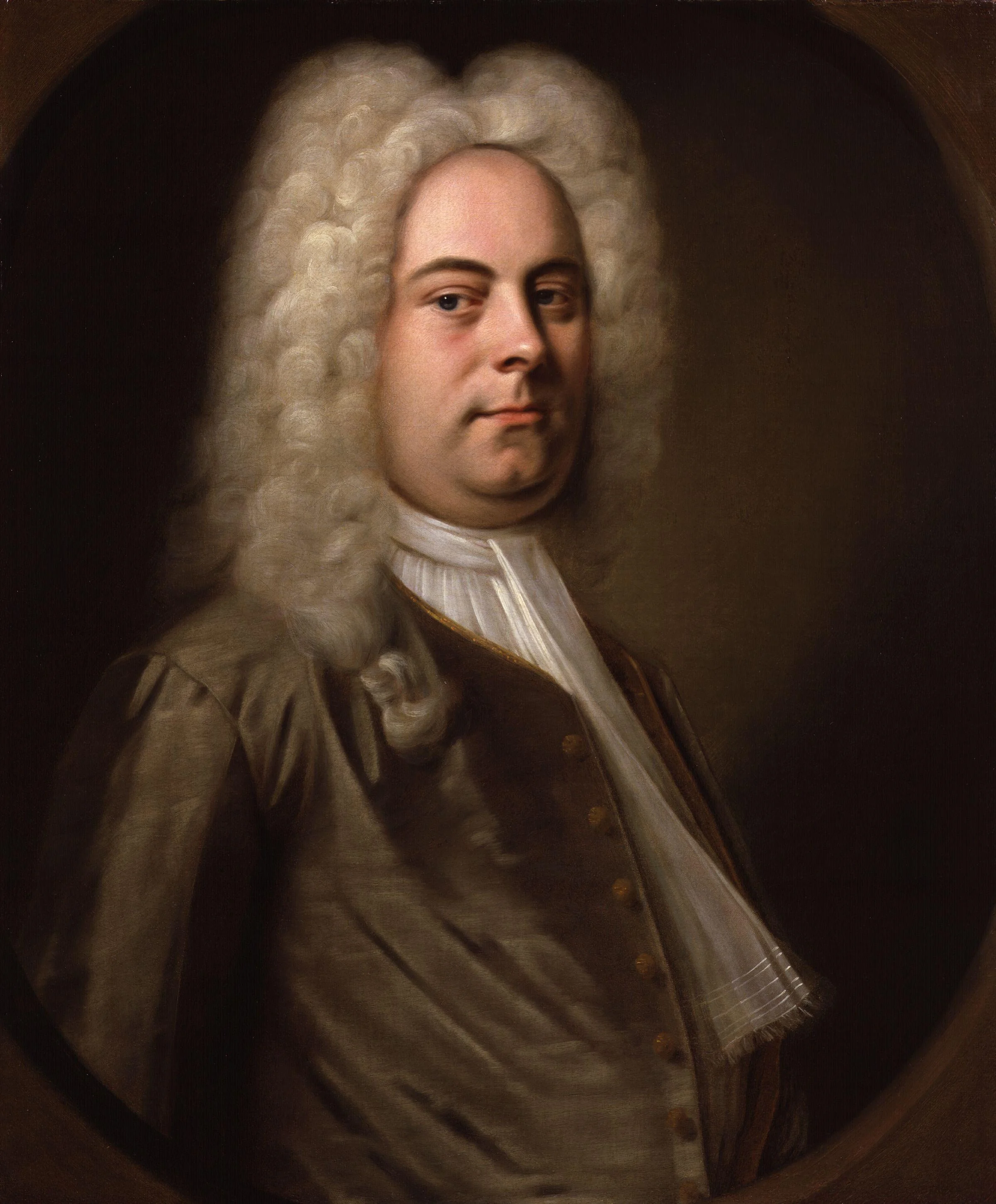
BRILLIANCE AND GLORY – Festive Music by Georg Friedrich Händel in the Abbey St. Ottilien
Festive baroque music meets monastery atmosphere: Händel in St. Ottilien promises sound splendor and goosebumps. On 15.08.2026 at 15:30. #Händel

Songs of St. Hildegard - Abbey of St. Ottilien 2026
A special sound space in St. Ottilien: Hildegard's songs, monastic silence, and spiritual depth on the feast of the Assumption of Mary. #StOttilien
GEORG FRIEDRICH HÄNDEL – Heavenly, authoritative, Hallelujah! at the Abbey of St. Ottilien
A special evening at the Abbey of St. Ottilien: Handel, chamber play, and baroque music in a monastic atmosphere. Experience culture now! #StOttilien
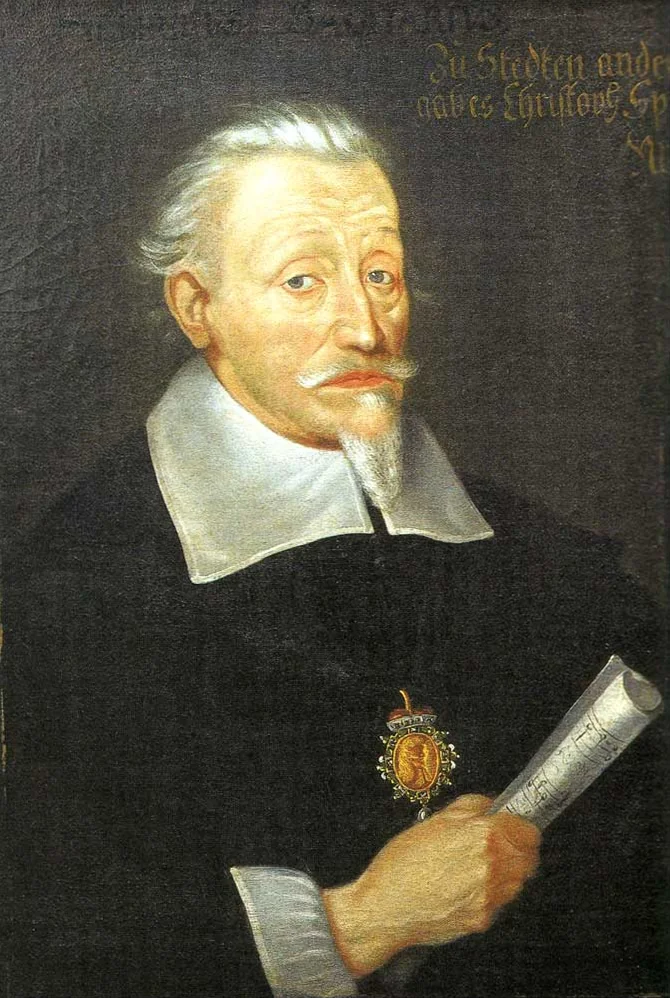
Köstritzer Soiree with musical and culinary delights surrounding Heinrich Schütz at the Archabbey St. Ottilien
Baroque music, monastic tranquility, and culinary enjoyment: The Köstritzer Soiree in St. Ottilien will be a special evening. #Classical #Ammersee
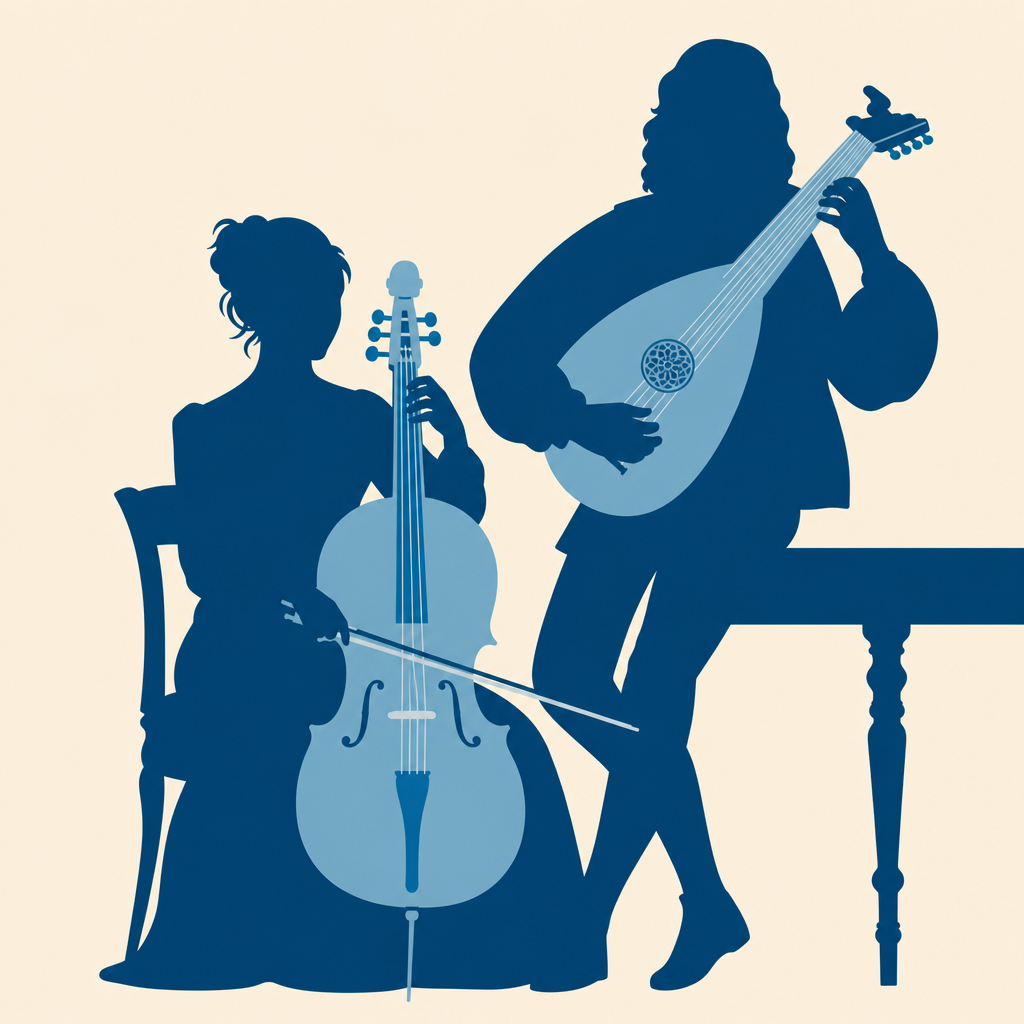
Chamber Music for the Royal Instruments at the Abbey of St. Ottilien
Fine sound art in St. Ottilien: Martina and Lutz Kirchhof bring lute and viola da gamba to life in the Ottilien Chapel. 09/13/2026, 3:30 PM. #ChamberMusic
Frequently Asked Questions
Reviews
No reviews found