
Starnberg
Kempfenhausen/Ostufer Butzentaurweg (Uferweg, 82319 Starnberg, Deutschland
BRK Water Rescue Starnberg | Starnberger See & Water Rescue
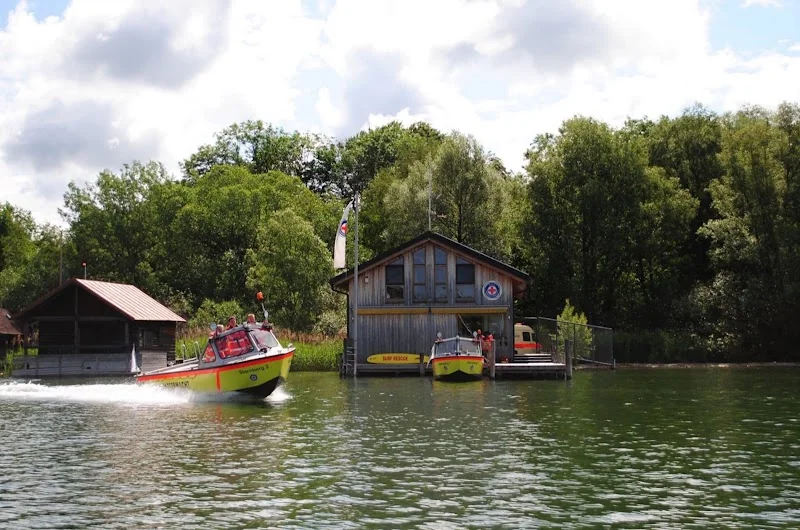
The BRK Water Rescue Starnberg is much more than a volunteer local group by the lake: it is a central component of water rescue in the Starnberg district and thus an important part of the safety structure around Starnberger See. The watch station is located in the bathing area of Percha/Kempfenhausen at Buzentaurweg 1, exactly where many people spend time in and around the water on warm days. The official presentation of the local group makes it clear that it is not about a classic leisure offer, but about prevention, quick assistance, training, and reliable presence in an area that requires special attention both in summer and winter. The local group belongs to the district water rescue Starnberg, which operates with seven local groups and mobile rapid response teams, and names combating drowning and preventive measures as its main tasks. This combination of local proximity, clear operational structure, and volunteer commitment explains why the Water Rescue Starnberg is so relevant for bathers, water sports enthusiasts, and families by the lake. At the same time, the chronicle of the local group shows that for decades, not only has there been a reaction, but also active building, training, and further development. ([wasserwacht-starnberg.de](https://www.wasserwacht-starnberg.de/Standort__Kontakt..1026%2C%2C%2C2.html?utm_source=openai))
Location and Watch Times of the Watch Station at Starnberger See
Those looking for the Water Rescue Starnberg are usually primarily searching for a clear location: Where is the station, when is it accessible, and how quickly can help be on site? This is exactly where the official website provides the most important answers. The watch station of the local group Starnberg is centrally located in the bathing area of Percha/Kempfenhausen at Buzentaurweg 1. Thus, it is directly at one of the most sensitive areas of Starnberger See, where swimming, boating, and general leisure activities are closely intertwined. According to the local group, the station is staffed from mid-May to mid-October on weekends and public holidays. For May and October, the website states the watch times from 10:00 AM to 6:00 PM, and from June to September from 9:00 AM to 7:00 PM. Outside of these times, the water rescue can be reached via the European emergency number 112. Additionally, the local group points out that inquiries that are not emergencies are only processed by phone during service hours. This structure is important for visitors because it shows that the water rescue is not a constantly open visitor station with public operations, but an operation-oriented rescue station that organizes itself according to season and watch duty. The location in the bathing area is no coincidence, but part of the concept: short distances to the water, quick response times, and a clear presence exactly where minutes count in an emergency. Therefore, anyone seeking information about Water Rescue Starnberg should first know this location and the seasonal watch times, as they form the basis for any further orientation regarding assistance, training, and water rescue at the lake. ([wasserwacht-starnberg.de](https://www.wasserwacht-starnberg.de/Standort__Kontakt..1026%2C%2C%2C2.html?utm_source=openai))
Water Rescue with Boats, Divers, and First Aid
The actual profile of Water Rescue Starnberg only becomes visible when looking at the tasks of the local group. The official pages and reports from the district association make it clear that this is not just about supervising bathers, but a wide range of water rescue, first aid, search and recovery operations, as well as preventive work. The district water rescue Starnberg explicitly describes its main task as combating drowning and conducting preventive measures in the district. For the local group Starnberg, this includes, among other things, rescuing exhausted swimmers, assisting capsized sailboats, searching for missing persons, and providing medical first aid on land and on the water. To ensure that this works quickly and professionally, the local group has technical equipment available, which according to the website includes rescue boats, diving equipment, full-face masks with communication devices, compressors, and lifting bags. It is also particularly important that Water Rescue Starnberg currently owns two motor rescue boats, which are stored dry outside of watch times and thus can be ready for use in the shortest time. The official presentation also emphasizes that the local group is among the larger diving groups in the surrounding area in terms of the number of operational divers and equipment. This explains why Water Rescue Starnberg not only operates along the shoreline during missions but also plays a significant role in search and recovery tasks on the lake itself. This combination of boat operations, diving competence, and medical first aid is the heart of the Water Rescue Starnberg brand and also the reason why the local group is so trustworthy for the region. ([brk-starnberg.de](https://www.brk-starnberg.de/1746%2C%2C%2C2.html?utm_source=openai))
Swimming Courses and Lifeguard Courses in Starnberg
An important part of Water Rescue Starnberg is training, not only for future responders but also for children, teenagers, and adults who want to become safer in the water. The official website of the local group explains that beginner swimming courses are regularly offered, from the end of the summer holidays until the beginning of the Pentecost holidays. These courses are aimed at children from the age of five and teenagers; they are intended to initially build trust in the water and then gradually lead to the Seepferdchen (a swimming badge) and further swimming skills. At the same time, Water Rescue emphasizes that part of the course fee is not only used for materials but also contributes to ensuring the water rescue service at Starnberger See. This is an important point for anyone looking for swimming courses in Starnberg or information about Water Rescue Starnberger See: it is not just about sports, but also about direct support for volunteer work. Additionally, the local group offers lifeguard courses upon request. These courses are interesting for people who want to specifically prepare for lifeguarding, water rescue, or a later activity in the water rescue. According to BRK documents, the training ranges from the first steps in the water to first aid to lifeguards in water rescue services and water rescuers. This creates a clear learning chain: children learn to swim, teenagers learn responsibility, and adults can acquire lifeguarding and operational knowledge. Especially in a lake region like Starnberg, this is more than just an additional offer. It is a preventive contribution to the safety of all who live, bathe, or work by the water. ([wasserwacht-starnberg.de](https://www.wasserwacht-starnberg.de/Anfngerschwimmkurse..1021%2C%2C%2C2.html?utm_source=openai))
Youth Work, Volunteering, and Getting Involved with Water Rescue
Water Rescue Starnberg is a volunteer organization, and this shapes its everyday life just as much as the lake itself. According to official information, there is at least one youth group in each of the seven local groups in the district water rescue Starnberg; around 120 children and teenagers are involved in the district water rescue. The group meetings are intentionally diverse: the children and teenagers learn everything needed in water rescue, from first aid to swimming to age-appropriate rescue scenarios. The information from the district water rescue describes that the program ranges from basic training in dealing with emergencies to exercises around emergency calls, applying bandages, and resuscitation. This is important because water rescue not only recruits responders but also promotes social competence, a sense of responsibility, and teamwork. The local group Starnberg also points to its active club structure with a board, technical management, youth leadership, and medical support. Those who want to get involved can contribute as active members or support the work through passive membership. The website emphasizes that passive membership helps maintain and expand the quality of the water rescue service at Starnberger See. This picture is complemented by the annual operational reality: the official site mentions around 5,000 watch hours, about 70 first aid services, and around 20 rescues from dangerous situations. Such numbers make it clear that volunteering here is not just a leisure designation, but a reliable service to the community. Water Rescue Starnberg thus combines youth work, training, team spirit, and rescue practice in a way that is particularly valuable for a lake region. ([brk-starnberg.de](https://www.brk-starnberg.de/1504%2C%2C%2C2.html?utm_source=openai))
Chronicle of the Local Group Starnberg from 1946 to Today
The history of Water Rescue Starnberg begins in 1946, during an early phase of reconstruction. According to the chronicle, the local group was one of the first in Upper Bavaria and was founded by a group of paramedics from the Red Cross in the Starnberg district association. Initially, very little equipment was available, much had to be privately paid for or organized. The first operational locations were at beaches and bathing places around Starnberg, and already in 1947/48 there was the first water rescue station in the form of an emptied changing cabin at the beach. These early years show how improvised water rescue began back then: with little space, simple means, and great idealism. In 1948, the first rescue boat was added, followed by further technical steps such as the first motorboat in 1959 and the first diving equipment. A particularly important development step was in 1961 when swimming courses for the public were conducted for the first time. In 1963, the first youth group was founded, and the watch area was expanded with a tent watch in Kempfenhausen. In 1964 and 1965, the current water rescue station was built, constructed with a lot of self-help and even a roof structure that was dismantled from a villa and brought to the construction site. In 1976/77, the station was expanded again to accommodate a second rescue boat. The chronicle also shows that the tasks of the local group have changed steadily: from pure rescue on the water surface to boat recoveries and diving tasks to winter operations and modern training formats. Understanding Water Rescue Starnberg also means understanding this development: it has not grown randomly, but has become a professional, locally rooted water rescue over decades. ([wasserwacht-starnberg.de](https://www.wasserwacht-starnberg.de/Chronik..1025%2C%2C%2C2.html?utm_source=openai))
BRK Water Rescue Starnberg, Herrsching, and the District Water Rescue
The search for Water Rescue Starnberg often automatically leads to Water Rescue Herrsching, to Starnberger See in general, and to the district water rescue Starnberg. This is no coincidence, as the local group Starnberg is just one of seven local groups within this district structure. According to the official BRK representation, these include Buch/Inning, Herrsching, Wörthsee, Pilsensee, Starnberg, Feldafing, and Tutzing. This structure is important because it shows that water rescue at the lake does not operate in isolation but is organized in a network. The local groups work together during missions, complement each other technically and personally, and are also closely linked in training and youth work. This becomes particularly evident in larger emergencies at Starnberger See: several water rescues, rapid response groups, DLRG units, fire departments, rescue services, and police come together for joint operations. The district water rescue explicitly names not only reaction but also preventive work, i.e., prevention and education, as its mission. For search engine queries such as Water Rescue Starnberger See or BRK Water Rescue Herrsching, it is therefore important to understand: Herrsching is its own local group, but it belongs to the same district water rescue and thus to the same safety net. Water Rescue Starnberg is therefore not alone but is part of a regional structure that secures the lake, the bathing areas, and the people in the district. This regional cooperation makes the difference between a single station and a robust rescue system. Those visiting Starnberg, swimming, sailing, or spending time by the lake benefit from an established organization that is locally present, professionally trained, and networked throughout the district. ([wasserwacht-starnberg.de](https://www.wasserwacht-starnberg.de/1004%2C%2C%2C2.html?utm_source=openai))
In summary, the BRK Water Rescue Starnberg stands for quick assistance at the water, strong training, and decades of experience at Starnberger See. For visitors, the location in the bathing area of Percha/Kempfenhausen is especially important, for families the swimming courses, for interested parties the lifeguard courses, and for volunteers the opportunity to actively participate or support the work passively. The local group thus combines safety, community, and practical competence in a way that is indispensable in a lake region. ([wasserwacht-starnberg.de](https://www.wasserwacht-starnberg.de/Standort__Kontakt..1026%2C%2C%2C2.html?utm_source=openai))
Sources:
Mehr anzeigenWeniger anzeigen
BRK Water Rescue Starnberg | Starnberger See & Water Rescue
The BRK Water Rescue Starnberg is much more than a volunteer local group by the lake: it is a central component of water rescue in the Starnberg district and thus an important part of the safety structure around Starnberger See. The watch station is located in the bathing area of Percha/Kempfenhausen at Buzentaurweg 1, exactly where many people spend time in and around the water on warm days. The official presentation of the local group makes it clear that it is not about a classic leisure offer, but about prevention, quick assistance, training, and reliable presence in an area that requires special attention both in summer and winter. The local group belongs to the district water rescue Starnberg, which operates with seven local groups and mobile rapid response teams, and names combating drowning and preventive measures as its main tasks. This combination of local proximity, clear operational structure, and volunteer commitment explains why the Water Rescue Starnberg is so relevant for bathers, water sports enthusiasts, and families by the lake. At the same time, the chronicle of the local group shows that for decades, not only has there been a reaction, but also active building, training, and further development. ([wasserwacht-starnberg.de](https://www.wasserwacht-starnberg.de/Standort__Kontakt..1026%2C%2C%2C2.html?utm_source=openai))
Location and Watch Times of the Watch Station at Starnberger See
Those looking for the Water Rescue Starnberg are usually primarily searching for a clear location: Where is the station, when is it accessible, and how quickly can help be on site? This is exactly where the official website provides the most important answers. The watch station of the local group Starnberg is centrally located in the bathing area of Percha/Kempfenhausen at Buzentaurweg 1. Thus, it is directly at one of the most sensitive areas of Starnberger See, where swimming, boating, and general leisure activities are closely intertwined. According to the local group, the station is staffed from mid-May to mid-October on weekends and public holidays. For May and October, the website states the watch times from 10:00 AM to 6:00 PM, and from June to September from 9:00 AM to 7:00 PM. Outside of these times, the water rescue can be reached via the European emergency number 112. Additionally, the local group points out that inquiries that are not emergencies are only processed by phone during service hours. This structure is important for visitors because it shows that the water rescue is not a constantly open visitor station with public operations, but an operation-oriented rescue station that organizes itself according to season and watch duty. The location in the bathing area is no coincidence, but part of the concept: short distances to the water, quick response times, and a clear presence exactly where minutes count in an emergency. Therefore, anyone seeking information about Water Rescue Starnberg should first know this location and the seasonal watch times, as they form the basis for any further orientation regarding assistance, training, and water rescue at the lake. ([wasserwacht-starnberg.de](https://www.wasserwacht-starnberg.de/Standort__Kontakt..1026%2C%2C%2C2.html?utm_source=openai))
Water Rescue with Boats, Divers, and First Aid
The actual profile of Water Rescue Starnberg only becomes visible when looking at the tasks of the local group. The official pages and reports from the district association make it clear that this is not just about supervising bathers, but a wide range of water rescue, first aid, search and recovery operations, as well as preventive work. The district water rescue Starnberg explicitly describes its main task as combating drowning and conducting preventive measures in the district. For the local group Starnberg, this includes, among other things, rescuing exhausted swimmers, assisting capsized sailboats, searching for missing persons, and providing medical first aid on land and on the water. To ensure that this works quickly and professionally, the local group has technical equipment available, which according to the website includes rescue boats, diving equipment, full-face masks with communication devices, compressors, and lifting bags. It is also particularly important that Water Rescue Starnberg currently owns two motor rescue boats, which are stored dry outside of watch times and thus can be ready for use in the shortest time. The official presentation also emphasizes that the local group is among the larger diving groups in the surrounding area in terms of the number of operational divers and equipment. This explains why Water Rescue Starnberg not only operates along the shoreline during missions but also plays a significant role in search and recovery tasks on the lake itself. This combination of boat operations, diving competence, and medical first aid is the heart of the Water Rescue Starnberg brand and also the reason why the local group is so trustworthy for the region. ([brk-starnberg.de](https://www.brk-starnberg.de/1746%2C%2C%2C2.html?utm_source=openai))
Swimming Courses and Lifeguard Courses in Starnberg
An important part of Water Rescue Starnberg is training, not only for future responders but also for children, teenagers, and adults who want to become safer in the water. The official website of the local group explains that beginner swimming courses are regularly offered, from the end of the summer holidays until the beginning of the Pentecost holidays. These courses are aimed at children from the age of five and teenagers; they are intended to initially build trust in the water and then gradually lead to the Seepferdchen (a swimming badge) and further swimming skills. At the same time, Water Rescue emphasizes that part of the course fee is not only used for materials but also contributes to ensuring the water rescue service at Starnberger See. This is an important point for anyone looking for swimming courses in Starnberg or information about Water Rescue Starnberger See: it is not just about sports, but also about direct support for volunteer work. Additionally, the local group offers lifeguard courses upon request. These courses are interesting for people who want to specifically prepare for lifeguarding, water rescue, or a later activity in the water rescue. According to BRK documents, the training ranges from the first steps in the water to first aid to lifeguards in water rescue services and water rescuers. This creates a clear learning chain: children learn to swim, teenagers learn responsibility, and adults can acquire lifeguarding and operational knowledge. Especially in a lake region like Starnberg, this is more than just an additional offer. It is a preventive contribution to the safety of all who live, bathe, or work by the water. ([wasserwacht-starnberg.de](https://www.wasserwacht-starnberg.de/Anfngerschwimmkurse..1021%2C%2C%2C2.html?utm_source=openai))
Youth Work, Volunteering, and Getting Involved with Water Rescue
Water Rescue Starnberg is a volunteer organization, and this shapes its everyday life just as much as the lake itself. According to official information, there is at least one youth group in each of the seven local groups in the district water rescue Starnberg; around 120 children and teenagers are involved in the district water rescue. The group meetings are intentionally diverse: the children and teenagers learn everything needed in water rescue, from first aid to swimming to age-appropriate rescue scenarios. The information from the district water rescue describes that the program ranges from basic training in dealing with emergencies to exercises around emergency calls, applying bandages, and resuscitation. This is important because water rescue not only recruits responders but also promotes social competence, a sense of responsibility, and teamwork. The local group Starnberg also points to its active club structure with a board, technical management, youth leadership, and medical support. Those who want to get involved can contribute as active members or support the work through passive membership. The website emphasizes that passive membership helps maintain and expand the quality of the water rescue service at Starnberger See. This picture is complemented by the annual operational reality: the official site mentions around 5,000 watch hours, about 70 first aid services, and around 20 rescues from dangerous situations. Such numbers make it clear that volunteering here is not just a leisure designation, but a reliable service to the community. Water Rescue Starnberg thus combines youth work, training, team spirit, and rescue practice in a way that is particularly valuable for a lake region. ([brk-starnberg.de](https://www.brk-starnberg.de/1504%2C%2C%2C2.html?utm_source=openai))
Chronicle of the Local Group Starnberg from 1946 to Today
The history of Water Rescue Starnberg begins in 1946, during an early phase of reconstruction. According to the chronicle, the local group was one of the first in Upper Bavaria and was founded by a group of paramedics from the Red Cross in the Starnberg district association. Initially, very little equipment was available, much had to be privately paid for or organized. The first operational locations were at beaches and bathing places around Starnberg, and already in 1947/48 there was the first water rescue station in the form of an emptied changing cabin at the beach. These early years show how improvised water rescue began back then: with little space, simple means, and great idealism. In 1948, the first rescue boat was added, followed by further technical steps such as the first motorboat in 1959 and the first diving equipment. A particularly important development step was in 1961 when swimming courses for the public were conducted for the first time. In 1963, the first youth group was founded, and the watch area was expanded with a tent watch in Kempfenhausen. In 1964 and 1965, the current water rescue station was built, constructed with a lot of self-help and even a roof structure that was dismantled from a villa and brought to the construction site. In 1976/77, the station was expanded again to accommodate a second rescue boat. The chronicle also shows that the tasks of the local group have changed steadily: from pure rescue on the water surface to boat recoveries and diving tasks to winter operations and modern training formats. Understanding Water Rescue Starnberg also means understanding this development: it has not grown randomly, but has become a professional, locally rooted water rescue over decades. ([wasserwacht-starnberg.de](https://www.wasserwacht-starnberg.de/Chronik..1025%2C%2C%2C2.html?utm_source=openai))
BRK Water Rescue Starnberg, Herrsching, and the District Water Rescue
The search for Water Rescue Starnberg often automatically leads to Water Rescue Herrsching, to Starnberger See in general, and to the district water rescue Starnberg. This is no coincidence, as the local group Starnberg is just one of seven local groups within this district structure. According to the official BRK representation, these include Buch/Inning, Herrsching, Wörthsee, Pilsensee, Starnberg, Feldafing, and Tutzing. This structure is important because it shows that water rescue at the lake does not operate in isolation but is organized in a network. The local groups work together during missions, complement each other technically and personally, and are also closely linked in training and youth work. This becomes particularly evident in larger emergencies at Starnberger See: several water rescues, rapid response groups, DLRG units, fire departments, rescue services, and police come together for joint operations. The district water rescue explicitly names not only reaction but also preventive work, i.e., prevention and education, as its mission. For search engine queries such as Water Rescue Starnberger See or BRK Water Rescue Herrsching, it is therefore important to understand: Herrsching is its own local group, but it belongs to the same district water rescue and thus to the same safety net. Water Rescue Starnberg is therefore not alone but is part of a regional structure that secures the lake, the bathing areas, and the people in the district. This regional cooperation makes the difference between a single station and a robust rescue system. Those visiting Starnberg, swimming, sailing, or spending time by the lake benefit from an established organization that is locally present, professionally trained, and networked throughout the district. ([wasserwacht-starnberg.de](https://www.wasserwacht-starnberg.de/1004%2C%2C%2C2.html?utm_source=openai))
In summary, the BRK Water Rescue Starnberg stands for quick assistance at the water, strong training, and decades of experience at Starnberger See. For visitors, the location in the bathing area of Percha/Kempfenhausen is especially important, for families the swimming courses, for interested parties the lifeguard courses, and for volunteers the opportunity to actively participate or support the work passively. The local group thus combines safety, community, and practical competence in a way that is indispensable in a lake region. ([wasserwacht-starnberg.de](https://www.wasserwacht-starnberg.de/Standort__Kontakt..1026%2C%2C%2C2.html?utm_source=openai))
Sources:
BRK Water Rescue Starnberg | Starnberger See & Water Rescue
The BRK Water Rescue Starnberg is much more than a volunteer local group by the lake: it is a central component of water rescue in the Starnberg district and thus an important part of the safety structure around Starnberger See. The watch station is located in the bathing area of Percha/Kempfenhausen at Buzentaurweg 1, exactly where many people spend time in and around the water on warm days. The official presentation of the local group makes it clear that it is not about a classic leisure offer, but about prevention, quick assistance, training, and reliable presence in an area that requires special attention both in summer and winter. The local group belongs to the district water rescue Starnberg, which operates with seven local groups and mobile rapid response teams, and names combating drowning and preventive measures as its main tasks. This combination of local proximity, clear operational structure, and volunteer commitment explains why the Water Rescue Starnberg is so relevant for bathers, water sports enthusiasts, and families by the lake. At the same time, the chronicle of the local group shows that for decades, not only has there been a reaction, but also active building, training, and further development. ([wasserwacht-starnberg.de](https://www.wasserwacht-starnberg.de/Standort__Kontakt..1026%2C%2C%2C2.html?utm_source=openai))
Location and Watch Times of the Watch Station at Starnberger See
Those looking for the Water Rescue Starnberg are usually primarily searching for a clear location: Where is the station, when is it accessible, and how quickly can help be on site? This is exactly where the official website provides the most important answers. The watch station of the local group Starnberg is centrally located in the bathing area of Percha/Kempfenhausen at Buzentaurweg 1. Thus, it is directly at one of the most sensitive areas of Starnberger See, where swimming, boating, and general leisure activities are closely intertwined. According to the local group, the station is staffed from mid-May to mid-October on weekends and public holidays. For May and October, the website states the watch times from 10:00 AM to 6:00 PM, and from June to September from 9:00 AM to 7:00 PM. Outside of these times, the water rescue can be reached via the European emergency number 112. Additionally, the local group points out that inquiries that are not emergencies are only processed by phone during service hours. This structure is important for visitors because it shows that the water rescue is not a constantly open visitor station with public operations, but an operation-oriented rescue station that organizes itself according to season and watch duty. The location in the bathing area is no coincidence, but part of the concept: short distances to the water, quick response times, and a clear presence exactly where minutes count in an emergency. Therefore, anyone seeking information about Water Rescue Starnberg should first know this location and the seasonal watch times, as they form the basis for any further orientation regarding assistance, training, and water rescue at the lake. ([wasserwacht-starnberg.de](https://www.wasserwacht-starnberg.de/Standort__Kontakt..1026%2C%2C%2C2.html?utm_source=openai))
Water Rescue with Boats, Divers, and First Aid
The actual profile of Water Rescue Starnberg only becomes visible when looking at the tasks of the local group. The official pages and reports from the district association make it clear that this is not just about supervising bathers, but a wide range of water rescue, first aid, search and recovery operations, as well as preventive work. The district water rescue Starnberg explicitly describes its main task as combating drowning and conducting preventive measures in the district. For the local group Starnberg, this includes, among other things, rescuing exhausted swimmers, assisting capsized sailboats, searching for missing persons, and providing medical first aid on land and on the water. To ensure that this works quickly and professionally, the local group has technical equipment available, which according to the website includes rescue boats, diving equipment, full-face masks with communication devices, compressors, and lifting bags. It is also particularly important that Water Rescue Starnberg currently owns two motor rescue boats, which are stored dry outside of watch times and thus can be ready for use in the shortest time. The official presentation also emphasizes that the local group is among the larger diving groups in the surrounding area in terms of the number of operational divers and equipment. This explains why Water Rescue Starnberg not only operates along the shoreline during missions but also plays a significant role in search and recovery tasks on the lake itself. This combination of boat operations, diving competence, and medical first aid is the heart of the Water Rescue Starnberg brand and also the reason why the local group is so trustworthy for the region. ([brk-starnberg.de](https://www.brk-starnberg.de/1746%2C%2C%2C2.html?utm_source=openai))
Swimming Courses and Lifeguard Courses in Starnberg
An important part of Water Rescue Starnberg is training, not only for future responders but also for children, teenagers, and adults who want to become safer in the water. The official website of the local group explains that beginner swimming courses are regularly offered, from the end of the summer holidays until the beginning of the Pentecost holidays. These courses are aimed at children from the age of five and teenagers; they are intended to initially build trust in the water and then gradually lead to the Seepferdchen (a swimming badge) and further swimming skills. At the same time, Water Rescue emphasizes that part of the course fee is not only used for materials but also contributes to ensuring the water rescue service at Starnberger See. This is an important point for anyone looking for swimming courses in Starnberg or information about Water Rescue Starnberger See: it is not just about sports, but also about direct support for volunteer work. Additionally, the local group offers lifeguard courses upon request. These courses are interesting for people who want to specifically prepare for lifeguarding, water rescue, or a later activity in the water rescue. According to BRK documents, the training ranges from the first steps in the water to first aid to lifeguards in water rescue services and water rescuers. This creates a clear learning chain: children learn to swim, teenagers learn responsibility, and adults can acquire lifeguarding and operational knowledge. Especially in a lake region like Starnberg, this is more than just an additional offer. It is a preventive contribution to the safety of all who live, bathe, or work by the water. ([wasserwacht-starnberg.de](https://www.wasserwacht-starnberg.de/Anfngerschwimmkurse..1021%2C%2C%2C2.html?utm_source=openai))
Youth Work, Volunteering, and Getting Involved with Water Rescue
Water Rescue Starnberg is a volunteer organization, and this shapes its everyday life just as much as the lake itself. According to official information, there is at least one youth group in each of the seven local groups in the district water rescue Starnberg; around 120 children and teenagers are involved in the district water rescue. The group meetings are intentionally diverse: the children and teenagers learn everything needed in water rescue, from first aid to swimming to age-appropriate rescue scenarios. The information from the district water rescue describes that the program ranges from basic training in dealing with emergencies to exercises around emergency calls, applying bandages, and resuscitation. This is important because water rescue not only recruits responders but also promotes social competence, a sense of responsibility, and teamwork. The local group Starnberg also points to its active club structure with a board, technical management, youth leadership, and medical support. Those who want to get involved can contribute as active members or support the work through passive membership. The website emphasizes that passive membership helps maintain and expand the quality of the water rescue service at Starnberger See. This picture is complemented by the annual operational reality: the official site mentions around 5,000 watch hours, about 70 first aid services, and around 20 rescues from dangerous situations. Such numbers make it clear that volunteering here is not just a leisure designation, but a reliable service to the community. Water Rescue Starnberg thus combines youth work, training, team spirit, and rescue practice in a way that is particularly valuable for a lake region. ([brk-starnberg.de](https://www.brk-starnberg.de/1504%2C%2C%2C2.html?utm_source=openai))
Chronicle of the Local Group Starnberg from 1946 to Today
The history of Water Rescue Starnberg begins in 1946, during an early phase of reconstruction. According to the chronicle, the local group was one of the first in Upper Bavaria and was founded by a group of paramedics from the Red Cross in the Starnberg district association. Initially, very little equipment was available, much had to be privately paid for or organized. The first operational locations were at beaches and bathing places around Starnberg, and already in 1947/48 there was the first water rescue station in the form of an emptied changing cabin at the beach. These early years show how improvised water rescue began back then: with little space, simple means, and great idealism. In 1948, the first rescue boat was added, followed by further technical steps such as the first motorboat in 1959 and the first diving equipment. A particularly important development step was in 1961 when swimming courses for the public were conducted for the first time. In 1963, the first youth group was founded, and the watch area was expanded with a tent watch in Kempfenhausen. In 1964 and 1965, the current water rescue station was built, constructed with a lot of self-help and even a roof structure that was dismantled from a villa and brought to the construction site. In 1976/77, the station was expanded again to accommodate a second rescue boat. The chronicle also shows that the tasks of the local group have changed steadily: from pure rescue on the water surface to boat recoveries and diving tasks to winter operations and modern training formats. Understanding Water Rescue Starnberg also means understanding this development: it has not grown randomly, but has become a professional, locally rooted water rescue over decades. ([wasserwacht-starnberg.de](https://www.wasserwacht-starnberg.de/Chronik..1025%2C%2C%2C2.html?utm_source=openai))
BRK Water Rescue Starnberg, Herrsching, and the District Water Rescue
The search for Water Rescue Starnberg often automatically leads to Water Rescue Herrsching, to Starnberger See in general, and to the district water rescue Starnberg. This is no coincidence, as the local group Starnberg is just one of seven local groups within this district structure. According to the official BRK representation, these include Buch/Inning, Herrsching, Wörthsee, Pilsensee, Starnberg, Feldafing, and Tutzing. This structure is important because it shows that water rescue at the lake does not operate in isolation but is organized in a network. The local groups work together during missions, complement each other technically and personally, and are also closely linked in training and youth work. This becomes particularly evident in larger emergencies at Starnberger See: several water rescues, rapid response groups, DLRG units, fire departments, rescue services, and police come together for joint operations. The district water rescue explicitly names not only reaction but also preventive work, i.e., prevention and education, as its mission. For search engine queries such as Water Rescue Starnberger See or BRK Water Rescue Herrsching, it is therefore important to understand: Herrsching is its own local group, but it belongs to the same district water rescue and thus to the same safety net. Water Rescue Starnberg is therefore not alone but is part of a regional structure that secures the lake, the bathing areas, and the people in the district. This regional cooperation makes the difference between a single station and a robust rescue system. Those visiting Starnberg, swimming, sailing, or spending time by the lake benefit from an established organization that is locally present, professionally trained, and networked throughout the district. ([wasserwacht-starnberg.de](https://www.wasserwacht-starnberg.de/1004%2C%2C%2C2.html?utm_source=openai))
In summary, the BRK Water Rescue Starnberg stands for quick assistance at the water, strong training, and decades of experience at Starnberger See. For visitors, the location in the bathing area of Percha/Kempfenhausen is especially important, for families the swimming courses, for interested parties the lifeguard courses, and for volunteers the opportunity to actively participate or support the work passively. The local group thus combines safety, community, and practical competence in a way that is indispensable in a lake region. ([wasserwacht-starnberg.de](https://www.wasserwacht-starnberg.de/Standort__Kontakt..1026%2C%2C%2C2.html?utm_source=openai))
Sources:
Frequently Asked Questions
Reviews
No reviews found