
Schöngeising
Bauernhofmuseum Jexhof, 82296 Schöngeising, Deutschland
Farm Museum Jexhof | Opening Hours & Tickets
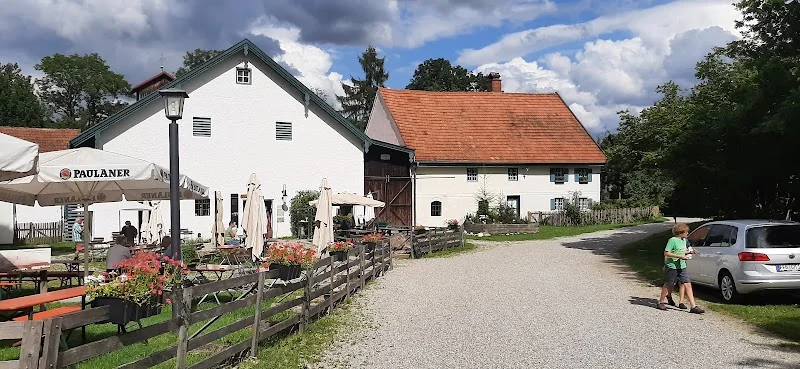
The Farm Museum Jexhof in Schöngeising is not an artificially assembled open-air museum, but a genuine original site with a rich history, clear building structures, and an atmosphere that makes the everyday life of past centuries immediately tangible. Visitors to the farm experience a traditional three-sided farm on a forest clearing in the west of Munich, surrounded by extensive forests and the nature reserve Wildmoos; behind the farm, the Kellerbach flows through an ice age depression. The Jexhof is operated as a farm museum by the district of Fürstenfeldbruck and conveys a vivid picture of rural life around 1900. Its first documented mention dates back to 1433, but the current farm complex also tells of later construction phases, agricultural work, family history, and museum preservation. This mix of authenticity, nature, and educational mission makes the Jexhof equally interesting for day trips, family visits, school groups, and culture-interested guests. ([jexhof.de](https://jexhof.de/museum))
Opening Hours, Tickets, and Admission Prices
For planning a visit, the opening hours and admission prices at Jexhof are particularly important, as there is already a lot of practical information behind what seems to be a simple museum visit. The museum is regularly open from Tuesday to Saturday from 1 PM to 5 PM, as well as on Sundays and public holidays from 11 AM to 6 PM. At the same time, the website points out that there may be limited opening hours in winter, which can vary slightly from year to year. Those arriving with family, groups, or in uncertain weather also benefit from the fact that the entrance area with gastronomy and special exhibitions is open year-round. This allows for a meaningful visit even when not all outdoor areas can be fully utilized. The museum ticket office is accessible during opening hours, and information and bookings are additionally organized through the museum administration. ([jexhof.de](https://jexhof.de/besuch/oeffnung-und-eintritt))
There are also clear, family-friendly structures regarding tickets. In the summer season, children under 6 years old have free admission, children and teenagers aged 6 to 16 pay 2.50 euros, adults pay 4 euros, and reduced admission is 2.50 euros. For groups of 15 or more, there is a price of 3 euros per person, as well as family day tickets for 10 euros and annual tickets for adults and families. In winter, the admission prices are lower, as only the entrance building with special exhibition is open: adults pay 3 euros, children and teenagers 1.50 euros, and families 6 euros. An important note for practical planning is that card payments are unfortunately not possible. Therefore, those who want to start their visit relaxed should bring cash. The museum also offers guided tours for a fee, making the Jexhof attractive for groups, associations, and educational institutions. ([jexhof.de](https://jexhof.de/besuch/oeffnung-und-eintritt))
The Jexhof is thus not just a place for a short stroll, but a museum that is suitable for consciously planned visits. Especially regarding inquiries about tickets, opening hours, and admission, it becomes clear how important simple, reliable information is. Those who check in advance whether the museum is open, how much the admission costs, and whether there are special rules for the season can avoid unnecessary trips and make better use of their day on site. This is especially true for families or guests who want to combine their journey with another point of interest in the surrounding area. Through the combination of admission prices for different target groups, regular opening hours, and a year-round open entrance area, the Jexhof remains a well-planned destination even in changeable weather. ([jexhof.de](https://jexhof.de/besuch/oeffnung-und-eintritt))
Directions, Parking, and Public Transport
The journey to the Farm Museum Jexhof is closely linked to its location amidst forest and landscape. Those arriving by public transport take the S-Bahn S4 towards Geltendorf to Grafrath and then transfer to the MVV regional bus line 804. According to the website, the bus runs Monday to Saturday from about 8 AM to 8 PM, taking around 12 minutes to reach the museum, and stops hourly at the lower parking lot of the museum. From there, it is about a 15-minute walk to the Jexhof. Alternatively, one can also travel to Schöngeising; from there, the Jexhof is signposted and can be reached on foot or by bicycle in about 6 kilometers. Additionally, there is the option to use a call taxi or the MVV Flex line when the regular bus lines pause. For inquiries regarding directions and public transport, this combination is particularly relevant, as the Jexhof remains easily accessible despite its quiet location. ([jexhof.de](https://jexhof.de/besuch/anfahrt-lageplan-und-wanderkarte))
Regarding parking, it is important to note that the official directions explicitly mention the lower parking lot. Therefore, those arriving by car or as passengers should factor in a bit of walking and not plan their arrival as they would for an inner-city museum. However, this short distance also contributes to the special atmosphere of the place, as the walk from the parking lot to the farm is already part of the outing. The Jexhof is located in a landscape where forest, nature, and historical farm intertwine, and the path to the museum leads not only physically but also atmospherically into another time. For guests arriving with strollers, older companions, or larger groups, it is advisable to arrive in good time and plan for the walk. The website also provides an MVV timetable information and refers to the Flex line, making visits especially flexible in the evening, on weekends, and on public holidays. ([jexhof.de](https://jexhof.de/besuch/anfahrt-lageplan-und-wanderkarte))
The area around the Jexhof also invites for walks. On the grounds and in the immediate vicinity, not only the museum and parking options are in focus, but also nature experiences and movement. The official hiking map and information on paths around the farm show that the visit can be well combined with a walk. This is especially useful for guests who are looking for not just an exhibition but a whole day trip. Therefore, those searching for the best route, parking, or directions will not receive rigid traffic instructions at the Jexhof, but rather a small movement experience as well. This fits the character of the house: arriving, walking slowly, looking, listening, and then diving in. ([jexhof.de](https://jexhof.de/besuch/anfahrt-lageplan-und-wanderkarte))
History of the Three-Sided Farm and Its Origins
The historical depth of the Jexhof is one of its strongest unique features. According to the official website, the farm was first mentioned in writing in 1433 when the transfer of the Vorderen Ückshoff was documented. The construction of the residential building with horse stable around 1775 can be traced back to the Schneider family, who farmed the estate since the second half of the 17th century. Later buildings also shape the current ensemble: the northern bakery with coach house dates from 1891, the barn was built in 1931, and other buildings such as the grain barn from 1897 or the machine barn from 1934 expand the complex outside the actual three-sided farm structure. Thus, a museum-smooth image does not emerge, but a farm history that remains readable in layers. The Jexhof is therefore not only beautiful to look at but also an authentic document of rural building and way of life. ([jexhof.de](https://jexhof.de/museum/jexhof-geschichte?utm_source=openai))
This authenticity is particularly strong because the Jexhof is an original site. Unlike many open-air museums where buildings from various regions are assembled, here the preserved farm complex stands at its historical location. Until 1980, the farm was inhabited; the last resident was the former maid Resi Geiger, who had worked for the Riedl farming family since 1930. The Riedls acquired the property in 1862 along with 88 acres of land for 12,300 guilders and shaped its current appearance through numerous construction measures. In 1987, the farm museum was opened under the sponsorship of the district of Fürstenfeldbruck, after a support association had been working since 1983 to preserve the farm complex. The fact that the Jexhof was awarded the Heimatpreis Bayern in 2018 underscores how strongly the connection between monument preservation, regional history, and public use is recognized. ([jexhof.de](https://jexhof.de/museum/jexhof-geschichte?utm_source=openai))
Those interested in history will find not only architectural facts at the Jexhof but also an insight into everyday life in the countryside at the beginning of the 20th century. The website emphasizes the particularly well-preserved interior of the residential building, which makes the living conditions of that time comprehensible. This is precisely what gives the museum its impact: it tells not only of old buildings but also of work rhythms, ownership structures, generational changes, and the transformation of a inhabited farm into a publicly accessible memorial site. The Jexhof is therefore a good example of how a historical place can be conveyed not as frozen in time but as a living experience. ([jexhof.de](https://jexhof.de/museum/jexhof-geschichte?utm_source=openai))
Events, Easter Traditions, Christmas Market, and Annual Program
The events page of the Jexhof clearly shows that the museum is much more than a place for quiet visits. The annual program includes Sunday tours, family offerings, children's programs, workshops, and thematic tours that appeal to different target groups. For example, museum tours provide an impression of the horse stable, residential house, barn, and rural way of life, while other tours address social topics, nature connections, or seasonal content. This diversity is crucial for search terms related to programs, holidays, and current events. The Jexhof appeals not only to people who want to look at old rooms but also to those seeking a recurring reason to visit. This makes the farm particularly attractive for families, grandparents with children, or regional visitors who want to combine spontaneous experiences with some education. ([jexhof.de](https://jexhof.de/programm/veranstaltungskalender))
The seasonality is particularly evident at Easter and during Advent. In the event calendar for 2026, the Easter traditions on Easter Monday are described as a colorful program around old and modern Easter customs. This includes Oarwoagln, Easter egg hunts for children, games, experiments around eggs, and the creation of Easter nests. This mix of tradition, hands-on stations, and family programs makes the event particularly relevant for search queries like Easter traditions at the Jexhof. At the other end of the year is the Christmas market: according to the official page, the Jexhof invites visitors on December 6 and 7 from 11 AM to 6 PM to a festive market. Lovingly designed stalls with traditional handicrafts, freshly baked bread from the Jexhof oven, other delicacies, and a craft workshop are expected. This combination of craftsmanship, enjoyment, and atmosphere is typical for the Jexhof and gives the Christmas market a very unique character. ([jexhof.de](https://jexhof.de/programm/veranstaltungskalender?utm_source=openai))
From an SEO perspective, these events are particularly valuable because they show that the Jexhof is not only historically interesting but also calendar-based relevant. Visitors often search for fixed dates, seasonal offerings, or themes like Easter, Advent, and traditions. The Jexhof addresses these interests with clearly described events and a broad mix of tours, play, and tradition. This makes the location suitable for recurring visits, where one has a different experience in spring than in winter. Therefore, those searching for Christmas markets or Easter traditions will find not a loose keyword here but concretely announced formats with a thematic focus. ([jexhof.de](https://jexhof.de/programm/veranstaltungskalender?utm_source=openai))
Family Offers, Playground, Gastronomy, and Nature Experience
The Jexhof works particularly well as a family excursion destination because it does not separate culture and movement. On the playground, children can balance, splash, and romp; a low ropes course leads to the tree house, a small wooden bridge to the sand area, and for real farm feeling, there is a children's farm with a stove, a life-sized cow, and a massive wooden tractor. This equipment is not just decorative but creates an environment where children perceive the museum visit as their own experience and not just as quiet observation. This is complemented by further offerings aimed at schools, kindergartens, and families. Thus, a historical place becomes a space for movement, participation, and child-friendly discovery. ([jexhof.de](https://jexhof.de/ausstellungen/spielplatz?utm_source=openai))
The quality of stay is also enhanced by the gastronomy. The website mentions that there is a tavern and that the tavern can be rented for private events. Outside of opening hours, catering for groups is possible by prior arrangement, and the homepage lists gastronomy as a daily open offer in conjunction with the museum. For guests, this means: The Jexhof is not just a place to walk through but also to sit, eat, and linger longer. Additionally, there is the practical note that card payment is not possible. This is especially important for families or groups, as one can then plan the outing with the appropriate preparation. Because the entrance area with gastronomy and special exhibition is open year-round, the Jexhof remains a meaningful point of contact even in transitional times or in bad weather. ([jexhof.de](https://jexhof.de/besuch/gastronomie))
The nature around the farm further enhances the experience. The Jexhof is located on a forest clearing, surrounded by extensive forests and the nature reserve Wildmoos, and is described in several offerings as a starting point for walks, sound paths, and thematic nature experiences. The museum thus connects not only indoor spaces and historical buildings but also landscape, forest, and movement. This mix explains why the Jexhof remains interesting for search queries related to weather or excursion ideas: those looking for a place that works in sunshine but also in changeable weather will find here a combination of outdoor areas, indoor spaces, gastronomy, and special exhibitions. This makes the visit flexible and planable for different age groups. ([jexhof.de](https://jexhof.de/museum))
Support Association, Collection, and Educational Work
Behind the current museum is also a strong history of engagement. The official history of the Jexhof makes it clear that since 1983, a support association has been working for the preservation of the farm complex, which eventually led to the opening of the farm museum in 1987. The support association is therefore not a peripheral issue but a central part of the museum's history. This is why the keyword Support Association Jexhof is also contextually meaningful: it refers to civic engagement that has shaped the path from a threatened farm to a publicly accessible cultural site. Such structures are important because they show how regional monuments can often only be preserved and utilized through long-term initiatives. ([jexhof.de](https://jexhof.de/museum/jexhof-geschichte?utm_source=openai))
The collection work is also visible at the Jexhof. The website explains that collection objects must be scientifically documented and conservatively maintained, and that until 2017, many pieces were distributed across various storage areas. Since then, objects have been gradually transported to a temporary depot in Unterschweinbach to store them under better conditions and secure them long-term. This shows: The Jexhof is not just a showcase but also a working museum with a collection, depot, and professional responsibility. In addition, the website refers to educational offerings for schools, kindergartens, groups, and children's birthdays, as well as digital content such as videos and online contributions. Therefore, those looking for photos, insights, or background material will find not just individual images but a digital and educational environment surrounding the farm. ([jexhof.de](https://jexhof.de/unsere-depots.html?utm_source=openai))
Content-wise, this also fits the special connection between culture and environmental education. The offerings around forest, moor, meadow, animals, and agricultural themes make the Jexhof a place where historical education and environmental education overlap. This is particularly valuable for schools, families, and groups because learning here is not abstract but tied to real places, objects, and landscapes. The Jexhof thus creates a rare combination of monument, museum, excursion destination, and learning place. This multifunctionality explains why search queries related to the support association, opening hours, tickets, directions, Christmas market, and Easter traditions fit together so well: they all refer to the same place that convincingly connects history, everyday life, and the present. ([jexhof.de](https://www.jexhof.de/files/media/PDF/Jexhof-Leitbild.pdf?utm_source=openai))
Sources:
- Farm Museum Jexhof - Official Website ([jexhof.de](https://jexhof.de/?utm_source=openai))
- Farm Museum Jexhof - Opening and Admission ([jexhof.de](https://jexhof.de/besuch/oeffnung-und-eintritt))
- Farm Museum Jexhof - Directions ([jexhof.de](https://jexhof.de/besuch/anfahrt-lageplan-und-wanderkarte))
- Farm Museum Jexhof - History of the Farm Museum Jexhof ([jexhof.de](https://jexhof.de/museum/jexhof-geschichte?utm_source=openai))
- Farm Museum Jexhof - Event Calendar ([jexhof.de](https://jexhof.de/programm/veranstaltungskalender))
- Farm Museum Jexhof - Christmas Market ([jexhof.de](https://jexhof.de/veranstaltung/christkindlmarkt.html))
Show moreShow less
Farm Museum Jexhof | Opening Hours & Tickets
The Farm Museum Jexhof in Schöngeising is not an artificially assembled open-air museum, but a genuine original site with a rich history, clear building structures, and an atmosphere that makes the everyday life of past centuries immediately tangible. Visitors to the farm experience a traditional three-sided farm on a forest clearing in the west of Munich, surrounded by extensive forests and the nature reserve Wildmoos; behind the farm, the Kellerbach flows through an ice age depression. The Jexhof is operated as a farm museum by the district of Fürstenfeldbruck and conveys a vivid picture of rural life around 1900. Its first documented mention dates back to 1433, but the current farm complex also tells of later construction phases, agricultural work, family history, and museum preservation. This mix of authenticity, nature, and educational mission makes the Jexhof equally interesting for day trips, family visits, school groups, and culture-interested guests. ([jexhof.de](https://jexhof.de/museum))
Opening Hours, Tickets, and Admission Prices
For planning a visit, the opening hours and admission prices at Jexhof are particularly important, as there is already a lot of practical information behind what seems to be a simple museum visit. The museum is regularly open from Tuesday to Saturday from 1 PM to 5 PM, as well as on Sundays and public holidays from 11 AM to 6 PM. At the same time, the website points out that there may be limited opening hours in winter, which can vary slightly from year to year. Those arriving with family, groups, or in uncertain weather also benefit from the fact that the entrance area with gastronomy and special exhibitions is open year-round. This allows for a meaningful visit even when not all outdoor areas can be fully utilized. The museum ticket office is accessible during opening hours, and information and bookings are additionally organized through the museum administration. ([jexhof.de](https://jexhof.de/besuch/oeffnung-und-eintritt))
There are also clear, family-friendly structures regarding tickets. In the summer season, children under 6 years old have free admission, children and teenagers aged 6 to 16 pay 2.50 euros, adults pay 4 euros, and reduced admission is 2.50 euros. For groups of 15 or more, there is a price of 3 euros per person, as well as family day tickets for 10 euros and annual tickets for adults and families. In winter, the admission prices are lower, as only the entrance building with special exhibition is open: adults pay 3 euros, children and teenagers 1.50 euros, and families 6 euros. An important note for practical planning is that card payments are unfortunately not possible. Therefore, those who want to start their visit relaxed should bring cash. The museum also offers guided tours for a fee, making the Jexhof attractive for groups, associations, and educational institutions. ([jexhof.de](https://jexhof.de/besuch/oeffnung-und-eintritt))
The Jexhof is thus not just a place for a short stroll, but a museum that is suitable for consciously planned visits. Especially regarding inquiries about tickets, opening hours, and admission, it becomes clear how important simple, reliable information is. Those who check in advance whether the museum is open, how much the admission costs, and whether there are special rules for the season can avoid unnecessary trips and make better use of their day on site. This is especially true for families or guests who want to combine their journey with another point of interest in the surrounding area. Through the combination of admission prices for different target groups, regular opening hours, and a year-round open entrance area, the Jexhof remains a well-planned destination even in changeable weather. ([jexhof.de](https://jexhof.de/besuch/oeffnung-und-eintritt))
Directions, Parking, and Public Transport
The journey to the Farm Museum Jexhof is closely linked to its location amidst forest and landscape. Those arriving by public transport take the S-Bahn S4 towards Geltendorf to Grafrath and then transfer to the MVV regional bus line 804. According to the website, the bus runs Monday to Saturday from about 8 AM to 8 PM, taking around 12 minutes to reach the museum, and stops hourly at the lower parking lot of the museum. From there, it is about a 15-minute walk to the Jexhof. Alternatively, one can also travel to Schöngeising; from there, the Jexhof is signposted and can be reached on foot or by bicycle in about 6 kilometers. Additionally, there is the option to use a call taxi or the MVV Flex line when the regular bus lines pause. For inquiries regarding directions and public transport, this combination is particularly relevant, as the Jexhof remains easily accessible despite its quiet location. ([jexhof.de](https://jexhof.de/besuch/anfahrt-lageplan-und-wanderkarte))
Regarding parking, it is important to note that the official directions explicitly mention the lower parking lot. Therefore, those arriving by car or as passengers should factor in a bit of walking and not plan their arrival as they would for an inner-city museum. However, this short distance also contributes to the special atmosphere of the place, as the walk from the parking lot to the farm is already part of the outing. The Jexhof is located in a landscape where forest, nature, and historical farm intertwine, and the path to the museum leads not only physically but also atmospherically into another time. For guests arriving with strollers, older companions, or larger groups, it is advisable to arrive in good time and plan for the walk. The website also provides an MVV timetable information and refers to the Flex line, making visits especially flexible in the evening, on weekends, and on public holidays. ([jexhof.de](https://jexhof.de/besuch/anfahrt-lageplan-und-wanderkarte))
The area around the Jexhof also invites for walks. On the grounds and in the immediate vicinity, not only the museum and parking options are in focus, but also nature experiences and movement. The official hiking map and information on paths around the farm show that the visit can be well combined with a walk. This is especially useful for guests who are looking for not just an exhibition but a whole day trip. Therefore, those searching for the best route, parking, or directions will not receive rigid traffic instructions at the Jexhof, but rather a small movement experience as well. This fits the character of the house: arriving, walking slowly, looking, listening, and then diving in. ([jexhof.de](https://jexhof.de/besuch/anfahrt-lageplan-und-wanderkarte))
History of the Three-Sided Farm and Its Origins
The historical depth of the Jexhof is one of its strongest unique features. According to the official website, the farm was first mentioned in writing in 1433 when the transfer of the Vorderen Ückshoff was documented. The construction of the residential building with horse stable around 1775 can be traced back to the Schneider family, who farmed the estate since the second half of the 17th century. Later buildings also shape the current ensemble: the northern bakery with coach house dates from 1891, the barn was built in 1931, and other buildings such as the grain barn from 1897 or the machine barn from 1934 expand the complex outside the actual three-sided farm structure. Thus, a museum-smooth image does not emerge, but a farm history that remains readable in layers. The Jexhof is therefore not only beautiful to look at but also an authentic document of rural building and way of life. ([jexhof.de](https://jexhof.de/museum/jexhof-geschichte?utm_source=openai))
This authenticity is particularly strong because the Jexhof is an original site. Unlike many open-air museums where buildings from various regions are assembled, here the preserved farm complex stands at its historical location. Until 1980, the farm was inhabited; the last resident was the former maid Resi Geiger, who had worked for the Riedl farming family since 1930. The Riedls acquired the property in 1862 along with 88 acres of land for 12,300 guilders and shaped its current appearance through numerous construction measures. In 1987, the farm museum was opened under the sponsorship of the district of Fürstenfeldbruck, after a support association had been working since 1983 to preserve the farm complex. The fact that the Jexhof was awarded the Heimatpreis Bayern in 2018 underscores how strongly the connection between monument preservation, regional history, and public use is recognized. ([jexhof.de](https://jexhof.de/museum/jexhof-geschichte?utm_source=openai))
Those interested in history will find not only architectural facts at the Jexhof but also an insight into everyday life in the countryside at the beginning of the 20th century. The website emphasizes the particularly well-preserved interior of the residential building, which makes the living conditions of that time comprehensible. This is precisely what gives the museum its impact: it tells not only of old buildings but also of work rhythms, ownership structures, generational changes, and the transformation of a inhabited farm into a publicly accessible memorial site. The Jexhof is therefore a good example of how a historical place can be conveyed not as frozen in time but as a living experience. ([jexhof.de](https://jexhof.de/museum/jexhof-geschichte?utm_source=openai))
Events, Easter Traditions, Christmas Market, and Annual Program
The events page of the Jexhof clearly shows that the museum is much more than a place for quiet visits. The annual program includes Sunday tours, family offerings, children's programs, workshops, and thematic tours that appeal to different target groups. For example, museum tours provide an impression of the horse stable, residential house, barn, and rural way of life, while other tours address social topics, nature connections, or seasonal content. This diversity is crucial for search terms related to programs, holidays, and current events. The Jexhof appeals not only to people who want to look at old rooms but also to those seeking a recurring reason to visit. This makes the farm particularly attractive for families, grandparents with children, or regional visitors who want to combine spontaneous experiences with some education. ([jexhof.de](https://jexhof.de/programm/veranstaltungskalender))
The seasonality is particularly evident at Easter and during Advent. In the event calendar for 2026, the Easter traditions on Easter Monday are described as a colorful program around old and modern Easter customs. This includes Oarwoagln, Easter egg hunts for children, games, experiments around eggs, and the creation of Easter nests. This mix of tradition, hands-on stations, and family programs makes the event particularly relevant for search queries like Easter traditions at the Jexhof. At the other end of the year is the Christmas market: according to the official page, the Jexhof invites visitors on December 6 and 7 from 11 AM to 6 PM to a festive market. Lovingly designed stalls with traditional handicrafts, freshly baked bread from the Jexhof oven, other delicacies, and a craft workshop are expected. This combination of craftsmanship, enjoyment, and atmosphere is typical for the Jexhof and gives the Christmas market a very unique character. ([jexhof.de](https://jexhof.de/programm/veranstaltungskalender?utm_source=openai))
From an SEO perspective, these events are particularly valuable because they show that the Jexhof is not only historically interesting but also calendar-based relevant. Visitors often search for fixed dates, seasonal offerings, or themes like Easter, Advent, and traditions. The Jexhof addresses these interests with clearly described events and a broad mix of tours, play, and tradition. This makes the location suitable for recurring visits, where one has a different experience in spring than in winter. Therefore, those searching for Christmas markets or Easter traditions will find not a loose keyword here but concretely announced formats with a thematic focus. ([jexhof.de](https://jexhof.de/programm/veranstaltungskalender?utm_source=openai))
Family Offers, Playground, Gastronomy, and Nature Experience
The Jexhof works particularly well as a family excursion destination because it does not separate culture and movement. On the playground, children can balance, splash, and romp; a low ropes course leads to the tree house, a small wooden bridge to the sand area, and for real farm feeling, there is a children's farm with a stove, a life-sized cow, and a massive wooden tractor. This equipment is not just decorative but creates an environment where children perceive the museum visit as their own experience and not just as quiet observation. This is complemented by further offerings aimed at schools, kindergartens, and families. Thus, a historical place becomes a space for movement, participation, and child-friendly discovery. ([jexhof.de](https://jexhof.de/ausstellungen/spielplatz?utm_source=openai))
The quality of stay is also enhanced by the gastronomy. The website mentions that there is a tavern and that the tavern can be rented for private events. Outside of opening hours, catering for groups is possible by prior arrangement, and the homepage lists gastronomy as a daily open offer in conjunction with the museum. For guests, this means: The Jexhof is not just a place to walk through but also to sit, eat, and linger longer. Additionally, there is the practical note that card payment is not possible. This is especially important for families or groups, as one can then plan the outing with the appropriate preparation. Because the entrance area with gastronomy and special exhibition is open year-round, the Jexhof remains a meaningful point of contact even in transitional times or in bad weather. ([jexhof.de](https://jexhof.de/besuch/gastronomie))
The nature around the farm further enhances the experience. The Jexhof is located on a forest clearing, surrounded by extensive forests and the nature reserve Wildmoos, and is described in several offerings as a starting point for walks, sound paths, and thematic nature experiences. The museum thus connects not only indoor spaces and historical buildings but also landscape, forest, and movement. This mix explains why the Jexhof remains interesting for search queries related to weather or excursion ideas: those looking for a place that works in sunshine but also in changeable weather will find here a combination of outdoor areas, indoor spaces, gastronomy, and special exhibitions. This makes the visit flexible and planable for different age groups. ([jexhof.de](https://jexhof.de/museum))
Support Association, Collection, and Educational Work
Behind the current museum is also a strong history of engagement. The official history of the Jexhof makes it clear that since 1983, a support association has been working for the preservation of the farm complex, which eventually led to the opening of the farm museum in 1987. The support association is therefore not a peripheral issue but a central part of the museum's history. This is why the keyword Support Association Jexhof is also contextually meaningful: it refers to civic engagement that has shaped the path from a threatened farm to a publicly accessible cultural site. Such structures are important because they show how regional monuments can often only be preserved and utilized through long-term initiatives. ([jexhof.de](https://jexhof.de/museum/jexhof-geschichte?utm_source=openai))
The collection work is also visible at the Jexhof. The website explains that collection objects must be scientifically documented and conservatively maintained, and that until 2017, many pieces were distributed across various storage areas. Since then, objects have been gradually transported to a temporary depot in Unterschweinbach to store them under better conditions and secure them long-term. This shows: The Jexhof is not just a showcase but also a working museum with a collection, depot, and professional responsibility. In addition, the website refers to educational offerings for schools, kindergartens, groups, and children's birthdays, as well as digital content such as videos and online contributions. Therefore, those looking for photos, insights, or background material will find not just individual images but a digital and educational environment surrounding the farm. ([jexhof.de](https://jexhof.de/unsere-depots.html?utm_source=openai))
Content-wise, this also fits the special connection between culture and environmental education. The offerings around forest, moor, meadow, animals, and agricultural themes make the Jexhof a place where historical education and environmental education overlap. This is particularly valuable for schools, families, and groups because learning here is not abstract but tied to real places, objects, and landscapes. The Jexhof thus creates a rare combination of monument, museum, excursion destination, and learning place. This multifunctionality explains why search queries related to the support association, opening hours, tickets, directions, Christmas market, and Easter traditions fit together so well: they all refer to the same place that convincingly connects history, everyday life, and the present. ([jexhof.de](https://www.jexhof.de/files/media/PDF/Jexhof-Leitbild.pdf?utm_source=openai))
Sources:
- Farm Museum Jexhof - Official Website ([jexhof.de](https://jexhof.de/?utm_source=openai))
- Farm Museum Jexhof - Opening and Admission ([jexhof.de](https://jexhof.de/besuch/oeffnung-und-eintritt))
- Farm Museum Jexhof - Directions ([jexhof.de](https://jexhof.de/besuch/anfahrt-lageplan-und-wanderkarte))
- Farm Museum Jexhof - History of the Farm Museum Jexhof ([jexhof.de](https://jexhof.de/museum/jexhof-geschichte?utm_source=openai))
- Farm Museum Jexhof - Event Calendar ([jexhof.de](https://jexhof.de/programm/veranstaltungskalender))
- Farm Museum Jexhof - Christmas Market ([jexhof.de](https://jexhof.de/veranstaltung/christkindlmarkt.html))
Farm Museum Jexhof | Opening Hours & Tickets
The Farm Museum Jexhof in Schöngeising is not an artificially assembled open-air museum, but a genuine original site with a rich history, clear building structures, and an atmosphere that makes the everyday life of past centuries immediately tangible. Visitors to the farm experience a traditional three-sided farm on a forest clearing in the west of Munich, surrounded by extensive forests and the nature reserve Wildmoos; behind the farm, the Kellerbach flows through an ice age depression. The Jexhof is operated as a farm museum by the district of Fürstenfeldbruck and conveys a vivid picture of rural life around 1900. Its first documented mention dates back to 1433, but the current farm complex also tells of later construction phases, agricultural work, family history, and museum preservation. This mix of authenticity, nature, and educational mission makes the Jexhof equally interesting for day trips, family visits, school groups, and culture-interested guests. ([jexhof.de](https://jexhof.de/museum))
Opening Hours, Tickets, and Admission Prices
For planning a visit, the opening hours and admission prices at Jexhof are particularly important, as there is already a lot of practical information behind what seems to be a simple museum visit. The museum is regularly open from Tuesday to Saturday from 1 PM to 5 PM, as well as on Sundays and public holidays from 11 AM to 6 PM. At the same time, the website points out that there may be limited opening hours in winter, which can vary slightly from year to year. Those arriving with family, groups, or in uncertain weather also benefit from the fact that the entrance area with gastronomy and special exhibitions is open year-round. This allows for a meaningful visit even when not all outdoor areas can be fully utilized. The museum ticket office is accessible during opening hours, and information and bookings are additionally organized through the museum administration. ([jexhof.de](https://jexhof.de/besuch/oeffnung-und-eintritt))
There are also clear, family-friendly structures regarding tickets. In the summer season, children under 6 years old have free admission, children and teenagers aged 6 to 16 pay 2.50 euros, adults pay 4 euros, and reduced admission is 2.50 euros. For groups of 15 or more, there is a price of 3 euros per person, as well as family day tickets for 10 euros and annual tickets for adults and families. In winter, the admission prices are lower, as only the entrance building with special exhibition is open: adults pay 3 euros, children and teenagers 1.50 euros, and families 6 euros. An important note for practical planning is that card payments are unfortunately not possible. Therefore, those who want to start their visit relaxed should bring cash. The museum also offers guided tours for a fee, making the Jexhof attractive for groups, associations, and educational institutions. ([jexhof.de](https://jexhof.de/besuch/oeffnung-und-eintritt))
The Jexhof is thus not just a place for a short stroll, but a museum that is suitable for consciously planned visits. Especially regarding inquiries about tickets, opening hours, and admission, it becomes clear how important simple, reliable information is. Those who check in advance whether the museum is open, how much the admission costs, and whether there are special rules for the season can avoid unnecessary trips and make better use of their day on site. This is especially true for families or guests who want to combine their journey with another point of interest in the surrounding area. Through the combination of admission prices for different target groups, regular opening hours, and a year-round open entrance area, the Jexhof remains a well-planned destination even in changeable weather. ([jexhof.de](https://jexhof.de/besuch/oeffnung-und-eintritt))
Directions, Parking, and Public Transport
The journey to the Farm Museum Jexhof is closely linked to its location amidst forest and landscape. Those arriving by public transport take the S-Bahn S4 towards Geltendorf to Grafrath and then transfer to the MVV regional bus line 804. According to the website, the bus runs Monday to Saturday from about 8 AM to 8 PM, taking around 12 minutes to reach the museum, and stops hourly at the lower parking lot of the museum. From there, it is about a 15-minute walk to the Jexhof. Alternatively, one can also travel to Schöngeising; from there, the Jexhof is signposted and can be reached on foot or by bicycle in about 6 kilometers. Additionally, there is the option to use a call taxi or the MVV Flex line when the regular bus lines pause. For inquiries regarding directions and public transport, this combination is particularly relevant, as the Jexhof remains easily accessible despite its quiet location. ([jexhof.de](https://jexhof.de/besuch/anfahrt-lageplan-und-wanderkarte))
Regarding parking, it is important to note that the official directions explicitly mention the lower parking lot. Therefore, those arriving by car or as passengers should factor in a bit of walking and not plan their arrival as they would for an inner-city museum. However, this short distance also contributes to the special atmosphere of the place, as the walk from the parking lot to the farm is already part of the outing. The Jexhof is located in a landscape where forest, nature, and historical farm intertwine, and the path to the museum leads not only physically but also atmospherically into another time. For guests arriving with strollers, older companions, or larger groups, it is advisable to arrive in good time and plan for the walk. The website also provides an MVV timetable information and refers to the Flex line, making visits especially flexible in the evening, on weekends, and on public holidays. ([jexhof.de](https://jexhof.de/besuch/anfahrt-lageplan-und-wanderkarte))
The area around the Jexhof also invites for walks. On the grounds and in the immediate vicinity, not only the museum and parking options are in focus, but also nature experiences and movement. The official hiking map and information on paths around the farm show that the visit can be well combined with a walk. This is especially useful for guests who are looking for not just an exhibition but a whole day trip. Therefore, those searching for the best route, parking, or directions will not receive rigid traffic instructions at the Jexhof, but rather a small movement experience as well. This fits the character of the house: arriving, walking slowly, looking, listening, and then diving in. ([jexhof.de](https://jexhof.de/besuch/anfahrt-lageplan-und-wanderkarte))
History of the Three-Sided Farm and Its Origins
The historical depth of the Jexhof is one of its strongest unique features. According to the official website, the farm was first mentioned in writing in 1433 when the transfer of the Vorderen Ückshoff was documented. The construction of the residential building with horse stable around 1775 can be traced back to the Schneider family, who farmed the estate since the second half of the 17th century. Later buildings also shape the current ensemble: the northern bakery with coach house dates from 1891, the barn was built in 1931, and other buildings such as the grain barn from 1897 or the machine barn from 1934 expand the complex outside the actual three-sided farm structure. Thus, a museum-smooth image does not emerge, but a farm history that remains readable in layers. The Jexhof is therefore not only beautiful to look at but also an authentic document of rural building and way of life. ([jexhof.de](https://jexhof.de/museum/jexhof-geschichte?utm_source=openai))
This authenticity is particularly strong because the Jexhof is an original site. Unlike many open-air museums where buildings from various regions are assembled, here the preserved farm complex stands at its historical location. Until 1980, the farm was inhabited; the last resident was the former maid Resi Geiger, who had worked for the Riedl farming family since 1930. The Riedls acquired the property in 1862 along with 88 acres of land for 12,300 guilders and shaped its current appearance through numerous construction measures. In 1987, the farm museum was opened under the sponsorship of the district of Fürstenfeldbruck, after a support association had been working since 1983 to preserve the farm complex. The fact that the Jexhof was awarded the Heimatpreis Bayern in 2018 underscores how strongly the connection between monument preservation, regional history, and public use is recognized. ([jexhof.de](https://jexhof.de/museum/jexhof-geschichte?utm_source=openai))
Those interested in history will find not only architectural facts at the Jexhof but also an insight into everyday life in the countryside at the beginning of the 20th century. The website emphasizes the particularly well-preserved interior of the residential building, which makes the living conditions of that time comprehensible. This is precisely what gives the museum its impact: it tells not only of old buildings but also of work rhythms, ownership structures, generational changes, and the transformation of a inhabited farm into a publicly accessible memorial site. The Jexhof is therefore a good example of how a historical place can be conveyed not as frozen in time but as a living experience. ([jexhof.de](https://jexhof.de/museum/jexhof-geschichte?utm_source=openai))
Events, Easter Traditions, Christmas Market, and Annual Program
The events page of the Jexhof clearly shows that the museum is much more than a place for quiet visits. The annual program includes Sunday tours, family offerings, children's programs, workshops, and thematic tours that appeal to different target groups. For example, museum tours provide an impression of the horse stable, residential house, barn, and rural way of life, while other tours address social topics, nature connections, or seasonal content. This diversity is crucial for search terms related to programs, holidays, and current events. The Jexhof appeals not only to people who want to look at old rooms but also to those seeking a recurring reason to visit. This makes the farm particularly attractive for families, grandparents with children, or regional visitors who want to combine spontaneous experiences with some education. ([jexhof.de](https://jexhof.de/programm/veranstaltungskalender))
The seasonality is particularly evident at Easter and during Advent. In the event calendar for 2026, the Easter traditions on Easter Monday are described as a colorful program around old and modern Easter customs. This includes Oarwoagln, Easter egg hunts for children, games, experiments around eggs, and the creation of Easter nests. This mix of tradition, hands-on stations, and family programs makes the event particularly relevant for search queries like Easter traditions at the Jexhof. At the other end of the year is the Christmas market: according to the official page, the Jexhof invites visitors on December 6 and 7 from 11 AM to 6 PM to a festive market. Lovingly designed stalls with traditional handicrafts, freshly baked bread from the Jexhof oven, other delicacies, and a craft workshop are expected. This combination of craftsmanship, enjoyment, and atmosphere is typical for the Jexhof and gives the Christmas market a very unique character. ([jexhof.de](https://jexhof.de/programm/veranstaltungskalender?utm_source=openai))
From an SEO perspective, these events are particularly valuable because they show that the Jexhof is not only historically interesting but also calendar-based relevant. Visitors often search for fixed dates, seasonal offerings, or themes like Easter, Advent, and traditions. The Jexhof addresses these interests with clearly described events and a broad mix of tours, play, and tradition. This makes the location suitable for recurring visits, where one has a different experience in spring than in winter. Therefore, those searching for Christmas markets or Easter traditions will find not a loose keyword here but concretely announced formats with a thematic focus. ([jexhof.de](https://jexhof.de/programm/veranstaltungskalender?utm_source=openai))
Family Offers, Playground, Gastronomy, and Nature Experience
The Jexhof works particularly well as a family excursion destination because it does not separate culture and movement. On the playground, children can balance, splash, and romp; a low ropes course leads to the tree house, a small wooden bridge to the sand area, and for real farm feeling, there is a children's farm with a stove, a life-sized cow, and a massive wooden tractor. This equipment is not just decorative but creates an environment where children perceive the museum visit as their own experience and not just as quiet observation. This is complemented by further offerings aimed at schools, kindergartens, and families. Thus, a historical place becomes a space for movement, participation, and child-friendly discovery. ([jexhof.de](https://jexhof.de/ausstellungen/spielplatz?utm_source=openai))
The quality of stay is also enhanced by the gastronomy. The website mentions that there is a tavern and that the tavern can be rented for private events. Outside of opening hours, catering for groups is possible by prior arrangement, and the homepage lists gastronomy as a daily open offer in conjunction with the museum. For guests, this means: The Jexhof is not just a place to walk through but also to sit, eat, and linger longer. Additionally, there is the practical note that card payment is not possible. This is especially important for families or groups, as one can then plan the outing with the appropriate preparation. Because the entrance area with gastronomy and special exhibition is open year-round, the Jexhof remains a meaningful point of contact even in transitional times or in bad weather. ([jexhof.de](https://jexhof.de/besuch/gastronomie))
The nature around the farm further enhances the experience. The Jexhof is located on a forest clearing, surrounded by extensive forests and the nature reserve Wildmoos, and is described in several offerings as a starting point for walks, sound paths, and thematic nature experiences. The museum thus connects not only indoor spaces and historical buildings but also landscape, forest, and movement. This mix explains why the Jexhof remains interesting for search queries related to weather or excursion ideas: those looking for a place that works in sunshine but also in changeable weather will find here a combination of outdoor areas, indoor spaces, gastronomy, and special exhibitions. This makes the visit flexible and planable for different age groups. ([jexhof.de](https://jexhof.de/museum))
Support Association, Collection, and Educational Work
Behind the current museum is also a strong history of engagement. The official history of the Jexhof makes it clear that since 1983, a support association has been working for the preservation of the farm complex, which eventually led to the opening of the farm museum in 1987. The support association is therefore not a peripheral issue but a central part of the museum's history. This is why the keyword Support Association Jexhof is also contextually meaningful: it refers to civic engagement that has shaped the path from a threatened farm to a publicly accessible cultural site. Such structures are important because they show how regional monuments can often only be preserved and utilized through long-term initiatives. ([jexhof.de](https://jexhof.de/museum/jexhof-geschichte?utm_source=openai))
The collection work is also visible at the Jexhof. The website explains that collection objects must be scientifically documented and conservatively maintained, and that until 2017, many pieces were distributed across various storage areas. Since then, objects have been gradually transported to a temporary depot in Unterschweinbach to store them under better conditions and secure them long-term. This shows: The Jexhof is not just a showcase but also a working museum with a collection, depot, and professional responsibility. In addition, the website refers to educational offerings for schools, kindergartens, groups, and children's birthdays, as well as digital content such as videos and online contributions. Therefore, those looking for photos, insights, or background material will find not just individual images but a digital and educational environment surrounding the farm. ([jexhof.de](https://jexhof.de/unsere-depots.html?utm_source=openai))
Content-wise, this also fits the special connection between culture and environmental education. The offerings around forest, moor, meadow, animals, and agricultural themes make the Jexhof a place where historical education and environmental education overlap. This is particularly valuable for schools, families, and groups because learning here is not abstract but tied to real places, objects, and landscapes. The Jexhof thus creates a rare combination of monument, museum, excursion destination, and learning place. This multifunctionality explains why search queries related to the support association, opening hours, tickets, directions, Christmas market, and Easter traditions fit together so well: they all refer to the same place that convincingly connects history, everyday life, and the present. ([jexhof.de](https://www.jexhof.de/files/media/PDF/Jexhof-Leitbild.pdf?utm_source=openai))
Sources:
- Farm Museum Jexhof - Official Website ([jexhof.de](https://jexhof.de/?utm_source=openai))
- Farm Museum Jexhof - Opening and Admission ([jexhof.de](https://jexhof.de/besuch/oeffnung-und-eintritt))
- Farm Museum Jexhof - Directions ([jexhof.de](https://jexhof.de/besuch/anfahrt-lageplan-und-wanderkarte))
- Farm Museum Jexhof - History of the Farm Museum Jexhof ([jexhof.de](https://jexhof.de/museum/jexhof-geschichte?utm_source=openai))
- Farm Museum Jexhof - Event Calendar ([jexhof.de](https://jexhof.de/programm/veranstaltungskalender))
- Farm Museum Jexhof - Christmas Market ([jexhof.de](https://jexhof.de/veranstaltung/christkindlmarkt.html))
Frequently Asked Questions
Reviews
No reviews found