
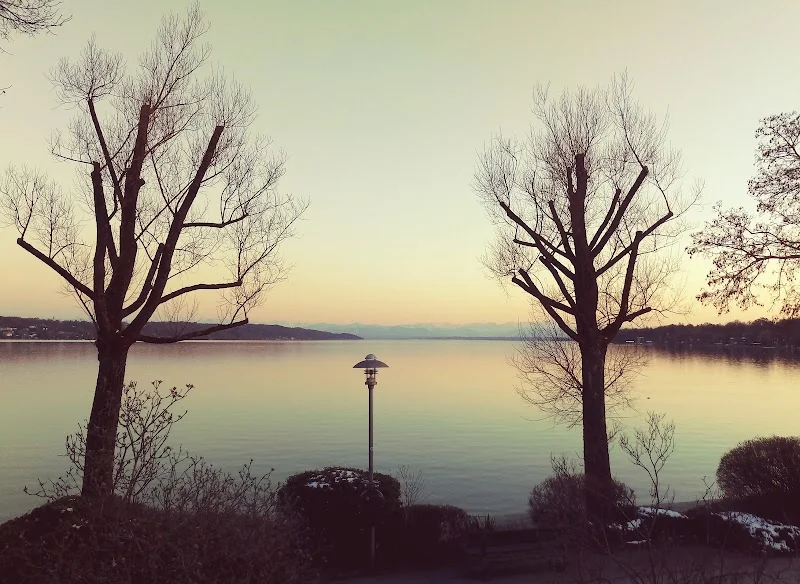
Starnberg
Bahnhofpl., 82319 Starnberg, Deutschland
Bahnhofplatz Starnberg | Parking & Access
The Bahnhofplatz in Starnberg is much more than just an address in the town center. The city describes it as one of the central urban spaces and as an important link between the city center and the lakeside promenade. That is precisely why the square is of interest to anyone who wants to experience Starnberg on foot, by car, bus, or train. When you arrive here, you stand at a place where mobility, orientation, daily life, and events come together. The Bahnhofplatz is simultaneously a thoroughfare, meeting point, starting point for the journey into the city center, and a base for short paths towards the lake. For visitors, it is particularly helpful that the city works with information pillars, parking regulations, and a well-developed bus and train service to make arrival easier. This text summarizes the most important questions regarding access, parking, accessibility, weekly markets, and events, and shows why the Bahnhofplatz in Starnberg is so important. ([starnberg.de](https://www.starnberg.de/buergerservice-verwaltung/aktuelles/news/see-and-the-city-am-bahnhofplatz))
Parking at Bahnhofplatz Starnberg
Those arriving by car should first understand the parking situation. The city of Starnberg designates the Bahnhofplatz itself as an area with parking meters; parking there is subject to fees. At the same time, the city emphasizes that one can usually find a parking space in the Starnberg city center and that six parking garages together offer over 800 parking spaces. For guests who only want to stay briefly, the central location is practical because the paths to the city center, shops, and the lakeside promenade are short. Those who do not need to park directly at the square can plan parking as part of a short walk, making the stay more relaxed. ([starnberg.de](https://www.starnberg.de/buergerservice-verwaltung/parken))
Particularly important is the combination of short-term parking and park-and-ride. The city explicitly recommends the P+R facility at Bahnhof Nord as an alternative to searching in the city center. There, the parking garage Hans-Zellner-Weg with 328 parking spaces is available; according to MVV, multi-day parking for public transport users is possible for up to 14 days, with a daily rate of 0.50 euros. For commuters, day visitors, and excursionists, this is a very clear solution: park the car, switch to bus or train, and reach the destination without traffic jams or parking stress. Especially if one only wants to visit the city center or use the Bahnhofplatz as a starting point, the parking garage at the Nord junction is a particularly practical component. ([starnberg.de](https://www.starnberg.de/buergerservice-verwaltung/parken))
Accessible parking spaces are also designated around the train station area. The city lists among the accessible parking spaces in Starnberg, the station at the Rondell parking lot and the station at the address Bahnhofplatz 8. This makes it clear that the square is not only functional for motorized individual traffic but also remains usable for guests with special mobility needs. Those with limited mobility should also keep an eye on the short distances: from Bahnhof Nord to the city center, it takes about two minutes by bus or train, according to the city. This makes the entire area around the Bahnhofplatz a well-structured mobility space with various options. ([starnberg.de](https://www.starnberg.de/buergerservice-verwaltung/parken))
In practice, this means: those who only want to take care of something briefly in the city center can use the paid parking spaces in the vicinity. Those who stay longer or consciously rely on bus and train are better advised with the P+R offer at Bahnhof Nord. Especially in a city like Starnberg, where many paths towards the lake, gastronomy, and shopping run parallel, it is worthwhile to make a decision in advance. Therefore, the Bahnhofplatz is a place where visit planning and mobility meet directly. The existing parking offers show that the square is not designed for a single user group but brings together different needs. This is relevant for day visitors, commuters, and residents alike. ([starnberg.de](https://www.starnberg.de/buergerservice-verwaltung/parken))
Access by Bus and Train
With public transport, the Bahnhofplatz is also well connected. The city of Starnberg informs that there are two train stations: the Bahnhof See in the city center and the accessible Bahnhof Nord. From both train stations, there are transfer options to the city bus lines and the bus lines to the surrounding area. This is important for travelers because the Bahnhofplatz is thus not isolated but part of a larger network that connects the city, lakeshore, and district. Those who want to orient themselves should therefore not only consider the square itself but understand the entire mobility hub consisting of Bahnhof See, Bahnhof Nord, and the numerous bus connections. ([starnberg.de](https://www.starnberg.de/buergerservice-verwaltung/bus-und-bahn))
The MVV describes Starnberg Nord as a stop in zones 2/3. The station is accessible, the access to the S-Bahn is step-free, and the platforms are indicated with a height of 96 centimeters and a length of 270 meters. Additionally, there are ramp, stairs, and lift as access options. For many visitors, this is the crucial information because it makes clear that the transfer with a stroller, luggage, or wheelchair is significantly easier than at many other places. The DB travel center at Hans-Zellner-Weg 1 and ticket machines on-site complement the offer. Those arriving spontaneously or wanting to buy tickets flexibly will thus find a functioning infrastructure directly at the station. ([red.mvv-muenchen.de](https://red.mvv-muenchen.de/plaene-bahnhoefe/bahnhofsinformation/station/starnberg-nord/index.html))
Additionally, the city refers to a total of twelve bus lines that connect the urban area, districts, and the surrounding area. Particularly important are the express bus lines X900 and X970, which integrate Starnberg into regional connections. For practical daily life, this means: the Bahnhofplatz is not just a car location but a transition between footpaths, bus, and train. This mix makes it so relevant for visitors, commuters, and locals. Those arriving in Starnberg can flexibly combine the paths and choose between Bahnhof See, Bahnhof Nord, and the bus connections depending on the destination. ([starnberg.de](https://www.starnberg.de/buergerservice-verwaltung/bus-und-bahn))
Orientation on-site is also clearly laid out. The city began expanding a new pedestrian guidance system in 2026, with the first information pillars located at the train station and the church square. This is relevant for travelers because they will find not only traffic information there but also indications of central destinations in the area. The Bahnhofplatz thus becomes even more clearly perceived as a point of arrival and transition. Those arriving by train or bus do not enter an anonymous traffic hub but a city area that is consciously oriented towards orientation and short distances. This strengthens the use of the entire environment and makes it easier to start the stay. ([starnberg.de](https://www.starnberg.de/buergerservice-verwaltung/aktuelles/news/neues-fussgaengerleitsystem-erste-informationsstelen-in-der-stadt-starnberg-aufgestellt))
Weekly Market and Events at Bahnhofsrondell
The Bahnhofplatz also has a strong everyday and cultural side. The city reports that the weekly market, during events at the church square, moves to the Bahnhofsrondell in front of the Bayerischer Hof at Bahnhofplatz 12. This regularly turns the square into a place of trade and encounter, not just a transit point. Those passing through Starnberg on Thursdays, Fridays, or Saturdays experience not just a thoroughfare but a vibrant address with regional significance. Markets are a good occasion for many visitors to consciously perceive the square and combine their stay with a stroll. ([starnberg.de](https://www.starnberg.de/kultur-freizeit/einkaufs-und-erlebnisstadt/wochenmaerkte/))
Culturally and socially, the Bahnhofplatz has also been repeatedly integrated in recent years. As part of See and the City, it was part of a larger project to enhance the urban space from May to October 2022. The city focused on additional seating, gastronomic offers, and a nature-oriented design with art, plants, and new meeting areas. At the opening, there was a family festival with a play street, sports and participation activities. Later, additional formats were added, including Starnberg bewegt and the Night of the Long Table, which extended over parts of the Bahnhofplatz, Wittelsbacherstraße, and the church square. This mix shows that the Bahnhofplatz can do more than just traffic and parking. ([starnberg.de](https://www.starnberg.de/buergerservice-verwaltung/aktuelles/news/see-and-the-city-am-bahnhofplatz))
This is particularly evident at the events at the city beach. In dry weather, concerts take place in front of the Bayerischer Hof at Bahnhofplatz 12, and in rain, in the loggia at the train station building at Bahnhofplatz 5. The program Music at the City Beach 2025 names this location as an event space and shows how closely the square is linked to the public life of the city. For guests, this is practical because they do not have to search for the place for long and because the Bahnhofplatz functions as a clearly defined meeting point. Those who come here experience Starnberg not abstractly but as a concrete, easily accessible city location with changing uses throughout the year. ([starnberg.de](https://www.starnberg.de/musik-am-stadtstrand-2025))
The event level is very important for the perception of the square because it expands the everyday function of the place. A square where markets, music, and city festivals take place is read differently than a purely traffic area. Therefore, the Bahnhofplatz is also significant for the city identity: it is visible, easily accessible, and changeable. Whether weekly market, summer concert, or city action, the space remains present in the consciousness of the urban society. This regular use makes it a place where Starnberg's public daily life condenses and where guests immediately feel that they are not just stopping but also staying. ([starnberg.de](https://www.starnberg.de/kultur-freizeit/einkaufs-und-erlebnisstadt/wochenmaerkte/))
Accessibility and Orientation around the Square
Accessibility is a central theme at the Bahnhofplatz and in the nearby train station area. The MVV page for Starnberg Nord explicitly points out a step-free access to the S-Bahn. This is complemented by ramps, stairs, and lifts, as well as the DB travel center and ticket machines. For people who rely on a clear path guidance, this is a significant advantage. The station offers not only technical accessibility but also information and sales points directly on-site. This reduces uncertainty and makes transfers in daily life easier. ([red.mvv-muenchen.de](https://red.mvv-muenchen.de/plaene-bahnhoefe/bahnhofsinformation/station/starnberg-nord/index.html))
The city has also begun expanding a new pedestrian guidance system in 2026. The first information pillars are located at the train station and the church square and are intended to facilitate orientation for visitors and locals. The pillars will indicate destinations such as Museum Starnberger See, Schlossgarten, Seebad, Tutzinger-Hof-Platz, Bucentaurpark, Rathaus, Tourist information, and the train stations. This is relevant for the Bahnhofplatz because it marks it even more strongly as a starting point for paths in the city. Those arriving here receive not only traffic but also structure. ([starnberg.de](https://www.starnberg.de/buergerservice-verwaltung/aktuelles/news/neues-fussgaengerleitsystem-erste-informationsstelen-in-der-stadt-starnberg-aufgestellt))
Additionally, accessible restrooms are available in the train station area. The city names the Bahnhof Starnberg-Nord, Hans-Zellner-Weg 1, with daily opening hours from 7:00 AM to 10:00 PM. Accessible parking spaces are also available at several locations, including at the Bahnhofparkplatz Rondell and at Bahnhofplatz 8. Together, this creates a picture that is important in daily life: the Bahnhofplatz is not only attractive for mobile people but also offers planable, understandable structures for guests with limitations. This is exactly what makes a place sustainably usable. ([starnberg.de](https://www.starnberg.de/gesellschaft-soziales/barrierefreiheit/barrierefreie-toiletten))
Orientation is also improved by the fact that important paths and stops are concentrated in immediate proximity. Those starting at Bahnhofplatz can quickly move on foot towards the city center, market areas, or the lake based on the information. The new guidance system is therefore more than just a comfort offer. It is a signal that the square is understood as an entrance to the city and not just as a transit area. For people with little local knowledge, with luggage, or with limited mobility, this is particularly valuable. ([starnberg.de](https://www.starnberg.de/buergerservice-verwaltung/aktuelles/news/neues-fussgaengerleitsystem-erste-informationsstelen-in-der-stadt-starnberg-aufgestellt))
Bahnhofplatz between City Center and Lakeside Promenade
The special strength of the Bahnhofplatz lies in its location between the city center and the lakeside promenade. The city explicitly designates it as an important urban space and link between these two areas. This is more than just a nice sentence: it describes the function of the square as a transition space that draws people into the city while simultaneously opening the way to the lake. When arriving at Bahnhofplatz, one essentially stands at a hinge between everyday traffic, shopping paths, gastronomy, culture, and recreation. That is why the square is so relevant for visitors, even if they only spend a few hours in Starnberg. ([starnberg.de](https://www.starnberg.de/buergerservice-verwaltung/aktuelles/news/see-and-the-city-am-bahnhofplatz))
This location also explains why the square plays such an important role in the pedestrian guidance system. The city aims to make the path to central destinations clearer with the information pillars and thus make the city more understandable for guests. From the train station, not only the city center and the lakeside promenade can be reached, but also important places such as the Museum Starnberger See, the Schlossgarten, the Seebad, or the Tourist information. This makes the Bahnhofplatz a natural starting point for a visit to Starnberg, where one does not have to plan for long but can simply start walking. This is a great relief, especially for day visitors. ([starnberg.de](https://www.starnberg.de/buergerservice-verwaltung/aktuelles/news/neues-fussgaengerleitsystem-erste-informationsstelen-in-der-stadt-starnberg-aufgestellt))
In practice, the connection between the square, train station, and lake is also palpable. The city refers in its mobility information to Bahnhof Nord as an accessible hub with P+R, bus connections, and central accessibility to the city center. Therefore, those who use Bahnhofplatz as a starting point can connect the lake, footpaths, and shopping streets. This makes the place attractive for walks, restaurant visits, errands, and short stays. Especially in a city like Starnberg, where water, mobility, and urban life are closely intertwined, this transition is particularly valuable. ([starnberg.de](https://www.starnberg.de/buergerservice-verwaltung/bus-und-bahn))
The Bahnhofplatz is therefore not just a practical address but also a space with high urban readability. Those getting off the train or arriving by bus quickly recognize where the paths lead. The square serves as a point of orientation, a starting area, and a transition zone to the city. This is just as important for locals as it is for guests. Especially because Starnberg has strong destinations like the lakeside promenade, city center, and cultural institutions, there needs to be a place where these paths converge. The Bahnhofplatz fulfills exactly this function. ([starnberg.de](https://www.starnberg.de/buergerservice-verwaltung/aktuelles/news/see-and-the-city-am-bahnhofplatz))
Shopping, Gastronomy, and Short Paths to the City Center
Those walking from Bahnhofplatz into the city quickly reach the shopping and experience world of Starnberg. The city describes the city center as picturesque, located near Lake Starnberg, and recommends the large shopping streets Wittelsbacherstraße and Maximilianstraße, as well as the area around the church square and Tutzinger-Hof-Platz for a relaxed visit. Gastronomy is also explicitly described as diverse, ranging from traditional Bavarian to Asian to Mediterranean Italian. The Bahnhofplatz is thus a sensible starting point for anyone who not only wants to arrive but also shop, eat, or stroll through the city. ([starnberg.de](https://www.starnberg.de/kultur-freizeit/einkaufs-und-erlebnisstadt/einzelhandel-und-gastronomie/))
It is particularly interesting that the city names the MVV as a relaxed alternative for visiting the city center. The S-Bahn stop Starnberg and the bus stops Kirchplatz, Wittelsbacherstraße, and Tutzinger-Hof-Platz are mentioned. This makes it clear how closely the paths around Bahnhofplatz are linked to the rest of the urban space. Those getting off here can continue their visit to the city center without long detours. For guests who specifically want to spend a day in Starnberg, this short connection between arrival, shopping, and gastronomy is a real advantage. ([starnberg.de](https://www.starnberg.de/kultur-freizeit/einkaufs-und-erlebnisstadt/einzelhandel-und-gastronomie/))
The lakeside promenade is also well integrated as a destination. The city describes it as Starnberg's promenade; south of Bahnhof See, it can be reached in about five minutes on foot. Numerous events take place there, such as the hobby artist market, African festival, dragon boat races, Roseninsel eight-oar regatta, or the Starnberg fish wrestling. Public restrooms are available in the Undosa building, and parking spaces for vehicles are not available there. Therefore, those traveling from Bahnhofplatz can combine shopping, gastronomy, and lake views in a compact area. ([starnberg.de](https://www.starnberg.de/kultur-freizeit/erholungsflaechen/gruenanlage-seepromenade/))
This makes the Bahnhofplatz an important starting point for the overall visit to Starnberg. It connects arrival with the typical destinations of the city: city center, shops, market, restaurants, and lakeside promenade. Especially because the paths are short and easily readable, the square is attractive for spontaneous visits. Those arriving without long planning can immediately decide whether to go to the market, a café, the lake, or the shopping streets first. The Bahnhofplatz supports exactly this flexible form of city visiting and fits very well with a city that offers both relaxation and urban life. ([starnberg.de](https://www.starnberg.de/kultur-freizeit/einkaufs-und-erlebnisstadt/einzelhandel-und-gastronomie/))
Urban Development and the Project See and the City
A look at the development of Bahnhofplatz shows how much Starnberg has engaged with this space in recent years. In the project See and the City, the city aimed to sustainably improve the quality of stay from May to October 2022. For this purpose, meeting areas were created, additional seating was established, and gastronomic offers were integrated. The design was under the motto water and lake; involved were, among others, a P-seminar from the high school, Starnberg creatives, nurseries, and the municipal workshop. The result was a consciously people-oriented urban area that aimed to transform the square into an experience zone. ([starnberg.de](https://www.starnberg.de/buergerservice-verwaltung/aktuelles/news/see-and-the-city-am-bahnhofplatz))
During the project period, sidewalks were visually widened, the roadway narrowed, and the speed in the area reduced to 20 km/h. The city clearly stated: the space should not only belong to cars. Rather, the Bahnhofplatz was temporarily conceived as a city promenade where pedestrians receive more space. For the opening, the entire area was even closed to car traffic, and there was a family festival with a play street, summer ice rink, inline skating course, and participation activities around sustainable mobility as well as accessibility and inclusion. These measures were not just event decoration but an expression of an urban planning realignment. ([starnberg.de](https://www.starnberg.de/buergerservice-verwaltung/aktuelles/news/see-and-the-city-am-bahnhofplatz))
Later, it became clear that the square can also flexibly respond to various uses. The city again supplemented the project area in 2022 because many citizens expressed the desire for more parking spaces in the city center. This shows that the Bahnhofplatz is discussed not only aesthetically but also functionally. Here, the interests of residents, commuters, visitors, traders, and event organizers meet. This tension makes the place interesting: it is neither just a parking lot nor just a stage but a public space that must be continually recalibrated. ([starnberg.de](https://www.starnberg.de/buergerservice-verwaltung/aktuelles/news/see-and-the-city-am-bahnhofplatz))
Much of this continues to have an impact today. The city is working in 2026 with a pedestrian guidance system that begins at the train station, and the Bahnhofplatz remains a place where traffic, orientation, and stay come together. At the same time, parking at Bahnhof Nord with P+R, barrier-free access, and further bus connections ensures that the urban space remains practically usable. The development shows that Starnberg does not understand Bahnhofplatz as a finished backdrop but as a vibrant space that connects urban development, mobility, and public use. This is what makes it relevant in the long term. ([starnberg.de](https://www.starnberg.de/buergerservice-verwaltung/aktuelles/news/neues-fussgaengerleitsystem-erste-informationsstelen-in-der-stadt-starnberg-aufgestellt))
For the present, it is important that this development is not yet complete. With the new pedestrian guidance system of 2026, the barrier-free offers at Bahnhof Nord, and the still-used market and event areas, the Bahnhofplatz remains a space in transition. Therefore, those searching for Bahnhofplatz Starnberg today are not just looking for an address but a place with history, present, and future. The mix of orientation, mobility, market, and urban life makes it one of the most distinctive areas in the center of Starnberg. ([starnberg.de](https://www.starnberg.de/buergerservice-verwaltung/aktuelles/news/neues-fussgaengerleitsystem-erste-informationsstelen-in-der-stadt-starnberg-aufgestellt))
Sources:
- City of Starnberg – Parking in Starnberg ([starnberg.de](https://www.starnberg.de/buergerservice-verwaltung/parken))
- City of Starnberg – Bus and Train ([starnberg.de](https://www.starnberg.de/buergerservice-verwaltung/bus-und-bahn))
- MVV – Bahnhof Starnberg Nord ([red.mvv-muenchen.de](https://red.mvv-muenchen.de/plaene-bahnhoefe/bahnhofsinformation/station/starnberg-nord/index.html))
- City of Starnberg – See and the City at Bahnhofplatz ([starnberg.de](https://www.starnberg.de/buergerservice-verwaltung/aktuelles/news/see-and-the-city-am-bahnhofplatz))
- City of Starnberg – Weekly Markets ([starnberg.de](https://www.starnberg.de/kultur-freizeit/einkaufs-und-erlebnisstadt/wochenmaerkte/))
- City of Starnberg – Accessible Toilets and New Pedestrian Guidance System ([starnberg.de](https://www.starnberg.de/gesellschaft-soziales/barrierefreiheit/barrierefreie-toiletten))
- City of Starnberg – Retail and Gastronomy as well as Lakeside Promenade ([starnberg.de](https://www.starnberg.de/kultur-freizeit/einkaufs-und-erlebnisstadt/einzelhandel-und-gastronomie/))
Mehr anzeigenWeniger anzeigen
Bahnhofplatz Starnberg | Parking & Access
The Bahnhofplatz in Starnberg is much more than just an address in the town center. The city describes it as one of the central urban spaces and as an important link between the city center and the lakeside promenade. That is precisely why the square is of interest to anyone who wants to experience Starnberg on foot, by car, bus, or train. When you arrive here, you stand at a place where mobility, orientation, daily life, and events come together. The Bahnhofplatz is simultaneously a thoroughfare, meeting point, starting point for the journey into the city center, and a base for short paths towards the lake. For visitors, it is particularly helpful that the city works with information pillars, parking regulations, and a well-developed bus and train service to make arrival easier. This text summarizes the most important questions regarding access, parking, accessibility, weekly markets, and events, and shows why the Bahnhofplatz in Starnberg is so important. ([starnberg.de](https://www.starnberg.de/buergerservice-verwaltung/aktuelles/news/see-and-the-city-am-bahnhofplatz))
Parking at Bahnhofplatz Starnberg
Those arriving by car should first understand the parking situation. The city of Starnberg designates the Bahnhofplatz itself as an area with parking meters; parking there is subject to fees. At the same time, the city emphasizes that one can usually find a parking space in the Starnberg city center and that six parking garages together offer over 800 parking spaces. For guests who only want to stay briefly, the central location is practical because the paths to the city center, shops, and the lakeside promenade are short. Those who do not need to park directly at the square can plan parking as part of a short walk, making the stay more relaxed. ([starnberg.de](https://www.starnberg.de/buergerservice-verwaltung/parken))
Particularly important is the combination of short-term parking and park-and-ride. The city explicitly recommends the P+R facility at Bahnhof Nord as an alternative to searching in the city center. There, the parking garage Hans-Zellner-Weg with 328 parking spaces is available; according to MVV, multi-day parking for public transport users is possible for up to 14 days, with a daily rate of 0.50 euros. For commuters, day visitors, and excursionists, this is a very clear solution: park the car, switch to bus or train, and reach the destination without traffic jams or parking stress. Especially if one only wants to visit the city center or use the Bahnhofplatz as a starting point, the parking garage at the Nord junction is a particularly practical component. ([starnberg.de](https://www.starnberg.de/buergerservice-verwaltung/parken))
Accessible parking spaces are also designated around the train station area. The city lists among the accessible parking spaces in Starnberg, the station at the Rondell parking lot and the station at the address Bahnhofplatz 8. This makes it clear that the square is not only functional for motorized individual traffic but also remains usable for guests with special mobility needs. Those with limited mobility should also keep an eye on the short distances: from Bahnhof Nord to the city center, it takes about two minutes by bus or train, according to the city. This makes the entire area around the Bahnhofplatz a well-structured mobility space with various options. ([starnberg.de](https://www.starnberg.de/buergerservice-verwaltung/parken))
In practice, this means: those who only want to take care of something briefly in the city center can use the paid parking spaces in the vicinity. Those who stay longer or consciously rely on bus and train are better advised with the P+R offer at Bahnhof Nord. Especially in a city like Starnberg, where many paths towards the lake, gastronomy, and shopping run parallel, it is worthwhile to make a decision in advance. Therefore, the Bahnhofplatz is a place where visit planning and mobility meet directly. The existing parking offers show that the square is not designed for a single user group but brings together different needs. This is relevant for day visitors, commuters, and residents alike. ([starnberg.de](https://www.starnberg.de/buergerservice-verwaltung/parken))
Access by Bus and Train
With public transport, the Bahnhofplatz is also well connected. The city of Starnberg informs that there are two train stations: the Bahnhof See in the city center and the accessible Bahnhof Nord. From both train stations, there are transfer options to the city bus lines and the bus lines to the surrounding area. This is important for travelers because the Bahnhofplatz is thus not isolated but part of a larger network that connects the city, lakeshore, and district. Those who want to orient themselves should therefore not only consider the square itself but understand the entire mobility hub consisting of Bahnhof See, Bahnhof Nord, and the numerous bus connections. ([starnberg.de](https://www.starnberg.de/buergerservice-verwaltung/bus-und-bahn))
The MVV describes Starnberg Nord as a stop in zones 2/3. The station is accessible, the access to the S-Bahn is step-free, and the platforms are indicated with a height of 96 centimeters and a length of 270 meters. Additionally, there are ramp, stairs, and lift as access options. For many visitors, this is the crucial information because it makes clear that the transfer with a stroller, luggage, or wheelchair is significantly easier than at many other places. The DB travel center at Hans-Zellner-Weg 1 and ticket machines on-site complement the offer. Those arriving spontaneously or wanting to buy tickets flexibly will thus find a functioning infrastructure directly at the station. ([red.mvv-muenchen.de](https://red.mvv-muenchen.de/plaene-bahnhoefe/bahnhofsinformation/station/starnberg-nord/index.html))
Additionally, the city refers to a total of twelve bus lines that connect the urban area, districts, and the surrounding area. Particularly important are the express bus lines X900 and X970, which integrate Starnberg into regional connections. For practical daily life, this means: the Bahnhofplatz is not just a car location but a transition between footpaths, bus, and train. This mix makes it so relevant for visitors, commuters, and locals. Those arriving in Starnberg can flexibly combine the paths and choose between Bahnhof See, Bahnhof Nord, and the bus connections depending on the destination. ([starnberg.de](https://www.starnberg.de/buergerservice-verwaltung/bus-und-bahn))
Orientation on-site is also clearly laid out. The city began expanding a new pedestrian guidance system in 2026, with the first information pillars located at the train station and the church square. This is relevant for travelers because they will find not only traffic information there but also indications of central destinations in the area. The Bahnhofplatz thus becomes even more clearly perceived as a point of arrival and transition. Those arriving by train or bus do not enter an anonymous traffic hub but a city area that is consciously oriented towards orientation and short distances. This strengthens the use of the entire environment and makes it easier to start the stay. ([starnberg.de](https://www.starnberg.de/buergerservice-verwaltung/aktuelles/news/neues-fussgaengerleitsystem-erste-informationsstelen-in-der-stadt-starnberg-aufgestellt))
Weekly Market and Events at Bahnhofsrondell
The Bahnhofplatz also has a strong everyday and cultural side. The city reports that the weekly market, during events at the church square, moves to the Bahnhofsrondell in front of the Bayerischer Hof at Bahnhofplatz 12. This regularly turns the square into a place of trade and encounter, not just a transit point. Those passing through Starnberg on Thursdays, Fridays, or Saturdays experience not just a thoroughfare but a vibrant address with regional significance. Markets are a good occasion for many visitors to consciously perceive the square and combine their stay with a stroll. ([starnberg.de](https://www.starnberg.de/kultur-freizeit/einkaufs-und-erlebnisstadt/wochenmaerkte/))
Culturally and socially, the Bahnhofplatz has also been repeatedly integrated in recent years. As part of See and the City, it was part of a larger project to enhance the urban space from May to October 2022. The city focused on additional seating, gastronomic offers, and a nature-oriented design with art, plants, and new meeting areas. At the opening, there was a family festival with a play street, sports and participation activities. Later, additional formats were added, including Starnberg bewegt and the Night of the Long Table, which extended over parts of the Bahnhofplatz, Wittelsbacherstraße, and the church square. This mix shows that the Bahnhofplatz can do more than just traffic and parking. ([starnberg.de](https://www.starnberg.de/buergerservice-verwaltung/aktuelles/news/see-and-the-city-am-bahnhofplatz))
This is particularly evident at the events at the city beach. In dry weather, concerts take place in front of the Bayerischer Hof at Bahnhofplatz 12, and in rain, in the loggia at the train station building at Bahnhofplatz 5. The program Music at the City Beach 2025 names this location as an event space and shows how closely the square is linked to the public life of the city. For guests, this is practical because they do not have to search for the place for long and because the Bahnhofplatz functions as a clearly defined meeting point. Those who come here experience Starnberg not abstractly but as a concrete, easily accessible city location with changing uses throughout the year. ([starnberg.de](https://www.starnberg.de/musik-am-stadtstrand-2025))
The event level is very important for the perception of the square because it expands the everyday function of the place. A square where markets, music, and city festivals take place is read differently than a purely traffic area. Therefore, the Bahnhofplatz is also significant for the city identity: it is visible, easily accessible, and changeable. Whether weekly market, summer concert, or city action, the space remains present in the consciousness of the urban society. This regular use makes it a place where Starnberg's public daily life condenses and where guests immediately feel that they are not just stopping but also staying. ([starnberg.de](https://www.starnberg.de/kultur-freizeit/einkaufs-und-erlebnisstadt/wochenmaerkte/))
Accessibility and Orientation around the Square
Accessibility is a central theme at the Bahnhofplatz and in the nearby train station area. The MVV page for Starnberg Nord explicitly points out a step-free access to the S-Bahn. This is complemented by ramps, stairs, and lifts, as well as the DB travel center and ticket machines. For people who rely on a clear path guidance, this is a significant advantage. The station offers not only technical accessibility but also information and sales points directly on-site. This reduces uncertainty and makes transfers in daily life easier. ([red.mvv-muenchen.de](https://red.mvv-muenchen.de/plaene-bahnhoefe/bahnhofsinformation/station/starnberg-nord/index.html))
The city has also begun expanding a new pedestrian guidance system in 2026. The first information pillars are located at the train station and the church square and are intended to facilitate orientation for visitors and locals. The pillars will indicate destinations such as Museum Starnberger See, Schlossgarten, Seebad, Tutzinger-Hof-Platz, Bucentaurpark, Rathaus, Tourist information, and the train stations. This is relevant for the Bahnhofplatz because it marks it even more strongly as a starting point for paths in the city. Those arriving here receive not only traffic but also structure. ([starnberg.de](https://www.starnberg.de/buergerservice-verwaltung/aktuelles/news/neues-fussgaengerleitsystem-erste-informationsstelen-in-der-stadt-starnberg-aufgestellt))
Additionally, accessible restrooms are available in the train station area. The city names the Bahnhof Starnberg-Nord, Hans-Zellner-Weg 1, with daily opening hours from 7:00 AM to 10:00 PM. Accessible parking spaces are also available at several locations, including at the Bahnhofparkplatz Rondell and at Bahnhofplatz 8. Together, this creates a picture that is important in daily life: the Bahnhofplatz is not only attractive for mobile people but also offers planable, understandable structures for guests with limitations. This is exactly what makes a place sustainably usable. ([starnberg.de](https://www.starnberg.de/gesellschaft-soziales/barrierefreiheit/barrierefreie-toiletten))
Orientation is also improved by the fact that important paths and stops are concentrated in immediate proximity. Those starting at Bahnhofplatz can quickly move on foot towards the city center, market areas, or the lake based on the information. The new guidance system is therefore more than just a comfort offer. It is a signal that the square is understood as an entrance to the city and not just as a transit area. For people with little local knowledge, with luggage, or with limited mobility, this is particularly valuable. ([starnberg.de](https://www.starnberg.de/buergerservice-verwaltung/aktuelles/news/neues-fussgaengerleitsystem-erste-informationsstelen-in-der-stadt-starnberg-aufgestellt))
Bahnhofplatz between City Center and Lakeside Promenade
The special strength of the Bahnhofplatz lies in its location between the city center and the lakeside promenade. The city explicitly designates it as an important urban space and link between these two areas. This is more than just a nice sentence: it describes the function of the square as a transition space that draws people into the city while simultaneously opening the way to the lake. When arriving at Bahnhofplatz, one essentially stands at a hinge between everyday traffic, shopping paths, gastronomy, culture, and recreation. That is why the square is so relevant for visitors, even if they only spend a few hours in Starnberg. ([starnberg.de](https://www.starnberg.de/buergerservice-verwaltung/aktuelles/news/see-and-the-city-am-bahnhofplatz))
This location also explains why the square plays such an important role in the pedestrian guidance system. The city aims to make the path to central destinations clearer with the information pillars and thus make the city more understandable for guests. From the train station, not only the city center and the lakeside promenade can be reached, but also important places such as the Museum Starnberger See, the Schlossgarten, the Seebad, or the Tourist information. This makes the Bahnhofplatz a natural starting point for a visit to Starnberg, where one does not have to plan for long but can simply start walking. This is a great relief, especially for day visitors. ([starnberg.de](https://www.starnberg.de/buergerservice-verwaltung/aktuelles/news/neues-fussgaengerleitsystem-erste-informationsstelen-in-der-stadt-starnberg-aufgestellt))
In practice, the connection between the square, train station, and lake is also palpable. The city refers in its mobility information to Bahnhof Nord as an accessible hub with P+R, bus connections, and central accessibility to the city center. Therefore, those who use Bahnhofplatz as a starting point can connect the lake, footpaths, and shopping streets. This makes the place attractive for walks, restaurant visits, errands, and short stays. Especially in a city like Starnberg, where water, mobility, and urban life are closely intertwined, this transition is particularly valuable. ([starnberg.de](https://www.starnberg.de/buergerservice-verwaltung/bus-und-bahn))
The Bahnhofplatz is therefore not just a practical address but also a space with high urban readability. Those getting off the train or arriving by bus quickly recognize where the paths lead. The square serves as a point of orientation, a starting area, and a transition zone to the city. This is just as important for locals as it is for guests. Especially because Starnberg has strong destinations like the lakeside promenade, city center, and cultural institutions, there needs to be a place where these paths converge. The Bahnhofplatz fulfills exactly this function. ([starnberg.de](https://www.starnberg.de/buergerservice-verwaltung/aktuelles/news/see-and-the-city-am-bahnhofplatz))
Shopping, Gastronomy, and Short Paths to the City Center
Those walking from Bahnhofplatz into the city quickly reach the shopping and experience world of Starnberg. The city describes the city center as picturesque, located near Lake Starnberg, and recommends the large shopping streets Wittelsbacherstraße and Maximilianstraße, as well as the area around the church square and Tutzinger-Hof-Platz for a relaxed visit. Gastronomy is also explicitly described as diverse, ranging from traditional Bavarian to Asian to Mediterranean Italian. The Bahnhofplatz is thus a sensible starting point for anyone who not only wants to arrive but also shop, eat, or stroll through the city. ([starnberg.de](https://www.starnberg.de/kultur-freizeit/einkaufs-und-erlebnisstadt/einzelhandel-und-gastronomie/))
It is particularly interesting that the city names the MVV as a relaxed alternative for visiting the city center. The S-Bahn stop Starnberg and the bus stops Kirchplatz, Wittelsbacherstraße, and Tutzinger-Hof-Platz are mentioned. This makes it clear how closely the paths around Bahnhofplatz are linked to the rest of the urban space. Those getting off here can continue their visit to the city center without long detours. For guests who specifically want to spend a day in Starnberg, this short connection between arrival, shopping, and gastronomy is a real advantage. ([starnberg.de](https://www.starnberg.de/kultur-freizeit/einkaufs-und-erlebnisstadt/einzelhandel-und-gastronomie/))
The lakeside promenade is also well integrated as a destination. The city describes it as Starnberg's promenade; south of Bahnhof See, it can be reached in about five minutes on foot. Numerous events take place there, such as the hobby artist market, African festival, dragon boat races, Roseninsel eight-oar regatta, or the Starnberg fish wrestling. Public restrooms are available in the Undosa building, and parking spaces for vehicles are not available there. Therefore, those traveling from Bahnhofplatz can combine shopping, gastronomy, and lake views in a compact area. ([starnberg.de](https://www.starnberg.de/kultur-freizeit/erholungsflaechen/gruenanlage-seepromenade/))
This makes the Bahnhofplatz an important starting point for the overall visit to Starnberg. It connects arrival with the typical destinations of the city: city center, shops, market, restaurants, and lakeside promenade. Especially because the paths are short and easily readable, the square is attractive for spontaneous visits. Those arriving without long planning can immediately decide whether to go to the market, a café, the lake, or the shopping streets first. The Bahnhofplatz supports exactly this flexible form of city visiting and fits very well with a city that offers both relaxation and urban life. ([starnberg.de](https://www.starnberg.de/kultur-freizeit/einkaufs-und-erlebnisstadt/einzelhandel-und-gastronomie/))
Urban Development and the Project See and the City
A look at the development of Bahnhofplatz shows how much Starnberg has engaged with this space in recent years. In the project See and the City, the city aimed to sustainably improve the quality of stay from May to October 2022. For this purpose, meeting areas were created, additional seating was established, and gastronomic offers were integrated. The design was under the motto water and lake; involved were, among others, a P-seminar from the high school, Starnberg creatives, nurseries, and the municipal workshop. The result was a consciously people-oriented urban area that aimed to transform the square into an experience zone. ([starnberg.de](https://www.starnberg.de/buergerservice-verwaltung/aktuelles/news/see-and-the-city-am-bahnhofplatz))
During the project period, sidewalks were visually widened, the roadway narrowed, and the speed in the area reduced to 20 km/h. The city clearly stated: the space should not only belong to cars. Rather, the Bahnhofplatz was temporarily conceived as a city promenade where pedestrians receive more space. For the opening, the entire area was even closed to car traffic, and there was a family festival with a play street, summer ice rink, inline skating course, and participation activities around sustainable mobility as well as accessibility and inclusion. These measures were not just event decoration but an expression of an urban planning realignment. ([starnberg.de](https://www.starnberg.de/buergerservice-verwaltung/aktuelles/news/see-and-the-city-am-bahnhofplatz))
Later, it became clear that the square can also flexibly respond to various uses. The city again supplemented the project area in 2022 because many citizens expressed the desire for more parking spaces in the city center. This shows that the Bahnhofplatz is discussed not only aesthetically but also functionally. Here, the interests of residents, commuters, visitors, traders, and event organizers meet. This tension makes the place interesting: it is neither just a parking lot nor just a stage but a public space that must be continually recalibrated. ([starnberg.de](https://www.starnberg.de/buergerservice-verwaltung/aktuelles/news/see-and-the-city-am-bahnhofplatz))
Much of this continues to have an impact today. The city is working in 2026 with a pedestrian guidance system that begins at the train station, and the Bahnhofplatz remains a place where traffic, orientation, and stay come together. At the same time, parking at Bahnhof Nord with P+R, barrier-free access, and further bus connections ensures that the urban space remains practically usable. The development shows that Starnberg does not understand Bahnhofplatz as a finished backdrop but as a vibrant space that connects urban development, mobility, and public use. This is what makes it relevant in the long term. ([starnberg.de](https://www.starnberg.de/buergerservice-verwaltung/aktuelles/news/neues-fussgaengerleitsystem-erste-informationsstelen-in-der-stadt-starnberg-aufgestellt))
For the present, it is important that this development is not yet complete. With the new pedestrian guidance system of 2026, the barrier-free offers at Bahnhof Nord, and the still-used market and event areas, the Bahnhofplatz remains a space in transition. Therefore, those searching for Bahnhofplatz Starnberg today are not just looking for an address but a place with history, present, and future. The mix of orientation, mobility, market, and urban life makes it one of the most distinctive areas in the center of Starnberg. ([starnberg.de](https://www.starnberg.de/buergerservice-verwaltung/aktuelles/news/neues-fussgaengerleitsystem-erste-informationsstelen-in-der-stadt-starnberg-aufgestellt))
Sources:
- City of Starnberg – Parking in Starnberg ([starnberg.de](https://www.starnberg.de/buergerservice-verwaltung/parken))
- City of Starnberg – Bus and Train ([starnberg.de](https://www.starnberg.de/buergerservice-verwaltung/bus-und-bahn))
- MVV – Bahnhof Starnberg Nord ([red.mvv-muenchen.de](https://red.mvv-muenchen.de/plaene-bahnhoefe/bahnhofsinformation/station/starnberg-nord/index.html))
- City of Starnberg – See and the City at Bahnhofplatz ([starnberg.de](https://www.starnberg.de/buergerservice-verwaltung/aktuelles/news/see-and-the-city-am-bahnhofplatz))
- City of Starnberg – Weekly Markets ([starnberg.de](https://www.starnberg.de/kultur-freizeit/einkaufs-und-erlebnisstadt/wochenmaerkte/))
- City of Starnberg – Accessible Toilets and New Pedestrian Guidance System ([starnberg.de](https://www.starnberg.de/gesellschaft-soziales/barrierefreiheit/barrierefreie-toiletten))
- City of Starnberg – Retail and Gastronomy as well as Lakeside Promenade ([starnberg.de](https://www.starnberg.de/kultur-freizeit/einkaufs-und-erlebnisstadt/einzelhandel-und-gastronomie/))
Bahnhofplatz Starnberg | Parking & Access
The Bahnhofplatz in Starnberg is much more than just an address in the town center. The city describes it as one of the central urban spaces and as an important link between the city center and the lakeside promenade. That is precisely why the square is of interest to anyone who wants to experience Starnberg on foot, by car, bus, or train. When you arrive here, you stand at a place where mobility, orientation, daily life, and events come together. The Bahnhofplatz is simultaneously a thoroughfare, meeting point, starting point for the journey into the city center, and a base for short paths towards the lake. For visitors, it is particularly helpful that the city works with information pillars, parking regulations, and a well-developed bus and train service to make arrival easier. This text summarizes the most important questions regarding access, parking, accessibility, weekly markets, and events, and shows why the Bahnhofplatz in Starnberg is so important. ([starnberg.de](https://www.starnberg.de/buergerservice-verwaltung/aktuelles/news/see-and-the-city-am-bahnhofplatz))
Parking at Bahnhofplatz Starnberg
Those arriving by car should first understand the parking situation. The city of Starnberg designates the Bahnhofplatz itself as an area with parking meters; parking there is subject to fees. At the same time, the city emphasizes that one can usually find a parking space in the Starnberg city center and that six parking garages together offer over 800 parking spaces. For guests who only want to stay briefly, the central location is practical because the paths to the city center, shops, and the lakeside promenade are short. Those who do not need to park directly at the square can plan parking as part of a short walk, making the stay more relaxed. ([starnberg.de](https://www.starnberg.de/buergerservice-verwaltung/parken))
Particularly important is the combination of short-term parking and park-and-ride. The city explicitly recommends the P+R facility at Bahnhof Nord as an alternative to searching in the city center. There, the parking garage Hans-Zellner-Weg with 328 parking spaces is available; according to MVV, multi-day parking for public transport users is possible for up to 14 days, with a daily rate of 0.50 euros. For commuters, day visitors, and excursionists, this is a very clear solution: park the car, switch to bus or train, and reach the destination without traffic jams or parking stress. Especially if one only wants to visit the city center or use the Bahnhofplatz as a starting point, the parking garage at the Nord junction is a particularly practical component. ([starnberg.de](https://www.starnberg.de/buergerservice-verwaltung/parken))
Accessible parking spaces are also designated around the train station area. The city lists among the accessible parking spaces in Starnberg, the station at the Rondell parking lot and the station at the address Bahnhofplatz 8. This makes it clear that the square is not only functional for motorized individual traffic but also remains usable for guests with special mobility needs. Those with limited mobility should also keep an eye on the short distances: from Bahnhof Nord to the city center, it takes about two minutes by bus or train, according to the city. This makes the entire area around the Bahnhofplatz a well-structured mobility space with various options. ([starnberg.de](https://www.starnberg.de/buergerservice-verwaltung/parken))
In practice, this means: those who only want to take care of something briefly in the city center can use the paid parking spaces in the vicinity. Those who stay longer or consciously rely on bus and train are better advised with the P+R offer at Bahnhof Nord. Especially in a city like Starnberg, where many paths towards the lake, gastronomy, and shopping run parallel, it is worthwhile to make a decision in advance. Therefore, the Bahnhofplatz is a place where visit planning and mobility meet directly. The existing parking offers show that the square is not designed for a single user group but brings together different needs. This is relevant for day visitors, commuters, and residents alike. ([starnberg.de](https://www.starnberg.de/buergerservice-verwaltung/parken))
Access by Bus and Train
With public transport, the Bahnhofplatz is also well connected. The city of Starnberg informs that there are two train stations: the Bahnhof See in the city center and the accessible Bahnhof Nord. From both train stations, there are transfer options to the city bus lines and the bus lines to the surrounding area. This is important for travelers because the Bahnhofplatz is thus not isolated but part of a larger network that connects the city, lakeshore, and district. Those who want to orient themselves should therefore not only consider the square itself but understand the entire mobility hub consisting of Bahnhof See, Bahnhof Nord, and the numerous bus connections. ([starnberg.de](https://www.starnberg.de/buergerservice-verwaltung/bus-und-bahn))
The MVV describes Starnberg Nord as a stop in zones 2/3. The station is accessible, the access to the S-Bahn is step-free, and the platforms are indicated with a height of 96 centimeters and a length of 270 meters. Additionally, there are ramp, stairs, and lift as access options. For many visitors, this is the crucial information because it makes clear that the transfer with a stroller, luggage, or wheelchair is significantly easier than at many other places. The DB travel center at Hans-Zellner-Weg 1 and ticket machines on-site complement the offer. Those arriving spontaneously or wanting to buy tickets flexibly will thus find a functioning infrastructure directly at the station. ([red.mvv-muenchen.de](https://red.mvv-muenchen.de/plaene-bahnhoefe/bahnhofsinformation/station/starnberg-nord/index.html))
Additionally, the city refers to a total of twelve bus lines that connect the urban area, districts, and the surrounding area. Particularly important are the express bus lines X900 and X970, which integrate Starnberg into regional connections. For practical daily life, this means: the Bahnhofplatz is not just a car location but a transition between footpaths, bus, and train. This mix makes it so relevant for visitors, commuters, and locals. Those arriving in Starnberg can flexibly combine the paths and choose between Bahnhof See, Bahnhof Nord, and the bus connections depending on the destination. ([starnberg.de](https://www.starnberg.de/buergerservice-verwaltung/bus-und-bahn))
Orientation on-site is also clearly laid out. The city began expanding a new pedestrian guidance system in 2026, with the first information pillars located at the train station and the church square. This is relevant for travelers because they will find not only traffic information there but also indications of central destinations in the area. The Bahnhofplatz thus becomes even more clearly perceived as a point of arrival and transition. Those arriving by train or bus do not enter an anonymous traffic hub but a city area that is consciously oriented towards orientation and short distances. This strengthens the use of the entire environment and makes it easier to start the stay. ([starnberg.de](https://www.starnberg.de/buergerservice-verwaltung/aktuelles/news/neues-fussgaengerleitsystem-erste-informationsstelen-in-der-stadt-starnberg-aufgestellt))
Weekly Market and Events at Bahnhofsrondell
The Bahnhofplatz also has a strong everyday and cultural side. The city reports that the weekly market, during events at the church square, moves to the Bahnhofsrondell in front of the Bayerischer Hof at Bahnhofplatz 12. This regularly turns the square into a place of trade and encounter, not just a transit point. Those passing through Starnberg on Thursdays, Fridays, or Saturdays experience not just a thoroughfare but a vibrant address with regional significance. Markets are a good occasion for many visitors to consciously perceive the square and combine their stay with a stroll. ([starnberg.de](https://www.starnberg.de/kultur-freizeit/einkaufs-und-erlebnisstadt/wochenmaerkte/))
Culturally and socially, the Bahnhofplatz has also been repeatedly integrated in recent years. As part of See and the City, it was part of a larger project to enhance the urban space from May to October 2022. The city focused on additional seating, gastronomic offers, and a nature-oriented design with art, plants, and new meeting areas. At the opening, there was a family festival with a play street, sports and participation activities. Later, additional formats were added, including Starnberg bewegt and the Night of the Long Table, which extended over parts of the Bahnhofplatz, Wittelsbacherstraße, and the church square. This mix shows that the Bahnhofplatz can do more than just traffic and parking. ([starnberg.de](https://www.starnberg.de/buergerservice-verwaltung/aktuelles/news/see-and-the-city-am-bahnhofplatz))
This is particularly evident at the events at the city beach. In dry weather, concerts take place in front of the Bayerischer Hof at Bahnhofplatz 12, and in rain, in the loggia at the train station building at Bahnhofplatz 5. The program Music at the City Beach 2025 names this location as an event space and shows how closely the square is linked to the public life of the city. For guests, this is practical because they do not have to search for the place for long and because the Bahnhofplatz functions as a clearly defined meeting point. Those who come here experience Starnberg not abstractly but as a concrete, easily accessible city location with changing uses throughout the year. ([starnberg.de](https://www.starnberg.de/musik-am-stadtstrand-2025))
The event level is very important for the perception of the square because it expands the everyday function of the place. A square where markets, music, and city festivals take place is read differently than a purely traffic area. Therefore, the Bahnhofplatz is also significant for the city identity: it is visible, easily accessible, and changeable. Whether weekly market, summer concert, or city action, the space remains present in the consciousness of the urban society. This regular use makes it a place where Starnberg's public daily life condenses and where guests immediately feel that they are not just stopping but also staying. ([starnberg.de](https://www.starnberg.de/kultur-freizeit/einkaufs-und-erlebnisstadt/wochenmaerkte/))
Accessibility and Orientation around the Square
Accessibility is a central theme at the Bahnhofplatz and in the nearby train station area. The MVV page for Starnberg Nord explicitly points out a step-free access to the S-Bahn. This is complemented by ramps, stairs, and lifts, as well as the DB travel center and ticket machines. For people who rely on a clear path guidance, this is a significant advantage. The station offers not only technical accessibility but also information and sales points directly on-site. This reduces uncertainty and makes transfers in daily life easier. ([red.mvv-muenchen.de](https://red.mvv-muenchen.de/plaene-bahnhoefe/bahnhofsinformation/station/starnberg-nord/index.html))
The city has also begun expanding a new pedestrian guidance system in 2026. The first information pillars are located at the train station and the church square and are intended to facilitate orientation for visitors and locals. The pillars will indicate destinations such as Museum Starnberger See, Schlossgarten, Seebad, Tutzinger-Hof-Platz, Bucentaurpark, Rathaus, Tourist information, and the train stations. This is relevant for the Bahnhofplatz because it marks it even more strongly as a starting point for paths in the city. Those arriving here receive not only traffic but also structure. ([starnberg.de](https://www.starnberg.de/buergerservice-verwaltung/aktuelles/news/neues-fussgaengerleitsystem-erste-informationsstelen-in-der-stadt-starnberg-aufgestellt))
Additionally, accessible restrooms are available in the train station area. The city names the Bahnhof Starnberg-Nord, Hans-Zellner-Weg 1, with daily opening hours from 7:00 AM to 10:00 PM. Accessible parking spaces are also available at several locations, including at the Bahnhofparkplatz Rondell and at Bahnhofplatz 8. Together, this creates a picture that is important in daily life: the Bahnhofplatz is not only attractive for mobile people but also offers planable, understandable structures for guests with limitations. This is exactly what makes a place sustainably usable. ([starnberg.de](https://www.starnberg.de/gesellschaft-soziales/barrierefreiheit/barrierefreie-toiletten))
Orientation is also improved by the fact that important paths and stops are concentrated in immediate proximity. Those starting at Bahnhofplatz can quickly move on foot towards the city center, market areas, or the lake based on the information. The new guidance system is therefore more than just a comfort offer. It is a signal that the square is understood as an entrance to the city and not just as a transit area. For people with little local knowledge, with luggage, or with limited mobility, this is particularly valuable. ([starnberg.de](https://www.starnberg.de/buergerservice-verwaltung/aktuelles/news/neues-fussgaengerleitsystem-erste-informationsstelen-in-der-stadt-starnberg-aufgestellt))
Bahnhofplatz between City Center and Lakeside Promenade
The special strength of the Bahnhofplatz lies in its location between the city center and the lakeside promenade. The city explicitly designates it as an important urban space and link between these two areas. This is more than just a nice sentence: it describes the function of the square as a transition space that draws people into the city while simultaneously opening the way to the lake. When arriving at Bahnhofplatz, one essentially stands at a hinge between everyday traffic, shopping paths, gastronomy, culture, and recreation. That is why the square is so relevant for visitors, even if they only spend a few hours in Starnberg. ([starnberg.de](https://www.starnberg.de/buergerservice-verwaltung/aktuelles/news/see-and-the-city-am-bahnhofplatz))
This location also explains why the square plays such an important role in the pedestrian guidance system. The city aims to make the path to central destinations clearer with the information pillars and thus make the city more understandable for guests. From the train station, not only the city center and the lakeside promenade can be reached, but also important places such as the Museum Starnberger See, the Schlossgarten, the Seebad, or the Tourist information. This makes the Bahnhofplatz a natural starting point for a visit to Starnberg, where one does not have to plan for long but can simply start walking. This is a great relief, especially for day visitors. ([starnberg.de](https://www.starnberg.de/buergerservice-verwaltung/aktuelles/news/neues-fussgaengerleitsystem-erste-informationsstelen-in-der-stadt-starnberg-aufgestellt))
In practice, the connection between the square, train station, and lake is also palpable. The city refers in its mobility information to Bahnhof Nord as an accessible hub with P+R, bus connections, and central accessibility to the city center. Therefore, those who use Bahnhofplatz as a starting point can connect the lake, footpaths, and shopping streets. This makes the place attractive for walks, restaurant visits, errands, and short stays. Especially in a city like Starnberg, where water, mobility, and urban life are closely intertwined, this transition is particularly valuable. ([starnberg.de](https://www.starnberg.de/buergerservice-verwaltung/bus-und-bahn))
The Bahnhofplatz is therefore not just a practical address but also a space with high urban readability. Those getting off the train or arriving by bus quickly recognize where the paths lead. The square serves as a point of orientation, a starting area, and a transition zone to the city. This is just as important for locals as it is for guests. Especially because Starnberg has strong destinations like the lakeside promenade, city center, and cultural institutions, there needs to be a place where these paths converge. The Bahnhofplatz fulfills exactly this function. ([starnberg.de](https://www.starnberg.de/buergerservice-verwaltung/aktuelles/news/see-and-the-city-am-bahnhofplatz))
Shopping, Gastronomy, and Short Paths to the City Center
Those walking from Bahnhofplatz into the city quickly reach the shopping and experience world of Starnberg. The city describes the city center as picturesque, located near Lake Starnberg, and recommends the large shopping streets Wittelsbacherstraße and Maximilianstraße, as well as the area around the church square and Tutzinger-Hof-Platz for a relaxed visit. Gastronomy is also explicitly described as diverse, ranging from traditional Bavarian to Asian to Mediterranean Italian. The Bahnhofplatz is thus a sensible starting point for anyone who not only wants to arrive but also shop, eat, or stroll through the city. ([starnberg.de](https://www.starnberg.de/kultur-freizeit/einkaufs-und-erlebnisstadt/einzelhandel-und-gastronomie/))
It is particularly interesting that the city names the MVV as a relaxed alternative for visiting the city center. The S-Bahn stop Starnberg and the bus stops Kirchplatz, Wittelsbacherstraße, and Tutzinger-Hof-Platz are mentioned. This makes it clear how closely the paths around Bahnhofplatz are linked to the rest of the urban space. Those getting off here can continue their visit to the city center without long detours. For guests who specifically want to spend a day in Starnberg, this short connection between arrival, shopping, and gastronomy is a real advantage. ([starnberg.de](https://www.starnberg.de/kultur-freizeit/einkaufs-und-erlebnisstadt/einzelhandel-und-gastronomie/))
The lakeside promenade is also well integrated as a destination. The city describes it as Starnberg's promenade; south of Bahnhof See, it can be reached in about five minutes on foot. Numerous events take place there, such as the hobby artist market, African festival, dragon boat races, Roseninsel eight-oar regatta, or the Starnberg fish wrestling. Public restrooms are available in the Undosa building, and parking spaces for vehicles are not available there. Therefore, those traveling from Bahnhofplatz can combine shopping, gastronomy, and lake views in a compact area. ([starnberg.de](https://www.starnberg.de/kultur-freizeit/erholungsflaechen/gruenanlage-seepromenade/))
This makes the Bahnhofplatz an important starting point for the overall visit to Starnberg. It connects arrival with the typical destinations of the city: city center, shops, market, restaurants, and lakeside promenade. Especially because the paths are short and easily readable, the square is attractive for spontaneous visits. Those arriving without long planning can immediately decide whether to go to the market, a café, the lake, or the shopping streets first. The Bahnhofplatz supports exactly this flexible form of city visiting and fits very well with a city that offers both relaxation and urban life. ([starnberg.de](https://www.starnberg.de/kultur-freizeit/einkaufs-und-erlebnisstadt/einzelhandel-und-gastronomie/))
Urban Development and the Project See and the City
A look at the development of Bahnhofplatz shows how much Starnberg has engaged with this space in recent years. In the project See and the City, the city aimed to sustainably improve the quality of stay from May to October 2022. For this purpose, meeting areas were created, additional seating was established, and gastronomic offers were integrated. The design was under the motto water and lake; involved were, among others, a P-seminar from the high school, Starnberg creatives, nurseries, and the municipal workshop. The result was a consciously people-oriented urban area that aimed to transform the square into an experience zone. ([starnberg.de](https://www.starnberg.de/buergerservice-verwaltung/aktuelles/news/see-and-the-city-am-bahnhofplatz))
During the project period, sidewalks were visually widened, the roadway narrowed, and the speed in the area reduced to 20 km/h. The city clearly stated: the space should not only belong to cars. Rather, the Bahnhofplatz was temporarily conceived as a city promenade where pedestrians receive more space. For the opening, the entire area was even closed to car traffic, and there was a family festival with a play street, summer ice rink, inline skating course, and participation activities around sustainable mobility as well as accessibility and inclusion. These measures were not just event decoration but an expression of an urban planning realignment. ([starnberg.de](https://www.starnberg.de/buergerservice-verwaltung/aktuelles/news/see-and-the-city-am-bahnhofplatz))
Later, it became clear that the square can also flexibly respond to various uses. The city again supplemented the project area in 2022 because many citizens expressed the desire for more parking spaces in the city center. This shows that the Bahnhofplatz is discussed not only aesthetically but also functionally. Here, the interests of residents, commuters, visitors, traders, and event organizers meet. This tension makes the place interesting: it is neither just a parking lot nor just a stage but a public space that must be continually recalibrated. ([starnberg.de](https://www.starnberg.de/buergerservice-verwaltung/aktuelles/news/see-and-the-city-am-bahnhofplatz))
Much of this continues to have an impact today. The city is working in 2026 with a pedestrian guidance system that begins at the train station, and the Bahnhofplatz remains a place where traffic, orientation, and stay come together. At the same time, parking at Bahnhof Nord with P+R, barrier-free access, and further bus connections ensures that the urban space remains practically usable. The development shows that Starnberg does not understand Bahnhofplatz as a finished backdrop but as a vibrant space that connects urban development, mobility, and public use. This is what makes it relevant in the long term. ([starnberg.de](https://www.starnberg.de/buergerservice-verwaltung/aktuelles/news/neues-fussgaengerleitsystem-erste-informationsstelen-in-der-stadt-starnberg-aufgestellt))
For the present, it is important that this development is not yet complete. With the new pedestrian guidance system of 2026, the barrier-free offers at Bahnhof Nord, and the still-used market and event areas, the Bahnhofplatz remains a space in transition. Therefore, those searching for Bahnhofplatz Starnberg today are not just looking for an address but a place with history, present, and future. The mix of orientation, mobility, market, and urban life makes it one of the most distinctive areas in the center of Starnberg. ([starnberg.de](https://www.starnberg.de/buergerservice-verwaltung/aktuelles/news/neues-fussgaengerleitsystem-erste-informationsstelen-in-der-stadt-starnberg-aufgestellt))
Sources:
- City of Starnberg – Parking in Starnberg ([starnberg.de](https://www.starnberg.de/buergerservice-verwaltung/parken))
- City of Starnberg – Bus and Train ([starnberg.de](https://www.starnberg.de/buergerservice-verwaltung/bus-und-bahn))
- MVV – Bahnhof Starnberg Nord ([red.mvv-muenchen.de](https://red.mvv-muenchen.de/plaene-bahnhoefe/bahnhofsinformation/station/starnberg-nord/index.html))
- City of Starnberg – See and the City at Bahnhofplatz ([starnberg.de](https://www.starnberg.de/buergerservice-verwaltung/aktuelles/news/see-and-the-city-am-bahnhofplatz))
- City of Starnberg – Weekly Markets ([starnberg.de](https://www.starnberg.de/kultur-freizeit/einkaufs-und-erlebnisstadt/wochenmaerkte/))
- City of Starnberg – Accessible Toilets and New Pedestrian Guidance System ([starnberg.de](https://www.starnberg.de/gesellschaft-soziales/barrierefreiheit/barrierefreie-toiletten))
- City of Starnberg – Retail and Gastronomy as well as Lakeside Promenade ([starnberg.de](https://www.starnberg.de/kultur-freizeit/einkaufs-und-erlebnisstadt/einzelhandel-und-gastronomie/))
Frequently Asked Questions
Reviews
No reviews found