
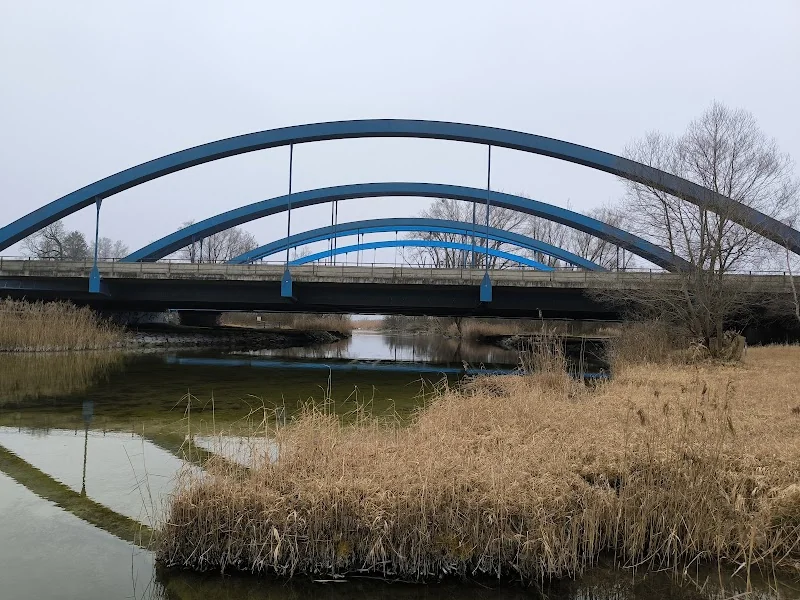
34HH+PG, Eching am Ammersee
34HH+PG, 82279 Eching am Ammersee, Germany
Ampermoos | Hiking & Birdwatching
The Ampermoos is a landscape area for people seeking tranquility, nature observation, and genuine wetland landscapes. Between the northern end of Lake Ammersee at Stegen and Grafrath, the Amper flows through the area for about 6 kilometers, which today is one of the largest flowing bogs in Bavaria and covers approximately 551 hectares. Since 1982, the Ampermoos has been protected as a nature reserve; at the same time, it is entirely located in the Ramsar area of Lake Ammersee and in the EU bird protection area of the Ammersee region. Those looking for Ampermoos hiking, Ampermoos walking, or Ampermoos birdwatching will find here not a classic urban excursion spot, but a vast, sensitive natural area with scattered meadows, bog areas, open watercourses, and a remarkable diversity of species. This mixture makes the area so valuable: it serves as a refuge for animals, a research area for experts, and a quiet destination for visitors who wish to experience nature respectfully. ([starnberg.lbv.de](https://starnberg.lbv.de/schutzgebiete/natura-2000/ampermoos/))
Nature Reserve Ampermoos: Location, Protection Status, and Landscape
The Ampermoos is closely linked to the history of Lake Ammersee and the Amper. After the end of the last Ice Age, a silted bog formed here, which today functions as a flowing bog and is therefore particularly sensitive in terms of water management. The government of Upper Bavaria describes the area as a bog landscape with nationally significant sedge populations and reed grass meadows, as well as rare river valley species. The municipality of Eching also emphasizes that the Ampermoos shapes the landscape on the northern shore of Lake Ammersee and has been under nature protection since 1982. For those searching for Ampermoos Grafrath or Ampermoos Kottgeisering, it is important to know: the protected area is not located in a single spot but stretches across several municipal borders, forming a continuous natural band along the Amper. ([regierung.oberbayern.bayern.de](https://www.regierung.oberbayern.bayern.de/service/themen_umwelt/natura2000_mpl-entwuerfe/ampermoos/index.html))
Particularly valuable is the diversity of habitats. The LBV Starnberg describes the Ampermoos as an area with near-natural calcareous dry grasslands, reed grass meadows, calcareous low moors, and calcareous swamps, as well as alder-ash-willow floodplain forests. The same expert information also mentions several protected species, including the shiny orchid, pale yellow orchid, dark meadow button-ant blue, spiral snails, and the river mussel. The fact that these rare habitats meet in a comparatively compact area makes the Ampermoos so exciting for nature lovers. It is not a monotonous bog but a mosaic of wet, open, and semi-open structures that vary depending on water levels, seasons, and maintenance. This is precisely why a quiet look at the landscape is worthwhile: those who observe the area attentively quickly recognize how closely geology, water, management, and species protection are interconnected here. ([starnberg.lbv.de](https://starnberg.lbv.de/schutzgebiete/natura-2000/ampermoos/))
Ampermoos Hiking, Walking, and Circular Path
An Ampermoos hike does not thrive on steep elevation gains but on slow, attentive movement through a sensitive wetland. The StarnbergAmmersee region describes the area around the northern Lake Ammersee as an idyllic path through nature and bird protection areas. For visitors, this means: the experience primarily arises from walking, observing, and pausing. Particularly beautiful is the transition from the shore and recreational areas at Stegen and Eching into the quieter, more open areas of the Amper Valley. Those looking for Ampermoos circular paths or Ampermoos walks should therefore not only think of a single marked loop but of a landscape that can be ideally combined with short paths, shore sections, and regional tours. This creates a nature experience that thrives less on athletic performance and more on perception. ([starnbergammersee.de](https://www.starnbergammersee.de/detail/id%3D6075b839d8fb501ac55de37a))
Practically, it is important to note that the Ampermoos is not a freely accessible recreational park. There are no arbitrary crossings over meadows and no open areas that one can simply enter at will. Rather, the path rule applies, and this is what defines the quality of the experience: those who stay on the existing paths often see more, not less. In the edge area of the Amper, at the transitions to open fields or at the sightlines towards Grafrath, the landscape can be particularly well read. The Ammersee region generally recommends considerate behavior in the open landscape, including parking only in designated areas, consideration for agriculture, and maintaining silence in sensitive areas. For an Ampermoos hike, this means in consequence: it is better to be slow, quiet, and equipped with binoculars than to be fast and cross-country. This turns a simple walk into a high-quality nature experience. ([regierung.oberbayern.bayern.de](https://www.regierung.oberbayern.bayern.de/mam/dokumente/bereich5/sg51/natura2000/mpl-entwuerfe/220304_ampermoos_aushang_information_nsgbesucher_kartierarbeiten.pdf))
Birdwatching in Ampermoos: Meadow Breeders, Marsh Harrier, and Quiet Times
When it comes to Ampermoos birdwatching, the area is one of the most exciting wetland habitats in the region. The LBV Starnberg explicitly mentions highly endangered bird species such as the curlew, lapwing, snipe, and brown-throated sandpiper; additionally, marsh harriers are mentioned, which seek a roost here in winter. The expert foundations for the FFH area also make it clear that numerous protected animal and plant species have been documented in the Ampermoos. The government of Upper Bavaria lists a total of 95 legally protected animal and plant species in the FFH context for the area, including 51 bird species and 29 dragonfly species. So those searching for Ampermoos birds or marsh harrier Ampermoos will indeed find a place where birdwatching is not incidental but professionally relevant. Especially in spring and winter, the importance of the area for breeding birds, migratory birds, and winterers becomes evident. ([starnberg.lbv.de](https://starnberg.lbv.de/schutzgebiete/natura-2000/ampermoos/))
The sensitivity of this avifauna is the reason why particularly clear behavioral rules apply in the Ampermoos. The government of Upper Bavaria points out that from March 1 to July 15, visitors should not leave the paths and should not let dogs run free. The reasoning given is that even the approach of walkers or free-running dogs can disturb the breeding and foraging of the birds. Repeated disturbances can lead to parent birds abandoning nests, eggs cooling down, or clutches being more easily found by predators. So those who are out at the right time with calmness and attention contribute a small part to the protection of the animals. For nature lovers, this is not a restriction but part of the experience: the best birdwatching often occurs when one maintains distance, remains quiet, and observes the landscape with patience. The region also offers thematic nature tours, including events on the great curlew in the Ampermoos, which shows how great the public interest in this habitat is. ([regierung.oberbayern.bayern.de](https://www.regierung.oberbayern.bayern.de/mam/dokumente/bereich5/sg51/natura2000/mpl-entwuerfe/220304_ampermoos_aushang_information_nsgbesucher_kartierarbeiten.pdf))
Ampermoos Map and Access: Orientation between Eching, Stegen, and Grafrath
When searching for Ampermoos map or Ampermoos Grafrath, the official mapping is particularly helpful. The government of Upper Bavaria provides an overview map for the FFH area Ampermoos as well as additional maps on inventory, assessment, and measures. This is useful not only for property questions or professional interest but also for anyone who wants to better understand the location of the area. The municipality of Eching also refers to the protected areas and their representation in a geo-application. For visitors, this results in a clear picture: the Ampermoos is not an isolated point but a stretched natural area between Lake Ammersee, Stegen, Eching, and Grafrath. Therefore, those wishing to orient themselves should always consider the landscape context and not just look for a single entry point. This is precisely what makes the map meaningful: it shows how closely the lake shores, Amper course, bog areas, and adjacent towns are interconnected. ([regierung.oberbayern.bayern.de](https://www.regierung.oberbayern.bayern.de/service/themen_umwelt/natura2000_mpl-entwuerfe/ampermoos/index.html))
For access, the same basic rule applies as for the visit itself: plan ahead and only park where it is explicitly allowed. The StarnbergAmmersee region generally points out not to park outside designated parking areas, as paths, meadows, and agricultural areas may otherwise be damaged. For a tour around the Ampermoos, this means that it is best to determine the starting point in advance and check the permissible parking options. Those who want to combine the area with a larger circular route, for example, as part of an Ammersee tour, will find several connection options in the region via Stegen or Eching. Particularly practical is that the Ammersee area is overall well connected by public transport and regional hiking and cycling paths. This allows the visit to the Ampermoos to be integrated into a longer but still relaxed outing without burdening the sensitive natural area with unnecessary traffic. This is not only ecologically sensible but often makes the stay more relaxed as well. ([starnbergammersee.de](https://www.starnbergammersee.de/entdecken-erleben/ruecksichtsvoll-durch-die-region-starnbergammersee))
History, Rewetting, and Ecological Importance
The ecological importance of the Ampermoos can only be understood by looking at its history. The Bund Naturschutz describes that a request for the designation of the nature reserve was already submitted in 1975. The background was the threat from drainage ditches and drains, as well as the long-term lowering of groundwater, which caused many bog habitats to dry out. The Munich Water Management Office today documents rewetting measures and points out that the installation of a base ramp can at least partially cushion the negative climatic factors. At the same time, the authority also makes it clear that no clearly positive developments in vegetation and fauna have been observed so far. This mixture of success, long-term observation, and caution is typical for bog renaturation: it is not a quick intervention but a process over many years. For search queries like refuge Ampermoos or green Ampermoos, this is essentially the core: a space that must be stabilized anew repeatedly to retain its function as a habitat. ([fuerstenfeldbruck.bund-naturschutz.de](https://fuerstenfeldbruck.bund-naturschutz.de/themen-projekte/arten-biotope/das-ampermoos?utm_source=openai))
Also, the status as part of a large protection network underscores the importance of the area. The Ampermoos is not only part of the Bavarian nature conservation system but also within the European Natura 2000 network and the international Ramsar context of Lake Ammersee. The government of Upper Bavaria describes it as one of the largest flowing bogs in Bavaria; the LBV adds that the area largely coincides with the Ampermoos nature reserve and is traversed by the Amper over a length of about 6 kilometers. This creates a landscape space that not only houses rare species but also acts as a water and climate buffer. Especially in times of frequent dry phases and heavy rainfall events, this is an important ecological factor. So when visiting the Ampermoos, one is not simply standing in front of a beautiful meadow but before a highly sensitive ecosystem that retains its stability only when use, maintenance, and protection are harmonized. This connection of natural beauty and professional significance makes the area so extraordinary. ([regierung.oberbayern.bayern.de](https://www.regierung.oberbayern.bayern.de/service/themen_umwelt/natura2000_mpl-entwuerfe/ampermoos/index.html))
Considerate Travel in Ampermoos
A good visit to the Ampermoos begins with consideration. The StarnbergAmmersee region reminds us that the open landscape is neither an adventure playground nor a recreational park. This may sound strict, but it is primarily a reminder of how sensitively the system reacts. Those who leave the paths, let dogs run free, play loud music, or unnecessarily disturb in the protected area endanger animals, plants, and breeding sites. The official visitor information from the government of Upper Bavaria is therefore very clear: from early March to mid-July, please stay on the paths and keep dogs on a short leash. Especially during this time, many species are breeding, and the ground and meadow areas are particularly vulnerable. General advice from the region, such as not flying drones and not parking outside designated areas, is also important for a successful visit. In the end, it is not about renunciation but about a form of nature enjoyment that has lasting value. ([regierung.oberbayern.bayern.de](https://www.regierung.oberbayern.bayern.de/mam/dokumente/bereich5/sg51/natura2000/mpl-entwuerfe/220304_ampermoos_aushang_information_nsgbesucher_kartierarbeiten.pdf))
Those who visit the Ampermoos thoughtfully will experience even more. The quiet areas along the Amper, the open sightlines towards Grafrath, and the marginal connections to Eching and Stegen make the area an ideal place for slow walks, nature photography from a distance, and observations with binoculars or spotting scopes. Especially in the early morning or during the quieter times of day, the meadows, water areas, and reed edges appear particularly intense. Therefore, for the Ampermoos circular path and Ampermoos walk: better a short but focused round than a hectic rush. The charm lies in careful observation, listening to bird calls, and understanding the landscape. Those who explore the area in this way will quickly realize why the Ampermoos is among the special natural addresses in the pre-Alpine region. It is a place that does not need to be loud to remain sustainably in memory. ([regierung.oberbayern.bayern.de](https://www.regierung.oberbayern.bayern.de/service/themen_umwelt/natura2000_mpl-entwuerfe/ampermoos/index.html))
Sources:
- Government of Upper Bavaria - Ampermoos FFH Area ([regierung.oberbayern.bayern.de](https://www.regierung.oberbayern.bayern.de/service/themen_umwelt/natura2000_mpl-entwuerfe/ampermoos/index.html))
- LBV Starnberg - FFH Area 7832-371 Ampermoos ([starnberg.lbv.de](https://starnberg.lbv.de/schutzgebiete/natura-2000/ampermoos/))
- Water Management Office Munich - Rewetting of the Ampermoos ([wwa-m.bayern.de](https://www.wwa-m.bayern.de/projekte/ampermoos/index.htm))
- Municipality of Eching am Ammersee - Location, Development, History ([eching-ammersee.de](https://www.eching-ammersee.de/lage-entwicklung-geschichte))
- StarnbergAmmersee Region - Considerate Travel through the Region ([starnbergammersee.de](https://www.starnbergammersee.de/entdecken-erleben/ruecksichtsvoll-durch-die-region-starnbergammersee))
- StarnbergAmmersee Region - Route 39: Circular Path around Lake Ammersee ([starnbergammersee.de](https://www.starnbergammersee.de/detail/id%3D6075b839d8fb501ac55de37a))
Show moreShow less
Ampermoos | Hiking & Birdwatching
The Ampermoos is a landscape area for people seeking tranquility, nature observation, and genuine wetland landscapes. Between the northern end of Lake Ammersee at Stegen and Grafrath, the Amper flows through the area for about 6 kilometers, which today is one of the largest flowing bogs in Bavaria and covers approximately 551 hectares. Since 1982, the Ampermoos has been protected as a nature reserve; at the same time, it is entirely located in the Ramsar area of Lake Ammersee and in the EU bird protection area of the Ammersee region. Those looking for Ampermoos hiking, Ampermoos walking, or Ampermoos birdwatching will find here not a classic urban excursion spot, but a vast, sensitive natural area with scattered meadows, bog areas, open watercourses, and a remarkable diversity of species. This mixture makes the area so valuable: it serves as a refuge for animals, a research area for experts, and a quiet destination for visitors who wish to experience nature respectfully. ([starnberg.lbv.de](https://starnberg.lbv.de/schutzgebiete/natura-2000/ampermoos/))
Nature Reserve Ampermoos: Location, Protection Status, and Landscape
The Ampermoos is closely linked to the history of Lake Ammersee and the Amper. After the end of the last Ice Age, a silted bog formed here, which today functions as a flowing bog and is therefore particularly sensitive in terms of water management. The government of Upper Bavaria describes the area as a bog landscape with nationally significant sedge populations and reed grass meadows, as well as rare river valley species. The municipality of Eching also emphasizes that the Ampermoos shapes the landscape on the northern shore of Lake Ammersee and has been under nature protection since 1982. For those searching for Ampermoos Grafrath or Ampermoos Kottgeisering, it is important to know: the protected area is not located in a single spot but stretches across several municipal borders, forming a continuous natural band along the Amper. ([regierung.oberbayern.bayern.de](https://www.regierung.oberbayern.bayern.de/service/themen_umwelt/natura2000_mpl-entwuerfe/ampermoos/index.html))
Particularly valuable is the diversity of habitats. The LBV Starnberg describes the Ampermoos as an area with near-natural calcareous dry grasslands, reed grass meadows, calcareous low moors, and calcareous swamps, as well as alder-ash-willow floodplain forests. The same expert information also mentions several protected species, including the shiny orchid, pale yellow orchid, dark meadow button-ant blue, spiral snails, and the river mussel. The fact that these rare habitats meet in a comparatively compact area makes the Ampermoos so exciting for nature lovers. It is not a monotonous bog but a mosaic of wet, open, and semi-open structures that vary depending on water levels, seasons, and maintenance. This is precisely why a quiet look at the landscape is worthwhile: those who observe the area attentively quickly recognize how closely geology, water, management, and species protection are interconnected here. ([starnberg.lbv.de](https://starnberg.lbv.de/schutzgebiete/natura-2000/ampermoos/))
Ampermoos Hiking, Walking, and Circular Path
An Ampermoos hike does not thrive on steep elevation gains but on slow, attentive movement through a sensitive wetland. The StarnbergAmmersee region describes the area around the northern Lake Ammersee as an idyllic path through nature and bird protection areas. For visitors, this means: the experience primarily arises from walking, observing, and pausing. Particularly beautiful is the transition from the shore and recreational areas at Stegen and Eching into the quieter, more open areas of the Amper Valley. Those looking for Ampermoos circular paths or Ampermoos walks should therefore not only think of a single marked loop but of a landscape that can be ideally combined with short paths, shore sections, and regional tours. This creates a nature experience that thrives less on athletic performance and more on perception. ([starnbergammersee.de](https://www.starnbergammersee.de/detail/id%3D6075b839d8fb501ac55de37a))
Practically, it is important to note that the Ampermoos is not a freely accessible recreational park. There are no arbitrary crossings over meadows and no open areas that one can simply enter at will. Rather, the path rule applies, and this is what defines the quality of the experience: those who stay on the existing paths often see more, not less. In the edge area of the Amper, at the transitions to open fields or at the sightlines towards Grafrath, the landscape can be particularly well read. The Ammersee region generally recommends considerate behavior in the open landscape, including parking only in designated areas, consideration for agriculture, and maintaining silence in sensitive areas. For an Ampermoos hike, this means in consequence: it is better to be slow, quiet, and equipped with binoculars than to be fast and cross-country. This turns a simple walk into a high-quality nature experience. ([regierung.oberbayern.bayern.de](https://www.regierung.oberbayern.bayern.de/mam/dokumente/bereich5/sg51/natura2000/mpl-entwuerfe/220304_ampermoos_aushang_information_nsgbesucher_kartierarbeiten.pdf))
Birdwatching in Ampermoos: Meadow Breeders, Marsh Harrier, and Quiet Times
When it comes to Ampermoos birdwatching, the area is one of the most exciting wetland habitats in the region. The LBV Starnberg explicitly mentions highly endangered bird species such as the curlew, lapwing, snipe, and brown-throated sandpiper; additionally, marsh harriers are mentioned, which seek a roost here in winter. The expert foundations for the FFH area also make it clear that numerous protected animal and plant species have been documented in the Ampermoos. The government of Upper Bavaria lists a total of 95 legally protected animal and plant species in the FFH context for the area, including 51 bird species and 29 dragonfly species. So those searching for Ampermoos birds or marsh harrier Ampermoos will indeed find a place where birdwatching is not incidental but professionally relevant. Especially in spring and winter, the importance of the area for breeding birds, migratory birds, and winterers becomes evident. ([starnberg.lbv.de](https://starnberg.lbv.de/schutzgebiete/natura-2000/ampermoos/))
The sensitivity of this avifauna is the reason why particularly clear behavioral rules apply in the Ampermoos. The government of Upper Bavaria points out that from March 1 to July 15, visitors should not leave the paths and should not let dogs run free. The reasoning given is that even the approach of walkers or free-running dogs can disturb the breeding and foraging of the birds. Repeated disturbances can lead to parent birds abandoning nests, eggs cooling down, or clutches being more easily found by predators. So those who are out at the right time with calmness and attention contribute a small part to the protection of the animals. For nature lovers, this is not a restriction but part of the experience: the best birdwatching often occurs when one maintains distance, remains quiet, and observes the landscape with patience. The region also offers thematic nature tours, including events on the great curlew in the Ampermoos, which shows how great the public interest in this habitat is. ([regierung.oberbayern.bayern.de](https://www.regierung.oberbayern.bayern.de/mam/dokumente/bereich5/sg51/natura2000/mpl-entwuerfe/220304_ampermoos_aushang_information_nsgbesucher_kartierarbeiten.pdf))
Ampermoos Map and Access: Orientation between Eching, Stegen, and Grafrath
When searching for Ampermoos map or Ampermoos Grafrath, the official mapping is particularly helpful. The government of Upper Bavaria provides an overview map for the FFH area Ampermoos as well as additional maps on inventory, assessment, and measures. This is useful not only for property questions or professional interest but also for anyone who wants to better understand the location of the area. The municipality of Eching also refers to the protected areas and their representation in a geo-application. For visitors, this results in a clear picture: the Ampermoos is not an isolated point but a stretched natural area between Lake Ammersee, Stegen, Eching, and Grafrath. Therefore, those wishing to orient themselves should always consider the landscape context and not just look for a single entry point. This is precisely what makes the map meaningful: it shows how closely the lake shores, Amper course, bog areas, and adjacent towns are interconnected. ([regierung.oberbayern.bayern.de](https://www.regierung.oberbayern.bayern.de/service/themen_umwelt/natura2000_mpl-entwuerfe/ampermoos/index.html))
For access, the same basic rule applies as for the visit itself: plan ahead and only park where it is explicitly allowed. The StarnbergAmmersee region generally points out not to park outside designated parking areas, as paths, meadows, and agricultural areas may otherwise be damaged. For a tour around the Ampermoos, this means that it is best to determine the starting point in advance and check the permissible parking options. Those who want to combine the area with a larger circular route, for example, as part of an Ammersee tour, will find several connection options in the region via Stegen or Eching. Particularly practical is that the Ammersee area is overall well connected by public transport and regional hiking and cycling paths. This allows the visit to the Ampermoos to be integrated into a longer but still relaxed outing without burdening the sensitive natural area with unnecessary traffic. This is not only ecologically sensible but often makes the stay more relaxed as well. ([starnbergammersee.de](https://www.starnbergammersee.de/entdecken-erleben/ruecksichtsvoll-durch-die-region-starnbergammersee))
History, Rewetting, and Ecological Importance
The ecological importance of the Ampermoos can only be understood by looking at its history. The Bund Naturschutz describes that a request for the designation of the nature reserve was already submitted in 1975. The background was the threat from drainage ditches and drains, as well as the long-term lowering of groundwater, which caused many bog habitats to dry out. The Munich Water Management Office today documents rewetting measures and points out that the installation of a base ramp can at least partially cushion the negative climatic factors. At the same time, the authority also makes it clear that no clearly positive developments in vegetation and fauna have been observed so far. This mixture of success, long-term observation, and caution is typical for bog renaturation: it is not a quick intervention but a process over many years. For search queries like refuge Ampermoos or green Ampermoos, this is essentially the core: a space that must be stabilized anew repeatedly to retain its function as a habitat. ([fuerstenfeldbruck.bund-naturschutz.de](https://fuerstenfeldbruck.bund-naturschutz.de/themen-projekte/arten-biotope/das-ampermoos?utm_source=openai))
Also, the status as part of a large protection network underscores the importance of the area. The Ampermoos is not only part of the Bavarian nature conservation system but also within the European Natura 2000 network and the international Ramsar context of Lake Ammersee. The government of Upper Bavaria describes it as one of the largest flowing bogs in Bavaria; the LBV adds that the area largely coincides with the Ampermoos nature reserve and is traversed by the Amper over a length of about 6 kilometers. This creates a landscape space that not only houses rare species but also acts as a water and climate buffer. Especially in times of frequent dry phases and heavy rainfall events, this is an important ecological factor. So when visiting the Ampermoos, one is not simply standing in front of a beautiful meadow but before a highly sensitive ecosystem that retains its stability only when use, maintenance, and protection are harmonized. This connection of natural beauty and professional significance makes the area so extraordinary. ([regierung.oberbayern.bayern.de](https://www.regierung.oberbayern.bayern.de/service/themen_umwelt/natura2000_mpl-entwuerfe/ampermoos/index.html))
Considerate Travel in Ampermoos
A good visit to the Ampermoos begins with consideration. The StarnbergAmmersee region reminds us that the open landscape is neither an adventure playground nor a recreational park. This may sound strict, but it is primarily a reminder of how sensitively the system reacts. Those who leave the paths, let dogs run free, play loud music, or unnecessarily disturb in the protected area endanger animals, plants, and breeding sites. The official visitor information from the government of Upper Bavaria is therefore very clear: from early March to mid-July, please stay on the paths and keep dogs on a short leash. Especially during this time, many species are breeding, and the ground and meadow areas are particularly vulnerable. General advice from the region, such as not flying drones and not parking outside designated areas, is also important for a successful visit. In the end, it is not about renunciation but about a form of nature enjoyment that has lasting value. ([regierung.oberbayern.bayern.de](https://www.regierung.oberbayern.bayern.de/mam/dokumente/bereich5/sg51/natura2000/mpl-entwuerfe/220304_ampermoos_aushang_information_nsgbesucher_kartierarbeiten.pdf))
Those who visit the Ampermoos thoughtfully will experience even more. The quiet areas along the Amper, the open sightlines towards Grafrath, and the marginal connections to Eching and Stegen make the area an ideal place for slow walks, nature photography from a distance, and observations with binoculars or spotting scopes. Especially in the early morning or during the quieter times of day, the meadows, water areas, and reed edges appear particularly intense. Therefore, for the Ampermoos circular path and Ampermoos walk: better a short but focused round than a hectic rush. The charm lies in careful observation, listening to bird calls, and understanding the landscape. Those who explore the area in this way will quickly realize why the Ampermoos is among the special natural addresses in the pre-Alpine region. It is a place that does not need to be loud to remain sustainably in memory. ([regierung.oberbayern.bayern.de](https://www.regierung.oberbayern.bayern.de/service/themen_umwelt/natura2000_mpl-entwuerfe/ampermoos/index.html))
Sources:
- Government of Upper Bavaria - Ampermoos FFH Area ([regierung.oberbayern.bayern.de](https://www.regierung.oberbayern.bayern.de/service/themen_umwelt/natura2000_mpl-entwuerfe/ampermoos/index.html))
- LBV Starnberg - FFH Area 7832-371 Ampermoos ([starnberg.lbv.de](https://starnberg.lbv.de/schutzgebiete/natura-2000/ampermoos/))
- Water Management Office Munich - Rewetting of the Ampermoos ([wwa-m.bayern.de](https://www.wwa-m.bayern.de/projekte/ampermoos/index.htm))
- Municipality of Eching am Ammersee - Location, Development, History ([eching-ammersee.de](https://www.eching-ammersee.de/lage-entwicklung-geschichte))
- StarnbergAmmersee Region - Considerate Travel through the Region ([starnbergammersee.de](https://www.starnbergammersee.de/entdecken-erleben/ruecksichtsvoll-durch-die-region-starnbergammersee))
- StarnbergAmmersee Region - Route 39: Circular Path around Lake Ammersee ([starnbergammersee.de](https://www.starnbergammersee.de/detail/id%3D6075b839d8fb501ac55de37a))
Ampermoos | Hiking & Birdwatching
The Ampermoos is a landscape area for people seeking tranquility, nature observation, and genuine wetland landscapes. Between the northern end of Lake Ammersee at Stegen and Grafrath, the Amper flows through the area for about 6 kilometers, which today is one of the largest flowing bogs in Bavaria and covers approximately 551 hectares. Since 1982, the Ampermoos has been protected as a nature reserve; at the same time, it is entirely located in the Ramsar area of Lake Ammersee and in the EU bird protection area of the Ammersee region. Those looking for Ampermoos hiking, Ampermoos walking, or Ampermoos birdwatching will find here not a classic urban excursion spot, but a vast, sensitive natural area with scattered meadows, bog areas, open watercourses, and a remarkable diversity of species. This mixture makes the area so valuable: it serves as a refuge for animals, a research area for experts, and a quiet destination for visitors who wish to experience nature respectfully. ([starnberg.lbv.de](https://starnberg.lbv.de/schutzgebiete/natura-2000/ampermoos/))
Nature Reserve Ampermoos: Location, Protection Status, and Landscape
The Ampermoos is closely linked to the history of Lake Ammersee and the Amper. After the end of the last Ice Age, a silted bog formed here, which today functions as a flowing bog and is therefore particularly sensitive in terms of water management. The government of Upper Bavaria describes the area as a bog landscape with nationally significant sedge populations and reed grass meadows, as well as rare river valley species. The municipality of Eching also emphasizes that the Ampermoos shapes the landscape on the northern shore of Lake Ammersee and has been under nature protection since 1982. For those searching for Ampermoos Grafrath or Ampermoos Kottgeisering, it is important to know: the protected area is not located in a single spot but stretches across several municipal borders, forming a continuous natural band along the Amper. ([regierung.oberbayern.bayern.de](https://www.regierung.oberbayern.bayern.de/service/themen_umwelt/natura2000_mpl-entwuerfe/ampermoos/index.html))
Particularly valuable is the diversity of habitats. The LBV Starnberg describes the Ampermoos as an area with near-natural calcareous dry grasslands, reed grass meadows, calcareous low moors, and calcareous swamps, as well as alder-ash-willow floodplain forests. The same expert information also mentions several protected species, including the shiny orchid, pale yellow orchid, dark meadow button-ant blue, spiral snails, and the river mussel. The fact that these rare habitats meet in a comparatively compact area makes the Ampermoos so exciting for nature lovers. It is not a monotonous bog but a mosaic of wet, open, and semi-open structures that vary depending on water levels, seasons, and maintenance. This is precisely why a quiet look at the landscape is worthwhile: those who observe the area attentively quickly recognize how closely geology, water, management, and species protection are interconnected here. ([starnberg.lbv.de](https://starnberg.lbv.de/schutzgebiete/natura-2000/ampermoos/))
Ampermoos Hiking, Walking, and Circular Path
An Ampermoos hike does not thrive on steep elevation gains but on slow, attentive movement through a sensitive wetland. The StarnbergAmmersee region describes the area around the northern Lake Ammersee as an idyllic path through nature and bird protection areas. For visitors, this means: the experience primarily arises from walking, observing, and pausing. Particularly beautiful is the transition from the shore and recreational areas at Stegen and Eching into the quieter, more open areas of the Amper Valley. Those looking for Ampermoos circular paths or Ampermoos walks should therefore not only think of a single marked loop but of a landscape that can be ideally combined with short paths, shore sections, and regional tours. This creates a nature experience that thrives less on athletic performance and more on perception. ([starnbergammersee.de](https://www.starnbergammersee.de/detail/id%3D6075b839d8fb501ac55de37a))
Practically, it is important to note that the Ampermoos is not a freely accessible recreational park. There are no arbitrary crossings over meadows and no open areas that one can simply enter at will. Rather, the path rule applies, and this is what defines the quality of the experience: those who stay on the existing paths often see more, not less. In the edge area of the Amper, at the transitions to open fields or at the sightlines towards Grafrath, the landscape can be particularly well read. The Ammersee region generally recommends considerate behavior in the open landscape, including parking only in designated areas, consideration for agriculture, and maintaining silence in sensitive areas. For an Ampermoos hike, this means in consequence: it is better to be slow, quiet, and equipped with binoculars than to be fast and cross-country. This turns a simple walk into a high-quality nature experience. ([regierung.oberbayern.bayern.de](https://www.regierung.oberbayern.bayern.de/mam/dokumente/bereich5/sg51/natura2000/mpl-entwuerfe/220304_ampermoos_aushang_information_nsgbesucher_kartierarbeiten.pdf))
Birdwatching in Ampermoos: Meadow Breeders, Marsh Harrier, and Quiet Times
When it comes to Ampermoos birdwatching, the area is one of the most exciting wetland habitats in the region. The LBV Starnberg explicitly mentions highly endangered bird species such as the curlew, lapwing, snipe, and brown-throated sandpiper; additionally, marsh harriers are mentioned, which seek a roost here in winter. The expert foundations for the FFH area also make it clear that numerous protected animal and plant species have been documented in the Ampermoos. The government of Upper Bavaria lists a total of 95 legally protected animal and plant species in the FFH context for the area, including 51 bird species and 29 dragonfly species. So those searching for Ampermoos birds or marsh harrier Ampermoos will indeed find a place where birdwatching is not incidental but professionally relevant. Especially in spring and winter, the importance of the area for breeding birds, migratory birds, and winterers becomes evident. ([starnberg.lbv.de](https://starnberg.lbv.de/schutzgebiete/natura-2000/ampermoos/))
The sensitivity of this avifauna is the reason why particularly clear behavioral rules apply in the Ampermoos. The government of Upper Bavaria points out that from March 1 to July 15, visitors should not leave the paths and should not let dogs run free. The reasoning given is that even the approach of walkers or free-running dogs can disturb the breeding and foraging of the birds. Repeated disturbances can lead to parent birds abandoning nests, eggs cooling down, or clutches being more easily found by predators. So those who are out at the right time with calmness and attention contribute a small part to the protection of the animals. For nature lovers, this is not a restriction but part of the experience: the best birdwatching often occurs when one maintains distance, remains quiet, and observes the landscape with patience. The region also offers thematic nature tours, including events on the great curlew in the Ampermoos, which shows how great the public interest in this habitat is. ([regierung.oberbayern.bayern.de](https://www.regierung.oberbayern.bayern.de/mam/dokumente/bereich5/sg51/natura2000/mpl-entwuerfe/220304_ampermoos_aushang_information_nsgbesucher_kartierarbeiten.pdf))
Ampermoos Map and Access: Orientation between Eching, Stegen, and Grafrath
When searching for Ampermoos map or Ampermoos Grafrath, the official mapping is particularly helpful. The government of Upper Bavaria provides an overview map for the FFH area Ampermoos as well as additional maps on inventory, assessment, and measures. This is useful not only for property questions or professional interest but also for anyone who wants to better understand the location of the area. The municipality of Eching also refers to the protected areas and their representation in a geo-application. For visitors, this results in a clear picture: the Ampermoos is not an isolated point but a stretched natural area between Lake Ammersee, Stegen, Eching, and Grafrath. Therefore, those wishing to orient themselves should always consider the landscape context and not just look for a single entry point. This is precisely what makes the map meaningful: it shows how closely the lake shores, Amper course, bog areas, and adjacent towns are interconnected. ([regierung.oberbayern.bayern.de](https://www.regierung.oberbayern.bayern.de/service/themen_umwelt/natura2000_mpl-entwuerfe/ampermoos/index.html))
For access, the same basic rule applies as for the visit itself: plan ahead and only park where it is explicitly allowed. The StarnbergAmmersee region generally points out not to park outside designated parking areas, as paths, meadows, and agricultural areas may otherwise be damaged. For a tour around the Ampermoos, this means that it is best to determine the starting point in advance and check the permissible parking options. Those who want to combine the area with a larger circular route, for example, as part of an Ammersee tour, will find several connection options in the region via Stegen or Eching. Particularly practical is that the Ammersee area is overall well connected by public transport and regional hiking and cycling paths. This allows the visit to the Ampermoos to be integrated into a longer but still relaxed outing without burdening the sensitive natural area with unnecessary traffic. This is not only ecologically sensible but often makes the stay more relaxed as well. ([starnbergammersee.de](https://www.starnbergammersee.de/entdecken-erleben/ruecksichtsvoll-durch-die-region-starnbergammersee))
History, Rewetting, and Ecological Importance
The ecological importance of the Ampermoos can only be understood by looking at its history. The Bund Naturschutz describes that a request for the designation of the nature reserve was already submitted in 1975. The background was the threat from drainage ditches and drains, as well as the long-term lowering of groundwater, which caused many bog habitats to dry out. The Munich Water Management Office today documents rewetting measures and points out that the installation of a base ramp can at least partially cushion the negative climatic factors. At the same time, the authority also makes it clear that no clearly positive developments in vegetation and fauna have been observed so far. This mixture of success, long-term observation, and caution is typical for bog renaturation: it is not a quick intervention but a process over many years. For search queries like refuge Ampermoos or green Ampermoos, this is essentially the core: a space that must be stabilized anew repeatedly to retain its function as a habitat. ([fuerstenfeldbruck.bund-naturschutz.de](https://fuerstenfeldbruck.bund-naturschutz.de/themen-projekte/arten-biotope/das-ampermoos?utm_source=openai))
Also, the status as part of a large protection network underscores the importance of the area. The Ampermoos is not only part of the Bavarian nature conservation system but also within the European Natura 2000 network and the international Ramsar context of Lake Ammersee. The government of Upper Bavaria describes it as one of the largest flowing bogs in Bavaria; the LBV adds that the area largely coincides with the Ampermoos nature reserve and is traversed by the Amper over a length of about 6 kilometers. This creates a landscape space that not only houses rare species but also acts as a water and climate buffer. Especially in times of frequent dry phases and heavy rainfall events, this is an important ecological factor. So when visiting the Ampermoos, one is not simply standing in front of a beautiful meadow but before a highly sensitive ecosystem that retains its stability only when use, maintenance, and protection are harmonized. This connection of natural beauty and professional significance makes the area so extraordinary. ([regierung.oberbayern.bayern.de](https://www.regierung.oberbayern.bayern.de/service/themen_umwelt/natura2000_mpl-entwuerfe/ampermoos/index.html))
Considerate Travel in Ampermoos
A good visit to the Ampermoos begins with consideration. The StarnbergAmmersee region reminds us that the open landscape is neither an adventure playground nor a recreational park. This may sound strict, but it is primarily a reminder of how sensitively the system reacts. Those who leave the paths, let dogs run free, play loud music, or unnecessarily disturb in the protected area endanger animals, plants, and breeding sites. The official visitor information from the government of Upper Bavaria is therefore very clear: from early March to mid-July, please stay on the paths and keep dogs on a short leash. Especially during this time, many species are breeding, and the ground and meadow areas are particularly vulnerable. General advice from the region, such as not flying drones and not parking outside designated areas, is also important for a successful visit. In the end, it is not about renunciation but about a form of nature enjoyment that has lasting value. ([regierung.oberbayern.bayern.de](https://www.regierung.oberbayern.bayern.de/mam/dokumente/bereich5/sg51/natura2000/mpl-entwuerfe/220304_ampermoos_aushang_information_nsgbesucher_kartierarbeiten.pdf))
Those who visit the Ampermoos thoughtfully will experience even more. The quiet areas along the Amper, the open sightlines towards Grafrath, and the marginal connections to Eching and Stegen make the area an ideal place for slow walks, nature photography from a distance, and observations with binoculars or spotting scopes. Especially in the early morning or during the quieter times of day, the meadows, water areas, and reed edges appear particularly intense. Therefore, for the Ampermoos circular path and Ampermoos walk: better a short but focused round than a hectic rush. The charm lies in careful observation, listening to bird calls, and understanding the landscape. Those who explore the area in this way will quickly realize why the Ampermoos is among the special natural addresses in the pre-Alpine region. It is a place that does not need to be loud to remain sustainably in memory. ([regierung.oberbayern.bayern.de](https://www.regierung.oberbayern.bayern.de/service/themen_umwelt/natura2000_mpl-entwuerfe/ampermoos/index.html))
Sources:
- Government of Upper Bavaria - Ampermoos FFH Area ([regierung.oberbayern.bayern.de](https://www.regierung.oberbayern.bayern.de/service/themen_umwelt/natura2000_mpl-entwuerfe/ampermoos/index.html))
- LBV Starnberg - FFH Area 7832-371 Ampermoos ([starnberg.lbv.de](https://starnberg.lbv.de/schutzgebiete/natura-2000/ampermoos/))
- Water Management Office Munich - Rewetting of the Ampermoos ([wwa-m.bayern.de](https://www.wwa-m.bayern.de/projekte/ampermoos/index.htm))
- Municipality of Eching am Ammersee - Location, Development, History ([eching-ammersee.de](https://www.eching-ammersee.de/lage-entwicklung-geschichte))
- StarnbergAmmersee Region - Considerate Travel through the Region ([starnbergammersee.de](https://www.starnbergammersee.de/entdecken-erleben/ruecksichtsvoll-durch-die-region-starnbergammersee))
- StarnbergAmmersee Region - Route 39: Circular Path around Lake Ammersee ([starnbergammersee.de](https://www.starnbergammersee.de/detail/id%3D6075b839d8fb501ac55de37a))
Upcoming Events
No events found
Frequently Asked Questions
Reviews
mami maldrei
21. January 2026
Today I discovered this peaceful spot, which really surprised me. The Amper River flows away from Lake Ammersee. This moor offers a variety of possibilities. It's home to beavers; the signs were unmistakable. There are also many different (water) birds. For breeding reasons, entering the meadows is prohibited from March onwards. There's a shallow area at the edge of the water where you can swim. You'll meet anglers, walkers, and people seeking peace and quiet. If you continue further along, you'll reach open fields. Passing the sewage treatment plant on your left, the road leads to Eching. There are cycle paths here. The motorway bridge is nearby. The bathing area in Stegen, where you can get ice cream, sausages, and other refreshments, is very close by. A great place that I'll definitely come back to.