
Peter Untermaierhofer
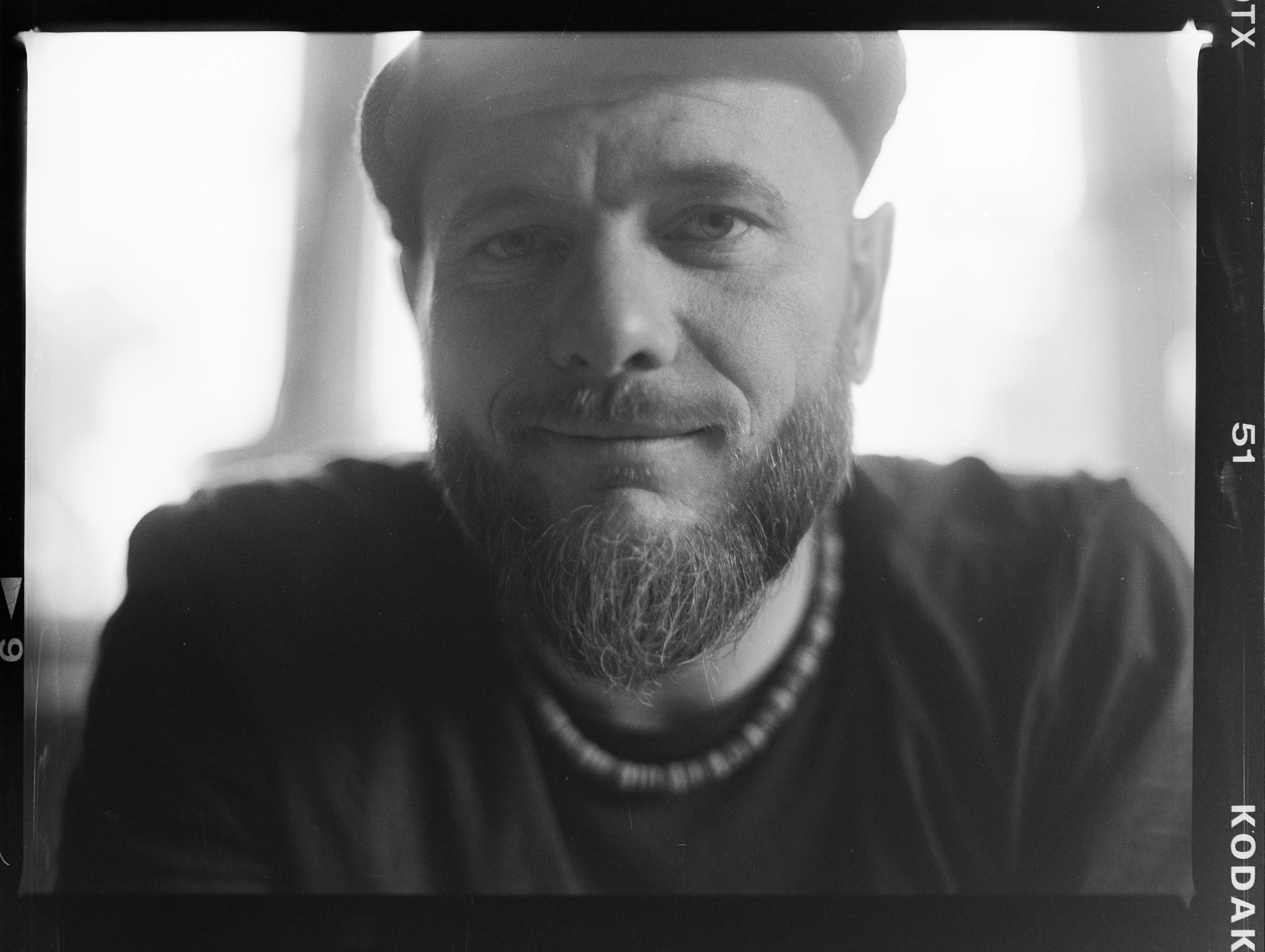
Image from Wikipedia
Image from Wikipedia
Peter Untermaierhofer – The Chronicler of Abandoned Places
A Photographer Who Makes the Echo of Transience Visible
Peter Untermaierhofer, born in 1983 in Eggenfelden, Bavaria, is one of the most prominent German photographers in the field of Lost Places documentation. Since 2008, he has been working photographically and quickly recognized the documentary potential of abandoned places, whose atmosphere oscillates between silence, beauty, and decay. What began as a personal interest in buildings in his surroundings evolved into a consistently developed artistic signature that transforms urban ruins, industrial wastelands, former hotels, churches, clinics, and castles into haunting image spaces.
His work combines precise composition, a keen sense of light, and a pronounced sensitivity to architectural details. Untermaierhofer does not merely photograph places, but states: the moment when history visibly frays, when material, space, and memory intertwine. This is precisely where his photography derives its power – from the tension between beauty and decay, cultural memory, and quiet dissolution.
Biographical Roots and Artistic Emergence
The biographical starting point of Peter Untermaierhofer lies in Lower Bavaria, yet his visual worlds extend far beyond that. His official biography states that he was trained as a diplomatic engineer in media technology and completed a semester in photography at James Cook University in Townsville, Australia, during his studies. This combination of technical precision and visual curiosity shapes his photographic practice to this day. His path into photography began in 2008, when his personal fascination with abandoned buildings evolved into a lasting artistic field of work.
By 2011, he graduated and wrote a thesis on the photographic documentation of urban exploration and high dynamic range technology. This early engagement with technology and image aesthetics is central to his later career: Untermaierhofer uses photographic means not decoratively, but as tools for analysis. His view of Lost Places is therefore not romanticizing, but observing, structuring, and archaeologically precise.
The Breakthrough with Lost Places and the Power of Documentation
Untermaierhofer truly broke through with his specialization in lost and abandoned places. Early on, he recognized that abandoned buildings tell more than just their structural condition: they point to social upheavals, economic changes, and vanished living environments. Media reports on his work frequently emphasize that he has been photographing so-called Lost Places for over ten years, documenting places marked by decay, overgrowth, and vacancy.
His attitude towards the places themselves is particularly important. Untermaierhofer works with respect for the history of the spaces and often consciously refrains from revealing the specific locations to protect the buildings. This restraint lends credibility and authority to his photography. Instead of sensationalism, a visual archive of disappearance emerges, making the aesthetic side of decay visible without losing sight of the cultural value of the places.
Exhibitions, Reach, and International Presence
Untermaierhofer's exhibition biography shows a steady development from regional attention to national and international visibility. His website documents that his images were first shown in 2013 as part of the main exhibition of urbEXPO in Bochum. In 2014, presentations followed at the Stroke Art Fair in Munich and again at urbEXPO, later a first major solo exhibition at KOKON in the Lenbachhaus in Munich. Since then, he has participated in numerous group and solo exhibitions.
In recent years, his works have been exhibited at very different venues: in museums, galleries, and cultural centers, but also in special exhibition formats around photography and contemporary art. The thematic continuity is particularly striking: whether in Burghausen, Munich, Hamburg, Markkleeberg, Eggenfelden, or Pielenhofen – places marked by time are always at the forefront. Several exhibitions are announced or planned for 2025 and 2026, including projects in Eggenfelden, Pielenhofen, Münster, and Tittmoning, emphasizing his ongoing presence in the exhibition landscape.
Photo Books and Photographic Practice
An important part of his artistic development lies in publications. In 2013, his first photobook Vergessene Orte im Ruhrgebiet – Lost Places in the Ruhr Area was published, which reflects the structural change of a historically significant industrial region photographically. The volume combines documentary accuracy with an aesthetic perspective on the decline of classical industrial architecture and is one of the early, programmatic works of his oeuvre.
In 2016, Lost Places fotografieren followed, a technical book that reveals his working methods. In it, he explains equipment, preparation, lighting, image processing, and how to deal with typical challenges such as converging lines or high brightness dynamics. This publication is more than a manual: it shows how thoughtfully Untermaierhofer thinks about photography. It was complemented by the strictly limited Retrospektive 2013–2016, which gathered his early key images and condensed his photographic language.
Style, Technique, and Artistic Development
Stylistically, Untermaierhofer's work is characterized by careful composition, controlled color dramaturgy, and a strong presence of spatial depth. His book describes how he uses light and intentionally placed colors to navigate through architecture and textures, opening resonant spaces for the viewer's imagination. This connection between documentary claim and pictorial staging makes his photography so distinctive. Decay remains visible, but it is not merely recorded; it is transformed into a readable image order.
Technically, his work operates in the tension field between urban exploration, documentary photography, and aesthetically condensed spatial representation. The themes range from psychiatric hospitals and hotels to industrial complexes, churches, castles, and Chernobyl images. Thus, a clear artistic cosmos emerges: Untermaierhofer does not seek the spectacularly unique but the structure of decay. His images tell of historical layers, the loss of function, and the slow reconstruction of culture through time.
Lost Places as Cultural Memory
The cultural significance of Untermaierhofer's work lies in its ability to keep forgotten spaces visible as part of collective memory. Particularly in the Ruhr area book, it becomes clear how closely his photography is linked to questions of industrial history, structural change, and memory. Abandoned factories, vacant clinics, or defunct hotels appear not only as motives but as carriers of societal narratives. The images provide a glimpse into what remains after utility: patina, emptiness, traces.
This perspective also lends his work a cultural-historical dimension. Lost Places are not mere ruins for Untermaierhofer, but places of transition. Nature reclaims spaces, paint peels, and furniture remains frozen like testimonies of an interrupted story. It is precisely in this tension that the appeal of his photography unfolds – it is sensual, analytical, and at the same time profoundly melancholic.
Current Projects and New Exhibitions 2024 to 2026
In the years 2024, 2025, and 2026, Untermaierhofer remains productive and present. His website lists several current and planned exhibitions, including Lost Places Ausstellung at the Deutsches Fotomuseum in Markkleeberg, Lost Places – Archäologie der Gegenwart at the Archaeological Museum Hamburg, and Lost Places – The Grandeur of Decay in Tittmoning for 2026. Additionally, there will be further presentations in Münster, Pielenhofen, and Eggenfelden, showcasing how vibrant his artistic work continues to be.
Notably, there is also ongoing expansion of his exhibition canon through series such as the Chernobyl images or new exhibition formats under titles like Parallelwelten and Betreten Verboten!. These titles reflect the central tension of his work: prohibition and attraction, loss and beauty, distance and proximity. Untermaierhofer continuously develops his photography while adhering to a clear aesthetic line.
Critical Reception and Public Perception
The reception of his work in the press and cultural reporting is remarkably consistent. Media describe him as a photographer who documents the fascination of decay with great commitment. Reports from Zeit, Süddeutsche Zeitung, Mittelbayerischer Zeitung, and other publications frequently highlight that he not only seeks spectacular motives but creates access to the history of the places. Particularly the connection of atmosphere, structure, and documentary perspective is emphasized in the reception.
International attention has also not been lacking. Even his early works garnered attention in various media, and his own website refers to reports in German and English publications. This resonance shows that his theme connects well beyond regional boundaries. Lost Places in his signature are not just a photographic genre but a cultural commentary on the visibility of disappearance.
Conclusion: An Artist Who Speaks the Silence
Peter Untermaierhofer is a photographer who shapes impressive image spaces from abandoned places. His work combines technical mastery, artistic composition, and historical awareness into a visual language that is both documentary and poetic. Those who view his photography see not just ruins but traces of life, work, use, and transformation. This is where his unique strength lies: he makes transience not spectacular but understandable and touching.
Untermaierhofer remains fascinating because he turns the seemingly marginal into a central theme of the present. His Lost Places photography tells of memory, change, and the quiet reverberation of human presence. Those who visit his exhibitions experience photography as an archaeological gaze upon time. An artist like Peter Untermaierhofer should not just be seen but experienced live in the exhibition.
Official Channels of Peter Untermaierhofer:
- Instagram: https://www.instagram.com/lost_places_urbex_europe/
- Facebook: https://www.facebook.com/peter.untermaierhofer/
- YouTube: No official profile found
- Spotify: No official profile found
- TikTok: No official profile found
Sources:
- Untermaierhofer Photography - Official Website
- Peter Untermaierhofer - About
- Peter Untermaierhofer - Exhibitions
- Peter Untermaierhofer - Books
- Peter Untermaierhofer - Press Reader
- DIE ZEIT / ze.tt - Psychiatries, Castles, Hotels: A Photographer Documents Creepy Lost Places
- Süddeutsche Zeitung - Bavaria Tip: Forgotten Places in Focus
- Mittelbayerische - The Beauty of the Morbid
- SN.at - Abandoned and Forgotten: Lost Places Exhibition at Tittmoninger Burg
- Wikipedia: Image and Text Source