
Federico García Lorca
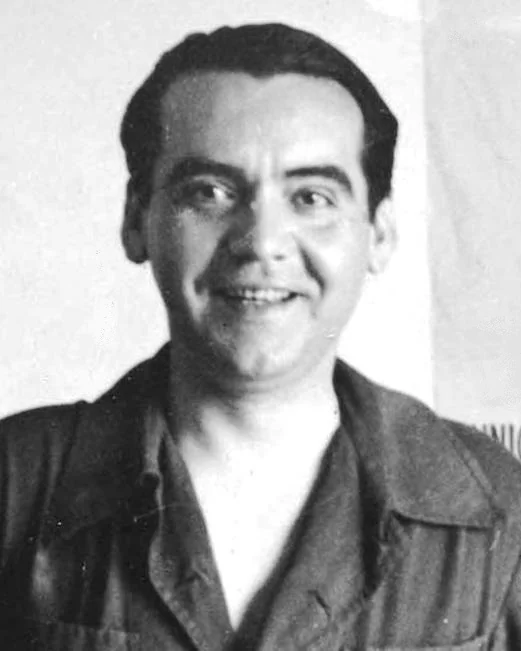
Image from Wikipedia
Image from Wikipedia
Federico García Lorca: The Poet Who Reinvented Spain's Stage and Language
A Life Between Andalusian Folklore, Literary Revolution, and Tragic History
Federico García Lorca is one of the most influential voices in 20th-century Spanish literature. As a poet, playwright, and theater innovator, he combined folk culture, musical sensitivity, and radical modernity into a distinctive artistic style. Born on June 5, 1898, in Fuente Vaqueros near Granada and murdered in 1936 near Víznar, he left a body of work of extraordinary density and brilliance, despite his short lifespan. ([britannica.com](https://www.britannica.com/biography/Federico-Garcia-Lorca?utm_source=openai))
His significance extends far beyond Spanish literature. Lorca was a central figure in the Generación del 27, a group of writers who significantly shaped and aesthetically renewed Spanish modernity. Together with Ramón del Valle-Inclán, he also revitalized Spanish theater, which had previously languished in late Romantic formulas and flat naturalism. ([en.wikipedia.org](https://en.wikipedia.org/wiki/Federico_Garc%C3%ADa_Lorca?utm_source=openai))
Biographical Roots: Granada as Artistic Origin
Lorca's origins in Andalusia are not merely a biographical background but an aesthetic foundation for his work. The region, with its blend of rural culture, flamenco, folk song traditions, and Arabic-influenced heritage, deeply influenced his imagery, rhythm, and symbolism. His early engagement with music and drawing shaped an artist who understood language not just as literary material but also as sound and visual material. ([garcia-lorca.org](https://garcia-lorca.org/lafundacion/?utm_source=openai))
His early years near Granada laid the groundwork for a poetics that intricately weaves everyday life with myth, rural lifestyles with existential drama. The official Lorca Foundation describes him as a universal artistic figure who was exposed to the arts from a young age and, despite his brief life, left a productive legacy in poetry and drama. This versatility forms the core of his enduring authority today. ([garcia-lorca.org](https://garcia-lorca.org/lafundacion/?utm_source=openai))
The Breakthrough: From Poetry to Literary Icon
Lorca's literary breakthrough came through poetry. His early texts display a strong attachment to musical forms, folk song tones, and a language that tightly interweaves emotion and structure. The Poetry Foundation emphasizes that his lyrical work incorporates elements of Spanish folklore, Andalusian flamenco, Gypsy culture, and cante jondo, the "deep song," exploring themes such as love, desire, and tragedy. ([poetryfoundation.org](https://www.poetryfoundation.org/poets/federico-garcia-lorca/?utm_source=openai))
With works like Romancero gitano, Lorca became a literary sensation. The 1928 collection solidified his reputation as a poet who does not conserve tradition but transforms it into modern forms. His verses distill folk myth, rhythmic rigor, and symbolic imagery into a language that remains instantly recognizable while also unleashing profound emotional force. ([es.wikipedia.org](https://es.wikipedia.org/wiki/Romancero_gitano?utm_source=openai))
Theater as Artistic Laboratory: Lorca as Playwright and Director
In drama, Lorca unleashed perhaps his most radical impact. As a playwright and theater maker, he saw the stage as a space of intensity where social conflicts, repressed desires, and primal violence intersect. His name is associated with works that belong to the canon of modern world theater, including Bodas de sangre, Yerma, and La casa de Bernarda Alba. These works combine poetic language with strict dramatic architecture and a distinct, often suffocating atmosphere. ([britannica.com](https://www.britannica.com/topic/Yerma?utm_source=openai))
Britannica describes Lorca as a poet and playwright who, in just 19 years of creative career, renewed the fundamental forces of Spanish poetry and theater. This compressed productivity makes his literary career, if you will, extraordinary: Lorca’s texts possess composition, tempo, crescendo, and a sense of stage presence that continues to inspire directors, composers, and performers today. ([britannica.com](https://www.britannica.com/biography/Federico-Garcia-Lorca?utm_source=openai))
Musical Sensitivity and Cultural Soundscape
Although Lorca was not a musician in the strict sense, musical thinking profoundly shapes his work. The foundation points to his early connection with music, and research highlights that his poetics are closely linked to sonic traditions. His approach to folk culture, flamenco, and ritualized forms of song makes his texts particularly open to musical adaptations and intermedial interpretations. ([garcia-lorca.org](https://garcia-lorca.org/lafundacion/?utm_source=openai))
His cultural influence extends far beyond literature. Lorca's work inspired numerous composers and opera creators; Larousse documents musical adaptations of his texts and dramatic materials by Vittorio Rieti, Wolfgang Fortner, Bruno Maderna, Juan José Castro, Sandor Szokolay, and Maurice Ohana. The Guardian also emphasizes that composers from Luigi Nono to George Crumb have been drawn to the life and work of Lorca. ([larousse.fr](https://www.larousse.fr/encyclopedie/musdico/Federico_Garc%C3%ADa_Lorca/167810?utm_source=openai))
Artistic Development: Between Modernity, Folk Culture, and Existential Intensification
Lorca's artistic development is a movement between formal discipline and emotional experience at the edge. His poems and dramas absorb the energy of oral tradition but transform it into highly conscious, literarily precise structures. This is precisely where his modernity lies: he does not nostalgically cite tradition but reshapes it into a language of the present. ([poetryfoundation.org](https://www.poetryfoundation.org/poets/federico-garcia-lorca/?utm_source=openai))
In thematic terms, Lorca shifts the boundaries of expression. Love does not appear as a harmonious ideal but as a tension between desire and prohibition, freedom and social norm, closeness and loss. The reflections on love, desire, and sexuality described by the foundation showcase an author who connects psychological depth and societal conflicts with poetic precision. ([garcia-lorca.org](https://garcia-lorca.org/evento/jardin-deshecho-lorca-y-el-amor/?utm_source=openai))
Political Context, Death, and Posthumous Impact
Lorca's death in the summer of 1936 marked a historical turning point and profoundly shaped the reception of his work. Britannica cites the area between Víznar and Alfacar as the place of his death, locating it within the context of the Spanish Civil War. The political violence that ended his life made him a symbolic figure for the interrupted cultural modernity of Spain. ([britannica.com](https://www.britannica.com/biography/Federico-Garcia-Lorca?utm_source=openai))
Especially after his death, the international impact of his texts unfolded even more strongly. Lorca became an icon of literary freedom, artistic autonomy, and cultural memory. Today, his poems, plays, and drawings form an extensive body of work that is continuously rediscovered in archives, editions, exhibitions, and scholarly projects. ([garcia-lorca.org](https://garcia-lorca.org/?utm_source=openai))
Current Projects and Contemporary Reception
Even in 2024 and 2025, Lorca remains present. The Centro Federico García Lorca in Granada continuously documents exhibitions, theater projects, and archival work surrounding his legacy, while the official foundation supports cultural and educational programs to promote his work. Recent activities include exhibitions and archival initiatives such as Suites. The Voyage of Perception and projects that connect Lorca's work with contemporary perspectives. ([garcia-lorca.org](https://garcia-lorca.org/evento/suites-the-voyage-of-perception/?utm_source=openai))
The current reception shows that Lorca has not become a stagnant museum figure. Rather, he remains an author whose texts continue to live on in theater, music, research, and cultural education. His presence in Granada, Madrid, and international research contexts underscores that his work is still read as a reference point for artistic renewal. ([garcia-lorca.org](https://garcia-lorca.org/lafundacion/?utm_source=openai))
Overview of Works and Literary Milestones
Key milestones in Lorca's oeuvre include early prose works such as Impresiones y paisajes, the poetry collection Romancero gitano, the poem Llanto por Ignacio Sánchez Mejías, and the major dramas of the 1930s. These works mark the range of his oeuvre: from the impressionistic travel gaze to folk-infused poetry to existentially intensified drama. ([es.wikipedia.org](https://es.wikipedia.org/wiki/Impresiones_y_paisajes?utm_source=openai))
His literary authority is based on a rare combination of musical language, symbolic density, and dramatic composition. Lorca thinks in images, rhythms, and scenes; his texts unfold like carefully constructed scores of emotion. This is why he remains indispensable for literary studies, theater practice, and cultural history. ([poetryfoundation.org](https://www.poetryfoundation.org/poets/federico-garcia-lorca/?utm_source=openai))
Conclusion: Why Federico García Lorca Continues to Captivate Today
Federico García Lorca fascinates because he has transformed poetry, theater, and cultural memory into a form of art that is simultaneously locally rooted and universally readable. His works carry the colors of Andalusia, the harshness of conflict, and the beauty of a language that vibrates musically in every line. Those who read Lorca or experience him on stage encounter an artist whose stage presence and poetic vision have lost none of their intensity to this day. ([poetryfoundation.org](https://www.poetryfoundation.org/poets/federico-garcia-lorca/?utm_source=openai))
Especially live, in theater or in an artistic adaptation, his power unfolds particularly directly. Lorca remains an author who needs not only to be studied but to be experienced: as a voice of modernity, as a chronicler of desire and loss, and as one of the great figures in European cultural history. ([garcia-lorca.org](https://garcia-lorca.org/lafundacion/?utm_source=openai))
Official Channels of Federico García Lorca:
- Instagram: No official profile found
- Facebook: No official profile found
- YouTube: No official profile found
- Spotify: No official profile found
- TikTok: No official profile found
Sources:
- Fundación Federico García Lorca – Official Website
- Fundación Federico García Lorca – The Foundation
- Centro Federico García Lorca – Archive
- Encyclopaedia Britannica – Federico García Lorca
- Poetry Foundation – Federico García Lorca
- Poetry Foundation – Biographical Entry
- Biblioteca Nacional de España – García Lorca, Federico
- Wikipedia: Image and Text Source