
Carlo Goldoni
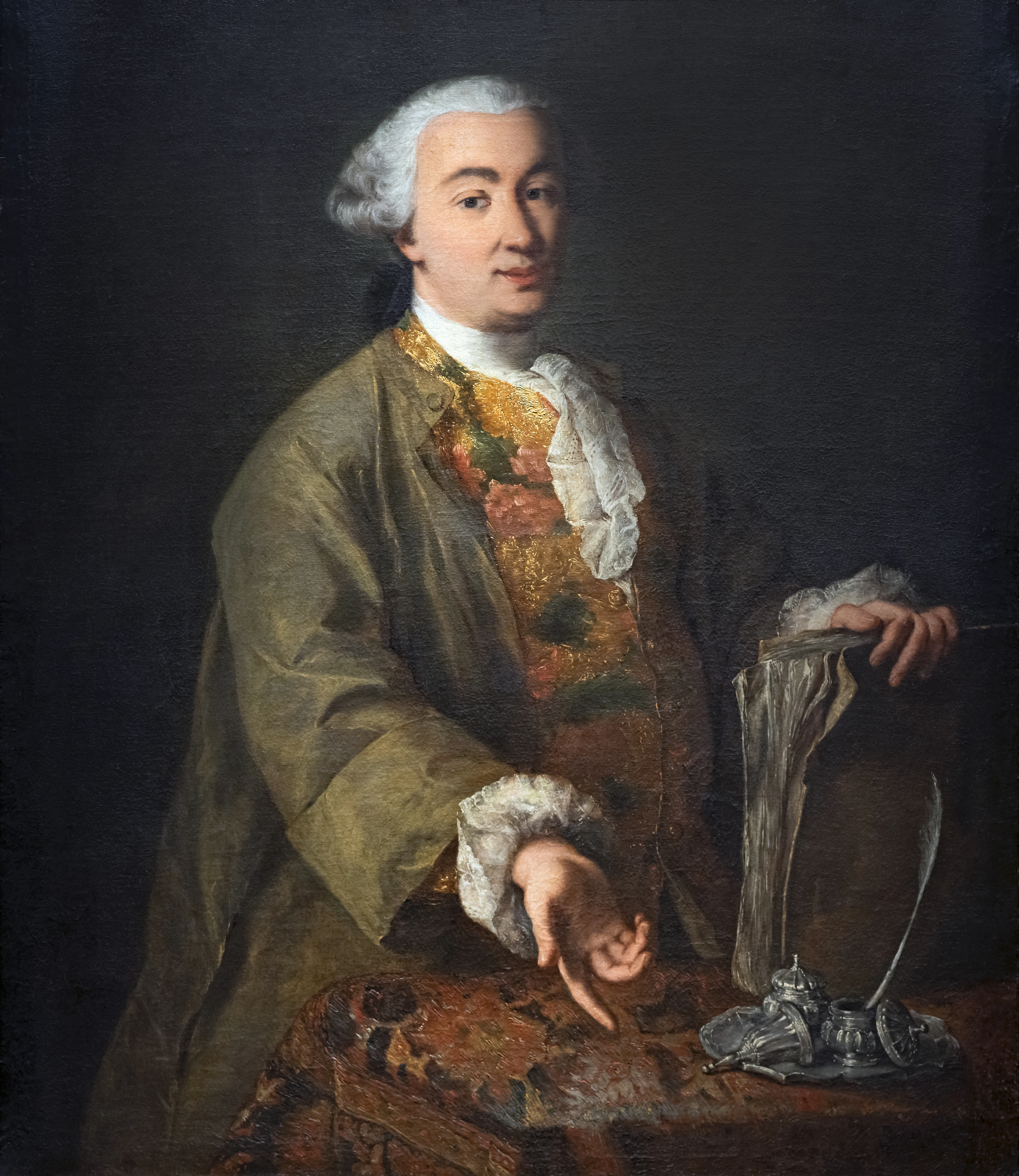
Image from Wikipedia
Image from Wikipedia
Carlo Goldoni: The Revolutionary of Comedy and Master of Lively Theater
A Venetian Author Who Reinvented European Theater
Carlo Goldoni is one of the defining figures of Italian theater history. Born on February 25, 1707, in Venice and died on February 6, 1793, in Paris, he evolved from a lawyer to a playwright and librettist who fundamentally changed the stage of his time. His works represent a significant step away from the improvised tradition of Commedia dell’arte towards a more realistic, character-driven dramaturgy. ([treccani.it](https://www.treccani.it/enciclopedia/carlo-goldoni_%28Dizionario-Biografico%29/?utm_source=openai))
Biography: From Legal Education to Calling for the Theater
Goldoni grew up in Venice, in a tumultuous environment filled with educational pursuits, family relocations, and an early spark of passion for theater. Even as a teenager, he exhibited a strong affinity for the stage; his education initially led him to jurisprudence, but the world of theater remained the true magnet of his life. After studies in various locations and initial professional activities, he consistently returned to writing until theater work ultimately became his life's mission. ([encyclopedia.com](https://www.encyclopedia.com/history/encyclopedias-almanacs-transcripts-and-maps/carlo-goldoni?utm_source=openai))
The movement of his early years is crucial for understanding his later plays. Goldoni did not know the daily life of the bourgeois and petty bourgeois milieu from a distance but from direct observation, and it was precisely this that provided the credibility of his characters. His biography is more than just a series of stages: it explains the social precision that became a trademark of his comedies. ([encyclopedia.com](https://www.encyclopedia.com/history/encyclopedias-almanacs-transcripts-and-maps/carlo-goldoni?utm_source=openai))
The Breakthrough: Goldoni’s Reform of Italian Theater
His artistic breakthrough began in the 1730s when he became closely connected with theater troupes and wrote plays for the Venetian stage. Criticism and the early failure of specific works did not deter him; instead, they sharpened his focus on craftsmanship, dramatic economy, and lively dialogue. During this period, Goldoni became the author who not only wrote but also questioned and renewed the performance style of Italian theater itself. ([encyclopedia.com](https://www.encyclopedia.com/people/literature-and-arts/italian-literature-biographies/carlo-goldoni?utm_source=openai))
His departure from pure improvisation was particularly significant. Goldoni increasingly provided actors with well-formulated texts, developed clearly structured scenes, and replaced masked stereotypes with psychologically credible characters. Britannica describes him as a reformer of Italian drama; research also emphasizes that his work led Commedia dell’arte in a new, modern direction. ([britannica.com](https://www.britannica.com/art/commedia-dellarte?utm_source=openai))
Career Highlights: Masterpieces Between Everyday Life, Satire, and Social Insight
Goldoni's most important works include La locandiera, Il servitore di due padroni, I rusteghi, Il campiello, and Le baruffe chiozzotte. These pieces showcase his particular strength: he transforms social observation into vibrant comedy without embarrassing his characters. Instead of abstract types, he creates individuals with idiosyncrasies, contradictions, and social profiles. ([encyclopedia.com](https://www.encyclopedia.com/history/encyclopedias-almanacs-transcripts-and-maps/carlo-goldoni?utm_source=openai))
In his Venetian comedies, Goldoni's gaze on society is particularly intense. Trade, marriage, vanity, money, urban conventions, and familial tensions form the dramatic material from which he builds precise compositions. His art lies in the arrangement of dialogue, tempo, and character depiction; as a result, his plays continue to feel remarkably contemporary today. ([treccani.it](https://www.treccani.it/enciclopedia/carlo-goldoni_%28Dizionario-Biografico%29/?utm_source=openai))
Librettist and Musical Theater: Goldoni Between Stage and Opera
Goldoni was not only a dramatist but also a librettist, showcasing his versatility. Particularly his collaboration with Baldassare Galuppi made him a key figure of opera buffa; more than twenty of his librettos were set to music by Galuppi. In these works, theatrical precision, comedic characters, and a fine sense of musical dramaturgy come together. ([en.wikipedia.org](https://en.wikipedia.org/wiki/Carlo_Goldoni?utm_source=openai))
His librettos carry the same signature as his comedies: everyday language, social friction, wit, and a realistic view of human weaknesses. Goldoni had a knack for formulating stage situations so that composers could musically articulate them. He thus became an author whose significance extends far beyond spoken theater. ([en.wikipedia.org](https://en.wikipedia.org/wiki/Carlo_Goldoni?utm_source=openai))
Style and Dramaturgy: Realism, Charm, and Precise Characterization
Goldoni's style is marked by a rare balance. His plays are light-hearted but never trivial; they are realistic without becoming dry; they are socially critical without losing their lightness. This very mix made him so influential in theater history, as he understood comedy not merely as a mask play but as an observation of human order. ([en.wikipedia.org](https://en.wikipedia.org/wiki/Carlo_Goldoni?utm_source=openai))
In contrast to older forms of Commedia dell’arte, Goldoni focused on closed plots, clear motivations, and linguistic naturalness. The characters speak not from a pose but from their social role, their interests, and their relationships. This results in the stage presence that keeps his plays alive to this day: the theater does not feel museum-like but instead immediately human. ([britannica.com](https://www.britannica.com/art/commedia-dellarte?utm_source=openai))
Critical Reception and Cultural Influence
Goldoni sparked intense debate during his lifetime. Opponents like Carlo Gozzi accused him of trimming the poetic imagination of Italian theater in favor of everyday life and reason; at the same time, posterity recognized his historical greatness precisely in this. Britannica and other references emphasize that Goldoni decisively pushed back the outdated tradition of Commedia dell’arte, thereby paving the way for a more modern theater. ([britannica.com](https://www.britannica.com/art/commedia-dellarte?utm_source=openai))
His cultural influence extends far beyond Italy. Goldoni shaped European comedic art by combining social observation with dramatic elegance, thus creating a model that has been revisited throughout literary and theater history. His autobiography and his plays simultaneously document the transformation of an entire era, in which the stage evolved from an improvised spectacle to a literarily shaped art form. ([treccani.it](https://www.treccani.it/enciclopedia/carlo-goldoni_%28Dizionario-Biografico%29/?utm_source=openai))
Current Projects and Publications
As Carlo Goldoni is a historical figure of the 18th century, there are no current albums, singles, tours, or new music projects in the contemporary sense. His presence continues through new productions, scholarly editions, and theater programs that repeatedly bring his plays to the stage. Thus, the real “release cycle” of Goldoni lies within the theater's repertoire itself, not in a modern discography. ([treccani.it](https://www.treccani.it/enciclopedia/carlo-goldoni_%28Dizionario-Biografico%29/?utm_source=openai))
Conclusion: Why Carlo Goldoni Continues to Fascinate Today
Carlo Goldoni remains compelling because he renewed theater from within. He combined observational talent, linguistic elegance, and comedic precision to create a body of work that takes social reality as seriously as it does the audience's enjoyment. Whoever reads Goldoni or experiences him on stage encounters an author who transformed comedy into a modern form of thought. ([treccani.it](https://www.treccani.it/enciclopedia/carlo-goldoni_%28Dizionario-Biografico%29/?utm_source=openai))
Goldoni truly manifests his full power in live performances: in the timing of dialogues, in the energy of the characters, and in the fine tension between wit and truth. His plays demonstrate how relevant good theater remains when it treats people not as masks, but as characters. A visit to a Goldoni production is always worthwhile, as it reveals the living soul of the European comedy heritage. ([encyclopedia.com](https://www.encyclopedia.com/history/encyclopedias-almanacs-transcripts-and-maps/carlo-goldoni?utm_source=openai))
Official Channels of Carlo Goldoni:
- Instagram: no official profile found
- Facebook: no official profile found
- YouTube: no official profile found
- Spotify: no official profile found
- TikTok: no official profile found
Sources:
- Wikipedia – Carlo Goldoni
- Treccani – Carlo Goldoni, Dizionario Biografico
- Britannica – Western theatre: The 18th-century theatre
- Britannica – Commedia dell’arte
- Encyclopedia.com – Carlo Goldoni
- Operndatenbank Universität Mainz – Goldoni, Carlo
- Encyclopedia.com – Mirandolina, or the Mistress of the Inn
- Britannica – Italian literature in the 18th century
Upcoming Events
Seebühne Utting – The Fan by Carlo Goldoni
The Fan on the Lakeside Stage Utting
The Fan by Carlo Goldoni at the Utting Open-Air Stage
The Fan on the Floating Stage Utting