
Aeham Ahmad
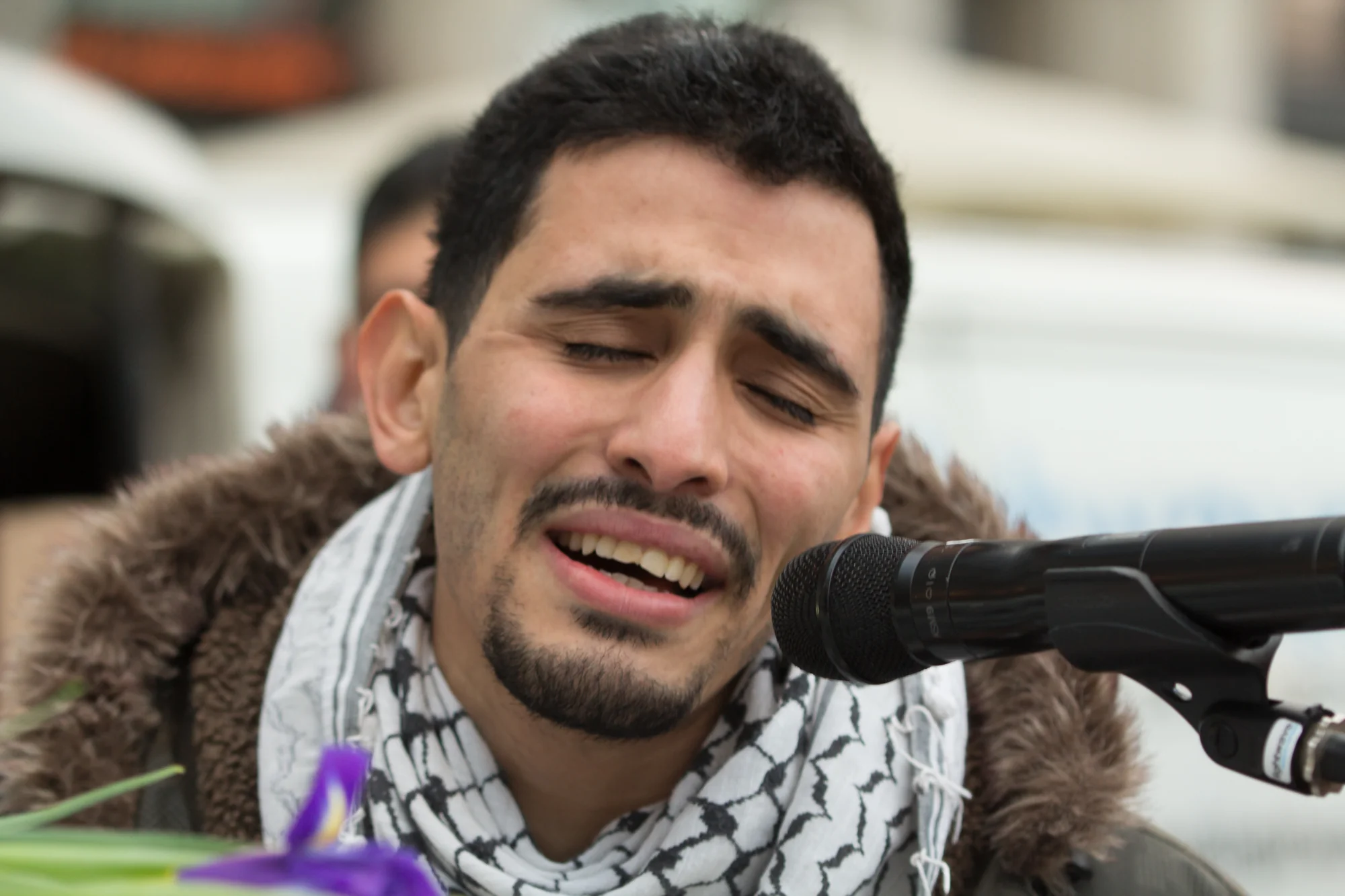
Image from Wikipedia
Image from Wikipedia
Aeham Ahmad – The Pianist from the Ruins who Transforms Music into Hope
A Life Between War, Flight, and Artistic Persistence
Aeham Ahmad, born in 1988 in the refugee camp of Yarmouk near Damascus, is one of those artists whose biography is inseparably linked to historical experience. As a Palestinian-Syrian pianist, he gained international fame in 2014/2015 for playing the piano publicly in besieged Yarmouk, earning him the title "Pianist in the Ruins." Today, he lives as a refugee in Germany and works as a professional pianist based in Warburg. ([de.wikipedia.org](https://de.wikipedia.org/wiki/Aeham_Ahmad))
The Early Years in Yarmouk: Music as Origin and Education
Ahmad grew up in a Palestinian refugee family in a camp that had developed over the decades into a densely populated district of Damascus. He began learning piano at the age of five; later, he studied initially at the Conservatory in Damascus and from 2006 to 2011 at the Musical Faculty of the Baath University in Homs. This solid education forms the classical foundation of a career that later expanded well beyond the boundaries of academic music. ([de.wikipedia.org](https://de.wikipedia.org/wiki/Aeham_Ahmad))
Ahmad's music career did not develop in protected concert halls but in the shadows of siege, hunger, and violence. As the civil war continued to devastate Yarmouk, he transported his piano on a trailer or pick-up through the camp and played on streets and squares for neighbors, children, and families. These performances were shared on social networks, making him internationally known, as they radiated not only musical but also deeply human grandeur. ([de.wikipedia.org](https://de.wikipedia.org/wiki/Aeham_Ahmad))
The Breakthrough: A Piano as a Symbol of Resistance
The real breakthrough came with images and videos from Yarmouk, where Ahmad played and sang among the ruins. These recordings spread worldwide, were picked up by international media, and transformed him into a symbol of civilian endurance under war conditions. The music served not as escapism but as an immediate counter-narrative to violence – a gesture of dignity in a dehumanized environment. ([de.wikipedia.org](https://de.wikipedia.org/wiki/Aeham_Ahmad))
In April 2015, fighters from the "Islamic State" destroyed his piano during a check. Ahmad then decided to flee, leaving Yarmouk on August 2 and reaching Germany in September 2015 via Izmir, Lesbos, and the Balkan route. This turning point did not mark the end but the transformation of his artistic identity: from a musician in a besieged camp to an internationally performing pianist with a clear humanistic message. ([de.wikipedia.org](https://de.wikipedia.org/wiki/Aeham_Ahmad))
Germany, Awards, and New Artistic Partnerships
In Germany, Ahmad began with his first performances for refugees and helpers in Munich, along with a charity concert with the Bochum Symphony Orchestra. As early as 2015, he received the newly established International Beethoven Prize for Human Rights, Peace, Freedom, Poverty Reduction, and Inclusion in Bonn. This award underscored that his impact extends beyond pure musical virtuosity, encompassing the cultural and political significance of his work. ([de.wikipedia.org](https://de.wikipedia.org/wiki/Aeham_Ahmad))
Since 2017, Ahmad has regularly collaborated with the Edgar Knecht Trio; together they created the album Keys to Friendship, reinterpreting German and Arabic folk songs in jazz arrangements. This collaboration marks an important step in his artistic development: moving away from the singular symbolic image of the war refugee towards an independent musical dialogue between oriental melodics, jazz harmonics, and European chamber music. In 2017, this formation won the Creole – Global Music Contest. ([de.wikipedia.org](https://de.wikipedia.org/wiki/Aeham_Ahmad))
Discography: From “Yarmouk” to “From Barada To Rhine”
Ahmad's discography is closely linked to his life story and often carries programmatic titles. Major releases include Keys to Friendship with Edgar Knecht (2017), Yarmouk (Music For Hope) (2021), Syria (Music For Peace) (2022), From Barada To Rhine (2024), and the album Aeham Ahmad Quartet (2024). These works chart a line from the memory of Syria to a musical location in Germany. ([de.wikipedia.org](https://de.wikipedia.org/wiki/Aeham_Ahmad))
Especially Yarmouk (Music For Hope) crystallizes Ahmad’s self-understanding as a musician of hope: The release ties back to his public persona but expands it into a long-term sound archive of memory, loss, and survival. From Barada To Rhine refers in its title to the geographical and emotional distance between Syria and Germany, while the Aeham Ahmad Quartet further opens his work towards ensemble interaction and jazz-like improvisation. ([music.apple.com](https://music.apple.com/us/album/yarmouk-music-for-hope/1596816452?utm_source=openai))
Musical Style: Oriental Jazz, Improvisation, and Lyricism
Ahmad's style combines classical piano playing with oriental maqams, folk-like motifs, and jazzy improvisation. In concert announcements and portraits, his music is described as "Oriental Jazz," an aesthetic that connects Western jazz harmony with traditional Eastern sound languages. Characteristically, his strong vocal presence remains: Ahmad uses the human voice not merely as singing but as an additional means of expression within the composition. ([amalthea-theater.de](https://www.amalthea-theater.de/aeham-ahmad/?utm_source=openai))
In this connection of form-awareness and existential urgency lies the special quality of his work. The music never feels decorative but is driven by experience, biography, and concrete memory. It unfolds in clear melodic lines, in improvisational openness, and in an arrangement style that intertwines Arabic melismas with European sound dramaturgy. ([de.wikipedia.org](https://de.wikipedia.org/wiki/Aeham_Ahmad))
Cultural Influence: A Symbol of Music, Flight, and Resilience
Aeham Ahmad has often been described in international media as the epitome of music as a humanitarian act. His story stands for cultural resilience, the power of public music-making, and the role of art in experiences of crisis and displacement. At the same time, he has become a prominent concert figure in Germany and regularly performs in other European countries. ([amp.dw.com](https://amp.dw.com/en/artists-after-the-escape-aeham-ahmad-when-music-saves-a-life/a-41769724?utm_source=openai))
His autobiography And the Birds Will Sing. I, the Pianist from the Ruins extends this impact into literary form and makes his personal story permanently accessible. The publication, created in 2017, is part of a broader artistic practice where Ahmad not only plays music but also bears witness. Thus, the pianist becomes a storyteller, the refugee a cultural mediator, and the symbol an independent artistic personality. ([de.wikipedia.org](https://de.wikipedia.org/wiki/Aeham_Ahmad))
Current Projects and New Presence in 2024/2025
In 2024 and 2025, Ahmad remained active: The album Aeham Ahmad Quartet was released in 2024, and From Barada To Rhine was announced as a new CD and presented in concert contexts. At the same time, events and portraits from 2024 and 2025 show that Ahmad continues to work with new formats – including duo and quartet concepts, readings, and concerts with a clear message of peace. ([music.apple.com](https://music.apple.com/us/album/aeham-ahmad-quartet/1758727691?utm_source=openai))
A particularly relevant classification is provided by an extensive conversation from late 2024, in which Ahmad discusses Syria, family, and the significance of his art after the fall of Bashar al-Assad. This contemporary perspective demonstrates that his work does not remain in the archive but responds to current political and societal developments. Ahmad therefore remains an artist whose music touches the present, memory, and future simultaneously. ([van-magazine.com](https://van-magazine.com/mag/aeham-ahmad-syria-2024/?utm_source=openai))
Conclusion: Why Aeham Ahmad Remains So Fascinating Today
Aeham Ahmad is much more than an impressive war biography. He is a pianist with a clear artistic signature, a musician between cultures, and a storyteller who draws musical form from loss. His career illustrates how deeply music can intervene in social realities when played with conviction, technique, and emotional truthfulness. ([de.wikipedia.org](https://de.wikipedia.org/wiki/Aeham_Ahmad))
Those who experience Aeham Ahmad live encounter not a museal memory of war but a contemporary, vibrant music career full of expression, dignity, and sonic fantasy. Especially in the intimacy of the piano, his stage presence unfolds most strongly. A concert with him is not just a musical evening but an invitation to hear hope, memory, and humanity in the same space. ([de.wikipedia.org](https://de.wikipedia.org/wiki/Aeham_Ahmad))
Official Channels of Aeham Ahmad:
- Instagram: no official profile found
- Facebook: https://www.facebook.com/profile.php?id=100010807323576
- YouTube: no official profile found
- Spotify: no official profile found
- TikTok: no official profile found
- SoundCloud: https://soundcloud.com/aeham_ahmad
Sources:
- Wikipedia – Aeham Ahmad
- Official Website – Aeham Ahmad
- SoundCloud – Aeham Ahmad
- Musicalista – Aeham Ahmad
- The National – The pianist from Syria: Aeham Ahmad on the power of music
- DW – Aeham Ahmad: Music Creates Connection
- neue musikzeitung – Aeham Ahmad was the "Pianist in the Ruins"
- Apple Music – Aeham Ahmad Quartet
- Apple Music – Yarmouk (Music For Hope)
- Amalthea Theater Paderborn – Aeham Ahmad