Discover the Most Beautiful Districts at Lake Ammersee
The Most Beautiful "Quarter Moments" Around Lake Ammersee: How You Will Plan Your Next Visit
8 min readLaura Müller
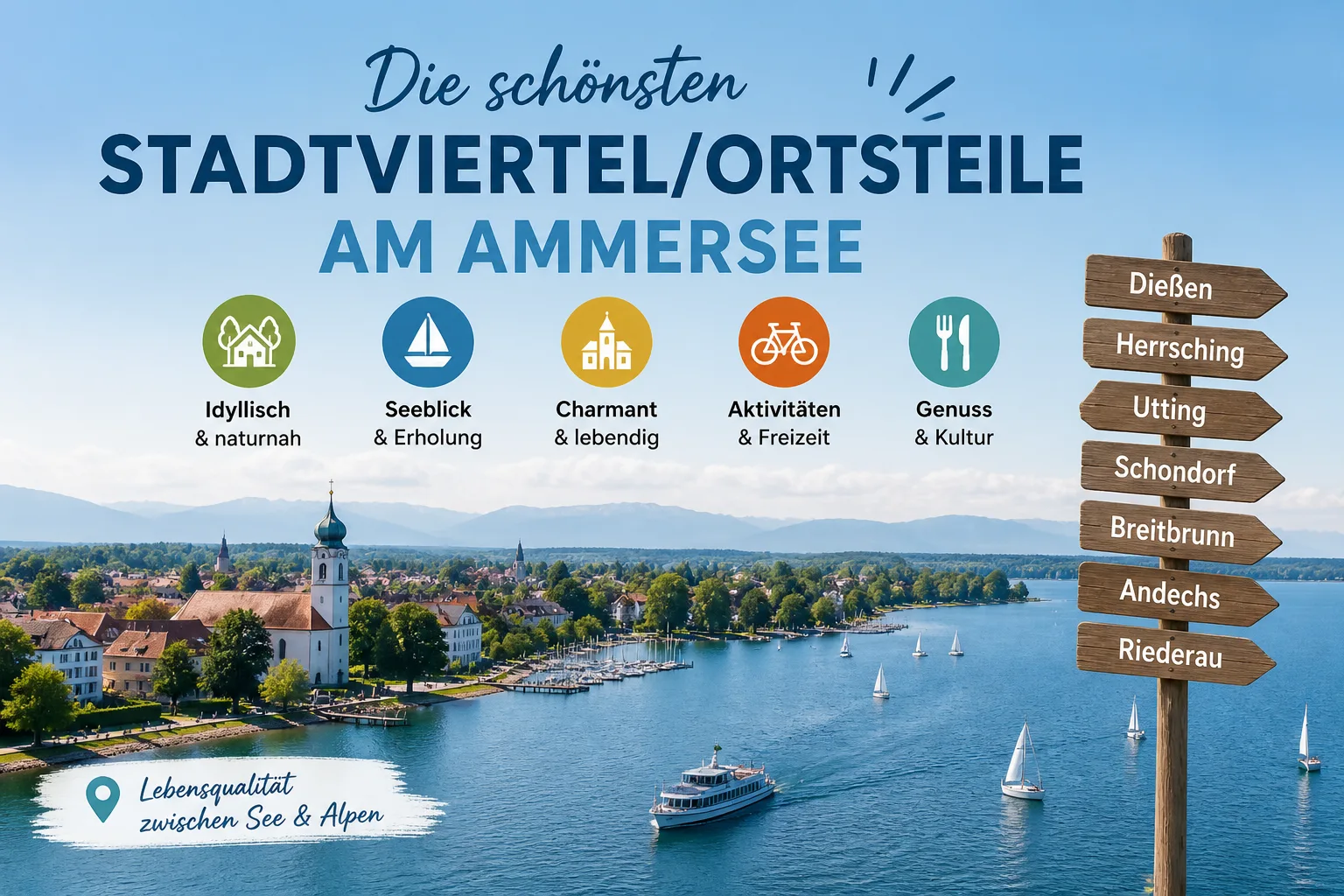
Anyone who will explore Lake Ammersee in the future will quickly notice: Instead of a single center, several places with their own "micro-centers" will set the pace. In this guide, you will get a route and decision logic that will allow you to consciously switch between promenade, village center, hillside, and quiet paths on your next trip.
Goal: You will not only head for the next bathing beach, but will deliberately experience the atmosphere of the districts—depending on whether you are looking for lively meeting points, quiet residential streets, or cultural impulses.
Dießen am Ammersee: How You Will Switch Between Village Center, Shore, and Hillsides
If you consciously experience Dießen on your next visit, you will find the strongest contrasts within short distances: dense alleys and squares, open shorelines, and quieter residential areas above the lake. Your impression will depend on the order in which you visit these sub-areas.
Historic Village Center & Lake Shore: How You Will Take in Market Feeling and Lake Air One After the Other
You will first be able to walk through the village center to get a "daily life framework"—smaller shops, path connections, and typical meeting points. Afterwards, you will quickly switch to the shore, where your pace will usually change automatically: more focus on the water, longer breaks, more photo stops.
- You will use the short distances between village center and shore as an advantage if your time window remains tight.
- You will find quieter shore sections more easily if you take small detours from the main paths.
St. Georgen & Hillsides: How You Will Classify Residential Quarters with a View
If you switch to the elevated areas, you will perceive a different acoustics and density: less through traffic, more gardens, more in-between spaces. For your tour, this will be especially valuable if you need a quiet "intermediate stage" between two lively points.
You will also experience that the way back towards the lake will change your perspective: From the "residential area above" it will become a "shore destination below" again—and this very change will make Dießen readable as a multi-layered place.
How Quarters Will Shape Your Experiences: How You Will Find the Right Rhythm
You will benefit most in Dießen if you do not treat everything as a "sightseeing spot," but as a sequence of uses: arriving, orienting, strolling, pausing, getting moving again. This way, you will also experience busier areas more relaxed, because you will consciously place your rest phases in quieter sub-areas.
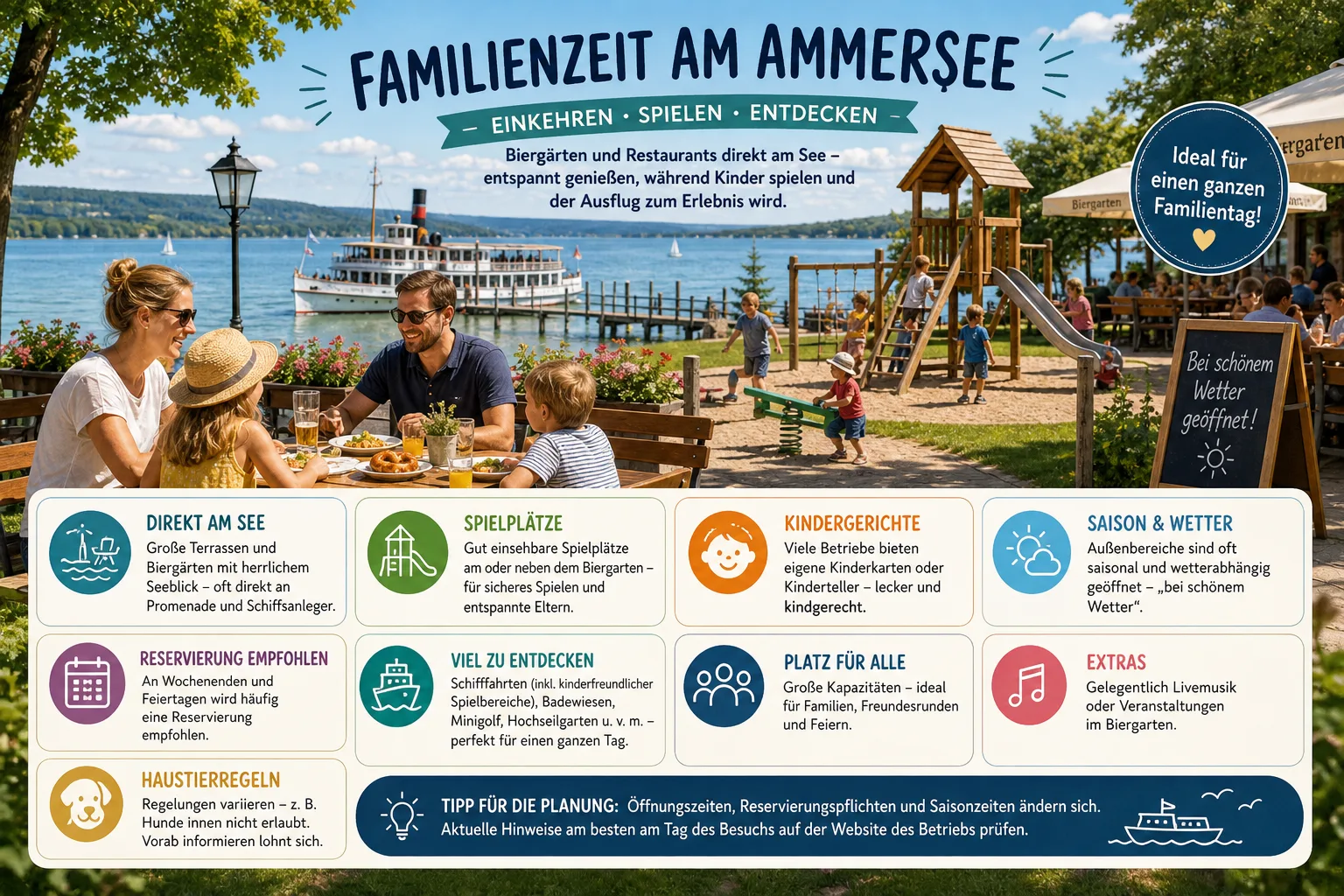
Herrsching: How You Will Combine Promenade, Town Center, and Residential Quarters
If you visit Herrsching in the future, you will probably first land at the shoreline—because the path layout and quality of stay will draw you there. However, you will get your best Herrsching experience if you then deliberately go "one level behind": into side streets, quiet residential zones, and everyday connections.
Shore Promenade & Town Center: How You Will Use the Common Meeting Point
At the promenade, you will experience a dense coexistence of different needs: walking, cycling, sitting, swimming, arriving by boat or train. To keep your time there pleasant, you will use peak times more as a "transit phase" and place longer breaks a bit off to the side.
- You will plan short stops (view, photo, bench) directly on the line.
- You will choose side paths for longer breaks so that conversations and relaxation remain quieter.
Residential Quarters: How You Will See the Quieter Herrsching
If you consciously walk away from the shore, you will get to know a different Herrsching: less "excursion pace," more everyday paths. This perspective will help you understand the place not just as a backdrop, but as a living and residential space—and to move accordingly considerately.
Mobility: How You Will Plan Your Routes Stress-Free
You will save the most time in Herrsching if you think of routes as a triangle: Arrival Point (e.g., train station/landing stage) – Shore – Town Center/Residential Area. This way, you will not have to walk back and forth constantly, but will close your loop organically.
Schondorf & Utting: How You Will Use Village Center, Shore Quarter, and Quiet Connections
If you combine Schondorf and Utting in the future, you will experience two places that often do not unfold their effect through grand staging, but through short distances, clear village centers, and well-walkable transitions towards the lake. Exactly these "simple" structures will make your planning easier.
Schondorf: How You Will Use the Compact Center for Orientation
You will quickly find your way in the village center because functions will be closer together: dining, short errands, meeting points. Afterwards, you will switch towards the shore, where your perception will become more open—more horizon, more water surface, more "slowing down."
Utting: How You Will Experience the Shore Area—and Then Deliberately Go "Behind the First Row"
You will first seek the summer dynamics at the shore (movement, sunbathing areas, piers). So that your impression does not stop at the typical "lake day," you will then use the quieter connecting paths between residential areas and the lake. This way, you will understand the place as a network of everyday routes, not just as a destination.
How You Will Include Culture and Community Places in Your Planning
If you look out for exhibitions, readings, or concerts on your next tour, you will check local event calendars and tourism information in advance. This will allow you to plan your route so that a cultural stop is not "on top," but will sensibly structure your daily rhythm (e.g., afternoon at the shore, evening program in town).
Small Districts Around Lake Ammersee: How You Will Respectfully Discover the "Quiet Neighbors"
If you travel away from the well-known shore axes in the future, you will experience smaller districts and hamlets as a counterpoint: less through traffic, less noise, more views of meadows and forest edges. To keep this experience pleasant for everyone, you will pay particular attention to quiet behavior, clean paths, and the privacy of residents here.
How You Will Find Quiet Places Without Making Them "Loud"
- You will use side paths but stay on marked routes to protect sensitive areas.
- You will take short breaks and then move on, instead of setting up longer group gatherings near residences.
- You will plan your arrival and departure so that parking pressure in small streets does not increase.
Outlook: What Will Shape You More in the Coming Years
If you visit Lake Ammersee repeatedly in the coming years, you will probably notice more how usage conflicts and solutions develop side by side: visitor flows will be managed, mobility offers will be adjusted, and the desire for residential quality will remain a key issue in many places.
For your future tours, this will mean above all: With more planning, you will have less stress. If you consciously set times, routes, and breaks, you will be able to enjoy the most popular areas without feeling like you are "pushing through"—and you will experience quieter quarters without overloading them as insider tips.
- You will choose a village center in the morning to arrive and orient yourself.
- You will switch to the shore at midday and take a round with clear stops.
- You will deliberately move to a quieter residential or hillside area in the afternoon.
- You will end the day with a second, shorter shore moment instead of doing everything "in one go."